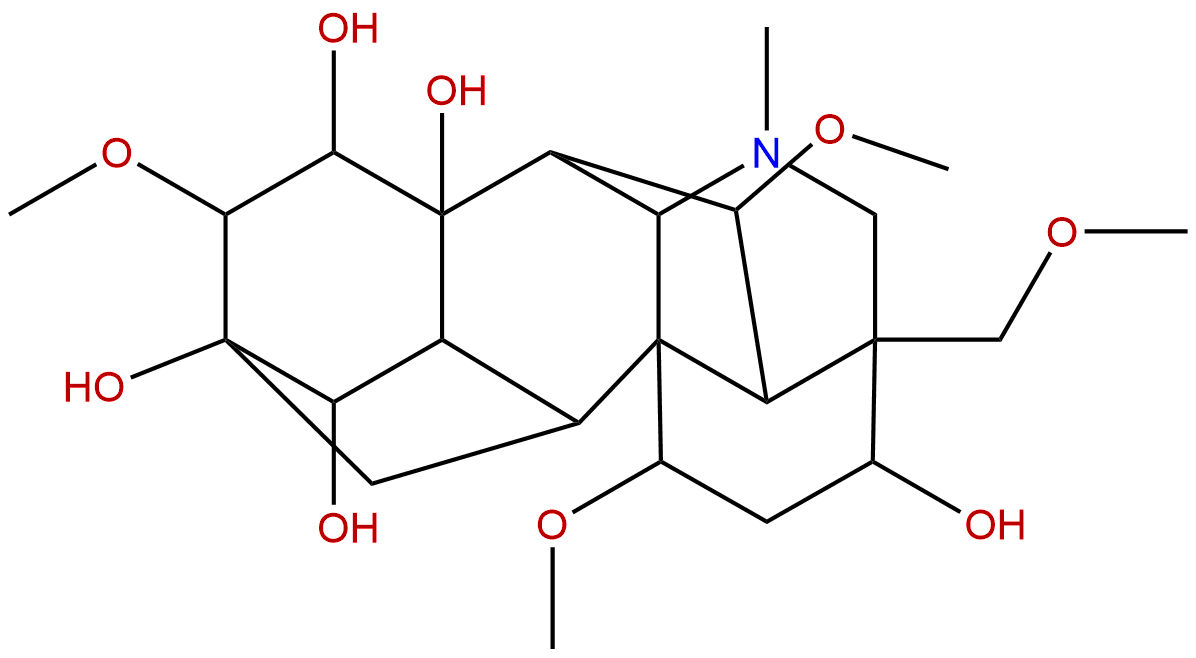


Product name: Mesaconine
Synonym name:
Catalogue No.: BP3252
Cas No.: 6792-09-2
Formula: C24H39NO9
Mol Weight: 485.574
Botanical Source:
Physical Description:
Type of Compound: Alkaloids
Purity: 95%~99%
Analysis Method: HPLC-DAD or/and HPLC-ELSD
Identification Method: Mass, NMR
Packing: Brown vial or HDPE plastic bottle
The product could be supplied from milligrams to grams. Inquire for bulk scale.
We provide solution to improve the water-solubility of compounds, thereby facilitating the variety of activity tests and clinic uses.
For Reference Standard and R&D, Not for Human Use Directly.
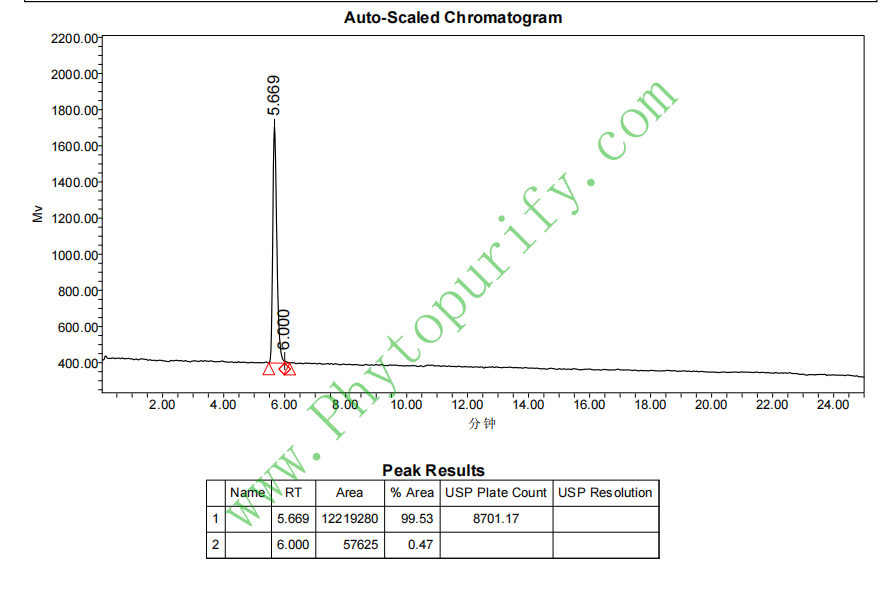
HPLC of Mesaconine
Storage conditions:Short-term storage at 2~8℃, long-term storage at -20 ~ -80℃
141.3100
.0787
-.0163
4.3179
.8662
5.4952
Low
35.3231
7.5220
No
No
No
No
Yes
No
0.3
Yes
No
Yes
No
Natural products have always been an important source of innovative drug discovery, among which alkaloids derived from traditional medicinal plants have attracted much attention due to their structural diversity and significant biological activity. Mesaconine (CAS number: 6792-09-2) is a C19 diterpenoid alkaloid extracted from Aconitum carmichaelii Debx., a plant in the Ranunculaceae family. It belongs to the hydrolysis product of aconitine type diester alkaloids (monoester alkaloids). Fuzi, as an important traditional Chinese medicine, has the effects of restoring yang and relieving reverse, tonifying fire and assisting yang, dispersing cold and relieving pain. However, its strong toxicity and therapeutic effects coexist. As one of its active ingredients, aconitine, while retaining certain pharmacological activity, has significantly reduced toxicity compared to its parent diester type aconitine (such as aconitine and aconitine), making it an ideal molecule for studying the mechanism of "reducing toxicity and maintaining efficacy" or "reducing toxicity and enhancing efficacy" of Aconitum drugs. Early research has suggested that it has a regulatory effect on the cardiovascular system, while recent studies have further revealed its potential application value in multiple fields such as analgesia. This article aims to systematically review the chemical structure, plant origin, pharmacological activity, molecular mechanism of action, pharmacological characteristics, and clinical application prospects of aconitine, in order to provide comprehensive scientific references for the in-depth research and development of this compound.
The chemical name of aconitine is (1 α, 6 α, 14 α, 16 β) -20-ethyl-3,13-dihydroxy-1,6,16-trimethoxy-4-methoxymethyl-20-azapentacyclic [11.8.0.0 ², ¹⁰⁵, ⁹. 0 ¹⁵, ¹⁹] undene-7,9,11-triene-4-ol, with a molecular formula of C ₂₄イ₉ NO ₉ and a molecular weight of 485.5740.
Structurally, the new aconitine retains the basic skeleton of aconitine compounds: a complex five ring system (C19 diterpene skeleton), including a nitrogen-containing D ring (piperidine ring). Its key feature is the hydrolysis of ester bonds at the C8 and C14 positions, with the C8 position connected to an acetoxy group (- OCOCH ∝) and the C14 position being a free hydroxyl group (- OH), which classifies it as a monoester alkaloid. The corresponding diester alkaloids, such as mesaconitine, have ester groups (usually acetyl or benzoyl) attached to both C8 and C14 positions, making them highly toxic. The C1, C6, and C16 positions are usually replaced by methoxy groups, and the C18 position is connected to a methoxymethyl group. This structural modification is the main reason for its reduced toxicity and increased water solubility.
The theoretical lipid water partition coefficient (LogP) is 0.0787, indicating that the molecule has hydrophilicity, which is closely related to the presence of multiple polar groups such as hydroxyl and methoxy groups in the structure. The theoretical polar surface area (TPSA) is as high as 141.31 Å ², further confirming its strong polarity. The calculated water solubility is about 4.32 mg/mL, which belongs to moderate to high solubility, which is beneficial for its development in aqueous formulations. These physicochemical properties collectively determine the distribution characteristics of aconitine in organisms. If its blood-brain barrier permeability is predicted to be "low", it suggests that it may not easily enter the central nervous system, which is of great significance for the mechanism analysis of its peripheral analgesic effects.
The main source of aconitine in Aconitum carmichaelii Debx. is processed from the Aconitum carmichaelii Debx. plant in the Ranunculaceae family. Raw aconite has severe toxicity and must undergo strict processing (such as soaking, steaming, and decoction) before being taken orally. One of the core purposes of the processing is to promote ester hydrolysis of highly toxic diester type aconitine compounds (such as aconitine, neoaconitine, and hypaconitine), first generating corresponding monoester alkaloids (benzoyl aconitine, neoaconitine, and hypaconitine), reducing toxicity by about 1/200 to 1/500, and further hydrolyzing them into almost non-toxic amine alcohol alkaloids (aconitine, etc.). Therefore, aconitine is an important secondary metabolite and active substance produced during the processing of aconite.
The extraction of aconitine from plant materials usually follows the general extraction process for alkaloids. Common methods include:
1. Solvent extraction method Ethanol, methanol, or acidic water (such as dilute hydrochloric acid or dilute acetic acid) are usually used for reflux extraction or percolation extraction of aconite slices or powders. Acid water extraction can utilize the principle of alkaloids forming salts with acids to increase water solubility, but there are many subsequent purification steps. The alcohol extraction method has high efficiency and is a commonly used method for laboratory and industrial preparation.
2. Purification and Separation After vacuum concentration, the crude extract is alkalized by adjusting the pH value to free the alkaloids, and then extracted with organic solvents such as chloroform and ethyl acetate. Further purification relies on column chromatography technology, often using silica gel, alumina, or macroporous adsorption resin as the stationary phase, and gradient elution with solvent systems such as chloroform methanol and petroleum ether ethyl acetate in different ratios. High performance liquid chromatography (HPLC), especially preparative HPLC, is a key technology for obtaining high-purity monomers of aconitine.
3. appraisal The isolated compounds need to be structurally confirmed by methods such as nuclear magnetic resonance (NMR, including ¹ H-NMR and ¹ ³ C-NMR), mass spectrometry (MS), infrared spectroscopy (IR), and thin-layer chromatography (TLC) or high-performance liquid chromatography (HPLC) compared to standard samples.
The pharmacological activity research of Aconitum alkaloids has expanded from the initial focus on cardiovascular effects to a wider range of fields, especially in terms of analgesic effects, becoming a current research hotspot.
Analgesic effect This is the most promising pharmacological activity of aconitine. A large number of in vivo experiments have shown that Aconitum alkaloids exhibit significant analgesic effects in various pain models, such as acetic acid-induced writhing response in mice, formalin test, hot plate method, and chronic sciatic nerve compression injury model. Although its analgesic intensity may be weaker than classical opioid drugs such as morphine, it is worth noting that research suggests that its analgesic mechanism may not be entirely dependent on opioid receptors and may show fewer adverse reactions (such as tolerance and addiction) in some models. This provides the possibility for its development into a new type of non addictive or low addictive analgesic drug.
Cardiovascular function As one of the material foundations of the "returning yang and rescuing reverse" effect of Aconitum carmichaelii, aconitine exhibits a bidirectional regulatory effect on the cardiovascular system. Research has shown that it may exhibit cardiotonic effects at low doses, enhancing myocardial contractility by affecting ion channels in cardiomyocytes (such as increasing sodium ion influx); At high doses or under specific conditions, antiarrhythmic effects may also be observed. In addition, it may have a certain regulatory effect on vascular tension. These effects are fundamentally different from the strong cardiac toxicity of its parent compound aconitine, reflecting the safety improvement brought by structural modification.
anti-inflammatory effect Inflammation and pain are often mutually causal. Research has shown that aconitine has inhibitory effects on inflammation models such as carrageenan induced foot swelling and cotton ball granuloma in rats. Its anti-inflammatory effect may be related to the inhibition of pro-inflammatory factors (such as TNF - α, IL-1 β, IL-6) production and inflammatory signaling pathways.
Other activities There are also a few studies reporting that aconitine may have potential activities such as neuroprotection and immune regulation, but more evidence is needed to support it.
The analgesic effect of aconitine involves a complex mechanism of multiple targets and pathways, which is consistent with its effectiveness in various pain models. According to existing research, its potential targets mainly include:
Transient receptor potential channel:
Endogenous cannabinoid system and opioid system:
Inflammation and pain mediator synthesis pathway:
Neurotransmitter transporter:
Dopamine receptor:
In summary, the analgesic mechanism of aconitine is likely to be a "multi-target synergistic" mode, which gently regulates multiple targets related to pain perception, transmission, and modulation (such as TRP channels, opioid receptors, and inflammatory pathways) simultaneously, rather than strongly inhibiting a single target. This mechanism may bring more balanced therapeutic effects and fewer adverse reactions, but it also poses challenges for mechanism research.
Based on computational predictions and preliminary experimental data, a preliminary evaluation of the pharmacological properties of aconitine is conducted
At present, there are insufficient public reports on the pharmacokinetic studies of the system of Aconitum alkaloids, such as absolute bioavailability, tissue distribution, identification of major metabolites, excretion kinetics, etc. This is a key data gap that must be filled in the process of drug development.
The clinical application prospects of aconitine mainly revolve around its core pharmacological activity - analgesia, and may be expanded to related fields.
As a key active ingredient in traditional Chinese medicine aconite, aconitine serves as a bridge between traditional medical wisdom and modern drug discovery. Its unique chemical structure (monoester C19 diterpenoid alkaloid) endows it with significantly reduced toxicity compared to diester aconitine and various pharmacological activities worthy of further exploration, especially in multi-target analgesia, showing great potential. Although it has research value in cardiovascular regulation and other areas, analgesia is undoubtedly the most concerned and evidence-based direction at present. However, the road from natural active compounds to successful new drugs is still long. Future research needs to focus on accurately elucidating its multi-target mechanism of action, comprehensively evaluating its pharmacokinetic characteristics and safety, and optimizing its drug properties through rational pharmacochemical or pharmaceutical methods. With the gradual resolution of these scientific issues, aconitine is expected to transform from a traditional active marker in traditional Chinese medicine into a modern drug lead compound with clear molecular mechanisms and good clinical application prospects, providing new options for pain treatment and other fields, as well as a model for the modernization and internationalization of traditional Chinese medicine.
