Introduction/Overview
As an important treasure house for drug discovery, natural products have played an irreplaceable role in the history of human resistance to infectious diseases. Influenza virus remains a major threat to global public health due to its high variability, rapid transmission, and potential serious complications. Despite the existence of anti influenza drugs such as neuraminidase inhibitors and polymerase inhibitors, the emergence of viral resistance and the continuous emergence of new strains have made the development of new, broad-spectrum, and low toxicity antiviral drugs an urgent need. In this context, screening natural compounds with antiviral activity from traditional medicinal plants has become a highly promising research pathway. Ciwujia(Eleutherococcus senticosus As a famous "adaptogen" herb, (Rupr.&Maxim.) Maxim. is commonly used in traditional medicine for anti fatigue, immune enhancement, and anti stress. The pharmacological active substance basis is mainly a class of phenylpropanoid compounds, among which Eleutheroside B1, as its characteristic coumarin glycoside component, has attracted much attention in recent years due to its significant anti influenza virus activity. This article aims to systematically review the chemical structure, plant origin, pharmacological activity, mechanism of action, medicinal properties, and clinical application prospects of Ciwujia glycoside B1, in order to provide comprehensive scientific references for the in-depth research and development of this compound.
Chemical structure and physicochemical properties
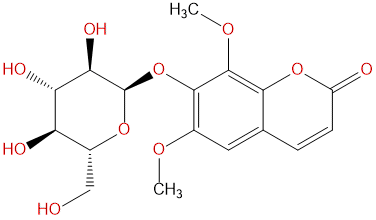
Ciwujia glycoside B1, chemical name 7-hydroxy-6,8-dimethoxycoumarin-7-O - β - D-glucopyranoside, CAS number 16845-16-2. Its molecular formula is C17H20O10 and its molecular weight is 384.3370. Structurally, it belongs to the glycoside derivatives of coumarin compounds, with its parent nucleus being 7-hydroxy-6,8-dimethoxycoumarin (i.e. isofraxidin), which is connected to a β - D-glucopyranose group via an oxyglycosidic bond at the 7th hydroxyl position. This glycosylation modification significantly altered the physicochemical properties and biological activity of its parent nucleus.
In terms of physical and chemical properties, calculations and experimental data show that the lipid water partition coefficient (LogP) of Ciwujia glycoside B1 is -0.2185, indicating its good hydrophilicity. Its topological polar surface area (TPSA) is as high as 148.0500 Å ², mainly attributed to the numerous oxygen atoms (sugar and methoxy) in the molecule. The predicted value of water solubility is 9.0169 mg/mL, indicating that it has moderate to good solubility in water, which is beneficial for its distribution in aqueous media such as biological fluids. These physical and chemical parameters collectively determine its poor lipid solubility and low cell membrane permeability, which is consistent with the predicted results of "low blood-brain barrier permeability" in its pharmacological evaluation. The coumarin core in its structure exhibits characteristic UV absorption and fluorescence at specific wavelengths, which can be used for qualitative and quantitative analysis.
Plant sources and extraction methods
Ciwujia glycoside B1 mainly comes from the roots, rhizomes, and stem bark of the genus Ciwujia in the family Araliaceae. Ciwujia is mainly distributed in Northeast China, the Far East of Russia, North Korea, and Japan. As a traditional Chinese medicine, Ciwujia has been included in the Chinese Pharmacopoeia, and its quality evaluation standards often use Ciwujia glycoside B and Ciwujia glycoside E as indicator components, with Ciwujia glycoside B1 being one of the important active ingredients.
The extraction of Acanthopanax senticosus glycoside B1 from plant materials is usually carried out using solvent extraction method. Due to its high polarity, commonly used extraction solvents include methanol, ethanol, or their aqueous solutions (such as 70% ethanol). In order to improve extraction efficiency, modern extraction techniques such as ultrasound assisted extraction, microwave-assisted extraction, and pressurized solvent extraction have been widely used. These methods can shorten extraction time, reduce solvent consumption, and improve the yield of target compounds. After vacuum concentration of the extract, further separation and purification steps are usually required to obtain high-purity Ciwujia glycoside B1. Column chromatography is the main purification method, often using macroporous adsorption resins (such as D101, AB-8), silica gel, reverse phase silica gel (such as ODS-C18), etc. as the stationary phase, and gradient elution with different ratios of alcohol water or chloroform methanol system. High performance liquid chromatography (HPLC), especially preparative HPLC, is the ultimate key technology for obtaining chromatographic grade compounds. The optimization of extraction process requires comprehensive consideration of multiple factors such as raw material location, drying method, crushing particle size, solvent type, solid-liquid ratio, extraction temperature and time.
Pharmacological activity research
The pharmacological activity research of Ciwujia glycoside B1 mainly focuses on its antiviral and anti-inflammatory effects, and extends to its traditional anti fatigue related effects.
1. Antiviral activity:
The most prominent activity of Ciwujia glycoside B1 is its broad-spectrum anti human influenza virus effect. In vitro cell experiments (such as MDCK cells) have shown that it exhibits inhibitory activity against various influenza virus strains (including type A and type B), with a half maximal inhibitory concentration (IC50) range of 64-125 μ g/mL. It is worth noting that this activity is achieved in the context of low cytotoxicity (i.e. high therapeutic index), indicating its good selectivity. In addition to directly inhibiting virus replication, studies have also shown that Acanthopanax senticosus B1 can significantly inhibit the mRNA expression of influenza virus nucleoprotein (NP) gene. NP is the core of the virus ribonucleoprotein complex and is crucial for the transcription and replication of the virus genome.
2. Anti inflammatory and immune regulatory activity:
Influenza virus infection is often accompanied by excessive inflammatory response ("cytokine storm"), leading to tissue damage and serious complications. Ciwujia glycoside B1 exhibits significant anti-inflammatory potential. Research has shown that it can inhibit the mRNA overexpression of various chemokine genes (such as CCL2, CCL5, CXCL10, etc.) induced by influenza virus. These chemokines are key signaling molecules that recruit immune cells to the site of infection, and their excessive production is closely related to lung inflammation and damage. Therefore, Ciwujia glycoside B1 may exert protective effects through a dual mechanism of "antiviral" and "anti-inflammatory".
3. Anti fatigue related activities:
Although there are relatively few reports on the direct and systematic anti fatigue effects of Ciwujia glycoside B1 monomer, based on extensive research on Ciwujia extract and the known activity of its structural parent nucleus (isoziridine), it can be inferred that it may be involved in regulating energy metabolism and central fatigue related pathways. The total glycosides of Acanthopanax senticosus have been proven to prolong weight-bearing swimming time, reduce blood lactate and serum urea nitrogen levels, and increase liver glycogen reserves. These effects are closely related to the activation of targets such as AMPK, SIRT1, PPAR γ, CREB, which are also associated with Ciwujia glycoside B1 (see below), suggesting that Ciwujia glycoside B1 may be one of the material bases for its anti fatigue effect.
Mechanism of action and molecular targets
The mechanism of action of Ciwujia glycoside B1 has been studied from phenotype observation to molecular and pathway level, mainly focusing on its two core activities of anti influenza and anti fatigue.
1. Mechanism of action against influenza virus:
The anti influenza activity of Ciwujia glycoside B1 is not achieved by directly targeting viral proteins (such as neuraminidase), but mainly acts on host cell targets and processes.
* Targeted host transcription mechanism: Research has found that the anti influenza activity of Ciwujia glycoside B1 depends on the host RNA polymerase II subunit A (POLR2A). POLR2A is the core catalytic subunit for mRNA synthesis in host cells. Ciwujia glycoside B1 may interfere with the transcription "machine" provided by host cells for virus replication by affecting the function or stability of POLR2A, thereby inhibiting the synthesis of virus mRNA. This is consistent with its ability to inhibit the expression of virus NP gene mRNA.
* Interference with viral protein processing: Another key mechanism involves the host cell's protein post-translational modification system - N-glycosylation. The correct folding, transportation, and function of various envelope glycoproteins of influenza virus, such as hemagglutinin HA and neuraminidase NA, heavily rely on N-glycosylation. Ciwujia glycoside B1 has been shown to mediate its antiviral activity by affecting the N-glycosylation process, which may lead to misfolding, retention in the endoplasmic reticulum, or degradation of viral glycoproteins, thereby inhibiting the assembly and release of viral particles.
* Inhibition of inflammatory signaling pathway: The inhibition of chemokine expression by Ciwujia glycoside B1 may be achieved by regulating key inflammatory transcription factor signaling pathways such as NF - κ B and IRF-3. In viral infection, these pathways are overactivated, and Ciwujia glycoside B1 may intervene in their activation through upstream signaling nodes, thereby reducing inflammatory damage.
2. Network of anti fatigue related mechanisms:
Based on bioinformatics analysis and overall pharmacological research of Acanthopanax senticosus, Acanthopanax senticosus glycoside B1 may exert anti fatigue effects through a multi-target network:
* Energy metabolism regulation: Activation of AMPK (AMP activated protein kinase) and SIRT1 (silencing information regulatory factor 1), two core sensors and regulators of cellular energy metabolism, can promote fatty acid oxidation, glucose uptake, and mitochondrial biosynthesis, enhancing cellular energy supply. Meanwhile, it is possible to regulate lipid metabolism and thermogenesis by activating PPAR γ (peroxisome proliferator activated receptor gamma) and UCP1 (uncoupling protein 1).
* Neurotransmitter system regulation: It is possible to reduce the degradation of monoamine neurotransmitters (such as serotonin and norepinephrine) by inhibiting MAOA (monoamine oxidase A), or by regulating targets such as SLC6A4 (serotonin transporter), HTR1A (serotonin 1A receptor), ADRB2 (β 2-adrenergic receptor), affecting neurotransmitter reuptake and signal transduction, thereby improving central fatigue and emotional state.
* Neuronutrition and neuroprotection: Perhaps by activating the CREB1 (cAMP response element binding protein 1) signaling pathway, upregulating the expression of BDNF (brain-derived neurotrophic factor), promoting neuronal survival, plasticity, and function, and combating central nervous system damage caused by stress and fatigue.
Evaluation of drug properties and pharmacokinetics
Preliminary computer-aided drug characterization (ADMET) analysis of Ciwujia glycoside B1 can provide early assessment of its potential for development.
- Absorption and distribution: As mentioned earlier, its high polarity (low LogP, high TPSA) and good water solubility are beneficial for its dissolution in the gastrointestinal tract, but may limit its ability to cross biofilms through passive diffusion, resulting in low oral bioavailability. It is predicted that its blood-brain barrier permeability is low, which is consistent with the characteristics of most polar glycosides, indicating that it may not easily enter the central nervous system to exert direct effects, but its effects on the central nervous system may be indirectly mediated through the peripheral central axis.
- Metabolism and toxicity: As a glycoside compound, Ciwujia glycoside B1 is likely to be first hydrolyzed by glycosidases in the gut microbiota or epithelial cells in the body, producing aglycones (such as imidacloprid) and glucose. The lipid solubility of aglycones is enhanced, making them more easily absorbed and further undergoing phase II metabolism (such as glucuronidation and sulfation). Therefore, its true active form in vivo may be the aglycone or its metabolites, which needs to be clarified in pharmacokinetic studies. Preliminary toxicity prediction shows that it has no inhibitory risk on hERG potassium channels (hERG inhibition: No), indicating a low potential risk of causing QT interval prolongation in the heart. The predicted value of Ames test is 0.9 (usually the threshold is about 0.8-1.0, which needs experimental verification), indicating that its mutagenic risk may be low, but it still needs to be confirmed by in vitro and in vivo experiments.
- Pharmacokinetic research gap: At present, there is still a lack of systematic pharmacokinetic studies on Ciwujia glycoside B1, such as absolute bioavailability, tissue distribution, metabolite identification, excretion pathways, etc., in public literature. This is a key data gap that must be filled as it moves towards drug development. Its glycoside structure determines that its pharmacokinetic behavior may be complex, and attention should be paid to its metabolic stability, biotransformation, and relationship with activity in different species.
Clinical application prospects and prospects
Ciwujia glycoside B1 exhibits unique dual effects (antiviral+anti-inflammatory) and good safety characteristics, providing clear direction and potential for its clinical application development.
As an anti influenza medication/adjuvant therapy drug:
* Direct antivirus application: Given its broad-spectrum anti influenza activity and mechanism of action (targeting the host) that differs from existing drugs such as oseltamivir and paramivir, Ciwujia glycoside B1 or its structurally optimized derivatives have the potential to be developed as novel anti influenza drugs, particularly for combating drug-resistant viral strains.
* Adjuvant therapy strategy: A more realistic path may be to develop it as an adjuvant drug for influenza treatment. Combined with direct antiviral drugs, it can inhibit virus replication, alleviate excessive inflammatory reactions, reduce lung pathological damage, and improve patient prognosis, especially for critically ill and high-risk patients. Its anti-inflammatory effect may also have the potential to inhibit cytokine storms caused by other respiratory viruses such as SARS-CoV-2.
2. As a functional product for anti fatigue/endurance enhancement:
Combining the traditional uses of Acanthopanax senticosus with modern pharmacological network analysis, Acanthopanax senticosus glycoside B1 can be used as a core ingredient in the development of anti fatigue health foods or functional beverages. The multi-target regulation of energy metabolism and neurological function is advantageous for sub-health states caused by sports fatigue, chronic fatigue syndrome, or long-term stress.
3. Challenges and future research directions:
* Structural optimization: In response to its potentially low membrane permeability and oral bioavailability, structural modifications can be made through medicinal chemical methods, such as preparing prodrugs, modifying glycosyl moieties, or synthesizing bioelectronic equivalents of glycosides, to improve its pharmacokinetic properties.
* In depth mechanism research: Further clarification is needed on the relationship and specific sites of action between POLR2A and N-glycosylation targets in its anti influenza effect. The anti fatigue effect requires direct in vitro and in vivo experimental verification, and elucidation of the dominant pathways in its multi-target network.
* System efficacy and safety evaluation: It is necessary to evaluate the antiviral efficacy, optimal administration regimen, and synergistic effect with existing drugs in influenza animal models such as mice and ferrets. At the same time, complete standardized preclinical safety evaluations (acute toxicity, chronic toxicity, reproductive toxicity, etc.).
* Clinical research: Ultimately, its safety, efficacy, and pharmacokinetic characteristics in the human body need to be validated through clinical trials.
Conclusion
Ciwujia glycoside B1, as a characteristic coumarin glycoside in traditional medicinal plant Ciwujia, has become a natural product lead compound with great research value due to its broad-spectrum anti influenza virus activity, unique host targeting mechanism, synergistic anti-inflammatory effect, and potential multi-target anti fatigue properties. Its mechanism of action avoids easily mutated viral targets and may have a more persistent antiviral spectrum. Despite facing common challenges in drug development such as bioavailability, it is expected to be overcome through modern medicinal chemistry and pharmaceutical strategies. In the future, interdisciplinary collaborative research, including in-depth molecular mechanism analysis, systematic preclinical development, and efficacy rediscovery based on network pharmacology, will jointly promote the transition of Ciwujia glycoside B1 from laboratory to clinical application, providing new natural drug options for addressing public health challenges such as influenza and improving human fatigue related sub-health status.