Introduction/Overview
In the field of neuroscience, the signaling pathway mediated by brain-derived neurotrophic factor (BDNF) and its high affinity receptor tropomyosin related kinase B (TrkB) has long been regarded as a key target for the treatment of various neurological disorders. The BDNF TrkB signaling axis plays an indispensable role in the survival, differentiation, synaptic plasticity, and cognitive function of neurons. However, as a protein drug, the clinical application of BDNF is subject to many limitations, including poor pharmacokinetic properties (such as short half-life, difficulty crossing the blood-brain barrier), easy degradation, and potential immunogenicity. Therefore, the development of small molecule TrkB agonists that can simulate the physiological functions of BDNF and have good pharmacological properties has become a research hotspot in the fields of medicinal chemistry and pharmacology.
7,8-Dihydroxyflavone (7,8-DHF) is a natural flavonoid compound that stands out in this context. Since being first reported as an effective and selective TrkB receptor small molecule agonist in 2006, 7,8-DHF has attracted much attention for its ability to mimic the physiological effects of BDNF and exhibit significant pharmacological activities such as neuroprotection, antidepressant, and cognitive enhancement in various neurological disease models. Unlike BDNF, 7,8-DHF, as a small molecule, has better chemical stability and potential bioavailability. Although its blood-brain barrier penetration ability is limited, its application prospects are still broad through structural modification or novel delivery systems. This article aims to systematically review the chemical properties, natural sources, pharmacological activities, molecular mechanisms, pharmacological evaluation, and clinical application prospects of 7,8-dihydroxyflavonoids, in order to provide comprehensive academic references for the in-depth research and development of this compound.
Chemical structure and physicochemical properties
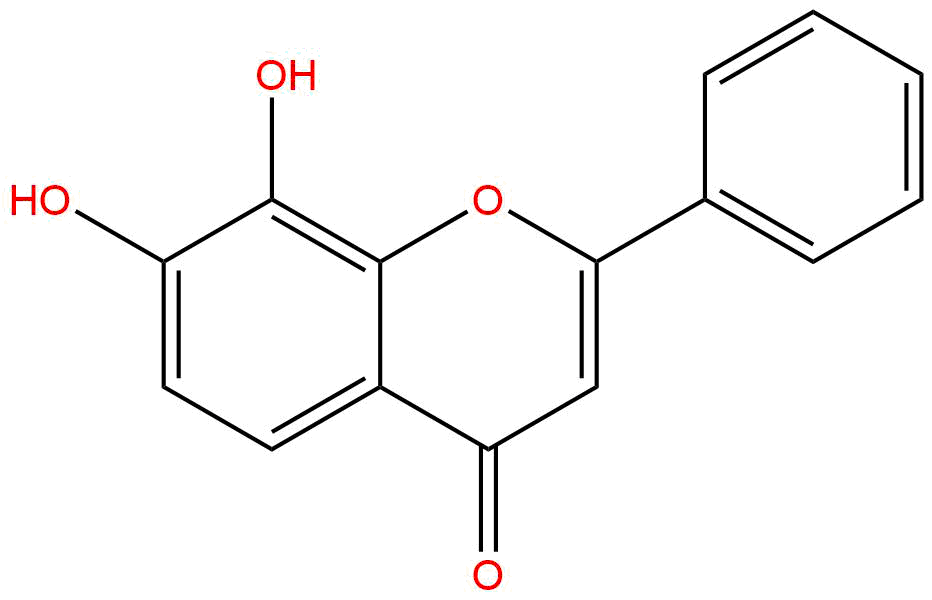
The chemical structure of 7,8-dihydroxyflavone (CAS number: 38183-03-8) belongs to the flavonoid compound family. Its core skeleton is 2-phenylchromen-4-one, which is the flavonoid nucleus. The key structural feature of this compound is the presence of a hydroxyl (- OH) group at each of the C-7 and C-8 positions of the A ring, hence the name 7,8-dihydroxyflavone. The presence of these two adjacent hydroxyl groups is not only the basis for their chemical naming, but also the key pharmacophores for their biological activity. The molecular formula is C ₁₅ H ₁₀ O ₄, and the molecular weight is 254.2410 g/mol.
From the perspective of physicochemical properties, 7,8-DHF exhibits typical flavonoid compound characteristics. Its lipophilic water partition coefficient (LogP) is 2.6340, indicating that the compound has moderate lipophilicity, which is beneficial for its interaction with cell membranes and protein hydrophobic pockets. The Topological Polar Surface Area (TPSA) is 70.6700 Å ², which is slightly higher than the recommended upper limit of 60 Å ² for oral drugs, indicating that it may have some polarity, consistent with the presence of two hydroxyl groups and one carbonyl group in its molecule. The higher TPSA value partially explains its lower blood-brain barrier penetration ability, as highly polar molecules are often difficult to passively diffuse through the BBB composed of dense lipid bilayers.
The water solubility of 7,8-DHF is poor, and the calculated water solubility value is 0.0077 mg/mL (approximately 30.3 μ M). This low water solubility is a common characteristic of many flavonoids and is also one of the main obstacles limiting their in vivo bioavailability and administration methods. In the solid state, 7,8-DHF is usually a light yellow to off white crystalline powder. Its chemical properties are relatively stable, but under strong acid, strong base, or light conditions, especially its ortho dihydroxy structure, it is prone to oxidative degradation. Therefore, in storage and experimental operations, it is usually necessary to avoid light, seal, and place in a low-temperature dry environment. In addition, the presence of its phenolic hydroxyl group gives it a certain acidity, which increases its solubility in alkaline solutions.
Plant sources and extraction methods
7,8-dihydroxyflavone, as a natural product, is widely present in various plants, especially in some traditional medicinal plants where its content is relatively abundant. Its main plant sources include:
- Fabaceae plants For example,Wooden beans(Cajanus cajan) The leaves Purple locust tree(Amorpha fruticosa) The fruits and leaves, as well as Fructus Psorale(Psoralea corylifolia) All fruits contain 7,8-DHF.
- Salvia genus(Salvia)Plants As follows: Danshen (Salvia miltiorrhiza)(Salvia miltiorrhiza) In the rhizome, 7,8-DHF is one of its main active ingredients, often coexisting with tanshinone compounds.
- Asteraceae plants For example: Calendula flower(Calendula officinalis) and Aiye(Artemisia argyi) The compound was also detected in the middle.
- Other plants As follows: Ginkgo biloba(Ginkgo biloba) Ye Guanye Lianqiao(Hypericum perforatum, namely St. John's Grass) And it has also been found in some ferns.
It is worth noting that although 7,8-DHF is widely distributed in nature, its content in plants is usually low, ranging from 0.01% to 0.5%, and the specific content varies depending on plant species, parts, growth environment, and harvest season. For example, in pigeon pea leaves, its content is relatively high, reaching over 0.1%, making it an ideal natural extraction source.
The extraction method for 7,8-DHF is mainly based on its physicochemical properties, especially the polarity of its phenolic hydroxyl group and moderate lipophilicity. Common extraction methods include:
- Solvent extraction method This is the most classic method. Organic solvents with moderate polarity, such as methanol, ethanol, ethyl acetate, or their aqueous solutions, are usually used for soaking or reflux extraction. For example, using 70% ethanol reflux to extract pigeon pea leaf powder can effectively extract 7,8-DHF. After concentration, the extract is preliminarily purified by liquid-liquid extraction (such as degreasing with petroleum ether and then extracting with ethyl acetate).
- Ultrasound assisted extraction Using the cavitation effect of ultrasound to destroy plant cell walls, accelerate solvent permeation and solute diffusion, can significantly improve extraction efficiency and shorten extraction time. This method is widely used in laboratories and small-scale production.
- Microwave assisted extraction By utilizing the penetrability and selective heating of microwaves, target compounds can also be extracted quickly and efficiently. This method requires high equipment requirements, but has fast extraction speed and low solvent usage.
- Supercritical fluid extraction Using supercritical CO ₂ as the solvent, non-polar and moderately polar compounds can be selectively extracted by adjusting pressure and temperature. This method is green and environmentally friendly, with no solvent residue, but the equipment cost is high, and the extraction efficiency for medium polarity compounds such as 7,8-DHF may not be as good as organic solvents.
The crude extract after extraction usually needs to be separated and purified by chromatographic techniques to obtain high-purity 7,8-DHF. Common purification methods include:
- column chromatography Use silica gel, polyamide, or macroporous adsorption resin (such as D101, AB-8) as the stationary phase, and perform gradient elution with different ratios of organic solvents (such as chloroform methanol, ethyl acetate methanol).
- Preparation type high-performance liquid chromatography For high-purity requirements such as pharmacological research or drug development, preparative HPLC is an effective means of final purification, typically using a C18 reverse phase column with acetonitrile water or methanol water system as the mobile phase.
Pharmacological activity research
Due to its unique mechanism as a TrkB receptor agonist, 7,8-dihydroxyflavone has demonstrated extensive and significant pharmacological activity in various neurological disease models.
1. Neuroprotective effect
This is the core pharmacological activity of 7,8-DHF. In various neurotoxic injury models, 7,8-DHF exhibits strong protective effects.
- anti-apoptotic In neuronal injury models induced by glutamate, hydrogen peroxide, β - amyloid protein (A β), etc., pretreatment with 7,8-DHF can significantly improve neuronal survival rate. The mechanism is closely related to the activation of the PI3K/Akt and MAPK/ERK signaling pathways downstream of TrkB receptors, which in turn upregulates the anti apoptotic protein Bcl-2 (BCL2), downregulates the pro apoptotic protein Bax, and inhibits the activation of Caspase-9 (CASP9) and Caspase-3.
- anti-oxidative stress 7,8-DHF can activate the nuclear factor E2 related factor 2 (NFE2L2, also known as Nrf2) signaling pathway, promote the expression of downstream antioxidant enzymes such as heme oxygenase-1 (HO-1) and quinone oxidoreductase 1 (NQO1), thereby enhancing the cell's antioxidant defense ability and reducing the damage of reactive oxygen species (ROS) to neurons.
- Protecting mitochondrial function By maintaining mitochondrial membrane potential and inhibiting the opening of mitochondrial permeability transition pores (mPTP), 7,8-DHF effectively protects the integrity of mitochondrial structure and function, reduces the release of cytochrome c, and blocks endogenous apoptotic pathways.
2. Antidepressant effect
Numerous animal experiments have confirmed that 7,8-DHF has a rapid and long-lasting antidepressant effect. In classic chronic unpredictable mild stress (CUMS) or forced swimming test (FST) models, oral or intraperitoneal injection of 7,8-DHF can significantly reduce desperate behavior (such as immobility time) in mice. Its antidepressant mechanism not only relies on the activation of TrkB receptors, but also involves:
- Promote hippocampal neurogenesis 7,8-DHF can increase the proliferation and differentiation of neural stem cells in the hippocampal dentate gyrus region, forming new neurons, which is the cytological basis for the long-term efficacy of antidepressant drugs.
- Regulating synaptic plasticity By enhancing BDNF TrkB signaling, 7,8-DHF can increase the expression of synaptic proteins (such as PSD-95, Synapsin I) in the hippocampal CA1 region and prefrontal cortex, promote dendritic spine formation, and improve synaptic transmission efficiency.
- Regulating monoamine neurotransmitters Research has shown that 7,8-DHF may exert antidepressant effects by affecting the functions of the serotonin (5-HT) and dopamine (DA) systems.
3. Improve cognitive function
In cognitive impairment models such as Alzheimer's disease (AD), 7,8-DHF exhibits the potential to improve learning and memory abilities.
- Reduce A β deposition In the APP/PS1 transgenic AD mouse model, long-term administration of 7,8-DHF can significantly reduce the burden of A β plaques in the brain. The mechanism may involve inhibiting the activity of β - secretase 1 (BACE1), thereby reducing the production of A β; At the same time, it may also promote the degradation and clearance of A β by activating TrkB signaling.
- Inhibit excessive phosphorylation of Tau protein Abnormal phosphorylation of Tau protein is another pathological feature of AD. 7,8-DHF can activate the PI3K/Akt pathway, inhibit the activity of glycogen synthase kinase-3 β (GSK3B), thereby reducing the phosphorylation level of Tau protein at Ser396, Ser404 and other sites, and protecting the stability of microtubule structure.
- Enhancing synaptic plasticity and long-term potentiation 7,8-DHF can directly enhance long-term potentiation (LTP) in hippocampal slices, which is the cellular basis of learning and memory. It can also reverse LTP damage caused by A β or stress.
4. Other pharmacological activities
- Anti Parkinson's disease In MPTP induced Parkinson's disease mouse model, 7,8-DHF can protect dopaminergic neurons from damage and improve motor dysfunction. Its function is related to activating TrkB and inhibiting neuroinflammation mediated by microglial activation.
- Anti cerebral ischemia/reperfusion injury In the focal cerebral ischemia model, 7,8-DHF can significantly reduce the volume of cerebral infarction and improve neurological function scores. Its mechanism involves anti apoptosis, anti-inflammatory, and promotion of angiogenesis.
- Antiepileptic In the epilepsy model induced by pentylenetetrazole (PTZ), 7,8-DHF can prolong the latency of epileptic seizures, reduce the severity of seizures, and protect hippocampal neurons.
- metabolic regulation: Recent studies also found that 7,8-DHF may regulate energy metabolism by activating the TrkB signal in the hypothalamus, and has a certain improvement effect on obesity and type 2 diabetes.
Mechanism of action and molecular targets
The pharmacological core of 7,8-dihydroxyflavone lies in its role as a selective agonist of TrkB receptors, which can mimic the physiological functions of BDNF. The molecular mechanism can be summarized as follows:
1. Directly activate TrkB receptors
The binding of BDNF to TrkB receptors induces receptor dimerization and activates its intracellular tyrosine kinase domain, leading to self phosphorylation. 7,8-DHF can also induce receptor dimerization and phosphorylation by binding to the extracellular domain of TrkB receptors, thereby initiating downstream signaling cascades. Unlike BDNF, the binding sites of 7,8-DHF may be located in different regions of the receptor, but its activation effect is specific, with much lower affinity for TrkA and TrkC receptors than TrkB. This selective excitatory effect is its key advantage over other non-specific neurotrophic factors.
2. Activate downstream signaling pathways
After TrkB receptor activation, it mainly exerts biological effects through the following three core signaling pathways:
- PI3K/Akt pathway Phosphorylated TrkB recruits and activates phosphatidylinositol 3-kinase (PI3K), which in turn activates protein kinase B (Akt). The activation of Akt is the core mechanism for anti apoptosis and promoting cell survival. It phosphorylates and inhibits the pro apoptotic proteins Bad and Caspase-9 (CASP9), while activating the transcription factor cAMP response element binding protein (CREB) and upregulating the expression of the anti apoptotic protein Bcl-2 (BCL2). In addition, Akt can phosphorylate and inhibit GSK3B, thereby reducing the excessive phosphorylation of Tau protein.
- MAPK/ERK pathway After TrkB activation, Ras is activated through the Shc/Grb2/SOS complex, thereby initiating the Raf-MEK-ERK (MAPK1/3) cascade reaction. The activation of ERK promotes cell proliferation, differentiation, and synaptic plasticity. It can also phosphorylate CREB and co regulate gene expression with the PI3K/Akt pathway. In addition, ERK signaling is crucial for the formation of long-term potentiation (LTP).
- PLC γ 1 channel The phosphorylation site of TrkB can directly bind and activate phospholipase C γ 1 (PLC γ 1). PLC γ 1 hydrolyzes phosphatidylinositol diphosphate (PIP2) to produce inositol triphosphate (IP3) and diacylglycerol (DAG). IP3 promotes the release of calcium ions (Ca ² ⁺) from the endoplasmic reticulum, while DAG activates protein kinase C (PKC). Ca ² ⁺ and PKC signaling further regulate neurotransmitter release, gene expression, and synaptic plasticity.
3. Regulating key targets and pathological processes
Through the above signaling pathways, 7,8-DHF regulates multiple key targets associated with neurodegenerative diseases:
- APP and BACE1 7,8-DHF may affect the processing of amyloid precursor protein (APP) by activating Akt and ERK. Research has shown that it can inhibit the expression and activity of BACE1, thereby reducing the production of A β.
- MAPT (Tau protein)By inhibiting the activity of GSK3B, 7,8-DHF effectively reduces the phosphorylation levels of Tau protein at multiple AD related sites, preventing its aggregation and formation of neurofibrillary tangles.
- NFE2L2(Nrf2)7,8-DHF activates the PI3K/Akt and ERK pathways, promoting the dissociation and translocation of Nrf2 from Keap1 into the nucleus, binding to antioxidant response elements (ARE), and initiating the transcription of a series of antioxidant enzyme genes.
- SIRT1 There are studies suggesting that 7,8-DHF may participate in regulating mitochondrial biosynthesis and energy metabolism by upregulating the expression of deacetylase SIRT1, thereby exerting neuroprotective effects.
- MAPK1(ERK2)As a core member of the MAPK/ERK pathway, the activation of ERK is a direct manifestation of the promotion of synaptic plasticity and neurogenesis by 7,8-DHF.
Evaluation of drug properties and pharmacokinetics
Although 7,8-DHF exhibits excellent pharmacological activity, its drug development faces severe challenges, mainly reflected in its pharmacokinetic (ADME) properties.
1. Absorption and bioavailability
The oral bioavailability of 7,8-DHF is extremely low, typically below 5%. The main reasons include:
- Low water solubility As mentioned earlier, its water solubility is only 0.0077 mg/mL, severely limiting its dissolution and absorption in the gastrointestinal tract.
- First pass effect 7,8-DHF undergoes extensive phase II metabolism in the intestine and liver, mainly glucuronidation and sulfation. The two phenolic hydroxyl groups in its molecule are the preferred sites for these binding reactions. The water solubility of these metabolites (such as 7,8-DHF-7-O - β - D-glucuronide) increases, but they lose the ability to bind to TrkB receptors and are quickly excreted from the body.
- Outward transportation carrier 7,8-DHF may be a substrate for efflux transporters such as P-glycoprotein (P-gp), which further limits its transport from intestinal epithelial cells to portal vein blood.
2. Distribution and blood-brain barrier penetration
The blood-brain barrier (BBB) penetration ability of 7,8-DHF was evaluated as' low '. This is related to its high polarity (TPSA 70.67 Å ²) and possible role as an efflux transporter. Although its LogP value (2.63) suggests a certain lipophilicity, the presence of two free hydroxyl groups makes it difficult to effectively cross the BBB through passive diffusion. Research has shown that the concentration of 7,8-DHF in the brain is much lower than in plasma, which directly limits its effective concentration at central nervous system targets. However, interestingly, some of its metabolites (such as glucuronides) may enter the brain through specific transporters (such as organic anion transporters, OATPs) and be hydrolyzed by β - glucuronidase in the brain, releasing the active parent drug again, which is known as the "prodrug" strategy. In addition, increased BBB permeability under inflammatory conditions in the brain may also enhance the distribution of 7,8-DHF in the brain.
3. Metabolism and excretion
7,8-DHF is rapidly metabolized in vivo and has a short half-life (approximately 1-2 hours in rats). Its main metabolic pathway is the II binding reaction, which generates glucuronide and sulfate ester complexes, which are mainly excreted through urine and bile. The liver is its main metabolic organ.
4. Safety evaluation
- HERG inhibition The inhibitory risk of 7,8-DHF on hERG potassium channels is' no ', indicating a low potential risk of causing QT interval prolongation in the heart.
- Ames test The Ames test result is 0.6, and it is generally considered negative if the Ames test value is below 0.5, and suspicious positive if it is between 0.5-1.0. The result of 0.6 suggests that there may be a weak genetic toxicity risk for 7,8-DHF, and further in vivo genetic toxicity studies are needed to confirm.
- Other toxicities In animal experiments, short-term use of 7,8-DHF usually shows good tolerance. However, the potential toxicity of long-term, high-dose use (such as effects on the liver and kidneys) still needs to be systematically evaluated.
5. Optimization strategy for drug properties
Given the aforementioned ADME defects, structural modification or development of novel delivery systems for 7,8-DHF is a key direction to enhance its pharmacological properties.
- Prodrug design This is one of the most successful strategies. By esterification, etherification or phosphorylation modification of the phenolic hydroxyl group of 7,8-DHF, it can be prepared as a prodrug, which can significantly improve its water solubility and oral absorption, and reduce first pass metabolism. For example,R13 (7,8-DHF-4 '- O-phosphate disodium salt) and CN2097 Precursors have shown significant improvement in pharmacokinetic properties and stronger in vivo efficacy in preclinical studies.
- nano-formulation Encapsulating 7,8-DHF in liposomes, polymer nanoparticles, or solid lipid nanoparticles can improve its water solubility, prolong circulation time, and increase BBB penetration using passive or active targeting strategies.
- structural analog Synthesize a series of structurally similar compounds of 7,8-DHF and search for novel TrkB agonists with higher activity, more stable metabolism, and better BBB penetration through structure-activity relationship studies.
Clinical application prospects and prospects
As a small molecule TrkB agonist with a unique mechanism of action, 7,8-dihydroxyflavone has broad clinical application prospects, but also faces a huge gap from laboratory to clinical translation.
1. Potential indications
Based on its broad pharmacological activity, 7,8-DHF and its derivatives have enormous therapeutic potential in the following disease areas:
- Neurodegenerative diseases Alzheimer's disease, Parkinson's disease, Huntington's disease, amyotrophic lateral sclerosis (ALS), etc. Its core neuroprotective, anti apoptotic, and synaptic plasticity promoting effects make it an ideal candidate drug for delaying disease progression.
- mental illness Depression, anxiety disorder, post-traumatic stress disorder (PTSD), etc. Its rapid onset antidepressant effect and improvement in cognitive function provide new ideas for the treatment of refractory depression.
- Cerebrovascular disease Neural repair after ischemic stroke and cerebral hemorrhage.
- Developmental neurological disorders Diseases such as Rett syndrome and Angelman syndrome are often accompanied by abnormalities in the BDNF signaling pathway.
- Metabolic diseases Obesity, type 2 diabetes and related cognitive disorders.
2. Current status of clinical research
Although 7,8-DHF itself has not yet been approved for marketing, its prodrug R13 (also known as TrkB agonist R13) has entered the clinical trial phase. For example, a phase I clinical trial (NCT03726658) targeting R13 in healthy volunteers has been completed to evaluate its safety, tolerability, and pharmacokinetics. In addition, phase II clinical trials for R13 in patients with Alzheimer's disease or depression are also planned or underway. The preliminary results of these clinical studies will provide key data for the clinical translation of 7,8-DHF class drugs.
3. Challenges and Prospects
Despite the promising prospects, the clinical development of 7,8-DHF still faces the following challenges:
- Pharmacokinetic bottleneck Low oral bioavailability and BBB penetration are the biggest obstacles. Although significant progress has been made in prodrug strategies, achieving efficient, stable, and controllable brain drug delivery remains a key focus of future research.
- Long term safety TrkB receptors are widely expressed throughout the body, and long-term activation of TrkB signaling may lead to potential side effects (such as promoting the growth of certain tumors, causing pain, etc.), which require long-term and systematic safety evaluation.
- Dosage and administration plan Determining the optimal therapeutic dose and dosing frequency to minimize side effects while maintaining efficacy is a crucial issue that must be addressed in clinical translation.
- biomarker Developing reliable biomarkers that reflect TrkB receptor activation status and drug efficacy is crucial for guiding clinical medication and evaluating treatment efficacy.
In the future, with a deeper understanding of the structure-activity relationship of 7,8-DHF, as well as advances in medicinal chemistry, nanomedicine, and delivery technology, we have reason to believe that TrkB agonists based on the 7,8-DHF skeleton have the potential to become novel drugs for treating various neurological diseases. At the same time, combining the concept of precision medicine, personalized treatment plans can be developed for different disease subtypes and patient genetic backgrounds to maximize their therapeutic value.
Conclusion
7,8-dihydroxyflavone, as the first discovered natural small molecule TrkB receptor agonist, has demonstrated outstanding potential in simulating the physiological functions of BDNF. It exerts strong neuroprotective, antidepressant, and cognitive promoting pharmacological activities in various neurological disease models by activating TrkB and its downstream PI3K/Akt, MAPK/ERK, and PLC γ 1 signaling pathways. Its mechanism of action is clear and its target is distinct, providing a new paradigm for the development of drugs based on the neurotrophic factor signaling pathway.
However, the pharmacological defects of 7,8-DHF itself, especially low oral bioavailability and limited blood-brain barrier penetration ability, are the main obstacles to its clinical translation. These issues are gradually being overcome through strategies such as prodrug design and nanoformulation. At present, its prodrug has entered the clinical trial stage, and the preliminary results are expected.
In summary, 7,8-dihydroxyflavone is not only an important tool compound for studying the role of BDNF TrkB signaling in physiological and pathological processes, but also a highly valuable lead compound for development. With a deeper understanding of its pharmacological mechanisms and continuous innovation in medicinal chemistry, 7,8-dihydroxyflavonoids and their derivatives are expected to bring new therapeutic hope to many patients with neurological diseases in the future, opening a new era of small molecule neurotrophic factor mimetics therapy.