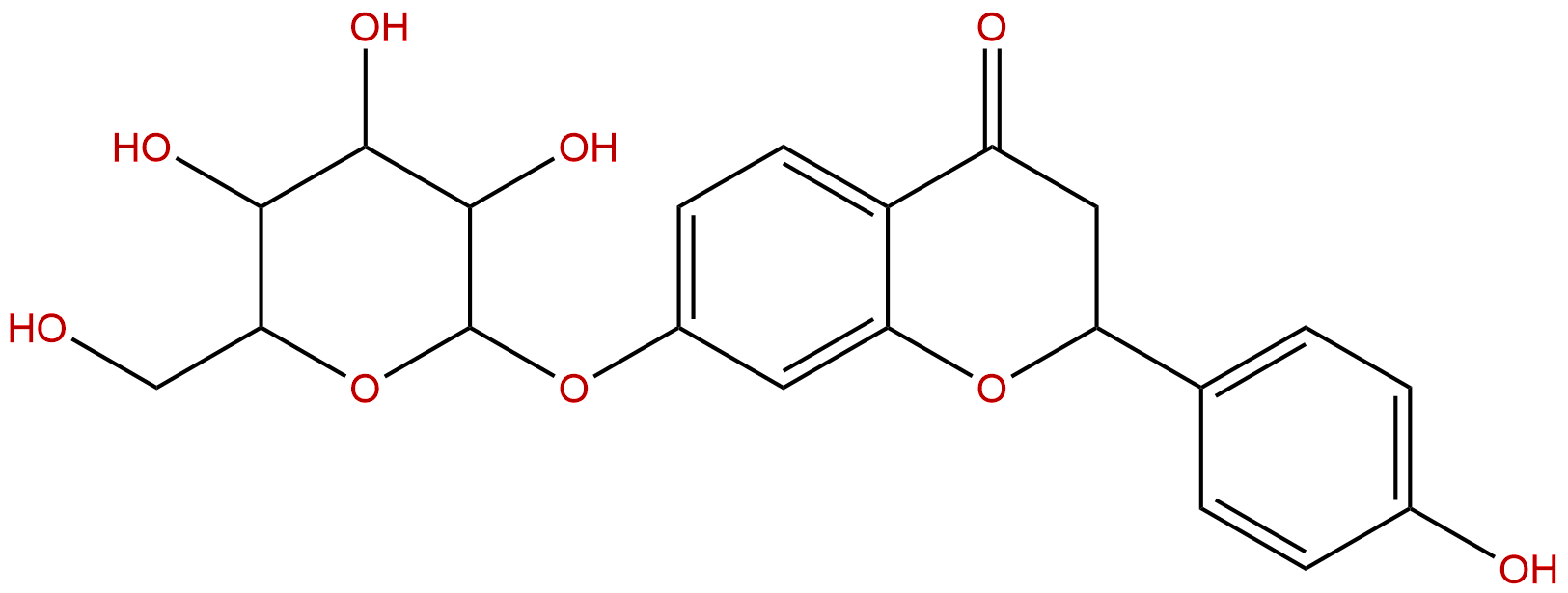


Product name: Neoliquiritin
Synonym name:
Catalogue No.: BP3267
Cas No.: 5088-75-5
Formula: C21H22O9
Mol Weight: 418.398
Botanical Source:
Physical Description:
Type of Compound: Flavonoids
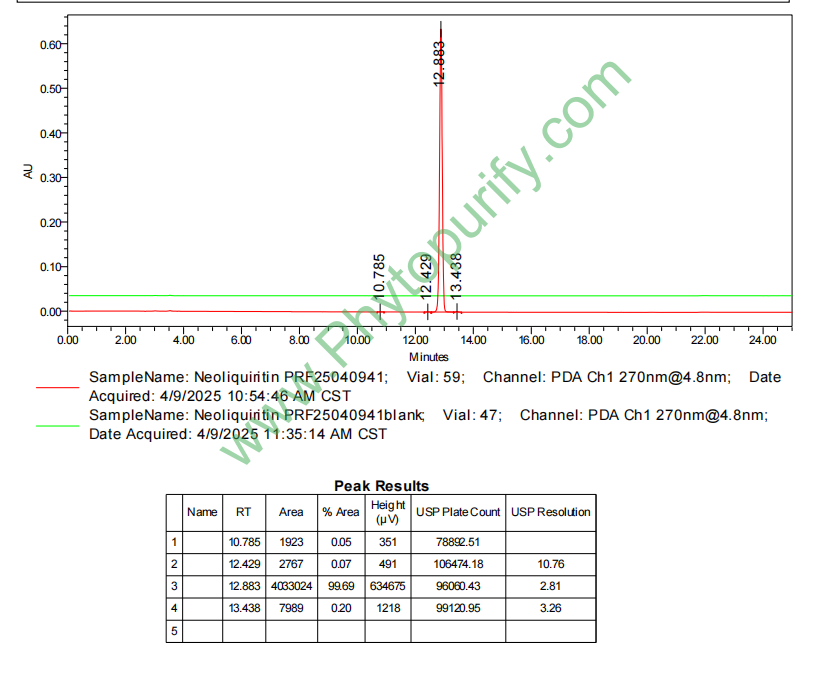
Purity: 95%~99%
Analysis Method: HPLC-DAD or/and HPLC-ELSD
Identification Method: Mass, NMR
Packing: Brown vial or HDPE plastic bottle
The product could be supplied from milligrams to grams. Inquire for bulk scale.
We provide solution to improve the water-solubility of compounds, thereby facilitating the variety of activity tests and clinic uses.
For Reference Standard and R&D, Not for Human Use Directly.
HPLC of Neoliquiritin
Storage conditions:Short-term storage at 2~8℃, long-term storage at -20 ~ -80℃
145.9100
.3567
.3557
1.9686
.5227
.2353
Low
71.6949
3.8640
No
No
No
No
No
No
0.0
Yes
Yes
Yes
Yes
Licorice(Glycyrrhiza uralensis Fisch., as one of the most widely used traditional Chinese medicines, is known as the "old man of the country" due to its complex chemical composition and diverse pharmacological effects. Glycyrrhetinic acid and its glycoside glycyrrhetinic acid have long been regarded as the main active ingredients of licorice, and their anti-inflammatory, antiviral, and hepatoprotective effects have been extensively studied. However, with the advancement of separation and identification techniques and the refinement of pharmacological research models, a series of flavonoids in licorice have gradually entered the research field and exhibited significant biological activities that cannot be ignored. Neoliquritin (CAS: 5088-75-5) is one of the important dihydroflavonoid glycosides with significant research value. As one of the specific components of licorice, neoglycyrrhizin not only reflects the partial material basis of licorice's "harmonizing various drugs", but also its unique anti-inflammatory activity and related mechanism of action, especially its potential role in regulating adrenal cortex function, providing new ideas for the development of new and more targeted anti-inflammatory drugs or natural product lead compounds for regulating endocrine disorders. This article aims to systematically review the chemical structure, plant origin, pharmacological activity, molecular mechanism of action, pharmacological characteristics, and clinical application prospects of new glycyrrhizin, in order to provide comprehensive scientific references for the in-depth research and development of this compound.
New glycyrrhizin is a typical dihydroflavonoid carbon glycoside, with the chemical name (2S) -7-hydroxy-2- (4-hydroxyphenyl) -8- [(2S, 3R, 4S, 5S, 6R) -3,4,5-trihydroxy-6- (hydroxymethyl) oxahexene-2-yl] -2,3-dihydro-4H-1-benzopyran-4-one. Its molecular formula is C21H22O9 and its molecular weight is 418.3980.
Structurally, the core of new glycyrrhizin is the dihydroflavonoid mother nucleus (A and C rings), with a hydroxyl group attached to the 7th position of the A ring and a p-hydroxyphenyl group in the B ring. Its most significant structural feature is that the sugar group (glucose group) is directly connected to the carbon atom at position 8 of the A ring through a carbon carbon bond, forming a carbon glycosidic bond. This C-glycosidic bond has stronger chemical and metabolic stability compared to the common O-glycosidic bond, and is not easily hydrolyzed by acids or glycosidases in the gastrointestinal tract. This may be the structural basis for its oral bioavailability related properties.
Based on its chemical structure, the new glycyrrhizin exhibits specific physicochemical properties. The calculated lipid water partition coefficient (LogP) is 0.3567, indicating that the compound has moderate lipophilicity and leans towards hydrophilicity. The topologically polar surface area (TPSA) is as high as 145.91 Å ², which is mainly attributed to the numerous hydroxyl groups and oxygen atoms on the sugar ring in the molecule. High TPSA is an important factor affecting its membrane permeability. The theoretically calculated water solubility value is 1.9686 mg/mL, which belongs to the solubility range, consistent with its glycoside structure and multiple polar functional groups. These physicochemical parameters collectively determine the basic behavior of new glycyrrhizin in vivo: good water solubility facilitates its distribution in body fluids, but high polarity and TPSA also suggest that its transmembrane transport (especially across the blood-brain barrier) may be challenging, as confirmed by subsequent pharmacological evaluation data.
The new glycyrrhizin mainly comes from plants of the genus Glycyrrhiza in the legume family, among which Ural licorice is one of them(Glycyrrhiza uralensis Fisch. is the main source, found in licorice fruit(G. glabra L. ) and swollen fruit licorice(G. inflata There is also distribution in Bat. It has a relatively stable content in licorice roots and rhizomes, and is one of the characteristic components that distinguishes it from other plants. It is often used as a quality control indicator component for licorice medicinal materials and their preparations.
The extraction and separation of new glycyrrhizin from licorice usually follow the conventional process of natural product chemistry, and are optimized based on its physicochemical properties. Common extraction methods include:
1. Solvent extraction method The most commonly used methods are reflux extraction or ultrasound assisted extraction using ethanol solutions of different concentrations (such as 50% -70%) or methanol aqueous solutions. Ethanol has become the preferred choice due to its safety, cost-effectiveness, and good extraction efficiency. The crude extract was obtained by vacuum concentration of the extraction solution.
2. Separation and purification The crude extract is usually subjected to gradient extraction using organic solvents such as petroleum ether, ethyl acetate, and n-butanol. Due to its high polarity, glycyrrhizin is mainly enriched in the n-butanol extraction site or water layer. Further purification relies on column chromatography techniques such as macroporous adsorption resin columns (such as D101, AB-8), silica gel column chromatography, polyamide column chromatography, and high-performance liquid chromatography (HPLC) preparative chromatography. Among them, the reverse phase C18 chromatographic column is widely used in the final refining and purification.
3. appraisal The isolated monomeric compounds were structurally identified using modern spectroscopic techniques, including ultraviolet spectroscopy (UV), infrared spectroscopy (IR), mass spectrometry (MS, especially high-resolution mass spectrometry HR-MS), and nuclear magnetic resonance spectroscopy (NMR, including 1H-NMR, 13C-NMR, and 2D-NMR such as HSQC, HMBC, etc.), and finally determined to be neoglycyrrhizin.
In recent years, some green and efficient extraction techniques such as supercritical CO2 fluid extraction (with the addition of entrainers such as ethanol), microwave-assisted extraction, and pressurized solvent extraction have also been explored for the extraction of flavonoids from licorice, in order to improve efficiency and reduce solvent consumption.
Although the pharmacological activity research of new glycyrrhizin is not as in-depth as that of glycyrrhetinic acid, it has been revealed to have significant biological effects in multiple aspects, among which anti-inflammatory activity is the most prominent.
anti-inflammatory activity This is the most widely studied pharmacological effect of new glycyrrhizin. In various acute and chronic inflammation models, neoglycyrrhizin has shown good anti-inflammatory effects. For example, in the RAW 264.7 macrophage inflammation model induced by lipopolysaccharide (LPS), neoglycyrrhizin can dose dependently inhibit the production of nitric oxide (NO), prostaglandin E2 (PGE2), and pro-inflammatory cytokines such as tumor necrosis factor - α (TNF - α), interleukin-6 (IL-6), and IL-1 β. In animal models such as carrageenan induced paw swelling in rats, xylene induced ear swelling in mice, and acetic acid induced increased intra-abdominal capillary permeability in mice, oral or intraperitoneal administration of neoglycyrrhizin can significantly alleviate inflammatory reactions. Its anti-inflammatory effect does not depend on the adrenal gland, indicating that it has a direct anti-inflammatory mechanism.
Neuroprotection and antidepressant activity Based on the close association between inflammation and the onset of depression (the "inflammation hypothesis"), the anti-inflammatory effect of neoglycyrrhizin extends to central nervous system research. Research has shown that new glycyrrhizin can improve depressive like behavior induced by chronic unpredictable mild stress (CUMS) in mice, and its mechanism may be related to inhibiting neuroinflammation in the hippocampus, regulating overactivation of the hypothalamic pituitary adrenal (HPA) axis, and promoting the expression of brain-derived neurotrophic factor (BDNF). This provides experimental evidence for its application in the treatment of emotional disorders.
Regulating adrenal cortex function This is a highly distinctive research direction of new glycyrrhizin. Records indicate that licorice and its components have a "corticosteroid like" effect. The research on new glycyrrhizin has found that it may exert its effects by affecting multiple links such as the synthesis, metabolism, and signal transduction of adrenal cortex hormones. For example, it may regulate enzymes related to cortisol synthesis (such as CYP11B1), affect the interconversion of cortisol and aldosterone (by regulating the balance of 11 β - hydroxysteroid dehydrogenase HSD11B1/HSD11B2), and intervene in the activity of glucocorticoid receptor (NR3C1) and mineralocorticoid receptor (NR3C2). This multi-target regulatory property makes it potentially valuable in the treatment of HPA axis dysfunction related diseases, such as certain types of Cushing's syndrome, adrenal cortex dysfunction, metabolic syndrome, etc.
Other activities Preliminary studies also suggest that neoglycyrrhizin may have antioxidant, anti ulcer, and drug-induced liver injury relieving effects, which are often associated with its anti-inflammatory and cell protective effects.
The pharmacological effects of glycyrrhizin, especially its anti-inflammatory and adrenal cortex regulating effects, are achieved by acting on multiple molecular targets and signaling pathways. According to existing research, its core mechanism of action is closely related to the following key targets:
Nuclear factor kappa B (NF - κ B) signaling pathway This is the core mechanism by which new glycyrrhizin exerts anti-inflammatory effects. Under stimulation such as LPS, neoglycyrrhizin can inhibit the phosphorylation and degradation of I κ B α, thereby preventing the nuclear translocation of NF - κ B p65 subunit. The decrease of p65 entering the nucleus leads to the inhibition of gene transcription of downstream pro-inflammatory mediators (iNOS, COX-2, TNF - α, IL-6, etc.). This is the direct reason for its reduction in the production of NO, PGE2, and inflammatory cytokines.
Mitogen activated protein kinase (MAPK) signaling pathway New glycyrrhizin can also inhibit LPS induced phosphorylation activation of MAPK family members, including p38, extracellular signal regulated kinase (ERK), and c-Jun N-terminal kinase (JNK). The MAPK pathway and NF - κ B pathway have a cross-talk and jointly regulate inflammatory responses. The dual inhibition of these two pathways by new glycyrrhizin enhances its anti-inflammatory effect.
Adrenal cortex hormone related targets:
NOD like receptor heat protein domain associated protein 3 (NLRP3) inflammasome The latest research has begun to focus on the effect of new glycyrrhizin on inflammasomes. The activation of NLRP3 inflammasome is a key step leading to the maturation and release of IL-1 β. Preliminary evidence suggests that neoglycyrrhizin may inhibit the assembly and activation of NLRP3 inflammasomes, reduce the activation of caspase-1 and the secretion of IL-1 β, providing a new mechanistic perspective for its treatment of diseases associated with excessive inflammasome activation, such as autoimmune and neurodegenerative diseases.
In summary, the new glycyrrhizin acts on classic inflammatory pathways such as NF - κ B, MAPK, and NLRP3, and finely regulates key adrenal cortex functional targets such as HSD11B1/2, CYP11B1, and NR3C1/2, forming a multi-target and multi-level network mechanism of action, which may be the molecular basis for its broad pharmacological activity.
Based on computational chemistry and preliminary experimental research, the drug like and pharmacokinetic (PK) characteristics of the new glycyrrhizin can be evaluated as follows:
Analysis of drug properties parameters According to the provided parameters, the molecular weight of the new glycyrrhizin (418.4) conforms to the Rule of Five, and its LogP value (0.36) is moderate, indicating that it has a good hydrophilic and oleophilic balance. However, its higher TPSA (145.9 Å ²) typically implies poorer passive diffusion ability of the cell membrane, which is contrary to its predicted value Low blood-brain barrier (BBB) permeability Consistent, it suggests that the direct entry of the prototype drug into the central nervous system may be limited, and its neuroprotective effect may be partially achieved indirectly through peripheral anti-inflammatory or HPA axis regulation, or dependent on its metabolites.HERG inhibition risk is' no 'It is a positive signal indicating a lower potential risk of cardiac toxicity.The Ames test result is 0.0(usually referring to no mutagenicity), indicating a low risk of genetic toxicity. These preliminary computer predictions provide a favorable starting point for its further development.
Absorption, distribution, metabolism, excretion (ADME):
At present, there are still few reports on the new glycyrrhizin system and complete preclinical pharmacokinetic studies, which is a key data gap that urgently needs to be filled in the process of drug development. In the future, it is necessary to establish sensitive and specific biological analysis methods (such as LC-MS/MS) to further study their absolute bioavailability, plasma protein binding rate, tissue distribution, major metabolites, and excretion pathways in different animal models.
As a natural compound with clear anti-inflammatory activity and unique adrenal cortex regulatory potential, neoglycyrrhizin has broad clinical application prospects, but also faces challenges.
Potential application directions:
Challenges and Prospects Faced:
As a unique dihydroflavonoid C-glycoside in licorice, neoglycyrrhizin has gradually grown from a quality marker to an active natural product with important research value. It exhibits multi-target, networked anti-inflammatory and endocrine regulatory effects by inhibiting classic inflammatory pathways such as NF - κ B and MAPK, and finely regulating key nodes of adrenal cortex function such as HSD11B1/2 and GR. Preliminary pharmacological predictions indicate that it has a low risk of hERG inhibition and mutagenicity, but its high polarity and low blood-brain barrier permeability suggest that its drug development needs to seek breakthroughs in structural optimization or formulation innovation. Although there are still many challenges in terms of the depth of its mechanism of action, systemic pharmacokinetics, and clinical translation, the unique pharmacological activity and relatively clear target of action exhibited by the new glycyrrhizin make it have broad development prospects in the treatment of chronic inflammatory diseases, endocrine and metabolic disorders, and emotional disorders. In the future, through interdisciplinary and in-depth research, the new glycyrrhizin is expected to move from the laboratory to clinical practice, becoming a modern innovative drug derived from traditional Chinese medicine, or providing a valuable natural template for designing a new generation of selective hormone modulators.
