Introduction/Overview
Natural products, as an important source of drug discovery, play an irreplaceable role in the long history of human struggle against diseases. Especially secondary metabolites derived from higher fungi have attracted much attention due to their novel structures and diverse activities. Ganoderma lucidum(Ganoderma lucidum)As a traditional and precious medicinal fungus, it has been used for thousands of years in China and East Asia, and is known as the "fairy grass". Modern pharmacological research has confirmed that Ganoderma lucidum and its active ingredients have various biological activities such as anti-tumor, immune regulation, antioxidant, anti-inflammatory, etc. Among them, Ganoderma triterpenoids are considered as one of the main material bases for Ganoderma lucidum to exert anti-tumor activity.
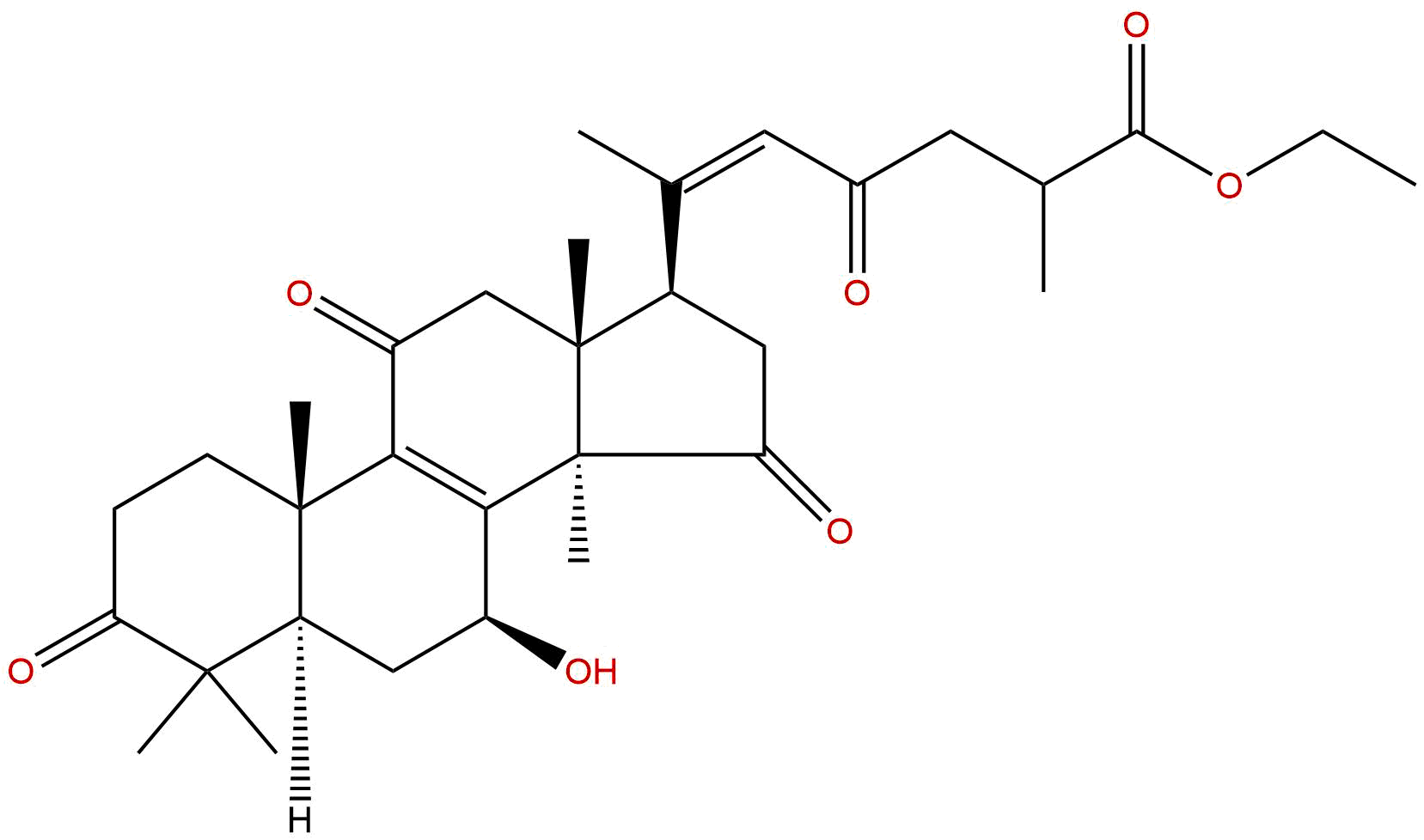
Ethyl ganoderinate D (EGD) is a highly oxidized lanostane type triterpenoid compound discovered and isolated from Ganoderma lucidum fruiting bodies or mycelia in recent years. Its chemical structure belongs to the ganoderic acid family, which is characterized by a C-3 carbonyl group, a C-7 hydroxyl or carbonyl group, a C-11 carbonyl group, and unsaturated double bonds at C-20 (22) or C-24 (25) positions. Unlike the parent compound ganoderic acid D, EGD's C-26 carboxyl group is esterified to form ethyl ester, which significantly alters its physicochemical properties and biological activity. In recent years, research on EGD has gradually deepened, especially in the field of anti lymphoma, showing remarkable potential. Lymphoma is a group of malignant tumors originating from the lymphatic hematopoietic system, with a complex pathogenesis involving abnormal activation of multiple signaling pathways and escape of apoptotic mechanisms. EGD exhibits significant proliferation inhibition and apoptosis induction effects on lymphoma cells through multi-target and multi pathway regulation, providing a new lead compound for the development of novel and low toxicity anti lymphoma drugs. This article will systematically review the chemical structure, plant origin, pharmacological activity, mechanism of action, pharmacological evaluation, and clinical application prospects of EGD, in order to provide reference for the in-depth research and development of this compound.
Chemical structure and physicochemical properties
The chemical name of Ganoderma lucidum D-ethyl ester (EGD) is (20E, 24E) -3,7,11,15,23-pentaoxo-5 α - lanostane-8,20,24-tiene-26-carboxylic acid ethyl ester, with a molecular formula of C ③₂ H ₄₄ O ₈ and a molecular weight of 540.6970. Its core skeleton is a highly oxidized lanostane type tetracyclic triterpene with a typical 6/6/6/5 ring structure. The structural features include: the C-3 position of the A ring is carbonyl; The C-7 position of the B ring is carbonyl; The C-11 position of the C ring is carbonyl; The C-15 position of the D ring is carbonyl; The C-20 (22) position of the side chain is a trans double bond, and the C-24 (25) position is a trans double bond; The carboxyl group at position C-26 is esterified. This highly dense carbonyl and double bond system endows EGD with unique chemical reactivity and biological activity.
In terms of physicochemical properties, the lipid water partition coefficient (LogP) of EGD is 3.5052, indicating its strong lipophilicity, which is consistent with the structural characteristics of its triterpenoid skeleton and ethyl ester group. The polar surface area (TPSA) is 114.8100 Å ², indicating that it may have some transmembrane ability. The extremely low water solubility, only 0.0034 mg/mL, limits its solubility and bioavailability in aqueous environments, which is one of the key challenges that need to be overcome in drug development. It is worth noting that the blood-brain barrier (BBB) penetration prediction is "high", indicating that EGD may have the potential to enter the central nervous system, which may have special significance for the treatment of central nervous system lymphoma or other brain tumors. In addition, hERG inhibition was predicted as' no ', indicating a lower risk of cardiac toxicity; The Ames test result is 0.0, indicating a low risk of genetic toxicity. These pharmacological parameters preliminarily indicate that EGD has good safety prospects, but low water solubility remains the main challenge for its clinical translation.
Plant sources and extraction methods
EGD mainly comes from various medicinal fungi of the Ganoderma genus in the family Polyporus, among which Ganoderma lucidum is one of them(Ganoderma lucidum)And Zizhi(Ganoderma sinense)As the main source. In addition, in Songshan Ganoderma lucidum(Ganoderma tsugae)Ganoderma lucidum with tree tongue(Ganoderma applanatum)Similar compounds have also been detected in closely related species. The content of EGD in Ganoderma lucidum is usually low and is influenced by various factors such as the strain, culture conditions, harvesting period, and processing method. Generally speaking, the content of triterpenoids in artificially cultivated Ganoderma lucidum fruiting bodies is higher than that in wild varieties, while mycelia obtained by liquid deep fermentation technology may increase the yield of target products by optimizing the composition of the culture medium and induction conditions.
The extraction, separation, and purification of EGD usually follow the classic process of natural product chemistry. Firstly, the dried fruiting body or mycelium of Ganoderma lucidum is crushed and extracted using organic solvents. Due to the moderate polarity of EGD, commonly used extraction solvents include ethanol, methanol, ethyl acetate, or their mixed solvents. In order to improve extraction efficiency and selectivity, modern extraction techniques such as ultrasound assisted extraction, microwave-assisted extraction, or supercritical fluid extraction can be used. After the extraction solution is concentrated under reduced pressure, crude extract is obtained. Subsequently, the crude extract was systematically separated and purified by normal phase silica gel column chromatography, reverse phase ODS column chromatography, Sephadex LH-20 gel column chromatography and preparative high performance liquid chromatography (Prep HPLC). During the separation process, thin-layer chromatography (TLC) and high-performance liquid chromatography (HPLC) are often used for tracking and monitoring, with EGD standard as a control, and localization is determined by retention time and UV absorption characteristics. Finally, the structure of the purified compound was confirmed by spectroscopic techniques such as nuclear magnetic resonance spectroscopy (NMR) and high-resolution mass spectrometry (HR-MS).
Pharmacological activity research
The pharmacological activity research of EGD is currently mainly focused on the field of anti-tumor, especially its inhibitory effect on lymphoma. Lymphoma is a highly heterogeneous hematological malignancy that can be classified into Hodgkin's lymphoma (HL) and non Hodgkin's lymphoma (NHL) based on pathological type. Existing studies have shown that EGD exhibits significant proliferative inhibitory activity on various lymphoma cell lines, such as Raji (Burkitt's lymphoma), Jurkat (T-cell lymphoma), and U937 (histiocytic lymphoma), with half maximal inhibitory concentration (IC50) values typically at the micromolar level. Compared with traditional chemotherapy drugs, the advantage of EGD is that its toxicity to normal lymphocytes is relatively low, showing a certain degree of selectivity.
At the cellular level, EGD can induce apoptosis in lymphoma cells. Through Annexin V-FITC/PI double staining combined with flow cytometry detection, cells treated with EGD exhibited typical early and late apoptotic features. At the same time, EGD can also cause cell cycle arrest, mainly blocking cells in the G0/G1 phase or G2/M phase, and the specific site of arrest may vary depending on the cell type. In addition, EGD has been found to inhibit the migration and invasion ability of lymphoma cells, which is related to its regulation of epithelial mesenchymal transition (EMT) - related protein expression. In addition to its direct anti-tumor effect, EGD may also exert indirect anti-tumor effects by regulating the tumor microenvironment, such as inhibiting M2 polarization of tumor associated macrophages (TAMs) and enhancing the anti-tumor activity of immune cells.
Mechanism of action and molecular targets
The molecular mechanism of EGD's anti lymphoma activity is multi-level and multi-target, and its action network involves multiple key biological processes such as apoptosis regulation, signal transduction, and cell cycle regulation. According to existing research, the main targets of EGD include MCL1, BCL2, CDC25B, PTPRC, RXRB, STAT3, MAPT, TOP2A, CASP8, and TP53.
1. Regulating apoptosis related proteins: MCL1 and BCL2 are important anti apoptotic proteins in the Bcl-2 family, highly expressed in various lymphomas, and are key molecules for tumor cells to evade apoptosis. EGD can significantly downregulate the protein expression levels of MCL1 and BCL2, while upregulating the expression of pro apoptotic protein BAX, thereby breaking the mitochondrial membrane potential balance, promoting cytochrome c release, and activating the Caspase cascade reaction. CASP8 (Caspase-8), as a key initiating enzyme of exogenous apoptosis pathway, showed significantly enhanced activity after EGD treatment, indicating that EGD may activate both endogenous and exogenous apoptosis pathways simultaneously.
2. Inhibition of STAT3 signaling pathway: STAT3 (Signal Transduction and Transcription Activating Factor 3) is a core member of the JAK/STAT signaling pathway, which is continuously activated in various lymphomas, promoting tumor cell proliferation, survival, and angiogenesis. EGD can inhibit the phosphorylation of STAT3 (Tyr705 site), block its nuclear translocation and transcriptional activity, and subsequently downregulate the expression of downstream target genes such as Cyclin D1, Survivor, VEGF, etc. PTPRC (protein tyrosine phosphatase receptor C, also known as CD45) is a critical phosphatase involved in regulating the activity of the JAK/STAT signaling pathway. EGD may indirectly affect the phosphorylation level of STAT3 by regulating the activity of PTPRC.
3. Interference with cell cycle regulation: CDC25B is a cell cycle phosphatase responsible for activating the CDK1/Cyclin B complex, which drives cells into mitosis. EGD can inhibit the activity or expression of CDC25B, causing the inhibitory phosphorylation sites (Thr14/Tyr15) of CDK1 to be unable to dephosphorylate, thereby blocking cells in the G2/M phase. In addition, TOP2A (Topoisomerase II α) is an enzyme essential for DNA replication and chromosome separation, and is also a target for various chemotherapy drugs such as etoposide. EGD may cause DNA damage and cell cycle arrest by inhibiting the activity of TOP2A.
4. Impact on nuclear receptors and microtubule system: RXRB (retinoic acid X receptor β) belongs to the nuclear receptor superfamily and is involved in regulating cell differentiation, metabolism, and apoptosis. EGD may act as a ligand or regulator of RXRB, affecting its downstream gene transcription. MAPT (microtubule associated protein Tau) is an important protein that stabilizes microtubule structure and is highly expressed in nerve cells, but also abnormally expressed in certain tumors. EGD may interfere with microtubule dynamics by affecting the phosphorylation status or expression level of MAPT, thereby affecting cell division and migration.
5. Activate the TP53 pathway: TP53 (p53) is one of the most important tumor suppressor proteins, mutated in approximately 50% of human tumors. In TP53 wild-type lymphoma cells, EGD can activate the p53 signaling pathway, upregulate p21 expression, leading to cell cycle arrest and apoptosis. For TP53 mutant cells, EGD may induce cell death through non p53 dependent pathways such as p73.
In summary, EGD exhibits strong anti lymphoma activity by synergistically targeting multiple targets and interfering with key processes such as apoptosis, proliferation, cell cycle, and migration. This multi-target mode of action helps overcome the problem of resistance to single target drugs.
Evaluation of drug properties and pharmacokinetics
Developing EGD as a clinical drug requires a systematic evaluation of its pharmacological properties. As mentioned earlier, the molecular weight of EGD (540.7 Da) is slightly higher than the upper limit of Lipinski's Rule of Five (500 Da) for traditional small molecule drugs, but still within an acceptable range. The LogP value is 3.5052, which meets the lipophilic requirements of drug design. The TPSA is 114.8 Å ², slightly higher than the recommended upper limit of 140 Å ² for oral medications, but considering that it may be administered through non oral routes such as injection, this value is still within an acceptable range. The most prominent issue is its extremely low water solubility (0.0034 mg/mL), which will seriously affect its oral bioavailability and the feasibility of intravenous administration. Therefore, developing suitable drug delivery systems such as liposomes, nanoparticles, cyclodextrin inclusion complexes, or phospholipid complexes is a key strategy for improving the water solubility and bioavailability of EGD.
In terms of safety, hERG inhibition is predicted as' no ', indicating a lower risk of EGD induced cardiac QT interval prolongation. The Ames test result is 0.0, indicating no significant mutagenicity. These preliminary data provide positive signals for the safety of EGD. However, comprehensive toxicological evaluations, including acute toxicity, chronic toxicity, reproductive toxicity, and immunotoxicity, still require systematic studies in animal models.
There is currently insufficient publicly available research data on the pharmacokinetic (ADME) properties of EGD. Based on its physicochemical properties, it can be inferred that EGD may have poor oral absorption and low bioavailability due to its high lipophilicity and low water solubility. Once it enters the bloodstream, EGD may bind highly to plasma proteins (especially albumin) and have a larger distribution volume. Its high BBB penetration suggests its possible distribution in the central nervous system, which has potential advantages for the treatment of central nervous system lymphoma. In terms of metabolism, EGD may be mainly metabolized by the liver cytochrome P450 enzyme system (such as CYP3A4), undergoing oxidation, reduction, or hydrolysis reactions. The main excretion pathway may be bile excretion, with some being excreted through the kidneys. In the future, systematic in vivo pharmacokinetic studies are needed to clarify the complete processes of absorption, distribution, metabolism, and excretion.
Clinical application prospects and prospects
Based on the unique chemical structure and multi-target anti lymphoma activity of EGD, it has shown broad prospects in clinical applications, but also faces many challenges.
As a lead compound in the development of new anti lymphoma drugs: The potent inhibitory activity of EGD on various lymphoma cell lines and its relatively low toxicity to normal cells make it a highly promising lead compound for anti lymphoma. By reasonably modifying and optimizing the EGD structure, such as introducing polar groups to enhance water solubility, or improving its pharmacokinetic properties through prodrug strategies, it is expected to obtain candidate drugs with stronger activity, lower toxicity, and better drug properties.
2. Combination therapy strategy: Given the multi-target mechanism of action of EGD, its combination with existing chemotherapy drugs (such as doxorubicin, cyclophosphamide, vincristine) or targeted drugs (such as ibrutinib, lenalidomide) may produce synergistic effects, reduce monotherapy dose and toxic side effects, and delay or overcome the development of drug resistance. For example, downregulating the effects of MCL1 and BCL2 by EGD may enhance the efficacy of BCL-2 inhibitors such as vinaclor.
3. Precise treatment for specific subtypes of lymphoma: The molecular subtypes of lymphoma are becoming increasingly refined, and there are differences in drug sensitivity among different subtypes. Future research should clarify the sensitivity differences of EGD to different subtypes of lymphoma (such as diffuse large B-cell lymphoma, follicular lymphoma, mantle cell lymphoma, etc.), and explore its association with specific gene mutations (such as MYC, BCL2, TP53 rearrangement or mutation), in order to provide a basis for precision treatment.
4. Overcoming delivery barriers: Low water solubility is the biggest obstacle to the clinical translation of EGD. Developing advanced drug delivery systems is the key to solving this problem. Nanotechnology, especially targeted nanocarriers such as anti-CD20 antibody modified liposomes, can accurately deliver EGD to lymphoma lesions, increase local drug concentration, and reduce systemic toxicity. In addition, exploring other routes of administration, such as transdermal delivery and lymphatic targeted delivery, may also provide new ideas for the clinical application of EGD.
5. Expand indications: In addition to lymphoma, whether EGD has therapeutic potential for other types of malignant tumors (such as liver cancer, lung cancer, breast cancer, colorectal cancer, etc.) and non neoplastic diseases (such as autoimmune diseases, inflammatory diseases) is worth further exploring. Its high BBB penetration also suggests that it may have therapeutic value for central nervous system tumors such as gliomas.
Conclusion
Ganoderma lucidum ethyl ester (EGD), as a natural triterpenoid compound isolated from the traditional medicinal fungus Ganoderma lucidum, has shown remarkable potential in the field of anti lymphoma research due to its unique chemical structure and multi-target pharmacological mechanism. By systematically regulating multiple key targets such as MCL1, BCL2, STAT3, CDC25B, TP53, EGD can effectively inhibit lymphoma cell proliferation, induce apoptosis, block cell cycle, and suppress migration and invasion. The preliminary pharmacological evaluation suggests that it has good safety prospects, but its extremely low water solubility is the main bottleneck facing its clinical development. Future research should focus on: further elucidating the pharmacokinetic and toxicological characteristics of EGD in vivo; Solving its water solubility problem through structural modification and advanced drug delivery technology; Conduct systematic in vivo pharmacological studies to validate its anti lymphoma effect in animal models; Explore the combination strategies of EGD and existing drugs. With the continuous deepening of research, EGD is expected to become a new candidate drug for the treatment of lymphoma, especially refractory and recurrent lymphoma, bringing new hope to patients. The exploration process of EGD, from the active ingredients of traditional Chinese medicine to the transformation of modern innovative drugs, is a vivid epitome of the discovery and development of natural product drugs.