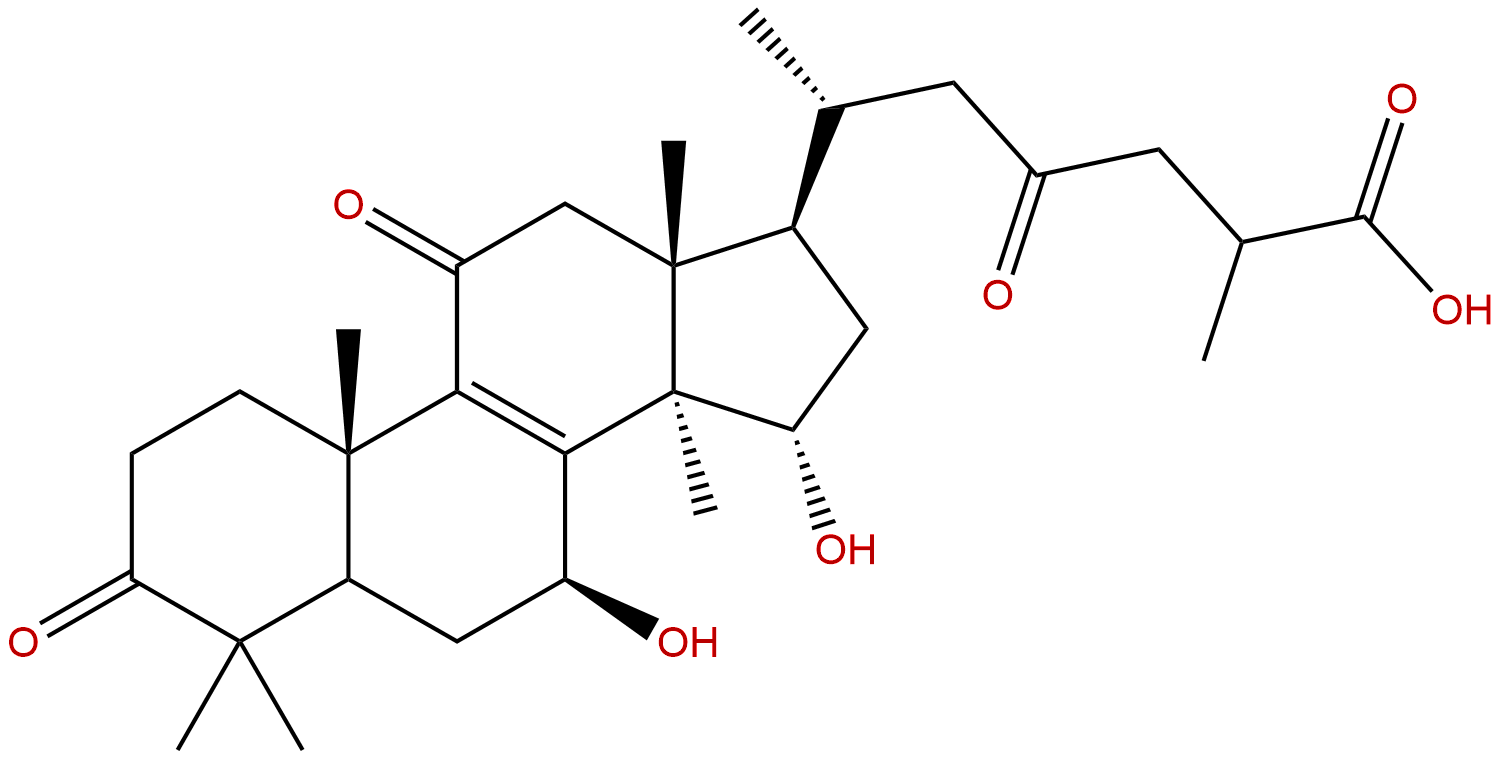


Product name: Ganoderic Acid A
Synonym name:
Catalogue No.: BP0615
Cas No.: 81907-62-2
Formula: C30H44O7
Mol Weight: 516.675
Botanical Source: Ganoderma lucidum (reishi)
Physical Description: Powder
Type of Compound: Triterpenoids
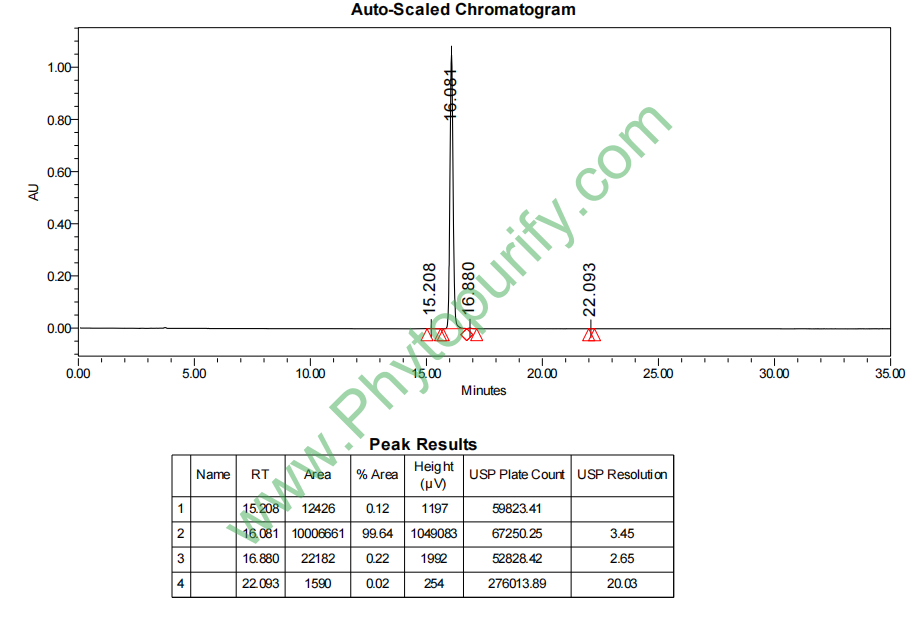
Purity: 95%~99%
Analysis Method: HPLC-DAD or/and HPLC-ELSD
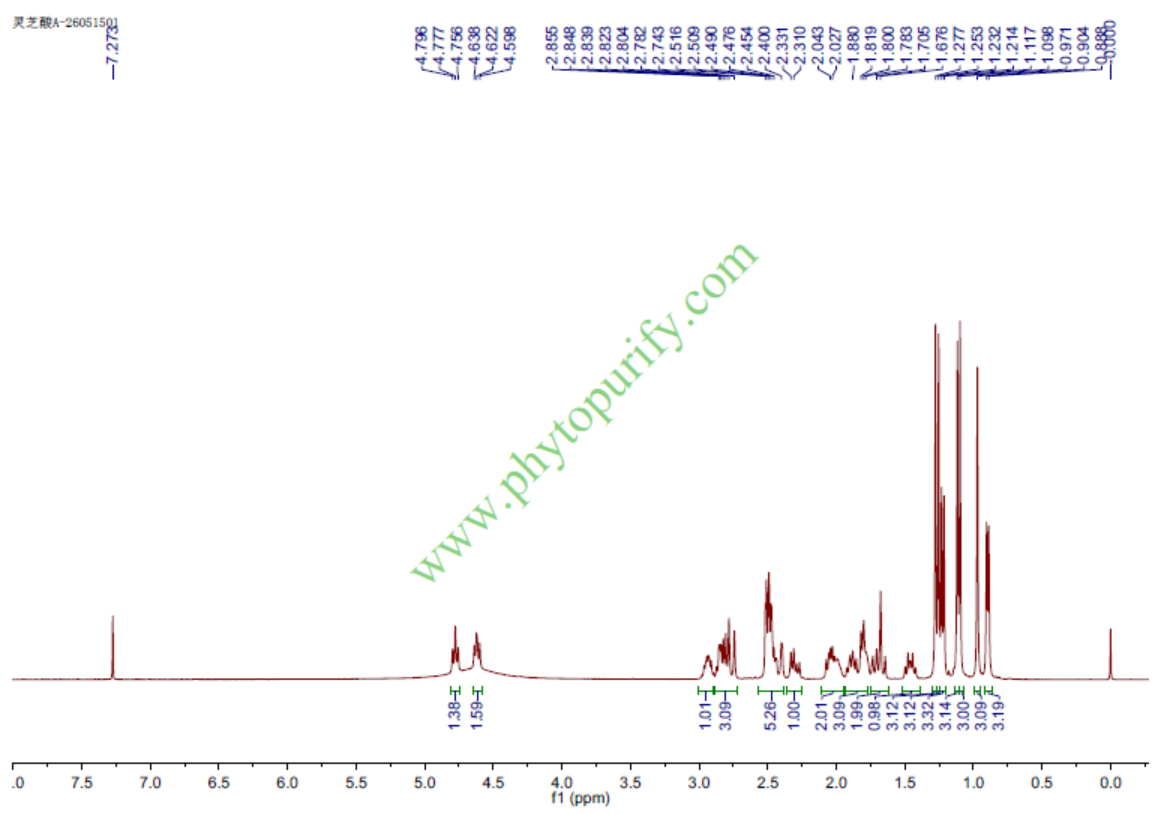
Identification Method: Mass, NMR
Packing: Brown vial or HDPE plastic bottle
Storage: Store in a well closed container, protected from air and light. Put into refrigerate or freeze for long term storage.
Whenever possible, you should prepare and use solutions on the same day. However, if you need to make up stock solutions in advance, we recommend that you store the solution as aliquots in tightly sealed vials at -20℃. Generally, these will be useable for up to two weeks.
The product could be supplied from milligrams to grams, up to kilograms
Inquire for bulk scale.
Descriptions:
Ganoderic acid A is a lanostane triterpene isolated from Ganoderma lucidum. It exhibits antitumor activity, which is mainly mediated through its inhibitory effect on nuclear transcription factor-kappaB and activator protein-1, it promotes cisplatin-induced cell death by enhancing the sensitivity of HepG2 cells to cisplatin mainly via the signal transducer and activator of transcription 3 suppression. [1]
Ganoderic acid A induces a remarkable cytotoxicity in various leukemia and lymphoma cell lines and primary tumors, with a minor toxicity to nonmalignant B-cells, can upregulate pro-apoptotic protein Bax proteins while downregulating anti-apototic proteins Bcl-2 and survivin, it may play dual roles in inducing apoptosis and enhancing HLA class II Ag presentation, and could be used as novel adjunctive therapy for the treatment of hematological malignancies.[2]
Ganoderic acid A can induce proliferation inhibition, apoptosis and suppression of invasion in human osteosarcoma HOS and MG-63 cells, down-regulate the expression level of phosphorylated STAT3 and increase the phosphorylation level of p38 and NF-κB1 expression in both cells. [3]
References:
[1] Yao X, Li G, Xu H, et al. Planta Medica, 2012, 78(16):1740-8.
[2] Haque A, Radwan F F Y, Hossain A, et al. Cancer Res, 2012, 72(8 Supplement):5641.
[3] Shao J, Li Z, Jiao G, et al. Journal of Southern Medical University, 2015, 35(5):619-24.
[4] Duan-Ping L U, Chen S, Wang Y, et al. Modern Chinese Medicine, 2013, 15(06):496-9.
HPLC of Ganoderic Acid A
HNMR of Ganoderic Acid A
Storage conditions:Short-term storage at 2~8℃, long-term storage at -20 ~ -80℃
Ganoderma lucidum(Ganoderma lucidum)As a highly representative medicinal fungus in traditional Chinese medicine, it has attracted much attention due to its extensive pharmacological activity and significant clinical efficacy. Ganoderma Acid A (CAS number: 81907-62-2) is one of the important triterpenoid active ingredients in Ganoderma lucidum. In recent years, it has become a hot topic in natural product pharmacology research due to its potential in various biological functions such as immune regulation and anti-tumor effects. Lingzhi acid A not only inhibits the JAK-STAT3 signaling pathway, regulates cell proliferation and survival, but also significantly reduces intracellular reactive oxygen species (ROS) levels, demonstrating good anti-inflammatory and antioxidant properties. This article provides a systematic review of the chemical structure and physicochemical properties, plant sources and extraction methods, pharmacological activity and mechanism of action, pharmacological evaluation, pharmacokinetic characteristics, and clinical application prospects of ganoderic acid A. The aim is to provide theoretical basis and research direction for subsequent drug development and clinical translation.
Lingzhi acid A belongs to the triterpenoid class, with a molecular formula of C30H44O7 and a molecular weight of 516.6750. Its structural feature is a typical pentacyclic triterpenoid skeleton, containing multiple hydroxyl and carboxyl functional groups, which endow it with certain water solubility and biological activity. The LogP value of Ganoderma lucidum acid A is 3.0501, indicating that it has moderate lipid solubility, which is beneficial for cell membrane penetration but not too hydrophobic, balancing its bioavailability and in vivo distribution. The polar surface area (TPSA) is 128.97 Å ², indicating its high polarity, which may limit its ability to pass through the blood-brain barrier, consistent with its low blood-brain barrier penetration evaluation. The low water solubility (0.0328 mg/mL) to some extent limits its oral absorption efficiency. The negative result of hERG channel inhibition experiment indicates a low risk of cardiac toxicity; The Ames mutagenicity test result is 0.0, indicating that its genetic toxicity risk is extremely low and has a good safety basis.
Lingzhi acid A mainly exists in the fruiting body and mycelium of Ganoderma lucidum. Lingzhi, as a type of porous fungal family, is widely distributed in multiple regions of Asia, especially occupying an important position in traditional medicinal resources in China, Japan, and South Korea. The content of ganoderic acid A is greatly affected by factors such as variety, harvesting time, cultivation conditions, and processing technology.
The traditional method for extracting ganoderic acid A often uses organic solvent extraction, such as ethanol, methanol, or ethyl acetate, combined with ultrasonic assisted extraction or reflux extraction technology, which can effectively improve the extraction efficiency. The common extraction process includes crushing dried Ganoderma lucidum, conducting multiple extractions with 70% ethanol, concentrating the filtrate, and separating and purifying it through silica gel column chromatography or high-performance liquid chromatography (HPLC) to obtain high-purity Ganoderma lucidum acid A. In recent years, supercritical CO2 extraction and microwave-assisted extraction techniques have also been applied to the extraction of Ganoderma lucidum acid A, which has the advantages of fast extraction speed, low solvent residue, and environmental friendliness, and has gradually become a trend in research and industrial production.
The pharmacological activity research of Ganoderma lucidum acid A covers multiple aspects such as immune regulation, anti-tumor, anti-inflammatory, and antioxidant, reflecting its multi-target and multi mechanism action characteristics.
Immune regulatory effect
Lingzhi acid A exhibits significant immune regulatory functions by regulating various immune related signaling pathways and cytokines. It can regulate the expression and activity of key immune targets such as TLR4, STAT3, IL2, NFKB1, TGFB1, CTLA4, STAT4, IL10, FOXP3, and IFNG, promoting the functional recovery of immune cells and maintaining immune balance. For example, ganoderic acid A inhibits the STAT3 signaling pathway, reduces the secretion of immunosuppressive cytokines, enhances the activity of effector T cells, and thus improves the body's immune response to pathogens and tumor cells.
Antitumor activity
Lingzhi acid A exhibits good anti-tumor potential by inhibiting tumor cell proliferation and promoting apoptosis. It can block the JAK-STAT3 pathway, reduce the survival rate and proliferation ability of tumor cells, lower ROS levels, alleviate oxidative stress damage to cells, and inhibit tumor invasion and metastasis. Many in vitro cell experiments and animal model studies have confirmed that Ganoderic acid A has inhibitory effects on many tumor types, especially in solid tumors such as lung cancer, liver cancer and breast cancer.
Anti inflammatory and antioxidant effects
Lingzhi acid A can significantly inhibit the release of inflammatory mediators and alleviate inflammatory reactions. It reduces the expression of pro-inflammatory cytokines such as TNF - α and IL-6 by inhibiting the NF - κ B signaling pathway, thereby alleviating tissue inflammatory damage. At the same time, ganoderic acid A reduces the generation of intracellular ROS, enhances antioxidant enzyme activity, protects cells from oxidative stress damage, and exerts cell protective effects.
The mechanism of action of ganoderic acid A mainly revolves around its regulation of the JAK-STAT3 signaling pathway and its impact on immune related targets. The JAK-STAT3 pathway plays a central role in cell proliferation, differentiation, and immune regulation, and abnormal activation is closely related to various diseases, especially cancer and immune disorders. Lingzhi acid A directly or indirectly inhibits JAK kinase activity, blocks STAT3 phosphorylation and nuclear translocation, inhibits its transcriptional activity, thereby regulating downstream gene expression, inhibiting tumor cell proliferation and the formation of an immunosuppressive environment.
In addition, ganoderic acid A regulates the TLR4 signaling pathway, affects innate immune response, regulates NFKB1 activity, and reduces the release of inflammatory factors. Regulating cytokines IL2, IL10, and TGFB1 promotes the functional recovery of immune cells and the balance of immune tolerance. The regulation of CTLA4 and FOXP3 affects the activity of regulatory T cells (Tregs), regulates immune suppression status, and enhances anti-tumor immune response. The enhanced expression of IFNG promotes cellular immune activity, synergistically exerting immune regulation and anti-tumor effects.
The pharmacological evaluation of Ganoderma lucidum acid A shows that it has certain development potential. Although the molecular weight of 516.6750 is slightly higher than the recommended 500 Da threshold by Lipinski's rule, its moderate LogP (3.05) and high TPSA (128.97 Å ²) indicate good membrane permeability and biological activity. The low water solubility (0.0328 mg/mL) is a limiting factor for its oral bioavailability, which needs to be improved through pharmaceutical methods such as nanocarriers, liposomes, or solid dispersions.
The low penetration of the blood-brain barrier suggests limited application in the treatment of central nervous system diseases, but this also reduces the potential risk of central neurotoxicity. The negative results of hERG channel inhibition and Ames test indicate a low risk of cardiac and genetic toxicity, and good safety.
In terms of pharmacokinetics, existing research is relatively limited. Preliminary in vivo metabolic experiments indicate that ganoderic acid A is metabolized in the liver through the CYP450 enzyme system, with the main metabolic pathways including hydroxylation and glucuronic acid binding. Its half-life is moderate and its plasma protein binding rate is high, indicating its widespread distribution in the body but slow clearance rate. Further systematic pharmacokinetic and toxicological studies are needed in the future to improve its clinical development foundation.
Lingzhi acid A has shown broad clinical application prospects due to its multi-target and multi mechanism immune regulation and anti-tumor activity. Currently, its potential is particularly prominent in the adjuvant therapy of immune related diseases such as autoimmune diseases, chronic inflammation, and tumors. By regulating key immune factors and signaling pathways, ganoderic acid A is expected to become a novel immunomodulatory agent, improving immune imbalance and enhancing the body's immune function.
In terms of tumor treatment, ganoderic acid A can not only directly inhibit tumor cell proliferation, but also improve the tumor microenvironment, enhance the anti-tumor activity of immune cells, and help improve the efficacy and reduce side effects of traditional radiotherapy and chemotherapy. In the future, combining modern drug delivery systems and precision medicine strategies, ganoderic acid A is expected to achieve more efficient clinical translation.
However, the clinical application of ganoderic acid A still faces many challenges, including limited bioavailability due to low water solubility, lack of systematic clinical pharmacokinetic and safety data, and insufficient in-depth analysis of its mechanism of action. In the future, interdisciplinary cooperation should be strengthened, standardized preclinical and clinical research should be conducted, formulation processes should be optimized, and combination drug strategies should be explored to promote the conversion of ganoderic acid A into clinical drugs.
As an important triterpenoid active ingredient in Ganoderma lucidum, ganoderic acid A has shown significant potential for application in immune regulation and anti-tumor fields due to its unique chemical structure and multi-target pharmacological properties. Its ability to inhibit the JAK-STAT3 signaling pathway, regulate multiple immune related targets, reduce cell proliferation and ROS levels provides a valuable example for natural product pharmacology research. Although its pharmacological properties and clinical applications still need further improvement, with the deepening of extraction and purification technology, pharmaceutical improvement, and mechanism research, ganoderic acid A is expected to become an important candidate for future novel immunomodulatory and anti-tumor drugs. Looking forward to more high-quality basic and clinical research in the future, promoting the scientific development and clinical application of ganoderic acid A, and contributing the power of natural medicine to human health.
