


Synonym name:
Catalogue No.: BP0852
Cas No.: 88182-33-6
Formula: C24H28O4
Mol Weight: 380.484
Botanical Source:
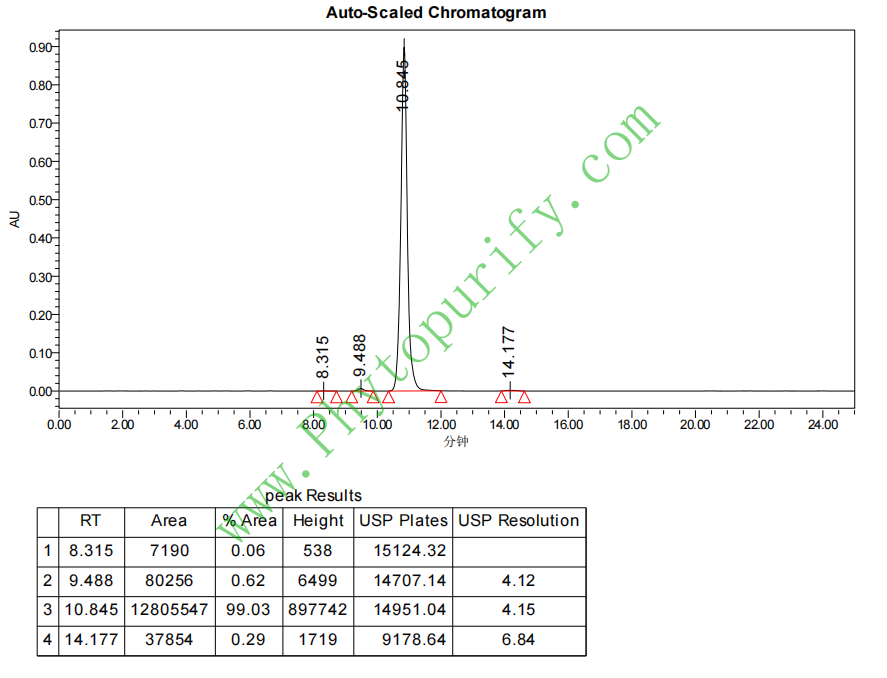
Purity: 95%~99%
Analysis Method: HPLC-DAD or/and HPLC-ELSD
Identification Method: Mass, NMR
Packing: Brown vial or HDPE plastic bottle
Can be supplied from milligrams to grams.
For Reference Standard and R&D, Not for Human Use Directly.
Inquire for bulk scale.
HPLC of Levistilide A
Storage conditions:Short-term storage at 2~8℃, long-term storage at -20 ~ -80℃
52.6000
4.9804
4.9804
.0021
5.8110
12.8478
High
89.6916
6.1403
No
Yes
No
No
Yes
Yes
0.3
Yes
Yes
Yes
Yes
Natural products, as an important source of drug discovery, play an irreplaceable role in the long history of human fight against diseases. Isolating and identifying active ingredients from traditional medicinal plants, and elucidating their pharmacological effects and molecular mechanisms, is an important paradigm in modern medicinal chemistry and pharmacology research. Angelica sinensis(Angelica sinensis (Oliv.) Diels), As a commonly used blood tonifying and blood activating medicine in traditional Chinese medicine clinical practice, its chemical composition is complex and its pharmacological activities are diverse, which has long been of great concern. In Angelica sinensis and its related plants (such as Ligusticum chuanxiong) Ligusticum chuanxiong Among the numerous active ingredients of Hort., a class of structurally unique phthalein dimer compounds has become a research hotspot due to their significant biological activity. Among them, Levistilide A (LA), as a typical phthalate dimer, is gradually becoming a rising star in the field of natural product pharmacology due to its outstanding potential in anti-tumor, anti-inflammatory, neuroprotective and other aspects.
LA originated from Oudanggui(Levisticum officinale W. It was isolated and named by D.J. Koch, and later found to be widely present in Umbelliferae plants such as Angelica sinensis and Ligusticum chuanxiong. Its chemical structure is (Z) -6,6 ', 7,3'a - Ligustilide, belonging to the butenolide class of compounds. Early research mainly focused on its dimeric form as the main active ingredient Ligustilide in Angelica sinensis or Ligusticum chuanxiong, with relatively limited understanding of its pharmacological activity. However, in the past decade, with the advancement of separation technology and the diversification of biological activity screening methods, the unique pharmacological value of LA has gradually been revealed. Especially in the field of anti-tumor, LA exhibits multiple effects such as proliferation inhibition, induction of apoptosis, and inhibition of invasion and metastasis on various tumor cell lines. Its mechanism of action involves the regulation of multiple key signaling pathways and targets, demonstrating great potential as a novel anti-tumor lead compound.
This review aims to systematically review the research progress of Angelica sinensis lactone A, analyzing the compound from multiple dimensions such as chemical structure and physicochemical properties, plant sources and extraction methods, pharmacological activity, mechanism of action, drug evaluation, and clinical application prospects, in order to provide comprehensive and professional references for subsequent basic research and drug development.
The chemical name of Angelica sinensis lactone A is (Z) -6,6 ', 7,3'a - diglycolide, and its core skeleton is a dimer with a cyclobutane structure formed by the [2+2] cycloaddition reaction of two molecules of diglycolide. Specifically, two monomers of ligustilide are connected through C-6 and C-6 'positions, as well as C-7 and C-3'a positions, forming a highly rigid quaternary ring structure. Its stereochemical characteristic is the (Z) configuration, where the double bond connecting two monomers is in the cis position. This structure belongs to the butenolide class, with the parent nucleus being phthalide, but has expanded from a monomer to a complex dimeric system. This unique dimer structure endows LA with physicochemical properties and biological activity distinct from its monomer, ligustilide.
From the perspective of physical and chemical properties, the molecular formula of LA is C ₂₄ H ₂₈ O ₄, with a molecular weight of 380.4840 Da. It has strong lipid solubility, and the calculated lipid water partition coefficient (LogP) is 4.9804, indicating that it has high lipophilicity and is easy to penetrate biological membranes. This characteristic is consistent with its good blood-brain barrier permeability (marked as "high" in the drug properties parameters), indicating that LA may have potential application value in the treatment of central nervous system diseases. Its topological polar surface area (TPSA) is 52.6000 Å ², which is within the acceptable range for oral medication (usually<140 Å ²), indicating its potential for oral absorption. However, the water solubility of LA is extremely poor, with a calculated water solubility of only 0.0021 mg/mL, which poses a major challenge for its formulation development and in vivo bioavailability improvement. In addition, pharmacological evaluation showed that LA has a low risk of inhibiting hERG potassium channels ("no"), indicating a relatively low risk of cardiac toxicity. The Ames test result is 0.3, which is usually interpreted as not showing significant mutagenicity at the tested concentration, indicating a low risk of genetic toxicity. These physicochemical properties and preliminary pharmacological parameters provide important basic data for the subsequent drug development of LA, but also indicate the direction that needs to be focused on, such as improving its water solubility and oral bioavailability through formulation techniques (such as nanoparticles, liposomes, cyclodextrin inclusion complexes, etc.).
Angelica sinensis lactone A is not a unique component of a single plant, but is widely present in various medicinal plants of the Apiaceae family, including Angelica sinensis(Angelica sinensis)And Chuanxiong(Ligusticum chuanxiong)The content of LA is the most abundant, and it is currently the main source of research on LA. In addition, in Oudanggui(Levisticum officinale)Dong Danggui(Angelica acutiloba)Binhai Angelica sinensis(Angelica keiskei)And some Ligusticum species(Ligusticum)It has also been found in plants. In Angelica sinensis and Ligusticum chuanxiong, LA usually coexists with benzophenone monomers such as ligustilide and senkyunolide, as well as other dimers. Its content is influenced by various factors such as plant variety, origin, harvest season, and processing methods. Generally speaking, the content of LA in the dried rhizomes of Angelica sinensis and Ligusticum chuanxiong is relatively low, belonging to trace or trace components, which poses difficulties for their efficient extraction and purification.
For the extraction of LA, traditional methods often use organic solvent soaking or reflux extraction. Due to the strong lipophilicity of LA, high concentrations of ethanol, methanol, or ethyl acetate are often used as extraction solvents. For example, cold soaking or heating reflux extraction of Angelica sinensis or Ligusticum chuanxiong powder with 95% ethanol, followed by solvent recovery under reduced pressure to obtain the extract. However, this crude extract has complex components and extremely low LA content, requiring further separation and purification steps. Modern separation technologies, especially high-speed countercurrent chromatography (HSCCC), preparative high-performance liquid chromatography (Prep HPLC), and the combination of various column chromatography techniques, have become key means for efficiently obtaining high-purity LA. A typical separation process involves first extracting the crude extract with solvents of different polarities (such as petroleum ether, ethyl acetate, n-butanol), with LA mainly enriched in the petroleum ether or ethyl acetate extraction layer due to its lipophilicity. Subsequently, the extraction layer was preliminarily separated by silica gel column chromatography, using mixed solvents such as petroleum ether ethyl acetate or n-hexane ethyl acetate for gradient elution. The LA rich stream is refined by Sephadex LH-20 gel column chromatography, ODS reverse phase column chromatography or preparative HPLC to finally obtain LA monomer with purity greater than 98%. In recent years, with the promotion of green chemistry concepts, supercritical fluid extraction (SFE-CO ₂) technology has also been attempted for the extraction of LA. This technology has the advantages of high extraction efficiency, no solvent residue, and environmental friendliness, but the equipment cost is high. Currently, it is mainly used for laboratory research. Overall, establishing an efficient, low-cost, and environmentally friendly LA extraction and purification process is the foundation for promoting its in-depth research and industrial application.
In recent years, research on the pharmacological activity of Angelica sinensis lactone A has become increasingly in-depth, especially in the fields of anti-tumor, anti-inflammatory, neuroprotective, and cardiovascular protection, showing significant biological effects.
1. Antitumor activity
Antitumor activity is currently the most concentrated area of research in LA. A large number of in vitro experiments have shown that LA has a proliferation inhibitory effect on a variety of human tumor cell lines, including but not limited to breast cancer (MCF-7, MDA-MB-231), lung cancer (A549, H1299), liver cancer (HepG2, SMMC-7721), colorectal cancer (HCT-116, SW480), gastric cancer (SGC-7901), prostate cancer (PC-3), cervical cancer (HeLa), and leukemia cells (K562). Its characteristic of action is dose-dependent and time-dependent. It is worth noting that LA has relatively low toxicity to certain normal cells (such as human normal liver cell L-02) and exhibits certain selective anti-tumor activity. In vivo experiments, LA can significantly inhibit tumor growth in nude mouse xenograft models, and no significant weight loss or major organ toxicity was observed, preliminarily confirming its anti-tumor effect and safety in vivo.
2. Anti inflammatory and antioxidant activity
Inflammation is an important driving factor for the occurrence and development of various diseases, including tumors. LA exhibits strong anti-inflammatory activity. In the macrophage RAW264.7 model stimulated by lipopolysaccharide (LPS), LA can significantly inhibit the production of pro-inflammatory factors such as nitric oxide (NO), prostaglandin E2 (PGE2), tumor necrosis factor - α (TNF - α), interleukin-6 (IL-6), and interleukin-1 β (IL-1 β). The mechanism is related to the inhibition of the activation of nuclear factor kappa B (NF - κ B) and mitogen activated protein kinase (MAPK) signaling pathways. In addition, LA also exhibits direct antioxidant activity, which can clear free radicals, reduce intracellular reactive oxygen species (ROS) levels, upregulate the activity of antioxidant enzymes such as superoxide dismutase (SOD) and glutathione peroxidase (GSH Px), thereby alleviating oxidative stress damage.
3. Neuroprotective activity
Given LA's excellent blood-brain barrier permeability, its role in central nervous system diseases is highly anticipated. Research has found that LA has a protective effect on various neurotoxic injury models. For example, in the Alzheimer's disease cell model induced by β - amyloid protein (A β), LA can reduce the aggregation and deposition of A β, inhibit the excessive phosphorylation of tau protein, and alleviate oxidative stress and neuroinflammatory responses. In the model of cerebral ischemia-reperfusion injury, LA can reduce the volume of cerebral infarction and improve neurological function scores. Its mechanism may be related to inhibiting neuronal apoptosis, reducing inflammatory response, and protecting the integrity of the blood-brain barrier. These findings suggest that LA has potential value in the treatment of neurodegenerative diseases and ischemic stroke.
4. Cardiovascular protective activity
Based on the traditional blood activating and stasis removing effects of Angelica sinensis and Ligusticum chuanxiong, the cardiovascular protective effect of LA has also received attention. Research has shown that LA can inhibit angiotensin II (Ang II) - induced myocardial cell hypertrophy and suppress platelet aggregation. In addition, LA can also dilate blood vessels, and its mechanism may be related to regulating the activity of endothelial nitric oxide synthase (eNOS) and the release of nitric oxide (NO). These effects suggest that LA may play a beneficial role in the prevention and treatment of hypertension, myocardial hypertrophy, and thrombotic diseases.
The pharmacological activity of Angelica sinensis lactone A, especially its anti-tumor effect, is achieved by regulating multiple complex signaling pathways and molecular targets. Its multi-target and multi pathway characteristics are a major advantage of natural products.
1. Regulating apoptosis related proteins
Inducing tumor cell apoptosis is one of the core mechanisms of LA's anti-tumor effect. LA can initiate apoptosis programs through two pathways: endogenous (mitochondria) and exogenous (death receptors). Specifically, LA can downregulate the expression of anti apoptotic protein B cell lymphoma 2 (BCL2) and upregulate the expression of pro apoptotic protein BAX, leading to a decrease in mitochondrial membrane potential (Δ PSI m), release of cytochrome c, and activation of Caspase-9 and Caspase-3, ultimately inducing cell apoptosis. In addition, LA can also inhibit the expression of myeloid leukemia cell line 1 (MCL1), which is another key anti apoptotic protein in the BCL2 family. Its downregulation further enhances the pro apoptotic signal. Meanwhile, LA has also been found to upregulate the expression of death receptors (such as Fas), activate Caspase-8, and initiate exogenous apoptotic pathways.
2. Inhibit the STAT3 signaling pathway
Signal transducer and activator of transcription factor 3 (STAT3) is continuously activated in various tumors and is a key transcription factor that promotes tumor proliferation, survival, angiogenesis, and immune escape. LA has been proven to be an effective inhibitor of STAT3. It can inhibit the phosphorylation of STAT3 (Tyr705 site), block its dimerization and nuclear translocation, thereby suppressing its transcriptional activity. The expression of downstream target genes such as Cyclin D1 (cell cycle), Survivin (anti apoptosis), VEGF (angiogenesis), and MMP2 (invasion and metastasis) decreases accordingly. Therefore, inhibiting the STAT3 pathway is a core hub for LA to exert anti-tumor activity.
3. Inhibit the MAPK/ERK pathway
The mitogen activated protein kinase (MAPK) pathway, particularly the Ras/Raf/MEK/ERK pathway, plays a critical role in regulating cell proliferation, differentiation, and survival. LA can inhibit the phosphorylation of MAPK1 (i.e. ERK2), thereby blocking the signal transduction of this pathway. This leads to downregulation of downstream proteins related to cell cycle progression, such as Cyclin D1 and CDK4, which blocks tumor cells in the G0/G1 phase and inhibits their proliferation. In addition, LA also has a regulatory effect on the p38 MAPK and JNK pathways, but its effects may vary in different cell types.
4. Inhibit invasion and metastasis
The invasion and metastasis of tumors are the main causes of treatment failure and patient death. LA can significantly inhibit the migration and invasion ability of tumor cells. The mechanism involves the regulation of matrix metalloproteinases (MMPs). LA can downregulate the expression and activity of MMP2 and MMP9, which are key enzymes for degrading extracellular matrix (ECM). The decrease in their activity directly weakens the invasive ability of tumor cells. Meanwhile, LA can indirectly downregulate the expression of MMPs and upregulate epithelial markers (such as E-cadherin) and downregulate stromal markers (such as N-cadherin and Vimentin) during epithelial mesenchymal transition (EMT) by inhibiting the STAT3 and NF - κ B pathways, thereby reversing the EMT process and inhibiting tumor metastasis.
5. Inhibit angiogenesis and regulate the tumor microenvironment
The growth and metastasis of tumors depend on the generation of new blood vessels. LA can inhibit the expression and stability of hypoxia inducible factor-1 α (HIF1A). HIF1A is a key transcription factor that responds to hypoxic environments and upregulates the expression of vascular endothelial growth factor (VEGF). LA inhibits HIF1A, thereby reducing the secretion of VEGF and suppressing tumor angiogenesis. In addition, LA can also affect other components in the tumor microenvironment, such as inhibiting M2 polarization of tumor associated macrophages (TAMs), thereby reshaping the immunosuppressive microenvironment.
6. Other targets
In addition to the main targets mentioned above, LA has also been found to inhibit the activity of topoisomerase I (TOP1) and topoisomerase II alpha (TOP2A), which may be one of the mechanisms by which it directly interferes with DNA replication and transcription and exerts cytotoxic effects. In addition, for hormone related tumors such as breast cancer, LA has shown the regulatory effect on estrogen receptor α (ESR1) and aromatase (CYP19A1), suggesting that it may also have application value in the treatment of hormone dependent tumors.
In summary, LA systematically inhibits tumor cell proliferation, induces apoptosis, blocks invasion and metastasis, inhibits angiogenesis, and regulates the tumor microenvironment through the synergistic effect of multiple targets and pathways, demonstrating great potential as a multi-target anti-tumor drug.
Although LA has shown excellent performance in both in vitro and in vivo pharmacological studies, its successful translation into clinical drugs depends on its pharmacological properties, particularly its pharmacokinetic (ADME) characteristics. As mentioned earlier, the physicochemical properties of LA exhibit a "double-edged sword" effect: high lipophilicity (LogP 4.98) and low water solubility (0.0021 mg/mL) are its most prominent issues. The extremely low water solubility not only limits its oral absorption, but also poses a huge challenge to the development of injectable formulations. Although high LogP values are beneficial for crossing biological membranes (such as the blood-brain barrier), they may also lead to their widespread distribution in the body, easy accumulation in adipose tissue, and increased difficulty in metabolic clearance.
At present, research on the pharmacokinetics of LA is relatively limited, but some preliminary findings have been made. After oral administration, the absolute bioavailability of LA is usually very low, mainly due to its poor water solubility and possible first pass effects. Research suggests that LA may be partially hydrolyzed or metabolized into monomers such as ligustilide in the intestine. After intravenous administration, LA rapidly distributes in the body and may have a short half-life. Its metabolic pathways may include oxidation, reduction, hydrolysis, and binding reactions with glucuronic acid or sulfuric acid. The liver and intestines may be its main metabolic organs. Due to the negative Ames test result of LA (0.3) and no inhibitory effect on hERG channel, its genetic toxicity and cardiotoxicity risk are low, which is a positive aspect of its drug development.
In order to overcome the ADME deficiency of LA and improve its bioavailability, researchers have begun exploring various drug delivery strategies. For example, encapsulating LA in liposomes or polymer nanoparticles can significantly improve its water dispersibility and stability, prolong in vivo circulation time, and achieve passive targeting of tumor tissue through enhanced permeability and retention (EPR) effects. In addition, technologies such as phospholipid complexes, cyclodextrin inclusion complexes, and self microemulsifying drug delivery systems (SMEDS) have also been attempted to improve the oral absorption of LA. These pharmaceutical methods are key to driving LA towards preclinical and clinical research.
Oudanggui lactone A, as a natural active molecule derived from traditional Chinese medicine, has a unique chemical structure and multi-target pharmacological mechanism, which has shown broad application prospects in multiple therapeutic fields.
1. Anti tumor therapy
This is the most promising application direction in LA. Its multi-target properties, especially its simultaneous action on multiple key pathways such as apoptosis, STAT3, MAPK, HIF-1 α, make it have the potential to overcome tumor heterogeneity and drug resistance. In the future, LA is expected to be developed as a new anti-tumor candidate drug, especially suitable for tumor types highly activated by STAT3 or HIF-1 α, such as triple negative breast cancer, liver cancer, lung cancer, etc. The combination of LA with existing chemotherapy drugs (such as cisplatin, paclitaxel) or targeted drugs (such as sorafenib) may produce synergistic effects and reduce toxic side effects, which is a direction worthy of further exploration.
2. Treatment of neurodegenerative diseases
Given its excellent blood-brain barrier permeability and clear neuroprotective, anti-inflammatory, and antioxidant activities, LA has great potential in the treatment of neurodegenerative diseases such as Alzheimer's disease and Parkinson's disease. It intervenes in A β deposition, tau protein phosphorylation, neuroinflammation, and oxidative stress through multiple pathways, which is in line with the concept of multi-target intervention needed to treat such complex diseases.
3. Other fields
The anti-inflammatory and cardiovascular protective activities of LA also provide a theoretical basis for its application in the treatment of chronic inflammatory diseases (such as rheumatoid arthritis, inflammatory bowel disease) and cardiovascular diseases (such as atherosclerosis, myocardial ischemia-reperfusion injury).
Outlook and Challenges:
Despite the bright prospects, the clinical translation of LA still faces many challenges. The primary challenge is Optimization of pharmacokinetic properties How to effectively improve its water solubility and bioavailability through formulation technology is the key to realizing its clinical value. Secondly,Deep analysis of the mechanism of action Still needs to be strengthened. Although multiple targets are known, the direct target protein of LA (i.e. its "receptor") is not yet clear, which limits structure based drug design and optimization. Third,Systematic preclinical toxicological evaluation Not yet perfect. Although preliminary data suggests low toxicity, comprehensive studies on acute toxicity, long-term toxicity, reproductive toxicity, and immunotoxicity are still needed. Finally,Resource issues The low content of LA in natural plants makes chemical total synthesis difficult and costly. How to achieve its large-scale supply through biosynthesis or efficient chemical synthesis methods is a problem that must be solved for industrialization.
In the future, interdisciplinary approaches such as chemical biology, medicinal chemistry, pharmacy, and pharmacology should be combined to deeply elucidate the precise molecular mechanism of LA and identify its direct targets; On the other hand, using LA as a lead compound, structural modification and optimization can be carried out, or efficient drug delivery systems can be developed in order to obtain derivatives or new dosage forms with better drug properties.
Oudanggui lactone A, as a type of naturally occurring phthalein dimer with a unique structure, exhibits significant biological activity and development potential in the fields of anti-tumor, neuroprotective, anti-inflammatory, etc. due to its multi-target and multi pathway pharmacological properties. It systematically intervenes in disease progression by regulating key targets such as MCL1, BCL2, STAT3, MAPK1, HIF1A, MMP2, etc., demonstrating the unique value of natural products in the treatment of complex diseases. However, the extremely low water solubility and resulting low bioavailability are the main bottlenecks for its drug development. In the future, research will be conducted on key scientific issues such as improving its ADME characteristics, clarifying its direct targets, and developing efficient and green preparation processes. This will determine whether Eudaidzein A can ultimately move from a "star molecule" in the laboratory to clinical applications and contribute to human health. The in-depth study of LA is not only a scientific interpretation of the active ingredients of a traditional Chinese medicine, but also a vivid epitome of modern drug discovery drawing inspiration from natural products and overcoming complex diseases.
