Introduction/Overview
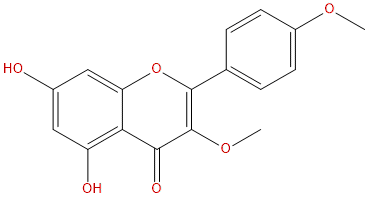
Natural products have always been an important source of drug discovery and development, especially in the fields of anti-inflammatory, anti infective, and anti-tumor effects. Plant secondary metabolites have shown tremendous potential. Flavonoids, as a class of polyphenolic compounds widely present in nature, have attracted much attention due to their structural diversity and extensive biological activity. Among numerous flavonoids, Ermanin (chemical name: 5,7-dihydroxy-3,4 '- dimethoxyflavone, CAS number: 20869-95-8), as a unique methylated flavonoid, has gradually become a hot topic in natural product pharmacology research in recent years.
Ermanin was originally derived from the Asteraceae plant Asteraceae, Asteraceae(Tanacetum microphyllum)Obtained through separation and identification. With the deepening of research, it has been found that this compound is not limited to a single plant, but widely exists in various medicinal plants, such as Lagerstroemia, Fabaceae, and Lamiaceae plants. The uniqueness of its chemical structure - the presence of methoxy substitution at the 4 'position of the B ring and the 3' position of the C ring - endows it with physicochemical properties and biological activity that are different from common flavonoids such as quercetin and kaempferol.
From the perspective of pharmacological activity, Ermanin exhibits pleiotropic effects. Early research mainly focused on its anti-inflammatory activity and found that it can effectively inhibit the activity of inducible nitric oxide synthase (iNOS) and cyclooxygenase-2 (COX-2), thereby reducing the production of inflammatory mediators nitric oxide (NO) and prostaglandin E2 (PGE2). In addition, Ermanin also exhibits significant anti platelet aggregation, anti tuberculosis mycobacteria, and antiviral/bacterial properties. These findings suggest that Ermanin may be a lead compound with multi target regulation ability, and has potential application value in the treatment of inflammatory related diseases, infectious diseases and thrombotic diseases.
However, despite the encouraging in vitro activity data of Ermanin, its in vivo pharmacodynamics, pharmacokinetic properties, and systematic toxicological evaluation are still relatively scarce. Especially its pharmacological parameters (such as LogP 2.61, water solubility 0.0912 mg/mL, low blood-brain barrier permeability) suggest that this compound may face challenges in oral bioavailability and tissue distribution. Therefore, a systematic review of the chemical, biological, and pharmacological research progress of Ermanin is of great significance for evaluating its potential as a lead compound for new drugs, as well as guiding subsequent structural optimization and formulation development.
This article aims to comprehensively review the chemical structure, plant origin, extraction methods, pharmacological activity, molecular mechanism, and pharmacological evaluation of Ermanin, and combine current research hotspots to prospect its clinical application prospects, in order to provide theoretical basis and reference for the in-depth development of this natural product.
Chemical structure and physicochemical properties
Ermanin belongs to the flavonol subclass of flavonoids, with its core structure being 2-phenylchromen-4-one. Specifically, its chemical name is 5,7-dihydroxy-3,4 '- dimethoxyflavone. From the perspective of structural features, the 5th and 7th positions of the A ring each have a hydroxyl group (- OH), the 3rd position of the C ring has a methoxy group (- OCH ∝), and the 4th 'position of the B ring also has a methoxy group. This substitution pattern distinguishes it from common 3,5,7,4 '- tetrahydroxyflavones (such as resveratrol), and the presence of methoxy groups significantly alters its polarity and molecular conformation.
In terms of physicochemical properties, Ermanin has a molecular formula of C ₁₇ H ₁₄ O ₆ and a molecular weight of 314.2930 g/mol. According to the calculated chemical parameters, its lipophilic water partition coefficient (LogP) is 2.6111, indicating that the compound has a moderate degree of lipophilicity and is theoretically more easily permeable through biofilms, but it also limits its solubility in the aqueous phase. Its topological polar surface area (TPSA) is 89.13 Å ², which is slightly higher than the recommended threshold for oral drugs (<140 Å ²), but still within an acceptable range, suggesting that it may have some oral absorption potential, but requires the use of transporters or special formulation techniques.
Water solubility is one of the key factors limiting the pharmacological properties of Ermanin. Its water solubility measurement value is only 0.0912 mg/mL (about 0.29 mM), which belongs to low solubility compounds. This characteristic may result in a slower dissolution rate in the gastrointestinal tract, thereby affecting oral bioavailability. In addition, the permeability of the blood brain barrier (BBB) is predicted to be "low", which is related to its high polar surface area and molecular weight, meaning that the application of Ermannin in central nervous system diseases may be limited, but for peripheral inflammation or infectious diseases, this may reduce central side effects instead.
In terms of early prediction of drug safety, the risk assessment of hERG (human ether - à - go related gene) inhibition is "no", indicating a low risk of inducing QT interval prolongation in the heart. The Ames test result is 0.6, which is generally considered to be below the threshold (usually between 0.5-0.8 and requires caution), indicating that Ermanin has no significant mutagenicity in vitro and has a low risk of genetic toxicity. These preliminary security data provide favorable conditions for its further development.
In summary, the chemical structure of Ermanin determines its dual characteristics of lipophilicity and certain polarity, but poor water solubility is its main weakness. Future pharmaceutical chemistry research should focus on how to improve its solubility and bioavailability through prodrug design, nanoencapsulation, or structural modification (such as introducing polar groups).
Plant sources and extraction methods
Ermanin is not a rare natural product, it has been found in multiple plant families and genera, with the Asteraceae and Fabaceae being the most commonly reported. The earliest and most classic source is the Asteraceae plant, the small leaved mugwort(Tanacetum microphyllum)The plant is commonly used in traditional medicine to treat inflammation and infectious diseases. In addition, Ermanin also exists in plants of the family Crassulaceae, such as Lagerstroemia indica)Leguminous plants (such as Dalea Genus) and plants in the family Lamiaceae (such as Salvia Belonging to). This widespread distribution suggests that it may have conservative ecological functions in the plant kingdom, such as resisting pathogens or ultraviolet radiation.
From the perspective of plant chemical taxonomy, Ermanin usually coexists with other methylated flavonoids (such as kaempferol-3,4 '- dimethyl ether) in the aboveground parts of plants, especially in flowers and leaves. Its content varies depending on the plant species, place of origin, harvest season, and extraction method. For example, in Tanacetum microphyllum Ermanin is one of the main flavonoids, with a content ranging from 0.1% to 0.5% of dry weight.
In terms of extraction methods, traditional solvent extraction is still the most commonly used approach. Due to Ermanin's moderate lipophilicity, organic solvents with moderate polarity, such as methanol, ethanol, or ethyl acetate, are usually used for cold soaking or hot reflux extraction. In order to improve extraction efficiency, researchers often use ultrasound assisted extraction (UAE) or microwave-assisted extraction (MAE) techniques. For example, using 70% ethanol as a solvent and ultrasonic extraction at 40 ℃ for 30 minutes can achieve a higher yield of Ermanin.
The crude extract after extraction needs to undergo a series of separation and purification steps. The classic separation process includes liquid-liquid extraction (such as sequential extraction with petroleum ether, ethyl acetate, and n-butanol), which enriches Ermanin in the ethyl acetate layer. Subsequently, the normal phase silica gel column chromatography (chloroform methanol or petroleum ether acetone as eluent) was used for preliminary separation, and then combined with Sephadex LH-20 gel column chromatography (methanol or methanol water as eluent) for refining. In recent years, high-speed counter current chromatography (HSCCC) and preparative high performance liquid chromatography (Prep HPLC) have also been used for the efficient separation of Ermanin, which can obtain monomer compounds with a purity of over 98% in one run.
It is worth noting that due to the presence of phenolic hydroxyl groups in the Ermanin structure, high temperature and strong alkaline environments should be avoided during the extraction and separation process to prevent its oxidative degradation or structural rearrangement. It is usually recommended to operate in the absence of light, at low temperatures, and under inert gas protection. In addition, with the promotion of green chemistry concepts, new methods such as supercritical fluid extraction (SFE-CO ₂) and deep eutectic solvent (DES) extraction have also been applied to the extraction of Ermanin. These methods have the advantages of low solvent residue and environmental friendliness, but the cost is relatively high.
Pharmacological activity research
The pharmacological activity research of Ermanin mainly focuses on anti-inflammatory, anti platelet aggregation, anti tuberculosis, and antiviral/bacterial aspects, presenting multiple pharmacological characteristics.
anti-inflammatory activity This is the most in-depth direction of Ermanin research. In vitro experiments have shown that Ermanin can significantly inhibit the protein expression and enzyme activity of iNOS and COX-2 in a macrophage model stimulated by lipopolysaccharide (LPS), thereby reducing the production of NO and PGE2. In addition, it can downregulate the mRNA levels of pro-inflammatory cytokines such as tumor necrosis factor - α (TNF - α), interleukin-6 (IL-6), and interleukin-1 β (IL-1 β). In animal models, oral administration of Ermanin can alleviate carrageenan induced toe swelling in rats and inhibit acetic acid-induced increase in peritoneal capillary permeability in mice, showing anti-inflammatory effects comparable to the positive drug indomethacin, but possibly lower gastrointestinal irritation.
Antiplatelet aggregation Ermanin has been found to be an effective platelet aggregation inhibitor. In vitro, it can inhibit human platelet aggregation induced by collagen, arachidonic acid (AA), and adenosine diphosphate (ADP), with IC ₅₀ values at the micromolar level. Mechanism studies suggest that Ermanin may exert its effects by inhibiting the synthesis of thromboxane A ₂ (TXA ₂) or blocking receptor signaling pathways on the surface of platelets. This activity suggests that it has potential value in the prevention and treatment of cardiovascular diseases (such as atherosclerosis, thrombosis).
Anti tuberculosis activity Ermanin against Mycobacterium tuberculosis(Mycobacterium tuberculosis)The H37Rv strain exhibits inhibitory activity, with a minimum inhibitory concentration (MIC) in the range of 25-50 μ g/mL. Although its activity intensity is not as strong as first-line anti tuberculosis drugs such as isoniazid and rifampicin, as a natural product, its mechanism of action may be different from traditional drugs, so it is expected to be used for the treatment of drug-resistant tuberculosis strains. It is preliminarily believed that its anti tuberculosis mechanism may be related to inhibiting the cell wall synthesis of Mycobacterium or interfering with its energy metabolism.
Antiviral and antibacterial activity Ermanin has inhibitory effects on various viruses, including influenza virus, herpes simplex virus (HSV), and coxsackievirus, in terms of antiviral activity. Its antiviral mechanism may involve inhibiting key enzymes involved in virus adsorption, invasion, or replication processes. In terms of antibacterial activity, Ermanin has a stronger inhibitory effect on Gram positive bacteria (such as Staphylococcus aureus and Bacillus subtilis) than Gram negative bacteria (such as Escherichia coli), which may be related to its difficulty in penetrating the outer membrane of Gram negative bacteria.
Other activities In addition, studies have reported that Ermanin also has certain antioxidant activity, which can scavenge DPPH free radicals and ABTS cationic free radicals, and inhibit lipid peroxidation. At the cellular level, Ermannin showed inhibitory effect on the proliferation of some cancer cells (such as liver cancer and breast cancer cells), but the IC ₀ value is usually high (>50 μ M), suggesting that its anti-tumor activity may not be the main pharmacological direction.
Mechanism of action and molecular targets
The pleiotropic pharmacological activity of Ermanin stems from its regulation of multiple signaling pathways and molecular targets. Based on existing research data, its mechanism of action can be elucidated from the following aspects.
Anti inflammatory mechanism The core anti-inflammatory effect of Ermanin is to inhibit the nuclear factor kappa B (NF - κ B) signaling pathway. In the resting state, NF - κ B (usually a p50/p65 heterodimer) binds to the inhibitory protein I κ B α and exists in the cytoplasm. When stimulated by LPS, TNF - α, etc., I κ B kinase (IKK, composed of IKK α, IKK β, and IKK γ) is activated, where IKK β (composed of genes) is activated IKBKB Coding is responsible for phosphorylating I κ B α, leading to its ubiquitination degradation, thereby releasing NF - κ B into the nucleus and activating downstream pro-inflammatory genes (such as NOS2、PTGS2、TNF、IL6)The transcription. Ermanin can inhibit the activity of IKK β, prevent the phosphorylation and degradation of I κ B α, and thus block the nuclear translocation of NF - κ B. In addition, Ermanin can directly inhibit the phosphorylation of signal transduction and transcription activator 3 (STAT3), which is a key transcription factor mediating IL-6 signaling. Its activation is closely related to chronic inflammation and autoimmune diseases. Ermanin achieves synergistic regulation of the inflammatory network by simultaneously inhibiting the NF - κ B and STAT3 pathways.
Target analysis In addition to the transcription factors mentioned above, Ermanin also directly acts on inflammation related enzymes and receptors. It inhibits iNOS (by NOS2 Gene encoding) and COX-2 (encoded by)PTGS2 The activity of gene coding is the direct cause of its reduction in NO and PGE2. In addition, Ermanin also has a regulatory effect on transient receptor potential channels (TRP channels). Research has shown that Ermanin can antagonize TRPV1 and TRPA1 receptors, which are key molecules mediating pain and neurogenic inflammation. By blocking these ion channels, Ermanin may exert analgesic and anti itch effects. Meanwhile, Ermanin can also inhibit the activity of caspase-1 (CASP1), which is a downstream effector molecule of inflammasomes such as NLRP3 inflammasome, responsible for cleaving pro-IL-1 β and pro-IL-18 into mature forms. Therefore, Ermanin may reduce the release of IL-1 β and IL-18 by inhibiting CASP1.
Antiplatelet mechanism The mechanism by which Ermanin inhibits platelet aggregation mainly involves the arachidonic acid metabolic pathway. It can inhibit the activity of phospholipase A2 (PLA2), reduce the release of arachidonic acid, and directly inhibit COX-1 PTGS1 The activity of gene coding reduces the generation of TXA ₂. TXA ₂ is a strong inducer of platelet aggregation and vasoconstrictor, and its reduced synthesis is the main molecular basis of Ermanin's antiplatelet effect.
Anti tuberculosis mechanism Although the specific target has not been fully elucidated, it is speculated that Ermanin may exert antibacterial effects by inhibiting the ATP synthase of Mycobacterium tuberculosis or interfering with the biosynthesis of mycolic acid in its cell wall. In addition, the antioxidant properties of Ermanin may also weaken the survival ability of tuberculosis bacteria in host macrophages.
In summary, the mechanism of action of Ermanin exhibits the characteristics of "multi-target and multi pathway", which is not only the advantage of natural products (less prone to drug resistance), but also brings complexity to its development. Future research should utilize systems pharmacology and network analysis methods to further reveal its key targets and action networks.
Evaluation of drug properties and pharmacokinetics
To push Ermanin from the laboratory to clinical applications, a systematic evaluation of its drug like and pharmacokinetic (ADME) properties is necessary. According to Lipinski's "Rule of Five", Ermanin's molecular weight (314<500), LogP (2.61<5), number of hydrogen bond donors (2 phenolic hydroxyl groups,<5), and number of hydrogen bond acceptors (6 oxygen atoms,<10) all meet the requirements, indicating its good drug like properties. However, poor water solubility (0.0912 mg/mL) is its most significant weakness, which may lead to limited dissolution in the gastrointestinal tract and affect oral absorption.
Absorption and bioavailability There are currently no publicly available pharmacokinetic data for Ermanin in humans, but based on its physicochemical properties and animal experiments, it is speculated that its oral bioavailability may be low. Low water solubility and moderate permeability make it possible to belong to BCS (Biopharmaceutical Classification System) Class II or IV drugs. To improve its oral absorption, formulation techniques such as solid dispersions, lipid nanoparticles, phospholipid complexes, or cyclodextrin inclusion complexes can be used. In addition, prodrug design (such as phosphorylation or esterification of phenolic hydroxyl groups) is also an effective strategy to improve their solubility and membrane permeability.
distribution Ermanin's TPSA is 89.13 Å ², and the expected plasma protein binding rate is high (>90%). Its apparent volume of distribution (Vd) may be moderate, indicating widespread tissue distribution but high non-specific binding. It is worth noting that its blood-brain barrier permeability is low, which is beneficial for indications that require peripheral anti-inflammatory effects (such as arthritis and colitis) and can avoid central nervous system side effects.
Metabolism Flavonoids mainly undergo phase II metabolic reactions in the body, including glucuronidation, sulfation, and methylation. The 5th and 7th phenolic hydroxyl groups of Ermanin are potential sites of action for glucuronosyltransferases (UGTs) and sulfotransferases (SULTs). In addition, the methoxy groups at positions 3 and 4 'may be demethylated by cytochrome P450 enzymes (such as CYP1A2, CYP3A4) to produce kaempferol or other metabolites. These metabolites may retain or alter the biological activity of the parent drug.
excretion Ermanin and its metabolites are mainly excreted through bile and urine. Due to its moderate molecular weight, some metabolites may be reabsorbed through the enterohepatic circulation, thereby prolonging their duration of action in the body.
safety evaluation As mentioned earlier, the low risk of hERG inhibition and negative Ames test are favorable factors for Ermanin. However, research on long-term toxicity, reproductive toxicity, and carcinogenicity is still blank. In addition, due to Ermanin's antiplatelet aggregation activity, caution should be exercised about the risk of bleeding when used in combination with anticoagulant drugs such as warfarin and aspirin. For patients with liver dysfunction, their metabolism may be affected and the dosage needs to be adjusted.
Clinical application prospects and prospects
Based on the existing pharmacological activity and pharmacological characteristics of Ermanin, its clinical application prospects are mainly reflected in the following directions.
1. Chronic inflammatory diseases Ermanin is expected to be used for the treatment of chronic inflammatory diseases such as rheumatoid arthritis, inflammatory bowel disease (such as Crohn's disease, ulcerative colitis), and psoriasis by inhibiting the NF - κ B and STAT3 pathways and downregulating key inflammatory factors such as TNF - α and IL-6. Its multi-target action characteristics may provide better efficacy and lower resistance risk than single target drugs. In the future, it is necessary to conduct animal model studies targeting these indications and explore their synergistic effects with existing drugs such as methotrexate and biologics.
2. Cardiovascular diseases Ermanin has the potential in the prevention and treatment of atherosclerosis and thrombotic diseases due to its dual effects of antiplatelet aggregation and anti-inflammatory. Compared with aspirin, Ermanin simultaneously inhibits COX-1 and COX-2, theoretically reducing gastrointestinal damage (as COX-1 inhibition is one of the main causes of aspirin gastrointestinal toxicity). However, whether its antiplatelet strength is sufficient to replace existing drugs and the safety of long-term use still needs to be verified through rigorous clinical trials.
3. infectious diseases Ermanin's antituberculosis and antiviral activities provide a possibility for its application in infectious diseases. Especially for drug-resistant Mycobacterium tuberculosis, Ermanin may be used as an adjuvant therapy in combination with traditional anti tuberculosis drugs to enhance efficacy or reduce dosage. In addition, its antiviral activity suggests that it can be used to treat influenza or herpes virus infections, but further evaluation of its in vivo antiviral potency and therapeutic index is needed.
4. Pain management Ermanin may be developed as a novel non opioid analgesic for the treatment of neuropathic pain or inflammatory pain by antagonizing TRPV1 and TRPA1 receptors. Its low BBB permeability means a lower risk of central side effects such as drowsiness and addiction, which gives it a unique advantage in peripheral pain treatment.
Future research directions:
- structural optimization To address the issue of poor water solubility, phosphate groups or amino acid residues can be introduced into the 5th or 7th hydroxyl group to prepare prodrugs. Ermanin can also be combined with key pharmacophores of known anti-inflammatory drugs (such as ibuprofen) through molecular hybridization strategies to design dual target molecules.
- Development of new dosage forms Using nanotechnology (such as liposomes, polymer micelles) or self microemulsifying drug delivery systems (SMEDS) to enhance the oral bioavailability of Ermanin. Topical preparations (such as gel and cream) can be used to treat skin inflammation or infection.
- In depth mechanism research Using CRISPR-Cas9 gene editing technology or knockout mouse models, verify the in vivo effects of key targets of Ermanin, such as IKBKB and CASP1. Combining metabolomics and proteomics to reveal its systematic pharmacological network.
- clinical translation After completing the necessary pharmacological, pharmacokinetic, and toxicological evaluations, conduct a small-scale Phase I clinical trial to evaluate its safety and tolerability in healthy volunteers, and preliminarily explore its pharmacokinetic characteristics.
Conclusion
Ermanin, as a natural methylated flavonoid, has shown remarkable potential in anti-inflammatory, antiplatelet, anti tuberculosis, and antiviral fields due to its unique chemical structure and multiple pharmacological activities. Its molecular mechanism of inhibiting the NF - κ B/STAT3 signaling pathway, regulating TRP ion channels, and inhibiting key inflammatory enzymes (iNOS, COX-2) provides a solid theoretical basis for its treatment of complex diseases. At the same time, preliminary pharmacological evaluation shows that it has good drug like properties and low risks of cardiac toxicity and genetic toxicity, which adds confidence to its further development.
However, we also have to face the challenges it faces: low oral bioavailability due to poor water solubility, and a lack of pharmacokinetic data in vivo, which are the main bottlenecks restricting its clinical translation. In addition, long-term toxicity and organ specific toxicity data still need to be supplemented. Future research should focus on overcoming these obstacles through medicinal chemical modifications and modern formulation techniques, while utilizing systems biology methods to further elucidate their functional networks.
In short, Ermanin is a natural product lead compound worthy of further exploration. With the continuous development of green extraction technology, computer-aided drug design, and nano drug delivery systems, we have reason to believe that Ermanin and its derivatives have the potential to become a new choice for treating inflammation, infections, and cardiovascular diseases in the future, contributing to human health. The path of Ermanin's transformation from natural products to innovative drugs is full of challenges, but also contains infinite possibilities.