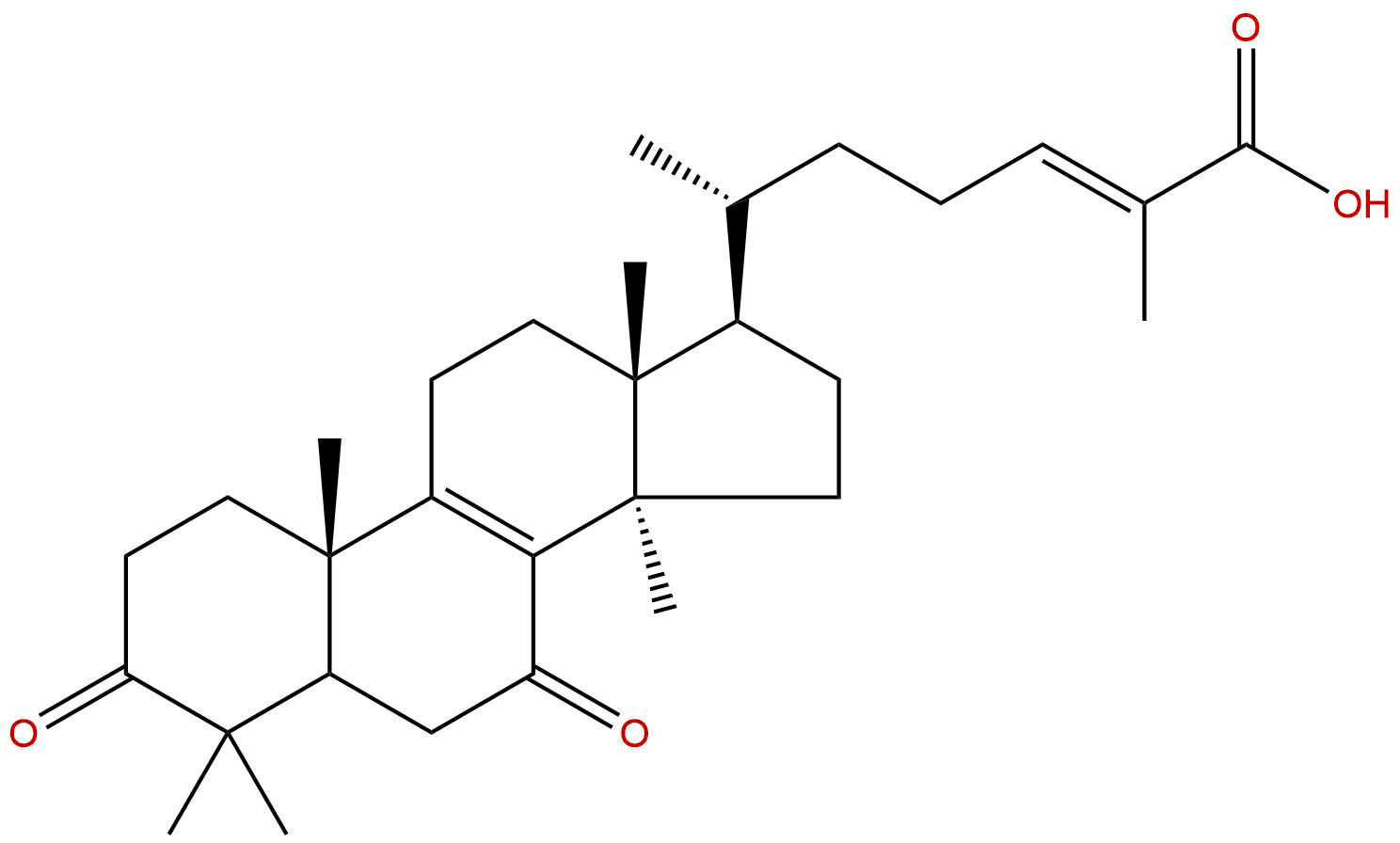


Product name: Ganoderic acid DM
Synonym name:
Catalogue No.: SBP00821
Cas No.: 173075-45-1
Formula: C30H44O4
Mol Weight: 468.678
Botanical Source:
Physical Description: Powder
Type of Compound: Triterpenoids
Purity: 95%~99%
Analysis Method: HPLC-DAD or/and HPLC-ELSD
Identification Method: Mass, NMR
Packing: Brown vial or HDPE plastic bottle
The product could be supplied from milligrams to grams. Inquire for bulk scale.
We provide solution to improve the water-solubility of compounds, thereby facilitating the variety of activity tests and clinic uses.
For Reference Standard and R&D, Not for Human Use Directly.
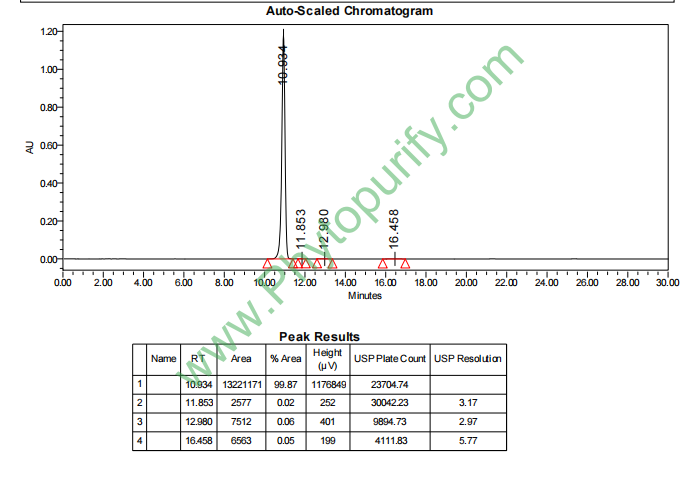
HPLC of Ganoderic acid DM
Storage conditions:Short-term storage at 2~8℃, long-term storage at -20 ~ -80℃
71.4400
5.5492
2.8231
.0026
5.6947
10.8578
Low
89.9048
4.6994
No
Yes
Yes
No
No
No
0.0
No
No
No
No
Ganoderma acid DM (CAS number: 173075-45-1) is a traditional medicinal fungus derived from Ganoderma lucidum(Ganoderma lucidum)Natural products of tetracyclic triterpenoids isolated from the middle. As an important member of the hundreds of triterpenoid compounds family in Ganoderma lucidum, ganoderic acid DM is unique due to its antitumor and Inhibit osteoclast formation The dual biological activity of natural product pharmacology and tumor therapy has received widespread attention from researchers in recent years. Research background shows that Ganoderma lucidum is known as the "fairy grass" in traditional East Asian medicine, with a history of more than two thousand years of application, mainly used to enhance immunity and prolong life. Modern pharmacological research gradually reveals that one of its core active ingredients, triterpenoids, is an important material basis for exerting various pharmacological effects. The discovery and research of Ganoderma lucidum acid DM is a typical case of transforming traditional medicinal experience into modern precision drug lead compounds. Existing studies have shown that this compound can specifically induce DNA damage, G1 phase cell cycle arrest and apoptosis of human breast cancer cells, and can also act as a specific inhibitor of osteoclast formation, which means that it can be used in the treatment of Advanced prostate cancer It provides unique therapeutic potential for malignant tumors accompanied by bone metastasis. This article will systematically analyze the scientific value of this natural molecule from multiple dimensions such as its chemical nature, mechanism of action, and medicinal properties.
The molecular formula of Ganoderma lucidum acid DM is C30H44O4, with a molecular weight of 468.6780 g/mol, belonging to highly oxidized tetracyclic triterpenoids. Its SMILES structural formula (C/C (=C \ CC C@@H[C@H]1CC[C@@]2(C)C3=C(CC[C@]12C)[C@@]1(C)CCC(=O)C(C)(C)C1CC3=O)C(=O)O) Revealed its complex stereochemical structure, including multiple chiral centers and specific double bonds, carboxyl and carbonyl functional groups. This structure is the material basis for its biological activity.
Analyzing its physicochemical properties from the parameters of drug properties:
- fat-soluble The calculated LogP value is 5.5492, indicating that the compound has Higher lipophilicity This is beneficial for it to penetrate the cell membrane, but it may also lead to poor water solubility. Its LogD (distribution coefficient at pH 7.4) is 2.8231, significantly lower than LogP, indicating that at physiological pH, its carboxyl group may be partially ionized, increasing hydrophilicity, but overall it still tends to be lipophilic.
- Water solubility The measured water solubility is extremely low, only 0.0026 mg/mL, which is a direct consequence of high LogP values and a key pharmaceutical challenge that needs to be overcome for oral administration.
- Polar Surface Area The topological polar surface area (TPSA) is 71.44 Å ², which is in the moderate range and is usually compatible with a certain membrane permeability.
- Permeability The permeability data of Caco-2 cells is 10.8578 × 10 ⁻⁶ cm/s, and the Peff value is 5.6947, both indicating that it has Good intestinal permeability potential This is a positive signal for its oral absorption.
- Plasma protein binding rate As high as 89.9%, it means that most drugs in the blood bind to plasma proteins (mainly albumin), which may affect their free drug concentration and tissue distribution.
In summary, Ganoderma lucidum acid DM is a typical natural triterpenoid acid with physicochemical characteristics of "high lipid solubility, low water solubility, good membrane permeability, and high protein binding".
The only known plant source of Ganoderma lucidum acid DM is Lingzhi, scientific name Ganoderma lucidum It belongs to the Ganoderma family. Lingzhi is a large basidiomycete that mainly grows on decaying wood. Its fruiting body has a lacquer like luster, so it is also known as "Chizhi".
In traditional medicine, especially in the traditional Chinese medicine system, Ganoderma lucidum is revered as the "upper medicine" and is listed as one of the "nine immortal herbs". Its nature is calm, its taste is sweet, and it belongs to the heart, lungs, liver, and kidney meridians. The traditional efficacy is recorded in classics such as "Shennong Bencao Jing" and "Compendium of Materia Medica", mainly summarized as "tonifying qi and calming the mind, relieving cough and asthma, and prolonging life". It is commonly used to treat symptoms such as fatigue, cough, palpitations, insomnia, and indigestion. In folk culture, Ganoderma lucidum is endowed with mythological colors of "resurrection" and "immortality", representing nourishing and strengthening the body. Thousands of years of application history have accumulated rich experience for the safety of Ganoderma lucidum.
Modern scientific research began in the second half of the 20th century, gradually isolating and identifying various active ingredients such as polysaccharides, triterpenoids, sterols, nucleosides, etc. from Ganoderma lucidum fruiting bodies, spore powders, and mycelia. Among them, triterpenoids are considered to be the main source of the bitter taste of Ganoderma lucidum, and are also one of the key components of its modern pharmacological activities such as anti-tumor, hepatoprotective, and anti-inflammatory effects. The discovery of Ganoderma lucidum acid DM is a modern scientific annotation of the traditional "strengthening the body and consolidating the foundation" effect of Ganoderma lucidum (which may involve immune regulation and inhibition of abnormal proliferation), linking macroscopic efficacy with microscopic molecular mechanisms of action.
The core pharmacological activity of Ganoderma lucidum acid DM focuses on antitumor and Inhibit osteoclast formation There are two aspects, and both have synergistic significance in the treatment of bone metastatic cancer.
The existing description clearly points out that Ganoderm can induce DNA damage, G1 phase cell cycle arrest and apoptosis of human breast cancer cells. Its mechanism of action involves the regulation of multiple key targets, which is highly consistent with the target information provided by the database:
1. Inducing DNA damage and activation of p53 pathway DNA damage is an important trigger for cell apoptosis. The target TP53 (i.e. p53 protein) is a well-known "guardian of the genome". Lingzhi acid DM may cause DNA damage directly or indirectly, thereby activating p53. Activated p53, as a transcription factor, upregulates the expression of downstream target genes.
2. Regulating the cell cycle After activation of p53, it will induce CDKN1A The expression of p21 protein. P21 is a potent inhibitor of cyclin dependent kinase (CDK), which can cause cell cycle arrest in the G1 phase, buy time for DNA repair, and initiate apoptosis if the damage is irreparable. This explains the molecular basis of G1 phase blockade caused by ganoderic acid DM.
3. Activate mitochondrial apoptosis pathway P53 can also transcribe and activate pro apoptotic proteins BAX The expression. BAX protein migrates to the outer membrane of mitochondria, leading to increased membrane permeability, release of cytochrome C, and activation of apoptotic executors CASP3(Caspase-3), Ultimately leading to programmed cell death.
4. Inhibition of cell proliferation related genes: Target MYC(c-Myc) is an important oncogene that regulates cell proliferation, metabolism, and apoptosis. Lingzhi acid DM may further inhibit the malignant proliferation of tumor cells by suppressing the expression or activity of MYC.
Integrated pathway Lingzhi acid DM may activate the core hub p53 through initial stress signals (such as causing DNA damage). On the one hand, p53 brakes the cell cycle (G1 phase arrest) through p21 (CDKN1A), and on the other hand, it initiates apoptosis through the BAX/Caspase-3 pathway. At the same time, the synergistic inhibition of MYC weakens the growth dynamics of tumor cells. The synergistic effect of multiple targets and pathways constitutes the molecular network of its anti-tumor effect.
This is another distinctive pharmacological effect of Ganoderma lucidum acid DM, especially significant in the treatment of cancer bone metastasis. Osteoclasts are multinucleated giant cells responsible for bone resorption, and their excessive activation is a key link in diseases such as osteoporosis and cancer bone resorption.
- Function description Lingzhi acid DM is defined as an "anti androgen osteoclast inhibitor". It can specifically inhibit key transcription factors involved in osteoclast differentiation process c-Fos and Activated T cell nuclear factor c1 (NFATc1)The expression.
- Mechanism Analysis In the signaling pathway of osteoclast differentiation (usually triggered by RANKL ligands), c-Fos and NFATc1 are core transcriptional regulatory factors. NFATc1 is considered the "main regulatory switch" for osteoclast differentiation. Lingzhi acid DM inhibits these two key factors, leading to the inhibition of downstream osteoclast specific genes (such as protease K and tartrate resistant acid phosphatase) expression.
- Key downstream effects Of particular importance is that this inhibition leads to Dendritic cell specific transmembrane protein (DC-STAMP) Reduced expression. DC-STAMP is an essential factor for the fusion of osteoclast precursor cells to form multinucleated mature osteoclasts. Therefore, ganoderic acid DM fundamentally inhibits DC-STAMP Reduced fusion of osteoclasts Thus, it inhibits the generation of multinucleated osteoclasts with strong bone resorption function.
Combining the above two activities, Ganoderma lucidum acid DM Advanced prostate cancer Showing unique prospects in treatment. Prostate cancer is often androgen dependent and prone to bone metastasis in late stages, leading to serious complications such as bone pain and pathological fractures. The destruction of bone metastases is mediated by overactive osteoclasts.
1. antitumor Lingzhi acid DM is toxic to both androgen dependent and non androgen dependent prostate cancer cells.
2. Anti bone resorption In advanced metastatic diseases, it can significantly reduce osteoclastogenesis, thereby alleviating bone destruction.
3. Anti androgen effect The "anti androgen" properties described may directly interfere with the androgen receptor signaling pathway and have additional therapeutic effects on hormone sensitive prostate cancer.
Therefore, Ganoderma lucidum acid DM provides a "one stone, two birds" treatment strategy: it directly kills tumor cells while protecting the bone microenvironment, inhibiting the "tumor bone" vicious cycle, and is expected to become an alternative or adjuvant drug for the treatment of advanced prostate cancer.
Based on the provided pharmacological parameters and combined with classical methods Lipinski's Five Rules By analyzing the "Five Principles of Similar Drugs", the potential of Ganoderma lucidum acid DM as an oral drug lead compound can be evaluated.
Lipinski's Five Rules Analysis:
1. Molecular weight (MW):468.68 < 500 Da, Compliant.
2. Lipid water partition coefficient (LogP):5.55 > 5,not conform to This is its main drawback, as a high LogP value indicates poor water solubility.
3. Number of hydrogen bond donors (HBDs)From the structural formula, it mainly contains one carboxyl group (which can provide an H ⁺), and may also have a hydroxyl group? According to the molecular formula C30H44O4 and common triterpenoid acid structures, the number of HBDs is usually ≤ 2 (such as carboxyl groups and possible individual hydroxyl groups),Comply with(≤5)。
4. Number of hydrogen bond acceptors (HBA)There are 4 oxygen atoms (O4) in the molecule, all of which are potential HBAs,Comply with(≤10)。
5. Number of rotatable keys Based on the complex triterpenoid skeleton, it is inferred that there may be a large number of rotatable bonds, but usually not exceeding 10, which requires precise calculation. Therefore, it is temporarily assumed that Basic compliance。
Conclusion: Lingzhi acid DM violates the LogP term (>5) in Lipinski's rule and belongs to the "Class I Violation" compound. This usually means that its oral bioavailability may face challenges.
Interpretation of other key pharmacological parameters:
- absorb Good Caco-2 permeability (10.86) and Peff value (5.69) are its advantages, indicating strong transmembrane absorption ability once dissolved. But extremely low Water solubility (0.0026 mg/mL) It is orally absorbed Main speed limit steps It may need to be improved through formulation techniques such as making salts, nanocrystals, solid dispersions, liposomes, etc.
- distribution:High plasma protein binding rate (89.9%) It may affect the concentration of free drugs and may require higher doses to achieve effective therapeutic concentrations.Low blood-brain barrier (BBB) penetration It indicates that it is not easy to enter the central nervous system, which may actually reduce central side effects for drugs that mainly act on peripheral bones and solid tumors, and is a beneficial characteristic.
- Metabolism and toxicity:
- Ames test negative (0.0),Chromosomal aberration test negative It indicates that it has no genetic toxicity and good safety.
- HERG inhibition negative It reduces the risk of causing QT interval prolongation and arrhythmia in the heart, and has good cardiovascular safety.
-Existence Skin sensitization and Respiratory sensitization Risks need to be closely monitored in drug development.
-Yes, that's right Serum biomarkers (ALK, GGT, AST, ALT) No impact, indicating no obvious signs of liver damage under testing conditions.
- Feasibility of synthesis The SyneAccess score (4.6994) reflects the difficulty level of its synthesis or semi synthesis, and this value needs to be interpreted in conjunction with specific criteria. Generally, the lower the score, the easier it is to obtain. Ganoderma lucidum is still mainly extracted from natural sources, and the synthetic route may be more complex.
Overall evaluation of drug properties Lingzhi acid DM is a lead compound with clear and unique dual pharmacological effects. The main bottleneck of its medicinal properties lies in Poor solubility (high LogP, low water solubility)However, its excellent membrane permeability, no genetic toxicity, and cardiotoxicity lay the foundation for its further development. Through modern medicinal chemical modifications (such as structural simplification, introduction of hydrophilic groups to reduce LogP) or advanced drug delivery technologies, it is expected to overcome its physicochemical defects and enhance its bioavailability.
Research status:
At present, research on Ganoderma lucidum acid DM is still in progress Preclinical stage Mainly focused on in vitro cell models and a few animal models. Studies have confirmed its anti proliferation and pro apoptosis effects in breast cancer, prostate cancer and other cell lines, as well as its specific inhibitory ability in osteoclast differentiation models. The study of its mechanism of action has preliminarily outlined a multi-path network through key targets such as p53 and NFATc1. However, there are still many gaps that need to be filled in terms of its detailed pharmacokinetic characteristics (absorption, distribution, metabolism, excretion), in vivo anti-tumor and anti bone resorption efficacy validation, optimal dosing regimen, and long-term toxicology studies.
Application Prospects:
1. Development of anti-tumor drugs Especially for:Solid tumor with bone metastasis, such as prostate cancer, breast cancer, lung cancer, etc. Its dual functional characteristics of "anti-cancer+bone protection" make it promising to be developed as a specialized drug for treating cancer bone metastasis, or combined with existing chemotherapy, targeted therapy, and immunotherapy to enhance efficacy and reduce toxicity (alleviate bone related events).
2. Lead compounds of anti osteoporosis drugs Based on its strong osteoclast formation inhibitory activity, structural optimization of it is expected to develop novel anti osteoporosis drugs, especially for the treatment of postmenopausal osteoporosis or glucocorticoid induced osteoporosis.
3. Template for Pharmaceutical Chemistry Optimization Its tetracyclic triterpenoid skeleton is a valuable starting point for medicinal chemistry. Through semi synthetic modification, a series of compound libraries can be derived for structure-activity relationship research, in order to find candidate molecules with stronger activity and better drug properties. For example, improving water solubility and LogP by modifying carboxyl groups or introducing polar groups.
4. Functional food or health supplement additives Under the premise of ensuring safety and effective dosage, Ganoderma lucidum extract rich in specific triterpenoids (including ganoderic acid DM) can be developed as a dietary supplement to assist cancer patients in recovery and improve bone health.
Future research directions:
-Carry out systematic development Pharmacodynamic evaluation in vivo Establish a suitable animal model of bone metastatic cancer and verify its dual efficacy.
-Conduct a comprehensive Preclinical pharmacokinetic and toxicological studies Clarify its ADMET (absorption, distribution, metabolism, excretion, and toxicity) characteristics.
-Utilize Computer aided drug design and Synthetic Biology Means to optimize its structure or explore efficient biosynthetic pathways.
-Conduct in-depth research on it The specific mechanism of anti androgen effect And its interaction with the AR (androgen receptor) signaling pathway.
Conclusion:
Lingzhi acid DM is a star molecule derived from the traditional treasure Lingzhi, which perfectly embodies the translational medicine concept of "using the past for the present". Its dual pharmacological effects of anti-tumor and anti osteoclast formation provide new ideas and unique chemical tools for solving the clinical problem of cancer bone metastasis. Although it still faces challenges such as solubility on the path of drug development, its clear target mechanism and good safety foundation make it a highly valuable lead compound for development. With the deepening application of modern drug research and development technology, ganoderic acid DM and its derivatives are expected to shine in the fields of cancer treatment and bone health in the future, becoming another model that connects traditional wisdom with modern science.
