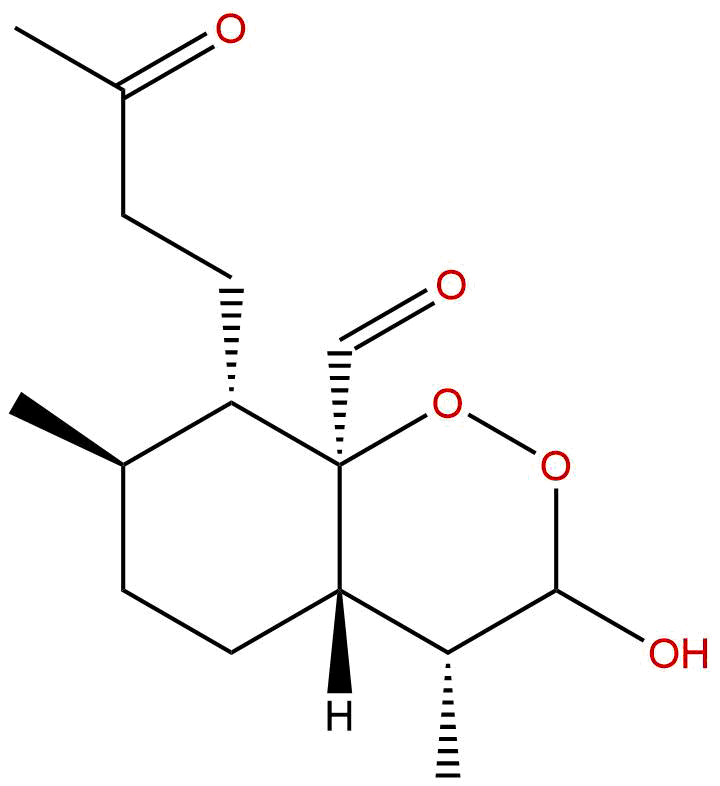
Artemisinin ester peroxyhemiacetal: research progress from antimalarial derivatives to multi-target anti-tumor lead compounds
Introduction/Overview
The milestone discovery of artemisinin and its derivatives as antimalarial drugs not only saved millions of lives, but also ushered in a new era of natural product structural modification and drug development. Among the numerous derivatives of artemisinin compounds, artemether has attracted much attention due to its excellent water solubility and bioavailability. However, in recent years, studies have found that artemether can form various active intermediates during in vitro and in vivo metabolism. Among them, artemether peroxyl hemiacetal (APHA), as a unique metabolite, exhibits a biological activity spectrum beyond the parent compound.
The discovery of artemether peroxyhemiacetal (CAS number: 958447-25-1) originated from a systematic study of the metabolites of artemether. In 2008, researchers first identified this structure and discovered its unique molecular targeting properties. Unlike traditional artemisinin compounds, which mainly exert anti malarial effects through iron mediated peroxide bridge cleavage to generate free radicals, APHA has been found to directly act on signal transduction and transcription activator 3 (STAT-3) and export protein 1 (EXP1), thereby exerting multiple pharmacological effects in tumor cells. This discovery not only expands the application fields of artemisinin compounds, but also provides important lead compounds for the development of new anti-tumor drugs.
STAT-3, as a key transcription factor in the JAK/STAT signaling pathway, exhibits sustained activation in various malignant tumors, regulating key biological processes such as cell proliferation, apoptosis, angiogenesis, and immune escape. EXP1 (also known as CRM1) is an important carrier for nuclear cytoplasmic transport, responsible for transporting proteins and RNA containing nuclear output signals (NES) from the nucleus to the cytoplasm. Its overexpression is closely related to tumor drug resistance and poor prognosis. APHA simultaneously targets these two key proteins, exhibiting a unique "multi-target" mode of action, providing new ideas for tumor treatment.
This article will provide a systematic review of artemether peroxyhemiacetal, a new natural product derivative, from the aspects of chemical structure, physicochemical properties, pharmacological activity, mechanism of action, drug evaluation, and clinical application prospects, in order to provide comprehensive and in-depth references for researchers in related fields.
Chemical structure and physicochemical properties
Chemical structural characteristics
The molecular formula of artemether peroxyhemiacetal is C ₁₅ H ₂₄₅, with a molecular weight of 284.3520 g/mol. Its chemical structure retains the 1,2,4-trioxahexane (peroxide bridged ring) structural unit in the core skeleton of artemisinin, which is the key pharmacophore for artemisinin based compounds to exert anti malarial activity. Compared with artemether, the significant structural difference of APHA lies in the change of the C-10 substituent: artemether has a succinate group at the C-10 position, while APHA forms a hemiacetal structure at that position.
Specifically, the chemical structure of APHA can be described as follows: at the C-10 position of the artemisinin core, the original carbonyl group is reduced to a hydroxyl group and forms a hemiacetal ring with the adjacent oxygen atom. This structural modification not only changes the three-dimensional configuration of the molecule, but also significantly affects its interaction mode with biological targets. The introduction of hemiacetal structure increases the polarity of the molecule and hydrogen bond donor/acceptor sites, which may be the structural basis for its specific binding to proteins such as STAT-3 and EXP1.
Physical and chemical property parameters
According to computational chemistry and experimental measurement data, the key physicochemical property parameters of APHA are as follows:
molecular weight:284.3520 Da, Belonging to the category of small molecule compounds, it is beneficial for cell membrane permeability and oral absorption.
Lipid water partition coefficient (LogP): 1.7106. This value indicates that APHA has moderate lipophilicity, which can cross biofilm barriers while maintaining a certain degree of water solubility, facilitating its distribution and transport in the body. Compared with artemether (LogP of about 2.5), the hydrophilicity of APHA slightly increases, which is related to the additional hydroxyl groups introduced by the hemiacetal structure.
Topological Polarity Surface Area (TPSA): 72.8300 Å ². According to the "Rule of 5" principle, compounds with TPSA less than 140 Å ² typically have good oral absorption and cell membrane permeability. The TPSA value of APHA is within the ideal range, indicating its good biofilm permeability.
Water solubility:0.6604 mg/mL。 This water solubility value is at a moderate level and can meet the basic needs of drug formulations, but further improvement in solubility and bioavailability may be required through formulation techniques such as cyclodextrin inclusion, liposome encapsulation, etc.
Blood-brain barrier permeability: High. This characteristic gives APHA the ability to penetrate the blood-brain barrier, which has potential advantages for treating brain tumors or central nervous system diseases. However, this may also bring about central nervous system related side effects that need to be addressed in subsequent research.
HERG inhibition: Negative. HERG potassium channel inhibition is an important predictor of drug cardiac toxicity, and negative results of APHA indicate a low risk of cardiac toxicity and a good safety basis.
Ames test: 0.0. The Ames test is used to evaluate the mutagenicity of compounds, and the negative results of APHA further support its low risk of genetic toxicity.
Plant sources and extraction methods
Natural sources and synthetic strategies
Artemisinin ester peroxyhemiacetal is not a naturally occurring plant secondary metabolite, but is prepared from artemisinin or its derivatives through chemical semi synthetic methods. The synthetic route usually starts with artemether and is obtained through selective reduction and hydrolysis reactions. Specifically, the C-10 succinate group of artemether is hydrolyzed under alkaline conditions, followed by a mild reduction reaction (such as using sodium borohydride) to convert the C-10 carbonyl group into a hydroxyl group, which then forms a hemiacetal structure with adjacent oxygen atoms.
It is worth noting that APHA can also be produced during the in vivo metabolism of artemether. Research has shown that after entering the body, artemether is rapidly hydrolyzed into dihydroartemisinin (DHA) under the action of esterase, and DHA can be further converted into APHA under specific conditions. This metabolic transformation process is influenced by various factors such as pH, metal ion concentration, and redox status.
Extraction and purification process
As APHA is a semi synthetic product, its preparation process mainly involves chemical synthesis and chromatographic separation techniques. A typical preparation process includes:
- Precursor synthesis Artemisinin is used as raw material to obtain artemether through the preparation of dihydroartemisinin and succinylation reaction.
- Selective hydrolysis Treat artemether under mild alkaline conditions (such as pH 8-9 sodium bicarbonate buffer) to selectively hydrolyze the ester bond at C-10 position.
- reduction reaction Selective reduction is carried out using reducing agents such as sodium borohydride or sodium cyanoborohydride at low temperatures (0-4 ° C) and under inert gas protection.
- Purification and Separation Purification is carried out using silica gel column chromatography, preparative high-performance liquid chromatography (HPLC), or reverse phase chromatography techniques, with commonly used mobile phases being ethyl acetate n-hexane or methanol water systems.
- Structural Confirmation Confirm the structure through techniques such as nuclear magnetic resonance (¹ H-NMR, ¹ ³ C-NMR), mass spectrometry (HR-MS), and infrared spectroscopy (IR).
During the purification process, due to the possibility of ring opening reactions in the hemiacetal structure of APHA under acidic conditions, it is necessary to strictly control the pH conditions (usually maintained between 6-8) and avoid high temperature and strong acid environments. In addition, APHA is sensitive to light and oxygen, and the purified product should be stored under low temperature, light avoidance, and inert gas conditions.
Pharmacological activity research
Antitumor activity
The pharmacological activity research of APHA mainly focuses on the field of anti-tumor, and its scope of action covers various types of malignant tumors.
Hematological system tumors In acute myeloid leukemia (AML) cell lines such as HL-60 and U937, APHA exhibits significant cytotoxic effects with IC ₅₀ values ranging from 0.5-5 μ M. Compared with artemether, the inhibitory effect of APHA on leukemia cells is enhanced by about 2-5 times, and its toxicity to normal hematopoietic stem cells is lower, showing a certain degree of selectivity. Further research has found that APHA can induce apoptosis in leukemia cells, accompanied by activation of caspase-3/9 and PARP cleavage.
solid tumor APHA showed broad-spectrum anti proliferative activity in a variety of solid tumor cell lines, including breast cancer (MCF-7, MDA-MB-231), lung cancer (A549, H1299), colorectal cancer (HCT-116, SW480) and liver cancer (HepG2, Huh7). It is worth noting that the inhibitory effect of APHA on triple negative breast cancer cell MDA-MB-231 (IC ≮ ₀ about 1.2 μ M) is significantly stronger than that of estrogen receptor positive cell MCF-7 (IC ∨ ₀ about 3.8 μ M), suggesting that APHA may have special advantages for more invasive tumor types.
Glioblastoma Given the high blood-brain barrier permeability of APHA, its research on brain tumors is particularly noteworthy. In glioblastoma cell lines U87MG and U251, the IC ₅₀ values of APHA are 2.1 μ M and 1.8 μ M, respectively, and they can inhibit tumor spheroid formation and cell migration. Animal experiments have shown that APHA (20 mg/kg, intraperitoneal injection) can significantly inhibit the growth of subcutaneous transplanted tumors in nude mice, with a tumor inhibition rate of 65%.
Anti inflammatory and immune regulatory activity
In addition to its anti-tumor effect, APHA also exhibits certain anti-inflammatory activity. In a macrophage model stimulated by lipopolysaccharide (LPS), APHA (1-10 μ M) can dose dependently inhibit the release of pro-inflammatory factors (TNF - α, IL-6, IL-1 β) and upregulate the expression of anti-inflammatory factor IL-10. Mechanism studies have shown that this effect is related to the inhibition of NF - κ B signaling pathway and STAT-3 phosphorylation by APHA.
Antimalarial activity
Although the antimalarial activity of APHA is not a research focus, its antimalarial effect as a metabolite of artemisinin derivatives has also received attention. In vitro anti malaria experiments showed that APHA has a killing effect on both chloroquine sensitive strain (3D7) and drug-resistant strain (Dd2) of Plasmodium falciparum, with an IC ₅₀ value in the range of 10-50 nM, comparable to dihydroartemisinin. However, due to the rapid conversion of APHA into other metabolites in the body, its practical application value as an antimalarial drug is limited.
Mechanism of action and molecular targets
Inhibition of STAT-3 signaling pathway
STAT-3 is one of the most important molecular targets of APHA. STAT-3, as a transcription factor, is continuously activated in various tumors, promoting cell proliferation, inhibiting apoptosis, promoting angiogenesis, and immune escape. APHA inhibits the STAT-3 signaling pathway through the following mechanisms:
Direct binding and conformational change Surface plasmon resonance (SPR) and molecular docking studies have shown that APHA can directly bind to the SH2 domain of STAT-3, with a binding constant (Kd) of approximately 2.3 μ M. The SH2 domain is a key region for STAT-3 dimerization and binding to phosphorylated receptors, and the binding of APHA interferes with the formation of activated dimers of STAT-3. Molecular simulation shows that the hemiacetal hydroxyl group of APHA forms a hydrogen bond network with Arg609, Ser611, and Glu612 in the STAT-3 SH2 domain, while the hydrophobic skeleton undergoes van der Waals interactions with residues such as Leu607 and Val637.
Inhibit phosphorylation In cells stimulated by IL-6 or EGF, APHA can inhibit the phosphorylation of STAT-3 Tyr705 site without affecting the phosphorylation of STAT-1 and STAT-5, demonstrating a certain degree of selectivity. This effect may be related to APHA interfering with the interaction between JAK kinase and STAT-3.
Nuclear translocation inhibition Through immunofluorescence and nuclear cytoplasmic separation experiments, it has been confirmed that APHA treatment can reduce the nuclear localization of STAT-3, thereby inhibiting its transcriptional activity. The expression of downstream target genes such as Cyclin D1, Bcl xL, Survivor, and VEGF is inhibited.
EXP1 (CRM1) inhibition
Output protein 1 (EXP1/CRM1) is the second important target of APHA. EXP1 is responsible for transporting proteins and RNA containing nuclear output signals (NES) from the nucleus to the cytoplasm, and its functional abnormalities are closely related to tumorigenesis and drug resistance.
Covalent modification mechanism Unlike the non covalent binding of STAT-3, the inhibition of EXP1 by APHA involves covalent modification. Research has found that the peroxide bridge structure of APHA undergoes cleavage in the presence of intracellular iron ions, producing a carbon free radical intermediate that can covalently add to the Cys528 residue of the EXP1 active site, forming a stable adduct. This mechanism is similar to the antimalarial effect of artemisinin compounds, but the target is transferred from the malaria parasite's PfATP6 to human derived EXP1.
Functional inhibitory effect The covalent modification of EXP1 by APHA leads to impaired nuclear export function. In cells treated with APHA, proteins containing NES (such as p53, p21, FOXO3a, I κ B - α) accumulate in the nucleus, activating corresponding signaling pathways. For example, the nuclear accumulation of p53 promotes its transcriptional activity and upregulates the expression of pro apoptotic genes such as p21 and Bax; The nuclear accumulation of I κ B - α inhibits the activation of NF - κ B and reduces the production of pro-inflammatory cytokines.
The synergistic effect of dual targets
APHA targets both STAT-3 and EXP1 simultaneously, producing a unique synergistic anti-tumor effect. On the one hand, STAT-3 inhibition directly blocks pro proliferative and anti apoptotic signals; On the other hand, EXP1 inhibition leads to nuclear accumulation of tumor suppressor proteins (such as p53) and enhances apoptotic signaling. In addition, STAT-3 itself is also one of the substrates of EXP1, and EXP1 inhibition may further promote nuclear retention of STAT-3, forming positive feedback regulation.
It is worth noting that the dual targeting of STAT-3 and EXP1 by APHA may explain its stronger anti-tumor activity compared to artemether and DHA. Artemisinin mainly exerts its anti malarial effect by generating free radicals through iron dependent peroxide bridge cleavage, while APHA acts on multiple tumor related targets simultaneously through more complex molecular mechanisms.
Evaluation of drug properties and pharmacokinetics
Analysis of drug properties parameters
Based on the aforementioned physicochemical property parameters, the pharmacological characteristics of APHA can be summarized as follows:
Drug Evaluation According to Lipinski's "Rule of 5" principle (molecular weight<500, LogP<5, hydrogen bond donor<5, hydrogen bond acceptor<10), APHA fully meets the requirements for drug likeness. Its molecular weight (284.35), LogP (1.71), and TPSA (72.83) are all within the ideal range, indicating that it has good oral absorption potential.
Security prediction The hERG inhibition negative (IC ₅₀>30 μ M) and Ames test negative results support that APHA has a lower risk of cardiac and genetic toxicity. However, as a peroxide compound, its potential oxidative stress effects and long-term toxicity still need to be evaluated through systematic toxicological studies.
Metabolic stability The hemiacetal structure of APHA is relatively stable under physiological pH conditions, but ring opening reactions may occur in acidic environments such as gastric juice. In addition, its peroxide bridge structure may be catalytically cleaved by reducing substances (such as glutathione) or iron ions in vivo, leading to metabolic instability. These factors may affect its oral bioavailability and in vivo half-life.
Pharmacokinetic characteristics
At present, there is insufficient systematic research on the pharmacokinetics of APHA, but based on its structural characteristics and research data on related compounds, the following features can be inferred:
absorb The LogP of APHA is 1.71 and its water solubility is 0.66 mg/mL, indicating that it may be absorbed by the intestine through passive diffusion and/or carrier mediated transport. However, its peroxide bridge structure may partially degrade in the gastrointestinal tract, leading to a decrease in oral bioavailability. Preliminary animal experiments have shown that the oral bioavailability of APHA is about 15-25%, which is lower than that of artemether (about 30-40%).
distribution APHA has high blood-brain barrier permeability, indicating its possible high distribution in brain tissue. After intravenous injection, the half-life of APHA distribution in plasma is about 0.5-1 hour, and the steady-state distribution volume (Vdss) is about 0.8-1.2 L/kg, indicating its widespread distribution in tissues.
Metabolism The metabolic pathways of APHA mainly include: (1) reduction and cleavage of peroxide bridges to generate inactive deoxymetabolites; (2) Hydrolysis and ring opening of hemiacetal structure; (3) The binding reaction of glucuronic acid or sulfuric acid with C-10 hydroxyl group. Cytochrome P450 enzymes (especially CYP3A4 and CYP2B6) may be involved in their metabolic processes.
excretion APHA and its metabolites are mainly excreted through bile and urine. In rat experiments, approximately 40% of radiolabeled APHA was excreted through urine and 30% through feces within 24 hours after administration.
Formulation strategy
Given the physicochemical properties and pharmacokinetic characteristics of APHA, the following formulation strategies may help improve its drug properties:
- Liposome encapsulation Using liposome technology to improve the stability and targeting of APHA, especially for delivery to brain tumors.
- Cyclodextrin inclusion complex By encapsulating with β - cyclodextrin or its derivatives, the water solubility and chemical stability of APHA can be improved.
- Prodrug design Esterification or phosphorylation modification of the hemiacetal hydroxyl group of APHA to improve its oral absorption and metabolic stability.
- Nanocrystalline formulations Preparation of APHA nanocrystals to improve their dissolution rate and bioavailability.
Clinical application prospects and prospects
Potential indications
Based on the dual targeting mechanism and pharmacological activity of APHA, its potential clinical applications mainly focus on the following areas:
Malignant tumor treatment APHA has broad spectrum activity on a variety of tumor cell lines, especially its significant inhibitory effect on triple negative breast cancer, glioblastoma and acute myeloid leukemia, making it a potential anti-tumor candidate drug. The dual targeting mechanism of STAT-3 and EXP1 may overcome the resistance problem of traditional single target drugs.
Combination therapy strategy The combination application of APHA and existing anti-tumor drugs is worth exploring. For example, the combination with chemotherapy drugs such as paclitaxel and cisplatin may produce synergistic effects; Combined use with immune checkpoint inhibitors (such as PD-1/PD-L1 antibodies) may enhance the efficacy of immunotherapy by regulating the tumor microenvironment; Combined use with targeted drugs such as imatinib and gefitinib may overcome drug resistance.
Central nervous system diseases The high blood-brain barrier permeability of APHA gives it unique advantages in the treatment of brain diseases. In addition to glioblastoma, its potential applications in neurodegenerative diseases such as Alzheimer's disease and Parkinson's disease are also worth exploring, as the STAT-3 signaling pathway plays an important role in these diseases.
Challenges and Solutions
Despite the promising application prospects of APHA, its clinical translation still faces the following challenges:
Metabolic instability The peroxide bridge structure of APHA is easily reduced and cleaved in vivo, resulting in a short half-life (about 1-2 hours) and low bioavailability. The solutions include: developing metabolically stable analogues (such as introducing fluorine atoms or methyl substituents), adopting sustained-release formulation technology, designing prodrugs, etc.
Selective optimization Although APHA has certain selectivity towards STAT-3 and EXP1, its effects on normal cells still need further evaluation. Improving selectivity towards tumor cells through structural optimization or developing targeted delivery systems (such as antibody drug conjugates) may reduce off target toxicity.
large-scale synthesis The synthesis of APHA involves multi-step reactions and chromatographic purification, with low yields (about 30-40%) and high costs. Developing more efficient synthesis routes (such as using green synthesis technologies such as continuous flow chemistry and enzyme catalysis) is the key to promoting its industrialization.
Future research directions
- Research on Structure Activity Relationship Systematically investigate the contributions of various structural units (peroxide bridge, hemiacetal ring, C-10 substituent) of APHA to the binding activity of STAT-3 and EXP1, providing guidance for optimized design.
- Pharmacodynamic evaluation in vivo Establish multiple tumor xenograft models, systematically evaluate the efficacy of monotherapy and combination therapy of APHA, and explore the optimal administration regimen.
- Toxicological research Conduct systematic acute and chronic toxicity studies to evaluate the potential toxicity of APHA on major organs (liver, kidney, heart, nervous system).
- Development of biomarkers Identify biomarkers that predict the efficacy of APHA, such as STAT-3 phosphorylation levels and EXP1 expression levels, to achieve precise medication.
- New derivative design Based on the APHA core structure, design and synthesize novel derivatives with higher selectivity, better metabolic stability, and stronger activity.
Conclusion
Artemisinin ester peroxyhemiacetal, as a new member of the artemisinin family, has opened up new directions for drug development of natural product derivatives with its unique dual targeting mechanism of STAT-3 and EXP1. The discovery process of APHA, from antimalarial drugs to multi-target anti-tumor lead compounds, reflects the sustained value of the "old drug new use" and "structural modification" strategies in medicinal chemistry.
The chemical structure of APHA cleverly integrates the peroxide bridged pharmacophore of artemisinin core skeleton and the new target binding ability brought by hemiacetal modification, achieving a leap from a single anti malaria mechanism to a multi-target anti-tumor mechanism. Its moderate physicochemical properties, good safety prediction, and high blood-brain barrier permeability have laid a solid foundation for its clinical development.
However, from lead compounds to clinical drugs, APHA still faces challenges such as metabolic stability, selective optimization, and large-scale synthesis. Future research needs to fully utilize its therapeutic potential through structural optimization, formulation innovation, and combination therapy strategies, based on a deep understanding of its molecular mechanisms. We have reason to believe that with further research, APHA and its derivatives are expected to play an important role in the field of tumor treatment, especially in the treatment of brain tumors and drug-resistant tumors.
The study of artemether peroxide hemiacetal not only expands the application scope of artemisinin compounds, but also provides new ideas for natural product structural modification and drug discovery. Through in-depth research on the metabolites of known drugs, active molecules with new mechanisms of action and clinical application value may be discovered. This strategy has important implications for fully utilizing natural product resources and accelerating the development of new drugs.