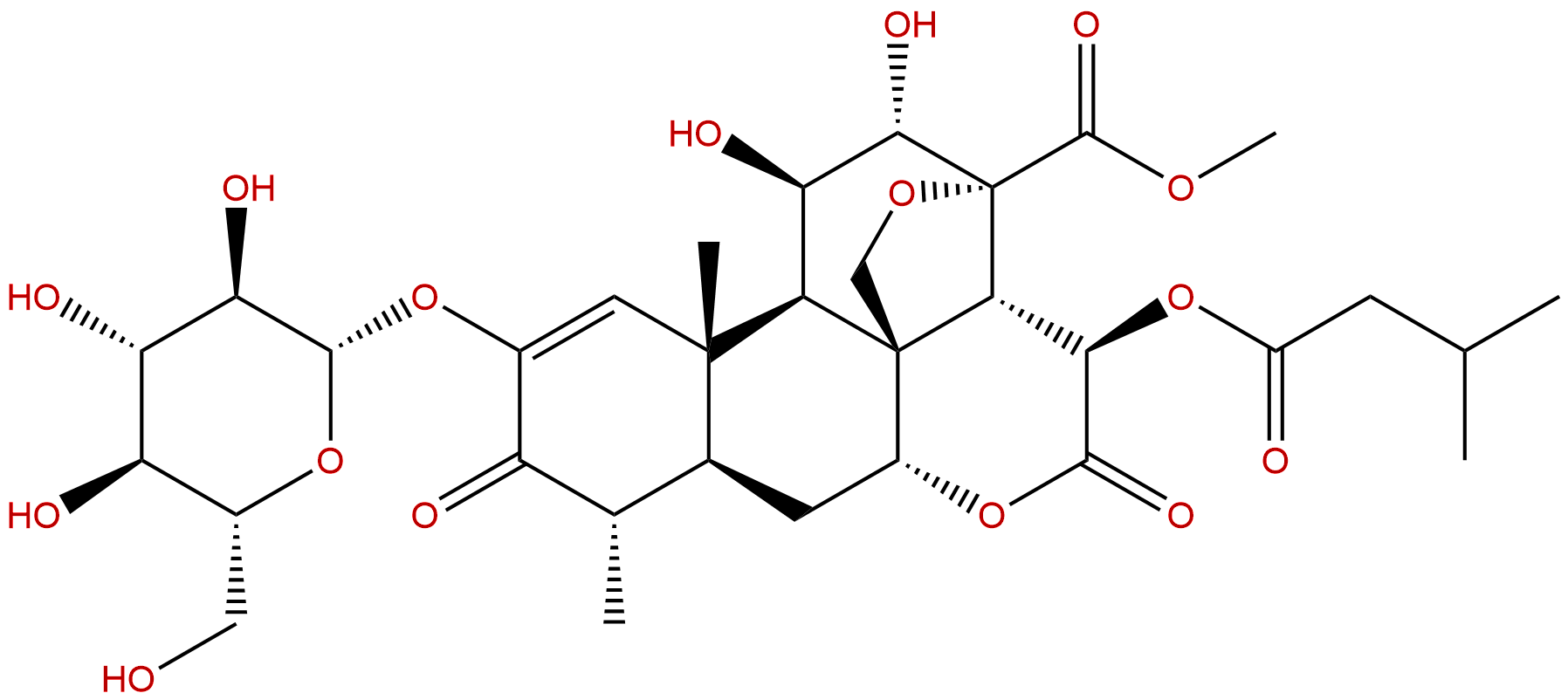


Product name: Yadanzioside A
Synonym name:
Catalogue No.: BP3460
Cas No.: 95258-15-4
Formula: C32H44O16
Mol Weight: 684.688
Botanical Source:
Physical Description:
Type of Compound:
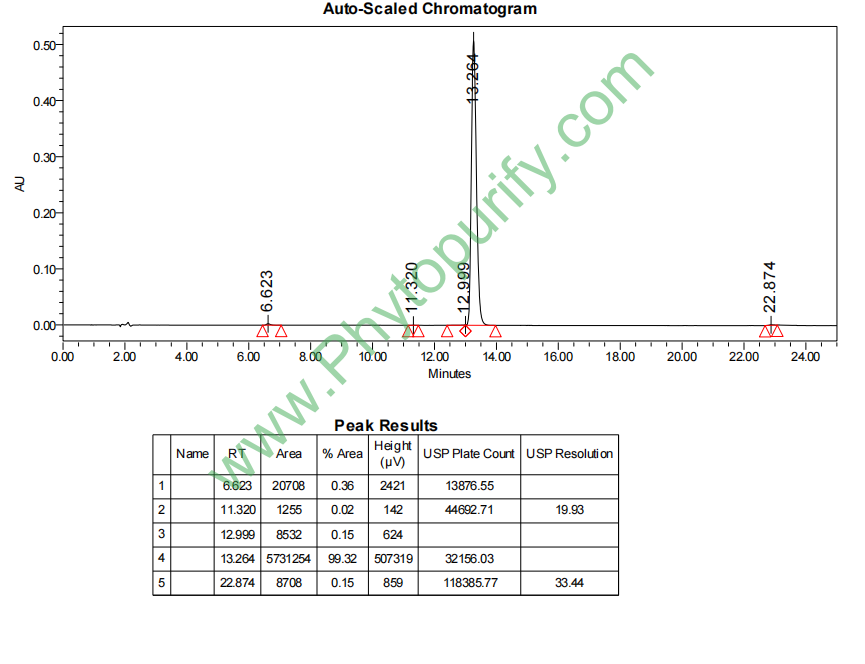
Purity: 95%~99%
Analysis Method: HPLC-DAD or/and HPLC-ELSD
Identification Method: Mass, NMR
Packing: Brown vial or HDPE plastic bottle
The product could be supplied from milligrams to grams. Inquire for bulk scale.
We provide solution to improve the water-solubility of compounds, thereby facilitating the variety of activity tests and clinic uses.
For Reference Standard and R&D, Not for Human Use Directly.
HPLC of Yadanzioside A
Storage conditions:Short-term storage at 2~8℃, long-term storage at -20 ~ -80℃
245.0400
-.0693
-.0696
1.4559
.5591
.8099
Low
58.3821
6.9545
Yes
No
No
No
Yes
No
0.0
Yes
No
Yes
Yes
Natural products, as an important source of drug discovery, play an irreplaceable role in the long history of human fight against diseases. From ancient plant medicines to modern targeted drugs, the secondary metabolites contained in nature continue to provide valuable lead compounds for the development of innovative drugs due to their unique chemical diversity and biological activity. Among the many natural products with anti-tumor potential, it comes from the Sapindaceae plant Brucea Javanica(Brucea javanica The series of lignin compounds, especially their glycosides, of (L.) Merr. have long been a hot topic in natural product chemistry and pharmacology research due to their significant cytotoxic activity and unique chemical structure.
Brucea, also known as Old Crow Gallbladder or Sophora flavescens, is a traditional Chinese medicinal herb. Its fruit has a long history of medicinal use in China, Southeast Asia, and Africa, and is commonly used to treat malaria, amoebic dysentery, warts, corns, and certain malignant tumors. Modern pharmacological research has confirmed that extracts of Brucea asiatica have a wide range of biological activities, including anti-tumor, anti-inflammatory, antiviral, antiparasitic, and immunomodulatory effects. Among them, anti-tumor activity is particularly noteworthy and is considered one of its most important pharmacological effects. The active ingredients in Brucea Javanica can be mainly divided into two categories: one is lipophilic lignin lactones, such as Brucea Javanica A, B, C, D, etc; The other type is water-soluble lignin glycoside compounds, namely the Yadanzioside series.
Yadanzioside A (YA) is an important member of the Yadanzioside family. As a natural saponin compound isolated from brucea, YA belongs to the glycoside derivative of bitter lignin type triterpenoids structurally. Compared with many lipophilic lignin lactones, YA exhibits better water solubility due to the presence of its sugar moiety, which provides favorable conditions for its transport and distribution in organisms. Since its isolation and identification, the anti-tumor activity of YA has received widespread attention. Studies have shown that YA has significantly inhibited proliferation and induced apoptosis in a variety of human tumor cell lines, such as liver cancer, lung cancer, breast cancer, colon cancer, etc. Its mechanism of action involves multiple levels, including regulation of the cell cycle, apoptotic signaling pathway, autophagy, and tumor microenvironment, exhibiting multi-target and multi pathway characteristics.
However, despite the encouraging anti-tumor potential demonstrated by YA, its path from laboratory research to clinical application still faces many challenges. Its complex chemical structure, relatively low natural abundance, potential toxic side effects, and unclear pharmacokinetic properties are all key factors that constrain its further development. In recent years, with the interdisciplinary integration of modern medicinal chemistry, pharmacology, analytical chemistry, and nanotechnology, research on YA has also entered a new stage. Scientists are not only exploring the molecular mechanisms of its anti-tumor properties, but also actively seeking to improve its drug properties through structural modifications and the development of new formulations, in order to transform this natural product into an effective clinical drug.
This article aims to provide a systematic review of the research progress on dihydrobruce acid glycoside A. The article will first introduce its chemical structure and physicochemical properties, followed by an explanation of its plant origin and extraction and separation methods, with a focus on summarizing its anti-tumor and other pharmacological activities. The mechanism of action and molecular targets will be explored in depth, and its pharmacokinetic characteristics and potential toxicity will be evaluated based on its pharmacological parameters. Finally, the clinical application prospects and future research directions will be discussed. Through this review, it is expected to provide a comprehensive and in-depth reference material for researchers engaged in natural product chemistry, pharmacology, and drug development, and jointly promote this valuable natural product to a broader application stage.
The chemical structure of dihydrobruce acid glycoside A is the basis of its biological activity. From a chemical classification perspective, YA belongs to the Quassinoid triterpenoid class, specifically, it is a glycoside derivative of C-20 type lignin lactone. Bitter lignin compounds are characterized by their highly oxidized tricyclic or tetracyclic skeleton, typically containing multiple lactone rings and hydroxyl groups, with complex and variable structures. The mother core structure of YA is a lignin skeleton with five ring systems, including an A/B trans fused bicyclic [2.2.2] octane system, as well as a characteristic delta lactone ring (C ring) and a gamma lactone ring (D ring). This unique cage like structure is considered a key pharmacophore for its anti-tumor activity.
The main difference between YA and Yadanzioside A lies in the degree of hydrogenation of its C-15 or C-16 side chains. Specifically, the prefix "dihydrogen" usually refers to the reduction of a double bond in its molecule to a single bond. According to existing literature, the structural feature of dihydrobruce acid glycoside A is that the double bond on the side chain or lactone ring connected to the C-13 position on its lignin mother nucleus is partially saturated. This slight structural difference may lead to subtle differences in biological activity and physicochemical properties between it and bruce acid glycoside A. The molecular formula of YA is C ∝₄ H ₄₈ O ₁₆, with an accurate molecular weight of 684.6880 g/mol. Its structure contains one or more sugar units, usually D-glucose or L-rhamnose, which are connected to specific hydroxyl groups in the lignin nucleus through glycosidic bonds (such as C-3 or C-15). The presence of sugar groups not only increases the water solubility of molecules, but may also regulate their biological activity by affecting the binding mode between molecules and targets or altering their metabolic pathways in vivo.
From the perspective of physical and chemical properties, YA exhibits typical characteristics of natural glycoside compounds. The calculated lipid water partition coefficient (LogP) is -0.0693, indicating that the compound has an extremely low n-octanol water partition coefficient and significantly stronger hydrophilicity than lipophilicity. This property is closely related to the presence of multiple hydroxyl and sugar units in its molecular structure. The high hydrophilicity makes YA have good solubility in water, with a calculated water solubility value of 1.4559 mg/mL. This provides convenience for its absorption and transport in organisms, but may also limit its ability to cross cell membranes through passive diffusion. Its polar surface area (TPSA) is as high as 245.0400 Å ², far exceeding the recommended upper limit of 140 Å ² for oral medications. A high TPSA value indicates that the molecule contains a large number of polar atoms (such as oxygen atoms and hydroxyl hydrogen atoms), which further confirms its strong hydrophilicity and suggests that its oral bioavailability may be low, as highly polar molecules have difficulty penetrating the lipid bilayer of intestinal epithelial cells. In addition, high TPSA values are often associated with low blood-brain barrier penetration. The calculation results show that YA's blood-brain barrier penetration ability is "low", which means its distribution in the central nervous system is limited, possibly reducing the risk of toxicity to the central nervous system, but also limiting its potential application in the treatment of brain tumors. Overall, the physicochemical properties of YA determine that it may be more suitable for administration through non oral routes (such as intravenous injection) or require specific drug delivery systems to improve its membrane permeability and oral absorption.
The only known natural source of dihydrobruce acid glycoside A is the Simaroubacheae plant bruce acid(Brucea javanica (L.) Merr.)。 This plant is mainly distributed in tropical and subtropical regions of Asia and Africa, including provinces such as Fujian, Guangdong, Guangxi, Yunnan, and Taiwan in China, as well as countries such as India, Myanmar, Thailand, Vietnam, Indonesia, and the Philippines. Brucea is a shrub or small tree, and its medicinal parts are mainly mature fruits. The fruit is long oval shaped, with a black surface and reticular wrinkles, and contains seeds inside. Traditionally, the fruit of Eucommia ulmoides was directly used to treat diseases, while modern research has isolated various active ingredients from the fruit, seeds, branches, leaves, and even bark.
The content of YA in the plant of Brucea is usually low and belongs to trace active ingredients. Its content is influenced by various factors, including the geographical origin of the plant, growth environment, harvest season, plant parts, and processing and storage methods. Generally speaking, the content of lignin compounds in mature fruits and seeds is relatively high. Due to the low abundance of YA in plants and its coexistence with structurally similar homologs such as A, B, C, D, E, F, G, etc., its extraction, separation, and purification processes are challenging and often require the use of multiple modern chromatographic techniques.
The classic extraction process usually starts with dried brucea fruit or seed powder. Firstly, in order to remove fat soluble impurities such as oils, waxes, and partially fat soluble lignin lactones, low polarity solvents such as petroleum ether or n-hexane are often used for degreasing treatment. The defatted drug residue is then extracted using a solvent with higher polarity to enrich water-soluble glycosidic components. Common extraction solvents include methanol, ethanol, or their aqueous solutions. For example, using 80% ethanol or methanol for multiple percolation or reflux extractions at room temperature or heating conditions can effectively dissolve YA from plant substrates. After filtration and vacuum concentration of the extract, the total extract is obtained.
The next step is to conduct preliminary separation and enrichment of the total extract. Due to its good water solubility, YA is often purified using liquid-liquid extraction method. Suspend the total extract in water and extract it sequentially with solvents such as petroleum ether, ethyl acetate, and n-butanol. YA is usually enriched in the n-butanol extraction layer due to its high polarity. After concentration, the n-butanol extract obtained a crude extract rich in brucellosis glycosides.
In order to obtain high-purity YA monomers, various chromatographic separation techniques need to be further employed. The classic separation methods include silica gel column chromatography, reverse phase silica gel (such as ODS) column chromatography, dextran gel (such as Sephadex LH-20) column chromatography and preparative high-performance liquid chromatography. A typical separation process is as follows: Firstly, the n-butanol extract is separated by silica gel column chromatography, using solvent systems such as chloroform methanol water or dichloromethane methanol for gradient elution. Based on the results of thin-layer chromatography (TLC) detection, the fractions containing YA are combined. Then, the fraction is separated by ODS reverse phase column chromatography using methanol water or acetonitrile water systems for elution, further removing impurities with similar polarity. Next, using Sephadex LH-20 column chromatography with methanol or methanol water as the mobile phase, fine separation was performed based on differences in molecular size and adsorption. Finally, YA monomer with a purity of over 98% can be obtained by preparative HPLC using a high-resolution C18 reverse phase column, selecting a suitable mobile phase (such as acetonitrile water or methanol water acid system), and purifying at a specific UV detection wavelength (usually 254 nm or 280 nm). Throughout the entire separation process, the structural identification of compounds typically relies on modern analytical techniques such as nuclear magnetic resonance spectroscopy (NMR), high-resolution mass spectrometry (HR-MS), and infrared spectroscopy (IR) to determine their chemical structure by comparing with known compound spectral data or conducting comprehensive spectral analysis.
The pharmacological activity research of dihydrobruce acid glycoside A mainly focuses on its anti-tumor effect, while there are also a few studies involving its anti-inflammatory, antiviral and other biological activities.
Antitumor activity
The core pharmacological activity of YA is its broad-spectrum anti-tumor effect. A large number of in vitro cell experiments have confirmed that YA can effectively inhibit the proliferation of various human tumor cell lines, and its half maximal inhibitory concentration (IC50) value is usually at the micromolar (μ M) level, showing strong cytotoxicity.
Other pharmacological activities
In addition to anti-tumor effects, YA also exhibits other potential pharmacological activities. Preliminary studies have shown that YA has certain anti-inflammatory effects and can inhibit the production of nitric oxide (NO) and pro-inflammatory cytokines (such as TNF - α, IL-6) in macrophages stimulated by lipopolysaccharide (LPS). In addition, there are reports that YA has a certain inhibitory effect on the replication of certain viruses (such as influenza virus and herpes simplex virus), but the specific mechanism and intensity of its antiviral activity still need further research. It is worth noting that brucea has traditionally been used to treat malaria, but there is currently insufficient research evidence to determine whether YA has direct antimalarial activity.
The anti-tumor mechanism of dihydrobruce acid glycoside A is complex and multi-level, and it does not exert its effect through a single target, but involves the regulation of multiple signaling pathways and cellular processes. At present, research suggests that its main mechanism of action includes the following aspects:
1. Inducing cell apoptosis
Inducing apoptosis is one of the core mechanisms of YA's anti-tumor effect. YA mainly triggers apoptosis through two classic pathways:
- Mitochondrial pathway (endogenous pathway)After YA treatment of tumor cells, it can induce a decrease in mitochondrial membrane potential and promote the release of cytochrome c from mitochondria into the cytoplasm. The released cytochrome c binds to Apaf-1 and procaspase-9 to form apoptotic bodies, which activate Caspase-9 and cascade downstream executing Caspases (such as Caspase-3 and Caspase-7), ultimately leading to cell apoptosis. This process is strictly regulated by Bcl-2 family proteins. Research has shown that YA can upregulate the expression of pro apoptotic proteins Bax and Bak, while downregulating the expression of anti apoptotic proteins Bcl-2 and Bcl xL, thereby breaking the balance of Bax/Bcl-2 and promoting mitochondrial outer membrane permeability.
- Death receptor pathway (exogenous pathway)YA may also upregulate the expression of death receptors (such as Fas, TRAIL-R1/R2) on the cell membrane, or activate their downstream Caspase-8, thereby activating Caspase-3 and initiating the exogenous apoptotic pathway. In some tumor cells, there may be a cross-talk between these two pathways.
2. Inducing cell cycle arrest
YA can block tumor cells at specific cell cycle checkpoints, thereby inhibiting their unlimited proliferation. Most studies report that YA mainly induces G2/M phase blockade. The molecular mechanism may be related to the downregulation of the expression of cyclin B1 and cyclin dependent kinase Cdc2 (CDK1), as well as the upregulation of cyclin dependent kinase inhibitors p21 and p27. In addition, YA may also mediate G2/M phase blockade by activating DNA damage checkpoint kinase Chk1/Chk2.
3. Regulating autophagy
Autophagy is a process of cellular self digestion that plays a double-edged sword role in the occurrence and development of tumors. Research has found that YA can induce autophagy in tumor cells. In some cases, this autophagy is activated as a survival promoting mechanism to help tumor cells resist the killing effect of YA; In other cases, YA induced autophagy directly leads to cell death (i.e. autophagic cell death). The mechanism of YA induced autophagy may be related to the inhibition of the PI3K/Akt/mTOR signaling pathway, which is a negative regulatory hub of autophagy. Whether YA exerts anti-tumor effects by inducing autophagy and how to regulate the transition between autophagy and apoptosis is currently a hot research topic.
4. Inhibit tumor cell invasion and metastasis
The invasion and metastasis of tumors are the main causes of patient death. YA has also shown potential in inhibiting tumor cell migration and invasion. The mechanism may include:
- Inhibition of epithelial mesenchymal transition (EMT)YA can upregulate the expression of epithelial markers (such as E-cadherin) and downregulate the expression of mesenchymal markers (such as N-cadherin and Vimentin), thereby reversing the EMT process and reducing the migration ability of tumor cells.
- Inhibition of matrix metalloproteinases (MMPs)YA can inhibit the activity and expression of MMP-2 and MMP-9, which are key enzymes for degrading extracellular matrix and promoting tumor cell invasion.
5. Regulating the tumor microenvironment
YA may also indirectly exert anti-tumor effects by influencing the tumor microenvironment. For example, YA may inhibit tumor angiogenesis by downregulating the expression of vascular endothelial growth factor (VEGF) to cut off the tumor's nutritional supply. In addition, YA may regulate the polarization of tumor associated macrophages (TAMs), transforming them from the pro tumor M2 type to the anti-tumor M1 type, thereby enhancing the body's anti-tumor immune response.
molecular target
Although the mechanism of action of YA involves multiple pathways, its direct molecular targets have not been fully elucidated. As YA is a structurally complex natural product, it may interact weakly with multiple protein targets through a "multi pharmacological" mode. At present, it is speculated that its potential molecular targets may include:
- NF - κ B signaling pathway YA may inhibit the activity of I κ B kinase (IKK) to prevent its degradation, thereby suppressing the nuclear translocation and transcriptional activity of NF - κ B, and downregulating its downstream pro survival and pro-inflammatory genes.
- PI3K/Akt/mTOR signaling pathway YA may directly or indirectly inhibit the activity of PI3K, leading to a decrease in Akt phosphorylation levels and subsequently inhibiting downstream effector molecules such as mTOR and GSK-3 β.
- STAT3 signaling pathway YA may inhibit the activity of JAK kinase, thereby preventing the phosphorylation and dimerization of STAT3 and inhibiting its function as a transcription factor.
- Topoisomerase Some studies speculate that bitter lignin compounds may interfere with DNA replication and transcription by inhibiting the activity of topoisomerase I or II, thereby exerting cytotoxic effects. However, whether YA has this activity still needs to be verified.
The conversion of natural products into clinical drugs requires a systematic evaluation of their pharmacological properties. Based on the provided pharmacological parameters and existing literature, the pharmacological properties and pharmacokinetic characteristics of YA are analyzed as follows.
Drugability assessment
pharmacokinetics
At present, there are relatively few research reports on the pharmacokinetics of YA in vivo, but inferences can be drawn from its physicochemical properties and studies of similar compounds.
Summary The main challenges facing the pharmacological properties of YA are low oral bioavailability and potential metabolic instability. Its advantage lies in the low risk of genetic toxicity and cardiac toxicity predicted, as well as good water solubility, which facilitates the development of injectable formulations. The future direction of optimizing drug properties should focus on: 1) improving lipid solubility and metabolic stability through prodrug design or structural modification; 2) Develop nano drug delivery systems to achieve targeted delivery and slow controlled release; 3) Conduct in-depth research on its metabolites in the body and search for derivatives with stronger activity and lower toxicity.
Despite facing challenges in drug development, the unique chemical structure, significant anti-tumor activity, and relatively low predictive toxicity of dihydrobruce acid glycoside A still have broad prospects for clinical application.
1. Development potential as anti-tumor drugs
The most direct clinical application prospect of YA is as an anti-tumor drug. Given its broad-spectrum anti-tumor activity and multi-target mechanism of action, YA is expected to be developed for the treatment of various types of cancer, especially those tumors that have developed resistance to existing chemotherapy drugs. For example, YA has significant inhibitory effect on liver cancer, lung cancer, breast cancer and other common high incidence malignant tumors, making it a potential candidate drug in these disease fields. In the future, YA may be used as a monotherapy or in combination with other chemotherapy drugs, targeted drugs, and immunotherapy drugs to improve efficacy, overcome drug resistance, and reduce side effects.
2. Optimize the structure as a lead compound
The complex chemical structure of YA provides extensive modification space for medicinal chemists. By systematically modifying the mother nucleus and sugar moiety of YA, it is expected to obtain a series of derivatives with stronger activity, higher selectivity, lower toxicity, and better pharmacokinetic properties. For example:
- Glycosylation modification Changing the type, quantity, or connection position of sugar groups can regulate the water solubility of molecules and their affinity for targets.
- Lactone ring modification Opening, reducing, or introducing other functional groups to the lactone ring may alter its stability and biological activity.
- Hydroxyl modification Esterification, etherification and other derivatization of hydroxyl groups in molecules can improve their lipid solubility and metabolic stability, and produce prodrugs.
3. Development of new drug delivery systems
To overcome the drawbacks of low oral bioavailability and metabolic instability of YA, developing a novel drug delivery system is a key step towards its clinical application. Here are some promising strategies:
- liposome Encapsulating YA in a lipid bilayer can improve its stability, prolong circulation time, and enrich it in tumor tissue through passive targeting.
- nanoparticle Using biodegradable polymer materials such as PLGA to prepare nanoparticles can achieve sustained release and targeted delivery of YA.
- Phospholipid complex YA forms a complex with phospholipids, which can significantly enhance its lipid solubility and transmembrane ability, thereby improving oral absorption.
- Antibody drug conjugate (ADC)By coupling YA with monoclonal antibodies that specifically target tumor antigens through linkers, precise tumor targeted therapy can be achieved, minimizing damage to normal tissues to the greatest extent possible.
4. Expand into new therapeutic areas
In addition to anti-tumor effects, other pharmacological activities of YA, such as anti-inflammatory and antiviral effects, are also worth further exploration. For example, YA may be developed for the treatment of chronic inflammatory diseases (such as rheumatoid arthritis, inflammatory bowel disease) or certain viral infections. In addition, considering the use of brucea in traditional medicine for the treatment of malaria, the antimalarial activity of YA or its derivatives also deserves re examination and in-depth research.
prospect
Future research on YA should focus on the following key directions:
1. Thoroughly elucidate the molecular mechanism Using modern molecular biology techniques such as CRISPR screening, proteomics, and chemical biology probes, identify the direct target of YA and create a detailed signal network regulatory map.
2. Systematically conduct in vivo pharmacological and toxicological studies Establish multiple animal tumor models (including subcutaneous transplant tumor, in situ tumor, and metastatic tumor models) to comprehensively evaluate the anti-tumor effect and potential toxic side effects of YA, especially long-term toxicity.
3. Optimize pharmacokinetic properties By structural modification and formulation methods, the ADME properties of YA are systematically improved, enhancing its bioavailability and therapeutic index.
4. Explore combination therapy regimens Study the synergistic effect of YA with existing anticancer drugs such as cisplatin, paclitaxel, sorafenib, PD-1 inhibitors, etc., and search for the optimal combination therapy strategy.
5. Developing sustainable sources of supply Due to the low content of YA in plants, it is necessary to develop biotechnology methods (such as plant cell culture, genetic engineering, total synthesis or semi synthesis) to ensure its stable and sufficient supply.
Dihydrobrucea Javanese Glycoside A, as a natural saponin compound derived from the traditional Chinese medicine brucea Javanese, occupies an important position in the field of natural product drug research due to its unique lignin glycoside structure and broad-spectrum anti-tumor activity. This article systematically reviews the chemical structure, physicochemical properties, plant sources, extraction methods, pharmacological activity, mechanism of action, drug evaluation, and clinical application prospects of YA. Studies have shown that YA has significant inhibitory effects on many malignant tumor cells, such as liver cancer, lung cancer, breast cancer, by inducing apoptosis, blocking cell cycle, regulating autophagy, inhibiting invasion and metastasis, and regulating tumor microenvironment. Its mechanism of action involves multiple key signaling pathways such as NF - κ B, PI3K/Akt/mTOR, STAT3, reflecting the multi-target and multi pathway characteristics of natural products.
However, the path of YA's research and development is not smooth. Its complex chemical structure, low oral bioavailability, potential metabolic instability, and unclear pharmacokinetic and toxicological characteristics in vivo are the main bottlenecks faced in translating it into clinical drugs. The evaluation results of drug properties show that although YA has a low risk of genetic toxicity and cardiac toxicity, its physicochemical properties seriously deviate from the "five rules of drug like", indicating that its oral administration prospects are bleak, and it is more suitable for injection or with the help of new delivery systems.
Looking ahead to the future, the research on dihydrobruce acid glycoside A is currently in a critical transitional period. From basic discovery to application development, it requires collaborative efforts from multiple disciplines such as chemistry, biology, pharmacy, and medicine. By deeply analyzing its molecular targets, optimizing its chemical structure, developing advanced drug delivery systems, systematically evaluating its in vivo efficacy and safety, and exploring its synergistic effects with other drugs, we are expected to overcome the current obstacles and transform the active ingredients in this ancient Chinese medicine into a powerful tool for treating human malignant tumors. The story of dihydrobruce acid glycoside A is a vivid epitome of modern drug development drawing inspiration from traditional wisdom and using cutting-edge technology for recreation. With the continuous deepening of research, we have reason to believe that this natural product will play a more important role in future anti-tumor treatments.
