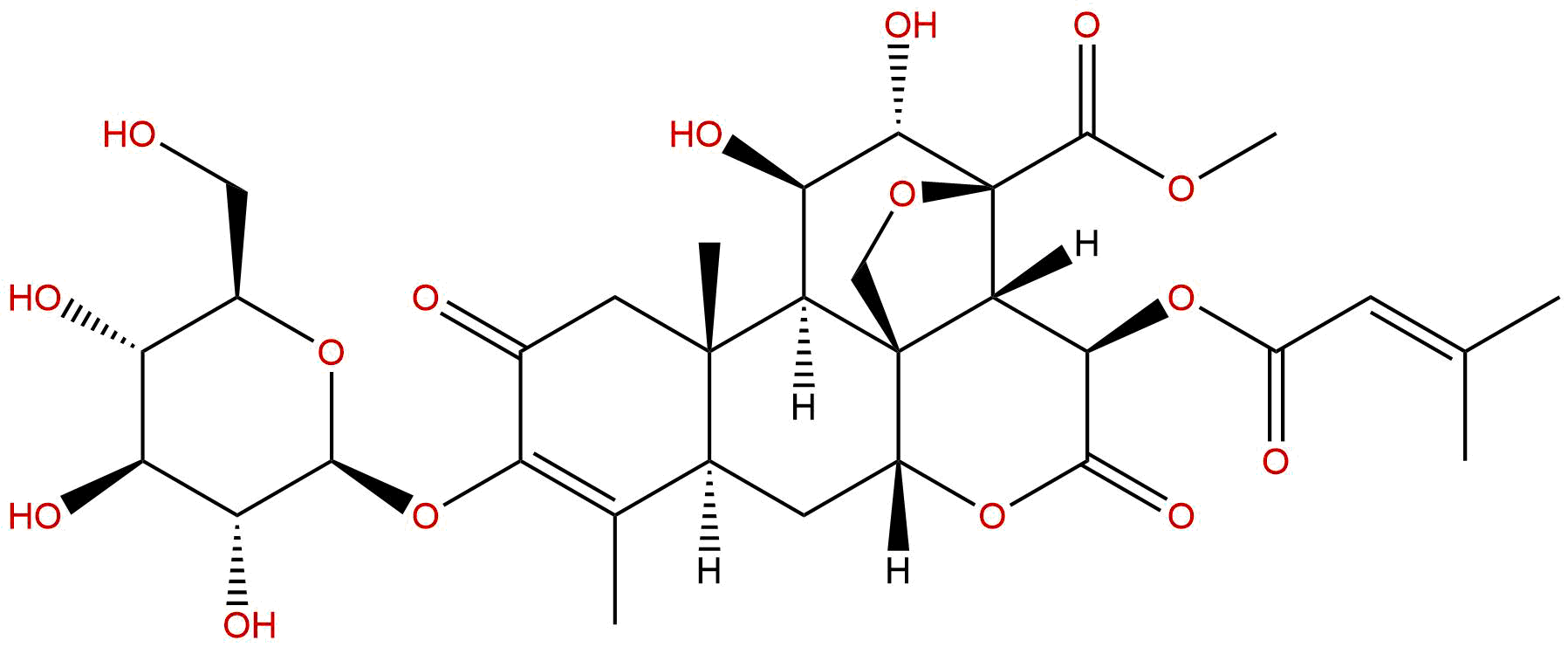


Product name: Bruceoside B
Synonym name:
Catalogue No.: BP5336
Cas No.: 69687-69-0
Formula: C32H42O16
Mol Weight: 682.672
Botanical Source:
Type of Compound: Diterpenoids
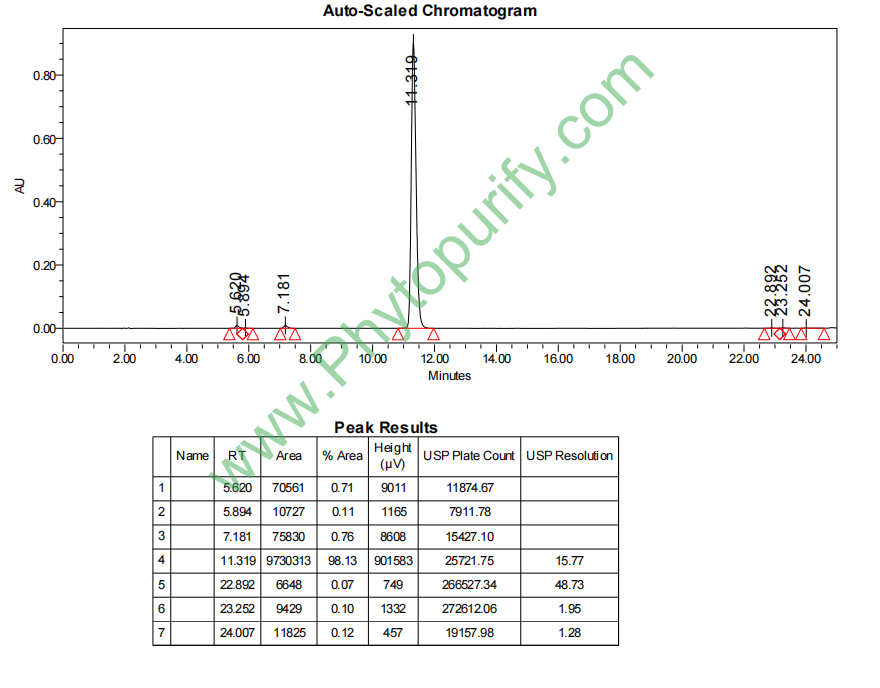
Purity: 95%~99%
Analysis Method: HPLC-DAD or/and HPLC-ELSD
Identification Method: Mass, NMR
Packing: Brown vial or HDPE plastic bottle
Storage: Store in a well closed container, protected from air and light. Put into refrigerate or freeze for long term storage.
Whenever possible, you should prepare and use solutions on the same day. However, if you need to make up stock solutions in advance, we recommend that you store the solution as aliquots in tightly sealed vials at -20℃. Generally, these will be useable for up to two weeks.
The product could be supplied from milligrams to grams
Inquire for bulk scale.
For Reference Standard and R&D, Not for Human Use Directly.
HPLC of Bruceoside B
Storage conditions:Short-term storage at 2~8℃, long-term storage at -20 ~ -80℃
245.0400
-.0593
-.0593
2.1365
.5607
.7840
Low
57.1958
6.9656
Yes
No
No
No
Yes
No
0.0
Yes
No
No
Yes
Natural products, as an important source of drug discovery, play an irreplaceable role in the long history of human fight against diseases. From artemisinin to paclitaxel, from camptothecin to vinblastine, plant secondary metabolites provide rich chemical entities and unique pharmacological templates for modern drug development. Among the numerous natural products with anti-tumor activity, the Simaroubacheae plant Brucea Javaca is one of them(Brucea javanica (L.) Merr. has attracted much attention due to its long history of folk medicine and significant anti-tumor activity. Brucea is native to Southeast Asia and southern China, and its fruit and seeds are commonly used in traditional medicine to treat dysentery, malaria, and certain malignant tumors. Modern pharmacological research has confirmed that extracts and active ingredients of Brucea asiatica have broad-spectrum anti-tumor, anti-inflammatory, antiviral, and antiparasitic activities.
Bruceoside B (CAS number: 69687-69-0) is a representative quassinoid glycoside compound isolated from plants of the genus Bruceae. Bitter lignin compounds are a class of highly oxidized triterpenoid natural products characterized by a complete bitter lignin skeleton or degraded C20 skeleton, typically exhibiting strong biological activity. As an important member of this family, Yaguzi glycoside B has become one of the hot molecules in natural product pharmacology research due to its unique chemical structure and multi-target anti-tumor mechanism. In recent years, with the deepening of understanding of tumor molecular biology and the development of drug chemical modification technology, the potential of bruce acid glycoside B in the development of anti-tumor drugs is gradually being revealed. This article will provide a systematic review of the research progress of Brucea Javanese Glycoside B from the aspects of chemical structure, plant origin, pharmacological activity, molecular mechanism, pharmacological evaluation, and clinical application prospects, in order to provide reference for the in-depth research and development of this compound.
The chemical structure of Brucea Javanese Glycoside B belongs to the bitter lignin type triterpenoid glycoside, and its parent nucleus is a C20 bitter lignin skeleton (picrasane type) with a β - D-glucose group attached at position C-21. Specifically, its glycoside moiety is bruceolide, which has a typical bitter lignin lactone ring structure, consisting of a δ - lactone ring (C-15/C-16 positions) and a highly oxidized six membered ring system. The presence of multiple hydroxyl and carbonyl groups in the molecule endows the compound with abundant hydrogen bond donor and acceptor sites, which is also the structural basis for its ability to interact with various biological targets.
From the molecular formula, the precise molecular weight of Brucea Javanese Glycoside B is 682.6720 Da, which belongs to the category of natural glycosides with medium molecular weight. The LogP of its lipid water partition coefficient is -0.0593, indicating that the compound has close to moderate lipophilicity and slightly leans towards a hydrophilic environment. This characteristic is closely related to the presence of multiple polar groups (hydroxyl, sugar) in its molecule. The topologically polar surface area (TPSA) is as high as 245.0400 Å ², which is much higher than the recommended upper limit of 140 Å ² for oral medications. This suggests that there may be a challenge in membrane permeability for bruce acid glycoside B. The water solubility parameter is 2.1365 mg/mL, indicating that it has good water solubility, which is partly due to the introduction of the sugar moiety.
In terms of spectroscopic characteristics, the UV absorption of Brucea Javanese Glycoside B mainly comes from conjugated carbonyl and double bond systems, usually exhibiting characteristic absorption in the range of 220-260 nm. Characteristic peaks of hydroxyl (~3400 cm ⁻¹), carbonyl (~1750 cm ⁻¹, lactone and ketone carbonyl), and glycosidic bonds (~1050 cm ⁻¹) can be observed in the infrared spectrum. In nuclear magnetic resonance spectra, the proton signal of sugar end groups usually appears in the δ 4.5-5.5 ppm region, while the methyl proton on the lignin skeleton appears in the high field region (δ 0.8-1.5 ppm). These spectral features provide important basis for the structural identification and purity analysis of Brucea Javanese Glycoside B.
It is worth noting that the chemical stability of Brucea Javanese Glycoside B is influenced by factors such as pH, temperature, and light. Under acidic conditions, glycosidic bonds may undergo hydrolysis, releasing glycosides; In alkaline environments, the lactone ring may undergo ring opening reactions. Therefore, in the process of extraction, separation, storage, and formulation development, it is necessary to strictly control these conditions to maintain the integrity of the compound.
The main source of Brucea Javanese Glycoside B comes from plants of the genus Brucea in the family Sapindaceae, among which Brucea Javanese(Brucea javanica)It is the primary source species. In addition, plants of the same genus such as Brucea sumatrana、Brucea antidysenterica It has also been reported to contain this compound. Brucea Javanese is mainly distributed in southern provinces such as Guangdong, Guangxi, Fujian, and Yunnan in China. Its fruit (Brucea Javanese) is a traditional medicinal herb, and Brucea Javanese Glycoside B is mainly enriched in the fruit and seeds, with relatively low content in the roots, stems, and leaves.
From a plant chemistry perspective, the biosynthetic pathway of Brucea Javanese Glycoside B in plants belongs to the triterpenoid secondary metabolism pathway, starting from the mevalonic acid (MVA) pathway or the 2-C-methyl-D-erythritol 4-phosphate (MEP) pathway, and finally formed through a series of enzymatic reactions such as cyclization, oxidation, and glycosylation of squalene. Its content is influenced by various factors such as plant growth stage, harvest season, and production environment, and is usually highest during fruit maturity.
In terms of extraction methods, traditional solvent extraction is still the most commonly used approach. Due to the moderate polarity of Brucea Javanese Glycoside B, methanol, ethanol, or methanol water mixed solvents are usually chosen as extraction solvents. Research has shown that a 70% -80% ethanol aqueous solution has a high extraction efficiency for bruce acid glycoside B, and can simultaneously extract other lignin compounds with similar polarity. The extraction method can be cold soaking, reflux, or ultrasound assisted extraction. Ultrasound assisted extraction is widely used in laboratory research due to its advantages of easy operation, short extraction time, and high efficiency. The extraction temperature is generally controlled at 40-60 ° C, and excessive temperature may lead to compound degradation.
The crude extract after extraction needs to go through a series of purification steps to obtain high-purity bruce acid glycoside B. Common separation and purification methods include liquid-liquid extraction (such as solvent distribution extraction with ethyl acetate, n-butanol, etc.), silica gel column chromatography (using chloroform methanol or ethyl acetate methanol as elution system), reverse phase column chromatography (ODS column, using methanol water as mobile phase), and preparative high-performance liquid chromatography (HPLC). In recent years, high-speed counter current chromatography (HSCCC) and molecular imprinting techniques have also been applied to the efficient separation of brucea Javanese glycoside B. These methods have the advantages of high separation efficiency and good sample recovery rate.
In terms of quality control, high-performance liquid chromatography ultraviolet detection (HPLC-UV) or high-performance liquid chromatography-mass spectrometry (HPLC-MS) are the main methods for qualitative and quantitative analysis of bruce acid glycoside B. Usually, a C18 reverse phase chromatography column is used, with acetonitrile water or methanol water as the mobile phase, and detected at a wavelength of 210-254 nm. The content of Yaguzi glycoside B varies greatly among different batches of Yaguzi medicinal materials, so establishing standardized extraction processes and quality control standards is crucial to ensure the reproducibility of subsequent pharmacological research.
The pharmacological activity research of Brucea Javanese Glycoside B mainly focuses on the field of anti-tumor, and there are also a few reports on its anti-inflammatory, antiviral, and immunomodulatory activities.
Antitumor activity It is the most widely studied pharmacological effect of Brucea Javanese Glycoside B. In vitro experiments showed that Brucea javanica glycoside B had significant inhibitory effects on the proliferation of a variety of human tumor cell lines, including liver cancer (HepG2, Huh7), lung cancer (A549, H1299), breast cancer (MCF-7, MDA MB-231), colon cancer (HT-29, HCT116), prostate cancer (PC-3, DU145), gastric cancer (SGC-7901, BGC-823) and leukemia (HL-60, K562). Its half maximal inhibitory concentration (IC ₅₀) is usually in the micromolar range (1-20 μ M), exhibiting moderate to strong cytotoxicity. It is worth noting that Brucea javanica B also showed certain activity on some drug resistant tumor cell lines (such as multidrug resistant breast cancer cell MCF-7/ADR), suggesting that it may have the potential to overcome tumor drug resistance.
In terms of anti-tumor activity in vivo, multiple studies have evaluated the therapeutic effect of Brucella Javanese Glycoside B using nude mouse xenograft tumor models. For example, in the HepG2 liver cancer xenograft model, brucellosis B (5-20 mg/kg, intraperitoneal or intravenous injection) can dose dependently inhibit tumor growth, with an inhibition rate of 40% -70%, and no significant weight loss or major organ toxicity was observed. In the MDA-MB-231 model of breast cancer, Brucea javanica glycoside B combined with low-dose chemotherapy drugs (such as doxorubicin) showed synergistic effect, which could significantly delay tumor progression and reduce the formation of metastasis.
anti-inflammatory activity On the one hand, it has been reported that Brucea Javanese Glycoside B can inhibit the inflammatory response of macrophages induced by lipopolysaccharide (LPS), reduce the production of tumor necrosis factor - α (TNF - α), interleukin-6 (IL-6), and nitric oxide (NO). This activity may have a synergistic relationship with its anti-tumor effect, as chronic inflammation in the tumor microenvironment is an important factor in promoting tumor occurrence and development.
Antiviral activity Preliminary studies have shown that Brucea Javanese Glycoside B has a certain inhibitory effect on certain RNA viruses (such as dengue virus and enterovirus 71), but its antiviral potency is much lower than its anti-tumor activity, and it is currently in the exploratory stage.
Immune regulatory activity In terms of regulation, it has been reported that Brucea Javanese Glycoside B can regulate the proportion of T cell subsets, enhance the activity of natural killer cells (NK cells), and promote the maturation of dendritic cells. These immune regulatory effects may provide additional mechanistic support for their anti-tumor activity.
The anti-tumor mechanism of Brucea Javanese Glycoside B involves multiple signaling pathways and molecular targets, reflecting the multi-target and multi pathway characteristics of natural products. According to existing research, its mechanism of action can be summarized as follows:
Inducing cell apoptosis It is one of the core mechanisms of the anti-tumor effect of Brucea Javanese Glycoside B. Research has shown that Brucea Javanese Glycoside B can induce tumor cell apoptosis through two pathways: endogenous (mitochondrial) and exogenous (death receptor). In the mitochondrial pathway, brucellosis B can downregulate the expression of anti apoptotic proteins MCL1 (myeloid leukemia factor 1) and BCL2 (B-cell lymphoma 2), while upregulating the levels of pro apoptotic proteins BAX and BIM, leading to loss of mitochondrial membrane potential, release of cytochrome c, and activation of caspase-9 and caspase-3 cascade reactions. MCL1 and BCL2, as key members of the BCL-2 family, are overexpressed in various tumors and closely associated with chemotherapy resistance. The regulatory effect of bruce acid glycoside B on these two targets has important therapeutic significance.
STAT3 signaling pathway inhibition It is another important mechanism by which Brucea Javanese Glycoside B exerts anti-tumor activity. STAT3 (Signal Transduction and Transcription Activation Factor 3) is a key transcription factor that is continuously activated in various tumors, promoting cell proliferation, survival, angiogenesis, and immune escape. Brucea Javanese Glycoside B can inhibit the phosphorylation of STAT3 (Tyr705 site), block its nuclear translocation and transcriptional activity, thereby downregulating the expression of downstream target genes such as Cyclin D1, Survivor, VEGF, and MMP2. MMP2 (Matrix Metalloproteinase 2) is a key enzyme in tumor invasion and metastasis, and its downregulation is closely related to the ability of Brucella Javanese Glycoside B to inhibit tumor cell migration and invasion.
Topoisomerase inhibition It is the classic mechanism of action of lignin compounds. Brucea Javanese Glycoside B has been shown to inhibit the activity of Topoisomerase I (TOP1) and Topoisomerase II α (TOP2A). TOP1 and TOP2A are essential enzymes in DNA replication and transcription processes, and their inhibitors (such as camptothecin and etoposide) have been successfully used in clinical anti-tumor therapy. Brucea Javanese Glycoside B may cause DNA damage accumulation and ultimately trigger cell cycle arrest and apoptosis by stabilizing TOP1-DNA or TOP2A-DNA cleavable complexes. It is worth noting that the inhibitory effect of Brucea Javanese Glycoside B on TOP2A may have a synergistic effect with its regulation of MCL1, as TOP2A is also one of the target genes for MCL1 transcriptional regulation.
Regulation of hypoxia inducible factor-1 α (HIF1A)It is the unique mechanism of the anti-tumor effect of Brucea Javanese Glycoside B. HIF1A is a key transcription factor for tumors to adapt to a low oxygen microenvironment, and its overexpression is closely related to tumor angiogenesis, metabolic reprogramming, and metastasis. Brucea Javanese Glycoside B can reduce the protein level of HIF1A by inhibiting its synthesis or promoting its degradation, thereby inhibiting the expression of downstream target genes such as VEGF, GLUT1, and CA9. This mechanism explains the molecular basis of the anti angiogenic activity of Brucea Javanese Glycoside B.
MAPK signaling pathway regulation In terms of activity, it has been reported that Brucea Javanese Glycoside B can activate p38 MAPK and JNK, while inhibiting the phosphorylation of ERK1/2. The activation of p38 and JNK is usually associated with stress-induced apoptosis, while the inhibition of ERK blocks the transmission of proliferation signals. This differentiated MAPK regulatory pattern may depend on cell type and stimulation conditions.
Hormone related targets In terms of regulating estrogen receptor alpha (ESR1) and aromatase (CYP19A1), the regulatory effect of bruce acid glycoside B has aroused the interest of researchers. ESR1 is a key therapeutic target for hormone dependent breast cancer, while CYP19A1 catalyzes the transformation of androgen into estrogen and is the target of aromatase inhibitors. Preliminary studies have shown that Brucea javanica B can down regulate the expression of ESR1 and inhibit the enzyme activity of CYP19A1, suggesting that it may have a dual therapeutic effect in hormone dependent tumors (such as breast cancer and endometrial cancer).
In addition, it has been reported that Brucea Javanese Glycoside B can induce tumor cell cycle arrest (mainly occurring in the G2/M phase), inhibit telomerase activity, induce autophagic death, and regulate immune cell function in the tumor microenvironment. The multi-target mechanism of action of Brucea Javanese Glycoside B gives it unique advantages in anti-tumor therapy, but also increases the complexity of its mechanism of action research.
The evaluation of drug properties is a crucial step in determining whether natural products can be transported from the laboratory to clinical applications. Based on the physicochemical properties and preliminary pharmacokinetic studies of Brucea Javanese Glycoside B, its pharmacological properties can be systematically evaluated.
Physical and chemical properties and drug like properties As mentioned earlier, the molecular weight of Brucea Javanese Glycoside B (682.67 Da) exceeds the threshold of Lipinski's Five Rules for molecular weight<500, and its TPSA (245.04 Å ²) is also much higher than the recommended upper limit of 140 Å ², indicating that its oral bioavailability may be low. The LogP is -0.0593, which is within the ideal range (-0.4 to 5.6), but has good water solubility (2.14 mg/mL), which is beneficial for the development of injectable formulations. Overall, Brucea Javanese Glycoside B does not meet the class of traditional oral drugs, but it still has development value as a candidate compound for injection administration.
Blood-brain barrier permeability The evaluation results show that the blood-brain barrier permeability of Brucea Javanese Glycoside B is relatively low, which to some extent limits its application in the treatment of brain tumors. However, it also means that the risk of central nervous system side effects is low, which is a favorable characteristic for the treatment of peripheral tumors.
safety evaluation The hERG inhibition test result was negative, indicating a low risk of bruce acid glycoside B causing prolonged QT interval in the heart. The Ames test result is 0.0, indicating no significant mutagenicity. These preliminary safety data are encouraging, but comprehensive toxicological evaluations (including acute toxicity, subchronic toxicity, reproductive toxicity, and genetic toxicity) still need to be systematically studied in animal models.
Pharmacokinetic characteristics At present, there is insufficient research on the pharmacokinetics of Brucea Javanese Glycoside B, but some preliminary findings have been made. After intravenous administration, the elimination half-life (t ₁/₂) of bruce acid glycoside B in plasma is about 1-3 hours, manifested by a large cloth volume (Vd), indicating its widespread distribution in tissues. Its metabolic pathway mainly includes II phase metabolic reactions such as glycosidic bond hydrolysis (to generate the aglycone bruceolide), hydroxylation, and glucuronic acid binding. The main excretion pathways are bile and feces, with less excretion in urine. It is worth noting that bruceolide, the glycoside of bruceolide B, has stronger cytotoxicity, but its water solubility is poor, which may affect its distribution in vivo. As a prodrug, Brucea Javanese Glycoside B slowly releases aglycones in the body, possibly achieving a balance between efficacy and toxicity.
Formulation development strategy Due to the low oral bioavailability of Brucea Javanese Glycoside B, current research mainly focuses on the development of injectable forms such as liposomes, nanoparticles, micelles, etc. Liposomal encapsulation can improve the stability of Brucella Javanese Glycoside B, prolong blood circulation time, and enhance tumor targeting. In addition, based on its good water solubility, it can also be developed as a freeze-dried powder injection, which can be dissolved in physiological saline or glucose solution before intravenous administration. In terms of oral preparations, absorption enhancers (such as surfactants, bile salts) or prodrug design strategies (such as esterification modification of the sugar moiety) can be considered to enhance intestinal absorption.
As a natural product with a unique chemical structure and multi-target mechanism of action, Yaguzi glycoside B has shown promising application prospects in the field of anti-tumor drug development, but also faces many challenges.
Potential indications: Based on the existing pharmacological studies, Brucea javanica B is most likely to develop indications for solid tumors such as liver cancer, breast cancer, lung cancer and colon cancer. Especially for hormone dependent breast cancer, Brucea javanica B has the potential to become a new endocrine therapy drug due to its simultaneous action on ESR1 and CYP19A1. In addition, its activity against multidrug-resistant tumor cells suggests that it can be used for second-line or third line treatment of chemotherapy resistant patients.
Combination therapy strategy The combination application of Brucea Javanese Glycoside B with existing chemotherapy drugs or targeted drugs is an important research direction. Preliminary studies have shown that when combined with chemotherapy drugs such as amphotericin B, cisplatin, and 5-fluorouracil, it can produce a synergistic effect and may reduce the dosage and toxicity of chemotherapy drugs. The combination application with immune checkpoint inhibitors (such as PD-1/PD-L1 antibodies) is also worth exploring, as the immunomodulatory activity of bruce acid glycoside B may enhance the efficacy of immunotherapy.
Structural modification and structure-activity relationship Structural modification of Brucea Javanese Glycoside B is an important way to improve its medicinal properties. The currently known structure-activity relationship studies indicate that the lignin skeleton is an essential functional group; The sugar group at position C-21 has a significant impact on water solubility and pharmacokinetic properties, but may reduce activity; The integrity of the C-15 lactone ring is crucial for activity; The hydroxyl substitution at positions C-3, C-11, and C-12 is related to the strength of activity. Based on these understandings, derivatives with better pharmacological properties can be obtained through strategies such as glycosylation modification (such as introducing different glycosylation or glycosylation derivatives), hydroxylation, and lactone ring opening closing modification.
challenges faced The clinical translation of Brucea Javanese Glycoside B faces multiple challenges. Firstly, its sources are limited and its content in natural plants is relatively low (usually<0.1%). Chemical synthesis or semi synthesis routes have not yet been established, and there are difficulties in large-scale supply. Secondly, its pharmacokinetic properties are not ideal, with a short half-life and fast metabolism, requiring frequent administration or the development of long-acting formulations. Thirdly, although preliminary safety data is good, long-term toxicity, immunogenicity, and potential drug drug interactions still require systematic evaluation. Fourthly, although its multi-target mechanism of action is beneficial for anti-tumor activity, it also increases the complexity of predicting toxic side effects and designing clinical protocols.
Future research directions Suggestions for future research focus on the following directions: (1) Establishing efficient chemical synthesis or biosynthetic methods for bruce acid glycoside B to solve the problem of raw material supply; (2) Conduct systematic pharmacokinetic pharmacodynamic (PK-PD) studies and optimize dosing regimens; (3) Using omics techniques (proteomics, metabolomics) to further elucidate its functional network and drug resistance mechanisms; (4) Develop targeted delivery systems (such as tumor microenvironment responsive nanocarriers) to improve therapeutic efficacy; (5) Conduct preclinical toxicology research to lay the foundation for clinical trial application; (6) Explore the potential application of Brucea Javanese Glycoside B in non tumor diseases such as inflammatory and metabolic diseases.
As a representative member of lignin based natural products, Yaguzi glycoside B occupies an important position in the field of natural product drug development due to its unique chemical structure and multi-target anti-tumor mechanism. From phytochemistry to pharmacological activity, from molecular mechanisms to drug evaluation, researchers have accumulated rich knowledge and preliminarily revealed the anti-tumor potential and characteristics of this compound. However, from laboratory research to clinical application, Brucea Javanese Glycoside B still faces multiple challenges such as source supply, pharmacokinetic optimization, safety evaluation, and formulation development.
Looking ahead to the future, with the rapid development of fields such as synthetic biology, medicinal chemistry, nanomedicine, and precision medicine, there is hope for a breakthrough in the clinical translation of bruce acid glycoside B. Especially by improving its pharmacological properties through structural modifications and utilizing advanced delivery systems for tumor targeted therapy, its therapeutic potential will be significantly enhanced. Meanwhile, a deeper understanding of its multi-target mechanism of action can help discover new therapeutic targets and combination therapy strategies. We have reason to believe that with the joint promotion of basic research and technological innovation, bruce acid glycoside B and its derivatives are expected to become important candidate molecules for the new generation of anti-tumor drugs, bringing new treatment options for cancer patients.
Natural products are the eternal treasure trove of drug discovery, and the research process of bruce acid glycoside B once again confirms this truth. The active molecule discovered in the traditional Chinese medicine Brucea asiatica is gradually being analyzed and optimized through modern scientific and technological means. Its transformation from a natural product to an innovative drug is both challenging and hopeful.
