


Product name: Bruceine D
Synonym name: Brucein D
Catalogue No.: BPF0771
Cas No.: 21499-66-1
Formula:C20H26O9
Mol Weight: 410.42
Botanical Source:
Physical Description: Powder
Type of Compound: Diterpenoids
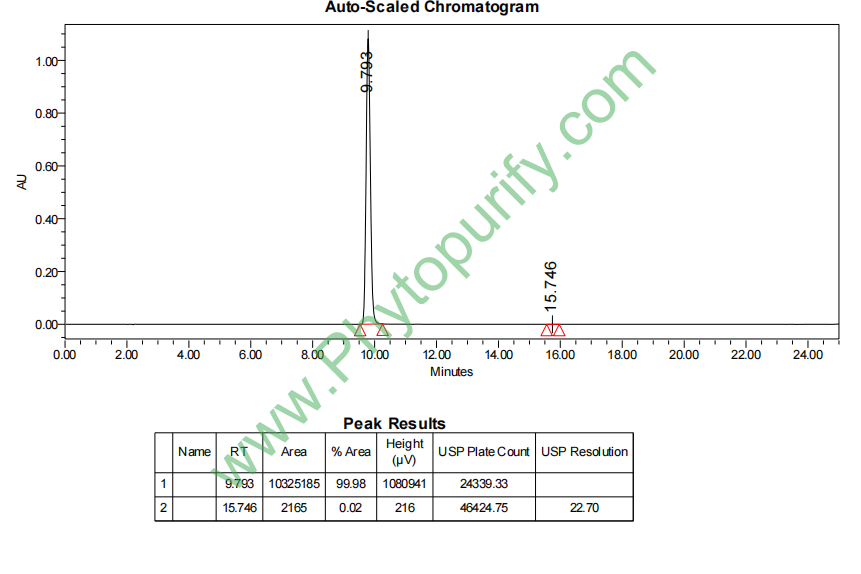
Purity: 95%~99%
Analysis Method: HPLC-DAD or/and HPLC-ELSD
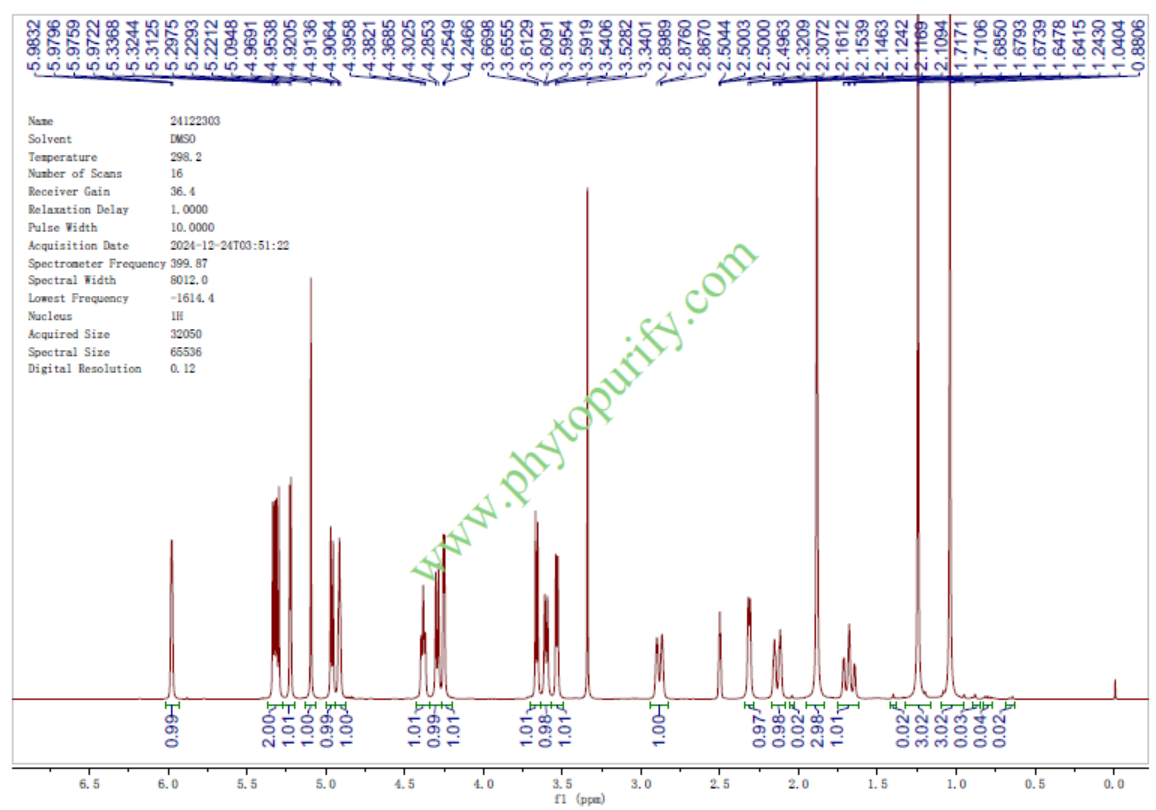
Identification Method: Mass, NMR
Packing: Brown vial or HDPE plastic bottle
The product could be supplied from milligrams to grams. Inquire for bulk scale.
We provide solution to improve the water-solubility of compounds, thereby facilitating the variety of activity tests and clinic uses.
For Reference Standard and R&D, Not for Human Use Directly.
Description:
Bruceine D has anti-cancer activity, it inhibits the growth of three pancreatic cancer cell lines, i.e., PANC-1, SW1990 and CAPAN-1; induces cytotoxicity in Capan-2 cells via the induction of cellular apoptosis involving the mitochondrial pathway.Bruceine D may have the potential to be used as a natural viricide, or a lead compound for new viricides.
References:
Int J Mol Med. 2012 Jul;30(1):93-9.
Involvement of the mitochondrial pathway in bruceine D-induced apoptosis in Capan-2 human pancreatic adenocarcinoma cells.
Our research group has previously identified Bruceine D (BD), a quassinoid found abundantly in B. javanica, to have potent cytotoxic effect on a number of pancreatic cancer cell lines, including Panc-1, SW1990 and Capan-1 cells.
METHODS AND RESULTS:
In the present study, we showed that Bruceine D was also able to inhibit the growth of the Capan-2 human pancreatic adenocarcinoma cell line, but it exerted only modest cytotoxicity on the WRL68 human hepatocyte cell line and a human pancreatic progenitor cell line. The antiproliferative effects of Bruceine D were comparable to those exhibited by camptothecin and gemcitabine in our culture system. We found a dose-dependent decrease of the mitochondrial membrane potential in Bruceine D-treated Capan-2 cells as measured by the JC-1 assay. Bruceine D exposure was able to attenuate the expression of Bcl-2 protein in Capan-2 cells as detected by western blot analysis. In addition, the expression of both caspase 9 and caspase 3 in Bruceine D-treated Capan-2 cells was significantly accentuated. Moreover, Bruceine D was capable of inducing the fragmentation of genomic DNA in Capan-2 cells as evidenced by Hoechst staining. Cell cycle analysis demonstrated that Bruceine D could increase the percentage of Capan-2 cells in the subG1 phase in a dose-related manner. An increase in the apoptosis of Capan-2 cells was also observed by Annexin V and PI staining.
CONCLUSIONS:
These results unequivocally indicate that Bruceine D induces cytotoxicity in Capan-2 cells via the induction of cellular apoptosis involving the mitochondrial pathway.
Vet Parasitol. 2011 Apr 19;177(1-2):127-33.
In vivo anthelmintic activity of bruceine A and bruceine D from Brucea javanica against Dactylogyrus intermedius (Monogenea) in goldfish (Carassius auratus).
The present study was designated to ascertain the anthelmintic activity of the dried fruits of Brucea javanica and to isolate and characterise the active constituents. The methanol extract from the fruits of B. javanica showed significant anthelmintic activity against Dactylogyrus intermedius (EC(50) (median effective concentration) value=49.96 mg l(-1)).
METHODS AND RESULTS:
Based on this finding, the methanol extract was fractionated on silica gel column chromatography in a bioassay-guided fractionation affording two known quassinoids showing potent activity, bruceine A and Bruceine D. Both bruceine A and D exhibited significant activity against D. intermedius with EC(50) values of 0.49 mg l(-1) and 0.57 mg l(-1), respectively, which were more effective than the positive control, mebendazole (EC(50) value=1.25 mg l(-1)). In addition, the 48-h median lethal concentration (LC(50)) for bruceine A and D against the host (Carassius auratus) was 10.6-fold and 9.7-fold higher than the EC(50) for D. intermedius.
CONCLUSIONS:
These results provide evidence that the isolated compounds might be potential sources of new anti-parasitic drugs for the control of Dactylogyrus. This is the first report on an in vivo anthelmintic investigation for B. javanica against D. intermedius.
Pest Manag Sci. 2008 Feb;64(2):191-6.
Antiphytoviral activity of bruceine-D from Brucea javanica seeds.
Brucea javanica (L.) Merr. is widely distributed throughout the southern parts of China and has been used in traditional medicine to treat a variety of diseases. The objective of the present study was to identify the active antiphytoviral compound in the seeds of B. javanica and evaluate the inhibitory activity of the compound against plant virus.
METHODS AND RESULTS:
Bioassay-guided fractionation of the most active extract from the seeds led to the isolation of an antiphytoviral compound which was identified as bruceine-D by conventional spectroscopy methods. The compound exhibited significant inhibitory activity against the infection and replication of tobacco mosaic virus (TMV), with IC(50) values of 13.98 and 7.13 mg L(-1) respectively. The compound also showed a strong inhibitory effect on the infectivity of potato virus Y (PVY) and cucumber mosaic virus (CMV). Furthermore, the compound could effectively inhibit systemic TMV infection in the host tobacco plant under glasshouse conditions.
CONCLUSIONS:
The results suggested that bruceine-D from Brucea javanica may have the potential to be used as a natural viricide, or a lead compound for new viricides.
HPLC of Bruceine D
HNMR of Bruceine D
Storage conditions:Short-term storage at 2~8℃, long-term storage at -20 ~ -80℃
153.7500
-.5227
-.5224
3.3989
.6440
4.6111
Low
34.2302
6.6581
No
No
No
No
Yes
No
0.0
Yes
No
Yes
Yes
Natural products, as an important source of drug discovery, play an irreplaceable role in the long history of human fight against diseases. From the miracle of artemisinin's anti malaria effect to the breakthrough of paclitaxel's anti-cancer effect, plant secondary metabolites continue to provide unique chemical entities and innovative mechanisms of action for modern drug development. Among numerous natural products with biological activity, the Sapindaceae plant Brucea asiatica(Brucea javanica The bitter lignin compounds contained in (L.) Merr. have attracted much attention due to their significant pharmacological activities. As a traditional Chinese medicine, Brucea asiatica has been recorded as early as in the "Compendium of Materia Medica" and is commonly used in folk medicine to treat dysentery, malaria, and certain malignant tumors. Modern pharmacological research has confirmed that extracts of brucea have various biological activities such as anti-tumor, anti-inflammatory, and anti parasitic effects. Among them, brucine D, as one of its main active ingredients, has shown unique value and potential in the field of anti-tumor research in recent years.
Brucein D, chemical name Bruceine D, CAS registration number 21499-66-1, is a bitter lignin tetracyclic triterpenoid compound isolated from plants of the genus Bruceae. This compound was initially isolated and identified in the 1960s, but it was not until the past two decades, with the advancement of molecular biology techniques and deeper understanding of the Notch signaling pathway, that brucelloxin D gradually became a hot topic molecule in natural product pharmacology research. Research has shown that Brucea Javanese D is an effective Notch signaling pathway inhibitor that can induce apoptosis in various human cancer cells, inhibit tumor cell proliferation, migration, and invasion by regulating multiple signaling cascades. In addition, the compound exhibits significant insect repellent and insecticidal activity, with an EC50 value as low as 0.57 mg/L for Diptera insect D. intermedius, demonstrating potential application value in the field of agricultural pest control.
This article will provide a systematic review of the research progress of brucine D from multiple dimensions, including chemical structure and physicochemical properties, plant sources and extraction methods, pharmacological activity research, mechanism of action and molecular targets, drug evaluation and pharmacokinetics, clinical application prospects and prospects, in order to provide reference for the in-depth development and clinical translation of this natural product.
Brucea Javanese D belongs to the class of bitter lignin compounds, and its chemical structure has typical bitter lignin skeleton characteristics. From the perspective of structural taxonomy, bitter lignin compounds are a class of highly oxidized tetracyclic triterpenoid lactones, whose basic skeleton consists of four rings: A, B, C, and D. The A ring is a cyclohexenone structure, the B and C rings are hexagonal rings, and the D ring is a pentagonal lactone ring. The molecular formula of Brucea Javanese D is C20H26O9, with a molecular weight of 410.4190 g/mol. This relatively small molecular weight gives it good cell membrane permeability and the potential to interact with biomolecules.
From the perspective of structural characteristics, the molecule of Brucea Javanese D contains multiple hydroxyl and carbonyl functional groups, and the presence of these polar groups has a significant impact on its physicochemical properties and biological activity. Specifically, the molecule contains four hydroxyl groups (- OH) and one lactone ring (- CO-O -), as well as an alpha, beta unsaturated ketone structural unit. α. The β - unsaturated ketone structure is a common feature of many biologically active natural products, and this structural unit can serve as a receptor for Michael addition reactions, covalently binding to the thiol group of protein cysteine residues. This may be one of the structural foundations for the biological effects of brucine D.
In terms of physical and chemical properties, Brucea Javanese D exhibits certain hydrophilic characteristics. The LogP of its lipid water partition coefficient is -0.5227, indicating that the solubility of the compound in the aqueous phase is slightly higher than that in the lipid phase, and it belongs to a molecule with strong hydrophilicity. The topological polar surface area (TPSA) is 153.7500 Å ², which is higher than the recommended upper limit of 140 Å ² for oral medications, indicating that the compound may have some oral absorption barriers. The water solubility parameter is 3.3989, indicating that it has a certain solubility ability in water, which provides favorable conditions for its distribution and efficacy in organisms. It is worth noting that the blood-brain barrier penetration ability of Brucea Javanese D has been evaluated at a low level, which may be advantageous for the development of non central nervous system targeted anti-tumor drugs, helping to reduce central nervous system related toxic side effects.
From the perspective of medicinal chemistry, the molecule of Brucea Javanese D contains multiple modifiable sites, including hydroxyl, carbonyl, and lactone rings, providing abundant chemical space for subsequent structural optimization and structure-activity relationship research. For example, by esterification or etherification modification of hydroxyl groups, the lipophilicity and metabolic stability of molecules can be regulated; Opening or reducing the lactone ring may alter its interaction mode with the target protein. These structural modification strategies are expected to improve their pharmacokinetic properties and reduce toxic side effects while maintaining or enhancing anti-tumor activity.
The main natural source of Brucea Javanese D is plants in the genus Brucea Javanese of the family Sapindaceae, among which Brucea Javanese is the main source(Brucea javanica)The most common. Brucea is native to Southeast Asia, including southern China, Indonesia, Malaysia, the Philippines, and other regions. In China, it is mainly distributed in provinces such as Guangdong, Guangxi, Fujian, and Yunnan. This plant is a shrub or small tree, and its fruit (brucea) is a commonly used medicinal part in traditional Chinese medicine. Other plants belonging to the same genus, such as Brucea antidysenterica and Brucea sumatrana It has also been reported that it contains brucelloxin D, but the content varies significantly depending on the species, place of origin, harvest season, and extraction method.
From the perspective of phytochemistry, the content of brucea jasmona D in brucea jasmona plants is relatively low, usually accounting for 0.01% to 0.1% of the weight of dried medicinal materials. This low content feature poses challenges for the large-scale preparation of the compound and highlights the importance of developing efficient extraction and purification methods. The traditional extraction method mainly uses organic solvent extraction, and commonly used solvents include methanol, ethanol, ethyl acetate, etc. Research has shown that using 95% ethanol reflux extraction, combined with subsequent liquid-liquid extraction and column chromatography separation, can obtain high-purity brucea jasmona D. The specific process usually includes: crushing the dried brucea jasmona fruit, soaking it in ethanol or reflux extraction, concentrating the extraction solution, and sequentially extracting it with petroleum ether, ethyl acetate, and n-butanol. The ethyl acetate extract rich in brucea jasmona D is purified through steps such as silica gel column chromatography, ODS column chromatography, and preparative high-performance liquid chromatography.
In recent years, with the promotion of green chemistry concepts and the advancement of separation technologies, some new extraction methods have been applied to the preparation of bruce acid extract D. Ultrasonic assisted extraction technology utilizes the cavitation effect and mechanical vibration of ultrasound to effectively destroy plant cell walls, promote the dissolution of target compounds, thereby shortening extraction time and improving extraction efficiency. Research has shown that under optimized conditions (ultrasound power of 300W, temperature of 50 ℃, ethanol concentration of 70%, extraction time of 30 minutes), the extraction rate of Brucea Javanese D can be increased by 20% to 30% compared to traditional reflux extraction. Microwave assisted extraction technology utilizes the penetrability and selective heating properties of microwaves to quickly and efficiently extract target compounds, particularly suitable for the extraction of thermosensitive components. In addition, supercritical fluid extraction technology, especially supercritical CO ₂ extraction, has shown good application prospects in the extraction of brucea Javanese D due to its green, safe, and selective advantages. However, this technology requires high equipment requirements and has not yet been widely industrialized.
In terms of purification, new separation methods such as high-speed counter current chromatography (HSCCC) and molecular imprinting technology provide a new pathway for the efficient purification of brucellosis toxin D. HSCCC utilizes the difference in distribution coefficients of solutes in two-phase solvent systems to achieve separation, which has the advantages of large sample loading, high recovery rate, and low solvent consumption. It is particularly suitable for the preparation level separation of natural products. Molecular imprinting technology can efficiently and selectively enrich target compounds from complex plant extracts by preparing polymer materials with specific recognition ability for Brucea Javanese D. The application of these new technologies is expected to solve the problems of low separation efficiency, high solvent consumption, and long cycle of traditional column chromatography methods, and provide technical support for the large-scale preparation and subsequent research of bruce acid extract D.
It is worth noting that the content of Brucea Javanese D in plants is influenced by various factors, including plant variety, growth environment, harvesting time, storage conditions, etc. Therefore, establishing a stable raw material supply system and standardized extraction process is of great significance for ensuring the reproducibility of research on brucea seed extract D and the consistency of product quality. In addition, considering the limited and sustainable utilization of wild brucea resources, the production of brucea toxin D through biotechnology methods such as tissue culture and hairy root culture, or the large-scale preparation of this compound through chemical synthesis and biosynthetic pathways, is also a direction worth exploring in the future.
The anti-tumor activity of Brucea Javanese D is one of its most prominent pharmacological effects. In recent years, a large number of studies have confirmed that this compound has significant proliferation inhibition and apoptosis induction effects on various human cancer cell lines. In vitro experiments, Brucea javanica D showed broad-spectrum anti-tumor activity, covering lung cancer, breast cancer, liver cancer, colorectal cancer, stomach cancer, prostate cancer, ovarian cancer, leukemia and other malignant tumor types. Its half maximal inhibitory concentration (IC50) is usually in the micromolar to nanomolar range, showing strong cytotoxic effects and also effective against certain drug-resistant cell lines, suggesting its potential to overcome tumor multidrug resistance.
In the field of lung cancer research, Brucea Javanese D has shown significant growth inhibitory effects on human non-small cell lung cancer cell lines A549, H1299, and H460. Research has found that this compound can induce cell cycle arrest in the G2/M phase, inhibit cell proliferation, activate the mitochondrial apoptosis pathway, promote cytochrome c release and caspase cascade activation, ultimately leading to cell apoptosis. In terms of breast cancer, Brucea javanica D also has a strong inhibitory effect on MCF-7, MDA-MB-231 and other cell lines, and also shows good activity on triple negative breast cancer cells (ER -/PR -/HER2-), which provides potential treatment options for triple negative breast cancer patients who lack effective treatment targets.
For digestive system tumors, the anti-tumor activity of Brucea Javanese D in liver cancer (HepG2, Huh7), colorectal cancer (HCT116, SW480), and gastric cancer (SGC-7901, BGC-823) cell lines has been confirmed by multiple studies. It is worth noting that the compound has relatively low toxicity to normal liver cells (such as L02 cells) and exhibits certain selective cytotoxicity, which is of great significance for the development of anti-tumor drugs. In the field of prostate cancer, Brucea Javanese D can inhibit the proliferation of androgen independent prostate cancer cells PC-3 and DU145, and induce their apoptosis, suggesting that it may have therapeutic potential for castration resistant prostate cancer.
In addition to solid tumors, brucea toxin D also exhibits activity against hematological malignancies. Research has shown that this compound can induce apoptosis in acute myeloid leukemia cells HL-60 and U937, and inhibit their clonogenic ability. In addition, Brucea Javanese D also has a growth inhibitory effect on multiple myeloma cells and can enhance the killing effect of proteasome inhibitors such as bortezomib on myeloma cells, suggesting its potential for combination therapy.
In addition to its anti-tumor effect, Brucea Javanese D also exhibits significant anti-inflammatory activity. Research has shown that this compound can inhibit the production of pro-inflammatory cytokines (such as TNF - α, IL-6, IL-1 β) in macrophages stimulated by lipopolysaccharide (LPS), and reduce the release of nitric oxide (NO) and prostaglandin E2 (PGE2). Its anti-inflammatory mechanism may be related to the inhibition of the activation of the nuclear factor kappa B (NF - κ B) signaling pathway, by blocking the phosphorylation and degradation of I κ B α, reducing the nuclear translocation of p65 subunit, and thereby inhibiting the expression of downstream inflammation related genes.
In terms of immune regulation, Brucea Javanese D also has a certain impact on the proliferation and function of T cells and B cells. Research has found that this compound can inhibit ConA stimulated T cell proliferation and LPS stimulated B cell proliferation, and regulate the balance of Th1/Th2 cytokines. These immune regulatory activities may have a synergistic effect with their anti-tumor effects, by regulating the function of immune cells in the tumor microenvironment and enhancing the body's anti-tumor immune response.
The insecticidal activity of Brucea Javanese D is another pharmacological effect worthy of attention. Research has shown that this compound has significant anti food and toxic effects on various agricultural and sanitary pests. Especially for Diptera insects D. intermedius, Brucea Javanese D exhibits strong insecticidal activity, with a half effective concentration (EC50) of only 0.57 mg/L, which is much lower than many commonly used synthetic insecticides, demonstrating its enormous potential in the development of green pesticides.
From the perspective of its mechanism of action, the insecticidal activity of Brucea Javanese D may be related to its interference with the insect nervous or digestive system. Research has found that this compound can inhibit the growth and development of insect larvae, leading to their inability to molt and pupate normally, ultimately resulting in death. In addition, Brucea Javanese D also exhibits certain nematode killing activity and has a toxic effect on plant parasitic nematodes such as pine wood nematodes, which provides new possibilities for its application in the field of plant protection.
It is worth noting that as a natural product of plant origin, Brucea Javanese D has the advantages of good biodegradability, low environmental residue, and relative safety for humans and livestock, which meets the requirements of modern green agriculture for pesticide safety. However, further research and solutions are needed to address issues such as stability, formulation technology, and cost-effectiveness in practical agricultural applications.
The mechanism of action of Brucea Javanese D as a Notch signaling pathway inhibitor is the core molecular basis of its anti-tumor activity. The Notch signaling pathway plays a key regulatory role in cell fate determination, proliferation, differentiation, and apoptosis, and its abnormal activation is closely related to the occurrence and development of various malignant tumors. Research has shown that Brucea Javanese D can directly bind to the negative regulatory region (NRR) of the Notch receptor, preventing it from being cleaved and activated by gamma secretase, thereby inhibiting the release and nuclear translocation of the Notch intracellular domain (NICD). This mechanism of action is different from traditional gamma secretase inhibitors. Brucea Javanese D acts directly on the Notch receptor itself, rather than inhibiting the activity of gamma secretase, and therefore may have higher selectivity and fewer off target effects.
In terms of downstream effects of the Notch signaling pathway, treatment with Brucea Javanica D can significantly reduce the expression levels of Notch target genes (such as Hes1, Hey1, c-Myc, etc.). Hes1 and Hey1, as transcription inhibitory factors, downregulation of their expression can lead to changes in the expression of cell cycle regulatory factors (such as p21 and p27), thereby causing cell cycle arrest. C-Myc, as an important oncogene, its expression inhibition is closely related to cell proliferation inhibition and apoptosis induction. In addition, there is extensive cross-talk between the Notch signaling pathway and other signaling pathways (such as PI3K/Akt, MAPK, NF - κ B, etc.), and the inhibition of the Notch pathway by brucine D may have broader biological effects by affecting these cross-talk nodes.
The induction of tumor cell apoptosis by Brucea Javanese D involves the regulation of multiple apoptosis related targets. Research has shown that this compound can downregulate the expression levels of anti apoptotic proteins MCL1 and BCL2, while upregulating the expression of pro apoptotic proteins BAX and BIM, leading to increased mitochondrial outer membrane permeability and promoting the release of cytochrome c into the cytoplasm. Cytochrome c binds to Apaf-1 and procaspase-9 to form apoptotic bodies, activating caspase-9 and subsequently activating downstream effector caspases (such as caspase-3 and caspase-7), ultimately leading to the execution of cell apoptosis.
It is worth noting that the regulation of MCL1 by Brucella asiatica D is particularly significant. MCL1 is an important anti apoptotic protein in the BCL2 family, highly expressed in various tumors, and closely related to tumor occurrence, development, and drug resistance. Research has found that Brucea Javanese Protein D can effectively reduce the protein level of MCL1 by inhibiting its transcription and promoting its protein degradation. This mechanism of action is of great significance in overcoming tumor drug resistance caused by high expression of MCL1, as many traditional chemotherapy drugs and targeted drugs often cannot effectively inhibit the expression of MCL1.
Signal transducer and activator of transcription factor 3 (STAT3) is another important molecular target of brucea jasmona D. STAT3, as a transcription factor, is continuously activated in various tumors, promoting tumor cell proliferation, survival, angiogenesis, and immune escape. Research has shown that Brucea Javanese D can inhibit the phosphorylation activation of STAT3, block its formation of homodimers and translocation to the nucleus, thereby inhibiting the expression of downstream target genes of STAT3 (such as Cyclin D1, Survivor, VEGF, MMP2, etc.).
The inhibition of the STAT3 signaling pathway by Brucea Javanese D may be achieved through multiple mechanisms. On the one hand, the compound may directly bind to STAT3 protein, interfering with its interaction with upstream kinases such as JAK2 and Src; On the other hand, Brucea Javanese D may promote the dephosphorylation of STAT3 by upregulating the expression or activity of protein tyrosine phosphatases such as SHP-1 and SHP-2. In addition, there is a positive feedback regulatory relationship between the Notch signaling pathway and the STAT3 pathway, and the inhibition of the Notch pathway by bruce acid D may indirectly lead to a decrease in STAT3 activity.
In addition to the main targets mentioned above, Brucea Javanese D also affects multiple molecular targets associated with tumor progression. Matrix metalloproteinase-2 (MMP2) is a key enzyme in the invasion and metastasis of tumor cells. Brucea Javanese D can inhibit the expression and activity of MMP2, thereby suppressing the migration and invasion ability of tumor cells. Topoisomerase I (TOP1) and Topoisomerase II alpha (TOP2A) are important enzymes in DNA replication and transcription processes. Brucea Javanese D has an inhibitory effect on the activity of these two enzymes, which may cause DNA damage and cell death by interfering with changes in DNA topology.
Hypoxia inducible factor 1 alpha (HIF1A) is a key transcription factor for tumors to adapt to the hypoxic microenvironment. Brucea Javanese D can inhibit the protein expression and transcriptional activity of HIF1A, thereby suppressing hypoxia induced angiogenesis and glycolytic metabolic reprogramming. Mitogen activated protein kinase 1 (MAPK1), also known as ERK2, is a core component of the RAS/RAF/MEK/ERK signaling pathway. Bruceae extract D regulates the phosphorylation level of MAPK1, which may affect cell proliferation and differentiation. In addition, the compound also has a regulatory effect on the expression of estrogen receptor 1 (ESR1) and aromatase (CYP19A1), suggesting that it may have potential therapeutic value in hormone dependent tumors (such as breast cancer).
From the perspective of medicinal chemistry and drug development, the pharmacological parameters of brucea Javanese D exhibit a characteristic of both advantages and disadvantages. Its molecular weight is 410.4190 Da, which meets the requirement of Lipinski's five rules for molecular weight less than 500, and is beneficial for the development of oral drugs. However, its LogP value is -0.5227, indicating that the compound has strong hydrophilicity, which may affect its ability to passively diffuse through cell membranes, thereby affecting oral absorption and bioavailability. The TPSA is 153.7500 Å ², which is higher than the recommended upper limit of 140 Å ² for oral medications, indicating that the compound may have poor intestinal permeability.
The water solubility parameter is 3.3989, indicating that Brucea Javanese D has a certain solubility ability in water, which provides favorable conditions for its formulation development. The assessment of blood-brain barrier penetration ability is at a low level, which may be advantageous for the development of non central nervous system targeted anti-tumor drugs and help reduce central nervous system related toxic side effects. The negative evaluation result of hERG inhibition indicates that the compound has a low risk of causing QT interval prolongation in the heart, which is a positive signal for its safety. The Ames test result is 0.0, indicating that Brucea Javanese D does not have significant mutagenicity, which provides a safety basis for its further clinical development.
At present, there is relatively limited research on the pharmacokinetics of Brucea Javanese D, but some existing research results provide preliminary understanding of its in vivo behavior. In terms of absorption, the oral bioavailability of Brucea Javanese D may be lower, which is related to its higher polarity and larger TPSA. Research has shown that the compound has poor permeability in the intestine and may rely mainly on passive diffusion and/or active transport mediated by transporters for absorption. The strategies to improve oral bioavailability include: using nanoformulation technology (such as liposomes, polymer nanoparticles, solid lipid nanoparticles, etc.) to improve their solubility and permeability; Design a prodrug strategy by introducing hydrolysable ester or phosphate groups to enhance its lipid solubility and intestinal absorption capacity.
In terms of distribution, the tissue distribution characteristics of brucelloxin D in the body are not fully understood. Considering its strong hydrophilicity, this compound may be mainly distributed in extracellular fluid and blood, with less distribution in adipose tissue and brain tissue. The plasma protein binding rate is an important factor affecting drug distribution and efficacy. Currently, there is a lack of data on the plasma protein binding rate of Brucea Javanese D, and further research is needed.
In terms of metabolism, brucine D may be mainly eliminated through liver metabolism. The hydroxyl and lactone rings in its molecule are potential metabolic sites, which may undergo metabolic reactions such as glucuronic acid binding, sulfuric acid binding, oxidation, and reduction. The cytochrome P450 enzyme system, especially CYP3A4, may play an important role in the metabolism of brucine D. Understanding its metabolic pathways and metabolites is of great significance for predicting drug interactions and evaluating metabolic toxicity.
In terms of excretion, brucelloxin D and its metabolites may be mainly excreted through bile and urine. Due to its strong hydrophilicity, renal excretion may play an important role in its elimination. The pharmacokinetic parameters such as half-life and clearance rate still need to be determined through systematic preclinical studies.
The toxicological study of Brucea Javanese D is still in its preliminary stage. Previous studies have shown that this compound has relatively low toxicity to normal cells in vitro, exhibiting a certain degree of selective cytotoxicity. However, in in vivo experiments, high doses of Brucea Javanica D may cause certain toxic reactions, including hepatotoxicity, nephrotoxicity, and gastrointestinal reactions. These toxic reactions may be related to the physiological function of the Notch signaling pathway in normal tissues, as the Notch pathway plays an important role in maintaining intestinal stem cells, liver regeneration, and kidney development.
It is worth noting that as a Notch inhibitor, the safety of long-term use of Brucea Javanese D requires special attention. Long term inhibition of the Notch signaling pathway may lead to adverse reactions such as disruption of intestinal crypt structure, abnormal differentiation of secretory cells, and decreased liver regeneration ability. Therefore, in the clinical development process, it is necessary to establish a reasonable dosing regimen (such as intermittent dosing, low-dose continuous dosing, etc.) to balance efficacy and safety.
As an inhibitor of the Notch signaling pathway, brucine D has broad application prospects in the field of tumor therapy. Notch signaling pathway is abnormally activated in a variety of malignant tumors, including T-cell acute lymphoblastic leukemia (T-ALL), breast cancer, lung cancer, pancreatic cancer, colorectal cancer, etc. Therefore, Notch inhibitors are considered as a promising tumor treatment strategy. Compared with traditional γ - secretase inhibitors, brucine D may have higher selectivity and fewer off target effects by directly acting on Notch receptors, which provides advantages for its clinical development.
In the context of precision medicine, the clinical application of brucine D may be more suitable for tumor patients with abnormal activation of the Notch signaling pathway. Screening suitable patient populations through biomarkers such as Notch receptor mutations, NICD nuclear positivity, Hes1 overexpression, etc., is expected to improve treatment response rates and clinical benefits. In addition, the combination application of brucea seed extract D with other anti-tumor drugs is also a direction worth exploring. For example, when used in combination with chemotherapy drugs such as cisplatin and paclitaxel, it may enhance anti-tumor efficacy through synergistic effects; Combined use with immune checkpoint inhibitors (such as PD-1/PD-L1 antibodies) may enhance anti-tumor immune response by regulating immune cell function in the tumor microenvironment.
The development of appropriate formulation technology is a key step in the clinical translation of Brucea Javanica D, which has low oral bioavailability. Nanoformulation technology is an effective means of improving oral absorption of poorly soluble drugs. Liposomes, as a classic nanomedicine delivery system, can encapsulate brucine D, improve its solubility and stability, prolong its circulation time in vivo, and enrich it in tumor tissues through passive targeting. Polymer nanoparticles (such as PLGA nanoparticles) can also effectively encapsulate brucine D, achieving sustained release and targeted delivery. Solid lipid nanoparticles and nanostructured lipid carriers combine the advantages of liposomes and polymer nanoparticles, with higher drug loading capacity and better stability.
In addition to nanomedicine, prodrug strategies are also an effective way to improve the oral bioavailability of Brucea Javanese D. By introducing hydrolysable ester or phosphate groups on its hydroxyl or carboxyl groups, the lipid solubility of the molecule can be increased and its intestinal permeability can be improved. The prodrug is released from the body through enzymatic or chemical hydrolysis, exerting pharmacological effects. In addition, phospholipid complex technology can effectively improve the lipid solubility of brucea Javanese D and enhance its oral absorption.
The water solubility of Brucea Javanese D provides favorable conditions for its development as an injection route. By preparing freeze-dried powder injections or lipid microsphere injections, intravenous administration can be achieved, avoiding oral absorption problems and improving the bioavailability of drugs. However, injection administration may pose a higher risk of systemic toxicity, and its safety needs to be carefully evaluated.
In addition to the field of anti-tumor treatment, Brucea Javanese D also has potential application value in agricultural pest control. As a plant derived insecticide, it has the advantages of environmental friendliness, safety for humans and animals, and resistance resistance, which is in line with the development trend of green agriculture. By developing microemulsions, suspensions, or nano pesticide formulations of Brucea Javanese D, its stability and efficacy in field applications can be improved. However, from laboratory research to practical agricultural applications, issues such as formulation costs, large-scale production processes, field efficacy verification, and environmental safety evaluation still need to be addressed.
In addition, the anti-inflammatory activity of Brucea Javanese D provides the possibility for its application in the treatment of inflammatory diseases. For example, in the treatment of chronic inflammatory diseases such as inflammatory bowel disease, rheumatoid arthritis, psoriasis, etc., brucitin D may exert anti-inflammatory and immune regulatory effects by inhibiting the NF - κ B and STAT3 signaling pathways. However, these applications are still in the exploratory stage and require more preclinical and clinical studies to validate their effectiveness and safety.
Despite the enormous potential demonstrated by Brucea Javanese D in anti-tumor and other fields, its clinical translation still faces many challenges. Firstly, the low oral bioavailability is the main bottleneck restricting its clinical development, and efficient formulation techniques or structural modification strategies need to be developed to overcome this problem. Secondly, the physiological function of the Notch signaling pathway in normal tissues may lead to treatment-related toxic side effects, and a reasonable dosing regimen and toxicity management strategy need to be established. Thirdly, the mechanism of action of Brucea Javanese D is complex, involving multiple signaling pathways and molecular targets, and the exact molecular mechanism of its anti-tumor activity still needs further clarification. Fourthly, the preclinical pharmacokinetic and toxicological data of Brucea Javanese D are currently incomplete, and systematic research is needed to support its clinical development.
Looking ahead to the future, research on Brucea Javanese D should focus on the following aspects: firstly, optimizing its structure through medicinal chemical methods to develop derivatives with higher activity and better pharmacokinetic properties; The second is to use modern drug delivery technology to improve its oral bioavailability and tumor targeting; The third is to conduct in-depth mechanism research, clarify the molecular basis of its anti-tumor activity, and provide theoretical basis for precision medicine; The fourth is to promote preclinical safety evaluation and pharmacokinetic research, providing data support for clinical trial design; The fifth is to explore combination therapy strategies to improve treatment efficacy and reduce low toxicity and side effects.
As a natural product of bitter lignin isolated from traditional Chinese medicine, Brucea Javanese, Brucea Javanese D has shown important scientific value and development potential in the field of natural product pharmacology research due to its unique chemical structure and multi-target pharmacological activity. As an inhibitor of the Notch signaling pathway, brucine D exhibits significant proliferation inhibition and apoptosis induction effects on various human cancer cell lines by regulating multiple signaling pathways and molecular targets such as Notch, STAT3, and BCL2 family. In addition, its anti-inflammatory, immune regulatory, and insecticidal activities also provide possibilities for its application in non tumor fields.
From the perspective of drug development, the pharmacological parameters of Brucea Javanese D exhibit a combination of advantages and disadvantages. Its good water solubility, low hERG inhibition risk, and low mutagenicity are its advantages, while its higher polarity and larger TPSA may limit its oral absorption. Future research needs to clarify its mechanism of action in depth, overcome its pharmacokinetic deficiencies, improve treatment index, and promote its clinical translation process through structural optimization, formulation technology development, and combination therapy strategies.
Natural products are an important source of drug discovery, and the research process of Brucea Javanese D once again proves the value of traditional Chinese medicine in modern drug development. With the advancement of systems biology, chemical biology, and drug delivery technology, we have reason to believe that brucelloxin D and its derivatives have the potential to become important candidate molecules in the field of anti-tumor drug development in the future, bringing new therapeutic hope to cancer patients. At the same time, the study of this compound also provides useful references for the development of other natural products, promoting the process of discovering innovative drugs from traditional Chinese medicine resources.
