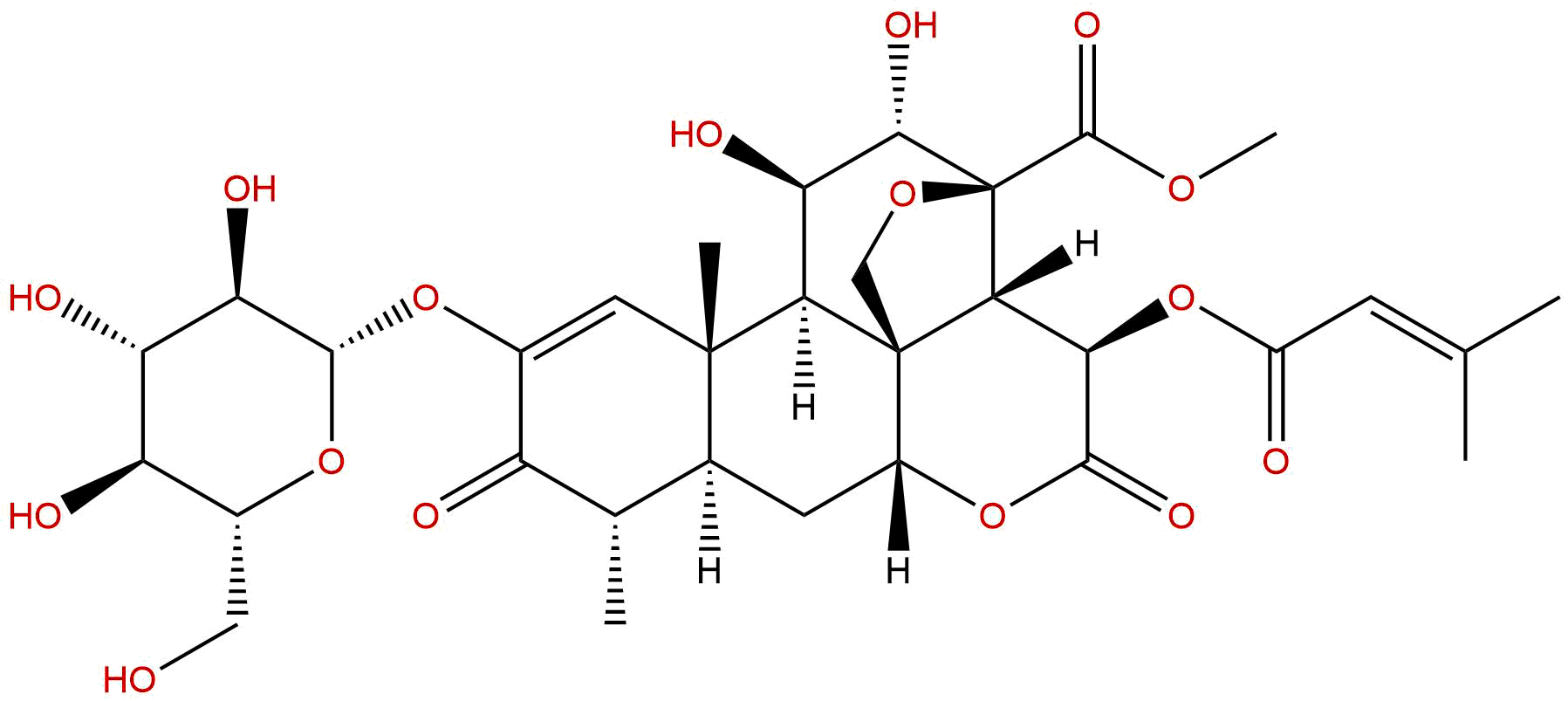


Product name: Bruceoside A
Synonym name:
Catalogue No.: BP5335
Cas No.: 63306-30-9
Formula: C32H42O16
Mol Weight: 682.672
Botanical Source:
Type of Compound: Diterpenoids
Purity: 95%~99%
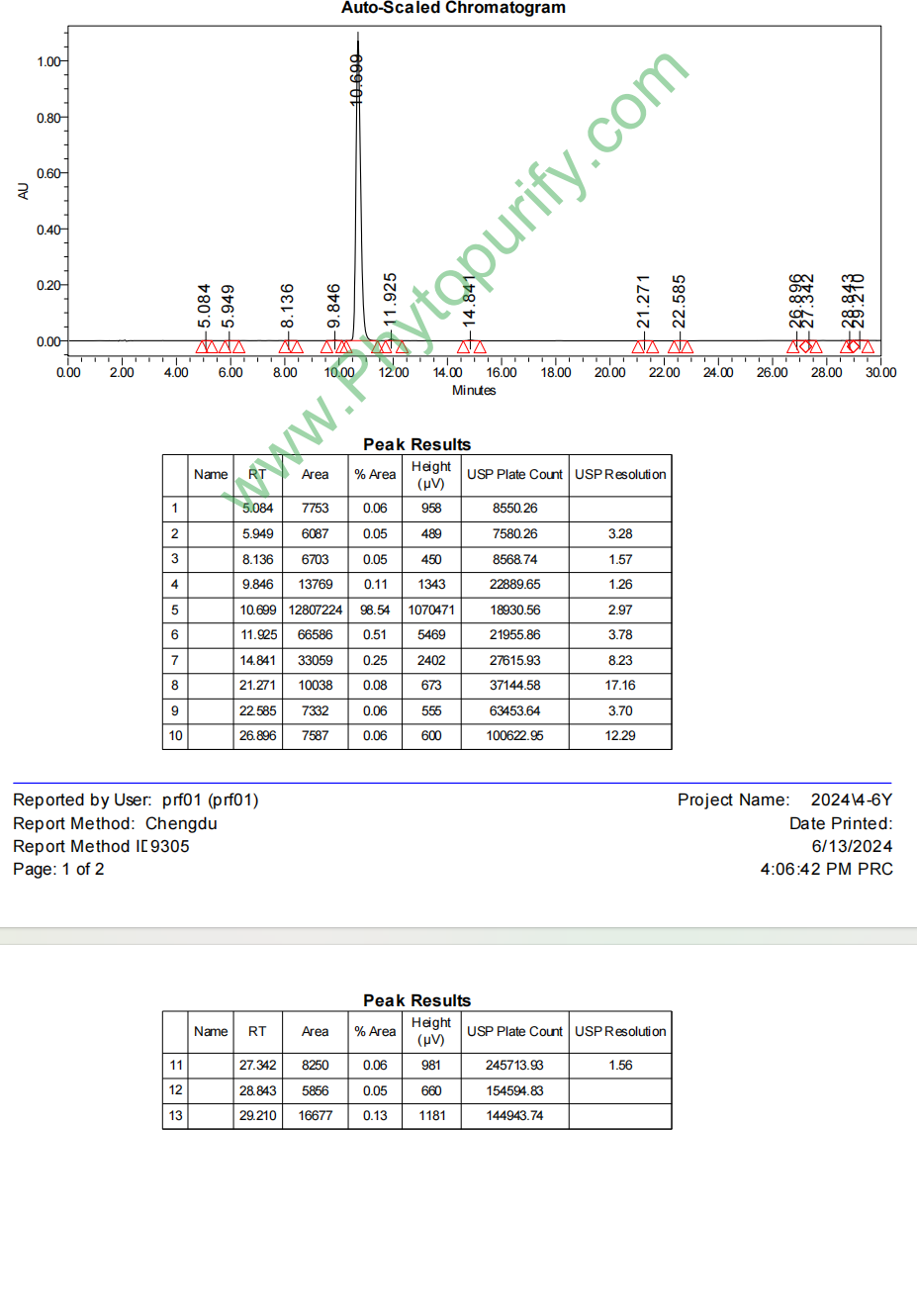
Analysis Method: HPLC-DAD or/and HPLC-ELSD
Identification Method: Mass, NMR
Packing: Brown vial or HDPE plastic bottle
Storage: Store in a well closed container, protected from air and light. Put into refrigerate or freeze for long term storage.
Whenever possible, you should prepare and use solutions on the same day. However, if you need to make up stock solutions in advance, we recommend that you store the solution as aliquots in tightly sealed vials at -20℃. Generally, these will be useable for up to two weeks.
The product could be supplied from milligrams to grams
Inquire for bulk scale.
For Reference Standard and R&D, Not for Human Use Directly.
HPLC of Bruceoside A
Storage conditions:Short-term storage at 2~8℃, long-term storage at -20 ~ -80℃
245.0400
-.1382
-.1379
1.8936
.5615
1.0716
Low
56.4361
7.0156
Yes
No
No
No
Yes
No
0.0
Yes
Yes
Yes
Yes
Natural products, as an important source of drug discovery, play an irreplaceable role in the long history of human fight against diseases. In traditional Chinese medicine, Fructus Bruceae, as an important Chinese medicinal herb, has medicinal value that can be traced back to the "Compendium of Materia Medica" and has been recorded as being used to treat diseases such as dysentery, malaria, and wart warts. Modern pharmacological research has revealed that extracts of Brucea asiatica have significant biological activities such as anti-tumor, anti-inflammatory, and antiparasitic effects, among which quassinoids are considered the main active ingredient group.
Bruceoside A (CAS number: 63306-30-9) is a representative bitter lignin glycoside compound isolated from brucea. This compound was first reported in the 1980s, and its unique chemical structure and significant anti-tumor activity quickly attracted widespread attention from the international natural product chemistry and pharmacology communities. Brucea Javanese Glycoside A belongs to the class of quassinoid lactones. Its molecular skeleton is a highly oxidized triterpenoid structure, connected to a sugar unit. This structural feature endows it with unique physicochemical properties and biological activity spectrum.
In recent years, with the continuous increase of the incidence rate of cancer and the increasingly serious problem of drug resistance of existing chemotherapy drugs, finding new, efficient and low toxic anti-tumor lead compounds from natural products has become a hot direction of drug research and development. Due to its unique chemical space, clear anti-tumor activity, and relatively low toxicity characteristics, Brucella Javanese Glycoside A exhibits great potential as a candidate anti-tumor drug. This article will provide a systematic review of the research progress of Brucea Javanese Glycoside A from multiple dimensions, including chemical structure, plant origin, pharmacological activity, mechanism of action, pharmacological evaluation, and clinical application prospects, in order to provide reference for the further development and utilization of this compound.
The chemical structure of Brucea Javanese Glycoside A belongs to the family of bitter lignin compounds, with a core skeleton of C20 bitter lignin lactone structure and a highly oxidized four ring or five ring system. Specifically, the core structure of Brucea Javanese Glycoside A contains a cis fused A/B ring system, with the C ring being the δ - lactone ring and the D ring being the γ - lactone ring. This dual lactone structure is a key pharmacophore for its anti-tumor activity. Unlike most lignin glycosides, Brucea Javanese Glycoside A is linked to a β - D-glucosyl group at position C-21, forming a glycosidic structure. This glycosylation modification significantly alters the water solubility and bioavailability of the compound.
From the molecular formula, the precise molecular weight of Brucea Javanese Glycoside A is 682.6720 Da, which belongs to a natural product with medium molecular weight. The LogP value of its lipid water partition coefficient is -0.1382, indicating that the compound has slight hydrophilicity, which is closely related to the presence of multiple hydroxyl and sugar groups in the molecule. The topologically polar surface area (TPSA) is as high as 245.0400 Å ², which is much higher than the recommended upper limit of 140 Å ² for oral drugs, indicating that the compound may have difficulty penetrating cell membranes through passive diffusion. The water solubility parameter is 1.8936 mg/mL, which belongs to the category of moderately water-soluble compounds. This characteristic provides the basis for their distribution and metabolism in organisms.
In terms of spectral characteristics, the UV absorption spectrum of Brucea Javanese Glycoside A usually shows strong absorption at 220-240 nm, which is attributed to the presence of α, β - unsaturated lactone structures. In the infrared spectrum, two characteristic carbonyl absorption peaks can be observed at approximately 1750-1780 cm ⁻¹ and 1680-1700 cm ⁻¹, corresponding to the C=O stretching vibration of γ - lactone and δ - lactone, respectively. In nuclear magnetic resonance hydrogen and carbon spectra, the proton signals of sugar end groups usually appear in the range of δ 4.5-5.5 ppm, while the characteristic proton signals on the lactone ring are distributed in the range of δ 3.0-5.0 ppm. High resolution mass spectrometry (HR-ESI-MS) showed that the [M+Na] ⁺ excimer ion peak was at m/z 705.2612, which is highly consistent with the theoretical calculation value.
It is worth noting that the chemical stability of Brucea Javanese Glycoside A is significantly affected by pH and temperature. Under alkaline conditions, its lactone ring is prone to undergo ring opening reactions, resulting in loss of activity; In acidic environments, glycosidic bonds may undergo hydrolysis, releasing glycosides. Therefore, during the extraction, separation, and storage processes, it is usually necessary to control the pH within the range of 4-7 and avoid high temperatures and strong light exposure.
The main plant source of Brucea Javanica (L.) Merr., a plant in the family Simaroubacheae, is mainly distributed in tropical and subtropical regions such as southern China, Southeast Asia, and northern Australia. In China, brucea is mainly produced in provinces such as Guangdong, Guangxi, Fujian, and Yunnan. Its dried and mature fruit (Fructus Bruceae) is the medicinal part of the traditional Chinese medicine brucea. In addition to Brucea asiatica, plants of the same genus such as B. sumatrana and B. mollis have also been reported to contain Brucea asiatica glycoside A, but the content is usually low.
The content of Yaguzi glycoside A in Yaguzi fruit varies depending on factors such as place of origin, harvest season, and storage conditions. Research has shown that the content of Yaguzi glycoside A in the fruit of Yaguzi fruit produced in Guangdong is about 0.05% -0.15% (dry weight), while the content in samples produced in Guangxi is slightly higher, reaching about 0.2%. The maturity of the fruit has a significant impact on its content, with lower levels of bruce acid glycoside A in immature fruits and peak levels in fully ripe fruits. In addition, the drying method of the fruit can also affect the stability of the compound. Drying in the shade or at low temperatures (≤ 50 ° C) is beneficial for maintaining the integrity of Brucea Javanese Glycoside A.
Traditional extraction methods often use ethanol or methanol as solvents and extract through cold soaking or hot reflux. Specifically, soak the dried and crushed powder of brucea fruit in 70% -95% ethanol for 24-48 hours, repeat the extraction 2-3 times, combine the extracts, and concentrate under reduced pressure to obtain the total extract. However, this crude extraction method has poor selectivity and can simultaneously extract a large amount of lipid soluble impurities and other lignin compounds. In recent years, various modern extraction techniques have been developed to improve extraction efficiency and selectivity
Ultrasound assisted extraction (UAE)At 40-60 ° C, 60% -80% ethanol is used as the solvent, ultrasonic power is 200-400W, and extraction time is 30-60 minutes. This method can significantly shorten the extraction time and increase the extraction rate of Brucea Javanese Glycoside A by about 20% -30%.
Microwave assisted extraction (MAE)Using microwave radiation to rupture plant cell walls and accelerate the release of target compounds. The optimal conditions are: microwave power of 300-500W, extraction temperature of 50-70 ° C, time of 10-20 minutes, and solvent of 70% ethanol.
Supercritical fluid extraction (SFE)Using CO ₂ as the extraction medium and adding an appropriate amount of ethanol as the entrainer. This method has the advantages of high selectivity and no solvent residue, but the equipment cost is high, and it is currently mainly used for laboratory scale research.
The crude extract after extraction needs to go through a systematic separation and purification step to obtain high-purity bruce acid glycoside A. The classic separation process includes liquid-liquid extraction (extraction with petroleum ether, ethyl acetate, and n-butanol in sequence), silica gel column chromatography (chloroform methanol gradient elution), ODS reverse phase column chromatography (methanol water gradient elution), and preparative high-performance liquid chromatography (pre HPLC) purification. In recent years, high-speed countercurrent chromatography (HSCCC) technology has also been successfully applied to the separation of bruce acid glycoside A. Using a two-phase solvent system of n-hexane ethyl acetate methanol water (1:5:1:5, v/v), bruce acid glycoside A monomer with a purity of>98% can be obtained within 2 hours.
The pharmacological activity research of Brucea Javanese Glycoside A mainly focuses on the field of anti-tumor, while there are also a few reports on anti-inflammatory, antiviral, and immune regulatory activities.
Brucea Javanese Glycoside A exhibits broad-spectrum cytotoxic effects on various human tumor cell lines. In vitro experimental data show that it has significant inhibitory effect on proliferation of leukemia cells (such as HL-60, K562), liver cancer cells (HepG2, Huh-7), lung cancer cells (A549, H1299), breast cancer cells (MCF-7, MDA MB-231), colon cancer cells (HCT-116, SW480), and prostate cancer cells (PC-3, DU145), and the IC ₀ value is usually in the range of 0.1-10 μ M. It is worth noting that the toxicity of Brucea Javanese Glycoside A to normal cells (such as human liver cell L02 and human umbilical vein endothelial cell HUVEC) is relatively low, with a selectivity index (SI) of 5-20 times, indicating a certain degree of tumor selectivity.
In the evaluation of anti-tumor activity in vivo, Brucea Javanese Glycoside A has shown good therapeutic effects in various transplant tumor models. For example, in a HepG2 liver cancer xenograft model in nude mice, intraperitoneal injection of brucellosine A (5-20 mg/kg, once daily, for 14 consecutive days) significantly inhibited tumor growth, with an inhibition rate of 45% -72%, and no significant weight loss or organ toxicity was observed. In the A549 lung cancer metastasis model, bruce acid glycoside A not only inhibits primary tumor growth, but also reduces the number and size of lung metastases, indicating its potential for anti metastasis.
In addition to its anti-tumor effect, Brucea Javanese Glycoside A also exhibits certain anti-inflammatory activity. In the RAW264.7 macrophage model stimulated by lipopolysaccharides (LPS), brucellosine A (1-10 μ M) can dose dependently inhibit the production of nitric oxide (NO) and prostaglandin E ₂ (PGE ₂), while downregulating the expression of inducible nitric oxide synthase (iNOS) and cyclooxygenase-2 (COX-2). In the rat model of toe swelling induced by carrageenan, oral administration of Brucella Javanese Glycoside A (20-50 mg/kg) can significantly reduce inflammatory response, and the effect is comparable to the positive control drug indomethacin.
In terms of immune regulation, Brucea Javanese Glycoside A can enhance the killing activity of natural killer cells (NK cells), promote T lymphocyte proliferation, and upregulate the secretion of cytokines such as IL-2 and IFN - γ. These immune enhancing effects may have a synergistic effect with their anti-tumor activity.
Preliminary studies have also found that Brucea Javanese Glycoside A has inhibitory effects on RNA viruses such as dengue virus and influenza virus, with EC ₅₀ values ranging from 5-20 μ M. In addition, the compound can inhibit the growth of malaria parasites in vitro, demonstrating anti malarial potential. However, the research on these non anti-tumor activities is still in its preliminary stage, and their in vivo efficacy and safety need further verification.
The anti-tumor mechanism of Brucea Javanese Glycoside A involves multiple signaling pathways and molecular targets, exhibiting characteristics of multi-target and multi pathway effects.
Brucea Javanese Glycoside A can induce tumor cell apoptosis through two pathways: endogenous (mitochondrial) and exogenous (death receptor). Research has shown that treatment with Brucea Javanese Glycoside A can lead to a decrease in mitochondrial membrane potential (Δ PSI m), release of cytochrome c into the cytoplasm, activation of caspase-9 and caspase-3, and ultimately trigger PARP cleavage. At the same time, the expression profile of Bcl-2 family proteins changed: the expression of anti apoptotic proteins Bcl-2 and Mcl-1 was down regulated, while the expression of pro apoptotic proteins Bax and Bak was up-regulated, and the Bax/Bcl-2 ratio was significantly increased. In terms of exogenous pathways, Brucea Javanese Glycoside A can upregulate the expression of death receptors Fas and TRAIL-R1/R2, and enhance the activation of caspase-8.
Brucea Javanese Glycoside A can block tumor cells in the G2/M phase, thereby inhibiting cell proliferation. Mechanism studies have found that this compound can downregulate the expression of cyclin B1 and CDK1, while upregulating the levels of CDK inhibitors such as p21 and p27. In addition, bruce acid glycoside A can also interfere with the normal assembly of mitotic spindles by inhibiting the activity of Aurora A kinase, leading to mitotic disasters.
Nuclear factor kappa B (NF - κ B) is a key transcription factor that regulates inflammation, proliferation, and apoptosis. Brucea Javanese Glycoside A can inhibit TNF - α or LPS induced phosphorylation and degradation of I κ B α, thereby preventing nuclear translocation and transcriptional activity of NF - κ B. The expression of downstream target genes such as cyclin D1, Bcl-2, VEGF, MMP-9, etc. decreases accordingly. This mechanism not only explains its anti-inflammatory activity, but also partially explains its anti-tumor and anti metastatic effects.
The PI3K/Akt/mTOR signaling pathway plays a central role in the survival, proliferation, and metabolism of tumor cells. Brucea Javanese Glycoside A can inhibit the phosphorylation of Akt (Thr308 and Ser473 sites), thereby suppressing the activity of mTORC1, leading to a decrease in the phosphorylation levels of downstream effector molecules p70S6K and 4E-BP1. Meanwhile, the compound can also activate AMPK, further inhibiting mTOR signaling and forming a dual regulatory mechanism.
Brucea Javanese Glycoside A can increase the level of reactive oxygen species (ROS) in tumor cells, deplete glutathione (GSH), and disrupt intracellular redox balance. Excessive ROS can damage mitochondria and trigger endoplasmic reticulum stress (ERS), manifested by upregulation of ERS marker proteins such as GRP78, CHOP, ATF4, etc. Continuous ERS can ultimately activate the caspase-12-dependent apoptotic pathway.
In recent years, through techniques such as chemical proteomics, drug affinity response target stability (DARTS), and cellular thermal transition analysis (CETSA), researchers have identified several direct targets of bruce acid glycoside A. Among them, heat shock protein 90 (HSP90) is considered to be one of the important targets of bruce acid glycoside A. Brucea Javanese Glycoside A can bind to the N-terminal ATP binding pocket of HSP90, inhibiting its chaperone function and leading to the degradation of various client proteins such as HER2, Akt, Raf-1, CDK4, etc. In addition, topoisomerase I (Topo I) and microtubule protein have also been reported as potential targets of bruce acid glycoside A, but their binding mode and functional significance still need further validation.
The pharmacological evaluation of Brucea Javanese Glycoside A involves multiple aspects such as physicochemical properties, pharmacokinetic characteristics, and safety.
According to the Lipinski Rule of Five, the molecular weight of Brucea Javanese Glycoside A (682.67 Da) exceeds the threshold of 500 Da, and the LogP value (-0.1382) is slightly lower than the recommended range (-0.4 to 5.6). The number of hydrogen bond donors (about 8) and acceptors (about 14) both exceed the rule limits. These features suggest that Brucea Javanese Glycoside A may not meet the drug class standards of traditional oral medications. However, there is controversy over the applicability of the Lipinski rule for natural products, especially glycosides. Many natural medicines with good oral activity, such as paclitaxel and Tripterygium wilfordii Hook. f., also do not comply with the five rules. Therefore, the potential of Brucea Javanese Glycoside A as a drug cannot be denied solely based on these rules.
The TPSA value of Brucea Javanese Glycoside A (245.04 Å ²) is much higher than the recommended upper limit of 140 Å ² for oral drugs, which is related to its multiple polar groups and sugar groups in the molecule. A high TPSA value usually indicates low membrane permeability, which is consistent with the low apparent permeability coefficient (Papp<1 × 10 ⁻⁶ cm/s) exhibited by bruce acid glycoside A in the Caco-2 cell model. However, bruce acid glycoside A may be taken up by cells through active transport or endocytosis pathways, partially overcoming the barriers of passive diffusion.
The pharmacokinetic study of Brucea Javanese Glycoside A is currently mainly based on animal experiments. In rats, after intravenous injection of 10 mg/kg of Brucea Javanese Glycoside A, its plasma half-life (t ₁/₂) is about 1.5-2.5 hours, manifested as a cloth volume (Vd) of about 0.8-1.2 L/kg, indicating that its distribution is mainly limited to extracellular fluid. After oral administration (50 mg/kg), the absolute bioavailability (F) is only 2% -5%, which is consistent with the low oral absorption predicted by the above physicochemical properties. The protein binding rate of Brucea Javanese Glycoside A in plasma is about 85% -92%, mainly binding to albumin.
Metabolic studies have shown that Brucea Javanese Glycoside A mainly undergoes metabolic reactions such as deglycosylation, hydroxylation, and glucuronic acid binding in the liver. The cytochrome P450 enzyme system (especially CYP3A4) is involved in its oxidative metabolism, while the UGT enzyme system is responsible for binding reactions. The deglycosylated products (aglycones) in the metabolites of Brucea Javanese Glycoside A still retain some anti-tumor activity, but their water solubility and stability are poor.
The preliminary safety evaluation results of Brucea Javanese Glycoside A are relatively optimistic. In vitro hERG inhibition assays showed no significant inhibitory activity of Brucea Javanese Glycoside A at a concentration of 10 μ M, indicating a low risk of cardiac toxicity. The Ames test result is negative (0.0), indicating that the compound has no mutagenicity. In the acute toxicity experiment, the LD ₅₀ of intraperitoneal injection of Brucea Javanese Glycoside A in mice was about 120-150 mg/kg, while the LD ₅₀ of oral administration was>1000 mg/kg, showing a larger safety window.
In the subacute toxicity experiment (repeated administration for 28 days), no significant liver, kidney, or hematological toxicity was observed in rats after oral administration of Brucea Javanese Glycoside A (20-80 mg/kg/day). However, the high-dose group (80 mg/kg/day) showed mild gastrointestinal reactions (such as diarrhea and decreased appetite), which may be related to the irritating effect of lignin compounds on the gastrointestinal mucosa.
The blood-brain barrier (BBB) permeability of Brucea Javanese Glycoside A was evaluated as "low", which is closely related to high TPSA values and molecular weight. This characteristic is both an advantage (reducing central nervous system toxicity) and a limitation (not conducive to treating brain metastases) in anti-tumor applications. For indications that require brain delivery, it may be necessary to develop nano formulations or prodrug strategies to improve BBB penetration ability.
Despite the encouraging anti-tumor activity demonstrated by Brucea Javanese Glycoside A in preclinical studies, the translation from laboratory to clinical still faces many challenges.
Low oral bioavailability The extremely low oral bioavailability (<5%) of Brucea Javanese Glycoside A severely limits the development of its oral formulations. Currently, most in vivo studies use intraperitoneal or intravenous administration, which is not conducive to long-term medication adherence of patients.
Limited water solubility Although Brucea Javanese Glycoside A has a certain water solubility (1.89 mg/mL), it is much lower than the concentration required for intravenous injection formulations (usually>10 mg/mL), and requires the use of solubilizers or nanotechnology to improve solubility.
Metabolic stability Brucea Javanese Glycoside A is prone to deglycosylation and oxidative metabolism in the body, resulting in a short half-life (about 2 hours) and requiring frequent administration to maintain effective blood drug concentration.
Insufficient targeting Although the selectivity of Brucea Javanese Glycoside A for normal cells and tumor cells is superior to traditional chemotherapy drugs, it still has certain non-specific toxicity, especially its stimulating effect on the gastrointestinal tract.
To overcome the above challenges, various new drug delivery systems are being explored:
Liposome nanoparticles Encapsulating Brucea Javanese Glycoside A in liposomes or PEGylated liposomes can significantly improve its water solubility, prolong circulation time, and enhance tumor passive targeting through EPR effect. Preliminary studies have shown that the tumor inhibition rate of Brucea Javanese Glycoside A liposomes in H22 liver cancer mouse models is about 30% higher than that of free drugs.
polymeric nanoparticles Using biodegradable polymers such as PLGA and PCL to prepare nanoparticles, it is possible to achieve sustained and controlled release of bruce acid glycoside A. Surface modified targeting ligands such as folate and RGD peptides can further enhance tumor active targeting.
Phospholipid complex Brucea Javanese Glycoside A forms a complex with phospholipids, which can improve its lipid solubility and promote oral absorption. After oral administration of Brucea Javanese Glycoside A-Phospholipid Complex in rats, the relative bioavailability increased by about 3-5 times.
Prodrug design Introducing ester groups, phosphate groups, and other cleavable functional groups on the sugar or hydroxyl groups of Brucea Javanese Glycoside A can improve its physicochemical properties and pharmacokinetic characteristics. For example, the phosphate prodrug of Brucea Javanese Glycoside A can be hydrolyzed by alkaline phosphatase in the body, releasing the active parent drug.
Given the multi-target mechanism of action of Brucea Javanese Glycoside A, combination therapy may produce synergistic effects and reduce toxicity:
Combined use with chemotherapy drugs The combination of Brucea Javanese Glycoside A with classic chemotherapy drugs such as cisplatin, doxorubicin, and paclitaxel exhibits synergistic effects in various tumor cells. Mechanism studies have shown that Brucea Javanese Glycoside A can inhibit the NF - κ B and Akt pathways, thereby reversing tumor cell resistance to chemotherapy drugs.
Combined with targeted drugs The combination of Brucea Javanese Glycoside A with targeted drugs such as sorafenib and gefitinib can enhance the efficacy of solid tumors such as liver cancer and lung cancer. Especially when combined with HSP90 inhibitors (such as 17-AAG), it can produce synergistic anti-tumor effects.
Combined with immunotherapy The immune enhancing effect of Brucea Javanese Glycoside A suggests that it may serve as an adjuvant drug for immune checkpoint inhibitors. Preliminary studies have shown that the combination of Brucea Javanese Glycoside A and anti-PD-1 antibodies can enhance the tumor infiltration and killing activity of CD8 ⁺ T cells.
At present, the clinical trial stage of Brucea Javanese Glycoside A has not yet entered, but research on its analogues and derivatives has made progress. For example, the brucine series compounds, which are the aglycones of brucitine A, have undergone phase I/II clinical trials in China for liver cancer and lung cancer. Preliminary results have shown good safety and certain therapeutic effects.
In the future, the clinical development of Brucea Javanese Glycoside A may focus on the following directions: firstly, developing novel drug delivery systems to address bioavailability issues; The second is to obtain derivatives with better drug properties through structural modification; Thirdly, explore its application in combination therapy for tumors; The fourth is to expand its indications to areas such as inflammatory diseases and viral infections.
As a representative compound of lignin based natural products, Yaguzi glycoside A exhibits great potential as a candidate anti-tumor drug due to its unique chemical structure, significant anti-tumor activity, and relatively low toxicity. Over the past few decades, fruitful results have been achieved in the chemical, pharmacological, and pharmacokinetic studies of this compound, revealing its molecular mechanism of exerting anti-tumor effects through multiple targets and pathways. However, drug defects such as low oral bioavailability and unstable metabolism remain the main bottlenecks restricting its clinical translation.
Looking ahead to the future, with the continuous advancement of nanotechnology, prodrug design, structural optimization and other strategies, the issue of the pharmacological properties of Brucea Javanese Glycoside A is expected to be resolved. At the same time, the development of omics technologies (such as proteomics and metabolomics) and artificial intelligence assisted drug design will help to better elucidate their targets and structure-activity relationships. We have reason to believe that in the near future, bruce acid glycoside A or its derivatives are expected to enter clinical research and provide new treatment options for cancer patients. This natural product excavated from traditional Chinese medicine will continue to shine on the stage of modern drug development.
