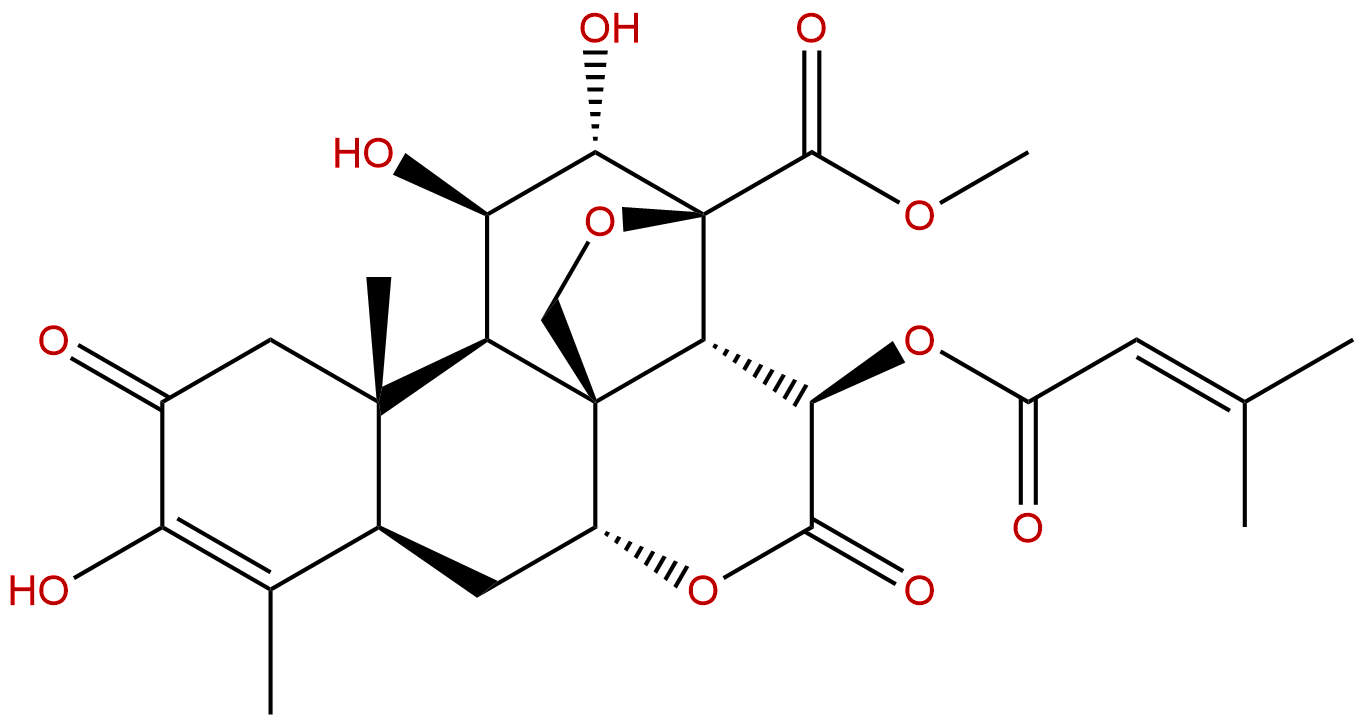


Product name: Brusatol
Synonym name:
Catalogue No.: BP3641
Cas No.: 14907-98-3
Formula: C26H32O11
Mol Weight: 520.531
Botanical Source:
Physical Description:
Type of Compound: Diterpenoids
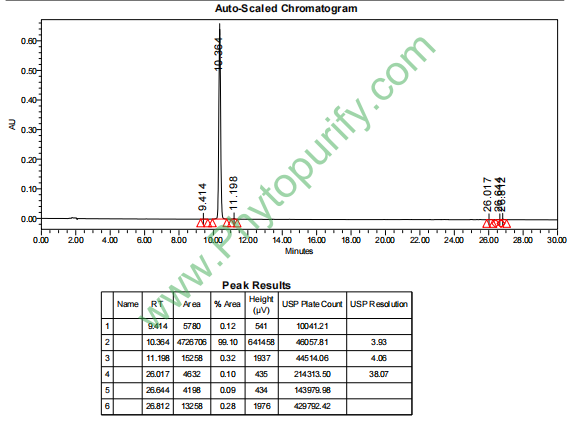
Purity: 95%~99%
Analysis Method: HPLC-DAD or/and HPLC-ELSD
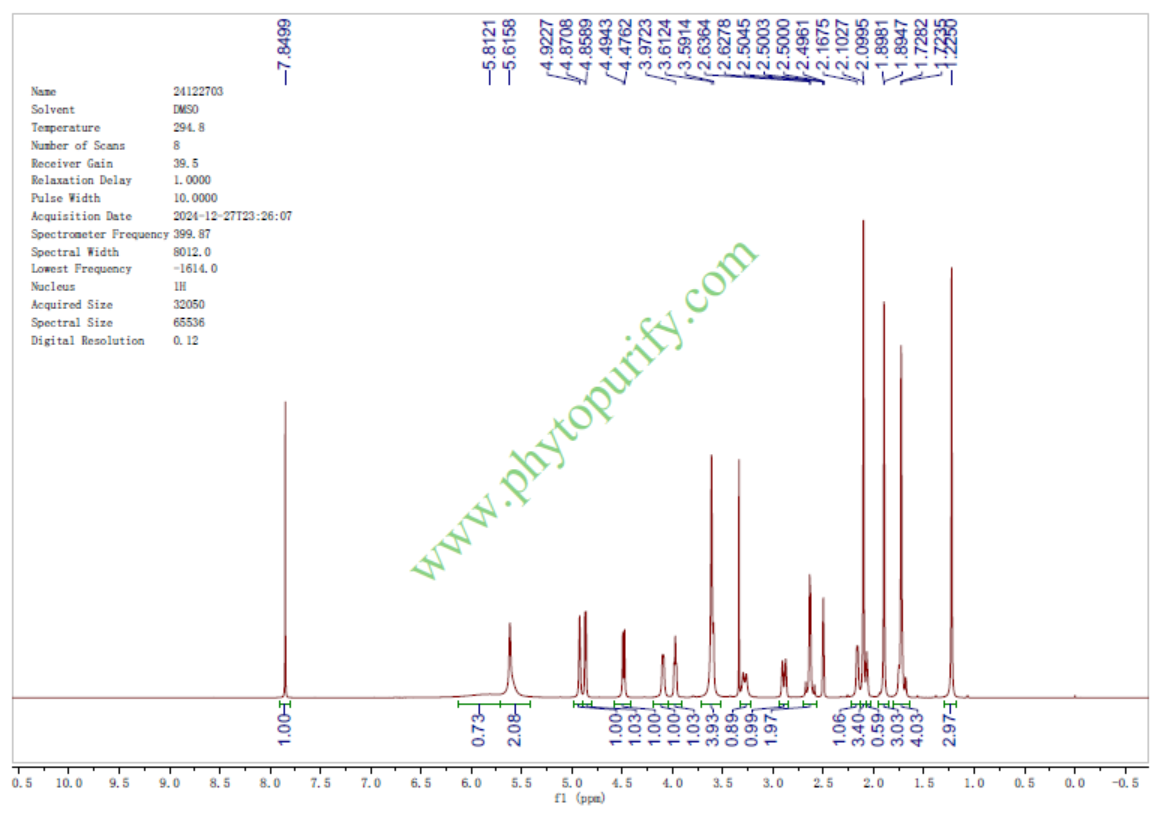
Identification Method: Mass, NMR
Packing: Brown vial or HDPE plastic bottle
The product could be supplied from milligrams to grams. Inquire for bulk scale.
We provide solution to improve the water-solubility of compounds, thereby facilitating the variety of activity tests and clinic uses.
For Reference Standard and R&D, Not for Human Use Directly.
HPLC of Brusatol
HNMR of Brusatol
Storage conditions:Short-term storage at 2~8℃, long-term storage at -20 ~ -80℃
165.8900
.9876
.9815
.5974
.8573
3.7802
Low
64.9532
6.5115
Yes
No
No
No
Yes
No
0.0
Yes
No
No
Yes
Brusatol, a traditional medicinal plant derived from the Chinese medicinal plant, is a type of bitter alcohol(Brucea javanica)The bitter lignin tetracyclic triterpenoids obtained from the separation have a CAS number of 14907-98-3. As a natural product with unique biological activity, brucea jasmona has attracted much attention in contemporary pharmacological research, especially due to its Efficient and selective inhibitors of the nuclear factor E2 related factor 2 (Nrf2) signaling pathway And famous. Nrf2 is a key transcription factor in cellular antioxidant stress response, playing a central role in maintaining intracellular redox balance. However, in many types of cancer, the Nrf2 pathway is abnormally continuously activated, leading to strong resistance of cancer cells to oxidative stress and chemotherapy drugs, a phenomenon known as "Nrf2 addiction". Therefore, inhibiting the Nrf2 pathway has become a potential strategy for reversing tumor resistance and enhancing chemotherapy sensitivity.
The research background of bitter alcohol in Brucea Javanica began with the modern scientific interpretation of its traditional anti-tumor and anti malaria effects derived from its plant source, Brucea Javanica. As research deepens, scientists have discovered that brucea jasmona not only inhibits the Nrf2 pathway, making various cancer cells (such as cervical cancer, colorectal cancer, liver cancer, etc.) re sensitive to chemotherapy drugs such as cisplatin, but also has direct antiviral (such as anti hepatitis C virus) and antiparasitic (such as anti Trypanosoma cruzi) activity. Its mechanism of action is complex, involving the regulation of multiple key signaling molecules such as c-Myc, ROS, and HIF-1 α. At present, Brucea Javanese Bitter Alcohol is considered a potential Chemotherapy sensitizers and candidate compounds for anti-cancer adjuvant therapy Its unique molecular skeleton and mode of action also provide valuable clues for new drug design. This article will systematically elaborate on its chemical properties, sources, pharmacological mechanisms, drug properties, and research prospects.
The molecular formula of Brucea Javanese Bitter Alcohol is C26H32O11, with a molecular weight of 520.5310 g/mol, and it belongs to highly oxidized tetracyclic triterpenoids. Its structure is complex, with multiple chiral centers and clear stereochemistry, as can be seen from its detailed SMILES string:COC(=O)[C@@]12OC[C@]34[C@H]([C@@H](O)[C@@H]1O)[C@@]1(C)CC(=O)C(O)=C(C)[C@@H]1C[C@H]3OC(=O)[C@H](OC(=O)C=C(C)C)[C@@H]24This structure contains multiple functional groups, such as lactone rings, hydroxyl groups, acetoxy groups, and vinyl bonds, which are crucial for its biological activity and physicochemical properties.
From the analysis of the provided pharmacological parameters:
- Fat water partition coefficient The calculated LogP value is approximately 0.9876, and the LogD value is approximately 0.9815. This indicates that brucea jasmona exhibits moderate lipophilicity in physiological pH environments, neither too hydrophobic (LogP>5) leading to poor solubility and absorption, nor too hydrophilic (LogP<0) leading to insufficient membrane penetration, theoretically facilitating its ability to penetrate cell membranes and exert its effects.
- Solubility and permeability The predicted value of its water solubility is 0.5974 (usually measured in mg/mL or log mol/L, indicating moderate to low solubility). The permeability of Caco-2 cells is 3.7802 (usually measured in units of 10 ⁻⁶ cm/s), which is a high value indicating its good intestinal absorption potential. The effective permeability (Peff) is 0.8573, further supporting its excellent membrane permeability.
- Polar Surface Area The topological polar surface area (TPSA) is 165.89 Å ². Compounds with TPSA>140 Å ² are generally considered to have weaker ability to cross the blood-brain barrier (BBB). The data also confirms that its BBB permeability is "low", which means it may not easily enter the central nervous system, which may reduce the risk of central neurotoxicity for the treatment of peripheral tumors.
- Protein binding rate The predicted plasma protein binding rate (PPB) is 64.95%, which is at a moderate level, indicating that there is a portion in the blood that exists in free form and can be distributed to tissues for action.
These physicochemical properties lay the foundation for its subsequent pharmacokinetic behavior and drug efficacy evaluation.
The plant source of bitter alcohol in Brucea Javanica is Brucea javanica, also known as Sophora flavescens or Old Crow Gallbladder, scientific name Brucea javanica (L.) Merr., Belonging to the Simaroubacheae family. This plant is mainly distributed in tropical and subtropical regions of Asia, such as southern China and Southeast Asian countries. In traditional Chinese medicine and Southeast Asian traditional medical systems, the fruit of Brucea Javanese (Brucea Javanese) has a long history of medicinal use.
Traditionally, brucea is considered to be cold in nature, extremely bitter in taste, and has a small toxicity. It belongs to the large intestine and liver meridian. Its main function is Clearing heat and detoxifying, intercepting malaria, stopping dysentery, and corroding warts Commonly used clinically for:
1. Treat dysentery, especially amoebic dysentery Take its effects of clearing heat, drying dampness, detoxifying and stopping dysentery.
2. against malaria Before the emergence of quinine, brucea was one of the important antimalarial drugs.
3. Treat warts and corns External use of its kernel or oil, utilizing its corrosive effect.
4. antitumor It is commonly used in folk medicine to treat digestive tract tumors such as esophageal cancer, gastric cancer, rectal cancer, and cervical cancer, and is often applied topically or taken orally.
Modern pharmacological research has confirmed that the extract of Brucea asiatica and its various bitter lignin compounds (such as Brucea asiatica A, B, C, D, and Brucea asiatica alcohol) are the material basis for its anti-tumor, anti-inflammatory, and antiparasitic activities. Among them, as one of the active ingredients with high content, the powerful Nrf2 inhibition and chemotherapy sensitization effects of Brucea Javanese Bitter Alcohol provide a modern molecular biology level scientific explanation for the traditional experience of "fighting poison with poison" in the treatment of tumors. From traditional herbs to clear targets of action, the research on brucea jasmona is a model for the modernization of traditional Chinese medicine and the development of new natural product drugs.
The pharmacological activity of Brucea Javanica Bitter Alcohol is extensive, but its most notable core function is as Nrf2 pathway inhibitor And thus derived powerful chemotherapy sensitization and anti-cancer effects.
Nrf2 normally binds to Keap1 protein and is degraded by ubiquitination. Under oxidative stress or electrophilic reagent stimulation, Nrf2 dissociates from Keap1, enters the nucleus, binds to antioxidant response elements (ARE), initiates transcription of a series of phase II detoxifying enzymes and antioxidant proteins (such as HO-1, NQO1, GCLC, etc.), and protects the cell. However, in various cancers, Nrf2 mutations or Keap1 dysfunction lead to constitutive activation of the Nrf2 pathway. Although this makes cancer cells more resistant to oxidative stress, it also makes them resistant to chemotherapy drugs that rely on oxidative stress killing, such as cisplatin.
Brucea Javanica is bitter and mellow Specific and effective inhibition of the Nrf2 pathway Research has shown that it does not affect the Keap1-Nrf2 interaction, but rather through Inhibition of Nrf2 protein synthesis To achieve. Specifically, brucea jasmona can inhibit global protein translation, among which Nrf2 protein has a short half-life and is particularly sensitive to its synthesis inhibition, leading to a rapid decrease in Nrf2 protein levels. When the protective umbrella of Nrf2 is removed, the antioxidant defense system of cancer cells is weakened, making them more sensitive to chemotherapy-induced oxidative damage and cell apoptosis.
The target information provided by the database (TP53, CDKN2A, RB1, HPV-E6, HPV-E7) mainly points to cervical cancer This reveals the possible network of action of brucea jasmona in this disease.
- HPV related cervical cancer The E6 and E7 oncogenes of high-risk human papillomavirus (HPV) are key contributors to cervical cancer. E6 protein promotes the degradation of tumor suppressor protein p53 (encoded by TP53 gene), while E7 protein inactivates retinoblastoma protein (pRb, encoded by RB1 gene) and affects the function of p16INK4a (encoded by CDKN2A gene). The inactivation of these three major tumor suppressor pathways (p53, pRb, p16) collectively drives infinite cell proliferation.
- Intervention of Brucea Javanica Bitter Alcohol Research has shown that brucea jasmona not only inhibits Nrf2 sensitization chemotherapy, but may also exert direct anti-cancer effects by regulating these key targets. For example, in hypoxic environments (common in solid tumors), brucea jasmona inhibits the c-Myc/ROS signaling pathway,Promote the activity of prolyl hydroxylase (PHD), thereby accelerating the degradation of hypoxia inducible factor-1 α (HIF-1 α)HIF-1 α is a key factor in tumor adaptation to hypoxia, promotion of angiogenesis, and metastasis. Meanwhile, there is a cross-talk between the reduction of HIF-1 α and the regulation of the p53 pathway. In addition, the strong oxidative stress and protein synthesis inhibition induced by brucea jasmona may indirectly affect the stability or function of HPV E6/E7 oncogenes, thereby relieving their inhibition of p53 and pRb, reactivating these anti-cancer pathways, and ultimately leading to cancer cell cycle arrest and apoptosis.
In summary, brucea jasmona exerts its effects through a "multi-target, multi pathway" approach, with its core being the inhibition of Nrf2, which disrupts the homeostasis of cancer cells and synergistically affects key anti-cancer networks such as p53 and RB, ultimately leading to cancer cell death.
Based on the provided pharmacological parameters and in combination with classic standards such as the "Lipinski Rule of Five" (Ro5), a preliminary evaluation of the potential of brucea jasmona as a drug can be conducted
Lipinski Five Rule Compliance:
Absorption, distribution, metabolism, excretion (ADME) characteristics:
Comprehensive Assessment:
As a lead compound, Brucea Javanese Bitter Alcohol has Significant pharmacological activity and clear mechanism of action However, its medicinal properties face severe challenges:
Research status:
At present, the research on bitter alcohol in brucea is mainly focused on Preclinical stage A large number of in vitro and animal experiments have confirmed its significant effects in reversing tumor chemotherapy resistance (especially to cisplatin, sorafenib, etc.), inhibiting tumor growth and metastasis. The research scope has expanded from the initial cervical cancer, colorectal cancer, liver cancer to lung cancer, breast cancer, pancreatic cancer and other solid tumors. The study of its mechanism of action has also expanded from single Nrf2 inhibition to cross regulation with multiple signaling pathways such as HIF-1 α, c-Myc, STAT3, etc. However, it Poor pharmacokinetic properties in vivo and potential toxicity issues (especially genetic toxicity) It is the main bottleneck that restricts its translation into clinical applications. At present, there is no publicly available registration information for the use of brucea jasmona as a single drug or adjuvant drug in clinical trials.
Application prospects and future directions:
1. As a chemotherapy/targeted therapy sensitizer This is the most promising direction. The combination of brucea jasmona or its optimized derivatives with existing standard chemotherapy regimens is expected to overcome tumor resistance, improve efficacy, reduce chemotherapy drug dosage, and alleviate side effects. Need to find the optimal combination and dosing window.
2. Structural optimization and derivative development The core task of medicinal chemistry. By using semi synthetic or fully synthetic methods, the molecular structure of brucea jasmona can be modified to enhance activity, reduce toxicity, and improve pharmacokinetic properties. For example, modifying its easily metabolized ester bonds or introducing solubilizing groups.
3. Research on a new drug delivery system The use of nanotechnology (such as polymer nanoparticles, micelles, liposomes) to encapsulate brucea jasmona can enhance its ability to target tumor sites (through EPR effect or active targeting), increase solubility, control release, and potentially reduce its toxicity to normal tissues.
4. Deep exploration of the mechanism of action It is crucial to further elucidate the specific mechanism by which it causes chromosomal abnormalities. Is it direct damage to DNA or indirect pathways such as interference with mitosis? Clarifying this point can help avoid the toxicity through structural design.
5. Expand the field of diseases In addition to cancer, its value in antiviral (such as HCV), antiparasitic and inflammatory related diseases (such as complications of diabetes) is also worth exploring.
In short, the bitter alcohol of brucea is a powerful and complex "chemical weapon" endowed by nature, which opens a new window for us to fight cancer, especially to overcome drug resistance. Although the road to becoming a medicinal herb is full of thorns, its unique value drives scientists to constantly explore. In the future, through interdisciplinary collaboration, combining modern drug design concepts with traditional herbal wisdom, it is expected to transform this ancient plant component into modern drugs that benefit patients, or at least provide us with a deeper understanding of the mechanisms of life regulation.
