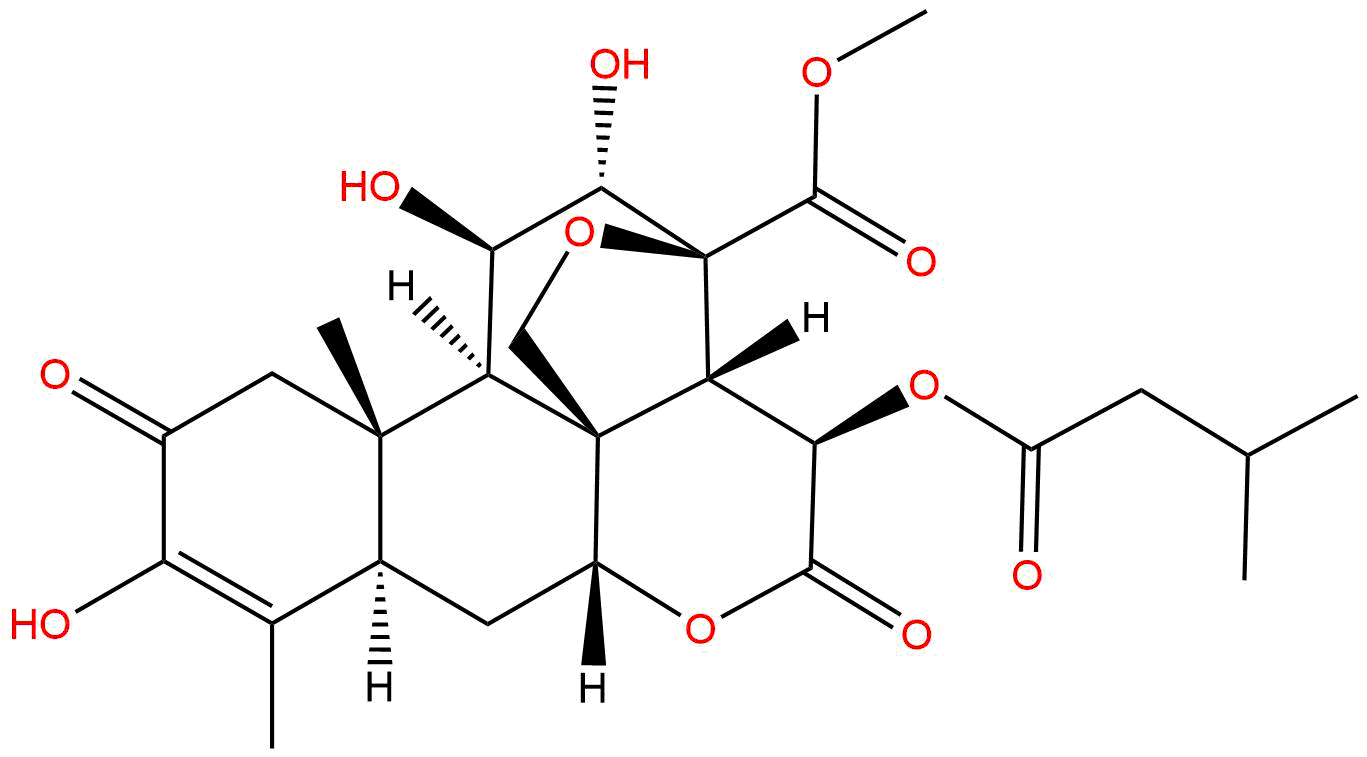


Product name: Bruceine A
Synonym name:
Catalogue No.: BP3089
Cas No.: 25514-31-2
Formula: C26H34O11
Mol Weight: 522.547
Botanical Source:
Physical Description:
Type of Compound: Diterpenoids
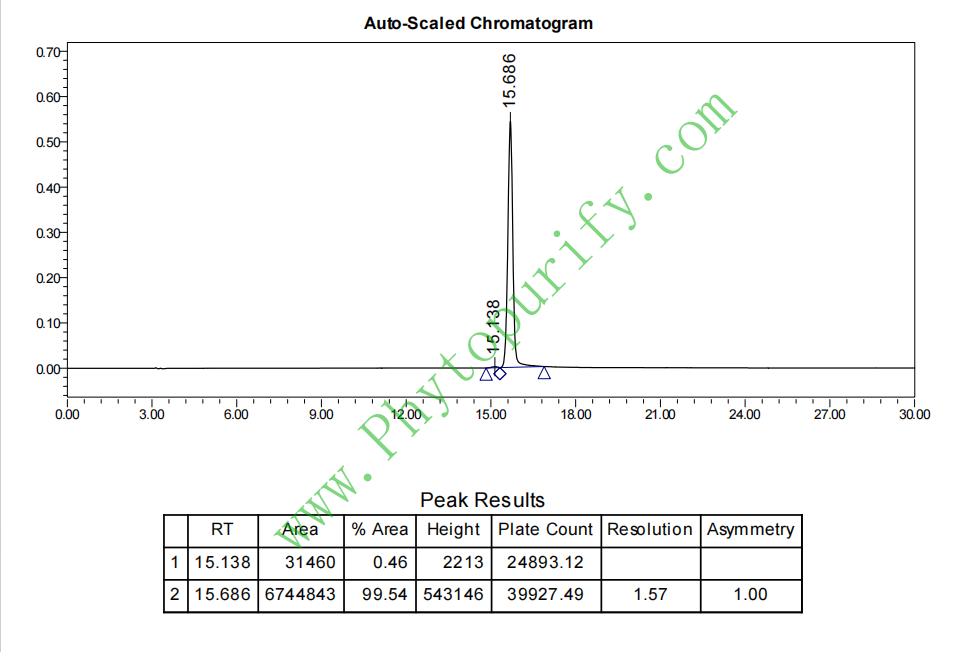
Purity: 95%~99%
Analysis Method: HPLC-DAD or/and HPLC-ELSD
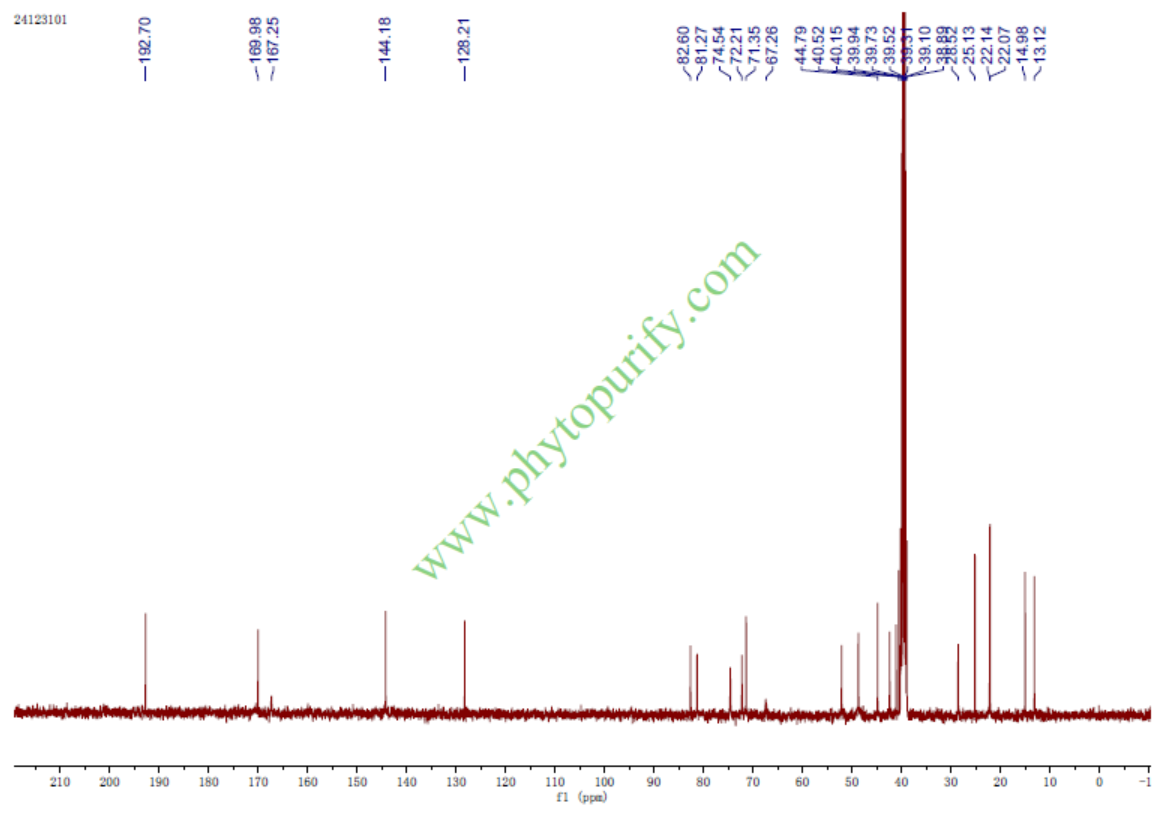
Identification Method: Mass, NMR
Packing: Brown vial or HDPE plastic bottle
The product could be supplied from milligrams to grams. Inquire for bulk scale.
We provide solution to improve the water-solubility of compounds, thereby facilitating the variety of activity tests and clinic uses.
For Reference Standard and R&D, Not for Human Use Directly.
Description:
Bruceine A has antibabesial activity, it can inhibit the in vitro growth of Babesia gibsoni in canine erythrocytes at lower concentration and kill the parasites within 24 hr at a concentration of 25 nM; it show strong antitrypanosomal activities with IC(50) values in the range of 2.9-17.8nM. Bruceine A has anthelmintic activity, it exhibits significant activity against Dactylogyrus intermedius with EC(50) values of 0.49 mg/L. Bruceine A exhibits NF-κB p65 inhibition, and cytotoxic potential against HT-29, HeLa, and HL-60 cells .
References:
Vet Parasitol. 2008 Dec 20;158(4):288-94.
In vitro antitrypanosomal activities of quassinoid compounds from the fruits of a medicinal plant, Brucea javanica.
The medicinal plant Brucea javanica (L.) Merr. (Simaroubaceae) is widely distributed throughout Asia where its bitter fruits have been used in traditional medicine for various ailments.
METHODS AND RESULTS:
Fifteen C-20 quassinoids were isolated from the fruits of B. javanica and examined for their in vitro antitrypanosomal activities against trypomastigotes of Trypanosoma evansi. Bruceine A, bruceantinol, bruceine C, brusatol, and bruceine B showed strong antitrypanosomal activities with IC(50) values in the range of 2.9-17.8nM, which compared well with the standard trypanocidal drugs diminazene aceturate (IC(50)=8.8nM) and suramin (IC(50)=43.2nM). However, dehydroBruceine A, dehydrobruceine B, and dehydrobrusatol were about 2100, 900, and 1200 times less active, respectively, than Bruceine A, bruceine B, and brusatol.
CONCLUSIONS:
The relationship of the structure and antitrypanosomal activity of these quassinoid compounds suggested that the presence of a diosphenol moiety in ring A and the nature of the C-15 side chain are important for their activities against T. evansi. This is the first report on the antitrypanosomal activity of isolated quassinoids.of the C-15 side chain are important for their activities against T. evansi. This is the first report on the antitrypanosomal activity of isolated quassinoids.
Vet Parasitol. 2011 Apr 19;177(1-2):127-33.
In vivo anthelmintic activity of bruceine A and bruceine D from Brucea javanica against Dactylogyrus intermedius (Monogenea) in goldfish (Carassius auratus).
The present study was designated to ascertain the anthelmintic activity of the dried fruits of Brucea javanica and to isolate and characterise the active constituents.
METHODS AND RESULTS:
The methanol extract from the fruits of B. javanica showed significant anthelmintic activity against Dactylogyrus intermedius (EC(50) (median effective concentration) value=49.96 mg l(-1)). Based on this finding, the methanol extract was fractionated on silica gel column chromatography in a bioassay-guided fractionation affording two known quassinoids showing potent activity, Bruceine Aand bruceine D. Both Bruceine A and D exhibited significant activity against D. intermedius with EC(50) values of 0.49 mg l(-1) and 0.57 mg l(-1), respectively, which were more effective than the positive control, mebendazole (EC(50) value=1.25 mg l(-1)). In addition, the 48-h median lethal concentration (LC(50)) for Bruceine A and D against the host (Carassius auratus) was 10.6-fold and 9.7-fold higher than the EC(50) for D. intermedius.
CONCLUSIONS:
These results provide evidence that the isolated compounds might be potential sources of new anti-parasitic drugs for the control of Dactylogyrus. This is the first report on an in vivo anthelmintic investigation for B. javanica against D. intermedius.
J Vet Med Sci. 2009 Jan;71(1):33-41.
Evaluation of efficacy of bruceine A, a natural quassinoid compound extracted from a medicinal plant, Brucea javanica, for canine babesiosis.
Bruceine A, a natural quassinoid compound extracted from the dried fruits of Brucea javanica (L.) Merr., was evaluated for its antibabesial activity in vitro and in vivo.
METHODS AND RESULTS:
Bruceine A inhibited the in vitro growth of Babesia gibsoni in canine erythrocytes at lower concentration compared with the standard antibabesial drug diminazene aceturate and killed the parasites within 24 hr at a concentration of 25 nM. Oral administration of Bruceine A at a dosage of 6.4 mg/kg/day for 5 days resulted in no clinical findings in a dog with normal ranges of hematological and biochemical values in the blood. Three dogs were infected with B. gibsoni and two of them were treated with Bruceine A at a dosage of 6.4 mg/kg/day for 6 days from day 5 post-infection. An untreated dog developed typical acute babesiosis symptoms including severe anemia, high fever, and complete loss of appetite and movement. However, the two Bruceine A-treated dogs maintained their healthy conditions throughout the experimental period of 4 weeks although complete elimination of parasites from the peripheral blood was not achieved and decreases in the packed cell volume and the erythrocyte and platelet counts were observed.
CONCLUSIONS:
Since natural quassinoid compounds have been used as traditional medicines for the treatment of various ailments including cancer and malaria, the present results suggest that Bruceine A or other related compounds are potential candidates for the treatment of canine babesiosis.
Bioorg Med Chem. 2009 Mar 15;17(6):2219-24.
Bioactivity-guided isolation of cytotoxic constituents of Brucea javanica collected in Vietnam.
METHODS AND RESULTS:
Five new triterpenoids (1-5), together with two known quassinoids, bruceantin (6) and Bruceine A (7), and a known flavonolignan, (-)-hydnocarpin (8), were isolated from the chloroform-soluble subfraction of a methanol extract of the combined twigs, leaves, and inflorescence of Brucea javanica collected in Vietnam. The structures of the new compounds 1-5 were established on the basis of spectroscopic methods. All isolates were evaluated for cytotoxicity against a small panel of human cancer cell lines.
CONCLUSIONS:
Quassinoids 6 and 7 were found to be highly active against these cell lines. (-)-Hydnocarpin (8) showed a potentiating effect when combined with both 6 and 7, during cytotoxicity testing using the MCF-7 human breast cancer cell line.
HPLC of Bruceine A
NMR of Bruceine A
Storage conditions:Short-term storage at 2~8℃, long-term storage at -20 ~ -80℃
165.8900
1.1136
1.1071
.4303
.7943
2.5599
Low
66.3061
6.4319
Yes
No
No
No
Yes
No
0.3
Yes
No
No
No
Natural products, as an important treasure trove for drug discovery, play an irreplaceable role in the history of human fight against diseases. Bitter lignin compounds are a class of natural products with a tetracyclic triterpenoid skeleton, which have attracted much attention due to their significant biological activity. Brucea Javanese Acid A, also known as Dihydro Brucea Javanese Bitter Alcohol, is one of the representative active ingredients, with a CAS number of 25514-31-2. This compound was initially discovered for its strong antiparasitic activity, particularly against amoebas and malaria parasites. With the deepening of research, Brucea Javanese A has shown a wider range of pharmacological effects, especially in the field of anti-tumor, demonstrating great potential. Research has shown that it can not only inhibit the proliferation and migration of various cancer cells, but also induce cell cycle arrest and programmed cell death. Its mechanism of action involves regulating multiple key signaling pathways and molecular targets, such as inhibiting nuclear factor kappa B and PFKFB4, while activating P38 α MAPK. This article aims to provide a systematic review of the chemical properties, plant sources, pharmacological activities, molecular mechanisms of action, pharmacological evaluation, and application prospects of Brucea Javanese A in diseases such as liver cancer, in order to provide comprehensive scientific references for the in-depth research and potential drug development of this compound.
Brucea Javanese A belongs to the class of bitter lignin compounds, with a molecular formula of C28H34O10 and a molecular weight of 522.5470 g/mol. Its core structure is a highly oxidized tetracyclic triterpenoid skeleton, containing multiple epoxy and hydroxyl functional groups, which are important foundations for its biological activity. The LogP value of its lipid water partition coefficient is 1.1136, indicating that the compound has a certain degree of lipophilicity, but is not highly hydrophobic. The topological polarity surface area is as high as 165.8900 Å ², mainly attributed to the presence of multiple hydrogen bond acceptors and donors (such as hydroxyl and epoxy groups) in the molecule, which significantly affects its solubility and transmembrane transport ability. In terms of solubility, its water solubility is about 0.4303 mg/mL, belonging to the category of slightly soluble to poorly soluble, which poses a challenge for its formulation development. Preliminary pharmacological risk assessment shows that the ability of Brucea Javanese A to penetrate the blood-brain barrier is low, suggesting that it may not be suitable for the treatment of central nervous system related diseases. In early safety indicators, its hERG channel inhibitory activity is negative, reducing the potential risk of inducing QT interval prolongation in the heart. However, the Ames test result was 0.3, indicating a potential genetic toxicity risk under specific conditions, which must be closely monitored in subsequent development.
Brucea Javanese A is mainly derived from plants of the genus Brucea in the family Sapindaceae, especially the traditional Chinese medicine Brucea Javanese. Brucea has been used in various regions of Asia to treat parasitic infections such as malaria and amoebic dysentery, and its medicinal value has long been recognized. Brucea Javanese A usually coexists with other structurally similar lignin in plants, and its content is relatively low.
Its extraction and separation is a multi-step precision process. The conventional method begins with crushing the dried seeds of brucea. Subsequently, medium polarity solvents such as methanol or ethanol are used for cold soaking or hot reflux extraction to fully extract the lignin components. After vacuum concentration, the crude extract was preliminarily enriched using liquid-liquid partitioning (such as segmented extraction with petroleum ether, ethyl acetate, and n-butanol), and brucine A was mainly concentrated in the ethyl acetate fraction. Further purification is highly dependent on modern chromatographic techniques. Silica gel column chromatography is commonly used, with different ratios of chloroform methanol or petroleum ether ethyl acetate gradient elution, to separate each component based on polarity differences. High performance liquid chromatography, especially preparative HPLC, is a key step in obtaining high-purity Brucea Javanese A, usually using a reverse phase C18 column with methanol water or acetonitrile water as the mobile phase for fine separation. In recent years, green technologies such as supercritical fluid extraction have also been explored to improve extraction efficiency and selectivity. The optimization of the extraction process is crucial for ensuring the stability of compounds and obtaining sufficient quantities for biological research.
Brucea Javanese A has diverse and significant pharmacological activities, and its research has expanded from the initial field of anti parasitic to anti-tumor and other aspects.
1. Antiparasitic activity This is the earliest known activity of Brucella asiatica A. It exhibits strong inhibitory and killing effects on various parasites, especially the histolytic Entamoeba that causes amoebic dysentery and the malaria parasite that causes malaria. The mechanism may be related to interfering with the energy metabolism or key protein functions of parasites.
2. Antitumor activity This is the current focus of research. Brucea javanica A has a broad spectrum of cytotoxicity to a variety of human cancer cell lines, including pancreatic cancer, breast cancer, lung cancer, colon cancer and liver cancer, which is the focus of this article. Its anti-tumor effect is not only reflected in the inhibition of cell proliferation, but also manifested as:
* Inhibit cell migration and invasion Brucea extract A can significantly reduce the motility of cancer cells and inhibit their ability to penetrate the basement membrane, which is of great significance for suppressing tumor metastasis.
* Inducing cell cycle arrest Research has shown that Brucea Javanese A can block cancer cells at specific stages of the cell cycle (such as G2/M phase), preventing them from undergoing mitosis and thus inhibiting proliferation.
* Inducing cell apoptosis Brucea Javanese A can activate the Caspase cascade reaction through endogenous and exogenous apoptotic pathways, leading to programmed cell death in cancer cells.
3. anti-inflammatory activity By inhibiting NF - κ B, a core inflammatory transcription factor, Brucea Javanese A can downregulate the expression of a series of pro-inflammatory cytokines and mediators, demonstrating anti-inflammatory potential.
4. Metabolic regulatory activity As a high affinity inhibitor of PFKFB4 (6-phosphofructose-2-kinase/fructose-2,6-diphosphatase 4), brucitin A can interfere with the reprogramming of glycolysis metabolism in cancer cells, cutting off their energy supply, which is considered one of its important mechanisms for selective anti-tumor treatment.
The anti-tumor effect of Brucea Javanese A, especially in liver cancer, is achieved through the synergistic action of multiple targets and pathways, reflecting the complexity of the mechanism of action of natural products.
1. Regulation of core signaling pathways:
* Inhibition of NF - κ B pathway NF - κ B is a key factor regulating cell survival, proliferation, and inflammation, and is continuously activated in various cancers. Brucea extract A can effectively inhibit the nuclear translocation and DNA binding activity of NF - κ B, thereby downregulating the expression of its target genes (such as BCL2, MMP9, PTGS2), promoting apoptosis, and inhibiting invasion.
* MAPK pathway regulation Brucea Javanese A exhibits bidirectional regulation of the MAPK pathway. On the one hand, it has been reported to activate P38 α MAPK, and the activation of P38 can transmit stress signals in certain contexts, promoting cell apoptosis or differentiation. On the other hand, it may also inhibit the overactivation of ERK (such as MAPK1), which typically transmits proliferative signals.
* PI3K/Akt pathway intervention By affecting PIK3CA or its downstream signals, Brucea Javanese A may inhibit the activation of Akt, thereby blocking signals that promote cell survival and growth.
2. Key molecular target effects:
* Apoptosis related targets Brucea Javanese A can downregulate the expression of anti apoptotic protein BCL2, while possibly upregulating or activating pro apoptotic proteins, disrupting the balance of apoptosis. It can also inhibit the phosphorylation and activation of STAT3, which is an important oncogenic transcription factor. Its inhibition can lead to a decrease in the expression of cell cycle proteins and survival proteins.
* Telomerase and DNA damage Inhibition of telomerase reverse transcriptase activity may accelerate telomere shortening in cancer cells and limit their unlimited replication potential. In addition, it may indirectly cause DNA damage by affecting targets such as topoisomerase I.
* Invasion and metastasis related targets By inhibiting the expression and activity of matrix metalloproteinase MMP9, Brucea Javanese A weakens the ability of cancer cells to degrade extracellular matrix, and inhibits invasion and metastasis.
* Metabolic target PFKFB4 Inhibiting PFKFB4 with high affinity directly suppresses glycolysis flux, affecting energy metabolism and biosynthesis in cancer cells, leading to "metabolic" cell death.
* Tumor suppressor factor p53 In TP53 wild-type cancer cells, Brucea Javanese A may promote cell cycle arrest and apoptosis by stabilizing or activating p53 protein, enhancing its transcriptional activity.
In summary, Brucea Javanese A acts like a "multi pronged" sniper, simultaneously targeting multiple lethal processes such as survival, proliferation, metabolism, and metastasis of liver cancer cells, providing potential advantages for overcoming resistance to single target drugs.
Despite the significant in vitro activity of Brucea Javanese A, its pharmacological development still faces many challenges, and systematic pharmacokinetic studies are key to promoting its clinical application.
1. Preliminary analysis of drug properties According to its physicochemical parameters, Brucea Javanese A basically conforms to the five rules of generic drugs, but its high TPSA and low water solubility are the main physical and chemical barriers to oral absorption. Low blood-brain barrier permeability limits its application in central nervous system tumors, but it may also reduce the risk of central neurotoxicity. The absence of hERG inhibition is a favorable safety signal.
2. Pharmacokinetic characteristics(Based on existing limited research): Currently, the systematic pharmacokinetic data of Brucea Javanese A is still incomplete. Based on its structural characteristics, it can be inferred that:
* absorb Oral bioavailability may be low, mainly limited by solubility and first pass effects. The formulation strategy (such as nanocrystals, liposomes, solid dispersions) is the key to improving their absorption.
* distribution A moderate LogP value suggests that it may have a good tissue distribution in vivo, but the specific tissue distribution characteristics, especially the enrichment in tumor tissue, need further research.
* Metabolism As a compound containing multiple modifiable sites, brucine A is likely to undergo extensive phase I (such as CYP450 enzyme catalysis) and phase II (such as glucuronidation and sulfation) metabolism in the liver. It is crucial to clarify the main metabolic enzymes and metabolites for evaluating drug interactions and individual differences.
* excretion Metabolites may be mainly excreted through bile and kidneys.
3. Security considerations The potential positive signal of Ames test is a serious warning in drug development, and its risk must be identified through a more comprehensive combination of genetic toxicity tests. In addition, its strong biological activity may also lead to a narrow therapeutic window, and potential organ toxicity (such as liver toxicity and gastrointestinal irritation) needs to be evaluated in detail in preclinical studies.
As a multi-target natural active molecule, Brucea Javanese A has shown promising prospects in the treatment of various diseases, especially malignant tumors.
1. Potential in the treatment of liver cancer The treatment options for liver cancer (HCC) are limited and prone to developing resistance to existing targeted drugs. Brucea Javanese A can simultaneously target multiple pathways such as STAT3, NF - κ B, PI3K/Akt, which are abnormally active in HCC, and inhibit MMP9 mediated metastasis, theoretically exhibiting a synergistic anti HCC effect. It may be used as a single drug for patients who are insensitive to traditional treatments, or in combination with standard targeted drugs such as sorafenib and lenvatinib to enhance efficacy and overcome resistance.
2. Application in other tumors The research in pancreatic cancer and breast cancer has shown preliminary results. Its ability to inhibit PFKFB4 is particularly suitable for solid tumors that rely heavily on glycolysis and exhibit significant "Warburg effect".
3. Formulation improvement and delivery system To address the issues of poor water solubility and insufficient targeting, future research will focus on the development of novel drug delivery systems. For example, preparing it into nanoparticles, polymer micelles, or binding it with tumor targeting ligands such as folate and RGD peptides can increase its accumulation at the tumor site, enhance therapeutic efficacy, and reduce systemic toxicity.
4. Structural optimization and derivative development Reasonable structural modifications based on the core pharmacophore of Brucea Javanese A aim to enhance its activity, improve solubility and pharmacokinetic properties, while reducing potential toxicity, which is an important direction in medicinal chemistry research.
5. Combination therapy strategy Exploring the combined application of Brucea Javanese A with other treatment modalities such as chemotherapy, radiotherapy, and immune checkpoint inhibitors may generate synergistic effects and provide new solutions for cancer treatment.
6. Challenge and direction The current main challenge is to elucidate its complete metabolic fate in vivo, confirm its therapeutic window, and ultimately validate its safety and efficacy through rigorous clinical trials. Future research needs to integrate multidisciplinary forces such as pharmacology, pharmacy, medicinal chemistry, and clinical medicine to systematically promote its transformation process.
Brucea Javanese A is a lignin compound with rich biological activity isolated from the traditional medicinal plant Brucea Javanese. From early anti parasitic drugs to the highly anticipated anti-tumor candidate molecules today, the research process reflects the inheritance and innovation from traditional wisdom to modern scientific discoveries. This compound exerts a multi-target anti-tumor effect by inhibiting NF - κ B, PFKFB4, STAT3, regulating the MAPK/P38 pathway, affecting multiple aspects such as cell apoptosis, cycle, metabolism, and metastasis, and demonstrating unique potential in the treatment of liver cancer. However, its poor water solubility, potential genetic toxicity, and unclear pharmacokinetic characteristics in vivo are the main bottlenecks for its translation into clinical applications. In the future, the key to unlocking the full therapeutic potential of Brucea Javanese A will be through advanced drug delivery technology for dosage form modification, rational drug design for structural optimization, and systematic and rigorous preclinical and clinical research. In summary, as an excellent lead compound, Brucea Javanese A provides important scientific basis and broad research space for the development of novel multi-target anti-tumor drugs.
