


Synonym name: Casimirolide; Tricoccin S3
Catalogue No.: BP1018
Cas No.: 751-03-1
Formula: C26H30O7
Mol Weight: 454.519
Botanical Source: Citrus spp., Poncirus trifoliata, Fortunella margarita (oval kumquat), Casimiroa edulis (Mexican apple), Phellodendron spp. and others in the Rutaceae
Purity: 95%~99%
Analysis Method: HPLC-DAD or/and HPLC-ELSD
Identification Method: Mass, NMR
Packing: Brown vial or HDPE plastic bottle
Can be supplied from milligrams to grams.
For Reference Standard and R&D, Not for Human Use Directly.
Inquire for bulk scale.
Description:
Obacunone is a novel activator of Nrf2, which exhibits anti-cancer, anti-inflammatory, antivirulence, insecticidal, anti-proliferative and anti-aromatase activities. Obacunone stimulates muscle hypertrophy and prevents obesity and hyperglycemia, and that these beneficial effects are likely to be mediated through the activation of TGR5 and inhibition of PPARγ transcriptional activity. Obacunone significantly inhibits aromatase activity in an in vitro enzyme assay with an IC50 value of 28.04 μM, and it also inhibits the p38 MAPK signaling pathway.
References:
Toxicology. 2015 Mar 2;329:88-97.Cytotoxicity of obacunone and obacunone glucoside in human prostate cancer cells involves Akt-mediated programmed cell death.
Obacunone and Obacunone glucoside (OG) are naturally occurring triterpenoids commonly found in citrus and other plants of the Rutaceae family. The current study reports the mechanism of cytotoxicity of citrus-derived Obacunone and OG on human androgen-dependent prostate cancer LNCaP cells.
METHODS AND RESULTS:
Both limonoids exhibited time- and dose-dependent inhibition of cell proliferation, with more than 60% inhibition of cell viability at 100 μM, after 24 and 48 h. Analysis of fragmentation of DNA, activity of caspase-3, and cytosolic cytochrome-c in the cells treated with limonoids provided evidence for activation of programmed cell death by limonoids. Treatment of LNCaP cells with Obacunone and OG resulted in dose-dependent changes in expression of proteins responsible for the induction of programmed cell death through the intrinsic pathway and down-regulation of Akt, a key molecule in cell signaling pathways. In addition, Obacunone and OG also negatively regulated an inflammation-associated transcription factor, androgen receptor, and prostate-specific antigen, and activated proteins related to the cell cycle, confirming the ability of limonoids to induce cytotoxicity through multiple pathways.
CONCLUSIONS:
The results of this study provided, for the first time, an evidence of the cytotoxicity of Obacunone and OG in androgen-dependent human prostate cancer cells.
Appl Environ Microbiol. 2012 Oct;78(19):7012-22.
Obacunone represses Salmonella pathogenicity islands 1 and 2 in an envZ-dependent fashion.
Obacunone belongs to a class of unique triterpenoids called limonoids, present in Citrus species. Previous studies from our laboratory suggested that Obacunone possesses antivirulence activity and demonstrates inhibition of cell-cell signaling in Vibrio harveyi and Escherichia coli O157:H7.
METHODS AND RESULTS:
The present work sought to determine the effect of Obacunone on the food-borne pathogen Salmonella enterica serovar Typhimurium LT2 by using a cDNA microarray. Transcriptomic studies indicated that Obacunone represses Salmonella pathogenicity island 1 (SPI1), the maltose transporter, and the hydrogenase operon. Furthermore, phenotypic data for the Caco-2 infection assay and maltose utilization were in agreement with microarray data suggesting repression of SPI1 and maltose transport. Further studies demonstrated that repression of SPI1 was plausibly mediated through hilA. Additionally, Obacunone seems to repress SPI2 under SPI2-inducing conditions as well as in Caco-2 infection models. Furthermore, Obacunone seems to repress hilA in an EnvZ-dependent fashion.
CONCLUSIONS:
Altogether, the results of the study seems to suggest that Obacunone exerts an antivirulence effect on S. Typhimurium and may serve as a lead compound for development of antivirulence strategies for S. Typhimurium.
Biochem Biophys Res Commun. 2015 Aug 7;463(4):846-52.
Dietary obacunone supplementation stimulates muscle hypertrophy, and suppresses hyperglycemia and obesity through the TGR5 and PPARγ pathway.
Obacunone is a limonoid that is predominantly found in Citrus. Although various biological activities of limonoids have been reported, little is known about the beneficial effects of Obacunone on metabolic disorders. In the present study, we examined the effects of dietary Obacunone supplementation on obese KKAy mice, to clarify the function of Obacunone in metabolic regulation.
METHODS AND RESULTS:
Mice were pair-fed a normal diet either alone or supplemented with 0.1% w/w Obacunone for 28 days. Compared with the control, Obacunone-fed mice had lower glycosylated hemoglobin, blood glucose, and white adipose tissue weight, although there was no significant difference in body weight. Obacunone treatment also significantly increased the weight of the gastrocnemius and quadriceps muscles. Reporter gene assays revealed that Obacunone stimulated the transcriptional activity of the bile acids-specific G protein-coupled receptor, TGR5, in a dose-dependent manner. In addition, Obacunone inhibited adipocyte differentiation in 3T3-L1 cells and antagonized ligand-stimulated peroxisome proliferator-activated receptor γ (PPARγ) transcriptional activity.
CONCLUSIONS:
These results suggest that Obacunone stimulates muscle hypertrophy and prevents obesity and hyperglycemia, and that these beneficial effects are likely to be mediated through the activation of TGR5 and inhibition of PPARγ transcriptional activity.
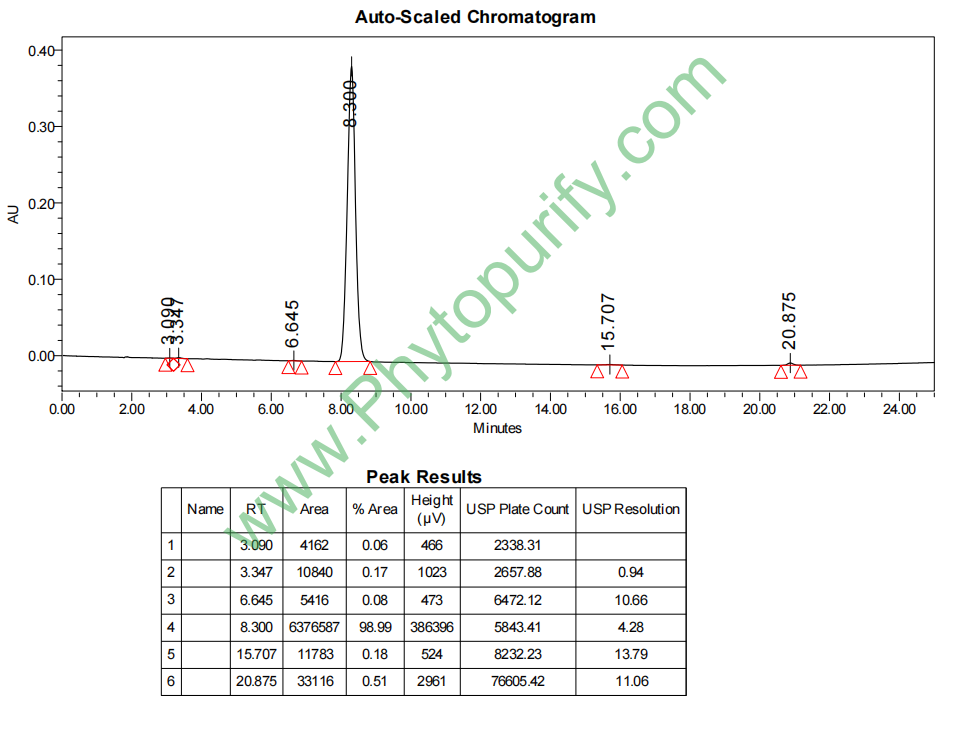
HPLC of Obacunone
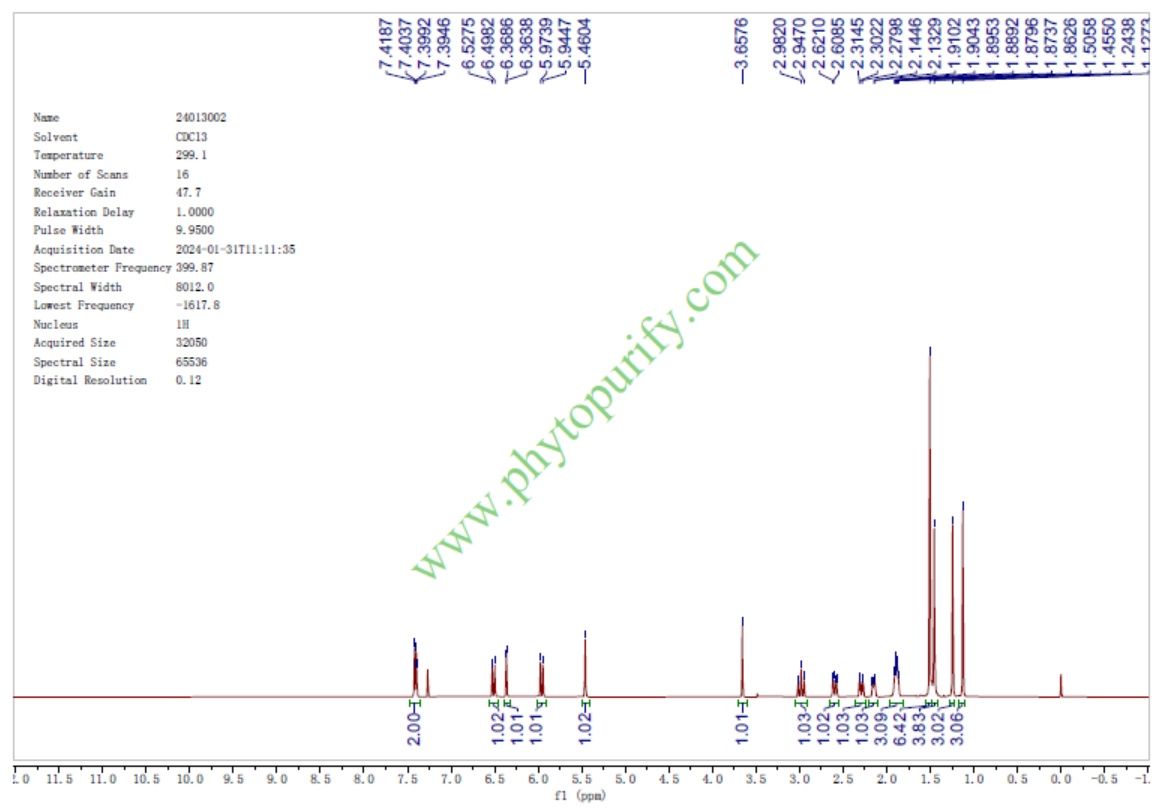
HNMR of Obacunone
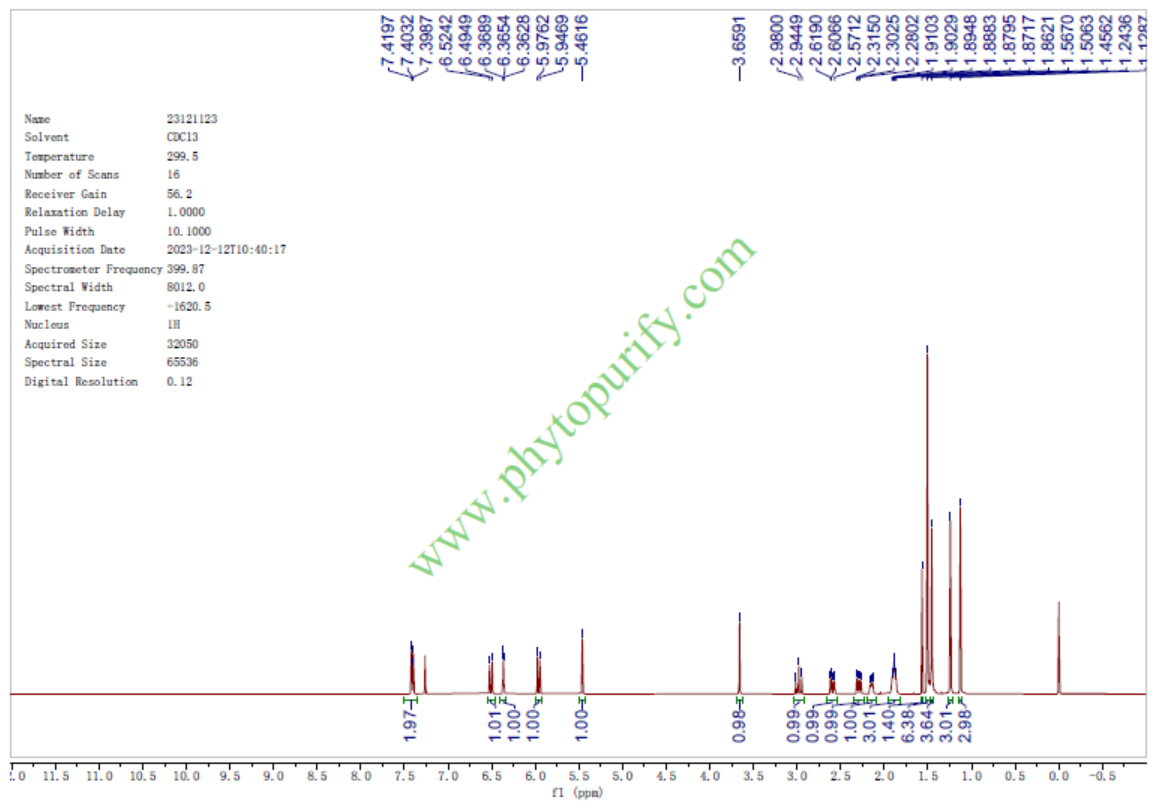
HNMR of Obacunone
Storage conditions:Short-term storage at 2~8℃, long-term storage at -20 ~ -80℃
95.3400
3.0460
3.0462
.0049
2.8060
14.9418
High
83.6669
5.5664
No
No
No
No
Yes
No
0.3
Yes
Yes
Yes
Yes
Natural products have always been an important source of drug discovery and development, and their unique chemical structures and diverse biological activities provide endless treasures for modern pharmacological research. Among numerous natural products with biological activity, limonoid compounds have attracted much attention due to their significant pharmacological activities such as anti-cancer, anti-inflammatory, antibacterial, and neuroprotective effects. Obacunone, as a highly oxidized triterpenoid limonoid, is a representative member of this family. Its name originates from the genus Phellodendron, originally from the genus Phellodendron(Phellodendron)The history of isolation from plants, but later in the Rutaceae citrus genus(Citrus)It has been found in various plants. The chemical structure of berberine is complex, with a unique furan ring and multiple oxygen-containing functional groups, which lays the chemical foundation for its diverse biological activities.
In recent years, research on berberine has become increasingly in-depth, revealing its potential value in the treatment of multiple diseases. Especially in the field of anti-tumor, berberine has shown the potential to exert anti-cancer effects through various mechanisms such as inducing cell apoptosis, inhibiting cell proliferation, and blocking the cell cycle. In addition, its role in protecting retinal pigment epithelial (RPE) cells from oxidative damage induced by ultraviolet radiation (UVR) also provides a new perspective for its application in ophthalmic diseases, especially degenerative diseases such as age-related macular degeneration (AMD). At the same time, the antibacterial activity of berberine, especially its potential to target drug-resistant strains, has also attracted widespread attention. However, despite its encouraging pharmacological activity, the pharmacological properties of berberine, including its poor water solubility, high blood-brain barrier penetration, and potential genetic toxicity risk (Ames test result of 0.3, indicating a certain risk), are key obstacles that it must overcome to move from laboratory research to clinical application. This article aims to systematically review the chemical structure, plant origin, pharmacological activity, mechanism of action, pharmacological evaluation, and clinical application prospects of berberine, in order to provide comprehensive references for the in-depth research and development of this natural product.
The chemical structure of berberine belongs to the highly oxidized triterpenoid class limonoid. The core skeleton consists of four rings (A, B, C, D), with the D ring being a furan ring, which is a characteristic structural unit of limonoid compounds. The molecular formula of berberine is C ₂₆ H ∝₀ O ₇, with a molecular weight of 454.5190 g/mol. Its structure contains multiple oxygen-containing functional groups, including one epoxy group, one lactone ring, as well as multiple hydroxyl and carbonyl groups. The presence of these functional groups not only endows berberine with unique chemical properties, but also provides multiple possibilities for its interaction with biomolecules. For example, epoxy groups may act as electrophilic centers and covalently bind with nucleophilic groups on proteins or DNA, thereby affecting their biological activity. The lactone ring may open after hydrolysis, forming a more polar carboxylic acid form that affects its solubility and bioavailability.
From the perspective of physical and chemical properties, berberine exhibits typical lipophilic small molecule characteristics. Its lipid water partition coefficient (LogP) is 3.0460, indicating that it has strong lipophilicity and is easy to penetrate biological membranes. This property is consistent with its predicted high blood-brain barrier (BBB) penetration, suggesting that berberine may play a role in the central nervous system, but may also pose potential neurotoxic risks. The topological polar surface area (TPSA) of berberine is 95.3400 Å ², which is at a moderate level, indicating that it has a certain polarity but is not sufficient to completely limit its transmembrane ability. Its water solubility is extremely poor, only 0.0049 mg/mL, which severely limits its absorption and bioavailability after oral administration and is one of the main bottlenecks restricting its drug development. In addition, the Ames test result was 0.3, indicating that it may have potential genetic toxicity and requires high attention in subsequent drug development. The prediction of hERG inhibition as' no 'indicates a lower risk of causing cardiac QT interval prolongation and arrhythmia, which is a relatively favorable safety feature.
Phellodendron ketone was originally derived from plants in the Rutaceae family, such as Phellodendron(Phellodendron amurense)Hechuan Huangbai(Phellodendron chinense)Separated from the bark of the tree. However, subsequent studies have found that berberine is more abundant in citrus plants of the Rutaceae family and is one of the main limonoid compounds in citrus fruits. Common sources include sweet oranges(Citrus sinensis)Grapefruit(Citrus paradisi)Lemon(Citrus limon)Yuzu(Citrus maxima)And citrus(Citrus reticulata)Wait. Among these plants, berberine is mainly present in fruits, seeds, peels, and leaves, with particularly high levels in seeds and peels. In addition, in plants of the Meliaceae family such as the Sichuan Meliaceae(Melia toosendan)There are also reports in it.
The extraction of berberine usually relies on organic solvent extraction method. Due to its lipophilicity, commonly used extraction solvents include methanol, ethanol, ethyl acetate, dichloromethane, etc. In order to improve extraction efficiency, heating reflux or ultrasound assisted extraction techniques are often used. For example, dry and crushed citrus seeds or peel powder can be soaked in methanol or ethanol, and subjected to multiple extractions at room temperature or heating conditions. The extracted liquids can be combined and concentrated under reduced pressure to obtain the crude extract. Subsequently, the crude extract is preliminarily separated by liquid-liquid extraction (such as sequential extraction with petroleum ether, ethyl acetate, n-butanol, etc.), and berberine is usually enriched in the ethyl acetate or dichloromethane extraction layer. Further purification requires the use of various chromatographic techniques. Silica gel column chromatography is the most commonly used method, which uses mixed solvents such as petroleum ether ethyl acetate or chloroform methanol in different ratios for gradient elution to effectively separate berberine from other limonoid compounds and impurities. In addition, high-performance liquid chromatography (HPLC) or preparative thin layer chromatography (PTLC) can also be used for the preparation of high-purity berberine. In recent years, with the promotion of green chemistry concepts, some new extraction techniques, such as supercritical fluid extraction (SFE) and microwave-assisted extraction (MAE), have also been attempted for the extraction of berberine, in order to improve extraction efficiency and purity while reducing the use of organic solvents.
The pharmacological activity research of berberine mainly focuses on anti-tumor, antioxidant, anti-inflammatory, and antibacterial aspects, demonstrating multi-target and multi pathway action characteristics.
1. Antitumor activity
The anti-tumor activity of berberine is its most studied area of concern. Numerous in vitro and in vivo studies have shown that berberine has significant inhibitory effects on proliferation and induces apoptosis in various cancer cell lines. For example, in many models, such as liver cancer cells (HepG2, Huh7), lung cancer cells (A549, H1299), breast cancer cells (MCF-7, MDA-MB-231), colon cancer cells (HT-29, HCT116), prostate cancer cells (PC-3, LNCaP), melanoma cells (B16-F10), and leukemia cells (HL-60), phellone shows dose and time-dependent cytotoxicity. Its mechanism of action involves multiple aspects, including:
- Inducing cell apoptosis Huangbai ketone can activate both endogenous (mitochondrial) and exogenous (death receptor) apoptotic pathways. It upregulates the expression of pro apoptotic proteins (such as Bax, Bak) and downregulates the expression of anti apoptotic proteins (such as Bcl-2, Bcl xL), leading to the loss of mitochondrial membrane potential, the release of cytochrome c, and the activation of Caspase-9 and Caspase-3, ultimately triggering cell apoptosis. At the same time, it can also upregulate the expression of death receptors (such as Fas, DR5) and activate Caspase-8.
- Block cell cycle Huangbai ketone can block the cancer cell cycle in G1 or G2/M phase. The mechanism may be related to downregulating the expression of cyclin D1, cyclin B1 and cyclin dependent kinases (CDK4, CDK2, CDC2), as well as upregulating the expression of cyclin dependent kinase inhibitors (such as p21, p27).
- Inhibit cell migration and invasion In some cancer cells, berberine can inhibit the migration and invasion ability of cancer cells by suppressing the activity and expression of matrix metalloproteinases (MMP-2, MMP-9), as well as regulating the expression of epithelial mesenchymal transition (EMT) related markers (such as E-cadherin, N-cadherin, Vimentin).
- Induce autophagy Studies have shown that berberine can also induce autophagic death in cancer cells, which may be related to the inhibition of the PI3K/Akt/mTOR signaling pathway.
2. Antioxidant and Retinal Protective Activities
Huangbai ketone exhibits significant activity in protecting retinal pigment epithelial (RPE) cells from oxidative damage induced by ultraviolet radiation (UVR). Ultraviolet radiation, especially UVA and UVB, is an important environmental factor that causes RPE cell damage and age-related macular degeneration (AMD). Research has shown that pre-treatment with berberine can significantly alleviate UVR induced decline in RPE cell viability and apoptosis. Its protective mechanism is mainly related to its antioxidant activity: Phellodendron amurense can clear reactive oxygen species (ROS), inhibit lipid peroxidation, and upregulate the activity of endogenous antioxidant enzymes in cells, such as superoxide dismutase (SOD), catalase (CAT), and glutathione peroxidase (GPx). In addition, it can activate the nuclear factor E2 related factor 2 (Nrf2) signaling pathway, promote the expression of downstream antioxidant genes, and enhance the antioxidant defense ability of cells.
3. Antibacterial activity
Huangbai ketone has inhibitory effects on various bacteria and fungi. Its antibacterial spectrum includes Staphylococcus aureus(Staphylococcus aureus)Escherichia coli(Escherichia coli)Pseudomonas aeruginosa(Pseudomonas aeruginosa)Candida albicans(Candida albicans)Wait. It is worth noting that berberine also exhibits certain inhibitory activity against methicillin-resistant Staphylococcus aureus (MRSA) and other drug-resistant strains. Its antibacterial mechanism may involve multiple targets, such as inhibiting bacterial DNA gyrase (GyrA/GyrB), cell division protein FtsZ, fatty acid synthase FabI, dihydrofolate reductase DHFR, penicillin binding protein PBP2a (MecA), penicillin binding protein PBP (PBP), ergosterol synthase (ERG11/CYP51A1), and resistance related transporter CDR1. This multi-target mode of action may help reduce the development of bacterial resistance.
4. Anti inflammatory activity
Huangbai ketone exhibits anti-inflammatory activity in various inflammatory models. It can inhibit the production of nitric oxide (NO), prostaglandin E2 (PGE2), and pro-inflammatory cytokines (such as TNF - α, IL-1 β, IL-6) in macrophages induced by lipopolysaccharide (LPS). The mechanism may be related to the inhibition of the activation of nuclear factor kappa B (NF - κ B) and mitogen activated protein kinase (MAPK) signaling pathways.
The pharmacological activity of berberine stems from its interactions with various intracellular molecular targets. Its mechanism of action is complex, involving multiple signaling pathways and key proteins.
1. Mechanism of anti-tumor action
The anti-tumor effect of berberine is mainly achieved through the following core mechanisms:
- Inducing apoptosis As mentioned earlier, berberine activates the mitochondrial apoptosis pathway by regulating the balance of Bcl-2 family proteins. In addition, it can synergistically promote apoptosis by activating JNK and p38 MAPK signaling pathways, as well as inhibiting survival signaling pathways such as PI3K/Akt and STAT3.
- cell cycle arrest Huangbai ketone blocks the cell cycle in G1 or G2/M phase by inhibiting the activity of Cyclin D1/CDK4 and Cyclin B1/CDC2 complexes. This effect is closely related to the activation of the p53/p21 pathway.
- Inhibition of NF - κ B pathway NF - κ B is a key transcription factor that regulates the expression of genes related to cell proliferation, survival, inflammation, and metastasis. Huangbai ketone can inhibit the phosphorylation and degradation of I κ B α, thereby preventing the nuclear translocation and transcriptional activity of NF - κ B, and downregulating the expression of its target genes (such as Bcl xL, Cyclin D1, MMP-9, VEGF, etc.).
- Regulating epigenetics Studies have shown that berberine may regulate gene expression and exert anti-cancer effects by affecting the activity of histone deacetylase (HDAC) or DNA methyltransferase (DNMT).
2. Mechanisms of antioxidant and retinal protective effects
The antioxidant effect of berberine is mainly achieved by activating the Nrf2/ARE signaling pathway. Under normal conditions, Nrf2 binds to Keap1 and is anchored in the cytoplasm, in an inactive state. When cells are subjected to oxidative stress, berberine or other electrophilic agents can modify cysteine residues on Keap1, causing Nrf2 to dissociate from Keap1 and translocate into the nucleus. In the nucleus, Nrf2 binds to antioxidant response elements (ARE) and initiates the transcription of a series of antioxidant and detoxifying enzyme genes, including SOD, CAT, GPx, glutathione S-transferase (GST), quinone oxidoreductase 1 (NQO1), etc. By enhancing the overall antioxidant capacity of cells, berberine can effectively eliminate excess ROS induced by UVR and protect RPE cells from oxidative damage.
3. Antibacterial mechanism
The antibacterial effect of berberine involves multiple potential targets and is a multi-target mode of action. These targets include:
- DNA gyrase (GyrA/GyrB) and topoisomerase IV (ParC/ParE)Inhibit bacterial DNA replication.
- Cell division protein FtsZ Inhibit bacterial cell division.
- Fatty acid synthase FabI Inhibit bacterial cell membrane fatty acid synthesis.
- Dihydrofolate reductase DHFR Inhibit bacterial folate metabolism.
- Penicillin binding protein PBP2a (MecA)Collaborate with β - lactam antibiotics to overcome MRSA resistance.
- Ergosterol synthase (ERG11/CYP51A1)Inhibition of ergosterol synthesis in fungal cell membranes.
- Drug resistance associated transporter protein CDR1 May inhibit fungal efflux pumps and reverse drug resistance.
This multi-target mode of action makes it difficult for berberine to induce bacterial resistance and may have synergistic effects with other antibiotics.
Although Huangbai ketone has remarkable pharmacological activity, its medicinal properties face severe challenges. According to the provided parameters, its pharmacological evaluation is as follows:
Regarding pharmacokinetics, there is currently insufficient research on the in vivo processes of berberine. Due to its poor water solubility, oral bioavailability is expected to be very low. Intravenous injection may be a more effective route of administration. Once it enters the bloodstream, due to its high lipophilicity, berberine may be widely distributed in tissues and may penetrate the blood-brain barrier. Its metabolic pathway may involve the cytochrome P450 enzyme system in the liver, which undergoes biotransformation through reactions such as oxidation, reduction, and hydrolysis. Metabolites may be excreted through bile or urine. Due to the lack of systematic pharmacokinetic data, the in vivo fate of berberine is still unclear, which is a key breakthrough direction for future research.
Although there are many challenges in the pharmacological development of berberine, its unique pharmacological activity spectrum has shown promising clinical application prospects in the treatment of multiple diseases.
1. Anti tumor therapy
Huangbai ketone, as a natural source of apoptosis inducer, has the potential to be developed into a novel anti-tumor drug. Its multi-target and multi pathway characteristics, as well as the advantage of not easily developing drug resistance, make it have great potential in combination therapy. For example, berberine can be used in combination with conventional chemotherapy drugs (such as cisplatin, paclitaxel, doxorubicin) or targeted drugs (such as sorafenib, erlotinib) to enhance efficacy through synergistic effects, and may reduce the dosage and toxic side effects of chemotherapy drugs. In addition, to address the problem of poor water solubility of berberine, new drug delivery systems such as liposomes, nanoparticles, micelles, cyclodextrin inclusion complexes, etc. can be developed to improve its solubility and bioavailability, achieving targeted delivery and sustained release.
2. Treatment of ophthalmic diseases
The protective effect of berberine on RPE cells from UVR oxidative damage makes it of great value in the prevention and treatment of age-related macular degeneration (AMD) and other photodamaging retinal diseases. AMD is one of the main causes of blindness in the elderly, and there is currently no specific treatment drug available. Huangbai ketone, as a natural antioxidant and Nrf2 activator, has the potential to be developed into an oral or topical AMD treatment drug or dietary supplement. Similarly, improving its bioavailability and eye targeting is key.
3. Antibacterial treatment
Faced with the increasingly severe problem of bacterial resistance, the multi-target antibacterial mechanism of berberine makes it a candidate molecule for the development of new antibacterial drugs. Especially its activity against resistant strains such as MRSA, as well as its potential to reverse fungal resistance, make it uniquely valuable in the field of anti infection. Huangbai ketone can be used alone or in combination with existing antibiotics such as beta lactams and fluoroquinolones to overcome resistance. However, the potential genetic toxicity risks must be rigorously evaluated and avoided when developing antibacterial drugs.
4. Other potential applications
In addition to the aforementioned fields, the anti-inflammatory activity of berberine also suggests its potential application in the treatment of chronic inflammatory diseases such as inflammatory bowel disease and rheumatoid arthritis. In addition, its high BBB penetration also provides possibilities for its application in central nervous system diseases such as neurodegenerative diseases and brain tumors, but caution should be exercised about its potential neurotoxicity.
Future research directions:
Huangbai ketone, as a structurally unique natural limonoid compound, has shown great potential for development in various therapeutic fields such as anti-tumor, ophthalmic diseases, and anti infection due to its diverse pharmacological activities such as inducing apoptosis, antioxidant, anti-inflammatory, and antibacterial. Its mechanism of action involves multiple signaling pathways and molecular targets, reflecting the multi-target and multi pathway characteristics of natural products. However, the extremely poor water solubility, potential genetic toxicity, and unknown risks associated with high blood-brain barrier penetration are the core challenges it faces in transitioning from laboratory to clinical practice. Future research should focus on overcoming these drug resistance barriers through structural modifications and novel drug delivery systems, while conducting in-depth pharmacokinetic and toxicological studies to comprehensively evaluate their safety and efficacy. Despite the challenges ahead, berberine is undoubtedly a natural product lead compound worth exploring and developing, with the potential to contribute to human health.
