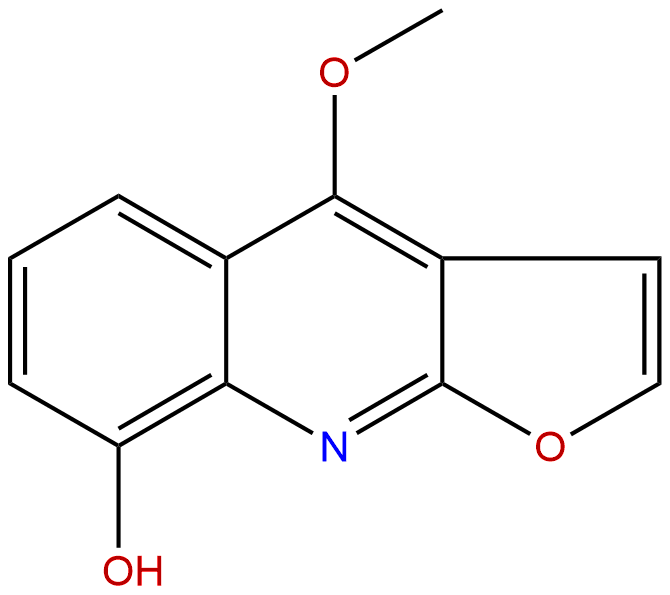


Product name: 8-hydroxy dictanmnine
Synonym name:
Catalogue No.: BP3414
Cas No.: 2255-50-7
Formula: C12H9NO3
Mol Weight: 215.208
Botanical Source:
Physical Description:
Type of Compound: Alkaloids
Purity: 95%~99%
Analysis Method: HPLC-DAD or/and HPLC-ELSD
Identification Method: Mass, NMR
Packing: Brown vial or HDPE plastic bottle
The product could be supplied from milligrams to grams. Inquire for bulk scale.
We provide solution to improve the water-solubility of compounds, thereby facilitating the variety of activity tests and clinic uses.
For Reference Standard and R&D, Not for Human Use Directly.
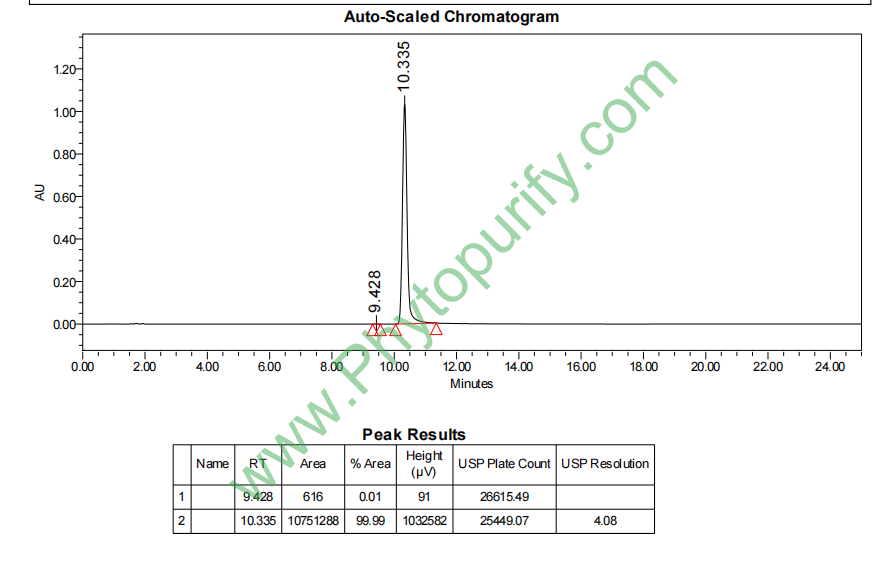
HPLC of 8-hydroxy dictanmnine
Storage conditions:Short-term storage at 2~8℃, long-term storage at -20 ~ -80℃
55.4900
2.0752
2.0724
.1013
4.5599
29.6634
High
87.6123
2.5964
Yes
Yes
No
No
Yes
Yes
1.8
Yes
No
Yes
No
Natural products have long been an important treasure trove for innovative drug discovery, among which alkaloid compounds have attracted much attention due to their structural diversity and significant biological activity. Quinoline alkaloids, as an important class of nitrogen-containing heterocyclic compounds, are widely distributed in plants such as Rutaceae and Rubiaceae, exhibiting various pharmacological activities including anti-tumor, anti-inflammatory, and antibacterial effects. 8-Hydroxy dictamnine, also known as rubustine, is a quinoline alkaloid with a furano [2,3-b] quinoline skeleton, and its CAS number is 2255-50-7. This compound is substituted with methoxy and hydroxyl groups at positions 4 and 8, respectively, possessing the structural characteristics of phenols and aromatic ethers, giving it unique reactivity and targeting properties in biological systems. In recent years, as the incidence rate of cancer continues to rise, the search for new antitumor drugs with high efficiency and low toxicity has become a research hotspot. 8-Hydroxyquercetin has entered the field of researchers due to its significant anti-tumor potential demonstrated in various in vitro and in vivo models. Its mechanism of action involves regulating cell apoptosis, inhibiting tumor invasion and metastasis, and other key pathways. This article aims to systematically review the chemical properties, plant sources, pharmacological activities, molecular mechanisms of action, pharmacological characteristics, and clinical application prospects of 8-hydroxyquercetin, in order to provide comprehensive scientific references for the in-depth research and development of this compound.
The chemical name of 8-hydroxy-4-methoxyfuran [2,3-b] quinoline is 8-hydroxy-4-methoxyfuran, with a molecular formula of C12H9NO3 and a molecular weight of 215.2080 g/mol. Its core structure is the furan [2,3-b] quinoline skeleton formed by the fusion of furan ring and quinoline ring, belonging to organic heterocyclic compounds. There is a methoxy group (- OCH3) attached to the 4th position of the quinoline ring and a hydroxyl group (- OH) attached to the 8th position, which gives the compound the properties of both aromatic ether and phenolic compounds. The presence of phenolic hydroxyl groups not only affects their acidity and alkalinity (manifested as weak acidity), but also provides sites for them to participate in hydrogen bond formation and redox reactions, which have important impacts on their biological activity and metabolic characteristics.
In terms of physicochemical properties, the calculated lipid water partition coefficient (LogP) is 2.0752, indicating that the compound has moderate lipophilicity, which is beneficial for its penetration into cell membranes. The topologically polar surface area (TPSA) is 55.49 Å ², which is relatively small due to its relatively flat molecular structure and limited polar groups. The predicted value of its water solubility is about 0.1013 mg/mL, which belongs to the category of slight solubility, indicating that solubilization strategies may need to be considered in formulation development. It is worth noting that based on its physicochemical parameters, 8-hydroxyquercetin has a high blood-brain barrier permeability potential, which provides the possibility for its application in the treatment of central nervous system related tumors. In addition, preliminary toxicity predictions indicate that it has no significant inhibition on hERG potassium channels (hERG inhibition: no), reducing the risk of inducing QT interval prolongation in the heart; The Ames test predicted a value of 1.8, indicating a low risk of mutagenicity, which provides preliminary favorable information for its drug development.
8-Hydroxyquercetin mainly comes from plants in the Rutaceae family, especially from various plants in the Dictamnus and Ruta genera. For example, this compound has been isolated and identified in the traditional Chinese medicine "Bai Xian Pi" (derived from the root bark of Dictamnus dasycarpus Turcz.), and it often coexists with other quinoline alkaloids with similar structures, such as dictamnine and skimminine. In addition, it also exists in plants such as Ruta graveolens L.
Its extraction and separation usually follow the conventional process of natural product chemistry. Firstly, the dried plant materials (such as roots, stems, and leaves) are crushed and subjected to cold soaking or heating reflux extraction using suitable organic solvents (such as methanol, ethanol, or chloroform methanol mixed solvents) to fully extract the alkaloid components. Due to the fact that alkaloids often exist in the form of salts, a small amount of alkaline reagents such as ammonia water are sometimes added during the extraction process to free the alkaloids and increase their solubility in organic solvents. After the crude extract is concentrated under reduced pressure, it is dissolved in acidic water (such as dilute hydrochloric acid), and alkaloids are dissolved in water as salts, while lipid soluble impurities are separated. Subsequently, the alkaline aqueous phase was used to free the alkaloids again, and organic solvents such as chloroform and ethyl acetate were used for back extraction to obtain the total alkaloid fraction.
Further purification relies on various chromatographic techniques. The silica gel column chromatography method is commonly used, with gradient elution using solvent systems such as petroleum ether ethyl acetate or chloroform methanol in different ratios, to preliminarily separate based on polarity differences. Subsequently, a combination of thin layer chromatography (PTLC) or high-performance liquid chromatography (HPLC, often using a reverse phase C18 column with methanol water or acetonitrile water as the mobile phase) is used for fine separation to obtain high-purity 8-hydroxyberberine. Structural identification is accomplished through spectroscopic techniques such as nuclear magnetic resonance (NMR, including 1H, 13C, and 2D spectra), mass spectrometry (MS), infrared spectroscopy (IR), and ultraviolet spectroscopy (UV). Modern technologies such as high-speed countercurrent chromatography (HSCCC) are also used for the separation of such alkaloids due to their high efficiency and avoidance of irreversible adsorption.
Numerous studies have shown that the core pharmacological activity of 8-hydroxyquercetin is concentrated in the field of anti-tumor, and has demonstrated inhibitory effects in various tumor cell lines and animal models.
1. Antitumor activity
* Cell proliferation inhibition: Studies have confirmed that 8-hydroxyleucocarpine can inhibit the proliferation of a variety of human tumor cells in a dose-dependent and time-dependent manner, including breast cancer (such as MCF-7, MDA-MB-231), liver cancer (HepG2, SMMC-7721), lung cancer (A549), colon cancer (HCT-116) and leukemia (HL-60) cells. Its half maximal inhibitory concentration (IC50 value) is usually in the micromolar range, showing a certain degree of cytotoxicity selectivity.
* Inducing cell apoptosis This compound can significantly induce apoptosis in tumor cells, manifested as morphological changes (chromatin agglutination, nuclear fragmentation), phosphatidylserine eversion (increased Annexin V positive staining), and activation of caspase cascade reactions (especially caspase-3).
* Inhibit cell migration and invasion In tumor cells with high metastatic potential, 8-hydroxyquercetin can effectively inhibit cell migration and invasion, indicating its potential for anti-tumor metastasis.
* cell cycle arrest This compound can block tumor cells at specific phases of the cell cycle, such as G0/G1 phase or G2/M phase, thereby preventing cell mitosis and inhibiting their proliferation.
2. Other potential activities
In addition to its anti-tumor activity, based on its structural characteristics (phenolic hydroxyl, aromatic ether) and related research clues, 8-hydroxyberberine may also have auxiliary pharmacological activities such as antioxidant and anti-inflammatory. Phenolic hydroxyl groups can act as hydrogen donors to scavenge free radicals, while some quinoline alkaloids have been reported to regulate the expression of inflammatory factors. However, these activities still require more direct experimental evidence to clarify.
The anti-tumor effect of 8-hydroxyquercetin involves multi-target and multi pathway synergistic regulation, and its molecular mechanism research has made certain progress, mainly related to the following key targets and pathways:
1. Regulating apoptosis related proteins (BCL2 family and MCL1)
BCL2 and MCL1 are important anti apoptotic proteins, and their overexpression is a common mechanism for tumor cells to resist apoptosis. Research has shown that 8-hydroxyquercetin can downregulate the protein expression levels of BCL2 and MCL1 in tumor cells, and may upregulate the expression of pro apoptotic proteins such as BAX, thereby reducing mitochondrial membrane potential, promoting cytochrome C release, and ultimately triggering caspase dependent apoptosis through endogenous pathways.
2. Inhibit signal transduction and transcription activator 3 (STAT3)
STAT3 is a key transcription factor in the occurrence and development of tumors, and continuously activated STAT3 promotes cell proliferation, survival, and immune escape. 8-Hydroxyquercetin has been shown to inhibit the phosphorylation (activated form) of STAT3, block its nuclear translocation and the transcription of downstream target genes (such as Cyclin D1, Survivor, BCL2), thereby inhibiting tumor growth and inducing apoptosis.
3. Inhibit matrix metalloproteinase (MMP2)
MMP2 is one of the main enzymes that degrade extracellular matrix (ECM) and plays a central role in tumor invasion and metastasis. 8-Hydroxyquercetin can downregulate the mRNA and protein expression of MMP2, and may upregulate the expression of its tissue inhibitor TIMP, thereby reducing the degradation ability of tumor cells to the basement membrane and inhibiting their invasion and metastasis.
4. Affects DNA topoisomerase (TOP1/TOP2A)
DNA topoisomerase is a key enzyme in DNA replication and transcription, and is a target of various chemotherapy drugs. Preliminary research suggests that 8-hydroxyquercetin may exert cytotoxic effects by interfering with the functions of TOP1 or TOP2A, leading to DNA damage and replication fork arrest. This is related to the possible DNA embedding effect of its quinoline ring structure.
5. Inhibit hypoxia inducible factor-1 α (HIF1A)
In the hypoxic microenvironment of tumors, the stability and activation of HIF1A promote angiogenesis and metabolic adaptation. 8-Hydroxyquercetin may interfere with tumor hypoxia adaptation and angiogenesis by inhibiting the protein accumulation or transcriptional activity of HIF1A.
6. Regulating the mitogen activated protein kinase (MAPK1/ERK2) pathway
The MAPK/ERK pathway regulates cell proliferation and survival. 8-Hydroxyquercetin may regulate the phosphorylation level of this pathway (such as inhibiting ERK1/2 phosphorylation), affect the activity of downstream transcription factors, and thereby inhibit tumor cell growth.
7. Intervention of estrogen signaling pathway (ESR1 and CYP19A1)
For hormone dependent breast cancer, estrogen receptor alpha (ESR1) and aromatase (CYP19A1, responsible for estrogen synthesis) are important targets. 8-Hydroxyquercetin may act as a regulator of estrogen receptors or a weak inhibitor of aromatase, interfering with estrogen driven tumor growth signals.
In summary, 8-hydroxyquercetin forms a multi-target anti-tumor network by acting on multiple key nodes such as apoptosis regulation, signal transduction, extracellular matrix degradation, DNA metabolism, hypoxia response, and hormone signaling, which helps overcome the resistance problem of single target drugs.
Although 8-hydroxyberberine has shown good anti-tumor activity in vitro, its development into a clinical drug depends on comprehensive drug efficacy evaluation and pharmacokinetic characteristics.
1. Analysis of pharmacological parameters
As mentioned earlier, its molecular weight is moderate (215.2), meeting the basic requirements of the Rule of Five for generic drugs. A moderate LogP value (~2.08) is beneficial for its membrane permeability and oral absorption potential. A lower TPSA suggests that its passive diffusion ability may be better, consistent with predictions of high blood-brain barrier penetration. However, its poor water solubility is a key issue that needs to be addressed in formulation development, which may require improvement through salt formation (utilizing its phenolic hydroxyl groups), preparation of nano formulations, cyclodextrin inclusion, or use of solubilizers.
2. Pharmacokinetic (ADME) prediction and challenges
* Absorption Moderate lipid solubility and small polar surface area predict that it may have good passive absorption in the small intestine after oral administration. But the first pass effect (especially liver metabolism) may affect its bioavailability.
* Distribution The predicted high blood-brain barrier permeability implies that it may be distributed to the central nervous system, which is advantageous for the treatment of brain tumors, but potential central neurotoxicity risks also need to be considered. The binding rate between it and plasma proteins is not yet clear and needs to be experimentally determined.
* Metabolism As a compound containing phenolic hydroxyl and methoxy groups, 8-hydroxyberberine is likely to be a substrate for liver cytochrome P450 (CYP) enzymes, especially CYP1A2, CYP2C9, CYP3A4 and other enzymes. Metabolic reactions may include O-demethylation (methoxy), hydroxylation, glucuronic acid binding, or sulfate binding (phenolic hydroxyl), etc. These metabolic processes may lead to their rapid clearance and may produce metabolites with different activities. Clarifying its main metabolic pathways and enzyme system is crucial for evaluating drug interactions.
* Excretion The prototype drug and its metabolites may be mainly excreted through the kidneys (conjugates) or bile.
* Toxicity Preliminary computer predictions indicate no significant hERG inhibition and low mutagenic risk (Ames test predicted value of 1.8), but comprehensive in vitro and in vivo toxicological evaluations are needed, including acute toxicity, subchronic toxicity, genetic toxicity, and functional effects on major organs (liver, kidney, heart). Its phenolic structure may also pose a certain risk of oxidative stress.
At present, there is still a relative lack of in vivo pharmacokinetic studies on the 8-hydroxyberberine system (such as drug time curves, absolute bioavailability, tissue distribution, excretion pathways, etc. in rats, mice, or dogs), which is a key data gap that must be filled in its preclinical development.
8-Hydroxyquercetin, as a natural quinoline alkaloid with multi-target anti-tumor activity, has shown certain potential for drug development, but its clinical application still faces many challenges and opportunities.
1. Development prospects
* New anti-tumor candidate drugs Its multi-target mechanism of action helps overcome tumor heterogeneity and resistance, and may be effective for tumor types that are insensitive to traditional chemotherapy drugs or prone to developing resistance. It can be developed as a single component drug or as part of a combination therapy regimen.
* Structural optimization and derivative development Using it as the mother nucleus for structural modification is an important strategy to enhance drug efficacy. For example, by esterifying, etherification, or preparing prodrugs of phenolic hydroxyl groups, their water solubility and metabolic stability may be improved; Modifying furan or quinoline rings may enhance their affinity for specific targets or reduce toxicity. The study of structure-activity relationships will guide the design and synthesis of highly efficient and low toxicity derivatives.
* Precision therapy targeting specific targets Further clarification of its most critical in vivo targets (such as MCL1, STAT3, etc.) can help locate it as a targeted therapeutic agent for tumors with abnormal activation of specific pathways (such as tumors with sustained activation of STAT3).
2. Challenges faced
* Efficacy and toxicity window Accurate in vivo pharmacological data is required to demonstrate its anti-tumor effect in animal models and determine its therapeutic index (the ratio of effective dose to toxic dose).
* Optimization of pharmacokinetic properties Poor water solubility and potential rapid metabolism issues urgently need to be addressed and improved through formulation or chemical modification methods.
* Deep analysis of the mechanism of action At present, most known targets are speculated based on in vitro studies, and more direct evidence (such as target binding experiments, gene knockout/knockdown validation) is needed to clarify their exact direct targets and networks.
* mass production Although it can be extracted from plants, it is crucial to explore efficient and economical chemical synthetic or semi synthetic routes to meet the needs of drug development.
3. Future research directions
Future research should focus on: 1) conducting systematic in vivo drug efficacy evaluation and establishing more clinically relevant models such as human tumor xenografts (PDX); 2) Complete comprehensive preclinical pharmacokinetic and toxicological studies; 3) Using chemical biology methods such as affinity fishing and molecular probes to identify its direct target proteins; 4) Strengthen the research on structural modification and structure-activity relationship, and develop derivatives with independent intellectual property rights and better drug properties; 5) Explore its synergistic effects with existing chemotherapy drugs, targeted drugs, or immunotherapy, and develop combination therapy plans.
8-Hydroxyquercetin, as a traditional medicinal plant derived furan quinoline alkaloid, has become a promising candidate molecule in natural anti-tumor drug research due to its unique chemical structure and multi-target anti-tumor activity. It has demonstrated clear roles in inducing tumor cell apoptosis, inhibiting metastasis, and regulating key signaling pathways such as STAT3 and BCL2/MCL1. However, the road from lead compounds to clinical drugs is still long, and their inherent poor water solubility, unclear metabolic properties, and lack of in vivo research data are the main bottlenecks at present. Future research needs to focus on optimizing drug properties through medicinal chemistry and pharmaceutical strategies, and completing standardized preclinical evaluations based on a deeper understanding of the mechanisms involved. With the deepening of interdisciplinary research, 8-hydroxyberberine and its derivatives are expected to add new choices to the anti-tumor drug library, and also provide valuable examples for innovative drug development based on natural products.
