


Product name: Fraxinellone
Synonym name:
Catalogue No.: BP0600
Cas No.: 28808-62-0
Formula: C14H16O3
Mol Weight: 232.279
Botanical Source: Densefruit Pittany Root-bark
Physical Description:
Type of Compound: Sesquiterpenoids
Purity: 95%~99%
Analysis Method: HPLC-DAD or/and HPLC-ELSD
Identification Method: Mass, NMR
Packing: Brown vial or HDPE plastic bottle
Storage: Store in a well closed container, protected from air and light. Put into refrigerate or freeze for long term storage.
Whenever possible, you should prepare and use solutions on the same day. However, if you need to make up stock solutions in advance, we recommend that you store the solution as aliquots in tightly sealed vials at -20℃. Generally, these will be useable for up to two weeks.
The product could be supplied from milligrams to grams
Inquire for bulk scale.
Chengdu Biopurify Phytochemicals Ltd. is a leading company in the research, development, manufacture and marketing of High Quality Phytochemicals and Extracts(especially Active Ingredients from Traditional Chinese Medicine,TCM), Natural Active Pharmaceutical Ingredients worldwide.
The main services:
A. Supply active ingredients and reference standards of TCM, from mgs to kgs scale
B. Custom extraction and purification, target Herb Active Ingredients
C. Custom synthesis and semi-synthesis for Natural Active Ingredients
D. CR(contract research), CM(contract manufacture) and PD(process development) services from lab scale, pilot scale to commercial scale(GMP is also available)
E. TCM compounds library for drug screen,more than 3000 compounds available, many of them are rare and unique.
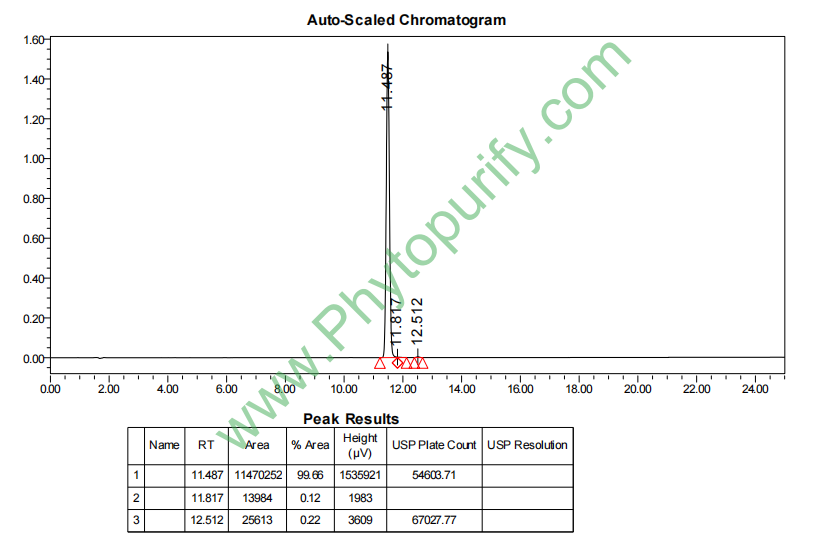
HPLC of Fraxinellone
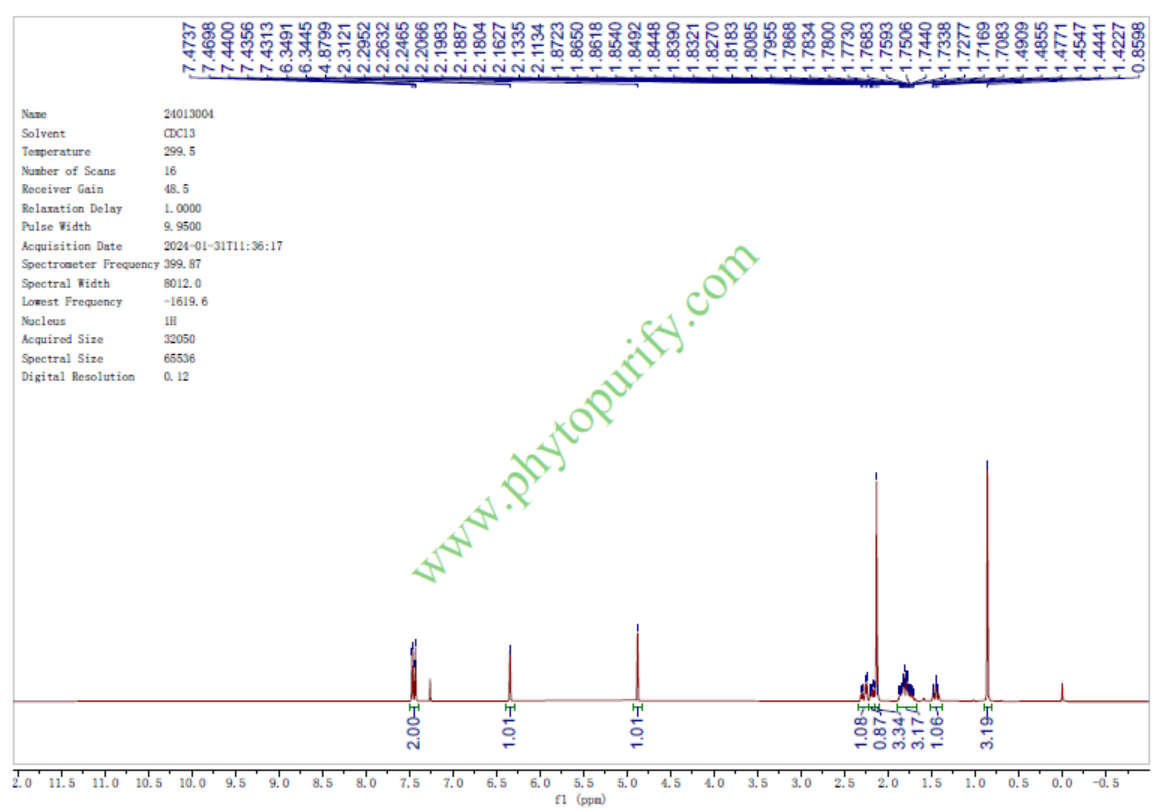
HNMR of Fraxinellone
Storage conditions:Short-term storage at 2~8℃, long-term storage at -20 ~ -80℃
39.4400
2.9415
2.9416
.0703
6.0891
27.6800
High
81.5943
3.8899
No
No
No
No
No
Yes
0.0
No
Yes
Yes
Yes
Natural products, as an important source of drug discovery, play an irreplaceable role in the history of human disease treatment. Among them, active monomeric compounds isolated and identified from traditional medicinal plants have become key lead compounds for modern innovative drug development due to their structural diversity and unique biological activity. Fraxinellone, a furan coumarin compound isolated from the root bark of traditional Chinese medicine Dictamnus dasycarpus Turcz., has attracted much attention in recent years due to its significant pharmacological activities in anti-inflammatory, neuroprotective, and anti-tumor aspects. Especially its discovery as a programmed death ligand-1 (PD-L1) inhibitor and hypoxia inducible factor-1 alpha (HIF-1 alpha) protein synthesis inhibitor provides a highly promising candidate molecule for the development of novel tumor immunotherapy drugs. This article aims to provide a systematic review of the chemical properties, plant sources, pharmacological activities, mechanisms of action, pharmacological properties, and application prospects of quercetin in cancer treatment, especially in the treatment of colon cancer, in order to provide comprehensive scientific references for the in-depth research and clinical translation of this compound.
The chemical name of ketone is (3R, 3aR, 7aS) -3,6-dimethyl-3a, 4,7,7a-tetrahydro-1-benzofuran-2 (3H) - one, and its CAS number is 28808-62-0. Structurally, quercetin belongs to tetrahydrofuran coumarin derivatives, with a core skeleton composed of a dihydrofuran ring and a partially hydrogenated benzene ring. The molecule contains multiple chiral centers, and its absolute configuration has been determined to be (3R, 3aR, 7aS). This unique fused ring structure is an important material basis for its biological activity.
According to the provided pharmacological parameters, the molecular weight of quercetin is 232.2790, which belongs to small molecule compounds. The calculated lipid water partition coefficient (LogP) is 2.9415, indicating that the compound has moderate lipophilicity, which is beneficial for its penetration into cell membranes. The topological polar surface area (TPSA) is 39.44 Å ², which is relatively low, further indicating its good membrane permeability. The water solubility parameter is 0.0703, indicating its low solubility in water, which may be a factor to consider in its formulation development. It is worth noting that quercetin exhibits high blood-brain barrier permeability potential, which provides the possibility for its application in central nervous system related diseases such as neurodegenerative diseases or brain tumors. In early safety evaluations, quercetin did not show significant hERG potassium channel inhibitory activity (hERG inhibition: no), indicating a low potential risk of arrhythmia. In addition, the Ames test result was 0.0, indicating that there was no mutagenicity under the experimental conditions, providing preliminary support for its safety.
Quercetin mainly comes from the dried root bark of Dictamnus dasycarpus Turcz., a plant in the Rutaceae family. This medicinal herb is clinically known as "white fresh bark" in traditional Chinese medicine and has the effects of clearing heat, drying dampness, dispelling wind and detoxifying. It is commonly used to treat eczema, scabies, rheumatism, and other diseases. The chemical composition of Bai Xianpi is complex, and in addition to quercetin, it also contains various bioactive ingredients such as Bai Xianjian, Huangbai ketone, and limonin.
The extraction and separation of ketone usually follow the conventional process of natural product chemistry. Firstly, the dried white fresh bark root bark is crushed and subjected to reflux extraction or ultrasound assisted extraction using suitable solvents such as methanol, ethanol, or ethanol water mixtures in different ratios. After vacuum concentration, the crude extract obtained was subjected to systematic solvent extraction using organic solvents such as petroleum ether, ethyl acetate, and n-butanol. Quercetin was mainly enriched in the moderately polar ethyl acetate extraction site. Subsequently, a series of column chromatography techniques were used for separation and purification, often using silica gel column chromatography with solvent systems of different polarities (such as petroleum ether ethyl acetate gradient elution) for preliminary separation. Further refinement can be achieved through methods such as preparative thin-layer chromatography, reverse phase column chromatography (such as ODS column), or high-performance liquid chromatography (HPLC). High efficiency separation techniques such as high-speed countercurrent chromatography have also been explored in modern technology. The isolated monomer compounds need to be structurally confirmed by spectroscopic methods such as nuclear magnetic resonance (NMR), mass spectrometry (MS), and X-ray single crystal diffraction.
A large number of in vitro and in vivo pharmacological studies have shown that quercetin has a wide range of biological activities, and its research focus has expanded from early anti-inflammatory and insecticidal effects to anti-tumor and immune regulation fields.
Anti inflammatory and immune regulatory activity Ketone is one of the important substance bases for the anti-inflammatory effect of white fresh skin. Research has shown that it can significantly inhibit the production of nitric oxide (NO) and prostaglandin E2 (PGE2) in macrophages induced by lipopolysaccharide (LPS), and downregulate the expression of inducible nitric oxide synthase (iNOS) and cyclooxygenase-2 (COX-2). Its anti-inflammatory mechanism involves inhibition of the nuclear factor kappa B (NF - κ B) and mitogen activated protein kinase (MAPK) signaling pathways. In addition, quercetin also has a regulatory effect on the proliferation of T lymphocytes and B lymphocytes, demonstrating immunosuppressive potential.
Antitumor activity Ketone exhibits growth inhibition and induces apoptosis in various tumor cell lines, especially in colon cancer research. It can inhibit the proliferation of human colon cancer cells (such as HCT116, SW480), induce cell cycle arrest (such as G2/M phase arrest) and apoptosis. Its anti-tumor activity is not limited to directly killing tumor cells, but the more important breakthrough lies in its immunomodulatory effect. Research has found that quercetin can downregulate the expression of PD-L1 protein on the surface of tumor cells, which may alleviate its immune suppression on T cells and enhance anti-tumor immune response.
Neuroprotective activity Thanks to its high blood-brain barrier permeability, quercetin has shown protective effects in neurological disease models. For example, in Alzheimer's disease cell models, quercetin can alleviate beta amyloid induced neurotoxicity. The mechanism may be related to inhibiting oxidative stress, reducing inflammatory response, and regulating apoptosis related proteins.
Other activities Traditionally, white skin has been used to treat skin diseases, and quercetin has also been proven to have anti allergic and anti itch effects. In addition, it also has certain insecticidal and antibacterial activities.
The anti-tumor effect of quercetin, especially its activity against colon cancer, involves a complex regulatory network of multiple targets and pathways. According to the provided target information, its mechanism of action can be summarized as follows:
Targeting PD-L1 to activate anti-tumor immunity This is one of the most closely watched mechanisms of ketone. PD-L1 is highly expressed on the surface of tumor cells, and when combined with PD-1 on T cells, it inhibits T cell activation and function, helping tumor immune escape. Ketone has been shown to inhibit the expression of PD-L1. In depth research reveals that quercetin does not promote the degradation of PD-L1 protein, but achieves this effect by inhibiting its protein synthesis. Specifically, quercetin can interfere with the protein synthesis of HIF-1 α. Under hypoxic conditions in the tumor microenvironment, HIF-1 α is a key transcription factor that upregulates PD-L1 expression. Ketone inhibits the accumulation of HIF-1 α, thereby blocking its transcriptional activation of PD-L1, ultimately reducing the level of PD-L1 in tumor cells and restoring the anti-tumor ability of T cells.
Inducing tumor cell apoptosis and inhibiting survival Ketone can induce apoptosis in colon cancer cells through various pathways.
Inhibit proliferation, invasion, and metastasis:
Reverse multidrug resistance (MDR)Ketone has an inhibitory effect on ABCB1 (P-glycoprotein, P-gp). P-gp is the main efflux pump of multidrug resistance in tumors. Ketone may reverse drug resistance by inhibiting P-gp function and increasing the accumulation of chemotherapy drugs in drug-resistant tumor cells.
Other potential targets Ketone may also affect T cell receptor signaling by inhibiting lymphocyte specific protein tyrosine kinase (LCK) and interfere with DNA replication by affecting topoisomerase I (TOP1), but the role of these mechanisms in the fight against colon cancer needs further clarification.
In summary, quercetin exerts its anti colon cancer effect through a dual mode of "immune regulation direct killing": on the one hand, it relieves immune suppression by inhibiting the HIF-1 α/PD-L1 axis, and on the other hand, it directly induces tumor cell apoptosis and cycle arrest by regulating multiple pathways such as AMPK, STAT3, Bcl-2/Mgl-1.
Based on the provided parameters and existing research, the preliminary evaluation of the pharmacological properties of quercetin is as follows:
Advantage:
1. Good molecular properties Low molecular weight (<500), moderate LogP, low TPSA, meeting the basic requirements of the Rule of Five, indicating good oral absorption potential.
2. Central nervous system permeability High blood-brain barrier permeability is a unique advantage that distinguishes it from many anti-tumor drugs, providing the possibility for treating brain metastases or primary brain tumors.
3. Early safety signals are positive The absence of hERG inhibition and Ames mutagenicity alert reduces its early risk in terms of cardiac toxicity and genetic toxicity.
challenge:
1. Poor water solubility Lower water solubility may affect the development, in vivo solubility, and bioavailability of its formulations. In the future, improvements may need to be made through methods such as salt formation, preparation of nano formulations, cyclodextrin inclusion, or prodrug strategies.
2. Lack of pharmacokinetic data At present, there are insufficient reports on the systematic pharmacokinetic studies of quercetin, such as absorption, distribution, metabolism, and excretion. Key parameters such as oral bioavailability, plasma protein binding rate, major metabolic organs, metabolites, and elimination half-life urgently need to be elucidated through standardized preclinical pharmacokinetic studies.
3. Potential off target effects and toxicity Although the early screening results were good, its impact on multiple kinases and signaling pathways also suggests the possibility of off target effects, requiring comprehensive in vitro off target screening and long-term toxicological evaluation to confirm its therapeutic window.
Ketones, especially their role as PD-L1 inhibitors and HIF-1 α synthesis inhibitors, have shown unique application prospects in the field of cancer treatment.
New strategies for tumor immunotherapy Currently, antibody based PD-1/PD-L1 inhibitors have achieved revolutionary success in various cancers, but there are still problems such as limited response rates, drug resistance, inherent poor permeability of antibody drugs, and high costs. Small molecule PD-L1 inhibitors such as quercetin have become a research hotspot in this field due to their small molecular weight, potential for better tissue permeability (especially within solid tumors), oral administration, and relatively low production costs. Ketone downregulates PD-L1 by inhibiting HIF-1 α synthesis, providing a novel mechanism that acts on upstream regulatory nodes different from antibody blockade, and may be particularly effective in tumors with significant hypoxic microenvironment, such as colon cancer.
Potential drugs for the treatment of colon cancer Colon cancer is a highly prevalent malignant tumor worldwide. Ketone has shown potential as a single or combination drug by targeting multiple key factors in the development and progression of colon cancer, including immune escape, cell apoptosis, proliferation, and drug resistance. Especially its reversal of P-gp mediated multidrug resistance suggests that its combination with conventional chemotherapy drugs such as oxaliplatin and 5-fluorouracil may overcome resistance and improve efficacy.
Combination therapy and sensitizers Ketone can be considered in combination with existing immune checkpoint inhibitors (anti-PD-1/PD-L1 antibodies) to synergistically enhance immune response through different mechanisms. In addition, its HIF-1 α inhibitory properties may also enhance the killing effect of radiotherapy or certain chemotherapy on hypoxic tumor cells.
Outlook and Future Directions:
As a natural furan coumarin compound derived from the traditional Chinese medicine Bai Xianpi, quercetin has become a highlight in the research of natural product anti-tumor due to its unique chemical structure and multi-target pharmacological mechanism. It provides innovative ideas for the development of novel small molecule tumor immunotherapy drugs by inhibiting the synthesis of PD-L1 protein mediated by HIF-1 α; Meanwhile, its regulation of multiple signaling pathways such as AMPK, STAT3, Bcl-2/Mgl-1 forms a solid foundation for its direct anti colon cancer activity. Despite facing challenges such as water solubility in drug development, its excellent drug like properties, high blood-brain barrier permeability, and positive early safety signals make it have significant potential for development. In the future, through in-depth mechanism elucidation, structural optimization, and systematic preclinical research, quercetin and its derivatives are expected to develop into original drugs for the treatment of malignant tumors such as colon cancer, or become an important component of combination therapy strategies to enhance the effectiveness of existing therapies, demonstrating the enormous value of excavating modern therapeutic drugs from the treasure trove of traditional medicine.
