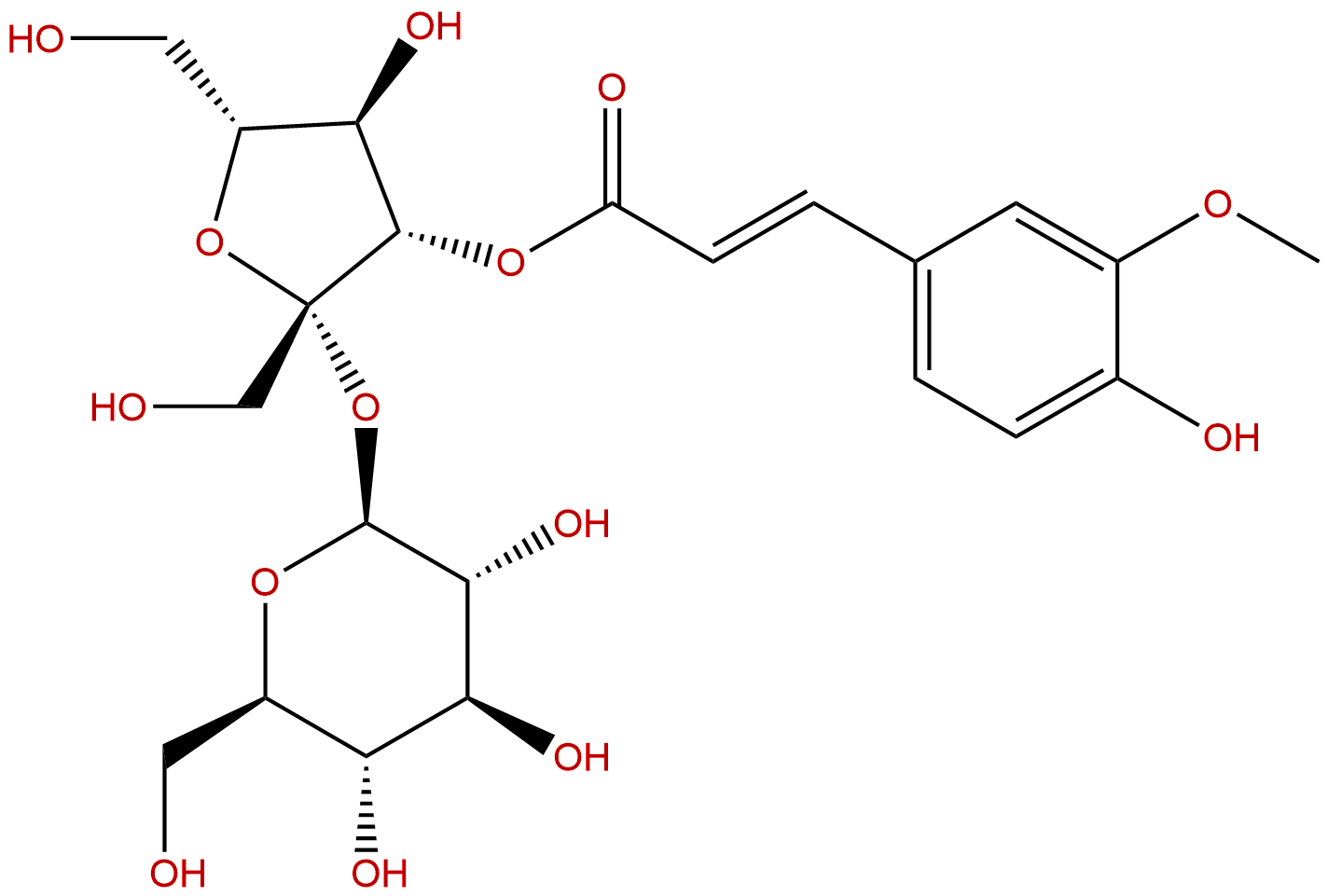


Product name: Sibiricose A5
Synonym name: 3′-Feruloylsucrose; Arillanin B
Catalogue No.: BP1558
Cas No.: 107912-97-0
Formula: C22H30O14
Mol Weight: 518.468
Botanical Source: Constit. of Polygala arillata and Polygala sibirica
Physical Description: Powder
Type of Compound: Phenylpropanoids
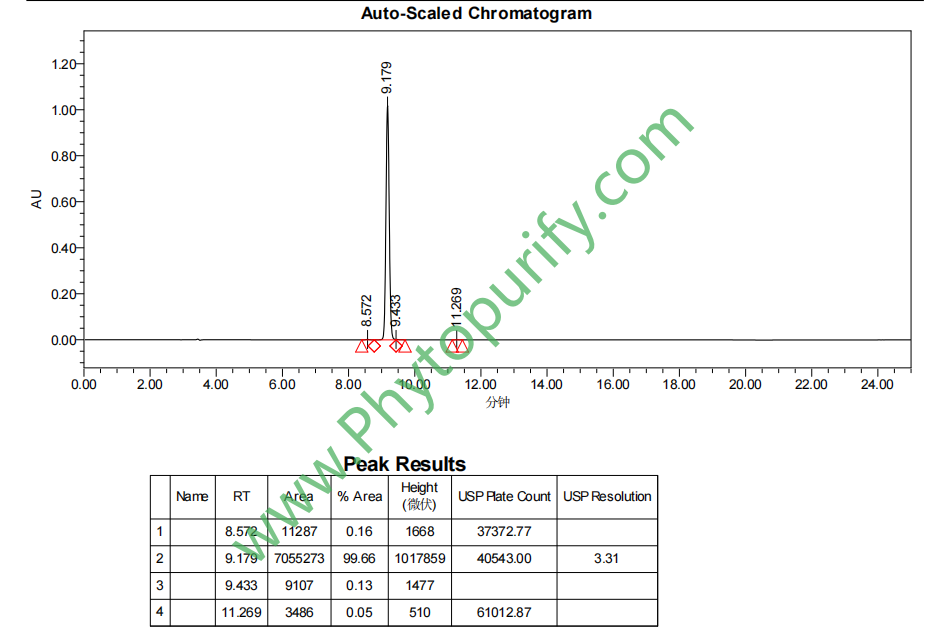
Purity: 95%~99%
Analysis Method: HPLC-DAD or/and HPLC-ELSD
Identification Method: Mass, NMR
Packing: Brown vial or HDPE plastic bottle
The product could be supplied from milligrams to grams. Inquire for bulk scale.
We provide solution to improve the water-solubility of compounds, thereby facilitating the variety of activity tests and clinic uses.
For Reference Standard and R&D, Not for Human Use Directly.
HPLC of Sibiricose A5
Storage conditions:Short-term storage at 2~8℃, long-term storage at -20 ~ -80℃
Sibiricose A5 (CAS number: 107912-97-0) is a natural product of oligosaccharides isolated from the traditional Chinese medicine Polygalae Radix. Yuanzhi, as an important calming and intellectual herb in traditional Chinese medicine, has always been used to treat neurological diseases such as insomnia, forgetfulness, and depression. In recent years, with the development of modern pharmacology and natural product chemistry, Siberian Polygalaceae glycoside A5 has received widespread attention due to its significant antioxidant activity and potential antidepressant effects.
This review aims to systematically summarize the chemical structure and physicochemical properties, plant origin and extraction process, pharmacological activity and mechanism of action, pharmacological evaluation, and clinical application prospects of Siberian Polygalaceae glycoside A5 in neurological and psychiatric disorders such as depression. The goal is to provide theoretical basis and research direction for subsequent basic research and clinical translation.
Siberian Polygalaceae glycoside A5 belongs to oligosaccharide ester compounds with a molecular weight of 518.4680. Its chemical structure contains multiple hydroxyl and sugar units, giving it high polarity and water solubility. Its LogP value is -1.1659, indicating strong hydrophilicity, and its TPSA (topological polar surface area) is as high as 225.0600, further indicating its high polarity, which may affect its membrane permeability and bioavailability.
The water solubility of Siberian Polygalaceae glycoside A5 is 12.7403, which is a natural product with good water solubility and is beneficial for dissolution and absorption after oral administration. The low permeability of the blood-brain barrier (BBB) suggests limited ability to enter the central nervous system, but this does not rule out its neuroprotective or antidepressant effects through indirect mechanisms or metabolites. In addition, the compound does not exhibit hERG channel inhibitory activity and demonstrates good cardiac safety, with an Ames test score of 0.3, indicating a low risk of genetic toxicity.
Siberian Polygala tenuifolia glycoside A5 mainly comes from the roots of Polygala tenuifolia Willd., a plant in the Polygala family, widely distributed in Northeast, Northwest, and Southwest China. In traditional Chinese medicine, the root of Yuanzhi is often used as a medicinal herb for calming the mind, dispelling phlegm, and strengthening the brain.
The process of extracting Siberian Polygalaceae glycoside A5 usually includes the following steps:
In recent years, green and efficient technologies such as ultrasound assisted extraction and microwave-assisted extraction have also been applied to the extraction of Siberian Polygalaceae glycoside A5, improving yield and purity.
Siberian Polygalaceae glycoside A5 exhibits significant antioxidant activity. In vitro studies have shown that the compound can effectively scavenge free radicals, inhibit lipid peroxidation, and protect cells from oxidative stress damage. Its antioxidant activity is mainly attributed to the abundant hydroxyl structure in the molecule, which can provide hydrogen atoms or electrons and stabilize free radicals.
In the in vivo model, Siberian Polygalaceae glycoside A5 exerts neuroprotective effects by regulating the activity of antioxidant enzyme systems such as superoxide dismutase (SOD) and glutathione peroxidase (GPx), reducing the levels of oxidative damage markers such as malondialdehyde (MDA).
The research on Siberian Polygalaceae glycoside A5 in the field of antidepressant treatment is gradually increasing. Animal behavioral experiments (such as forced swimming test and tail suspension test) have shown that this compound can significantly shorten the despair time of depression model animals and improve depressive like behavior.
Mechanism studies suggest that Siberian Polygalaceae glycoside A5 may exert antidepressant effects by regulating various neurotransmitter systems and signaling pathways, including the regulation of monoamine neurotransmitter metabolism (serotonin, norepinephrine, dopamine) and the expression of neuroplasticity related factors.
In addition, its antioxidant and anti-inflammatory properties also help alleviate depression related neuroinflammation and oxidative stress, promoting neuronal survival and functional recovery.
The antidepressant effect of Siberian Polygalaceae glycoside A5 involves multi-target and multi pathway regulation, with the main targets including:
Monoamine oxidase A and B (MAOA, MAOB)These two enzymes are involved in the metabolism of monoamine neurotransmitters, and Siberian Polygalaceae glycoside A5 has a certain inhibitory effect on them, prolonging the action time of neurotransmitters in synaptic cleft and improving nerve conduction efficiency.
Glycogen synthase kinase 3 β (GSK3B)GSK3B plays a crucial role in neuronal signal transduction and neuroplasticity, and Siberian Polygalaceae glycoside A5 may promote neuronal survival and functional recovery by regulating GSK3B activity.
Serotonin transporter (SLC6A4) and serotonin receptor 1A (HTR1A)Regulating serotonin reuptake and receptor activity, improving serotonin signaling, and alleviating depressive symptoms.
Gamma aminobutyric acid A receptor subunit 1 (GABRA1)As a major inhibitory neurotransmitter receptor that regulates neural excitability, Siberian Polygalaceae glycoside A5 may exert sedative and anti anxiety effects by regulating GABRA1 activity.
CAMP response element binding protein 1 (CREB1) and brain-derived neurotrophic factor (BDNF)CREB1 is a key transcription factor regulating neuronal gene expression, while BDNF is an important factor in neural plasticity and neuroprotection. Siberian Polygalaceae glycoside A5 activates the CREB1-BDNF signaling pathway, promotes neuronal growth and repair, and improves depression related neurological dysfunction.
Catechin-O-methyltransferase (COMT)Participating in the metabolism of neurotransmitters such as dopamine, Siberian Polygalaceae glycoside A5 regulates COMT and helps maintain neurotransmitter balance.
In summary, Siberian Polygalaceae glycoside A5 regulates neurotransmitter metabolism, receptor function, and neuronal signal transduction through multi-target synergistic effects, comprehensively exerting antidepressant and neuroprotective effects.
The molecular weight of Siberian Polygalaceae glycoside A5 is 518.4680, which is relatively large and polar (TPSA 225.0600), with a LogP of -1.1659, indicating strong hydrophilicity but poor lipid solubility. This property limits its oral absorption and ability to pass through lipid membranes, especially with low permeability of the blood-brain barrier, which may affect the direct function of the central nervous system.
The hERG channel inhibition experiment result was negative, indicating that the compound has a low risk of prolonging the QT interval in the heart and is safe. The Ames test score is 0.3, indicating a low risk of genetic toxicity and meeting the safety requirements of the drug.
Currently, there is limited systematic pharmacokinetic research on Siberian Polygalaceae glycoside A5. Based on its physicochemical properties, it is speculated that its oral bioavailability may be limited, and the blood-brain barrier permeability is low, suggesting the need to optimize the administration route or structural modification to enhance the efficacy of the central nervous system.
Future research should focus on its in vivo absorption, distribution, metabolism, and excretion (ADME) characteristics, especially metabolic stability and brain tissue distribution, to guide clinical formulation design and dose optimization.
Siberian Polygalaceae glycoside A5, as a natural product with multi-target antidepressant potential, has good antioxidant and neuroprotective effects, demonstrating the potential to become a new type of antidepressant drug. Its multi-target mechanism of action is in line with the current multifactorial pathological characteristics of neurological and psychiatric diseases, and is expected to overcome the limitations of traditional single target drugs.
However, its drug development still faces certain challenges, especially with low oral bioavailability and blood-brain barrier permeability, which limits its direct application in central nervous system diseases. In the future, its pharmacokinetic characteristics can be improved through modern pharmaceutical strategies such as nanocarriers, liposomes, and prodrug design.
In addition, combining modern molecular pharmacology and systems biology methods to deeply analyze its action network and signaling pathways will help clarify its therapeutic advantages and potential side effects, and promote its clinical translation process.
The development of preclinical animal models and early clinical trials is a key step in verifying their safety and efficacy. Based on the overall pharmacological research of Polygala tenuifolia, Siberian Polygala glycoside A5 is expected to become an important active ingredient in the development of Polygala tenuifolia drugs, providing new ideas and choices for the treatment of depression and related neurological and psychiatric disorders.
Siberian Polygalaceae glycoside A5, as an important natural product of oligosaccharides isolated from Polygalaceae, has significant antioxidant and antidepressant activities, and its mechanism of action involves synergistic regulation of multiple targets and pathways. Its good safety and unique pharmacological effects provide new candidate molecules for the treatment of neurological and psychiatric disorders.
Future research needs to focus on breaking through the bottleneck of drug development, optimizing pharmacokinetic characteristics, and combining modern pharmaceutical and molecular biology technologies to promote its transition from laboratory to clinical applications. The in-depth study of Siberian Polygalaceae glycoside A5 not only enriches the theoretical system of natural product pharmacology, but also lays a solid foundation for the development of new safe and effective antidepressant drugs.
