Introduction/Overview
Natural products have long been an important source of innovative drug discovery, among which flavonoids have attracted much attention due to their wide range of biological activities. Isopentenyl flavonoids, as an important subclass of flavonoids, are structurally linked with isopentenyl side chains. This modification often significantly enhances their lipophilicity, membrane permeability, and binding ability to target proteins, thereby exhibiting stronger pharmacological activity than nuclear flavonoids. Sophoflavescenol (CAS number: 216450-65-6) is an outstanding representative of this class of compounds. As an isopentenyl flavonoid isolated from traditional medicinal plants, sophorol has rapidly become a hot topic in natural product pharmacology research in recent years due to its potent and diverse inhibitory activities against multiple key disease-related targets.
Preliminary pharmacological screening revealed the remarkable multi-target action spectrum of Sophora flavescens. Its most prominent activity lies in its potent inhibition of phosphodiesterase 5 (PDE5), with IC50 values reaching the nanomolar level (0.013 μ M), suggesting its potential value in improving circulatory system function. At the same time, it can also effectively inhibit aldose reductase (RLAR/HRAR), beta site amyloid precursor protein lyase 1 (BACE1), acetylcholinesterase (AChE) and butyrylcholinesterase (BChE), which are closely related to neurodegenerative diseases such as diabetes complications and Alzheimer's disease, respectively. In addition, its anti-inflammatory potential is demonstrated through the involvement of multiple key targets such as IL-6, STAT3, TNF - α, NF - κ B pathways. The characteristic of "one stone, multiple birds" makes Sophora flavescens alcohol have unique advantages and application prospects in the treatment of complex diseases, especially metabolic, neurological, and inflammatory diseases with multiple intertwined factors. This article aims to systematically review the chemical properties, plant sources, pharmacological activities, mechanisms of action, and medicinal properties of Sophora flavescens, in order to provide comprehensive academic references for the in-depth research and development of this compound.
Chemical structure and physicochemical properties
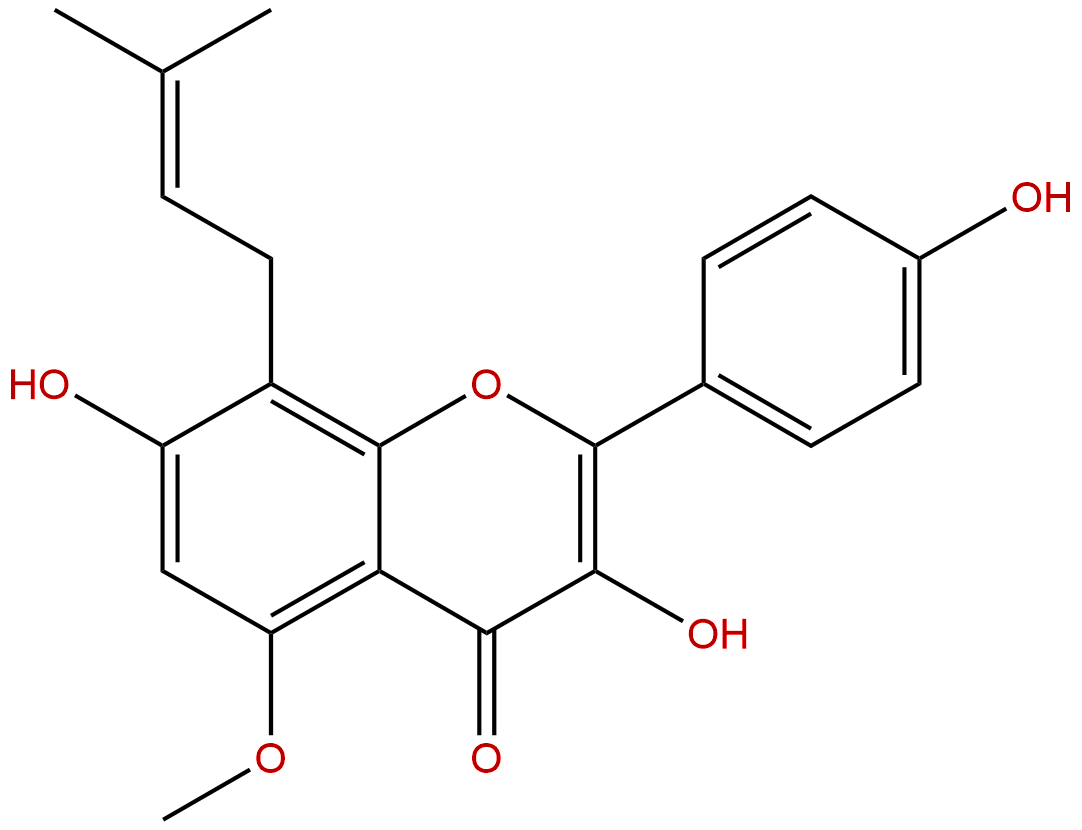
The chemical name of sophorol is (2S) -2- [(2S) -5,7-dihydroxy-2- (4-hydroxyphenyl) -8- (3-methylbut-2-en-1-yl) -4-oxo-4H-chromen-6-yl] -5,7-dihydroxy-2,3-dihydro-4H-chromen-4-one, with a molecular formula of C20H16O6 and a molecular weight of 368.3850. Structurally, the core of Sophora flavescens is a flavonoid core (2-phenylchromenone), characterized by a modification in which an isopentenyl group (3-methylbut-2-en-1-yl) is attached to the C-8 position. The introduction of the isopentenyl group is a key structural factor determining its unique biological activity. There are multiple phenolic hydroxyl groups in the molecule, giving it typical flavonoid properties.
The physicochemical parameters calculated based on its chemical structure have a significant impact on its biological activity and pharmacokinetic properties. Its lipid water partition coefficient (LogP) is 3.4932, indicating that sophorol has moderate lipophilicity, which is beneficial for its penetration of cell membranes, but may also affect its water solubility. Its topological polar surface area (TPSA) is 100.1300 Å ², reflecting the presence of multiple polar groups (hydroxyl and carbonyl) in the molecule. The water solubility value is 0.0716 mg/mL, which belongs to the category of slight solubility, which may be a limiting factor for its oral absorption. It is worth noting that its blood-brain barrier permeability is predicted to be "low", which poses a challenge to its potential for treating central nervous system diseases such as Alzheimer's disease and may require improvement through formulation techniques or structural modifications. In terms of early safety indicators, the hERG inhibition risk of sophorol is "no", indicating a low potential risk of inducing QT interval prolongation in the heart; The Ames test result is 0.6 (usually considered to have mutagenic risk if>1.0), which preliminarily indicates that it has no significant genetic toxicity risk, laying a preliminary safety foundation for its further development.
Plant sources and extraction methods
Huaihuangchun is mainly derived from the leguminous plant Sophora flavescens(Sophora flavescens It was separated from Ait. and its epithet "flavescens" is also the source of its English name "Sophoflavescenol". Sophora flavescens is a traditional Chinese herb with a long history of medicinal use, traditionally used for clearing heat, drying dampness, insecticidal and diuretic purposes. Modern research has shown that Sophora flavescens is rich in various alkaloids and flavonoids, which are the material basis for its pharmacological activity. Huaihuangchun, as a component of isopentenyl flavonoids, has a relatively low content and is a trace active ingredient in secondary metabolites.
The extraction and separation of sophorol from plant materials usually use multi-step chromatographic techniques. The conventional process begins with organic solvent extraction, commonly using methanol, ethanol, or acetone water mixed solvents to extract or reflux the dried powder of Sophora flavescens roots, in order to maximize the extraction of polar components including flavonoids. The crude extract obtained was subsequently subjected to solvent extraction (such as petroleum ether, ethyl acetate, n-butanol) in stages, and sophorol was mainly enriched in the ethyl acetate extraction site due to its equipolarity and phenolic hydroxyl groups. Further purification is highly dependent on various column chromatography techniques. Silica gel column chromatography is commonly used for preliminary separation, with chloroform methanol or petroleum ether ethyl acetate gradient elution. Subsequently, refining was carried out in combination with reversed phase silica gel (such as ODS-C18) column chromatography and dextran gel (Sephadex LH-20) column chromatography. High performance liquid chromatography (HPLC), especially preparative HPLC, is the final key step in obtaining high-purity sophorol monomers, usually using methanol water or acetonitrile water as the mobile phase. Structural identification involves the comprehensive use of techniques such as ultraviolet spectroscopy (UV), mass spectrometry (MS), and nuclear magnetic resonance spectroscopy (NMR, including 1H-NMR, 13C-NMR, 2D-NMR such as HSQC and HMBC) to ultimately determine its planar structure and stereoconfiguration. In recent years, green extraction technologies such as supercritical fluid extraction have also been explored for application, aiming to improve extraction efficiency and reduce the use of organic solvents.
Pharmacological activity research
The pharmacological activity research of Sophora flavescens reveals its broad and potent therapeutic potential, mainly focusing on the following areas:
1. Phosphodiesterase 5 (PDE5) inhibitory activity: This is one of the most significant activities of Sophora flavescens, with an IC50 value of up to 0.013 μ M, making it a potent inhibitor at the nanomolar level. PDE5 is a key enzyme for degrading cyclic guanosine monophosphate (cGMP), mainly distributed in vascular smooth muscle. Inhibition of PDE5 can increase intracellular cGMP levels, leading to vasodilation. Sildenafil and other drugs are based on this mechanism to treat pulmonary arterial hypertension and erectile dysfunction. The potent PDE5 inhibitory activity of Sophora flavescens indicates its enormous potential for development in the treatment of cardiovascular diseases and male sexual dysfunction.
2. Anti diabetes complications potential: Huaihuang alcohol exhibits strong inhibitory activity against aldose reductase, with IC50 values of 0.17 μ M and 0.30 μ M for recombinant human aldose reductase (HRAR) and recombinant rat lens aldose reductase (RLAR), respectively. Aldose reductase is the key rate limiting enzyme of the polyol pathway, which is over activated in the state of hyperglycemia, leading to sorbitol accumulation and increased oxidative stress. It is one of the core mechanisms of complications such as diabetes cataract, neuropathy and kidney disease. The strong inhibitory effect of sophoraxanthol indicates that it may prevent or delay the occurrence and development of diabetes complications by blocking this pathway.
3. Neuroprotective and Anti Alzheimer's Disease Potential: Huaihuangchun exhibits multi-target effects in this regard. Firstly, it can inhibit β - secretase (BACE1, IC50=10.98 μ M), which is a key enzyme catalyzing the production of β - amyloid protein (A β) from amyloid precursor protein (APP). The aggregation of A β is a core event in the pathology of Alzheimer's disease. Secondly, it has inhibitory activity against acetylcholinesterase (AChE, IC50=8.37 μ M) and butyrylcholinesterase (BChE, IC50=8.21 μ M). Inhibiting these enzymes can slow down the breakdown of neurotransmitter acetylcholine and improve cognitive function in Alzheimer's disease patients. This simultaneous targeting of the two classic hypotheses of "A β production" and "cholinergic deficiency" makes sophorol a promising multi-target anti Alzheimer's disease lead compound.
4. Anti inflammatory activity: Although the specific values of anti-inflammatory targets are not directly listed in the provided IC50 data, the associated target groups (such as IL-6, TNF, NOS2, PTGS1/COX-1, NF - κ B pathway components RELA, IKBKB, etc.) strongly suggest that sophorol has a wide range of anti-inflammatory effects. Inflammation is the common pathological basis of many chronic diseases. By regulating these key inflammatory mediators and signaling pathways, sophoraxanthol may have therapeutic effects on rheumatoid arthritis, atherosclerosis, neuritis and other inflammatory related diseases.
Mechanism of action and molecular targets
The multiple pharmacological activities of Sophora flavescens stem from its direct interactions with multiple key disease targets, and its mechanism of action is complex and interrelated.
1. PDE5 inhibition mechanism: Sophoraflavanol competes with the catalytic active center of PDE5 enzyme through its flavonoid structure, possibly similar to known PDE5 inhibitors, occupying the binding site of cGMP and preventing its hydrolysis. Its isopentenyl side chain may enhance its binding affinity with the enzyme hydrophobic pocket, which may be the structural basis for its nanomolar ultra-high activity. The elevation of cGMP levels activates protein kinase G (PKG), leading to vasodilation of vascular smooth muscle, which is the direct molecular mechanism of its cardiovascular protective effect.
2. Anti inflammatory network: The anti-inflammatory mechanism of Sophora flavescens involves the regulation of multiple signaling pathways.(1) NF - κ B pathway: By inhibiting IKBKB (I κ B kinase), the phosphorylation and degradation of I κ B protein are prevented, thereby inhibiting the nuclear translocation of transcription factor RELA (p65), and ultimately downregulating the gene expression of pro-inflammatory factors such as TNF - α, IL-6, and NOS2 (inducible nitric oxide synthase).(2) JAK/STAT pathway: It is possible to regulate inflammation and cell proliferation by intervening in the signal transduction after IL-6 binds to its receptor, inhibiting the phosphorylation and activation of STAT3.(3) Inflammatory bodies and pain perception: Inhibition of CASP1 (cysteine protease-1) may interfere with the activation of NLRP3 inflammasome and reduce the release of mature inflammatory factors such as IL-1 β. Meanwhile, the potential inhibitory effect on TRPV1 and TRPA1 ion channels may be related to their anti-inflammatory and analgesic effects, as these channels are key sensors mediating inflammatory pain.(4) Inhibition of cyclooxygenase: Inhibition of PTGS1 (COX-1) may reduce the production of inflammatory mediators such as prostaglandins.
3. Multi target synergy for neuroprotection:
* BACE1 inhibition: Directly binding to the active site of BACE1 reduces the generation of A β and alleviates the burden of amyloid plaques from the source.
* Acetylcholinesterase inhibition: By binding to the catalytic anion sites or peripheral anion sites of AChE and BChE, the levels of acetylcholine in synaptic cleft are increased, improving cognitive function.
* Antioxidant and anti glycation properties: The flavonoid structure itself has the ability to scavenge free radicals, combined with strong aldose reductase inhibition, which can effectively alleviate oxidative stress and the formation of advanced glycation end products (AGEs), protecting neurons and glial cells.
These mechanisms do not exist in isolation. For example, its anti-inflammatory effects (inhibiting NF - κ B and reducing IL-6) can indirectly alleviate neuroinflammation, synergizing its direct inhibition of BACE1 and AChE to exert neuroprotective effects. The synergistic effect of multiple targets and pathways is the core of the potential of sophorol in treating complex diseases.
Evaluation of drug properties and pharmacokinetics
Although sophorol has demonstrated excellent biological activity in vitro, its successful development as a drug depends on its pharmacological properties, including absorption, distribution, metabolism, excretion (ADME) characteristics, and safety.
1. Pharmacokinetic prediction and challenges:
* Absorption: A moderate LogP value (3.49) facilitates its passive diffusion across intestinal epithelial cell membranes, but its lower water solubility (0.0716 mg/mL) may limit its dissolution rate and degree in gastrointestinal fluids, becoming the main bottleneck for oral bioavailability. Formulation strategies such as making nanocrystals, solid dispersions, or cyclodextrin inclusion complexes are potential directions for improving their solubility and absorption.
* Distribution: The molecular weight is moderate, but the high TPSA (100 Å ²) and multiple hydrogen bond donors/acceptors result in lower predicted blood-brain barrier permeability. This is a major challenge for its goal of treating central nervous system diseases such as Alzheimer's disease. In the future, it may be necessary to study its prodrug, use nano delivery systems (such as liposomes, polymer nanoparticles) or explore its role in peripheral anti-inflammatory and anti diabetes complications.
* Metabolism and excretion: As a flavonoid compound, sophorol is likely to undergo extensive phase II metabolism in the body, such as glucuronidation and sulfation, especially in the liver and intestines. Its isopentenyl group may also become a site for metabolic modification. These metabolic processes accelerate their clearance and may result in a shorter half-life. At present, there is a lack of detailed identification of metabolites in the body and research on excretion pathways.
2. Early security assessment:
The preliminary data provided is relatively optimistic. The absence of hERG inhibition risk reduces concerns about its cardiac toxicity. The negative result of Ames test indicates that there is no risk of genotoxicity. However, a comprehensive preclinical safety evaluation is still needed, including acute/subchronic toxicity tests, reproductive toxicity, carcinogenicity tests, etc. Its multi-target nature may also bring off target effects and unknown side effects, which need to be closely monitored in subsequent research.
3. Optimization strategy for drug properties:
In order to improve the pharmacological properties of Sophora flavescens, future research may focus on:(1) Structural modification: Under the premise of retaining the pharmacophore, esterification, etherification of its hydroxyl group, or modification of its isopentenyl group can be carried out through chemical synthesis to optimize its LogP, solubility, and metabolic stability.(2) New drug delivery system: Develop oral nano formulations to enhance bioavailability, or design brain targeted delivery systems to overcome the blood-brain barrier.(3) Pre drug design: Prepare prodrugs that are activated in specific parts of the body, such as inflammation or high oxidative stress environments, to enhance targeting and reduce potential risks associated with systemic exposure.
Clinical application prospects and prospects
As a multi-target and highly active natural lead compound, sophorol has broad clinical application prospects, but the road ahead is long and full of challenges.
1. Potential therapeutic areas:
* Cardiovascular and metabolic diseases: Based on its potent PDE5 inhibition and aldose reductase inhibition activity, sophorol or its derivatives are expected to be developed for therapeutic purposes Pulmonary hypertension, erectile dysfunction (especially those with diabetes) and microvascular complications of diabetes(such as peripheral neuropathy, diabetes nephropathy). Its anti-inflammatory effect may also be beneficial to inflammatory cardiovascular diseases such as atherosclerosis.
* Neurodegenerative diseases: Its unique multi-target inhibitory properties of BACE1, AChE/BChE make it a therapeutic agent Alzheimer disease A highly attractive candidate molecule. Compared with existing single target drugs, it may provide more comprehensive pathological coverage and better efficacy.
* Inflammatory diseases: By regulating core inflammatory pathways such as NF - κ B and STAT3, sophorol may be suitable for Rheumatoid arthritis, inflammatory bowel disease, neuroinflammation Treatment or adjuvant therapy for various chronic inflammatory diseases.
2. Development Strategy and Prospects:
* Optimization of lead compounds: The current top priority is to use sophorol as the lead structure for systematic analysis Structure Activity Relationship (SAR) Research and Pharmaceutical Chemistry Optimization The focus is on addressing the issues of poor water solubility, low BBB permeability, and potential metabolic instability, with the aim of obtaining derivatives with better activity and drug properties.
* In depth mechanism research: It is necessary to use gene knockout/knockdown techniques, molecular docking and kinetic simulations, chemical biology probes, and other methods,Accurately elucidate its binding mode and action details with each key target And explore its systemic pharmacological mechanisms in complex disease networks.
* Preclinical and clinical studies: After obtaining optimized candidate compounds, a complete Preclinical pharmacodynamics (validated in animal models closer to human diseases), pharmacokinetics, and safety evaluation Only by passing these rigorous tests can we advance to the clinical trial stage.
* Exploration of compound and combination therapy: Given its multi-target nature, sophorol or its derivatives may also serve as potential targets Core components, drugs that complement other mechanisms of action to form a compound To synergistically enhance therapeutic efficacy or reduce individual dosage and side effects.
Conclusion
Huaihuangchun is an isopentenyl flavonoid active molecule discovered from the traditional Chinese medicine Sophora flavescens. Its value lies in the fact that it does not act on a single target, but rather efficiently inhibits PDE5, aldose reductase BACE1、 Cholinesterase and its extensive inflammatory signal network have demonstrated the therapeutic potential for cardiovascular diseases, diabetes complications, Alzheimer's disease, inflammatory diseases and other complex diseases. The characteristic of multi-target synergistic effect is highly compatible with the concept of modern multifactorial disease treatment. Although it faces challenges in drug development such as low water solubility and poor blood-brain barrier permeability, these challenges are precisely the areas that modern pharmaceutical chemistry and pharmacy can focus on addressing. Through in-depth structural optimization, mechanism elucidation, and delivery system innovation, sophorol is expected to gradually develop from an excellent natural lead compound into a new multi-target therapeutic drug with independent intellectual property rights. It not only provides new candidate molecules for the treatment of related diseases, but also once again confirms the enduring vitality and scientific value of the strategy of finding complex disease solutions from natural products. Future research requires close collaboration among multiple disciplines to jointly promote the translation of sophorol into clinical applications, ultimately benefiting patients worldwide.