


Synonym name: Lactucone; Lactucerin
Catalogue No.: BP1364
Cas No.: 6426-43-3
Formula: C32H52O2
Mol Weight: 468.766
Botanical Source: Calotropis gigantea and Lactuca virosa and other plants, esp. in the Compositae
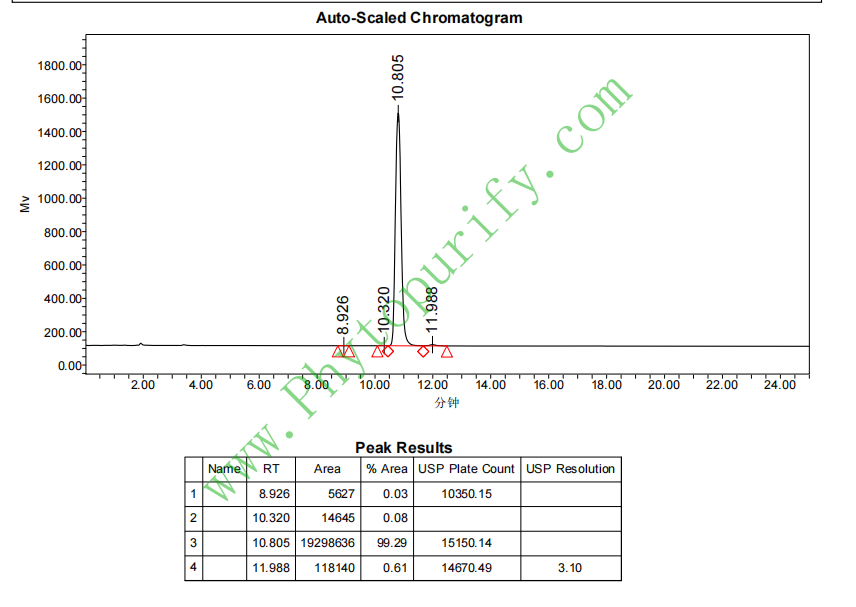
Purity: 95%~99%
Analysis Method: HPLC-DAD or/and HPLC-ELSD
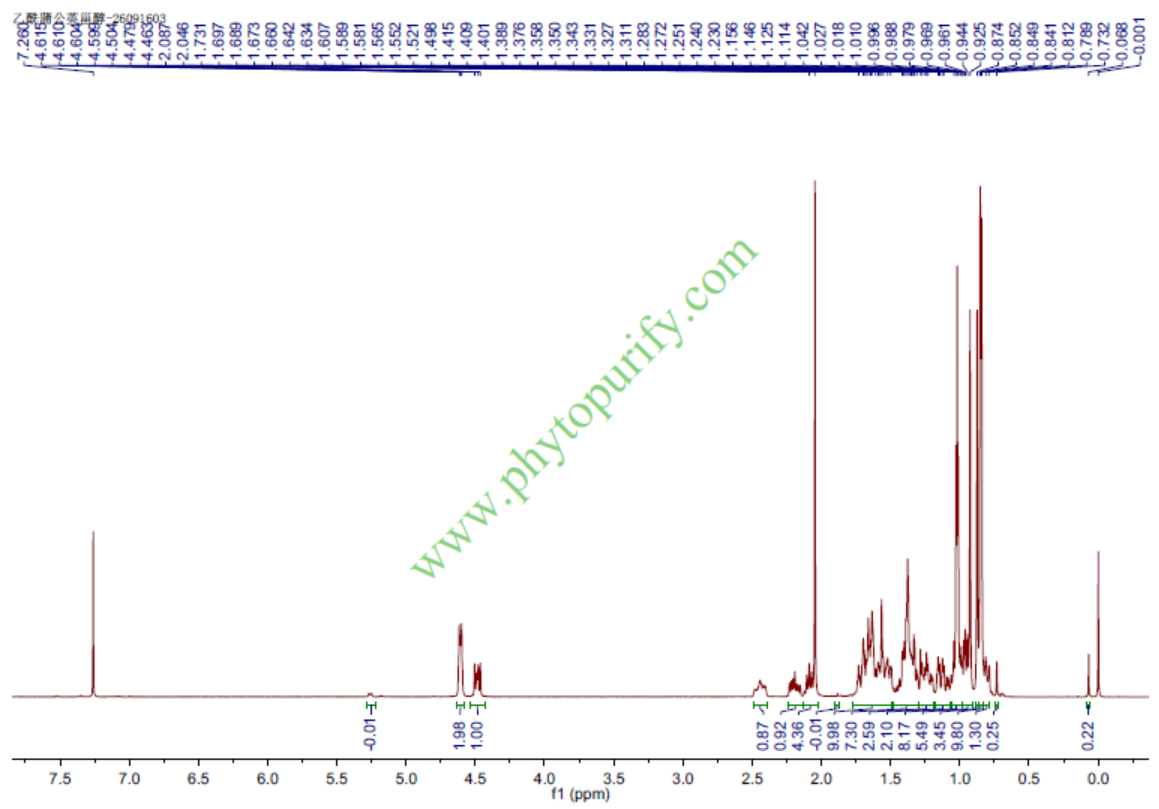
Identification Method: Mass, NMR
Packing: Brown vial or HDPE plastic bottle
Can be supplied from milligrams to grams.
For Reference Standard and R&D, Not for Human Use Directly.
Inquire for bulk scale.
Description:
Taraxasterol acetate has anti-inflammatory activity in bino rats against carrageenan, formaldehyde and adjuvant induced inflammations in doses between 10 and 100 mg/kg. Taraxasterol acetate also displays potential antibacterial activities.
References:
Naunyn Schmiedebergs Arch Pharmacol. 2014 Feb;387(2):119-27.
Effect of Pluchea lanceolata bioactives in LPS-induced neuroinflammation in C6 rat glial cells.
Neuroinflammation plays a significant role in various chronic and acute pathological conditions of the central nervous system. In the Indian system of medicine, Pluchea lanceolata is used to treat the neurological disorders.
METHODS AND RESULTS:
We investigated the effect of major pentacyclic triterpene and its naturally occurring acetate derivative isolated from P. lanceolata on lipopolysaccharide (LPS)-stimulated neuroinflammatory condition associated to inflammatory cytokine production in rat astrocytoma cell line (C6). The log concentration dependence of Pluchea bioactive taraxasterol (Tx) significantly (p < 0.05) attenuates the release of pro-inflammatory cytokines, such as TNF-α, IFN-γ, and IL-6, while its in situ produced acetyl derivative, i.e., Taraxasterol acetate (TxAc), did not inhibit the LPS-induced IL-6 production at lower concentration (p > 0.05). Surflex-Dock molecular modeling study was performed to simulate the binding capacity of compounds into the active site of the TNF-α (2AZ5), tumor protein P53 (2VUK), and NF-kappa-B (1RAM). The differential inhibition of cytokines by Tx and TxAc was further confirmed by high docking scores showing the high affinity to target proteins.
CONCLUSIONS:
Findings of the study demonstrated the comparatively greater role of Pluchea triterpene than its in situ produced acetate derivate in neuroinflammation-associated disorders.
Acta Botanica Yunnanica, 2007, 29(4):479-482.
Antibacterial triterpenes from Centipeda minima (Compositae).
METHODS AND RESULTS:
A new triterpene,ursane-20(30)-en-3#beta#, 16#beta#, 21#alpha#-triol(1), together with two known compounds, Taraxasterol acetate(2) and taraxasterol(3), was isolated from the whole plants of Centipeda minima. Their structures were identified by spectroscopic analysis.
CONCLUSIONS:
Antibacterial properties of compounds 2 and 3 were evaluated against eight disease-associated microorganisms by the agar dilution method, Both of them displayed potential antibacterial activities.
HPLC of Taraxasteryl acetate
HNMR of Taraxasteryl acetate
Storage conditions:Short-term storage at 2~8℃, long-term storage at -20 ~ -80℃
26.3000
8.4627
8.4627
.0002
9.5710
5.8536
High
91.6643
4.8549
No
No
No
No
No
No
0.0
No
No
No
No
Inflammation is a complex and delicate defense response of the body to infection, injury or stimulation. Its regulation imbalance is the core pathological link of many acute and chronic diseases, such as arthritis, atherosclerosis, neurodegenerative diseases and even cancer. Therefore, the search for efficient and low toxicity new anti-inflammatory drugs has always been a hot topic in pharmacological research. Natural products have become an important source of innovative drug discovery due to their structural diversity and rich biological activity. Among the numerous phytochemicals with anti-inflammatory potential, pentacyclic triterpenoids have attracted much attention due to their significant biological activity. Taraxasteryl acetate (CAS number: 6426-43-3), as a pentacyclic triterpenoid acetate isolated from traditional medicinal plants, has gradually become an emerging star molecule in natural product pharmacology research in recent years due to its broad-spectrum and potent anti-inflammatory effects. This article aims to provide a systematic review of the chemical properties, plant sources, pharmacological activities, molecular mechanisms of action, and pharmacological potential of acetyl dandelionsterol, in order to provide comprehensive academic references for the in-depth research and future development of this compound.
Acetyldandelion sterol, chemical name (3 β) - Taraxast-20 (30) - en-3-yl acetate, molecular formula C ∝₂ H ₅₂ O ₂, molecular weight 468.7660. Its core structure belongs to the lupine type pentacyclic triterpenoid, which is an important subtype of triterpenoids. Its characteristic is that the E ring is a pentagonal ring and has an isopropyl substitution at the C-19 position. The specific structural characteristics of acetyl dandelion sterols are the formation of acetate on the hydroxyl group at the C-3 position of the mother nucleus, and the presence of a C-20 (30) double bond on the side chain in the molecule.
These structural features directly determine their physicochemical properties. This compound has a high degree of lipophilicity, with a calculated lipid water partition coefficient (LogP) of up to 8.4627, indicating that it is highly soluble in organic solvents but difficult to dissolve in water (with a water solubility of approximately 0.0002 mg/mL). Its topological polar surface area (TPSA) is only 26.3 Å ², further confirming its non-polar molecular properties. High lipophilicity and low TPSA usually indicate that compounds have high cell membrane permeability. The prediction of pharmacological parameters shows that acetyl dandelionsterol has a high blood-brain barrier permeability potential, which provides a possibility for its application in the study of central nervous system inflammation related diseases. In addition, preliminary toxicity predictions showed no inhibitory activity on hERG potassium channels (indicating a low potential risk of cardiac toxicity), and Ames test predictions were negative (indicating a low risk of mutagenicity), providing preliminary support for its relatively good safety profile.
Acetyl dandelionsterol is widely present in various plants of the dandelion genus in the Asteraceae family, which is consistent with its name "dandelionsterol". For example, it has been detected in the roots, leaves, and flowers of medicinal plants such as dandelion and rubber grass. In addition, it has also been found in other Asteraceae plants such as Convolvulaceae, Artemisia, and Euphorbiaceae. It is worth noting that the literature clearly states that it can be isolated from the "Sagittarius malaria parasite", which is likely a mistranslation or alias of the plant species name "Centaurea" or a specific species name, indicating the widespread distribution of this compound in Asteraceae plants.
The extraction of acetyl dandelion sterols from plant materials often follows the classic natural product separation process. Firstly, organic solvents such as methanol, ethanol, or chloroform are used to extract or reflux the dried and crushed plant parts to obtain crude extracts. Subsequently, preliminary separation was performed using silica gel column chromatography, commonly using gradient elution systems such as petroleum ether ethyl acetate or chloroform methanol. Due to the low polarity of acetyl dandelion sterols, they are usually enriched in non-polar or weakly polar elution segments. Further purification can be achieved through repeated column chromatography, preparative thin-layer chromatography, or high-performance liquid chromatography (HPLC). Modern technologies such as high-speed countercurrent chromatography are also suitable for the efficient preparation of such triterpenoids due to their advantage of avoiding irreversible adsorption by solid adsorbents. Structural identification involves the comprehensive use of techniques such as nuclear magnetic resonance (NMR, including ¹ H-NMR, ¹ ³ C-NMR, 2D-NMR), mass spectrometry (MS), and infrared spectroscopy (IR).
A large number of preclinical studies have confirmed that acetyl dandelion sterol has broad and significant anti-inflammatory activity, which is its core pharmacological characteristic.
1. Anti inflammatory activity:
The in vivo pharmacological experiments provide direct evidence. Research has shown that acetyl dandelion sterols can significantly alleviate the inflammatory response in rat paw edema models induced by various chemical inducers. This includes models induced by dextran (which primarily induces early inflammation of histamine and serotonin release), yeast polysaccharides (which activate the complement system and macrophages), and arachidonic acid (a precursor of inflammatory mediators such as prostaglandins and leukotrienes). It is effective in inducing inflammation through different pathways, suggesting that its effect may involve multiple nodes in the inflammatory network and has broad-spectrum anti-inflammatory properties. In addition, its anti-inflammatory effect was also observed in the carrageenan induced pleurisy model and the cotton ball induced granuloma chronic inflammation model.
2. Other potential activities:
Based on its anti-inflammatory core effects and related mechanisms, the study also suggests other potential pharmacological directions. For example, by regulating the inflammatory microenvironment, this compound may have inhibitory effects on the proliferation of certain tumor cells. Its ability to activate autophagy also suggests its potential research value in neuroprotection or metabolic diseases. However, these extended activities still require more experimental data to support.
The anti-inflammatory effect of acetyl dandelion sterols is not achieved through a single pathway, but involves the regulation of multiple inflammatory signaling pathways and unique protein degradation mechanisms.
1. Inhibit the classical inflammatory signaling pathway:
Research has shown that acetyl dandelion sterols can effectively inhibit the activation of the nuclear factor kappa B (NF - κ B) pathway. NF - κ B is a key transcription factor that regulates the expression of numerous inflammatory factors, such as TNF - α, IL-1 β, IL-6, COX-2, iNOS. Acetyldandelionsterol may inhibit the degradation of I κ B α or suppress the activity of I κ B kinase (IKK), prevent the translocation of NF - κ B p65 subunit to the nucleus, and thus downregulate the gene expression and protein synthesis of downstream inflammatory mediators. Meanwhile, it has also been reported to inhibit the mitogen activated protein kinase (MAPK) pathway, including phosphorylation of ERK, JNK, and p38, which play important roles in cellular stress and inflammatory responses.
2. Regulating NLRP3 inflammasome:
NLRP3 inflammasome is a multi protein complex in cells, and its activation leads to the activation of caspase-1 and the maturation and secretion of IL-1 β and IL-18, playing a key role in chronic inflammation. There is evidence to suggest that acetyl dandelionsterol may exert anti-inflammatory effects by inhibiting the assembly or activation of NLRP3 inflammasomes, reducing the release of IL-1 β.
3. Activate autophagy and promote RNF31 degradation:
This is a distinctive discovery in the mechanism of action of acetyl dandelion sterols. Autophagy is an important process in which cells degrade damaged components through lysosomes and is closely related to inflammation regulation. Research has found that acetyl dandelionsterol can activate cellular autophagy flow. More specifically, it promotes the degradation of circular finger protein 31 (RNF31, also known as HOIP) through the autophagy lysosome pathway. RNF31 is the core component of the linear ubiquitin chain assembly complex (LUBAC), which catalyzes the generation of M1 type linear ubiquitin chains and positively regulates NF - κ B and inflammatory responses. Therefore, acetyl dandelionsterol effectively inhibits signaling pathways such as NF - κ B at the post-translational level by inducing the degradation of this key pro-inflammatory protein, providing a new molecular explanation for its anti-inflammatory effect.
4. Antioxidant effect:
Inflammation and oxidative stress are often mutually causal. Acetyldandelion sterol exhibits certain antioxidant capacity, which may indirectly alleviate inflammatory damage by clearing free radicals or enhancing the intracellular antioxidant defense system (such as upregulating the Nrf2 pathway).
Although acetyl dandelion sterols have shown excellent anti-inflammatory potential in vitro and animal models, their pharmacological development still faces challenges, and related pharmacokinetic studies are currently insufficient.
Advantage:
1. Strong activity and wide spectrum: Proven effective in various inflammatory models.
2. Multi target effect: Simultaneously affecting multiple pathways such as NF - κ B, MAPK, NLRP3, and autophagy may result in synergistic effects and reduce the risk of drug resistance.
3. Good predictive security: Preliminary computer predictions suggest no risk of hERG inhibition and mutagenicity.
4. High lipid solubility: Beneficial for the skin or mucosal penetration of locally administered formulations, highly consistent with its description as' applicable for local inflammation research '.
Challenges and unknowns:
1. Extremely low water solubility: This is the biggest obstacle to its development into systematic drug delivery formulations (such as oral and injectable). Poor water solubility can lead to extremely low oral bioavailability, making it difficult to achieve effective blood drug concentrations.
2. Lack of pharmacokinetic data: There are currently few detailed studies publicly available on its absorption, distribution, metabolism, and excretion (ADME) processes in the body. Its high LogP value suggests that it may be easily distributed and accumulated in adipose tissue, but the metabolic pathway (whether it is metabolized by the liver CYP450 enzyme system), half-life, major metabolites, and their activity/toxicity are all unknown.
3. Potential deacetylation: Under the action of enzymes in the body, the acetyl group at position C-3 may be hydrolyzed and converted into its precursor compound Taraxasterol. The latter also has anti-inflammatory activity, but the pharmacokinetics and efficacy may differ. Therefore, the actual form of the substance that works in the body needs to be clarified.
4. Formulation restrictions: At present, it is more suitable to be developed as local topical preparations (such as cream, gel, patch) for the treatment of dermatitis, arthritis and other local inflammation. If systemic administration is required, advanced drug delivery technologies such as nanocrystals, liposomes, micelles, or cyclodextrin inclusion complexes must be utilized to improve their solubility and bioavailability.
The future application prospects of acetyl dandelion sterols are broad, but the road needs to be clearly planned and implemented step by step.
1. Local treatment application (the most feasible direction in the near future):
Based on its potent anti-inflammatory properties and high skin permeability, developing topical formulations is a shortcut to quickly push it into clinical research. Potential indications include:
* skin disease: Atopic dermatitis, psoriasis, contact dermatitis, eczema, etc.
* Musculoskeletal inflammation: Alleviate the local pain and swelling of rheumatoid arthritis and osteoarthritis, and can be used as gel or liniment.
* Oral mucositis: Used for oral ulcers caused by chemotherapy or radiotherapy.
2. System therapy application (relying on breakthroughs in formulation technology):
After overcoming its water solubility problem through new delivery systems such as nanotechnology, it is expected to explore the potential of its systemic therapy:
* Chronic inflammatory diseases: Such as inflammatory bowel disease (Crohn's disease, ulcerative colitis).
* Neuroinflammatory related diseases: Explore its role in Alzheimer's disease, Parkinson's disease, and multiple sclerosis by utilizing its high blood-brain barrier penetration potential.
* Metabolic inflammation: Such as non-alcoholic steatohepatitis, atherosclerosis.
3. Combination therapy strategy:
Combination use with existing anti-inflammatory drugs (such as nonsteroidal anti-inflammatory drugs) can be considered to enhance efficacy, reduce individual doses and side effects.
4. Structural optimization and derivative development:
Using acetyl dandelion sterol as the lead compound, structural modifications (such as modifying acetyl groups, introducing polar groups, synthesizing glycosides, etc.) are carried out to optimize its water solubility, pharmacokinetic properties, and target selectivity, in order to discover new chemical entities with more pharmacological properties.
Future research should focus on: ① conducting comprehensive preclinical pharmacokinetic and toxicological evaluations; ② Developing efficient delivery systems using modern formulation technology; ③ Validate its efficacy in more animal models related to human diseases, such as autoimmune disease models; ④ Thoroughly elucidate the precise molecular details of its degradation of specific targets such as RNF31 through autophagy.
Acetyldandelion sterol, as a plant derived pentacyclic triterpenoid acetate, plays an important role in the research of natural anti-inflammatory drugs due to its broad-spectrum and potent anti-inflammatory activity, as well as its multiple mechanisms of inhibiting NF - κ B/MAPK signaling, regulating NLRP3 inflammasome, and innovatively promoting the degradation of key pro-inflammatory factor RNF31 by activating autophagy. Although its extremely low water solubility poses a serious challenge to systemic drug delivery, it precisely highlights its unique application value in the field of local anti-inflammatory therapy. With the continuous development of modern medicinal chemistry, pharmacy, and molecular pharmacology, through structural optimization, development of new delivery systems, and in-depth mechanism research, acetyl dandelion sterol is expected to gradually move from a potential natural active molecule to clinical practice, providing new options for the treatment of inflammatory diseases and fully demonstrating the infinite possibilities from traditional medicinal plants to modern innovative drug development.
