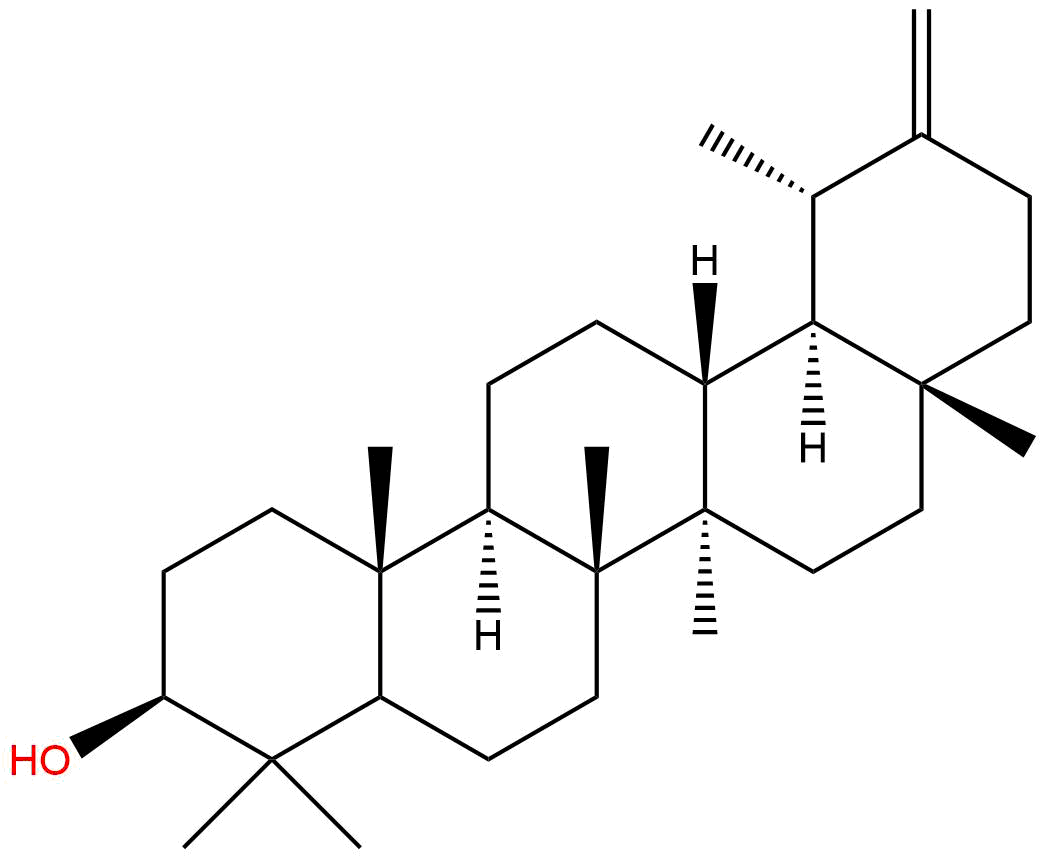


Product name: Taraxasterol
Synonym name: Taraxasterol
Catalogue No.: SBP00555
Cas No.: 1059-14-9
Formula: C30H50O
Mol Weight: 426.729
Botanical Source:
Physical Description:
Type of Compound: Triterpenoids
Purity: 95%~99%
Analysis Method: HPLC-DAD or/and HPLC-ELSD
Identification Method: Mass, NMR
Packing: Brown vial or HDPE plastic bottle
The product could be supplied from milligrams to grams
Inquire for bulk scale.
For Reference Standard and R&D, Not for Human Use Directly.
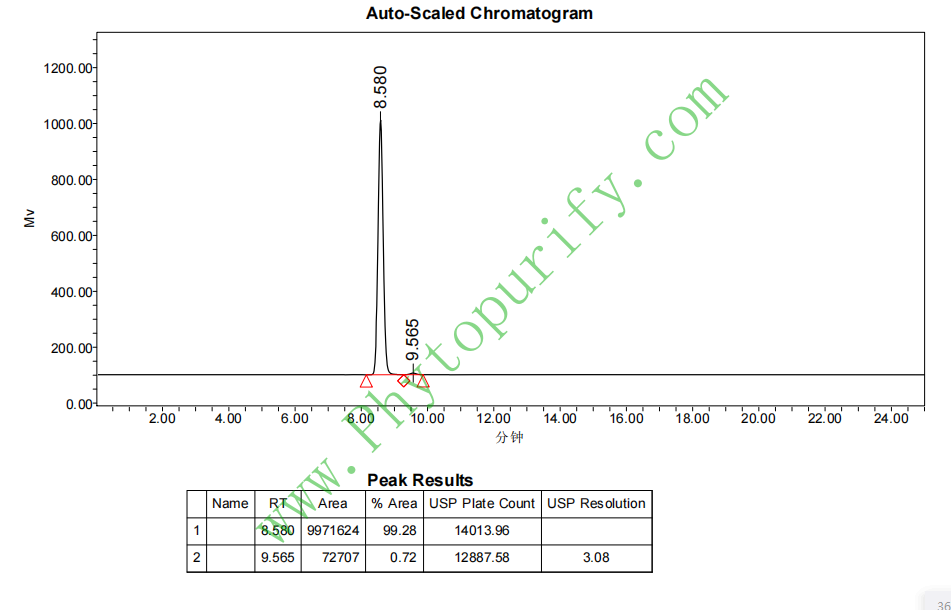
HPLC of Taraxasterol
Storage conditions:Short-term storage at 2~8℃, long-term storage at -20 ~ -80℃
20.2300
7.9586
7.9586
.0000
9.6033
16.6284
High
92.2107
4.8416
No
No
No
No
No
No
0.0
No
No
No
No
Taraxasterol is a naturally occurring pentacyclic triterpenoid compound, named after its earliest isolated plant source - the dandelion genus(Taraxacum). Its CAS number is 1059-14-9, molecular formula is C30H50O, and molecular weight is 426.7290 g/mol. As a secondary metabolite of plants, dandelion sterol has been found in various plants used in traditional medicine, especially in the Asteraceae plant dandelion(Taraxacum officinale)The most famous. Modern pharmacological research reveals that dandelion sterols are not only metabolites in plants, but also natural products with multiple biological activities, with their core functions concentrated in anti-inflammatory field Research has shown that it can regulate multiple key inflammation related targets, such as TNF - α, IL-6, COX-2 (PTGS2), and NF - κ B, thereby inhibiting the production of various inflammatory mediators. This provides a solid scientific basis for its treatment of immune inflammatory diseases, such as arthritis, allergic diseases, and certain inflammation related tissue injuries. At present, dandelion sterols have become a hot molecule in the research of natural product medicinal chemistry and pharmacology, and are an important source for exploring new anti-inflammatory drug lead compounds.
Dandelion sterols belong to the structural variants of Lupane type triterpenoids - Taraxastane triterpenoids. Its core is a rigid five membered ring skeleton (four six membered rings and one five membered ring), with a β - configured hydroxyl group (- OH) connected at the C-3 position, which classifies it as a secondary alcohol. This complex polycyclic structure endows the molecule with a high degree of hydrophobicity.
The physical and chemical properties can be analyzed in depth from the provided pharmacological parameters:
- Molecular weight (MW):426.73 g/mol, Slightly higher than conventional small molecule drugs (usually<500 Da), but still within an acceptable range.
- Lipid water partition coefficient (LogP/LogD)Up to 7.96, which clearly indicates that dandelion sterols are a Extremely lipophilic (hydrophobic)The compound. Such a high LogP value means that its solubility in water is extremely low (water_stolubility: 0.0000), which will be the main challenge for its oral absorption and formulation development.
- Topological Polarity Surface Area (TPSA)Only 20.23 Å ², a small value, mainly contributed by a single hydroxyl group. Low TPSA and high LogP together indicate that the molecule has Excellent membrane permeability。
- Penetration data Caco-2 cell permeability (16.63 × 10 ⁻⁶ cm/s) and effective permeability (Peff: 9.60) both indicate that it has Extremely high intestinal absorption potential At the same time, the blood-brain barrier (BBB) penetration is predicted to be "high", suggesting that it may act on inflammatory targets related to the central nervous system.
- Plasma protein binding rate (PPB)As high as 92.21%, it indicates that after entering the bloodstream, most molecules will bind to plasma proteins (mainly albumin), which may affect their free concentration, tissue distribution, and drug efficacy.
Overall, dandelion sterols are a typical class II compound with high permeability and low solubility (according to the Biopharmaceutical Classification System BCS). Its strong lipophilicity is its advantage in penetrating cell membranes and acting on intracellular targets, but it also brings problems such as poor water solubility and potential limited bioavailability.
The main plant source of dandelion sterols is dandelion Especially medicinal dandelions(Taraxacum officinale F. H. Wigg.)。 Dandelion belongs to the Asteraceae family and is a perennial herbaceous plant widely distributed worldwide. In traditional Chinese medicine theory, dandelion (whole plant) is cold in nature, bitter and sweet in taste, and belongs to the liver and stomach meridians. It has Clearing heat and detoxifying, reducing swelling and dispersing nodules, diuresis and promoting lymphatic circulation The efficacy. Commonly used for treating conditions such as sores, tumors, breast abscesses, scrofula, red eyes, sore throat, lung abscesses, intestinal abscesses, damp heat jaundice, and heat induced pain. The descriptions of these traditional effects, especially "clearing heat and detoxifying" and "reducing swelling and dispersing nodules", are highly consistent with the concepts of "anti-inflammatory" and "anti infection" in modern medicine.
Dandelion is also commonly used as a "detoxifying" tea drink or edible wild vegetable in folk culture. Modern plant chemistry research has isolated and identified various triterpenoids, phenolic acids, flavonoids, and sesquiterpene lactones, including dandelion sterols, from the aboveground and root parts of dandelions. These active ingredients together form the material basis for the pharmacological effects of dandelion. Dandelion sterols, as a characteristic triterpenoid component, are considered one of the key contributors to the anti-inflammatory effects of dandelion, providing a modern scientific annotation for its traditional medicinal value.
The most notable pharmacological activity of dandelion sterols is their Broad spectrum and potent anti-inflammatory effects Its function is not through a single pathway, but like a precise "multi-target regulator" that intervenes in multiple key nodes in the inflammatory response network. Based on the provided target information, we can delve into its mechanism of action:
Inhibit the production of pro-inflammatory cytokines Dandelion sterols can significantly inhibit the production of various core pro-inflammatory factors by immune cells such as macrophages.
Regulating the inflammatory signaling hub - NF - κ B pathway NF - κ B1 (p50) is an important member of the NF - κ B transcription factor family. In the resting state, NF - κ B binds to its inhibitory protein I κ B and exists in the cytoplasm. When stimulated by TNF - α, IL-1, etc., I κ B is phosphorylated and degraded, allowing NF - κ B (such as p50/p65 dimer) to enter the nucleus and initiate transcription of a large number of inflammation related genes (including TNF - α, IL-6, IL-1 β, COX-2, etc.). Research has shown that dandelion sterols can Inhibit the phosphorylation and degradation of I κ B, thereby preventing the nuclear translocation and DNA binding activity of NF - κ B This is its ability to exert multi-target anti-inflammatory effects Core molecular mechanism。
Inhibition of inflammatory mediator synthase COX-2 (PTGS2)Cyclooxygenase-2 (COX-2) is a key enzyme that catalyzes the synthesis of eicosanoids such as prostaglandin E2 (PGE2) from arachidonic acid. It is induced to be highly expressed at the site of inflammation, leading to pain, fever, and swelling. Dandelion sterols can inhibit the expression and activity of COX-2, reduce the production of PGE2, which explains their analgesic and antipyretic effects in animal models.
Other activities Research has also shown that dandelion sterols have:
Summary of mechanism of action Dandelion sterols are mainly produced through Inhibition of NF - κ B signaling pathway activation This upstream event, and subsequently Downstream inhibition of the expression of pro-inflammatory cytokines such as TNF - α, IL-6, IL-1 β, as well as the production of inflammatory mediators such as COX-2/PGE2 Form a collaborative anti-inflammatory network. This multi-target mode of action may give it an advantage over single target inhibitors in dealing with complex inflammatory diseases.
Based on the provided detailed pharmacological parameters, we can systematically evaluate the potential of dandelion sterols as lead compounds for drugs, and refer to the famous Lipinski's Rule of Five (Ro5)Compare:
Lipinski Rule Compliance Analysis:
Analysis of ADMET (absorption, distribution, metabolism, excretion, toxicity) characteristics:
Summary of potential for drug development:
Dandelion sterol is a High potential anti-inflammatory lead compounds with clear pharmacological activity, multi-target effects, and good preliminary safety Its biggest advantage lies in its strong membrane permeability and clear NF - κ B pathway inhibition mechanism. However, it The main obstacles to developing ideal drugs are extremely high lipophilicity and poor water solubility It may lead to unstable oral absorption, difficulty in formulation, and unpredictable in vivo behavior.
Future directions for pharmaceutical chemistry optimization may include:Structural modification of molecules by introducing polar groups (such as carboxyl, amino, glycosides, etc.) to reduce LogP and improve water solubility At the same time, try to preserve its core pentacyclic triterpenoid skeleton and key pharmacophores (such as 3- β - OH) as much as possible. For example, preparing prodrugs or derivatives with better water solubility (such as phosphate esters, amino acid esters), or developing advanced drug delivery systems (such as nanocrystals, liposomes, micelles) to improve their solubility and bioavailability.
At present, research on dandelion sterols has progressed from early plant chemical isolation and in vitro activity screening to Interpretation of mechanism of action, in vivo pharmacological validation, and preliminary exploration of structure-activity relationship Stage. Numerous cell and animal model studies have confirmed its protective effects in acute/chronic inflammation, endotoxemia, allergic asthma, arthritis, and even certain cancer models. As a Liver X receptor alpha (LXR alpha) activator Its discovery has also opened up new ideas for its application in metabolic diseases (such as atherosclerosis).
However, the vast majority of research is still in the preclinical stage. To promote the clinical application of dandelion sterols, future research needs to focus on the following key directions:
In short, dandelion sterols are a valuable molecular template gifted by nature. It is like a multi toothed key that can open multiple lock holes to suppress excessive inflammatory reactions. Although it still faces challenges in terms of solubility and pharmacokinetics on its path to becoming a modern drug, its strong pharmacological activity and good safety starting point still shine a tempting light in the development of new anti-inflammatory drugs. With the continuous advancement of modern drug development technology, this natural molecule derived from dandelion is expected to radiate new vitality in the future, providing a new option for the treatment of human inflammatory diseases.
