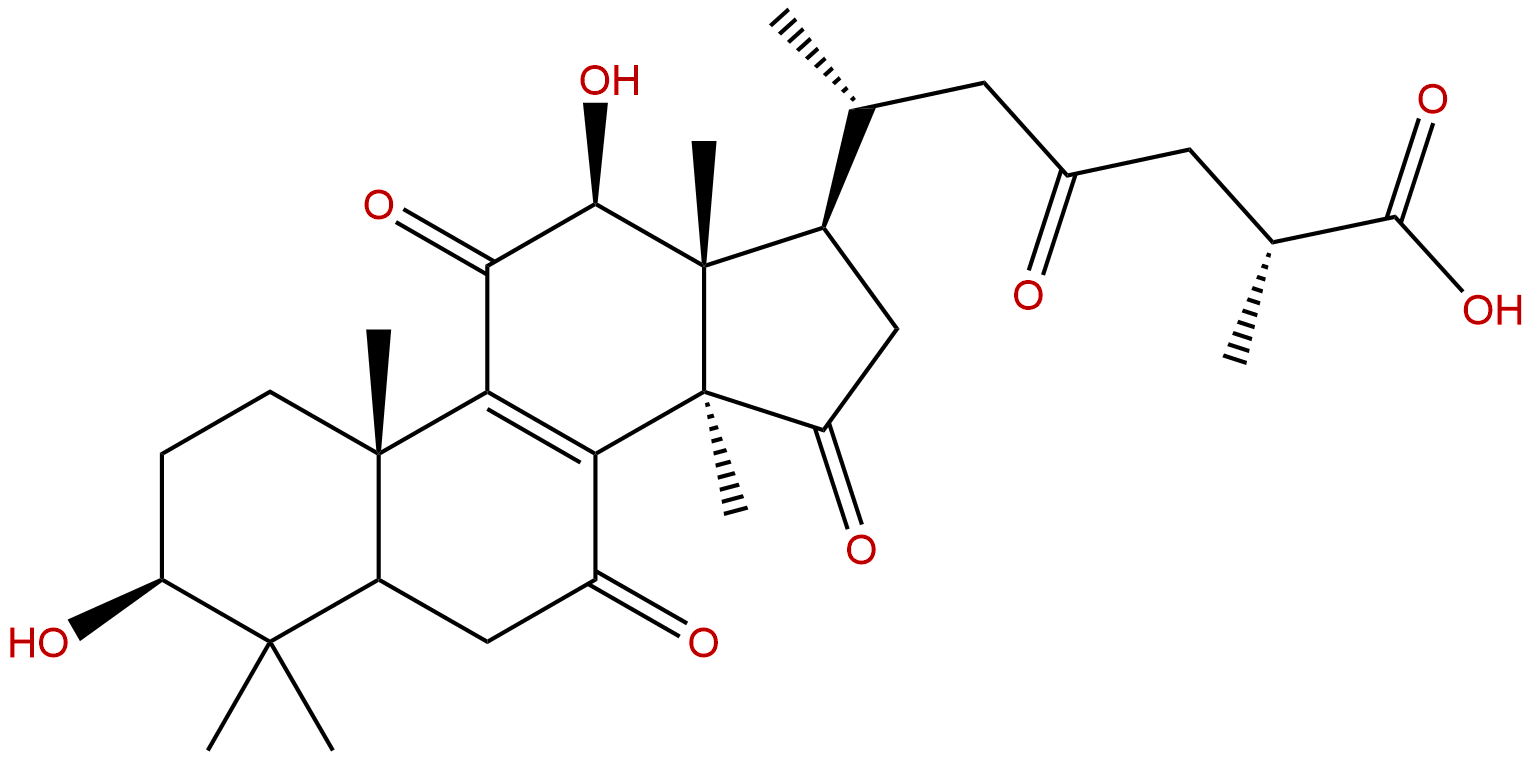


Product Name: Ganoderic acid C6
Synonym name:
Catalogue No.: BP1865
Cas No.: 105742-76-5
Formula: C30H42O8
Mol Weight: 530.658
Botanical Source: Ganoderma lucidum (reishi)
Purity: 95%~99%
Analysis Method: HPLC-DAD or/and HPLC-ELSD
Identification Method: Mass, NMR
Packing: Brown vial or HDPE plastic bottle
Can be supplied from milligrams to grams.
For Reference Standard and R&D, Not for Human Use Directly.
Inquire for bulk scale.
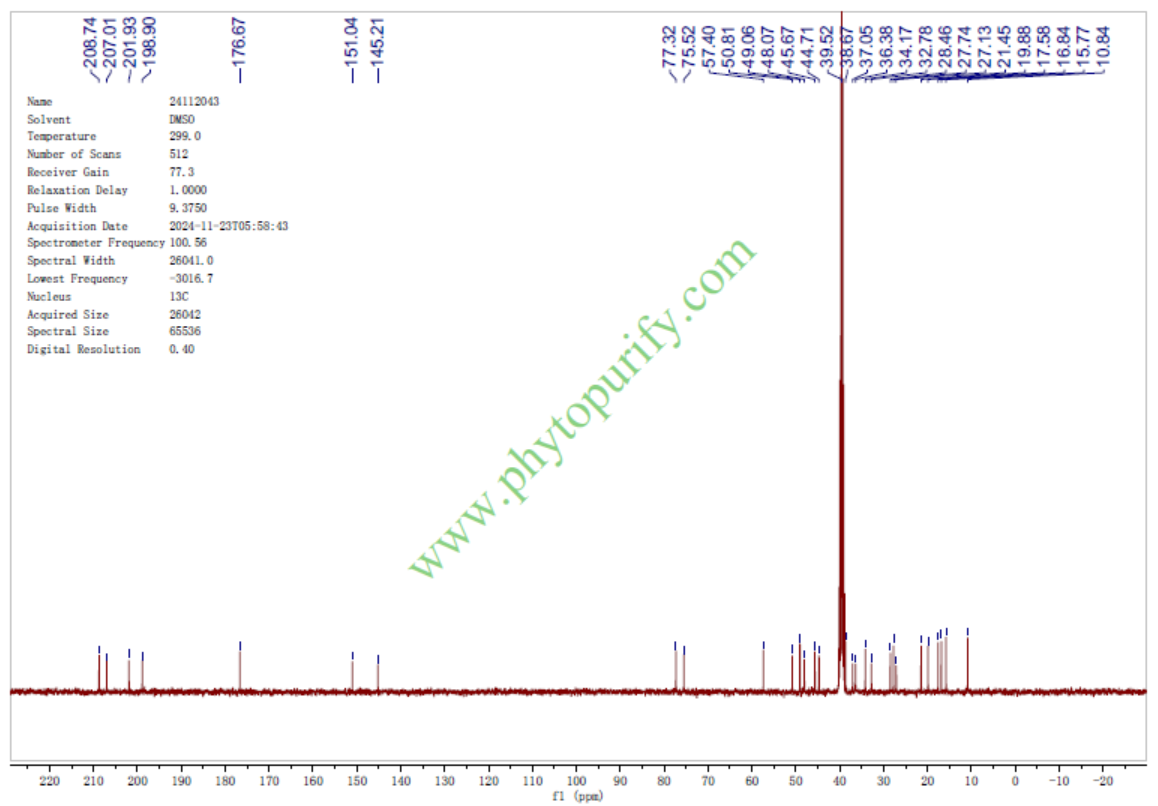
NMR of Ganoderic acid C6
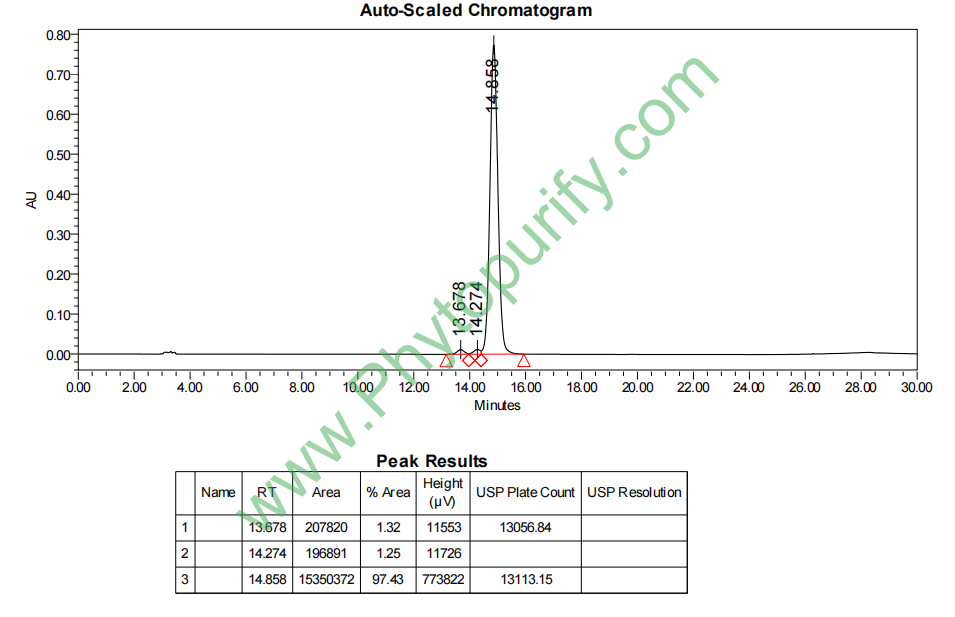
HPLC of Ganoderic acid C6
Storage conditions:Short-term storage at 2~8℃, long-term storage at -20 ~ -80℃
146.0400
2.7275
.4012
.0348
1.3188
4.9930
Low
85.3864
5.2388
No
No
Yes
No
No
No
0.0
Yes
No
No
Yes
Natural products, as an important source of drug discovery, play an irreplaceable role in the long history of human struggle against diseases. Fungi, especially higher medicinal fungi, have always been a hot topic in natural product chemistry and pharmacology research due to their unique secondary metabolites and significant biological activity. Ganoderma lucidum(Ganoderma lucidum)As a traditional precious traditional Chinese medicine, it is known as the "fairy grass" and its medicinal value has a history of thousands of years in East Asia. Modern scientific research has confirmed that Ganoderma lucidum is rich in various active ingredients, including polysaccharides, triterpenoids, sterols, nucleosides, etc. Among them, ganoderic acids, as a highly oxidized lanostane type triterpenoid compound, are considered the core material basis for Ganoderma lucidum to exert various pharmacological effects such as anti-tumor, anti-inflammatory, immune regulation, and liver protection.
Among the numerous isolated and identified ganoderic acids, ganoderic acid C6 (GA-C6) has attracted widespread attention from researchers due to its unique chemical structure and potential anti-tumor activity, especially its effect on hematological malignancies. Multiple myeloma (MM) is a clonal malignant proliferative disease of plasma cells, characterized by abnormal proliferation of monoclonal plasma cells in the bone marrow, the presence of monoclonal immunoglobulin and its fragments (M protein) in serum or urine, often accompanied by multiple osteolytic lesions, anemia, renal dysfunction, and immune dysfunction. Although targeted therapies such as proteasome inhibitors (such as bortezomib), immunomodulators (such as lenalidomide), and monoclonal antibodies (such as dareremumab) have significantly improved the prognosis of MM patients in recent years, the disease is still incurable, and the emergence of drug resistance is the main challenge facing clinical treatment. Therefore, searching for natural active molecules with new mechanisms of action that can overcome drug resistance or enhance the efficacy of existing drugs has important scientific significance and clinical value.
This article aims to provide a comprehensive professional review of Ganoderma lucidum acid C6. The article will systematically explain its chemical structure and physicochemical properties, plant sources and extraction methods, pharmacological activity (especially anti multiple myeloma activity), mechanism of action and molecular targets, drug evaluation and pharmacokinetic characteristics, and prospects its clinical application prospects, in order to provide reference for the in-depth research and development of this natural product.
Ganoderma lucidum acid C6 belongs to highly oxidized lanostane triterpenoids, and its chemical structure has typical characteristics of this class of compounds. Its core skeleton is a tetracyclic triterpenoid, consisting of four rings A, B, C, and D, and connected to a side chain at the C-17 position. Similar to many other ganoderic acids, the molecular structure of GA-C6 contains multiple oxygen-containing functional groups, including hydroxyl, carbonyl, and carboxyl groups. The presence of these functional groups not only determines its polarity, but is also closely related to its biological activity. Specifically, its structural features include the presence of multiple hydroxyl and ketone groups on the A and B rings, as well as a carboxyl group on the side chain, making it acidic.
From the perspective of physical and chemical properties, the molecular formula of ganoderic acid C6 is C ∝₀ H ₄₂ O ₈, with a molecular weight of 530.6580 g/mol. Its lipid water partition coefficient (LogP) is 2.7275, indicating that the compound has a certain lipophilicity, which is beneficial for it to cross the phospholipid bilayer of the cell membrane and enter the cell to exert its pharmacological effects. The topological polar surface area (TPSA) is 146.0400 Å ², which is relatively high and mainly contributed by multiple hydroxyl and carboxyl groups in its molecule. According to Rule of 5, a TPSA greater than 140 Å ² typically indicates poor oral absorption, which is consistent with the low oral bioavailability mentioned in subsequent pharmacological evaluations. Its water solubility is 0.0348 mg/mL, which is a difficult to dissolve compound in water. This poses a challenge for its formulation development and may require the use of solubilization techniques such as cyclodextrin inclusion, liposome encapsulation, or nanoparticle delivery to improve its solubility and bioavailability. In addition, the predictive model shows that the blood-brain barrier (BBB) permeability of Ganoderma lucidum acid C6 is relatively low, indicating that it is not easily able to enter the central nervous system. Although it may limit its application in the treatment of brain diseases, it also reduces the potential risk of neurotoxicity. The prediction result of hERG inhibition is' no ', indicating a low risk of causing QT interval prolongation and arrhythmia in the heart, which is a favorable safety feature. The Ames test result is 0.0, indicating a low potential risk of genetic toxicity.
Lingzhi acid C6 mainly comes from fungi of the family Ganoderma in the order Basidiomycota, especially Ganoderma lucidum(Ganoderma lucidum)The fruiting body, mycelium, and spore powder. The content of Ganoderma lucidum varies significantly in different regions, cultivation methods, and growth stages. Usually, the content of triterpenoids in the fruiting body reaches its peak during maturity. In addition, the varieties of Ganoderma lucidum (such as Ganoderma lucidum, Ganoderma lucidum, and Ganoderma lucidum) can also affect the yield of GA-C6.
The method for extracting Ganoderma lucidum acid C6 usually follows the classic process of natural product chemistry, which mainly includes the following steps:
Lingzhi acid C6 exhibits various pharmacological activities, among which anti-tumor activity, especially in the study of multiple myeloma (MM), is the most in-depth and prominent. In addition, it also shows certain potential in anti-inflammatory, antioxidant and other aspects.
Anti multiple myeloma activity
This is the most remarkable pharmacological activity of GA-C6. Multiple in vitro and in vivo studies have shown that GA-C6 can effectively inhibit the proliferation of various MM cell lines (such as U266, RPMI 8226, NCI-H929, etc.) and induce their apoptosis. Its functional characteristics include:
- Inducing apoptosis GA-C6 can significantly activate the intrinsic pathway (mitochondrial pathway) and extrinsic pathway (death receptor pathway) of cell apoptosis. It downregulates the expression of anti apoptotic proteins (such as MCL1, BCL2, BCL2L1) and upregulates the expression of pro apoptotic proteins (such as BAX, BAK), leading to the loss of mitochondrial membrane potential, release of cytochrome c, and activation of CASP9 and CASP3/7, ultimately triggering a cascade apoptotic response. At the same time, it can also upregulate death receptors (such as Fas) and their ligands (FasL), activate CASP8, and initiate exogenous apoptotic pathways.
- Inhibition of proliferation and cell cycle arrest GA-C6 can arrest the cell cycle of MM cells in G0/G1 or G2/M phase, thereby inhibiting cell proliferation. The mechanism may be related to the downregulation of the expression of cyclins and cyclin dependent kinases (CDKs).
- Overcoming drug resistance This is a huge advantage of GA-C6 as a candidate drug. Research has shown that GA-C6 has significant cytotoxicity against bortezomib resistant and lenalidomide resistant MM cells, suggesting that its mechanism of action may be different from existing first-line drugs and may be used to treat recurrent/refractory MM patients. The mechanism of overcoming drug resistance may be related to inhibiting the STAT3 signaling pathway and downregulating the expression of ABCG2 (a drug efflux pump), thereby reversing multidrug resistance.
- Collaborative sensitization effect When GA-C6 is used in combination with bortezomib or lenalidomide, it can produce a synergistic anti MM effect, that is, a "1+1>2" effect. This provides a theoretical basis for clinical combination therapy strategies, which are expected to reduce the dosage of chemotherapy drugs while enhancing efficacy and reducing toxic side effects.
Other anti-tumor activities
In addition to MM, GA-C6 also showed a certain inhibitory effect on a variety of solid tumor cells, such as liver cancer, lung cancer, breast cancer, colon cancer, etc., but its IC50 value is usually higher than that of MM cells, indicating that it may have a relative selectivity on MM.
Anti inflammatory and immune regulatory activity
Triterpenoids generally have anti-inflammatory activity. GA-C6 can inhibit the production of nitric oxide (NO), prostaglandin E2 (PGE2), and various pro-inflammatory cytokines (such as TNF - α, IL-6, IL-1 β) in macrophages stimulated by lipopolysaccharide (LPS). The mechanism may be related to the inhibition of the activation of NF - κ B and MAPK signaling pathways. In addition, it may also exert immunomodulatory effects by regulating the functions of T cells, B cells, and macrophages.
antioxidant activity
The molecular structure of GA-C6 contains multiple phenolic hydroxyl groups, which endow it with certain free radical scavenging ability. It can reduce intracellular reactive oxygen species (ROS) levels and protect cells from oxidative stress damage.
The mechanism of action of Ganoderma lucidum acid C6 against multiple myeloma is the result of the synergistic effect of multiple targets and pathways. According to existing research, its core mechanism of action can be summarized as follows:
Targeting the STAT3 signaling pathway STAT3 (Signal Transduction and Transcription Activation Factor 3) plays a crucial role in the survival, proliferation, drug resistance, and angiogenesis of MM cells, and is an important driver of carcinogenesis. GA-C6 can directly or indirectly inhibit the phosphorylation of STAT3 (Tyr705 site), preventing its dimerization and translocation into the nucleus, thereby suppressing its transcriptional activity. The expression of downstream target genes such as anti apoptotic proteins (MCL1, BCL2, BCL2L1), cell cycle regulatory protein (Cyclin D1), and vascular endothelial growth factor (VEGF) decreases accordingly. This is one of the core mechanisms by which GA-C6 exerts its anti MM effect.
Regulating the Balance of BCL-2 Family Proteins GA-C6 can directly downregulate the expression of anti apoptotic proteins MCL1, BCL2, and BCL2L1, while upregulating or activating pro apoptotic proteins BAX and BAK. This regulation of BCL-2 family protein balance directly leads to mitochondrial outer membrane permeabilization (MOMP), release of cytochrome c, activation of Caspase-9, and initiation of mitochondrial apoptosis pathway. Among them, the downregulation of MCL1 is particularly crucial, as MCL1 is a key protein relied upon for the survival of MM cells and is also one of the reasons for the development of drug resistance in many drugs.
Inhibition of NF - κ B signaling pathway NF - κ B is another transcription factor highly activated in MM, regulating the expression of genes related to inflammation, survival, and drug resistance. GA-C6 can inhibit the phosphorylation and degradation of I κ B α, thereby preventing the nuclear translocation of NF - κ B (p65) subunit and suppressing its transcriptional activity. This helps explain its dual effects of anti-inflammatory and pro apoptotic effects.
Affects the MAPK signaling pathway The MAPK (mitogen activated protein kinase) pathway, including ERK, JNK, and p38, plays an important role in cell proliferation, differentiation, and apoptosis. GA-C6 may synergistically promote cell apoptosis by inhibiting the phosphorylation of ERK1/2 (MAPK1) and activating JNK and p38.
Targeted Topoisomerase I (TOP1)Topoisomerase I is an enzyme essential for DNA replication and transcription. GA-C6 is predicted to be a TOP1 inhibitor. By inhibiting the activity of TOP1, DNA damage is caused, which in turn activates the DNA damage response pathway and ultimately induces cell apoptosis. This provides a new molecular explanation for its anti-tumor activity.
Inhibition of drug efflux pump (ABCG2)ABCG2 (breast cancer resistance protein) is an important drug efflux transporter, and its high expression is an important reason for MM cells to produce multidrug resistance. GA-C6 can downregulate the expression or inhibit the function of ABCG2, thereby increasing the accumulation of chemotherapy drugs in cells and reversing drug resistance.
Regulating protein kinase C alpha (PRKCA)PRKCA (protein kinase C alpha) is involved in various cellular processes, including proliferation, differentiation, and apoptosis. GA-C6 may affect downstream signal transduction by regulating the activity of PRKCA.
In summary, GA-C6 forms a complex network regulatory mechanism by simultaneously acting on multiple key targets such as STAT3, NF - κ B, BCL-2 family, MAPK, TOP1, ABCG2, etc., effectively inhibiting MM cell proliferation, inducing apoptosis, and overcoming drug resistance. This multi-target mode of action is a significant advantage that distinguishes it from many single target chemotherapy drugs.
Although Ganoderma lucidum acid C6 exhibits strong anti MM activity in vitro and in vivo, its drug like properties are the key to determining whether it can ultimately become a clinical drug. Based on the provided pharmacological parameters, we can conduct a preliminary evaluation:
Overall, the pharmaceutical challenge of GA-C6 mainly lies in its Low water solubility and potential low oral bioavailability Its high TPSA and low water solubility suggest that it may belong to BCS (Biopharmaceutical Classification System) Class IV (low solubility, low permeability) drugs.
Regarding its pharmacokinetic (PK) characteristics, currently available detailed in vivo PK data is relatively limited, but based on its physicochemical properties, it can be inferred that:
- absorb Poor oral absorption and possibly low bioavailability. Intravenous injection may be the preferred route of administration, but appropriate solubilizing agents are required.
- distribution Due to its lipophilicity, it may be widely distributed in tissues, but due to its high binding rate with plasma proteins, the concentration of free drugs may be lower. BBB transmittance is low.
- Metabolism As a triterpenoid compound, GA-C6 may undergo extensive phase I (oxidation, reduction, hydrolysis) and phase II (glucuronidation, sulfation) metabolism in the liver, which may result in a short half-life and the production of multiple metabolites.
- excretion Metabolites may be mainly excreted through bile and feces, with a small amount excreted through urine.
To overcome these barriers to drug development, future research needs to focus on:
1. Formulation technology Develop new drug delivery systems, such as liposomes, nanoparticles, polymer micelles, phospholipid complexes, or cyclodextrin inclusion complexes, to significantly improve their solubility and bioavailability.
2. Prodrug design By chemical modification, ionizable groups or groups that can be hydrolyzed by enzymes in the body are introduced into its molecules to improve its water solubility and membrane permeability, and converted into active active active ingredients in vivo.
3. structural optimization Based on its interaction mode with targets such as STAT3 and MCL1, reasonable structural modifications can be made to improve its physicochemical properties and PK characteristics while maintaining or enhancing its activity.
Although there is still a long way to go for Ganoderma lucidum acid C6 to become a formal clinical drug, its unique pharmacological activity and mechanism of action provide an exciting blueprint for its clinical application prospects.
1. As a novel candidate drug for the treatment of multiple myeloma
Given its potent killing activity against MM cells, especially drug-resistant MM cells, and its synergistic effect with traditional drugs such as bortezomib, GA-C6 is the most promising new drug for the treatment of recurrent/refractory MM. Its multi-target mode of action makes it less likely to develop drug resistance, which is a huge advantage compared to existing targeted drugs. In the future, if its pharmacokinetic defects can be solved through formulation technology or structural optimization, GA-C6 or its derivatives are expected to enter the preclinical and clinical trial stages.
2. As a "sensitizer" for combination therapy
The synergistic effect of GA-C6 with drugs such as bortezomib and lenalidomide suggests that it may not be used as a single alternative therapy, but as a component of a combination therapy regimen. By downregulating key resistance proteins such as MCL1 and STAT3, GA-C6 can "sensitize" MM cells to existing drugs, allowing for the use of lower doses of chemotherapy drugs and achieving the goal of "reducing toxicity and increasing efficacy". This combination therapy strategy may enter clinical application faster.
3. Optimize the structure as a lead compound
The complex chemical structure of GA-C6 provides an excellent modification platform for medicinal chemists. By derivatizing its different sites (such as hydroxyl, carboxyl, and double bonds), a series of GA-C6 analogs can be synthesized with the aim of:
-Improve water solubility and oral bioavailability.
-Enhance the binding affinity and selectivity towards specific targets such as MCL1 or STAT3.
-Optimize pharmacokinetic properties and prolong half-life.
-Reduce potential toxic side effects.
4. Expand applications in other disease fields
Although current research mainly focuses on MM, the inhibitory effect of GA-C6 on STAT3 and NF - κ B pathways also suggests its potential application value in other diseases associated with abnormal activation of these pathways, such as:
- Other blood tumors Such as acute myeloid leukemia (AML), lymphoma, etc.
- solid tumor Especially those tumors that rely on STAT3 signaling pathway, such as head and neck squamous cell carcinoma, breast cancer, liver cancer, etc.
- Inflammatory diseases Such as rheumatoid arthritis, inflammatory bowel disease, etc.
prospect
Future research on Ganoderma lucidum acid C6 should focus on the following directions:
1. In depth mechanism research Using chemical biology methods such as activity-based proteomic analysis (ABPP) to identify the direct acting protein targets of GA-C6 and clarify its "target map".
2. Pharmacokinetic study of the system Establish sensitive and specific biological sample analysis methods (such as LC-MS/MS) to comprehensively evaluate the absorption, distribution, metabolism, and excretion characteristics of GA-C6 in different animal models.
3. Innovative formulation development Focus on tackling the problem of poor water solubility and developing formulations with high bioavailability suitable for intravenous or oral administration.
4. In vivo efficacy and safety evaluation Systematic evaluation of the anti-tumor efficacy and long-term toxicity of GA-C6 and its formulations in MM xenograft mouse models or transgenic mouse models.
5. Structure Activity Relationship (SAR) Study Systematically synthesize a series of GA-C6 derivatives and establish a structure-activity relationship model between their chemical structures, anti MM activity, physicochemical properties, and metabolic stability, providing guidance for discovering better candidate compounds.
Ganoderma lucidum acid C6, as a representative triterpenoid active ingredient in Ganoderma lucidum, has shown remarkable potential in the field of anti multiple myeloma due to its unique chemical structure and multi-target pharmacological mechanism of action. It can not only effectively inhibit the proliferation of MM cells and induce apoptosis, but more importantly, it can overcome the clinical problem of drug resistance and produce synergistic effects with existing drugs. Its target involves multiple key signaling nodes such as STAT3, BCL-2 family, NF - κ B, MAPK, TOP1, etc., forming a complex regulatory network.
However, from laboratory discovery to clinical application, GA-C6 also faces severe challenges, mainly reflected in its poor water solubility, low oral bioavailability, and drug defects. Future research must closely integrate pharmacological activity studies with medicinal chemistry, pharmacology, pharmacokinetics, and toxicology studies, and overcome these obstacles through innovative formulation techniques and rational structural optimization.
In summary, Ganoderma lucidum acid C6 is a natural product lead compound with great research and development value. It is not only a modern scientific interpretation of the anti-tumor effect of traditional Chinese medicine Ganoderma lucidum, but also provides new ideas and candidate molecules for overcoming the stubborn disease of multiple myeloma. With the continuous deepening of research, we have reason to believe that ganoderic acid C6 and its derivatives have the potential to bring new therapeutic hope to multiple myeloma patients, especially those who have developed resistance to existing treatments, in the future.
