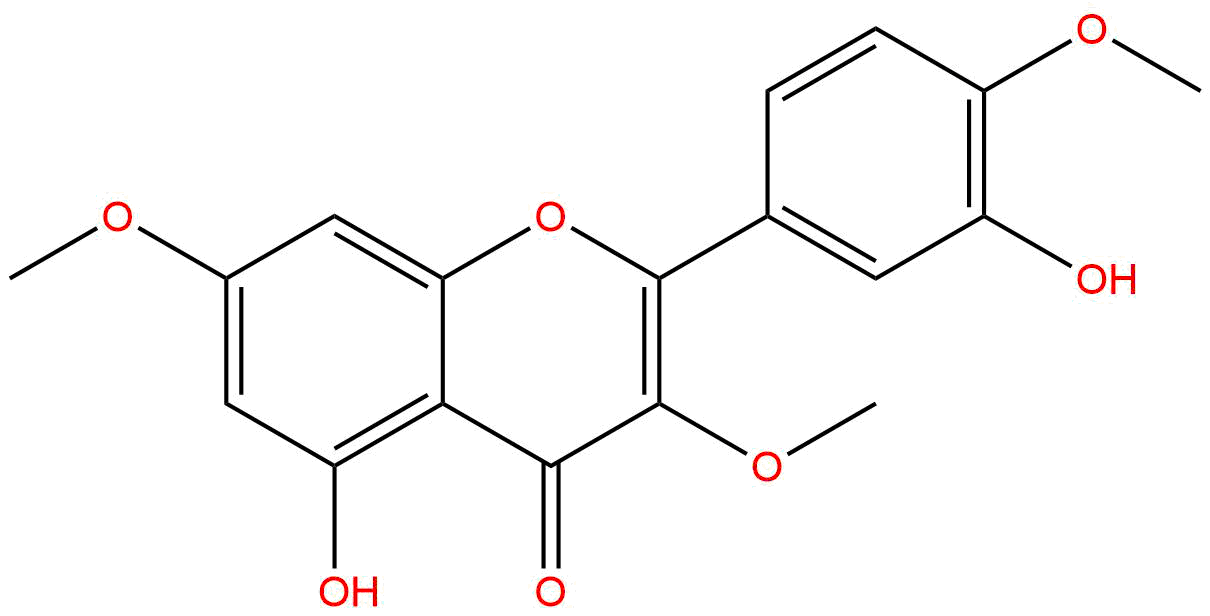


Product name: Ayanin
Synonym name:
Catalogue No.: SBP02939
Cas No.: 572-32-7
Formula: C18H16O7
Mol Weight: 344.319
Botanical Source:
Type of Compound: Flavonoids
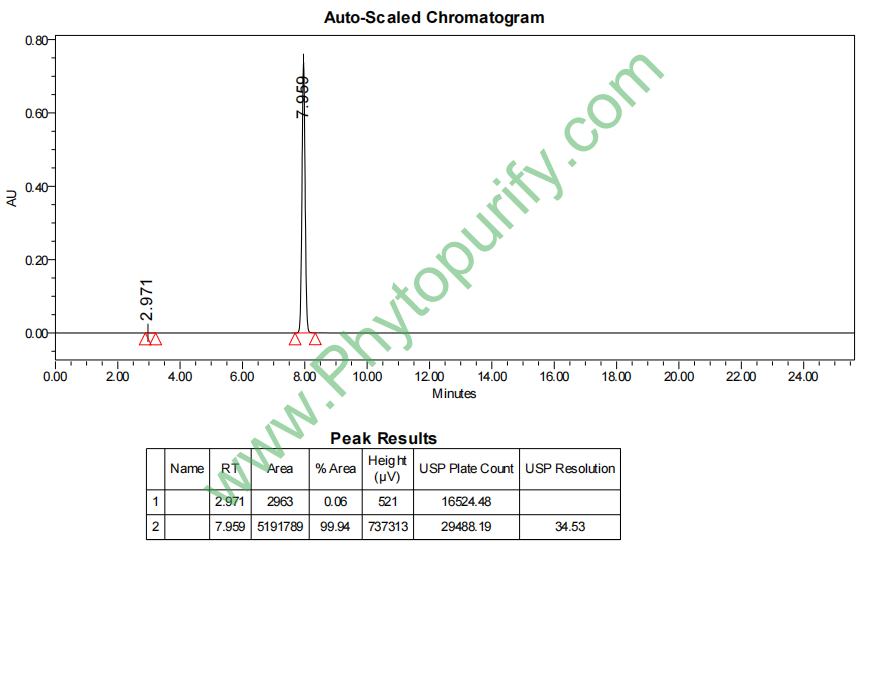
Purity: 95%~99%
Analysis Method: HPLC-DAD or/and HPLC-ELSD
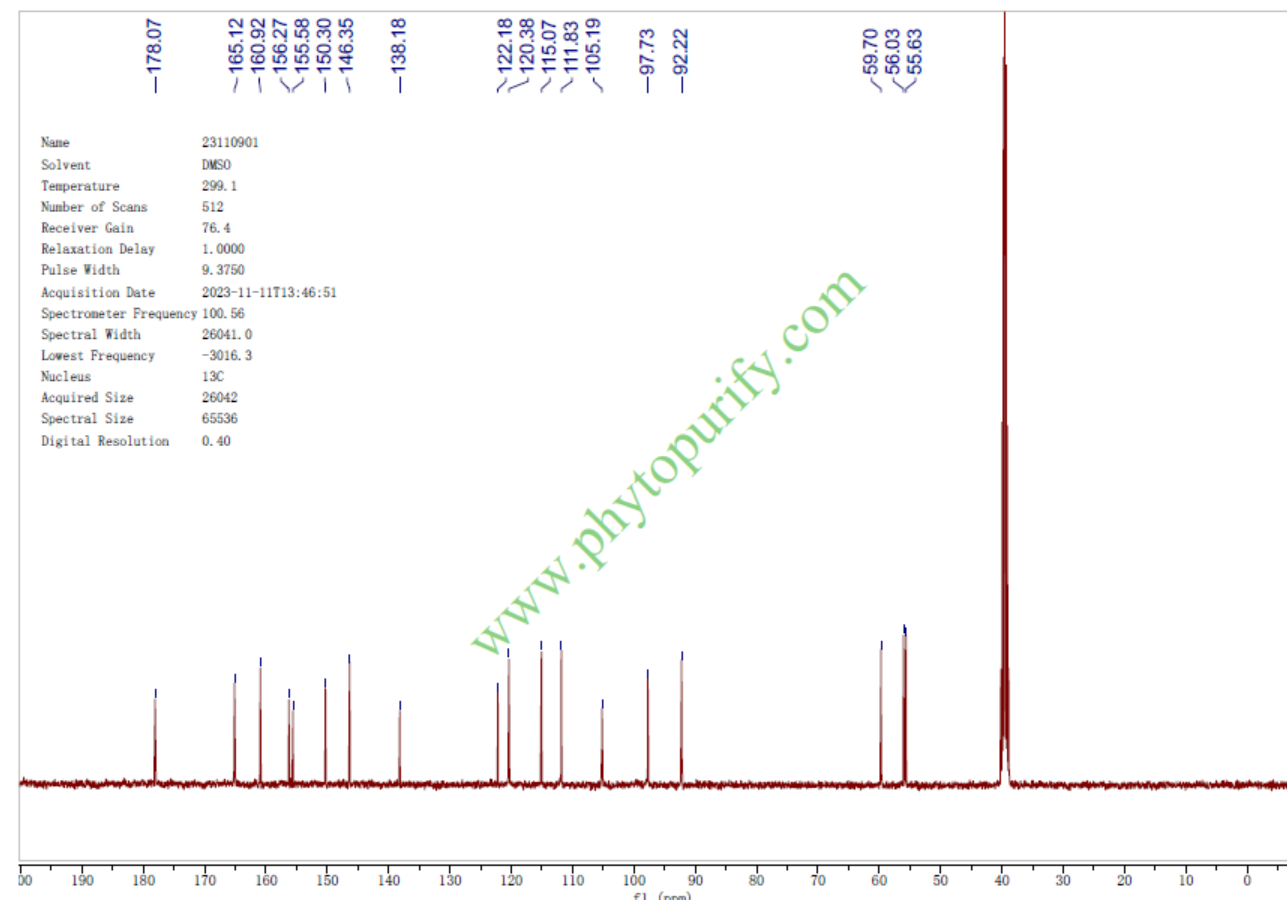
Identification Method: Mass, NMR
Packing: Brown vial or HDPE plastic bottle
Storage: Store in a well closed container, protected from air and light. Put into refrigerate or freeze for long term storage.
Whenever possible, you should prepare and use solutions on the same day. However, if you need to make up stock solutions in advance, we recommend that you store the solution as aliquots in tightly sealed vials at -20℃. Generally, these will be useable for up to two weeks.
The product could be supplied from milligrams to grams
Inquire for bulk scale.
For Reference Standard and R&D, Not for Human Use Directly.
NMR of Ayanin
HPLC of Ayanin
Storage conditions:Short-term storage at 2~8℃, long-term storage at -20 ~ -80℃
98.3600
2.6085
2.5755
.0612
4.4516
31.4574
Low
88.9851
2.3571
Yes
No
Yes
No
Yes
No
0.6
Yes
No
Yes
No
Natural products have always been an important source of drug discovery and development, especially in the treatment of complex diseases such as cancer and inflammatory diseases. Flavonoids, as a widely present class of secondary metabolites in nature, have attracted much attention due to their structural diversity and extensive biological activity. Ayanin, also known as 5-hydroxy-3,7,4 '- trimethoxyflavone, is a natural flavonoid compound with significant biological activity. This compound was originally derived from the vine nine nodes(Psychotria serpens)When isolated from plants, its unique chemical structure endows it with diverse pharmacological effects. Early research revealed that Ayaflavin is a non selective phosphodiesterase (PDE1-4) inhibitor, suggesting its potential therapeutic value in respiratory diseases such as allergic asthma. However, in recent years, the anti-tumor activity of Ayaflavin has gradually become a research focus. Research has shown that Ayaflavin can exert multiple effects, such as inhibiting tumor cell proliferation, inducing apoptosis, inhibiting invasion and metastasis, and reversing drug resistance, by regulating multiple signaling pathways and molecular targets closely related to tumor occurrence and development, such as MCL1, BCL2, STAT3, MMP2, TOP1, HIF1A, TOP2A, MAPK1, ESR1, and CYP19A1. Given its multi-target and multi pathway properties, Ayaflavin has shown promising development prospects in the field of tumor therapy. This article aims to systematically review the chemical structure, plant origin, pharmacological activity, mechanism of action, medicinal properties, and clinical application prospects of Ayaflavin, in order to provide comprehensive scientific basis for the in-depth research and development of this natural product.
Ayaflavin belongs to the flavonol subclass of flavonoids, and its core structure is 2-phenylchromenone. Specifically, its chemical structural feature is that the C-5 and C-7 positions of the A ring and the C-4 'position of the B ring are respectively replaced by methoxy groups, while the C-3 position is connected to a hydroxyl group. This specific substitution pattern, namely 5,7,4 '- trimethoxy-3-hydroxyflavone, is a key structural feature that distinguishes Ayaflavin from other flavonoids. Its molecular formula is C18H16O7 and its molecular weight is 344.3190 g/mol. From the perspective of physical and chemical properties, Ayaflavin appears as a pale yellow crystalline powder. Its lipophilic water partition coefficient (LogP) is 2.6085, indicating that the compound has a certain degree of lipophilicity, which is beneficial for its passage through biological membranes. The topological polar surface area (TPSA) is 98.3600 Å ², which is within a reasonable range and suggests that it may have good oral absorption potential. However, its water solubility is poor, only 0.0612 mg/mL, which may be one of the main challenges facing its oral bioavailability. In addition, the blood-brain barrier penetration ability of Ayaflavin is relatively low, which to some extent limits its application in central nervous system diseases, but may also mean that its peripheral administration has less side effects on the central nervous system. The key pharmacological evaluation shows that Ayaflavin has no inhibitory effect on hERG potassium channels (hERG inhibition: no), reducing the risk of cardiac toxicity; The Ames test result is 0.6, indicating a low risk of genetic toxicity. These physicochemical properties and preliminary pharmacological parameters provide important foundational data for the subsequent drug development of Ayaflavin.
Ayaflavin was originally derived from the Rubiaceae plant Vine Nine Knots(Psychotria serpens)Separation and identification in the middle. Manjiujie is a creeping or climbing shrub widely distributed in southern China and Southeast Asia. It is commonly used in folk medicine to treat rheumatism, rheumatism, pain, and injuries caused by falls. In addition to the nine nodes of the vine, Ayaflavin is also present in various other plants, including but not limited to certain genera of Fabaceae (Fabaceae) such as Astragalus、Indigofera)The Lamiaceae family Ocimum Belonging to (Basil) and Rutaceae Ruta Some species belonging to the Rutaceae and Asteraceae families. This widespread distribution suggests that quercetin may be a common flavonoid metabolite in the plant kingdom.
The extraction of Ayaflavin is usually carried out using classical natural product chemistry methods. Firstly, crush the dried plant material (such as whole grass, leaves, or stems) and then extract it using a polar solvent. Common solvents include methanol, ethanol, or acetone water mixed solvents. To improve extraction efficiency and selectivity, techniques such as heating reflux, ultrasound assisted extraction, or microwave-assisted extraction can be used. The crude extract is obtained by filtering and concentrating the extract under reduced pressure. Subsequently, the crude extract was preliminarily separated using liquid-liquid extraction method (such as sequentially using solvents of different polarities such as petroleum ether, ethyl acetate, n-butanol, etc.), and the ethyl acetate or n-butanol extraction sites rich in flavonoids were usually used as further separation targets. Modern chromatographic separation technology is a key step in achieving purification of quercetin. Common methods include silica gel column chromatography, ODS (octadecylsilane bonded silica gel) reverse phase column chromatography, Sephadex LH-20 gel column chromatography and preparative high-performance liquid chromatography (prep HPLC). By gradient elution combined with thin-layer chromatography (TLC) or HPLC monitoring, high-purity Ayaflavin monomer can be obtained. The structural identification mainly relies on spectroscopic techniques, including ultraviolet visible spectroscopy (UV Vis), infrared spectroscopy (IR), mass spectrometry (MS), and nuclear magnetic resonance spectroscopy (1H-NMR, 13C-NMR, DEPT, HMBC, HSQC, etc.).
The earliest reported pharmacological activity of Ayaflavin was its role as a non selective phosphodiesterase (PDE1-4) inhibitor. PDEs are a family of enzymes that hydrolyze cyclic adenosine monophosphate (cAMP) and cyclic guanosine monophosphate (cGMP), playing a critical role in regulating intracellular levels of second messengers. In the respiratory system, PDE4 is the main subtype, and its increased activity is closely related to pathological processes such as airway smooth muscle contraction, inflammatory cell infiltration, and airway remodeling. Ayaflavin can increase intracellular cAMP and cGMP levels by inhibiting PDE1-4, thereby exerting bronchodilator, anti-inflammatory, and immunomodulatory effects. This mechanism provides a theoretical basis for its application in respiratory diseases such as allergic asthma and chronic obstructive pulmonary disease (COPD). Research has shown that Ayaflavin can effectively inhibit airway hyperresponsiveness and inflammatory responses induced by allergens, with effects comparable to the classic PDE4 inhibitor Roflumilast, but may have a different spectrum of side effects.
In recent years, the research focus has shifted towards the anti-tumor activity of quercetin. Both in vitro and in vivo experiments have confirmed that Ayaflavin has significant inhibitory effects on various types of tumor cell lines.
The pharmacological activity of Ayaflavin, especially its anti-tumor effect, is not derived from a single target, but is achieved by acting on a complex signaling network. The core mechanism can be summarized as the regulation of multiple key signaling pathways and molecular targets.
Regulating apoptosis related proteins Ayaflavin directly or indirectly affects the expression balance of BCL-2 family proteins. It downregulates anti apoptotic proteins MCL1 and BCL2, while upregulating pro apoptotic protein BAX, leading to increased mitochondrial outer membrane permeability, release of cytochrome c, activation of Caspase cascade reaction, and ultimately inducing cell apoptosis. This mechanism is one of the core components of the anti-tumor effect of Ayaflavin.
Inhibition of STAT3 signaling pathway STAT3 is an important transcription factor that is continuously activated in various tumors, promoting cell proliferation, survival, angiogenesis, and immune escape. Ayaflavin can inhibit the phosphorylation of STAT3 (Tyr705 site), preventing its dimerization and incorporation into the nucleus, thereby suppressing its transcriptional activity. The expression of downstream target genes of STAT3, such as Cyclin D1 (cell cycle), Survivin (anti apoptosis), MMP2 (invasion), VEGF (angiogenesis), and c-Myc (proliferation), all decreased accordingly.
Inhibition of MAPK/ERK pathway MAPK1 (ERK2) is a key component of the RAS-RAF-MEK-ERK signaling pathway, playing a central role in cell proliferation and differentiation. Ayaflavin has been found to inhibit the phosphorylation of MAPK1, thereby blocking the transmission of this pro proliferative signal. This may be another important mechanism by which it inhibits tumor cell proliferation.
Inhibition of DNA Topoisomerase Ayaflavin, as a dual inhibitor of TOP1 and TOP2A, can stabilize topoisomerase DNA cleavable complexes, causing single or double strand breaks in DNA, thereby interfering with DNA replication and transcription, leading to cell cycle arrest (G2/M phase) and cell death.
Regulating hypoxia and angiogenesis By inhibiting the expression and transcriptional activity of HIF1A, Ayaflavin can weaken the adaptability of tumor cells in low oxygen environments and reduce the production of angiogenic factors such as VEGF, thereby inhibiting the formation of tumor neovascularization.
Intervention hormone signaling Ayaflavin reduces the role of estrogen signaling in hormone dependent tumors by directly binding to ESR1 (possibly as a partial antagonist) and inhibiting the enzymatic activity of CYP19A1 (aromatase).
In summary, Ayaflavin forms a synergistic network of multiple targets and pathways by simultaneously acting on multiple targets such as MCL1, BCL2, STAT3, MMP2, TOP1, HIF1A, TOP2A, MAPK1, ESR1, and CYP19A1. This may be one of the reasons for its strong anti-tumor activity and difficulty in developing drug resistance.
Although Ayaflavin has shown encouraging pharmacological activity in vitro and in vivo experiments, its pharmacological properties remain a key factor determining whether it can ultimately enter clinical practice. According to the provided pharmacological parameters, Ayaflavin has some advantageous properties, but also faces challenges.
Beneficial characteristics:
- Low risk of cardiac toxicity A negative hERG inhibition test indicates a lower risk of prolonging QT interval and inducing arrhythmia, which is an important safety advantage.
- Low genetic toxicity risk The Ames test result is 0.6, indicating a low risk of mutagenicity and meeting the basic safety requirements for drug development.
- Reasonable lipophilicity The LogP value is 2.6085, which is within the ideal range for oral medication (usually 1-3) and is favorable for its passive diffusion through the cell membrane.
Main challenges:
- Poor water solubility The water solubility is only 0.0612 mg/mL, which belongs to insoluble compounds. Low water solubility is the main reason for poor oral absorption and low bioavailability, and it is also a major bottleneck in the development of many natural flavonoids.
- Potential metabolic instability Flavonoids typically undergo extensive phase II metabolism (such as glucuronidation and sulfation) in the body, resulting in low systemic exposure. The structure of Ayaflavin contains multiple phenolic hydroxyl groups (C-5 hydroxyl group) and methoxy groups, which are the sites of action for metabolic enzymes. Therefore, its oral bioavailability may be very low.
Pharmacokinetic characteristics (speculated):
Based on its physicochemical properties, the oral absorption of Ayaflavin may be poor and irregular. After absorption, it is expected to be rapidly metabolized by phase II metabolic enzymes (such as UGTs, SULTs) in the liver and intestinal wall, forming glucuronic acid or sulfate complexes, resulting in extremely low concentrations of the prototype drug in plasma. Its distribution volume may be moderate, and the plasma protein binding rate may be high. The elimination pathway may mainly be through bile and fecal excretion. Due to its low blood-brain barrier penetration ability and limited distribution in the central nervous system.
Improvement strategy:
To improve the pharmacological properties of Ayaflavin, the following strategies can be considered:
1. Formulation technology The use of modern formulation technologies such as solid dispersions, liposomes, nanoparticles, and cyclodextrin inclusion complexes can significantly improve their solubility and oral bioavailability.
2. Prodrug design Introducing hydrolyzable groups (such as phosphate esters and amino acid esters) into molecules to make prodrugs, in order to improve water solubility or intestinal absorption.
3. Structural modification On the basis of retaining the core pharmacophore, reasonable structural modifications can be made to the molecule, such as introducing polar groups (such as hydroxyl and carboxyl groups) or changing the position of methoxy groups, to balance lipophilicity and water solubility while improving metabolic stability.
Ayaflavin, as a natural flavonoid compound with multi-target action characteristics, has broad clinical application prospects, especially in the field of tumor treatment.
As a candidate anti-tumor drug Given its inhibitory effect on multiple tumor cell lines and its regulatory ability on key oncogenic targets such as STAT3, TOP1/2, HIF1A, CYP19A1, Ayaflavin or its structural analogues are expected to be developed as novel anti-tumor drugs. Especially for hormone receptor positive breast cancer, its dual mechanism of action (anti ESR1 and inhibition of CYP19A1) may provide a therapeutic option superior to single target drugs. In addition, its combination with existing chemotherapy drugs such as topoisomerase inhibitors may produce synergistic effects and reduce drug resistance.
Application in respiratory diseases As a PDE1-4 inhibitor, Ayaflavin has potential in the treatment of allergic asthma and COPD. Compared with already marketed PDE4 inhibitors such as roflunomide, its non selective inhibition of PDE1-4 may result in different efficacy and side effect profiles. For example, inhibiting PDE1 may have additional benefits for the cardiovascular system, while inhibiting PDE3 may enhance bronchodilator effects. However, this may also increase the risk of side effects such as nausea and vomiting. Therefore, further research is needed to evaluate its therapeutic window.
As a lead compound The unique chemical structure of Ayaflavin provides excellent lead compounds for medicinal chemists. By studying the structure-activity relationship (SAR) of the system, its structure can be optimized with the aim of enhancing activity, improving pharmacokinetic properties, and reducing toxicity. For example, one can attempt to synthesize a series of derivatives of Ayaflavin and explore the effects of different substituents on PDE inhibitory activity, anti-tumor activity, and metabolic stability.
Future research directions:
- In depth mechanism research More advanced molecular biology techniques such as CRISPR-Cas9, proteomics, and transcriptomics are needed to comprehensively elucidate the precise network of action of Ayaflavin in cells, particularly its dynamic interactions with multiple targets.
- In vivo pharmacological and toxicological evaluation Systematic in vivo pharmacological studies are needed, including xenograft tumor models, transgenic mouse models, etc., to verify their anti-tumor effects. At the same time, comprehensive acute and chronic toxicology studies must be conducted to evaluate its safety.
- Pharmacokinetic optimization Focus on addressing the issues of poor water solubility and metabolic instability. Improving its oral bioavailability through pharmaceutical methods or prodrug design is a key step in achieving its clinical translation.
- Combination therapy strategy Explore the optimal combination therapy of Ayaflavin with immune checkpoint inhibitors, targeted drugs, or chemotherapy drugs to achieve better therapeutic outcomes and overcome drug resistance.
Ayaflavin is a naturally occurring multifunctional flavonoid compound with a wide spectrum of pharmacological activities, ranging from early PDE inhibitors for respiratory diseases to the currently highly anticipated anti-tumor effects, demonstrating its enormous potential as a drug lead. Its anti-tumor mechanism involves the regulation of multiple key pathways such as apoptosis, proliferation, invasion, angiogenesis, DNA damage repair, and hormone signaling. Its targets include MCL1, BCL2, STAT3, MMP2, TOP1, HIF1A, TOP2A, MAPK1, ESR1, and CYP19A1, reflecting the multi-target and multi pathway nature of natural products. Despite facing challenges such as poor water solubility and metabolic instability in drug development, these issues are expected to be resolved through modern medicinal chemistry and formulation methods. Future research should focus on further elucidating its mechanism of action, optimizing its pharmacokinetic properties, and evaluating its clinical application value through systematic in vitro and in vivo studies. It can be foreseen that with the continuous deepening of research, Ayaflavin and its derivatives are expected to play an important role in the treatment of major diseases such as tumors and respiratory diseases, providing new ideas and candidate molecules for the development of innovative drugs.
