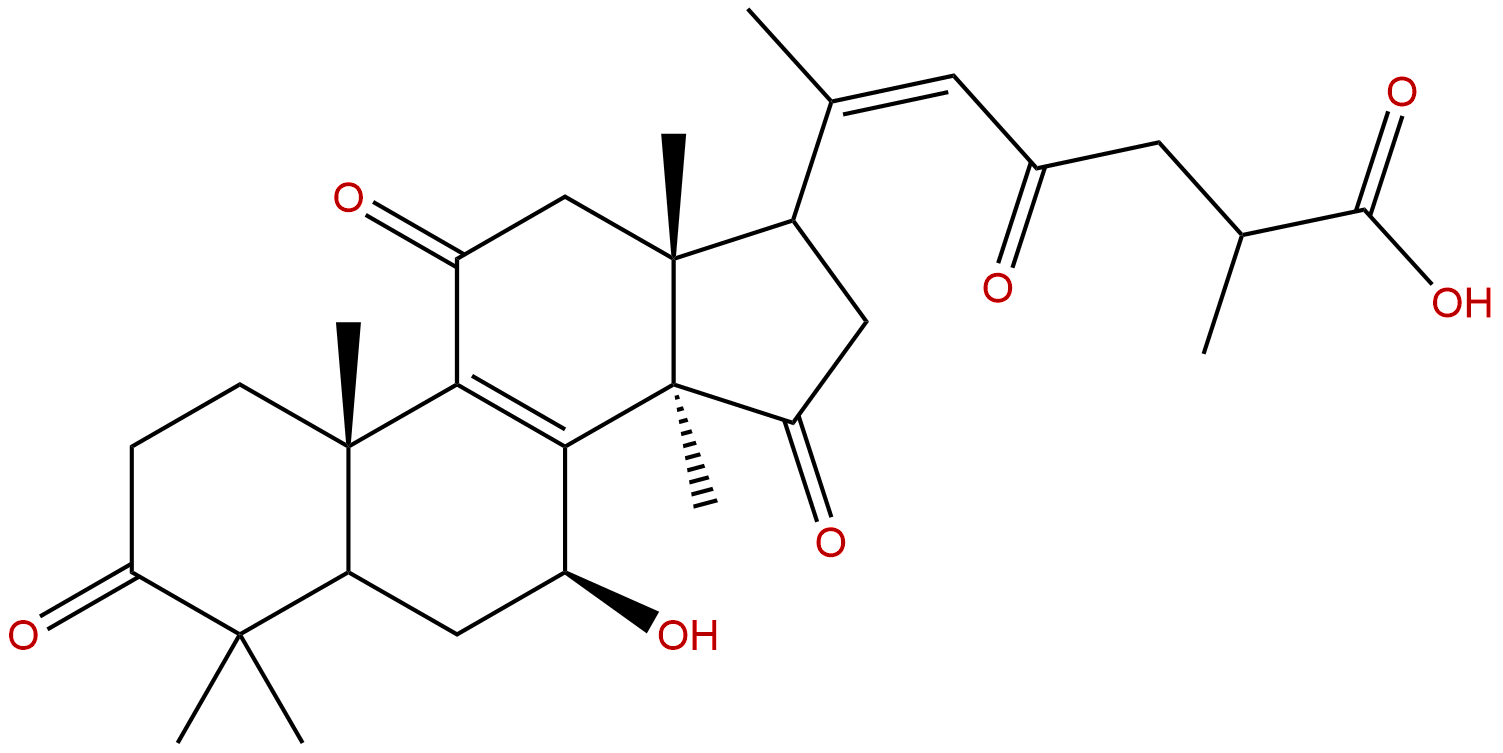


Product name: Ganoderenic acid D
Synonym name:
Catalogue No.: BP3153
Cas No.: 100665-43-8
Formula: C30H40O7
Mol Weight: 512.643
Botanical Source:
Physical Description: White cryst.
Type of Compound: Triterpenoids
Purity: 95%~99%
Analysis Method: HPLC-DAD or/and HPLC-ELSD
Identification Method: Mass, NMR
Packing: Brown vial or HDPE plastic bottle
The product could be supplied from milligrams to grams. Inquire for bulk scale.
We provide solution to improve the water-solubility of compounds, thereby facilitating the variety of activity tests and clinic uses.
For Reference Standard and R&D, Not for Human Use Directly.
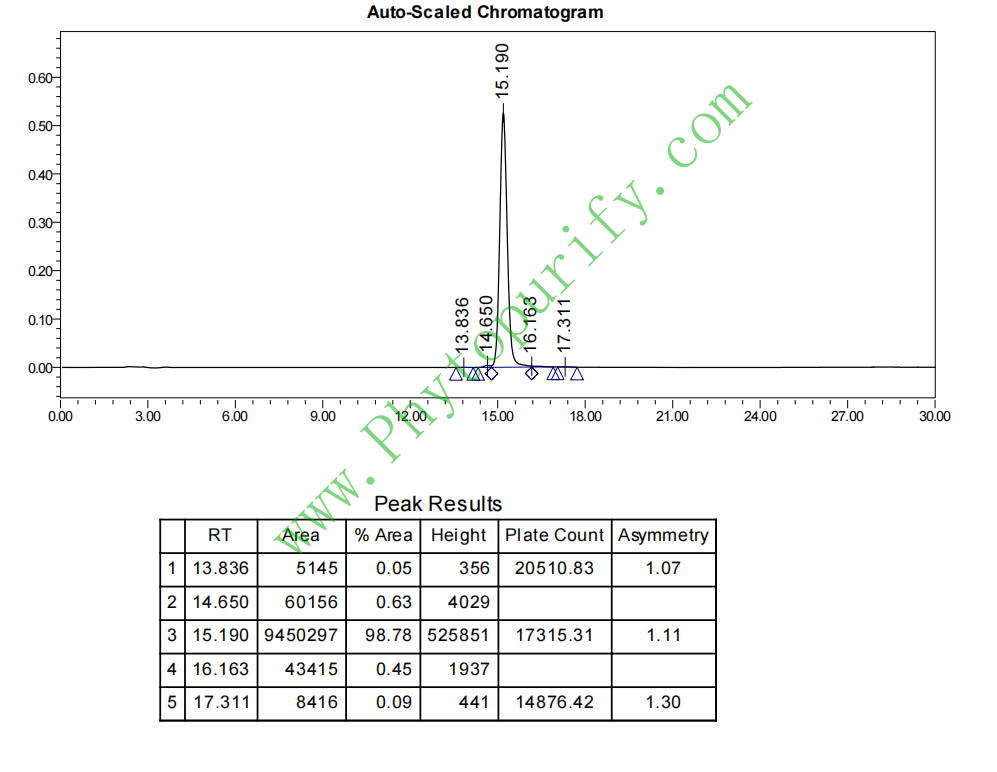
HPLC of Ganoderenic acid D
Storage conditions:Short-term storage at 2~8℃, long-term storage at -20 ~ -80℃
125.8100
2.7504
.3098
.0206
2.2487
3.2547
Low
84.5933
5.1870
No
No
Yes
No
No
No
0.0
Yes
Yes
No
Yes
Natural products, as an important treasure trove for drug discovery and development, play an irreplaceable role in the long history of human fight against diseases. Among them, the fungus Ganoderma lucidum in the family Polyporus(Ganoderma lucidum)As a treasure of traditional Chinese medicine, it has a history of more than two thousand years of application and is known as the "fairy grass". Its effects of strengthening the body and promoting longevity are widely known. Modern pharmacological research reveals that the various biological activities of Ganoderma lucidum are mainly attributed to its rich compounds such as triterpenoids, polysaccharides, sterols, etc. Ganoderma triterpenoids, especially highly oxidized lanostane triterpenoids, are one of the key active ingredients in Ganoderma for exerting anti-tumor, anti-inflammatory, and hepatoprotective effects.
Ganoderma acid D is an important member of the triterpenoid family in Ganoderma lucidum, with a CAS number of 100665-43-8. Early research has found that it has significant in vitro anti-tumor activity, which can inhibit the proliferation of various cancer cells by inducing cell cycle arrest and apoptosis. In recent years, with the continuous deepening of research, the pharmacological spectrum of ganoderic acid D has been greatly expanded, especially in the field of anti liver fibrosis, showing remarkable potential. Liver fibrosis is a pathological process characterized by excessive deposition of extracellular matrix caused by tissue repair dysfunction after chronic liver injury, and is a key link in the development of various chronic liver diseases to cirrhosis and even liver cancer. At present, there is a lack of highly effective drugs for reversing liver fibrosis in clinical practice. Therefore, it is of great scientific significance and clinical value to search for new anti fibrotic lead compounds from natural products.
This article aims to provide a systematic review of the chemical structure, plant origin, pharmacological activity, multi-target mechanism of action against liver fibrosis, pharmacological evaluation, and clinical application prospects of ganoderic acid D, in order to provide comprehensive academic references for the in-depth research and development of this compound.
Lingzhi acid D belongs to highly oxidized lanostane triterpenoids. Its molecular formula is C30H40O7 and its molecular weight is 512.6430. Its core structure is the classic lanostane tetracyclic skeleton (A/B/C/D rings), which undergoes oxidation at multiple sites such as C-3, C-7, C-11, C-15, C-23 to form functional groups such as hydroxyl, carbonyl, or carboxyl. Its typical feature is the presence of carboxyl groups (- COOH) on the side chain, making it acidic, so it is classified as a derivative of "ganoderic acid". The specific stereoconfiguration needs to be determined by spectroscopic methods such as nuclear magnetic resonance (NMR) and X-ray single crystal diffraction. These oxygen-containing functional groups and their stereoconfigurations are the material basis for their biological activity.
Based on the analysis of the parameters related to drug properties, the logarithmic partition coefficient (LogP) of ganoderic acid D in Ganoderma lucidum is 2.7504, indicating its lipophilicity but not high hydrophobicity. Its topological polar surface area (TPSA) is 125.8100 Å ², which is a relatively large value, mainly due to the presence of multiple polar groups such as hydroxyl and carboxyl groups in the molecule. These two parameters jointly affect its solubility and permeability. Its low water solubility value (0.0206 mg/mL) suggests poor solubility in water, which may be a limiting factor for its oral bioavailability. In the preliminary in vitro safety evaluation, the Ames test result was 0.0, indicating no mutagenicity in this testing system; The inhibition of hERG is' no ', indicating a low potential risk of cardiac toxicity, which is a favorable characteristic for drug development. In addition, its ability to penetrate the blood-brain barrier is predicted to be "low", which means that its main effect may be concentrated in the peripheral system, and the treatment or side effects of central nervous system related diseases need to be evaluated separately.
Lingzhi acid D mainly comes from fungi of the Ganoderma genus in the family Polyporus, including Ganoderma lucidum(Ganoderma lucidum)And Zizhi(Ganoderma sinense)As the main source. It is distributed in fruiting bodies, mycelium, and spore powder, but the content is usually low, and is significantly affected by factors such as bacterial species, cultivation conditions (such as substrate, temperature, humidity), growth stage, and harvesting time.
The extraction of ganoderic acid D from Ganoderma lucidum materials usually follows the general extraction and separation process for natural triterpenoid components. Firstly, organic solvents are used for extraction. Due to the wide polarity range of triterpenoids, methanol, ethanol, or ethanol water mixed solvents with different ratios are often used for reflux extraction or ultrasound assisted extraction to extract various triterpenoids, including ganoderic acid D, as comprehensively as possible. Subsequently, crude extract was obtained by vacuum concentration.
The crude extract has complex components and contains a large amount of impurities such as polysaccharides, pigments, and oils, which require further enrichment and purification. Common preliminary enrichment methods include: 1) liquid-liquid extraction: using the acidity of triterpenes, the crude extract is dissolved in water and then adjusted to alkaline with a base (such as sodium bicarbonate) to make the acidic triterpenes salt and dissolve in the aqueous phase, separate from non acidic components, and then acidify back to the organic phase. 2) Macroporous adsorption resin chromatography: Utilizing the adsorption characteristics of resin for triterpenoids, strong polar impurities such as polysaccharides are removed by washing with water, and then the triterpenoid enrichment sites are obtained by washing with different concentrations of ethanol.
After obtaining the triterpenoid enrichment site, a series of chromatographic separation techniques need to be used for the purification of monomeric compounds. Normal phase silica gel column chromatography (using petroleum ether ethyl acetate or chloroform methanol system gradient elution), reverse phase silica gel column chromatography (such as ODS, using methanol water or acetonitrile water system elution), and high performance liquid chromatography (HPLC, preparative or semi preparative) are often used for repeated separation and purification. By monitoring with thin layer chromatography (TLC) or high-performance liquid chromatography, and combining with mass spectrometry (MS) and nuclear magnetic resonance (NMR) for structural identification, high-purity ganoderic acid D monomer was finally obtained. Modern biotechnology such as Ganoderma lucidum cell culture and fermentation engineering also provide potential controllable pathways for targeted production of specific triterpenoid compounds, including ganoderic acid D.
The pharmacological activity research of Ganoderma lucidum acid D initially focused on its anti-tumor effect, but in recent years it has expanded to multiple fields such as liver protection, anti fibrosis, and anti-inflammatory.
Antitumor activity This is the earliest known activity of ganoderic acid D. Studies have shown that it has growth inhibitory activity on a variety of human cancer cell lines, such as HepG2, breast cancer MCF-7, lung cancer A549, and colon cancer HT-29. Its function is not simply cytotoxicity, but rather achieved by interfering with the normal life process of cancer cells. Specifically, it induces cell cycle arrest (usually blocking cells in the G0/G1 or G2/M phase, preventing them from entering the stages of DNA synthesis and mitosis), and simultaneously activates endogenous (mitochondrial pathway) and exogenous (death receptor pathway) apoptotic signaling pathways, leading to programmed cell death in cancer cells.
Anti hepatic fibrosis activity This is the most promising direction in current research on ganoderic acid D. The core of liver fibrosis is the activation and proliferation of hepatic stellate cells (HSCs). Activated HSCs transform into myofibroblast like cells, synthesizing and secreting large amounts of extracellular matrix (ECM) such as collagen (mainly type I and III). In vitro and in vivo experiments have confirmed that ganoderic acid D can significantly inhibit the activation and proliferation of HSCs, and reduce their collagen synthesis ability. In animal models of liver fibrosis induced by carbon tetrachloride (CCl4) or bile duct ligation (BDL), administration of ganoderic acid D can effectively reduce hepatic inflammatory cell infiltration, decrease collagen fiber deposition, and improve liver pathological scores, demonstrating clear anti fibrotic effects.
Anti inflammatory and antioxidant activity Chronic inflammation and oxidative stress are key factors driving liver fibrosis and various chronic diseases. Lingzhi acid D can inhibit the excessive production of pro-inflammatory cytokines (such as TNF - α, IL-1 β, IL-6) in macrophages induced by stimuli such as lipopolysaccharide (LPS). At the same time, it can enhance the defense ability of cells against oxidative stress by activating relevant pathways, upregulating the activity of antioxidant enzymes such as superoxide dismutase (SOD) and glutathione peroxidase (GSH Px), and reducing the level of lipid peroxidation products such as malondialdehyde (MDA).
Other activities Preliminary studies also suggest that ganoderic acid D may have immunomodulatory and viral replication inhibitory effects, but the relevant evidence is not yet sufficient and further exploration is needed.
The anti liver fibrosis and other pharmacological effects of Ganoderma lucidum acid D are not achieved through a single target, but involve a complex multi-target and multi pathway regulatory network. According to existing research, its key mechanism of action is closely related to the following targets/pathways:
Regulating the AMPK signaling pathway Adenosine activated protein kinase (AMPK) is a core sensor and regulator of cellular energy metabolism, and its activation has anti-inflammatory and inhibitory effects on synthetic metabolism (such as protein and lipid synthesis). Lingzhi acid D can activate AMPK (composed of subunits such as PRKAA1), thereby inhibiting downstream mammalian growth and fibrosis promoting pathways such as rapamycin target protein (mTOR). It may also affect fatty acid oxidation and mitochondrial function, and inhibit HSC activation from the perspective of energy metabolism.
Intervention of cell apoptosis and survival balance Lingzhi acid D downregulates the expression of anti apoptotic proteins such as B-cell lymphoma 2 (BCL2) and upregulates the levels of pro apoptotic proteins such as Bax, disrupting mitochondrial membrane potential and leading to the release of cytochrome C, thereby activating the Caspase cascade reaction (such as CASP3), ultimately inducing apoptosis in activated HSCs or cancer cells. This is crucial for clearing activated HSCs and reversing fibrosis.
Inhibition of TLR4/STAT3 inflammatory axis Toll like receptor 4 (TLR4) is a key receptor that recognizes endogenous injury associated molecular patterns (DAMPs) and exogenous pathogen associated molecular patterns (PAMPs). Its activation triggers the activation of transcription factors such as nuclear factor kappa B (NF - κ B) and signal transduction and transcription activator 3 (STAT3), driving the expression of a large number of pro-inflammatory and pro fibrotic genes. Lingzhi acid D can inhibit the activation of TLR4, thereby blocking the phosphorylation and nuclear translocation of STAT3, effectively suppressing liver inflammation and HSC activation.
Regulating oxidative stress response Nuclear factor E2 related factor 2 (NFE2L2, abbreviated as Nrf2) is a central regulatory factor of antioxidant response. Lingzhi acid D can promote the transfer of Nrf2 from the cytoplasm to the nucleus, bind to antioxidant response elements (ARE), initiate the transcription of a series of phase II detoxifying enzymes and antioxidant proteins such as heme oxygenase-1 (HO-1) and quinone oxidoreductase 1 (NQO1), enhance the antioxidant defense ability of cells, and alleviate oxidative stress damage to liver cells.
Affects extracellular matrix metabolism The characteristic of liver fibrosis is an imbalance between ECM synthesis and degradation. Lingzhi acid D can inhibit the expression of matrix metalloproteinase inhibitors (TIMPs) and relatively regulate the activity of matrix metalloproteinases (MMPs). Although its specific effects on MMP1 (collagenase) and MMP2 (gelatinase A) may vary in different research models, the overall trend is to promote excessive deposition of collagen degradation and restore ECM metabolic balance.
Other potential targets The research also involves targets such as protein kinase C alpha (PRKCA) and DNA helicase RECQL. Inhibition of PRKCA may be involved in regulating cell proliferation and differentiation; As a DNA repair enzyme, RECQL's interaction with ganoderic acid D may be associated with genome stability and cellular aging processes. CASP1 is a key component of inflammasomes, involved in the maturation of IL-1 β. Inhibiting CASP1 may help control inflammatory responses.
In summary, ganoderic acid D exerts anti liver fibrosis effects through synergistic effects on multiple key targets such as AMPK, BCL2, TLR4, STAT3, NFE2L2, and other pathways, including inhibiting HSC activation and proliferation, inducing activated HSC apoptosis, anti-inflammatory, antioxidant, and regulating ECM metabolism. It forms a three-dimensional pharmacological network of action.
Although ganoderic acid D has shown good pharmacological activity in vitro and animal models, its development into a clinical drug requires a systematic pharmacological evaluation.
Preliminary analysis of drug properties As mentioned earlier, its molecular weight is moderate (512.6), and the LogP value shows that it has a good membrane permeability foundation. However, its high TPSA and low water solubility are the main challenges for oral absorption. The absence of hERG inhibition and Ames mutagenicity are its early safety advantages.
Pharmacokinetic (PK) study At present, there are relatively limited reports on the pharmacokinetic studies of Ganoderma lucidum D-system, which is usually a weak link in the research of natural product monomers. Based on its physicochemical properties, it can be inferred that its lower solubility and possible first pass effect after oral administration may lead to low bioavailability. In the body, triterpenoid acid compounds often undergo extensive phase I (such as hydroxylation) and phase II (such as glucuronidation, sulfation) metabolism. Whether its metabolites are active, as well as the tissue distribution characteristics of the prototype drug and metabolites (whether they target the liver), the length of the elimination half-life, and whether there is a risk of accumulation, all need to be clarified through standardized in vitro and in vivo ADME (absorption, distribution, metabolism, excretion) studies.
Pharmaceutical Strategy To improve its bioavailability, advanced drug delivery technology may be required. For example, preparing nanocrystals, liposomes, solid dispersions, or self microemulsion delivery systems can significantly improve their solubility and dissolution rate, promoting intestinal absorption. Pre drug modification (such as esterification of carboxyl groups to enhance lipid solubility) is also a potential strategy to improve pharmacokinetic properties.
safety evaluation Before advancing to clinical practice, comprehensive toxicology studies are required, including acute toxicity, subacute/subchronic toxicity, genetic toxicity, reproductive toxicity, etc., to determine their safe dosage range and treatment window.
Lingzhi acid D, as a natural triterpenoid with multi-target anti liver fibrosis activity, has promising clinical application prospects, but also faces many challenges.
prospect:
Challenges and Prospects:
As an important bioactive triterpenoid compound in Ganoderma lucidum, ganoderic acid D has expanded from its initial anti-tumor activity research to a highly promising natural lead molecule in the field of anti liver fibrosis. It constructs a comprehensive network that inhibits hepatic stellate cell activation, promotes activated cell apoptosis, reduces inflammation and oxidative stress, and regulates extracellular matrix metabolism by cleverly intervening in multiple key signaling nodes such as AMPK, STAT3, NFE2L2, BCL2, etc., reflecting the advantages of natural product multi-target and multi pathway synergistic effects. Although there are still a series of scientific and technological challenges in its large-scale acquisition, pharmacokinetic property optimization, precise target confirmation, and clinical translation, these challenges are expected to be gradually overcome with the cross fusion and rapid development of disciplines such as natural product chemistry, pharmacology, pharmaceutical formulation, and synthetic biology. The continuous in-depth research on ganoderic acid D in Ganoderma lucidum not only helps to reveal the modern scientific connotation of its traditional efficacy, but also provides valuable candidate structures and theoretical basis for the development of new anti liver fibrosis and even anti-tumor drugs. Its future development and application value deserve continuous attention.
