Introduction/Overview
Natural products, as an important treasure trove for drug discovery, play an irreplaceable role in the history of human disease prevention and treatment. Among them, the fungus Ganoderma lucidum in the family Polyporus(Ganoderma lucidum)As a treasure of traditional Chinese medicine, it has a history of over two thousand years of application and is highly praised for its effects of "strengthening the body and promoting longevity". Modern pharmacological research has revealed that the extensive biological activities of Ganoderma lucidum, such as immune regulation, anti-tumor, hepatoprotective, anti-inflammatory, etc., are mainly attributed to its rich secondary metabolites such as triterpenoids, polysaccharides, sterols, etc. Ganoderma triterpenoids, as their characteristic active ingredients with diverse structures and significant biological activities, are currently a hot research topic.
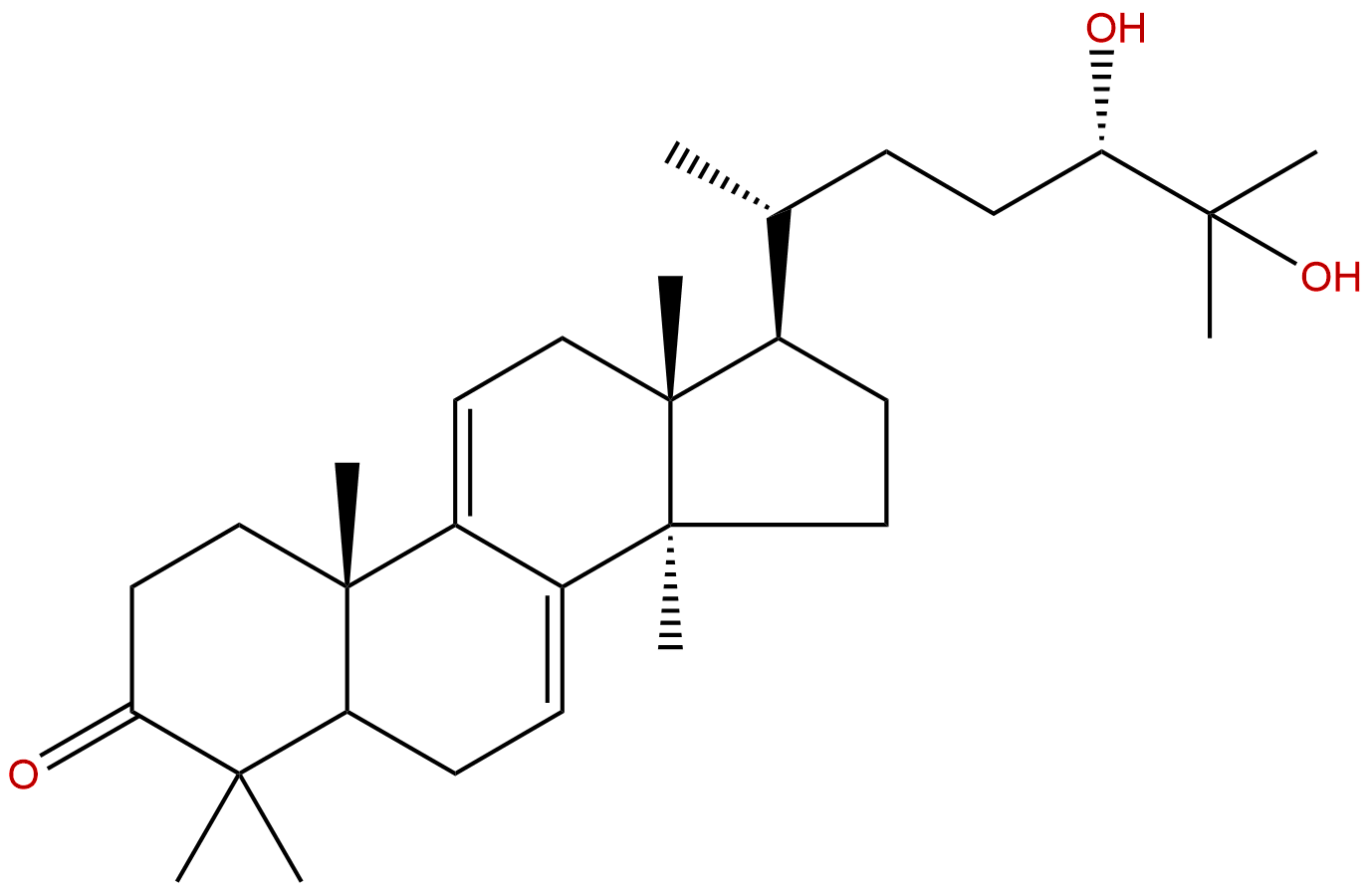
Ganodermandiol (CAS number: 107900-76-5) is a lanostane type triterpenoid compound isolated from Ganoderma lucidum. Since its discovery, research has preliminarily revealed its multifaceted pharmacological potential. Early research indicated that it is an inhibitor of melanin production, and later it was found to have a highly effective cell protective effect on liver cell damage induced by tert butyl hydroperoxide, suggesting its antioxidant and hepatoprotective value. More notably, it exhibits anti human immunodeficiency virus type 1 protease activity and strong anti complement activity. In recent years, with metabolic syndrome (MetS) and its related complications (such as obesity, insulin resistance, non-alcoholic fatty liver disease, cardiovascular disease, etc.) becoming a global health challenge, it is urgent to find multi-target, low toxicity natural intervention methods. Preliminary target prediction and analysis show that ganoderic acid ketone diol has potential interactions with multiple key regulatory targets of metabolic syndrome, such as AMPK, TLR4, NFE2L2, which opens up new directions for its in-depth exploration in the field of metabolic diseases. This article aims to provide a systematic review of the chemical properties, plant sources, pharmacological activities, mechanisms of action, medicinal properties, and application prospects of ganoderide glycol in metabolic syndrome and other diseases, in order to provide scientific basis for the in-depth development and clinical application of this compound.
Chemical structure and physicochemical properties
The molecular formula of Ganoderma lucidum ketone diol is C30H48O2, with a molecular weight of 456.7110. Its chemical structure belongs to highly oxidized lanostane type tetracyclic triterpenes, which are derivatives of ganoderic acid compounds. Its core structure consists of four steroid like rings (A, B, C, D) and a characteristic C-17 side chain. Unlike many ganoderic acids, the C-3 position of ganoderic acid ketone is a ketone group (C=O), the C-26 position is a carboxyl group (- COOH), and there are double bonds at C-24 and C-25 positions. These structural features have a decisive impact on its physicochemical properties and biological activity.
According to the pharmacological parameters calculated based on its chemical structure, the lipid water partition coefficient (LogP) of Ganoderma lucidum ketone diol is 6.1307, indicating that the compound has high lipophilicity. Its topological polar surface area (TPSA) is 57.5300 Å ², which is relatively small. The water solubility is extremely low, only 0.0018 mg/mL, which is consistent with its high LogP value, indicating poor solubility in conventional aqueous systems, and may require the use of solubilization techniques in formulation development (such as cyclodextrin inclusion, nano formulations, prodrug modification, etc.). It is worth noting that its predicted blood-brain barrier permeability is "high", mainly due to its small polar surface area and suitable lipophilicity, indicating that the compound has the potential to act on central nervous system targets, such as cannabinoid receptor 1 (CNR1) and transient receptor potential vanillic acid subtype 1 (TRPV1), which are distributed in the central nervous system. This provides the possibility for treating neuropathic pain or metabolic related central regulatory disorders. In addition, the key toxicity risk prediction shows that it has no inhibitory activity on hERG potassium channels (hERG inhibition: No), and the Ames test prediction result is 0.0 (negative), indicating that its cardiac toxicity risk and genetic toxicity risk are relatively low, and it has a good safety starting point.
Plant sources and extraction methods
Lingzhi ketone diol mainly comes from the porous fungal family Ganoderma lucidum(Ganoderma lucidum The fruiting body, mycelium, or spore powder of (Leyss. ex Fr.) Karst. There are significant differences in the composition and content of triterpenes among different varieties, origins, growth environments (such as oak cultivation or bag cultivation), growth stages, and parts (such as caps, stems, spores). Usually, the fruiting body of Ganoderma lucidum, especially the red skin part of the cap, is the main raw material for extracting triterpenoids.
Extracting ganoderic acid ketone diol from Ganoderma lucidum raw materials requires following the conventional process of natural product chemistry and optimizing for the characteristics of its triterpenoid compounds. The main steps include:
1. Preprocessing and Extraction After crushing the dried Ganoderma raw materials, organic solvents are preferred for extraction due to their high lipophilicity. Common solvents include methanol, ethanol, chloroform, ethyl acetate, or their mixed solvents. The use of techniques such as reflux extraction, ultrasound assisted extraction, or microwave-assisted extraction can improve extraction efficiency and rate.
2. Separation and enrichment After vacuum concentration, the crude extract is usually first subjected to liquid-liquid extraction (such as sequential extraction with petroleum ether, ethyl acetate, and n-butanol) for preliminary fractionation. Lingzhi ketone diol is mostly enriched in the moderately polar ethyl acetate fraction. Subsequently, column chromatography technology is used for fine separation, often using silica gel as the stationary phase and gradient elution with different ratios of petroleum ether ethyl acetate or chloroform methanol.
3. Purification and identification The components containing ganoderide glycol obtained from column chromatography fractions may require repeated column chromatography or preparative high-performance liquid chromatography (HPLC) for final purification to obtain high-purity monomeric compounds. The structural identification comprehensively utilizes modern spectroscopic techniques, including mass spectrometry (MS) to determine molecular weight, nuclear magnetic resonance hydrogen spectroscopy (¹ H NMR) and carbon spectroscopy (¹ ³ C NMR) to analyze the hydrocarbon skeleton and functional groups, and confirms them by comparing with literature data or standard samples.
In recent years, in order to obtain active ingredients from Ganoderma lucidum in a green and efficient manner, new technologies such as supercritical CO ₂ extraction and high-speed countercurrent chromatography have also been applied to the extraction and separation of triterpenoids from Ganoderma lucidum. These methods can better maintain the activity of the ingredients and reduce residual organic solvents.
Pharmacological activity research
Numerous in vitro and in vivo studies have shown that ganoderide glycol has diverse pharmacological activities, ranging from liver protection to antiviral and immune regulation, and extending to potential metabolic regulation fields.
-
Liver protective effect This is one of the earliest extensively studied activities of ganoderic acid ketone diol. In the liver cell injury model induced by tert butyl hydroperoxide (t-BHP), ganoderide glycol exhibits highly efficient cell protective effects. T-BHP is a commonly used oxidative stress inducer that can cause lipid peroxidation, mitochondrial dysfunction, and cell death. Lingzhi ketone diol can significantly improve cell survival rate, and its mechanism is believed to be related to clearing free radicals, inhibiting the production of lipid peroxidation products, and maintaining the balance of intracellular antioxidant systems (such as glutathione), reflecting its strong antioxidant stress resistance.
-
Antiviral activity Research has shown that ganoderide glycol has inhibitory activity against HIV-1 protease, with a half maximal inhibitory concentration (IC50) of 90 μ M. HIV-1 protease is the key enzyme in the process of AIDS virus replication, which is responsible for cutting the virus precursor protein and making it become a mature functional protein. Inhibiting the enzyme activity can effectively block virus maturation and proliferation. Although its activity intensity is weaker compared to some synthetic drugs, as a natural source inhibitor, it provides a valuable molecular framework for designing novel anti HIV lead compounds.
-
Anti complement activity The complement system is an important component of innate immunity, but its excessive activation can lead to tissue damage and is associated with various inflammatory diseases, ischemia-reperfusion injury, and more. Lingzhi ketone diol exhibits strong anti complement activity, with an IC50 value of 41.7 μ M for the classical complement pathway, indicating significant activity. This suggests that it may have potential application value in the treatment of complement mediated diseases by inhibiting key steps of complement activation, such as the formation of C3 convertase or the assembly of membrane attack complexes.
-
Potential anti metabolic syndrome activity (based on target association)Although there are limited direct research reports on the use of ganoderic acid ketone in metabolic syndrome models, the analysis of its related targets strongly suggests its enormous potential in this field. The core pathological processes of metabolic syndrome include insulin resistance, chronic low-grade inflammation, oxidative stress, and lipid metabolism disorders. The targets associated with the prediction of ganoderic acid ketone diol, such as AMPK (energy metabolism regulator), NFE2L2 (key transcription factor for antioxidant stress), TLR4 (inflammatory signaling hub), PTPN1 (negative regulator of insulin signaling), etc., are all core regulators of these pathological processes. Therefore, it is reasonable to speculate that ganoderide glycol may improve insulin sensitivity, alleviate inflammation and oxidative stress, regulate lipid metabolism, and thus combat metabolic syndrome through multi-target synergistic effects.
Mechanism of action and molecular targets
The multiple pharmacological activities of Ganoderma lucidum ketone diol stem from its interactions with various biomolecules. Based on existing research and target prediction, its mechanism of action can revolve around the following key targets:
-
AMPK signaling pathway AMP activated protein kinase (AMPK) is a "sensor" and "regulatory center" for cellular energy metabolism. Activation of AMPK can promote glucose uptake, fatty acid oxidation, inhibit cholesterol and fatty acid synthesis, and improve mitochondrial function. Lingzhi ketone diol may act as a conformational activator of AMPK or activate AMPK by affecting its upstream kinase (such as LKB1), thereby exerting effects on improving insulin resistance, regulating lipid metabolism, and combating fatty liver.
-
NFE2L2/antioxidant response element pathway Nuclear factor E2 related factor 2 (NFE2L2/Nrf2) is a core transcription factor that regulates the cellular antioxidant defense system. Under oxidative stress, Nrf2 translocates to the nucleus, initiating the expression of a series of antioxidant enzymes and phase II detoxifying enzymes (such as HO-1, NQO1, GCLC). The strong antioxidant and hepatoprotective effects of Ganoderma lucidum ketone diol are likely achieved by activating the Nrf2 pathway, enhancing the cell's resistance to oxidative damage.
-
TLR4/NF - κ B inflammatory pathway Toll like receptor 4 (TLR4) is an important pattern recognition receptor that recognizes endogenous danger signals (such as free fatty acids) and exogenous pathogens. Its activation triggers inflammatory signaling pathways such as nuclear factor kappa B (NF - κ B), leading to the massive release of pro-inflammatory factors such as tumor necrosis factor alpha (TNF - α) and interleukin-6 (IL-6). Lingzhi ketodiol may alleviate metabolic inflammation by directly or indirectly inhibiting the activation of TLR4, blocking downstream NF - κ B signaling transduction, which is a key link in improving insulin resistance.
-
PTPN1 (protein tyrosine phosphatase 1B)PTPN1 is a key negative regulator of tyrosine phosphorylation of insulin receptors and their substrates, and its overexpression weakens insulin signaling. Inhibition of PTPN1 activity is an important strategy for the treatment of type 2 diabetes. Lingzhi ketone diol may act as an inhibitor of PTPN1, enhancing the sensitivity of the insulin signaling pathway.
-
Lipoxygenases (ALOX5, ALOX15) and inflammatory mediators 5-Lipoxygenase (ALOX5) and 15 Lipoxygenase (ALOX15) are key enzymes in the arachidonic acid metabolism pathway, catalyzing the production of potent inflammatory mediators such as leukotrienes and lipoxygenins, respectively. Inhibiting the activity of these enzymes can effectively regulate inflammatory responses. Lingzhi ketone diol may reduce the production of pro-inflammatory mediators by inhibiting ALOX5/15.
-
Other potential targets Its potential effects on TRPV1 (involved in pain, inflammation, and energy metabolism) and CNR1 (cannabinoid receptor 1, closely related to appetite, energy balance, and lipid metabolism) suggest that it may play a role in the cross regulation of neural immune metabolic networks. Its effect on SERPINE1 (plasminogen activator inhibitor-1, associated with thrombosis and cardiovascular risk) may be associated with improving cardiovascular complications of metabolic syndrome.
In summary, the mechanism of action of Ganoderma lucidum ketone diol exhibits distinct "multi-target, multi pathway" characteristics, especially focusing on regulating the "malignant triangle" of metabolism inflammation oxidative stress, which provides unique advantages for its treatment of complex diseases such as metabolic syndrome.
Evaluation of drug properties and pharmacokinetics
Despite the attractive biological activity exhibited by ganoderic acid ketone diols, the development of their medicinal properties still faces challenges, mainly due to their inherent physicochemical properties.
-
Prediction and Challenges of Absorption, Distribution, Metabolism, and Excretion (ADME):
- absorb The extremely high lipophilicity (LogP>6) and extremely low water solubility are the main bottlenecks limiting its oral bioavailability. Although lipophilicity is beneficial for passive transmembrane absorption, its low water solubility can lead to extremely poor solubility and dissolution rate in gastrointestinal fluids, becoming the rate limiting step in absorption.
- distribution The predicted high blood-brain barrier permeability is its advantage, which is beneficial for the development of central target drugs. High lipophilicity also means that it may be widely distributed in adipose tissue, resulting in a large apparent distribution volume, but it may also pose a risk of accumulation.
- Metabolism and excretion As a triterpenoid compound, it is likely to be mainly metabolized through the liver cytochrome P450 enzyme system, undergoing reactions such as hydroxylation, oxidation, and demethylation. Its carboxyl group may also bind with glucuronic acid to form a more water-soluble complex, which can be excreted through bile or urine. The specific metabolites, major metabolic enzyme subtypes, and excretion pathways need to be elucidated through experiments.
-
Optimization strategy for drug properties:
- Formulation strategy Advanced drug delivery systems can be developed to address its low solubility, such as solid dispersions, liposomes, nanocrystals, self microemulsion delivery systems, etc., to improve its dissolution and bioavailability.
- Structural modification By rational drug chemical modification, the carboxyl, ketone or double bond groups can be modified to prepare more water-soluble prodrugs or derivatives (such as salt formation, esterification, introduction of hydrophilic groups), which can be hydrolyzed or converted back to the original drug in vivo to improve its pharmaceutical properties.
- Pharmacokinetic study It is urgent to conduct systematic preclinical pharmacokinetic studies to clarify its absolute bioavailability, half-life, tissue distribution characteristics, main metabolic pathways, and excretion kinetics in different animal models, providing a basis for dosage form design and administration plan formulation.
-
Preliminary Safety Assessment The existing computational predictions indicate that there is no risk of hERG inhibition and Ames mutagenicity, which is a positive signal. However, a complete preclinical safety evaluation is still needed, including acute toxicity, subchronic toxicity, reproductive toxicity, etc., to comprehensively assess its safety window.
Clinical application prospects and prospects
The multi-target pharmacological properties of Ganoderma lucidum ketone diol, especially its potential role in metabolic syndrome related pathways, provide a broad blueprint for its clinical application.
-
Potential therapeutic areas:
- Non alcoholic fatty liver disease/metabolic associated fatty liver disease Combined with its powerful hepatoprotective, antioxidant, anti-inflammatory, and lipid metabolism regulating effects (via AMPK), ganoderide glycol is expected to become a candidate drug for the treatment of NAFLD/MAFLD, playing a role in reducing liver steatosis, preventing inflammation, and fibrosis in multiple aspects.
- Type 2 diabetes and insulin resistance: By targeting PTPN1, AMPK, TLR4, etc., it can improve insulin signal transduction and reduce insulin resistance, which may be a natural choice for auxiliary hypoglycemic or pre diabetes intervention.
- Atherosclerosis and cardiovascular disease: Its anti-inflammatory (inhibiting TLR4/NF - κ B), antioxidant (activating Nrf2), potential regulation of blood lipids (through AMPK) and possible effects on SERPINE1 have positive significance in delaying the formation of atherosclerotic plaque and stabilizing plaque.
- Neurodegenerative diseases and neuropathic pain Its high BBB permeability and potential effects on targets such as TRPV1 and CNR1 provide clues for exploring its applications in Alzheimer's disease (related to oxidative stress and inflammation), neuropathic pain, and other fields.
- Complement mediated diseases Such as paroxysmal nocturnal hemoglobinuria and age-related macular degeneration, their potent anti complement activity deserves further exploration.
-
Research and Development Challenges and Future Directions:
- Mechanism deep validation Currently, most target associations are based on prediction or indirect evidence, and there is an urgent need to use biochemical and cell biology methods such as molecular docking, surface plasmon resonance, gene knockout/knockdown, and reporter gene experiments to directly verify the interaction and functional effects of ganoderic acid ketone diol with the aforementioned key targets.
- Confirmation of in vivo pharmacodynamics It is necessary to systematically evaluate the improvement effect of ganoderide glycol on body weight, blood glucose, blood lipids, insulin sensitivity, liver fat content, inflammatory markers, etc. in mature metabolic syndrome animal models (such as high-fat diet induced obese mice, db/db mice, Zucker obese rats, etc.), and clarify its effective dosage.
- Overcoming the bottleneck of traditional Chinese medicine As mentioned earlier, its solubility and bioavailability are the core obstacles in translational research. Future research should prioritize the development of formulations or structural optimization to obtain candidate compounds with exploitability.
- Explore synergies As a natural product, ganoderic acid ketone diol may have a synergistic effect with ganoderic polysaccharides or other traditional Chinese medicine ingredients. Studying its role in the compound is in line with the therapeutic concept of holistic traditional Chinese medicine.
Conclusion
Lingzhi ketone diol, as an important lanostane type triterpenoid monomer in Ganoderma lucidum, exhibits multiple biological activities including liver protection, antiviral, anti complement, and potential anti metabolic syndrome due to its unique chemical structure. Its mechanism of action exhibits multi-target regulatory features targeting the metabolic inflammatory oxidative stress network, particularly its potential association with core targets such as AMPK, Nrf2, TLR4, PTPN1, making it uniquely attractive in addressing the global public health challenge of metabolic syndrome. However, its extremely low water solubility and incompletely elucidated pharmacokinetic properties are the main challenges towards clinical application. Future research should focus on improving its drug properties through modern medicinal chemistry and pharmacology methods, and using systems biology and precision pharmacology methods to deeply reveal its in vivo mechanisms and networks of action. With the advancement of these studies, ganoderic acid ketone diol is expected to develop from a potential natural active molecule into an innovative drug lead compound or health product functional factor for treating metabolic diseases and related complications, continuing and enhancing the modern scientific value of ganoderic acid, a traditional medicinal and edible treasure.