Tirotundin: a natural sesquiterpene lactone with anti-inflammatory and anti-tumor potential
1. Overview
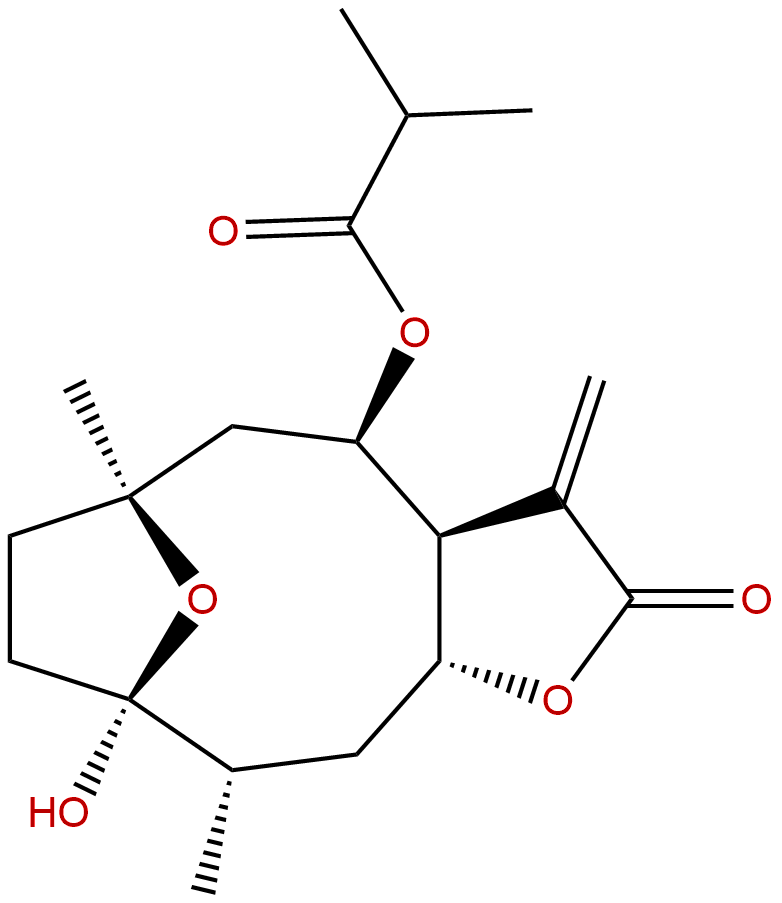
Tirotundin D, also known as Tagitinin D, is a compound derived from the Asteraceae plant Tirotundin(Tithonia diversifolia)Natural products of sesquiterpene lactones isolated from the middle. Its CAS number is 56377-67-4, molecular formula is C19H28O6, and molecular weight is 352.4270 g/mol. Since its discovery, this compound has attracted much attention in the fields of natural product pharmacy and medicinal chemistry research due to its significant biological activity. Existing studies have preliminarily revealed that stemnesin D is not only an effective anti-inflammatory agent, which can inhibit the activation of nuclear transcription factor - κ B (NF - κ B), thereby reducing the synthesis of inflammatory mediators (such as cytokines and chemokines), but also has been identified as a dual agonist of peroxisome proliferator activated receptor α/γ (PPAR α/γ), which plays a potential anti diabetes role through the PPAR γ pathway. More notably, its targets involve multiple key proteins closely related to cell cycle regulation and apoptosis, such as TP53, CASP3, MYC, BAX, and CDKN1A, strongly suggesting its broad research prospects in the field of anti-tumor. This article will provide a systematic professional popularization of this promising natural compound from the aspects of its chemical structure, plant origin, pharmacological mechanism, medicinal evaluation, and research prospects.
2. Chemical structure and physicochemical properties
The chemical structure of Chrysanthemum morifolium D belongs to the sesquiterpene lactone class, and its SMILES string is: C=C1C (=O) O [C @ @ H] 2C C@H[C@]3(O)CCC@(CC@@H[C@@H]12)O3。 This string clearly indicates that its molecular skeleton contains an alpha, beta unsaturated lactone ring, multiple chiral centers, and an acetoxy group, which are important material foundations for its biological activity. Its three-dimensional configuration is clarified by the "@" and "@ @" symbols in SMILES, indicating that it is a complex molecule with a specific three-dimensional spatial configuration.
According to the analysis of drug parameters, its molecular weight (MW) is 352.43 g/mol, which meets the requirement of "molecular weight less than 500" in Lipinski's five rules. The calculated logarithm of the lipid water partition coefficient (LogP) is 1.80, and the LogD (at a specific pH) is also 1.80, indicating that the compound has moderate lipophilicity, which is beneficial for penetrating cell membranes and avoiding metabolic and distribution problems caused by high lipid solubility. The topological polar surface area (TPSA) is 82.06 Å ², which is lower than the commonly believed limit of 140 Å ², indicating that it may have good membrane permeability. The water solubility value is 0.1763 (usually measured in mg/mL or mol/L, although the database is not clear here, the value is relatively low), indicating that it belongs to a poorly soluble compound, which is a key issue that needs to be addressed in subsequent formulation development.
The Caco-2 cell permeability (Peff) value is 3.34, and this model is commonly used to predict the absorption of drugs in the human gut. A higher value usually indicates good oral absorption potential. The blood-brain barrier (BBB) penetrability is predicted to be "high", which means that resveratrol D may act on targets or diseases related to the central nervous system, but potential neurotoxic risks should also be monitored. The plasma protein binding rate (PPB) is about 60.34%, which is at a moderate level, indicating that a portion of it exists in free form in the blood, which is beneficial for exerting pharmacological effects.
3. Plant sources and traditional applications
The plant source of D in Round leaved Chrysanthemum is Chrysanthemum morifolium(Tithonia diversifolia)Commonly known as Mexican sunflowers. This is a Asteraceae plant native to Central America and Mexico, widely distributed in many tropical and subtropical regions around the world, including Africa and Asia, due to its strong adaptability and reproductive ability. In the traditional medical system, especially in its place of origin and some parts of Africa, the leaves, flowers, and roots of Chrysanthemum morifolium are widely used to treat various diseases.
Traditional applications mainly include: treatment of malaria, fever, liver disease, diabetes, inflammatory diseases (such as arthritis), gastrointestinal tract infection and skin infection. Its decoction or extract is often used as an antipyretic, antimalarial, and anthelmintic. These rich folk medicinal experiences provide valuable clues for modern scientific research, prompting researchers to isolate and identify bioactive chemical components from the plant. Round leaved swollen stem chrysanthemum extract D is one of the many active sesquiterpene lactones discovered in the chemical defense system of this plant. The discovery of its anti-inflammatory activity is highly consistent with the traditional use of plants for the treatment of inflammatory diseases, reflecting the successful connection from traditional knowledge to modern drug discovery.
4. Pharmacological activity and mechanism of action
The pharmacological activity research of Chrysanthemum morifolium D mainly focuses on anti-inflammatory and anti-tumor aspects, and its mechanism of action involves multiple signaling pathways and key targets.
4.1 Anti inflammatory activity and NF - κ B pathway inhibition
The existing description clearly states that Quercetin D is an effective anti-inflammatory agent, with its core mechanism being the inhibition of NF - κ B activation. NF - κ B is a crucial transcription factor in cells, regulating the expression of a large number of genes related to inflammation, immune response, cell survival, and proliferation. In the resting state, NF - κ B binds to its inhibitory protein I κ B and exists in the cytoplasm. When cells are stimulated by inflammatory factors such as TNF - α, IL-1 β, bacterial lipopolysaccharides (LPS), or oxidative stress, I κ B is phosphorylated and degraded, and NF - κ B is released and transported into the nucleus, initiating gene transcription of downstream inflammatory mediators such as TNF - α, IL-6, IL-1 β, COX-2, iNOS, etc. Round leaved swollen stem chrysanthemum extract D inhibits this activation process and blocks the cascade amplification of inflammatory response from upstream, effectively reducing the synthesis of pro-inflammatory cytokines and chemokines. This inhibitory effect on the NF - κ B pathway makes it potentially valuable in the treatment of chronic inflammatory diseases such as rheumatoid arthritis, inflammatory bowel disease, and asthma.
4.2 PPAR α/γ dual activation and anti diabetes potential
It is mentioned in the English description that stemnesin D is a dual agonist of PPAR α and PPAR γ, and plays an anti diabetes effect through PPAR γ pathway. PPARs (peroxisome proliferator activated receptors) are a class of nuclear receptors that play a central role in regulating glucose metabolism, lipid metabolism, and energy balance. PPAR γ agonists (such as thiazolidinedione drugs) are classic insulin sensitizers that can improve peripheral tissue sensitivity to insulin and lower blood sugar. PPAR α agonists (such as beta drugs) mainly regulate lipid metabolism and reduce triglycerides. Compounds with dual agonistic activity may simultaneously improve the disorder of glucose and lipid metabolism, and provide a more comprehensive treatment strategy for type 2 diabetes and its complications (such as diabetes nephropathy and atherosclerosis). This characteristic of stemnesin D provides an important basis for its development of new anti diabetes drugs from natural products.
4.3 Antitumor activity and multi-target mechanism of action
The target information provided by the database (TP53, CASP3, MYC, BAX, CDKN1A) clearly outlines the potential anti-tumor effect network of Echinococcin D. These targets do not exist in isolation, but form a sophisticated network that regulates the cell cycle, DNA damage repair, and apoptosis:
* TP53(p53)The famous "genome guardian" is a tumor suppressor protein. Under stress conditions such as DNA damage and oncogene activation, p53 is activated, which can induce cell cycle arrest (to buy time for DNA repair) or initiate apoptosis programs (to clear irreparable damaged cells). The action of Chrysanthemum D on p53 may indicate that it can activate or stabilize the function of p53, thereby inhibiting tumor cell growth or inducing its death.
* CASP3(Caspase-3)It is a key protease in the execution stage of cell apoptosis, known as the "death protease". Once activated by upstream signals such as the mitochondrial apoptosis pathway, Caspase-3 cleaves various cytoskeletal and nuclear proteins, leading to characteristic morphological changes in cell apoptosis. Targeting CASP3 suggests that the compound may directly promote the apoptosis process of tumor cells.
* BAX It is a pro apoptotic protein in the Bcl-2 family. Under the stimulation of apoptotic signals, BAX will transfer to the outer membrane of mitochondria, forming pores, leading to the loss of mitochondrial membrane potential and the release of cytochrome C, thereby activating the Caspase cascade reaction. The effect of resveratrol D on BAX may be to upregulate its expression or promote its activation, thereby initiating the mitochondrial apoptosis pathway.
* MYC: is a proto oncogene whose abnormally high expression is closely related to the occurrence, development, invasion, and poor prognosis of various tumors. MYC promotes cell proliferation, metabolic reprogramming, and inhibits differentiation. Inhibiting the activity or expression of MYC is an important anti-cancer strategy. Round leaved swollen stem chrysanthemum D targets MYC and may inhibit abnormal proliferation of tumor cells by downregulating its expression.
* CDKN1A(p21)It is a cyclin dependent kinase inhibitor (CKI) that is activated by p53 transcription. P21 blocks cells in the G1 phase by inhibiting the activity of the cyclin CDK complex, preventing DNA damaged cells from entering the S phase for replication. This target works synergistically with p53 activation to achieve cell cycle checkpoint function.
In summary, the compound D in the swollen stem of round leaves may be obtained through Activation of p53/p21 axis induces cell cycle arrest At the same time Upregulation of BAX, activation of Caspase-3, and possible inhibition of MYC Thus Synergistic triggering of apoptosis in tumor cells This multi-target and multi pathway mode of action makes it possible to overcome the disadvantage of single target drugs easily developing resistance and demonstrate unique advantages in the development of anti-tumor drugs.
5. Evaluation of drug properties
Based on the provided pharmacological parameters, we can conduct a preliminary evaluation of the pharmacological potential of Quercus erinaceus D.
5.1 Lipinski Five Rule Compliance Analysis(Used to evaluate the pharmacological properties of orally active small molecules):
1. Molecular weight (MW)<500:352.43,Comply with。
2. LogP < 5:1.80,Comply with。
3. The number of hydrogen bond donors (HBDs) is less than 5: According to the molecular formula C19H28O6, oxygen atoms are mostly ether bonds, ester groups, or carbonyl groups. It is speculated that the number of HBDs (such as - OH) is relatively small and should be considered Comply with。
4. The number of hydrogen bond acceptors (HBAs) is less than 10: there are 6 oxygen atoms in the molecule that can serve as HBAs, with a total of 6,Comply with。
5. Number of rotatable keys: moderate, usually also Comply with。
In summary, the compound D from Scutellaria lobata fully complies with Lipinski's five rules, indicating its good oral absorption potential.
5.2 Absorption, distribution, metabolism, and excretion (ADME) characteristics:
* absorb Moderate LogP (1.80), low TPSA (82.06 Å ²), and high Caco-2 permeability (Peff 3.34) strongly support its excellent intestinal absorption and membrane permeability.
* distribution A higher BBB penetration prediction suggests its ability to enter the central nervous system, which may be advantageous for treating central nervous system related diseases such as neuroinflammation and brain tumors, but it also needs to be given special attention in safety evaluations. A moderate plasma protein binding rate (~60%) is beneficial for tissue distribution and drug efficacy.
* Metabolism and toxicity The Ames test result is 0.0 (usually indicating no mutagenicity), hERG inhibition is "no" (indicating low risk of cardiac toxicity), skin and respiratory sensitization is "no", and phototoxicity is "no", all of which are positive signals. However, the database shows that it has "chromosomal aberration" activity, which is an important genetic toxicity risk signal that needs to be confirmed and evaluated through more comprehensive experiments (such as in vitro micronucleus test, in vivo chromosomal aberration test) in subsequent research. In addition, serological indicators suggest that it has an impact on serum alkaline phosphatase (Ser_LK), aspartate aminotransferase (Ser_ST), and alanine aminotransferase (Ser_LT), which may indicate potential liver cell damage or liver function effects and are toxicity endpoints that need to be closely monitored in drug development.
5.3 Main Challenges:
1. Poor water solubility The value of 0.1763 indicates low water solubility, which may affect the development and in vivo bioavailability of the formulation. Improvements need to be made through formulation techniques such as salt screening, solid dispersion, nanocrystals, liposomes, etc.
2. Potential genetic toxicity and hepatotoxicity The warning of "chromosomal aberration" and changes in serum enzymes are the main obstacles to its clinical development, and it is necessary to clarify its risk level and safety window through in-depth preclinical safety pharmacology and toxicology research.
6. Research Status and Application Prospects
At present, research on resveratrol D in round leaved swollen stem is still in the preclinical stage. The existing literature mainly focuses on its isolation and identification, preliminary in vitro anti-inflammatory and anti-tumor activity screening, and exploration of some mechanisms of action. Its activity as PPAR α/γ dual agonist provides a new natural lead compound for the research and development of new drugs for metabolic diseases (such as type 2 diabetes, non-alcoholic fatty liver disease). And its anti-inflammatory and anti-tumor potential demonstrated by inhibiting NF - κ B and regulating multiple targets such as p53 and Caspase has attracted attention in the fields of oncology and immunology.
Future research directions may focus on the following areas:
1. Deepening the mechanism of action It is necessary to use techniques such as gene knockout/knockdown, reporter gene system, proteomics, etc. to more accurately elucidate their specific mode of action on targets such as TP53 and MYC (whether they directly bind or indirectly regulate), and to draw a more complete signal pathway network diagram.
2. Structure Activity Relationship (SAR) Study Using it as the parent nucleus, systematic chemical modification is carried out to synthesize a series of derivatives or analogues, aiming to optimize their activity, improve selectivity, enhance water solubility, and minimize potential genetic and liver toxicity.
3. Pharmacodynamic validation in vivo Evaluate the in vivo efficacy and dose-response relationship in reliable animal models of inflammation (such as LPS induced sepsis models, collagen induced arthritis models) and tumors (such as transplant tumor models).
4. Comprehensive preclinical safety evaluation This is the key to determining whether it can enter clinical trials. A complete set of studies, including genetic toxicity, acute toxicity, repeated administration toxicity (with a focus on liver), pharmacokinetics, and toxicokinetics, must be systematically completed in accordance with international standards such as ICH guidelines.
5. Formulation development Develop advanced formulations suitable for oral or injection administration to address the issue of low water solubility, in order to improve bioavailability and therapeutic efficacy.
In summary, as a natural product with a unique structure and multi-target effects, the compound D from Chrysanthemum morifolium has shown remarkable potential in anti-inflammatory, anti metabolic disease, and anti-tumor fields. Although it still faces challenges such as solubility and potential toxicity on the path of drug development, its basic characteristics that comply with the rules of generic drugs provide a good starting point for its optimization. With further in-depth systematic research, it is expected to develop into a modern innovative drug derived from traditional medicinal plants, or provide valuable chemical templates for designing and synthesizing new generation multi-target therapeutic drugs.