| Catalog No | Package | Original Price | Price | Inventory | Quantity | Operating |
|---|---|---|---|---|---|---|
| BP2265-2mg | 2mg | $650.00 | Sign in |
|


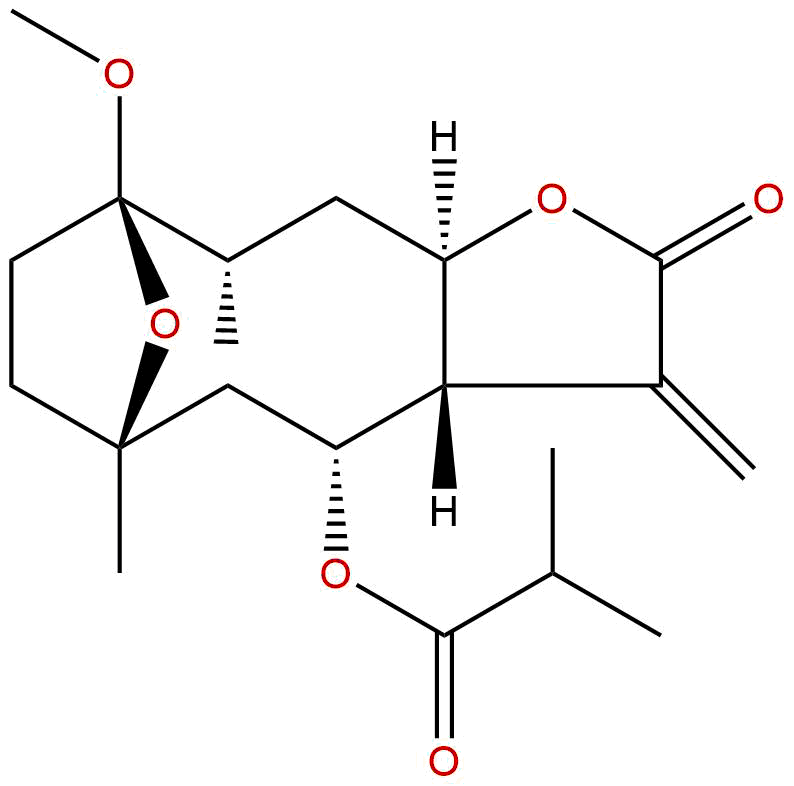
Product name: Tirotundin 3-O-methyl ether
Synonym name:
Catalogue No.: BP2265
Cas No.: 1454840-36-8
Formula: C20H30O6
Mol Weight: 366.454
Botanical Source: Tithonia diversifolia A.Gray
Type of Compound:
Purity: 95%~99%
Analysis Method: HPLC-DAD or/and HPLC-ELSD
Identification Method: Mass, NMR
Packing: Brown vial or HDPE plastic bottle
Storage: Store in a well closed container, protected from air and light. Put into refrigerate or freeze for long term storage.
Whenever possible, you should prepare and use solutions on the same day. However, if you need to make up stock solutions in advance, we recommend that you store the solution as aliquots in tightly sealed vials at -20℃. Generally, these will be useable for up to two weeks.
The product could be supplied from milligrams to grams
Inquire for bulk scale.
For Reference Standard and R&D, Not for Human Use Directly.
Storage conditions:Short-term storage at 2~8℃, long-term storage at -20 ~ -80℃
71.0600
2.4554
2.4554
.0844
4.6747
4.6604
High
63.2871
5.9665
No
No
No
No
Yes
No
0.0
Yes
No
Yes
Yes
Natural products, as an important source of drug discovery, play an irreplaceable role in the long history of human fight against diseases. Especially the sesquiterpene lactones derived from Asteraceae plants have always been a hot topic in medicinal chemistry and pharmacology research due to their structural diversity and significant biological activity. Scutellaria genus(Tithonia)Plants, especially Mexican sunflowers(Tithonia diversifolia)It is widely used in traditional medicine to treat various inflammatory diseases and infections. The Tagitinin series compounds isolated from this genus of plants are a class of sesquiterpene lactones with an eucalyptus skeleton. Tagitinin D and its derivatives have attracted much attention for their outstanding anti-inflammatory and anti-tumor activities.
Tirotundin 3-O-methyl ether, also commonly referred to as Tagitinin D, is a natural sesquiterpene lactone isolated from plants of the genus Tirotundin. Its chemical structure is characterized by a highly oxidized eucalyptol type core and contains an alpha, beta unsaturated gamma lactone ring, which is a common pharmacophore of many bioactive sesquiterpene lactones. In recent years, a large number of studies have revealed that this compound has great potential in regulating key signaling pathways in inflammation and tumor development. Especially, it has been proven to be an effective anti-inflammatory agent, and its mechanism of action is closely related to the potent inhibition of nuclear factor kappa B (NF - κ B) activation. NF - κ B is a core transcription factor that regulates inflammatory response, cell proliferation, apoptosis, and immune response. Its abnormal activation is closely related to the occurrence and development of various chronic inflammatory diseases and cancers. Therefore, targeting the NF - κ B signaling pathway has become an important strategy for the development of anti-inflammatory and anti-tumor drugs.
In addition to its anti-inflammatory activity, stemnesin D-3-methyl ether has also shown remarkable prospects in the field of anti-tumor, especially in the study of breast cancer. Breast cancer is the highest incidence of malignant tumors among women in the world. Its pathogenesis is complex, involving the imbalance of multiple signal pathways and the abnormal expression of key proteins. Research shows that this compound can exert its anti-tumor effect by regulating multiple molecular targets closely related to the occurrence, development, drug resistance and metastasis of breast cancer, including AMPK, MCL1, BCL2, NOTCH1, STAT3, ESR2, etc. These findings not only deepen our understanding of the anti-tumor mechanism of natural products, but also provide lead compounds for the development of new, low toxic and efficient anti breast cancer drugs.
This article aims to provide a systematic professional review of D-3-methylether, a compound used in the production of Chrysanthemum morifolium. We will start from its chemical structure and physicochemical properties, trace its plant origin and extraction methods, deeply explore its pharmacological activities such as anti-inflammatory and anti-tumor effects, elaborate on its mechanism of action and molecular targets, and evaluate its pharmacokinetic properties based on drug parameters. Finally, we will look forward to its application prospects and challenges in clinical translation, in order to provide comprehensive and in-depth references for the subsequent research and development of this natural product.
The chemical structure of D-3-methylether from Chrysanthemum morifolium belongs to the eudemane type sesquiterpene lactone. Its core skeleton is a bicyclic system composed of 15 carbon atoms, formed by the cis or trans fusion of a six membered ring (ring A) and a six membered ring (ring B), with an alpha, beta unsaturated gamma lactone ring connected between the C-6 and C-7 positions of ring B. The specific structural features of this compound include the presence of oxygen-containing functional groups such as hydroxyl or methoxy at the C-1, C-3, and C-4 positions, with the C-3 position being methoxy (- OCH ∝), which is also the origin of its name "3-methylether". The C-10 position is usually connected to a methyl group, while the methylene group (=CH ₂) at the C-11 position is conjugated with the carbonyl group of the lactone ring to form the α - methylene - γ - lactone structural unit. This α - methylene - γ - lactone structure is a key pharmacophore for the biological activity of sesquiterpene lactones. As a Michael addition receptor, it can covalently bind to the thiol groups on protein cysteine residues, thereby regulating the activity of various signaling proteins.
From the perspective of physical and chemical properties, the molecular formula of D-3-methylether in Cymbidium grandiflorum is C ₁₇ H ₂₂ O ₆, with a molecular weight of 366.4540 g/mol. The LogP of its lipid water partition coefficient is 2.4554, indicating that the compound has moderate lipophilicity, which facilitates its penetration of the cell membrane and interaction with intracellular targets. The polar surface area (TPSA) is 71.0600 Å ², indicating that the molecule has a certain degree of polarity but is still within an acceptable range, which facilitates its oral absorption and binding to target proteins. The water solubility data is 0.0844 mg/mL, which belongs to the category of insoluble in water, which may pose challenges to its formulation development and in vivo bioavailability. It is worth noting that the blood-brain barrier (BBB) penetration of this compound is predicted to be "high", which means it may enter the central nervous system, providing possibilities for its application in the treatment of brain diseases such as brain tumors or neuroinflammation. However, it may also bring central nervous system related toxic side effects that need to be addressed in subsequent research. In addition, hERG inhibition was predicted as' no ', indicating a lower risk of causing QT interval prolongation and arrhythmia in the heart; The Ames test result is 0.0, indicating that it did not show significant mutagenicity in the in vitro bacterial recovery mutation experiment, and the preliminary safety is good.
D-3-methylether from Asteraceae is mainly derived from Asteraceae, the genus Asteraceae(Tithonia)Plants. This genus of plants is native to Central America and Mexico, with the most famous species being the Mexican sunflower(Tithonia diversifolia)Due to its rapid growth and strong adaptability, it is now widely distributed in tropical and subtropical regions around the world, including southern China, Southeast Asia, and Africa. In traditional medicine,T. diversifolia Its leaves and stems are used to treat malaria, diabetes, wound infection, inflammation, pain and other diseases. Based on its extensive folk medicinal background, scientists have systematically studied its chemical composition and isolated and identified a series of bioactive sesquiterpene lactones, collectively known as Tagitinins, including Tagitinin A, B, C, D, E, F, etc. Tagitinin D, also known as Tagitinin D, is one of the components with relatively high content and outstanding activity in the plant.
The extraction of D-3-methylether from Chrysanthemum morifolium is usually carried out using classical natural product chemical methods, which mainly include the following steps:
Raw material collection and pretreatment: Collection T. diversifolia The above ground parts (mainly leaves and tender stems) of other plants in the genus Chrysanthemum are air dried or low-temperature dried in a cool place, and then crushed to a certain fineness to increase the contact area between the extraction solvent and the plant material.
Rough extraction The most commonly used extraction method is solvent extraction. Soak and extract dried plant powder multiple times with organic solvents (such as methanol, ethanol, or their aqueous solutions) at room temperature or under heating conditions. Due to the polarity of the target compound, methanol or ethanol are ideal extraction solvents. After filtration and merging, the extract is concentrated under reduced pressure to obtain the total extract.
Preliminary separation and enrichment Total extract usually contains a large amount of chlorophyll, wax, lipid soluble impurities, and other polar and non-polar components. In order to enrich the target sesquiterpene lactones, liquid-liquid extraction method is often used. Suspend the total extract in water and extract it sequentially with solvents of different polarities such as petroleum ether, ethyl acetate, and n-butanol. Due to its LogP of 2.4554 and moderate polarity, D-3-methylether from Chrysanthemum morifolium is usually enriched in the ethyl acetate extraction layer.
Chromatographic Separation and Purification The ethyl acetate extract was subjected to preliminary silica gel column chromatography separation, and gradient elution was performed using mixed solvents such as petroleum ether ethyl acetate or chloroform methanol in different ratios. Combine the fractions containing the target compound through thin-layer chromatography (TLC) detection. Subsequently, these enriched fractions are further purified using methods typically including:
Structural Identification The final pure product obtained was structurally confirmed by modern spectroscopic techniques such as nuclear magnetic resonance spectroscopy (NMR, including ¹ H-NMR, ¹ ³ C-NMR, DEPT, COSY, HSQC, HMBC, etc.), high-resolution mass spectrometry (HR-MS), and infrared spectroscopy (IR), and compared with data reported in the literature. Finally, it was determined to be D-3-methylether, a compound of Chrysanthemum morifolium.
The pharmacological activity research of D-3-methylether from Chrysanthemum morifolium mainly focuses on its anti-inflammatory and anti-tumor fields. In addition, some studies have explored its potential activities such as anti parasitic and antibacterial effects.
Inflammation is a defensive response of the body to injury and infection, but excessive or persistent inflammation is the pathological basis of various chronic diseases such as arthritis, cardiovascular disease, metabolic disorders, and cancer. D-3-methylether, a compound of Chrysanthemum morifolium, has been clearly described as an "effective anti-inflammatory agent". Its anti-inflammatory activity has been validated in multiple cell and animal models.
The anti-tumor activity of D-3-methyl ether, especially for breast cancer, is another focus of its pharmacological activity research.
In addition to its anti-inflammatory and anti-tumor activities, preliminary studies have also shown that D-3-methylether from Scutellaria baicalensis may have antiparasitic activities such as anti malaria parasites, anti trypanosomes, and anti leishmania parasites, as well as certain antibacterial and antifungal effects. These activities are related to the covalent binding of their α - methylene - γ - lactone structures to key proteins in microorganisms or parasites.
The various pharmacological activities of D-3-methylether, particularly its anti-inflammatory and anti-tumor effects, are rooted in its precise regulation of multiple key signaling pathways and molecular targets within cells. Its core mechanism of action can be summarized as follows:
NF - κ B is a key transcription factor that plays a central role in inflammatory response, immune response, and cell survival. In the resting state, NF - κ B binds to its inhibitory protein I κ B and exists in an inactive form in the cytoplasm. When cells are stimulated by LPS, TNF - α, etc., I κ B kinase (IKK) is activated, phosphorylating I κ B, leading to its ubiquitination and degradation, thereby releasing NF - κ B. The free NF - κ B immediately enters the nucleus and binds to the promoter of the target gene, initiating the transcription of a series of pro-inflammatory factors, anti apoptotic proteins, and cell cycle regulators.
D-3-methylether from Chrysanthemum morifolium effectively inhibits the activation of NF - κ B through the following mechanisms:
* Inhibition of IKK activity This compound can directly or indirectly inhibit the activity of IKK, prevent the phosphorylation and degradation of I κ B, and thus "lock" NF - κ B in the cytoplasm, preventing it from entering the nucleus to perform transcriptional functions.
* Modify p65 subunit Studies have shown that this compound may undergo Michael addition reaction with cysteine residues (such as Cys38) on the p65 subunit of NF - κ B through its α - methylene - γ - lactone structure, directly modifying p65 to inhibit its DNA binding ability and transcriptional activity.
By inhibiting NF - κ B, D-3-methylether from Chrysanthemum morifolium can effectively downregulate the expression of downstream target genes, including:
* pro-inflammatory factor TNF - α, IL-1 β, IL-6, COX-2, iNOS, etc.
* Anti apoptotic protein BCL2, BCL-XL, c-FLIP, XIAP, Survivor, etc.
* Cell cycle regulatory factors Cyclin D1, c-Myc, etc.
* Adhesive molecules and MMPs ICAM-1, VCAM-1, MMP-9, etc.
In addition to NF - κ B, D-3-methylether from Chrysanthemum morifolium also exerts its anti-tumor effect by regulating other signaling pathways closely related to cell apoptosis and survival.
D-3-methylether from Chrysanthemum morifolium can directly or indirectly regulate the expression and function of BCL2 family proteins. It usually manifests as downregulating the expression of anti apoptotic proteins BCL2 and MCL1, while upregulating or activating pro apoptotic proteins BAX and BAK. This change in proportion leads to an increase in mitochondrial outer membrane permeability, the release of apoptotic factors such as cytochrome c, activation of the Caspase cascade reaction, and ultimately cell apoptosis.
Multidrug resistance is the main cause of chemotherapy failure in breast cancer. Overexpression of ABC transporters (such as ABCB1/P-gp and ABCG2/BCRP) is one of the main mechanisms of MDR. D-3-methylether, a compound found to inhibit the activity of ABCB1 and ABCG2, may increase the concentration of chemotherapy drugs (such as doxorubicin and paclitaxel) in drug-resistant cells by directly binding to these transporters or downregulating their expression, thus restoring their killing effect.
For estrogen receptor positive (ER+) breast cancer, estrogen signal is the key to drive tumor growth. This compound may exert its effect by affecting the expression or activity of ESR2 (estrogen receptor beta). Although the specific mechanism is not completely clear, regulation of ER signal may be one aspect of its anti breast cancer activity.
In addition, this compound may also participate in the regulation of melanin synthesis by affecting TYR (tyrosinase) activity, but its specific significance in breast cancer needs further study. Meanwhile, the regulation of PRKCA (protein kinase C alpha) may also affect cell proliferation, differentiation, and apoptosis.
The evaluation of drug properties is a crucial step in pushing natural products from the laboratory to clinical applications. Based on the provided parameters and existing knowledge, we have conducted a preliminary evaluation of the pharmacological properties of D-3-methylether in Scutellaria baicalensis.
D-3-methylether from Chrysanthemum morifolium has a good drug like skeleton and preliminary safety signal (without hERG inhibition and Ames toxicity), but its low water solubility and potential metabolic instability are the main pharmacological barriers. In addition, the off target toxicity risk caused by its covalent binding mechanism also requires high vigilance. Future research directions should focus on:
* structural optimization Introducing polar groups to enhance water solubility while retaining the key pharmacophore (α - methylene - γ - lactone), or shielding metabolic sites through prodrug design.
* Formulation development Utilize modern formulation technology to enhance its solubility and bioavailability.
* Targeted delivery Develop targeted delivery systems (such as antibody conjugated drugs or nanocarriers) to deliver drugs specifically to tumor or inflammatory sites, in order to reduce systemic toxicity.
D-3-methylether, a natural product with multiple pharmacological activities, has broad clinical application prospects, especially in the fields of anti-inflammatory and anti-tumor.
Given its potent NF - κ B inhibitory activity, this compound is expected to be developed as a novel drug for the treatment of various chronic inflammatory diseases, such as:
* Rheumatoid arthritis By inhibiting the inflammatory response in the joint synovium, relieving joint swelling and pain, and delaying bone destruction.
* Inflammatory bowel disease Like Crohn's disease and ulcerative colitis, they alleviate inflammation and ulcers by suppressing the excessive immune response of the intestinal mucosa.
* neuroinflammation Due to its high BBB penetration, it can be used to treat neurodegenerative diseases such as Alzheimer's disease and Parkinson's disease, by inhibiting neuroinflammation mediated by microglia and protecting neurons.
* Metabolic inflammation Obesity related insulin resistance and non-alcoholic steatohepatitis (NASH) improve metabolic disorders by inhibiting chronic low-grade inflammation in adipose tissue and liver.
In the treatment of breast cancer, this compound has the advantages of multiple targets and mechanisms, and is expected to overcome the limitations of traditional chemotherapy drugs:
* As a monotherapy: For some specific subtypes of breast cancer (such as triple negative breast cancer), it may have a direct killing effect.
* As a chemotherapy sensitizer By reversing MDR and combining it with conventional chemotherapy drugs such as paclitaxel and doxorubicin, chemotherapy efficacy can be improved and drug resistance can be reduced.
* Targeting cancer stem cells: Eliminate breast cancer stem cells and prevent tumor recurrence and metastasis by inhibiting signal pathways such as NOTCH1.
* Combined immunotherapy By inhibiting immune suppressive signals such as STAT3, the anti-tumor immune response in the tumor microenvironment can be enhanced. When used in combination with immune checkpoint inhibitors (such as PD-1/PD-L1 antibodies), a synergistic effect may occur.
Despite the promising prospects, the clinical translation of D-3-methylether from Scutellaria baicalensis still faces many challenges:
* Pharmacokinetic defects Low water solubility and potential rapid metabolism are its biggest bottlenecks. Systematic modifications need to be carried out through medicinal chemistry and formulation methods.
* Toxicity and selectivity Its covalent binding mechanism may lead to off target toxicity. It is necessary to improve its selectivity towards target tissues and reduce systemic toxic side effects through structural optimization or targeted delivery strategies.
* In depth analysis of the mechanism of action Although it is known to inhibit NF - κ B, the precise molecular mechanisms, upstream and downstream regulatory networks, and specific modes of action in different cellular environments of its interactions with numerous targets such as AMPK, STAT3, NOTCH1, etc. still need to be further elucidated.
* preclinical research: More comprehensive pharmacodynamics, pharmacokinetics and toxicology studies in vivo are needed, especially to verify its effectiveness and safety in appropriate animal models (such as breast cancer in situ model, transgenic inflammation model).
* Large scale preparation The cost of extracting and purifying from plants is high, and the yield is limited. In the future, efficient chemical synthesis or semi synthesis routes need to be developed to meet the needs of clinical research and future commercial production.
Tirotundin 3-O-methyl ether, a type of eucalyptol sesquiterpene lactone derived from plants of the genus Tirotundin, has become a remarkable research hotspot in the field of natural product pharmacology due to its unique chemical structure and multi-target pharmacological activity. Its potent anti-inflammatory activity lies in its precise inhibition of the NF - κ B signaling pathway; Its anti-tumor activity, especially in the field of breast cancer, involves the regulation of multiple key molecular targets, such as AMPK, STAT3, NOTCH1, BCL2 family proteins and ABC transporters, showing a complex network of multiple pathways and layers.
From the perspective of drug development, this compound has a good drug like basis, and the preliminary safety assessment is also optimistic. However, low water solubility and potential metabolic instability are the main obstacles to its clinical translation. Future research should focus on overcoming these deficiencies through structural modification and formulation innovation, while utilizing modern molecular biology and pharmacology methods to further elucidate its mechanism of action, clarify its pharmacokinetic characteristics and toxicological spectrum in vivo.
In summary, D-3-methylether, a natural lead compound with great development value, is a promising candidate for the production of Scutellaria baicalensis. Although the road from laboratory to clinical is full of challenges, with the cross integration and collaborative innovation of multi disciplines such as pharmaceutical chemistry, pharmacology, pharmaceutics and system biology, we have reason to believe that through in-depth research and rational development of this compound, it is expected to provide new candidate drugs for the treatment of inflammatory diseases and breast cancer and other major diseases, and ultimately benefit human health.
Batch can search by a CAS number,one per line
