Introduction/Overview
Natural products, as an important source of drug discovery, play an irreplaceable role in the long history of human struggle against diseases. Fungi, especially higher medicinal fungi, have attracted much attention due to their unique secondary metabolite libraries. Ganoderma lucidum(Ganoderma lucidum)As a treasure in the treasure trove of traditional Chinese medicine, it is known as the "fairy grass" and its medicinal value has been fully verified in thousands of years of practice. Modern pharmacological research has revealed that the various biological activities of Ganoderma lucidum, including anti-tumor, immune regulation, anti-inflammatory, antioxidant, and antimicrobial effects, are mainly attributed to its rich content of triterpenoids and polysaccharides. Among them, ganoderic acids, as a highly oxidized lanostane triterpenoid, are one of the most characteristic and pharmacologically active components in Ganoderma lucidum.
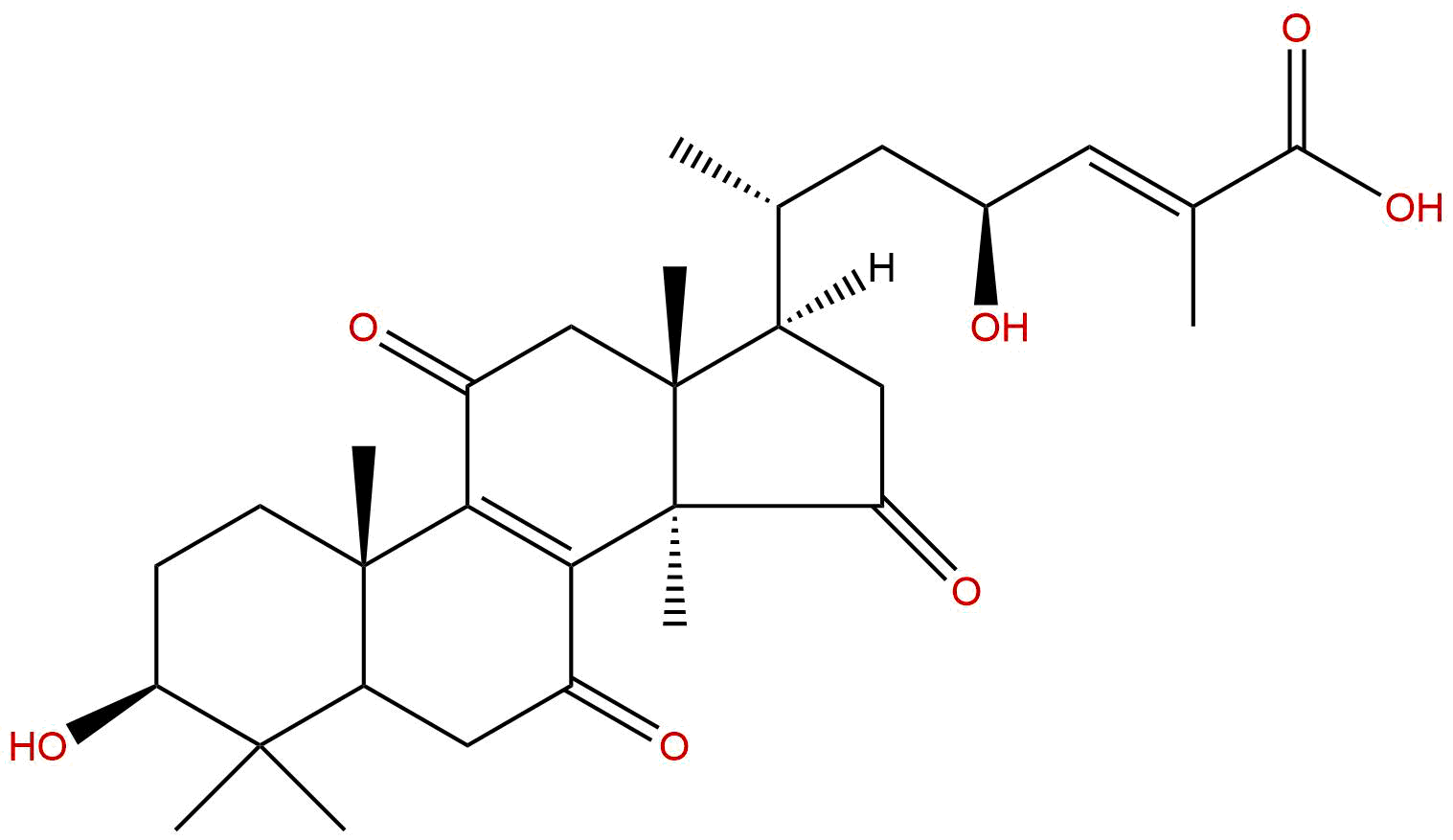
Ganoderma acid Zeta (abbreviated as Ganoderma acid Z), CAS number 294674-09-2, is a relatively new triterpenoid compound isolated and identified from Ganoderma lucidum fruiting bodies or mycelium in recent years. Compared with the more well-known ganoderic acids A, B, C, etc., ganoderic acid Z has unique structural characteristics, and its biological activity and mechanism of action are still in the early stages of research, but it has shown remarkable potential. Preliminary research suggests that ganoderic acid Z may have unique value in combating fungal infections, and its targets may involve dual regulation of host immune regulation (such as TLR4, NFKB1) and key fungal enzymes (such as ERG11, FKS1). This characteristic makes it an important prospect as a novel antifungal lead compound in addressing the increasingly severe problem of drug-resistant fungal infections.
This article aims to provide a systematic and in-depth review of the chemical structure, physicochemical properties, plant origin, extraction process, pharmacological activity, mechanism of action, medicinal properties, and clinical application prospects of ganoderic acid Z, in order to provide comprehensive scientific basis for the subsequent research and development of this natural product.
Chemical structure and physicochemical properties
Lingzhi acid Z belongs to highly oxidized tetracyclic triterpenoids, and its skeleton is based on the lanostane structure. Similar to typical ganoderic acid, its molecular skeleton contains a complete four ring system (A/B/C/D ring) and multiple hydroxyl or carbonyl functional groups at positions C-3, C-7, C-11, C-15, C-23, etc. The uniqueness of ganoderic acid Z may be reflected in its side chain oxidation mode and stereochemical configuration, such as chirality at C-20 position, differences in double bond or epoxy structure at C-24/25 position, and the position of carboxyl group (usually at C-26 position). Accurate structural analysis typically relies on high-resolution mass spectrometry (HR-MS) and one-dimensional/two-dimensional nuclear magnetic resonance spectroscopy (1D/2D NMR) techniques such as HMBC, HSQC, and NOESY to determine their absolute configurations.
From the perspective of physical and chemical properties, the molecular weight of ganoderic acid Z is 514.6590 Da, which belongs to a medium-sized natural product. Its lipid water partition coefficient (LogP) is 3.1309, indicating that the compound has a certain lipophilicity, which is beneficial for its penetration of cell membranes, but may also affect its solubility and bioavailability in aqueous environments. The topological polar surface area (TPSA) is 128.9700 Å ², which is a relatively high value (usually considered unfavorable for oral absorption if TPSA>140 Å ²), indicating that it may mainly pass through biofilms through mechanisms other than passive diffusion (such as active transport), or its oral absorption may be limited. Its low water solubility (0.0412 mg/mL) makes it a difficult to dissolve compound, which is a key challenge that needs to be overcome in actual drug formulation development. In addition, the predicted blood-brain barrier (BBB) permeability is "low", indicating that ganoderic acid Z is not easily able to enter the central nervous system, which to some extent reduces its potential neurotoxic risk, but also limits its application in the treatment of brain diseases. HERG inhibition is predicted as' no ', which is a positive pharmacological signal indicating a lower risk of causing QT interval prolongation and arrhythmia in the heart. The Ames test result is 0.0, indicating that it has no significant mutagenicity in standard testing and preliminary low genetic toxicity. These physicochemical properties and preliminary toxicological predictions provide a favorable basis for the further development of ganoderic acid Z, but also clarify the directions that need to be optimized in terms of solubility and oral absorption.
Plant sources and extraction methods
Lingzhi acid Z mainly comes from the porous fungal family Ganoderma lucidum(Ganoderma lucidum)And its closely related species, such as Ganoderma lucidum(Ganoderma sinense)Or Songshan Lingzhi(Ganoderma tsugae). There are significant differences in its content in different parts (fruiting bodies, mycelium, spore powder) and growth stages of Ganoderma lucidum. Usually, the accumulation of triterpenoids (including ganoderic acid Z) is high in mature fruiting bodies, and the mycelium cultured by deep fermentation is also an important source for obtaining ganoderic acid Z due to its short growth cycle and ease of large-scale production. In addition, the variety, origin, and cultivation conditions (such as light, temperature, and medium composition) of Ganoderma lucidum can significantly affect the yield of ganoderic acid Z.
The extraction method of ganoderic acid Z is mainly based on its weak acidity and moderate polarity. The classic extraction process includes the following steps:
- Raw material pretreatment Grind the dried Ganoderma lucidum fruiting body or mycelium to an appropriate particle size to improve extraction efficiency.
- Solvent extraction Common solvents include methanol, ethanol, or their aqueous mixtures (such as 70% -95% ethanol). Due to the LogP of ganoderic acid Z being approximately 3.13, it tends to dissolve more in organic solvents. Usually, heating reflux extraction or room temperature soaking extraction is used, with multiple extractions to fully enrich the target components. In recent years, green and efficient technologies such as ultrasound assisted extraction (UAE) and microwave-assisted extraction (MAE) have also been widely applied, which can significantly shorten extraction time and improve yield.
- Preliminary purification After the extraction solution is concentrated under reduced pressure, crude extract is obtained. In order to remove a large amount of lipophilic impurities (such as fatty acids and sterols), liquid-liquid extraction is often used, such as defatting with petroleum ether or n-hexane, and then extracting the triterpenoid rich fraction with ethyl acetate or n-butanol.
- chromatographic separation This is a key step in obtaining high-purity ganoderic acid Z. Common chromatographic techniques include:
- Silica gel column chromatography Preliminary separation of triterpenoid mixtures using gradient elution with solvents of different polarities, such as chloroform methanol and petroleum ether acetone.
- Reverse phase silica gel column chromatography (ODS)Using methanol water or acetonitrile water systems for elution can effectively separate homologous compounds of ganoderic acid with similar structures.
- High performance liquid chromatography (HPLC)Especially for preparative HPLC, it is the standard method for obtaining high purity ganoderic acid Z (purity>98%) in milligrams or even grams. Usually, a C18 reverse phase column is used, with acetonitrile water (containing a small amount of formic acid or acetic acid) as the mobile phase, combined with a UV detector (usually detected at 254 nm or 210 nm) for separation.
- Structural Identification The final pure product was structurally confirmed by HR-MS, NMR (¹ H-NMR, ¹ ³ C-NMR, 2D-NMR), and optical rotation spectroscopy (ORD).
Pharmacological activity research
Although the research history of ganoderic acid Z is relatively short, existing pharmacological studies have revealed its multifaceted biological activities, particularly outstanding in antifungal, anti-inflammatory, and immunomodulatory aspects.
Antifungal activity
This is one of the most notable pharmacological activities of ganoderic acid Z. Research shows that ganoderic acid Z is effective against various pathogenic fungi, including Candida albicans(Candida albicans)Cryptococcus neoformans(Cryptococcus neoformans)And some Aspergillus molds(Aspergillus Both spp. showed inhibitory effects. Its antifungal mechanism is not singular, but exhibits the characteristic of multi-target synergy. On the one hand, it may directly act on fungal cells by inhibiting key enzymes in the ergosterol synthesis pathway (such as ERG11), disrupting the integrity and function of the cell membrane. On the other hand, it may reverse fungal resistance to traditional azole drugs by inhibiting fungal resistance mechanisms, such as suppressing the activity of efflux pump CDR1. More noteworthy is that ganoderic acid Z has also been found to enhance antifungal effects by regulating host immune responses, such as by regulating the TLR4 and NFKB1 signaling pathways, promoting the phagocytic and bactericidal abilities of immune cells such as macrophages.
Anti inflammatory and immune regulatory activity
Inflammation is a common pathological basis for many diseases, including fungal infections. Lingzhi acid Z exhibits significant anti-inflammatory activity. In the macrophage model stimulated by lipopolysaccharide (LPS), ganoderic acid Z can significantly inhibit the production of pro-inflammatory cytokines (such as TNF - α, IL-6, IL-1 β) and nitric oxide (NO). The mechanism is closely related to the inhibition of phosphorylation activation of NFKB1 and MAPK1 (ERK, JNK, p38) signaling pathways. In addition, the regulation of CASP1 (caspase-1) by ganoderic acid Z is also worthy of attention. CASP1 is a key effector molecule for inflammasome activation, responsible for cleaving pro-IL-1 β and pro-IL-18 into mature forms. Lingzhi acid Z may exert anti-inflammatory effects by inhibiting the assembly or activity of NLRP3 inflammasomes, thereby suppressing the activation of CASP1. This immune regulatory activity not only helps to control the excessive inflammatory response caused by fungal infections, but may also have potential application value in autoimmune diseases or chronic inflammatory diseases.
Other potential activities
Preliminary studies also suggest that ganoderic acid Z may have other pharmacological activities. For example, by inhibiting topoisomerase I (TOP1), it may demonstrate some anti-tumor potential, although the evidence in this regard is not yet sufficient. In addition, its potential inhibitory effect on DHFR (dihydrofolate reductase) may affect nucleic acid synthesis, which is related to its antifungal and potential anti proliferative activity. However, most of these activities are based on molecular docking or in vitro enzyme activity experiments, and further cell and animal model validation is needed.
Mechanism of action and molecular targets
The pharmacological activity of ganoderic acid Z is the result of its interaction with multiple molecular targets. According to existing research, its mechanism of action can be summarized as follows:
Direct antifungal mechanism: targeting key enzymes in fungal cells
- Inhibition of ergosterol synthesis ERG11 (14 α - demethylase) is a key rate limiting enzyme in the ergosterol biosynthesis pathway of fungal cell membranes, and is also a target of commonly used azole antifungal drugs such as fluconazole in clinical practice. Molecular docking and enzyme activity experiments have shown that ganoderic acid Z can bind to the active site of ERG11, inhibit its catalytic activity, hinder ergosterol synthesis, accumulate toxic intermediates, and thus disrupt the fluidity and integrity of the cell membrane.
- Inhibit cell wall synthesis FKS1 is the catalytic subunit of β -1,3-glucan synthase, responsible for synthesizing the main structural component of fungal cell walls, β -1,3-glucan. The inhibitory effect of ganoderic acid Z on FKS1 weakens the mechanical strength of the cell wall, leading to unstable cell osmotic pressure and ultimately resulting in cell lysis and death. This is similar to the mechanism of action of echinocandin antifungal drugs such as caspofungin.
- Inhibit the discharge pump CDR1 (Candida Resistance Protein 1) is an important ABC transporter protein in Candida albicans, responsible for pumping drugs out of the cell and is one of the main mechanisms leading to fungal resistance to azole drugs. Lingzhi acid Z has been found to inhibit the activity of CDR1, thereby increasing the effective concentration of drugs in fungal cells and restoring sensitivity to drug-resistant strains. This' resistance reversal 'activity is an important advantage that distinguishes it from traditional antifungal drugs.
Immune regulatory mechanism: regulating host defense response
- TLR4/NFKB1 signaling pathway Toll like receptor 4 (TLR4) is a key pattern recognition receptor that recognizes fungal cell wall components such as mannan. Its activation triggers the downstream NFKB1 (p50/p65) signaling cascade, inducing the expression of pro-inflammatory cytokines. Lingzhi acid Z may inhibit the nuclear translocation and transcriptional activity of NFKB1 by directly binding to TLR4 or interfering with its downstream signaling molecules, thereby reducing the excessive inflammatory response caused by fungal infection and protecting host tissues from immunopathological damage.
- MAPK1 signaling pathway The mitogen activated protein kinase (MAPK) pathway (including ERK, JNK, p38) plays a central role in cell proliferation, differentiation, and inflammatory response. Lingzhi acid Z can inhibit the phosphorylation of MAPK1 (especially p38 and JNK) induced by LPS or fungal components, thereby downregulating the production of inflammatory mediators.
- CASP1/inflammasome pathway The activation of CASP1 is the core function of inflammasomes such as NLRP3. Fungal infection can activate NLRP3 inflammasome, leading to activation of CASP1, which in turn cleaves pro-IL-1 β and pro-IL-18, triggering a strong inflammatory response. Lingzhi acid Z may block this inflammatory cascade by inhibiting the assembly of NLRP3 or directly inhibiting the activity of CASP1.
Other potential targets
- TOP1 By inhibiting topoisomerase I and interfering with DNA replication and transcription, it may contribute to its anti proliferative (anti-tumor/antifungal) activity.
- DHFR Inhibition of dihydrofolate reductase affects the production of tetrahydrofolate, thereby interfering with nucleic acid synthesis, which may be another supplementary mechanism for its antifungal activity.
In summary, the mechanism of action of ganoderic acid Z presents a "dual pronged" characteristic: on the one hand, it directly attacks multiple key targets of fungi (ERG11, FKS1, CDR1), and on the other hand, it regulates the host's immune response (TLR4, NFKB1, MAPK1, CASP1). This multi-target and multi-level synergistic mode of action gives it unique advantages in combating complex and drug-resistant fungal infections.
Evaluation of drug properties and pharmacokinetics
Based on the provided pharmacological parameters and existing research, a preliminary evaluation of the pharmacological properties of Ganoderma lucidum acid Z is conducted.
Advantage aspects:
1. Low toxicity risk Ames test negative, low risk of hERG inhibition, and low BBB permeability. These preliminary data indicate that ganoderic acid Z has a good safety window and is not prone to genetic toxicity, cardiotoxicity, or central nervous system side effects.
2. Clear targets and mechanisms Its antifungal and immunomodulatory effects involve multiple clear targets (ERG11, FKS1, CDR1, TLR4, NFKB1, CASP1), providing a solid foundation for structure based drug design and optimization.
3. Overcoming the potential for drug resistance By inhibiting the efflux pump (CDR1) and acting on multiple fungal targets, ganoderic acid Z has the potential to overcome existing antifungal drug resistance.
Challenges and Shortcomings:
1. Solubility and bioavailability Poor water solubility (0.0412 mg/mL) and high LogP (3.13) are its main shortcomings. This can lead to poor oral absorption, low bioavailability, and limit its oral administration route. Formulation techniques such as liposomes, nanoparticles, cyclodextrin inclusion complexes, phospholipid complexes are needed to improve their solubility and oral absorption.
2. Metabolic stability As a triterpenoid compound, ganoderic acid Z may undergo extensive phase I (oxidation, reduction) and phase II (glucuronidation, sulfation) metabolism in the body, resulting in a short half-life and low systemic exposure. There is currently a lack of research on its specific metabolic pathways and metabolites.
3. Lack of pharmacokinetic data At present, there are almost no public reports on the absorption, distribution, metabolism, and excretion (ADME) process of ganoderic acid Z in animal bodies. The plasma protein binding rate, tissue distribution characteristics, major metabolic organs, and excretion pathways are all unknown, which is the biggest obstacle in the evaluation of its pharmacological properties.
4. Synthesis and Supply The content of ganoderic acid Z in natural Ganoderma lucidum is usually low, and the chemical total synthesis route is complex, with multiple steps and low yield, making it difficult to meet the needs of large-scale drug development. The key to solving its source problem is to develop efficient and green biosynthesis methods (such as using engineering yeast or mycelium fermentation) or semi synthetic methods.
Clinical application prospects and prospects
Despite facing many challenges, the unique pharmacological properties and preliminary safety data of ganoderic acid Z make it show promising clinical application prospects in the following fields:
-
Development of new antifungal drugs: In view of the continuous increase in incidence rate and mortality of invasive fungal infections (especially caused by drug-resistant candida, aspergillus and cryptococcus) worldwide, and the limitations of existing drugs (azoles, echinocandins and polyenes) (toxicity, drug resistance and narrow antimicrobial spectrum), it is urgent to develop antifungal drugs with new mechanisms of action. The multi-target mechanism of action of ganoderic acid Z, especially its ability to inhibit efflux pumps and regulate host immunity, makes it an ideal lead compound for developing novel anti infective drugs with a dual mode of action of "antifungal+immune regulation". It is particularly promising for the treatment of refractory, recurrent, or drug-resistant fungal infections.
-
Antifungal adjuvant therapy Lingzhi acid Z can be used as an "adjuvant" in combination with traditional antifungal drugs such as fluconazole and amphotericin B. By inhibiting the CDR1 efflux pump, it can restore the sensitivity of drug-resistant strains to azole drugs, achieving a "sensitization" effect. At the same time, its anti-inflammatory activity can alleviate tissue damage and inflammatory reactions caused by fungal infections or antifungal drugs themselves, improve treatment index, and reduce toxic side effects.
-
Diseases related to immune regulation Based on its regulatory effects on TLR4/NFKB1 and CASP1/inflammasome pathways, ganoderic acid Z also has certain potential in the treatment of chronic inflammatory diseases (such as inflammatory bowel disease, rheumatoid arthritis) or autoimmune diseases. However, this requires extensive preclinical research to validate its effectiveness and safety.
Future research directions:
1. In depth pharmacokinetic research Systematic in vivo ADME research must be conducted to clarify the oral bioavailability, metabolic stability, metabolite identification, tissue distribution, and excretion pathways of ganoderic acid Z. This is the key to determining whether it can become a drug.
2. Research on Structural Optimization and Structure Activity Relationship (SAR)Taking ganoderic acid Z as the lead, the relationship between its antifungal and anti-inflammatory activities and chemical structure is systematically studied through chemical modification (such as prodrug design, introduction of polar groups, optimization of side chains) or synthesis of a series of analogues, aiming to improve activity, solubility and metabolic stability, and reduce toxicity.
3. Formulation development To address the issue of poor water solubility, develop suitable drug delivery systems such as liposomes, nanoemulsions, solid dispersions, etc., to improve their bioavailability and achieve targeted delivery.
4. Pharmacodynamic validation in vivo Validate the in vivo antifungal efficacy and immunomodulatory effects of single or combination therapy in various animal models, such as mouse systemic candidiasis models and skin fungal infection models.
5. Toxicity evaluation Conduct comprehensive acute and chronic toxicity experiments, including toxicity assessments of important organs such as the liver and kidneys, to ensure their safety.
Conclusion
Lingzhi acid Z, as a structurally unique triterpenoid compound in Ganoderma lucidum, provides new ideas and candidate molecules for addressing the current challenge of drug-resistant fungal infections due to its multi-target and multi-level pharmacological mechanisms, especially its dual activities in antifungal and immune regulation. Its preliminary pharmacological evaluation shows the advantages of low toxicity and clear target, but poor water solubility, low bioavailability, and lack of pharmacokinetic data are the main obstacles to its transition from natural products to clinical drugs. In the future, through in-depth pharmacokinetic studies, systematic exploration of structure-activity relationships, innovative formulation design, and rigorous in vitro and in vivo pharmacological and toxicological evaluations, it is expected that ganoderic acid Z or its derivatives will be developed into a new class of antifungal drugs or immunomodulators with independent intellectual property rights. The study of ganoderic acid Z not only expands our understanding of the medicinal value of ganoderic acid, but also once again proves the irreplaceable position of natural products in contemporary drug discovery.