Introduction/Overview
Natural products, as an important source of drug discovery, play an irreplaceable role in the history of human health maintenance and disease treatment. Licorice(Glycyrrhiza As a traditional medicinal plant with a long history and wide application, it is known as the "old man of the country" and its medicinal value has been fully recognized and utilized in both Eastern and Western medical systems. The chemical composition of licorice is extremely complex, mainly including triterpenoid saponins (such as glycyrrhizic acid and glycyrrhetinic acid), flavonoids (such as glycyrrhizin and isoliquiritigenin), and coumarins. Among them, coumarin compounds have attracted increasing attention from researchers due to their diverse biological activities, such as anti-inflammatory, antioxidant, anti-tumor, and hepatoprotective effects.
Glycycoumarin, as a characteristic coumarin compound isolated from licorice, has become one of the hotspots in natural product chemistry and pharmacology research in recent years due to its unique pharmacological activity. Its chemical structure belongs to the derivatives of simple coumarins, with a typical benzo - α - pyranone core and substituents such as isopentenyl. Early research mainly focused on its efficacy as an antispasmodic agent, used to alleviate smooth muscle spasm symptoms such as abdominal pain. However, with the deepening of research, the more extensive pharmacological effects of licorice coumarin, especially its significant hepatoprotective activity, have gradually been revealed. Research has shown that licorice coumarin can protect against various chemical liver injuries, non-alcoholic fatty liver disease (NAFLD), and even liver fibrosis through multiple mechanisms, such as antioxidant stress, anti-inflammatory, inhibition of liver cell apoptosis, and regulation of lipid metabolism.
In addition, it is worth noting that licorice coumarin has also shown potential application value in the field of anticoagulation. The coagulation system is a precise regulatory network composed of multiple coagulation factors, anticoagulant factors, plasminogen activators, and their inhibitors. Literature suggests that licorice coumarin may affect key targets in the coagulation cascade, such as SERPINE1 (plasminogen activator inhibitor-1, PAI-1)、 Organ factor (F3), prothrombin (F2), vitamin K epoxide reductase complex subunit 1 (VKORC1), as well as various coagulation factors (F7, F9, F10) and von Willebrand factor (VWF), exert their anticoagulant effects. This discovery not only expands the pharmacological spectrum of licorice coumarin, but also provides potential lead compounds for the development of new anticoagulant drugs.
This review aims to systematically review and summarize the research progress of licorice coumarin, covering its chemical structure and physicochemical properties, plant sources and extraction methods, pharmacological activity research, mechanism of action and molecular targets, pharmacological evaluation and pharmacokinetics, and prospects for its clinical application, in order to provide reference for the in-depth research and development of licorice coumarin.
Chemical structure and physicochemical properties
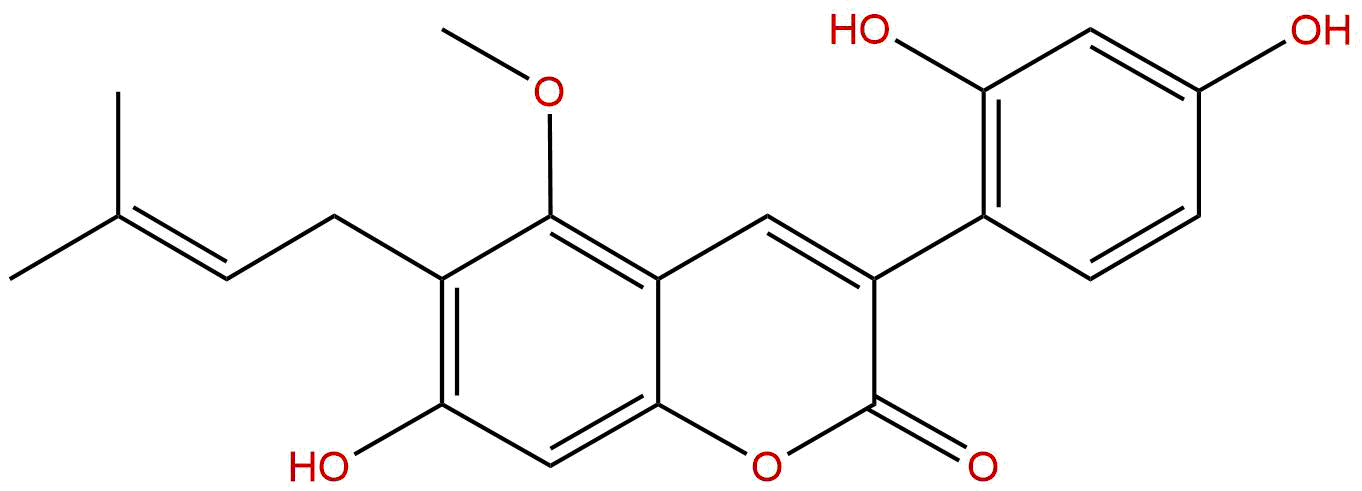
The chemical structure of Glycycoumarin belongs to the coumarin class of compounds. The basic skeleton of coumarin is a benzo - α - pyranone formed by the fusion of a benzene ring and an α - pyranone ring. Glycyrrhizic coumarin has substituents attached to specific positions on the basis of this mother nucleus, which determines its unique chemical properties and biological activity.
chemical structure The systematic name of licorice coumarin is 7-hydroxy-6-isoprentenyl-4-methoxy-5-methylcoumarin. Its molecular formula is C ₂₁ H ₂₀ O ₆, and its molecular weight is 368.3850 g/mol. The structural features are mainly reflected in: the C-4 position of the coumarin parent nucleus is connected to a methoxy group (- OCH ∝), the C-5 position is connected to a methyl group (- CH3), the C-6 position is connected to an isopentenyl group (3,3-dimethylallyl), and the C-7 position is a hydroxyl group (- OH). This isopentenyl side chain is a common structural feature of many natural products with significant biological activity, which can increase the lipophilicity of molecules and may affect activity by interacting with the hydrophobic regions of target proteins.
Physicochemical properties:
1. solubility Licorice coumarin is a compound with strong lipid solubility. The calculated lipid water partition coefficient (LogP) is 3.7854, indicating that its distribution in both aqueous and organic phases (such as n-octanol) tends towards the organic phase, indicating higher lipid solubility. This is consistent with the presence of hydrophobic groups such as isopentenyl and methyl in the molecule. The calculated water solubility value is 0.0491 mg/mL, which belongs to the category of insoluble in water. In practical operation, licorice coumarin is usually soluble in organic solvents such as methanol, ethanol, dimethyl sulfoxide (DMSO), and ethyl acetate, while its solubility in water is very low. This property has a significant impact on its formulation development and in vivo pharmacokinetic behavior.
2. Polarity and charge The phenolic hydroxyl group (- OH) at position C-7 in the molecule endows licorice coumarin with a certain polarity and weak acidity. Its topological polar surface area (TPSA) is 100.1300 Å ². TPSA is an important parameter for measuring the ability of molecules to penetrate cell membranes, and molecules with TPSA less than 140 Å ² are generally considered to have good oral absorption potential, while molecules with TPSA less than 60-70 Å ² are more likely to penetrate the blood-brain barrier. The TPSA of licorice coumarin is 100.13 Å ², indicating its potential for oral absorption, but its ability to penetrate the blood-brain barrier is relatively low, which is consistent with the conclusion of "blood-brain barrier: low" in the pharmacological parameters.
3. Stability Under alkaline conditions, coumarin compounds tend to open their lactone rings and form cis hydroxycinnamate salts, thereby losing their original coumarin structure. Under acidic conditions, the ring opening product can be re cyclized and restored to coumarin. In addition, light exposure may also cause photodimerization or decomposition reactions of coumarin compounds. Therefore, during the extraction, separation, storage, and experimental processes, attention should be paid to avoiding light and controlling the pH value to ensure its stability.
4. spectral characteristics Licorice coumarin usually has characteristic absorption under ultraviolet light and can be used for its qualitative and quantitative analysis. Its infrared spectrum, nuclear magnetic resonance hydrogen spectrum, carbon spectrum, mass spectrometry and other data are important basis for its structural identification.
Plant sources and extraction methods
Plant-based Licorice coumarins are mainly derived from the Fabaceae family of the licorice genus(Glycyrrhiza)The roots and rhizomes of plants. There are approximately 30 species of plants in this genus worldwide, among which the ones widely used as medicinal and food additives mainly include:
* glycyrrhiza uralensis fisch(Glycyrrhiza uralensis Fisch., also known as East Licorice, is one of the main sources of licorice recorded in the Chinese Pharmacopoeia, distributed in northern China, Mongolia, Siberia, and other regions.
* Swelling fruit licorice(Glycyrrhiza inflata Bat., also known as southern licorice, is mainly distributed in Xinjiang, Gansu and other areas of China, and is also a variety listed in the pharmacopoeia.
* Glycyrrhiza glabra(Glycyrrhiza glabra L. Also known as Western licorice or Eurasian licorice, it is native to Europe, the Mediterranean region, and West Asia. It is the main variety recorded in the European Pharmacopoeia and is widely used in the food and pharmaceutical industries.
The content of licorice coumarin varies among different species, regions, and harvest periods of licorice. It is generally believed that licorice and licorice are the main sources of licorice coumarins. In addition to licorice roots, recent studies have also isolated licorice coumarins from cell cultures or hairy roots of licorice.
extraction method The extraction of licorice coumarin usually adopts solvent extraction method, combined with modern separation and purification technology. The extraction process generally includes the following steps:
- Raw material pretreatment Grind the dried licorice roots or rhizomes to an appropriate particle size (such as 40-60 mesh) to increase the solvent contact area and improve extraction efficiency.
- Solvent extraction Due to the strong lipophilicity of licorice coumarin, organic solvents with moderate polarity are often selected for extraction. Common solvents include:
- ethanol: is the most widely used solvent, usually using 70% -95% ethanol for reflux extraction or percolation extraction. Ethanol extraction has high efficiency, is relatively safe, and is easy to recover.
- methanol The extraction efficiency is usually higher than ethanol, but it is more toxic and is often used for laboratory research.
- ethyl acetate Good selectivity for licorice coumarin, but high cost, commonly used for subsequent liquid-liquid extraction or column chromatography separation.
- Supercritical fluid extraction (SFE)Using CO ₂ as a solvent, lipid soluble components can be selectively extracted by adjusting pressure and temperature. This method has the advantages of being green, efficient, and solvent-free, but the equipment cost is relatively high.
- Concentration and preliminary purification Concentrate the extract under reduced pressure to obtain a paste. The extract can be dispersed in water and then subjected to liquid-liquid extraction using organic solvents of different polarities (such as petroleum ether, chloroform, ethyl acetate, n-butanol) to achieve preliminary component separation. Licorice coumarin is usually enriched in the ethyl acetate or chloroform extraction sites.
- Chromatographic separation and purification This is a key step in obtaining high-purity licorice coumarin. Common chromatographic techniques include:
- silica gel column chromatography The use of different ratios of chloroform methanol or petroleum ether ethyl acetate systems for gradient elution is a classic separation method.
- Reverse phase silica gel column chromatography Using C18 or C8 bonded silica gel, eluted with methanol water or acetonitrile water system, the separation effect is better, especially suitable for separating coumarin compounds with similar polarity.
- Preparation type high performance liquid chromatography (Prep HPLC): is the most effective means of obtaining high-purity monomeric compounds, suitable for preparation in milligrams to grams.
- High Speed Counter Current Chromatography (HSCCC)A chromatographic technique based on liquid-liquid distribution principle, which does not require a solid stationary phase, avoids irreversible adsorption of samples on the column, has high recovery rate, and is suitable for large-scale preparation.
- Structural Identification The purified compound was structurally confirmed by methods such as nuclear magnetic resonance (NMR), mass spectrometry (MS), ultraviolet spectroscopy (UV), and infrared spectroscopy (IR).
Pharmacological activity research
Licorice coumarin exhibits diverse pharmacological activities, among which its anti spasmodic and hepatoprotective effects are the two most deeply studied areas. In recent years, its potential in anticoagulation has also attracted attention.
-
anticonvulsant effect This is the earliest reported pharmacological activity of licorice coumarin. Research has shown that licorice coumarin can effectively inhibit smooth muscle contractions induced by agonists such as acetylcholine, histamine, and barium chloride in isolated guinea pig ileum and rat gastric fundus. Its mechanism of action may involve blocking voltage dependent calcium channels (VDCC), thereby inhibiting calcium ion influx and reducing excitation contraction coupling in smooth muscle cells. In addition, it may also be related to regulating the nitric oxide (NO) signaling pathway or activating potassium channels. This activity provides pharmacological evidence for its use in traditional medicine for treating diseases such as abdominal pain and gastrointestinal spasms.
-
Hepatoprotective effect This is a hot topic in the research of licorice coumarin in recent years. A large number of in vitro and in vivo experiments have confirmed its significant liver protective effect.
- Anti chemical liver injury In animal models of acute liver injury induced by carbon tetrachloride (CCl ₄), acetaminophen (APAP), D-galactosamine (D-GalN), etc., pretreatment or treatment with licorice coumarin can significantly reduce serum transaminase (ALT, AST) levels and alleviate liver tissue pathological damage (such as necrosis and inflammatory infiltration). The mechanism is mainly related to antioxidant stress: licorice coumarin can clear reactive oxygen species (ROS), enhance the activity of antioxidant enzymes such as superoxide dismutase (SOD) and glutathione peroxidase (GPx), and inhibit the production of lipid peroxidation product malondialdehyde (MDA).
- Anti non-alcoholic fatty liver disease (NAFLD)In high-fat diet or methionine choline deficiency diet (MCD) induced NAFLD/NASH models, licorice coumarin can significantly reduce liver lipid deposition, lower serum triglyceride and total cholesterol levels. Its mechanism of action involves regulating lipid metabolism related pathways, such as inhibiting the expression of steroid regulatory element binding protein-1c (SREBP-1c), thereby reducing de novo synthesis of fatty acids; Simultaneously activate AMP activated protein kinase (AMPK) to promote fatty acid beta oxidation.
- Anti liver fibrosis In liver fibrosis models induced by bile duct ligation (BDL) or thioacetamide (TAA), licorice coumarin can inhibit the activation of hepatic stellate cells (HSCs), reduce the deposition of extracellular matrix (such as collagen I, III), and promote their degradation. The mechanism may be related to the inhibition of the transforming growth factor - β 1 (TGF - β 1)/Smad signaling pathway.
- Anti hepatocyte apoptosis In various liver injury models, licorice coumarin can inhibit liver cell apoptosis by regulating mitochondrial pathways (such as inhibiting Bax/Bcl-2 ratio and reducing cytochrome c release) or death receptor pathways (such as inhibiting Caspase-8 activation).
-
Anticoagulant effect This is an emerging activity worth exploring in depth for licorice coumarin. The coagulation process involves a series of complex cascade reactions, ultimately forming fibrin clots. Glycyrrhizin coumarin may affect the coagulation process by acting on multiple targets. Preliminary research suggests that it may inhibit the activity of vitamin K epoxide reductase (VKORC1), thereby interfering with the circulation and regeneration of vitamin K, affecting the carboxylation activation of vitamin K-dependent coagulation factors (such as F2, F7, F9, F10), and producing anticoagulant effects similar to warfarin. In addition, it may also affect the balance of coagulation and fibrinolysis systems by regulating the expression or activity of tissue factor (F3) and influencing the levels of plasminogen activator inhibitor-1 (SERPINE1/PAI-1). This discovery suggests that licorice coumarin may become a lead compound for developing novel oral anticoagulant drugs, but at the same time, caution should be exercised about its potential bleeding risk.
-
Other activities In addition to the main activities mentioned above, studies have also found that licorice coumarin has anti-inflammatory (inhibiting the NF - κ B pathway and reducing inflammatory factors such as TNF - α and IL-6), antioxidant (directly clearing free radicals), anti-tumor (inhibiting the proliferation of certain cancer cells, such as liver and colon cancer cells), and antibacterial (inhibiting certain Gram positive bacteria) activities.
Mechanism of action and molecular targets
The pharmacological effects of licorice coumarin are the result of multi-target and multi pathway synergistic effects. Its mechanism of action mainly revolves around the following aspects:
-
Anti oxidative stress mechanism This is one of the core mechanisms of its hepatoprotective effect. The phenolic hydroxyl group in licorice coumarin molecules can directly supply hydrogen, scavenge free radicals (such as · OH, O ₂⁻ ·), and interrupt the lipid peroxidation chain reaction. More importantly, it can activate the nuclear factor E2 related factor 2 (Nrf2)/antioxidant response element (ARE) signaling pathway. Nrf2 is a key transcription factor for cells to cope with oxidative stress. After activation, it enters the nucleus and binds to ARE, initiating the expression of a series of downstream antioxidant enzyme genes (such as SOD, GPx, glutathione S-transferase GST, heme oxygenase-1 HO-1), thereby enhancing the overall antioxidant defense ability of cells.
-
Anti inflammatory mechanism Licorice coumarin can inhibit various inflammatory signaling pathways. Among them, inhibition of the nuclear factor kappa B (NF - κ B) pathway is particularly crucial. In the resting state, NF - κ B binds to the inhibitory protein I κ B and exists in an inactive form in the cytoplasm. When stimulated by inflammation (such as TNF - α, LPS), I κ B is phosphorylated and degraded, releasing NF - κ B into the nucleus and initiating the transcription of various inflammatory factors (such as TNF - α, IL-1 β, IL-6, iNOS, COX-2). Licorice coumarin can inhibit the phosphorylation and degradation of I κ B, thereby blocking the nuclear translocation and transcriptional activity of NF - κ B and exerting anti-inflammatory effects. In addition, it may also inhibit the mitogen activated protein kinase (MAPK) pathway (such as p38, JNK, ERK), further suppressing inflammatory responses.
-
Anti apoptotic mechanism Licorice coumarin inhibits liver cell apoptosis by regulating the mitochondrial pathway and death receptor pathway. In the mitochondrial pathway, it can upregulate the expression of anti apoptotic protein Bcl-2 and downregulate the expression of pro apoptotic protein Bax, thereby stabilizing the mitochondrial membrane potential, preventing the release of cytochrome c from mitochondria to cytoplasm, and inhibiting the cascade activation of Caspase-9 and Caspase-3. In the death receptor pathway, it may block exogenous apoptotic signals by downregulating the expression of death receptors such as Fas and TNF receptors, or inhibiting the activation of Caspase-8.
-
Regulating lipid metabolism mechanism In the anti NAFLD effect, licorice coumarin improves liver lipid metabolism by regulating multiple key signaling pathways. It can activate AMPK, which serves as a cellular energy receptor. Upon activation, AMPK can phosphorylate and inhibit acetyl CoA carboxylase (ACC), thereby reducing the production of acetyl CoA and promoting the entry of fatty acids into mitochondria for beta oxidation. Meanwhile, AMPK can also inhibit the activity of SREBP-1c, a key transcription factor for de novo synthesis of fatty acids and triglycerides. After its activity is inhibited, the expression of downstream lipid synthases such as fatty acid synthase (FAS) and stearoyl CoA desaturase 1 (SCD1) decreases, thereby reducing liver lipid synthesis.
-
Anticoagulant mechanism The anticoagulant effect of licorice coumarin may involve multiple targets. The most likely mechanism is the inhibition of VKORC1. VKORC1 is a key enzyme in the vitamin K cycle, responsible for reducing oxidized vitamin K to reduced vitamin K. The latter is a cofactor of gamma glutamyl carboxylase, responsible for carboxylating glutamate residues in coagulation factors (F2, F7, F9, F10) and anticoagulant protein (protein C, protein S) precursors to gamma carboxyglutamic acid (Gla), giving it calcium binding ability and biological activity. Inhibiting VKORC1 can block the vitamin K cycle, leading to the inhibition of the synthesis of these vitamin K-dependent proteins and resulting in anticoagulant effects. In addition, licorice coumarin may directly or indirectly affect the expression of tissue factor (F3), or affect the fibrinolytic system by regulating the level of PAI-1 (SERPINE1). The specific interaction network of these targets still needs further research and clarification.
Evaluation of drug properties and pharmacokinetics
To develop natural products into clinical drugs, a systematic evaluation of their drug-induced and pharmacokinetic (ADME) properties is necessary. Based on computational predictions and preliminary experimental data, the pharmacological analysis of licorice coumarin is as follows:
-
Lipinski's Rule of Five The molecular weight of licorice coumarin is 368.38 (<500), the LogP is 3.79 (<5), the number of hydrogen bond donors is 1 (phenolic hydroxyl,<5), and the number of hydrogen bond acceptors is 6 (<10). All its parameters comply with Lipinski's rules, indicating its good potential as an oral drug.
-
absorb Its LogP is moderate and TPSA is 100.13 Å ², indicating that it has good membrane permeability and may be absorbed by the gastrointestinal tract through passive diffusion after oral administration. However, its poor water solubility (0.0491 mg/mL) may be a key factor limiting its oral bioavailability. Formulation techniques such as solid dispersions, nanoparticles, liposomes, etc. may help improve their solubility and dissolution rate, thereby enhancing oral absorption.
-
distribution Its LogP value suggests that it may have a large distribution volume and is easy to enter tissues. Low blood-brain barrier penetration ability (BBB: Low) indicates that it is difficult to enter the central nervous system, which can to some extent reduce the risk of side effects in the central nervous system.
-
Metabolism Coumarin compounds typically undergo extensive phase I and phase II metabolism in the liver. Phase I metabolism is mainly mediated by cytochrome P450 enzyme systems (CYPs), which may undergo reactions such as hydroxylation and O-demethylation. Phase II metabolism mainly binds with glucuronic acid, sulfuric acid, etc., generating more water-soluble metabolites that are easier to excrete from urine or bile. The phenolic hydroxyl and methoxy groups in licorice coumarin molecules are potential metabolic sites. The specific metabolic pathways and enzymes still need to be identified through in vitro and in vivo experiments.
-
excretion Licorice coumarin and its metabolites are mainly excreted through bile and urine. Due to its high molecular weight (>300), bile excretion may be an important pathway and there is a possibility of enterohepatic circulation.
-
Toxicity prediction The Ames test predicted a result of 0.6 (usually considered negative for<0.5 and positive for>0.5), indicating a possible genetic toxicity risk and requiring careful evaluation. HERG inhibition is predicted as' no ', indicating a lower risk of causing QT interval prolongation and arrhythmia in the heart. However, due to its potential anticoagulant activity, the risk of bleeding is a safety indicator that requires special attention. Long term toxicity, reproductive toxicity, etc. also need to be systematically evaluated.
-
Pharmacokinetic characteristics Currently, there are relatively few reports on the pharmacokinetics of licorice coumarin in vivo. Preliminary studies suggest that after oral administration, its absorption may be slower and its bioavailability may not be high, partly due to its poor water solubility and/or first pass effect. Its half-life (t ₁/₂) may be short and requires frequent administration or development of sustained-release formulations. In the future, more comprehensive pharmacokinetic studies are needed, including absorption, distribution, metabolism, excretion (ADME) processes in different species of animals, as well as food drug interactions.
Clinical application prospects and prospects
Licorice coumarin, as a natural product with multiple pharmacological activities, has broad clinical application prospects, but also faces many challenges.
-
Development of hepatoprotective drugs Given its significant anti chemical liver injury, anti NAFLD, and anti liver fibrosis effects, licorice coumarin is expected to be developed as a drug for treating various liver diseases. Especially for non-alcoholic steatohepatitis (NASH), there is currently no approved specific drug worldwide. Licorice coumarin has great potential as a candidate drug for NASH treatment due to its multi-target effects (antioxidant, anti-inflammatory, anti apoptotic, regulating lipid metabolism). More preclinical studies are needed in the future to determine the optimal dosage, route of administration, and course of treatment, as well as to evaluate its long-term safety.
-
Development of antispasmodic drugs Its traditional anti spasmodic activity can be used to develop drugs for the treatment of gastrointestinal spasms, biliary colic, dysmenorrhea and other diseases. Compared to existing antispasmodics such as atropine and papaverine, licorice coumarin may have the advantage of having fewer side effects. Developing oral or rectal administration formulations (such as suppositories) is a feasible direction.
-
Development of anticoagulant drugs This is a highly innovative application direction of licorice coumarin. The commonly used oral anticoagulants in clinical practice include warfarin (vitamin K antagonist) and novel oral anticoagulants (DOACs, such as dabigatran and rivaroxaban). Warfarin has a narrow treatment window, requires frequent monitoring of INR, and is greatly affected by the interaction between food and medication; Although DOACs do not require routine monitoring, they are expensive and lack effective antagonists. If licorice coumarin can exert anticoagulant effects by inhibiting VKORC1, it may become a novel vitamin K antagonist with different pharmacokinetic characteristics. However, in-depth and systematic research is needed to compare its anticoagulant activity, selectivity, safety, and efficacy with warfarin, as well as to manage its bleeding risk. In addition, its regulatory effect on other coagulation related targets such as F3 and SERPINE1 may also bring unique therapeutic advantages.
-
Challenges faced and future research directions:
- The issue of bioavailability Poor water solubility and potential low oral bioavailability are its main bottlenecks. Future research should focus on developing novel drug delivery systems, such as phospholipid complexes, self microemulsion drug delivery systems (SMEDS), nanocrystals, etc., to enhance their solubility and oral absorption.
- Deep analysis of the mechanism of action Although a large number of studies have revealed some of its mechanisms of action, its direct binding mode to molecular targets, binding sites, and fine regulation of downstream signaling networks still need to be further elucidated through methods such as structural biology and chemical biology.
- safety evaluation Comprehensive toxicology studies are required, including acute toxicity, long-term toxicity, reproductive toxicity, genetic toxicity, and cardiac toxicity. Especially the bleeding risk caused by its potential anticoagulant activity requires strict evaluation and risk management.
- Study on Structure Activity Relationship Using licorice coumarin as the lead compound, its structure is modified through chemical synthesis or biotransformation methods (such as changing the position and length of isopentenyl groups, modifying hydroxyl and methoxy groups, etc.) in order to obtain derivatives with higher activity, better selectivity, and better pharmacokinetic properties.
- clinical translation After completing sufficient preclinical research, clinical trials should be actively promoted to verify its safety, efficacy, and pharmacokinetic characteristics in humans.
Conclusion
As an important bioactive coumarin in licorice, licorice coumarin has become a shining pearl in the field of natural product research due to its unique chemical structure and diverse pharmacological activities, especially its significant anti spasmodic, hepatoprotective, and emerging anticoagulant effects. The research process of licorice coumarin vividly illustrates the enormous value of natural products in drug discovery, from traditional medicine's "spasmolysis and pain relief" to modern pharmacology's "liver protection and protection" to the exploration of "anticoagulant" potential.
Although remarkable progress has been made in the research of licorice coumarin, its path from laboratory to clinical application is still full of challenges. The drug defects such as poor water solubility, low oral bioavailability, potential genetic toxicity, and bleeding risk are key scientific issues that urgently need to be addressed. Future research should focus on improving its bioavailability through advanced formulation technology; By utilizing multiple omics, chemical biology, and structural biology techniques, we aim to elucidate its complex mechanisms of action and precise molecular targets; Conduct systematic and rigorous toxicological and pharmacokinetic evaluations; On this basis, through reasonable structural modifications, new candidate drugs with independent intellectual property rights have been developed.
We have reason to believe that with the continuous deepening of research and advances in technology, licorice coumarin and its derivatives are expected to make breakthroughs in the treatment of liver diseases, gastrointestinal spasms, and even thrombotic diseases, making new contributions to human health. The exploration of licorice coumarin is not only a study of a single compound, but also a model for modernizing and creatively transforming the treasure trove of traditional Chinese medicine.