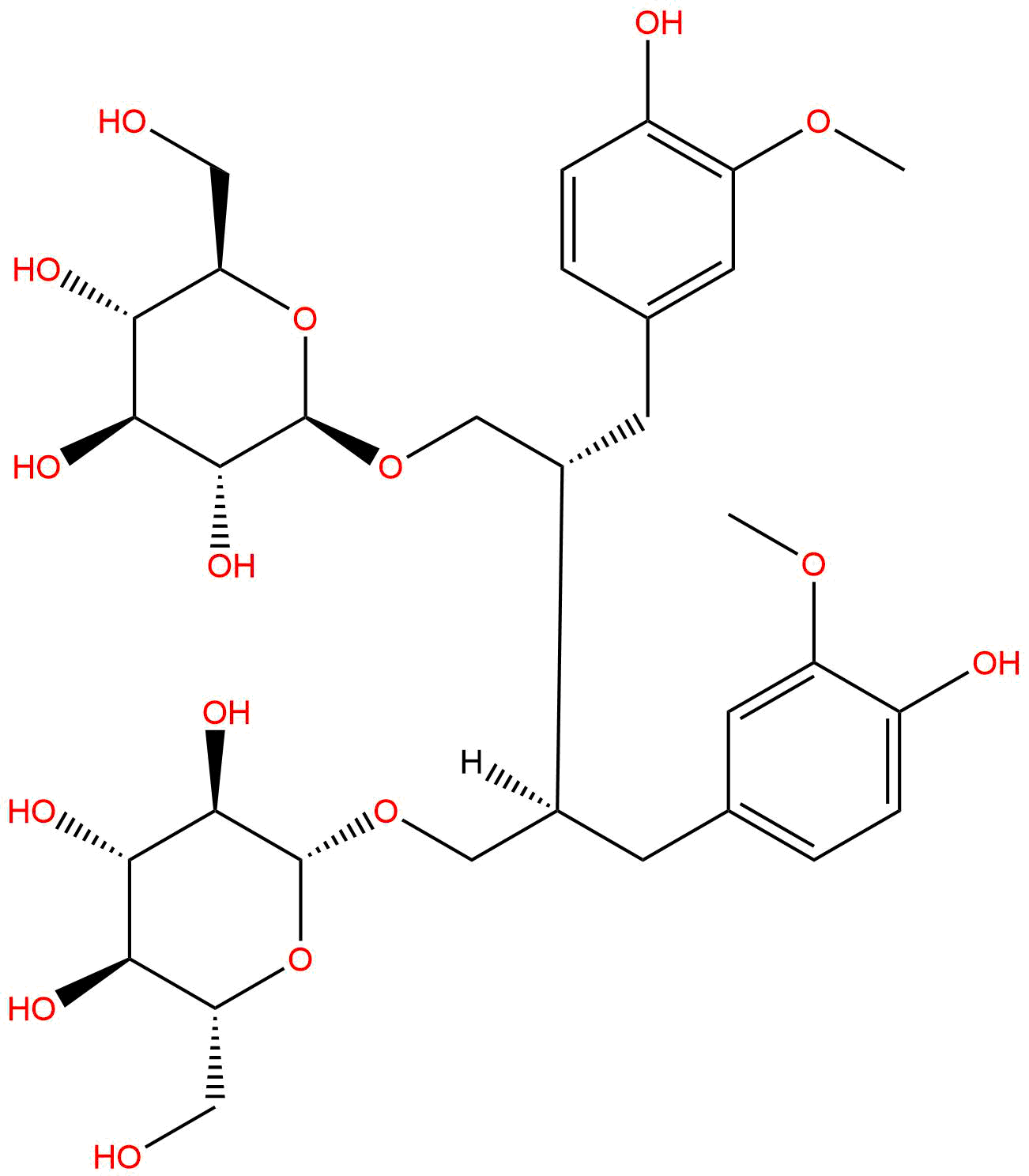


Product name: Secoisolariciresinol Diglucoside
Synonym name: SDG; other cas, 148244-82-0
Catalogue No.: BP1281
Cas No.: 158932-33-3
Formula: C32H46O16
Mol Weight: 686.704
Botanical Source: Linum usitatissimum L.
Physical Description:
Type of Compound: Lignans
Purity: 95%~99%
Analysis Method: HPLC-DAD or/and HPLC-ELSD
Identification Method: Mass, NMR
Packing: Brown vial or HDPE plastic bottle
Storage: Store in a well closed container, protected from air and light. Put into refrigerate or freeze for long term storage.
Whenever possible, you should prepare and use solutions on the same day. However, if you need to make up stock solutions in advance, we recommend that you store the solution as aliquots in tightly sealed vials at -20℃. Generally, these will be useable for up to two weeks.
The product could be supplied from milligrams to grams
Inquire for bulk scale.
Chengdu Biopurify Phytochemicals Ltd. is a leading company in the research, development, manufacture and marketing of High Quality Phytochemicals and Extracts(especially Active Ingredients from Traditional Chinese Medicine,TCM), Natural Active Pharmaceutical Ingredients worldwide.
The main services:
A. Supply active ingredients and reference standards of TCM, from mgs to kgs scale
B. Custom extraction and purification, target Herb Active Ingredients
C. Custom synthesis and semi-synthesis for Natural Active Ingredients
D. CR(contract research), CM(contract manufacture) and PD(process development) services from lab scale, pilot scale to commercial scale(GMP is also available)
E. TCM compounds library for drug screen,more than 3000 compounds available, many of them are rare and unique.
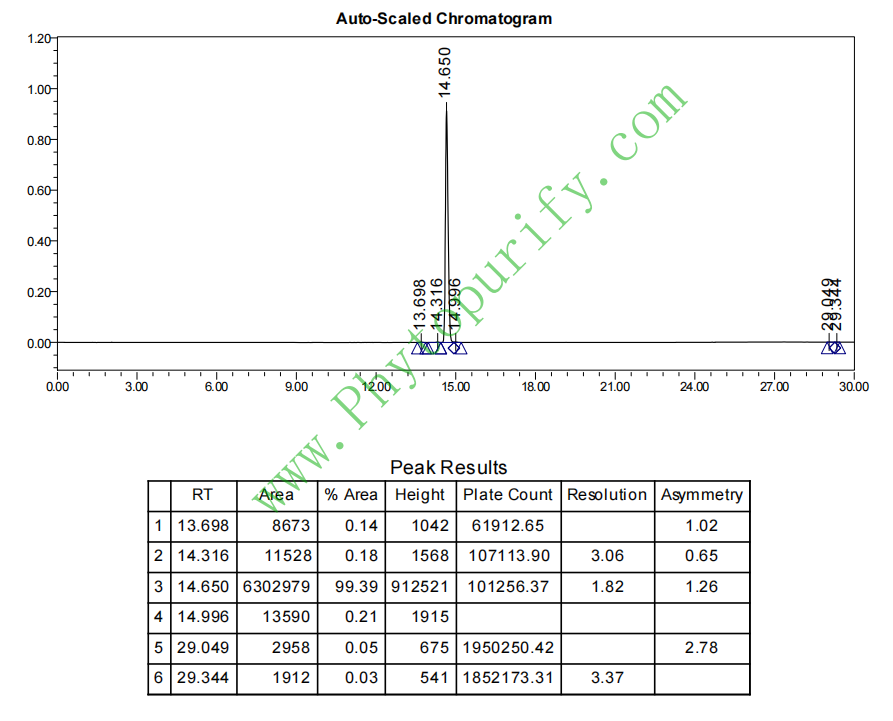
HPLC of Secoisolariciresinol Diglucoside
Storage conditions:Short-term storage at 2~8℃, long-term storage at -20 ~ -80℃
257.6800
-.4229
-.4241
4.7731
.5494
.1739
Low
73.8186
4.9010
Yes
No
No
No
No
No
0.0
Yes
No
No
No
Throughout the long history of human pharmaceutical development, natural products have always been a valuable source of innovative drug discovery and health intervention strategies. Among them, lignans derived from plants have attracted much attention due to their wide range of biological activities. Linoleagin, also known as open-loop isolarch resin phenol diglucoside, is the most abundant and representative lignan in whole wheat flaxseed. As a plant estrogen precursor, SDG itself has weak activity, but the mammalian lignans produced by intestinal microbiota metabolism, such as intestinal diols and intestinal lactones, exhibit a wide range of physiological regulatory functions. Modern pharmacological research has revealed that SDGs and their metabolites have significant multiple activities such as anti-inflammatory, antioxidant, anti mutagenic, antimicrobial, anti obesity, lipid-lowering, and neuroprotective effects, making them highly promising in the prevention and treatment of chronic metabolic diseases, neurodegenerative diseases, and cancer. This article aims to systematically review the chemical properties, plant sources, pharmacological activities, molecular mechanisms of action, pharmacological characteristics, and clinical application prospects of SDGs, in order to provide comprehensive scientific references for the deep development and utilization of this natural product.
Linoleagin is a lignan diglucoside composed of aromatic tetrahydronaphthalene structural units. Its chemical name is (2R, 3R) -1,4-bis [(3-methoxy-4-hydroxyphenyl) methyl] -2,3-bis (hydroxymethyl) butane-1,4-diol di - β - D-glucopyranoside. Its CAS number is 158932-33-3, molecular formula is C32H46O16, and molecular weight is 686.7040.
Structurally, the core of SDG is an open-loop dibenzylbutane skeleton formed by the β - β 'connection of two phenylpropanoid units (C6-C3). Two glucose groups are connected to the two phenolic hydroxyl groups of the skeleton through glycosidic bonds, forming a diglucoside structure. This glycosylation modification is the main form of its natural existence and greatly affects its physicochemical properties and bioavailability.
The key physicochemical parameters related to drug properties show that the logarithm of the lipid water partition coefficient (LogP) of SDG is -0.4229, indicating its hydrophilicity. Its topological polar surface area (TPSA) is as high as 257.68 Å ², mainly attributed to the numerous hydroxyl and sugar structures in the molecule, indicating its ability to form strong hydrogen bonding networks. The calculated water solubility value is 4.7731, confirming its good water solubility. These properties collectively determine the absorption, distribution, and metabolic behavior of SDGs in living organisms. High hydrophilicity and large polar surface area typically result in lower oral bioavailability and difficulty in crossing the blood-brain barrier (predicted as low permeability), which is consistent with its subsequent pharmacokinetic characteristics. In addition, preliminary drug safety screening showed that SDG has no inhibitory activity on hERG potassium channels (predicted as "no"), and the Ames mutagenicity test predicted a value of 0.0, suggesting that it may have good cardiac safety and low genetic toxicity risk.
Flaxseed is the most abundant and primary plant source of SDGs. Flax, also known as flaxseed, has a much higher content of lignin in its seeds than other common grains, beans, and vegetables, reaching over 1% of dry weight, with SDGs accounting for the vast majority (about 95% -97%). SDGs do not exist in free form, but are stored in the shell of flaxseed as high molecular weight, low solubility complexes, typically linked to 3-hydroxy-3-methylglutaric acid via ester bonds to form so-called "SDG polymers" or "lignin macromolecules".
This unique form of existence determines the complexity of its extraction process. Traditional extraction methods mainly rely on organic solvents. The common process includes: first, defatting flaxseed powder with petroleum ether or n-hexane to remove oil; Subsequently, polar solvents such as methanol water, ethanol water, or acetone water mixed systems are used for extraction under heating or ultrasound assistance. In order to improve extraction efficiency and selectivity, modern extraction techniques have been widely applied:
1. Enzyme assisted extraction The use of cellulase, pectinase, and other enzymes to disrupt cell wall structure and release bound SDGs can significantly improve yield.
2. Microwave assisted extraction and Ultrasound assisted extraction Utilizing the thermal effect of microwaves or the cavitation effect of ultrasound to accelerate solvent penetration and target dissolution, shorten extraction time, and reduce solvent consumption.
3. Supercritical fluid extraction Using supercritical CO ₂ as the solvent, the conditions are mild and there is no solvent residue, but it is usually required to be combined with polar entrainers to improve the solubility of SDGs.
The crude extract after extraction needs to undergo further purification steps, such as macroporous resin adsorption (such as AB-8, D101 resin), silica gel column chromatography, preparative high-performance liquid chromatography, etc., in order to obtain high-purity SDG monomers. The entire extraction and purification process requires optimization of conditions to balance yield, purity, and cost.
Numerous in vitro and in vivo studies have confirmed that SDGs and their intestinal metabolites have broad and significant pharmacological activities.
Antioxidant and anti-inflammatory activities This is one of the core activities of SDGs. SDGs can directly eliminate various reactive oxygen species and reactive nitrogen radicals, such as DPPH radicals, ABTS ⁺ radicals, superoxide anions, and peroxynitrite. More importantly, it can indirectly exert strong antioxidant effects by activating the intracellular antioxidant defense system. In various acute and chronic inflammation models (such as lipopolysaccharide induced macrophage inflammation, arthritis, colitis), SDGs exhibit the ability to inhibit the production and release of pro-inflammatory factors (such as TNF - α, IL-1 β, IL-6, COX-2, iNOS), thereby reducing tissue inflammatory damage.
Metabolic regulation effect:
Neuroprotective effect SDGs have shown protective effects in animal models of neurodegenerative and traumatic diseases such as Alzheimer's disease, Parkinson's disease, and cerebral ischemia-reperfusion injury. It can alleviate the neurotoxicity induced by β - amyloid protein, improve memory and cognitive function, protect dopaminergic neurons, and reduce the area of cerebral infarction. Its neuroprotective effect is mainly attributed to its strong antioxidant and anti-inflammatory properties, as well as its inhibition of neuronal apoptosis pathways.
Antitumor and anti mutagenic activity SDG can inhibit the proliferation of breast cancer, prostate cancer, colon cancer and other cancer cell lines, and can induce cell apoptosis and cycle arrest. As a precursor of phytoestrogens, it exhibits bidirectional regulatory effects on hormone dependent cancers. In addition, SDGs can inhibit DNA damage and chromosomal aberrations caused by chemical mutagens, demonstrating the potential for chemoprevention.
Other activities Research has also shown that SDGs have certain antimicrobial (such as against certain bacteria and fungi), anti osteoporosis, and renal protective activities, demonstrating their multi-target and multi pathway characteristics of action.
The pharmacological effects of SDGs and their active metabolites are not achieved through a single target, but through regulating a complex cellular signaling network, with the activation of the antioxidant response pathway mediated by nuclear factor E2 related factor 2 as the core.
Core mechanism: Activation of Nrf2/ARE signaling pathway
Nrf2 is a key transcription factor in cellular antioxidant stress response. In the resting state, Nrf2 binds to its inhibitory protein Keap1 in the cytoplasm and is degraded by ubiquitination. When stimulated by SDGs or their metabolites (such as intestinal lactones), Nrf2 dissociates from Keap1, translocates to the nucleus, binds to antioxidant response elements, and initiates gene transcription of downstream phase II detoxifying enzymes and antioxidant proteins. The key targets regulated by SDGs include:
* NFE2L2/NRF2 Core regulatory factors of pathways.
* HMOX1 Encoding heme oxygenase-1, it catalyzes the degradation of heme, producing bilirubin and carbon monoxide with antioxidant and anti-inflammatory effects.
* SOD1 (cytoplasm), SOD2 (mitochondria)Encoding superoxide dismutase is the first line of defense for clearing superoxide anions.
* CAT Encoding catalase, responsible for decomposing hydrogen peroxide.
* GPX1 Encoding glutathione peroxidase, utilizing reduced glutathione to reduce hydrogen peroxide and lipid peroxides.
By synergistically upregulating the expression of these enzymes, SDGs significantly enhance the ability of cells to clear free radicals and resist oxidative damage.
Other important mechanisms:
1. Inhibition of NF - κ B inflammatory pathway SDGs can inhibit the activation of I κ B kinase, prevent the degradation of I κ B α and nuclear translocation of NF - κ B p65 subunit, thereby downregulating the expression of COX-2, iNOS, and various pro-inflammatory cytokines, which is the main molecular basis of their anti-inflammatory effects.
2. Regulating lipid metabolism related pathways By activating AMPK, regulating transcription factors such as SREBP and PPARs, it affects the expression of genes related to fatty acid synthesis, oxidation, and cholesterol metabolism (such as ACC, FAS, CPT-1, CYP7A1).
3. Regulating the PI3K/Akt and MAPK signaling pathways These pathways are involved in the regulation of cell survival, proliferation, and apoptosis. SDGs can exert neuroprotective and anti-tumor effects by regulating these pathways.
4. Epigenetic regulation The latest research suggests that the metabolites of SDGs may epigenetic regulate the expression of related genes by affecting histone modifications and DNA methylation, providing a new perspective for understanding their long-term effects.
Although SDGs have a wide range of pharmacological activities, their pharmacological properties, especially pharmacokinetic properties, face certain challenges.
absorb SDGs themselves have extremely low oral bioavailability. It has strong hydrophilicity and high molecular weight, making it difficult to passively diffuse through intestinal mucosal epithelial cells. After ingestion, most SDGs reach the colon and are hydrolyzed by β - glucosidase secreted by the gut microbiota, which removes glycosides to produce open-loop isoquercetin. The latter is further metabolized by the microbiota into more active mammalian lignans - intestinal diols and intestinal lactones. These metabolites have increased lipid solubility and can be absorbed into the systemic circulation. Therefore, SDGs are actually a "prebiotic" compound, and their in vivo efficacy largely depends on the composition and metabolic capacity of individual gut microbiota.
distribution After absorption, intestinal diols and lactones can bind to plasma proteins and are widely distributed throughout the body. However, due to its relatively high polarity, its ability to penetrate the blood-brain barrier is limited, which to some extent limits its direct therapeutic effect on central nervous system diseases, but it may also produce indirect neuroprotective effects through peripheral anti-inflammatory and antioxidant effects.
Metabolism and excretion The absorbed intestinal diols and intestinal lactones mainly undergo phase II binding reactions (such as glucuronidation and sulfation) in the liver, forming more water-soluble complexes. The conjugate and its small prototype are mainly excreted through the kidneys with urine, and some also enter the intestine through bile, resulting in enterohepatic circulation.
Formulation strategy To improve the bioavailability and targeting of SDGs, modern pharmacy has adopted various strategies:
1. Nano delivery system Liposomes, nanoparticles, solid lipid nanoparticles, etc. can encapsulate SDGs, enhance their gastrointestinal stability, promote lymphatic absorption or cross cellular transport.
2. Prodrug modification Improve its lipid solubility and enhance membrane permeability through chemical modification.
3. Microbial co administration Used in combination with probiotics that produce β - glucosidase, aimed at stabilizing and enhancing their biotransformation in the intestine.
These new formulation technologies are expected to overcome the inherent pharmacokinetic deficiencies of SDGs and enhance their clinical efficacy.
Based on solid preclinical evidence, SDGs have broad translational medicine prospects in multiple disease prevention and treatment fields.
However, moving towards widespread clinical application still requires addressing the following key issues:
* Lack of high-quality clinical evidence At present, most research is still limited to the cellular and animal levels, and there is still a lack of well-designed, large sample sizes, and long cycles of human clinical trials, especially randomized controlled trials.
* Standardization and Quality Control The SDG content and extract purity of flaxseeds from different origins, varieties, and processing methods vary greatly. It is urgent to establish a standardized quality control system from raw materials to finished products.
* Individual differences in coping Individual differences in the metabolic capacity of gut microbiota may lead to varying therapeutic effects of SDGs. In the future, personalized medication strategies need to be explored, such as combining microbiota testing to guide application.
* Long term safety assessment Although short-term studies have shown good safety, safety data for long-term, high-dose use still needs to be improved.
As a natural lignan derived from traditional food and medicine resources, flaxseed lignin has shown new vitality in the field of modern disease prevention and health promotion due to its multi-target and multi effect pharmacological properties. Its core mechanism of action revolves around activating the Nrf2 antioxidant pathway and inhibiting the NF - κ B inflammatory pathway, thereby exerting comprehensive benefits in antioxidant damage, regulating metabolism, and protecting nerves. Although its inherent low bioavailability poses a challenge to drug development, it also reveals its unique role - deep interaction with the gut microbiome. With the deepening understanding of the molecular mechanisms of SDGs and the intervention of interdisciplinary methods such as nanotechnology and formulation engineering, we have reason to believe that SDGs will gradually develop from an important dietary component into natural medicines or functional factors with clear preventive and therapeutic value. Future research should focus on promoting high-quality clinical translation, elucidating individualized patterns of microbiota metabolism, and developing innovative delivery systems, ultimately transforming this ancient plant gift into scientific achievements that benefit human health.
