
| Catalog No | Package | Original Price | Price | Inventory | Quantity | Operating |
|---|---|---|---|---|---|---|
| BP0251-20mg | 20mg | $30.00 | Sign in |
|


Product name: Berberine
Synonym name: Berbericine
Catalogue No.: BP0251
Cas No.: 2086-83-1
Formula: C20H18NO4+
Mol Weight: 336.366
Botanical Source: Quaternary alkaloid from many Berberis and Mahonia spp. (Berberidaceae) and very many other spp. in several different families
Physical Description: Yellow powder
Type of Compound: Alkaloids
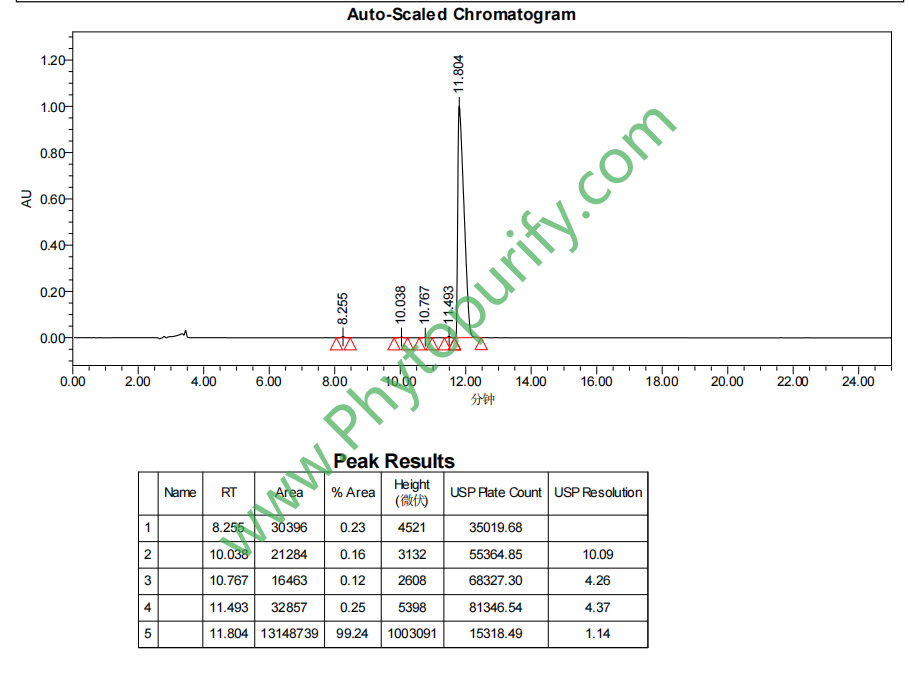
Purity: 95%~99%
Analysis Method: HPLC-DAD or/and HPLC-ELSD
Identification Method: Mass, NMR
Packing: Brown vial or HDPE plastic bottle
Storage: Store in a well closed container, protected from air and light. Put into refrigerate or freeze for long term storage.
Whenever possible, you should prepare and use solutions on the same day. However, if you need to make up stock solutions in advance, we recommend that you store the solution as aliquots in tightly sealed vials at -20℃. Generally, these will be useable for up to two weeks.
The product could be supplied from milligrams to grams, up to kilograms
Inquire for bulk scale.
Descriptions:
Berberine, a naturally occurring isoquinoline alkaloid, has been shown to possess anti-inflammatory and antitumor properties in some in vitro systems; berberine-induced apoptosis of human prostate cancer cells is mediated primarily through the caspase-dependent pathway, the effectiveness of berberine in checking the growth of androgen-insensitive, as well as androgen-sensitive, prostate cancer cells without affecting the growth of normal prostate epithelial cells indicates that it may be a promising candidate for prostate cancer therapy.[1]
Berberine has beneficial effects in the treatment of diabetes and obesity at least in part via stimulation of AMPK activity, can reduce body weight and cause a significant improvement in glucose tolerance without altering food intake in mice, downregulate the expression of genes involved in lipogenesis and upregulate those involved in energy expenditure in adipose tissue and muscle, and activate AMP-activated protein kinase.[2]
Berberine can ameliorate β-amyloid pathology, gliosis, and cognitive impairment in an Alzheimer's disease transgenic mouse model.[3]
Berberine can suppress inflammatory agents-induced cytokine production in lung cells, the suppression of berberine on the cytokine production resulted from the inhibition of inhibitory κB-α phosphorylation and degradation, suggests the potential role of berberine in the treatment of pulmonary inflammation.[4]
Berberine down-regulates u-PA, MMP-2 and -9 expressions in SCC-4 cells through the FAK, IKK and NF-kappaB mediated pathways and a novel function of berberine is to inhibit the invasive capacity of malignant cells.[5]
Berberine has anti- proliferation activity against human esophageal cancer cell lines.[6]
References:
[1] Mantena S K, Sharma S D, Katiyar S K. Mol Cancer Ther, 2006, 5(2):296-308.
[2] Yun S L, Kim W S, Kang H K, et al. Diabetes, 2006, 55(8):2256-64.
[3] Durairajan S, Liu L F, Lu J H, et al. Neurobiol Aging, 2012, 33(12):2903-19.
[4] Lee C H, Chen J C, Hsiang C Y, et al. Pharmacol Res, 2007, 56(3):193-201.
[5] Ho Y T, Yang J S, Li T C, et al. Cancer Lett, 2009, 279(2):155-62.
[6] Iizuka N, Miyamoto K, Okita K, et al. Cancer Lett, 2000, 148(1):19-25.
[7] Jun-Lin H U, Tan J L, Fei Y Q, et al. Chinese J Hospital Pharma, 2014, 34(1):50-2.
HPLC of Berberine
Storage conditions:Short-term storage at 2~8℃, long-term storage at -20 ~ -80℃
40.8000
.2341
.2341
.2766
2.9123
23.2093
High
25.3265
2.7871
Yes
No
Yes
No
Yes
Yes
2.4
No
No
No
No
Berberine, also known as berberine, is an isoquinoline quaternary ammonium alkaloid widely present in various medicinal plants, with a CAS number of 2086-83-1. As a traditional Chinese medicine, Huanglian(Coptis chinensis Berberine, the core active ingredient of Franch., has a long history of application and is mainly used to treat gastrointestinal infections and inflammatory diseases. With the deepening of modern pharmacological research, the biological activity spectrum of berberine has been greatly expanded, and its effects go far beyond traditional antibacterial and anti-inflammatory properties. A large number of studies have shown that berberine shows excellent potential of multi target and multi pathway regulation in regulating glucose and lipid metabolism, anti-tumor, cardiovascular protection, neuroprotection, etc. Especially in the field of prevention and treatment of type 2 diabetes and its complications, berberine has become a hotspot of natural product research. Although its oral bioavailability is low, its pharmacological properties are gradually improving through dosage form improvements (such as sulfate form HY-N0716B) and mechanism exploration. This article aims to systematically review the chemical properties, pharmacological activities, molecular mechanisms of action, pharmacological evaluation, and clinical application prospects of berberine, in order to provide scientific references for the deep development and transformation of this natural product.
The molecular formula of berberine is C ₂₀ H ₁₈ NO ₄⁺, with a molecular weight of 336.3670. Its basic chemical structure is an isoquinoline skeleton, and it has a quaternary ammonium nitrogen atom, which makes it usually exist in a cationic form under physiological conditions. This unique structure is the basis for its various biological activities.
In terms of physicochemical properties, berberine exhibits typical alkaloid characteristics. Its lipid water partition coefficient (LogP) is 0.2341, indicating that it has a certain degree of hydrophilicity, but not high lipophilicity. The topological polar surface area (TPSA) is 40.8000 Å ², relatively low, which is related to the aromatic ring system in its molecular structure. Its water solubility value is 0.2766 mg/mL, belonging to the category of slightly soluble to poorly soluble, which directly affects its oral absorption. It is worth noting that berberine has a high blood-brain barrier permeability, which provides the possibility for its application in central nervous system diseases such as Alzheimer's disease. In the preliminary safety evaluation, its Ames test value was 2.4, indicating a potential mutagenic risk that needs to be carefully evaluated in subsequent studies. However, existing data shows that it does not inhibit hERG potassium channels, indicating a low risk of causing QT interval prolongation in the heart.
Berberine is widely distributed in various plants such as Papaveraceae, Ranunculaceae, Berberidaceae, Rutaceae, etc. Its most famous and main plant source is Huanglian in the Ranunculaceae family(Coptis chinensis)In addition, Huangbai(Phellodendron amurense)Three needles(Berberis spp.)Waiting is also an important medicinal resource. Among these plants, berberine mainly exists in parts such as roots and stem bark.
The traditional extraction method is mainly based on solvent method. Due to its quaternary ammonium salt form, berberine is easily soluble in hot water and polar organic solvents such as methanol and ethanol, but difficult to dissolve in non-polar solvents such as benzene and chloroform. The conventional process includes: 1) Acid water extraction method: soaking medicinal materials in dilute sulfuric acid or dilute hydrochloric acid to convert berberine into a more soluble acid salt form and dissolve it, and then obtaining crude products through alkaline precipitation; 2) Alcohol extraction method: Ethanol or methanol reflux extraction is used to recover the solvent and obtain the extract. Modern extraction techniques are dedicated to improving efficiency and purity, such as ultrasound assisted extraction, microwave-assisted extraction, supercritical fluid extraction, etc. After extraction, purification is usually carried out by combining column chromatography (such as alumina column, macroporous resin column), recrystallization and other techniques. In recent years, in response to the low bioavailability of berberine, research has focused on structural modifications after extraction (such as preparation into sulfates and hydrochloride salts) and the development of novel drug delivery systems (such as nanoparticles, liposomes, and solid dispersions).
Berberine has a wide and significant pharmacological activity, and its research has expanded from traditional antibacterial fields to multiple modern medical focuses such as metabolic diseases, tumors, cardiovascular and nervous systems.
1. Antibacterial and anti-inflammatory activity: Berberine is a natural antibiotic with a long history, which has inhibitory effects on various Gram positive bacteria, Gram negative bacteria, fungi, and parasites. The mechanism involves disrupting the integrity of bacterial cell membranes, inhibiting bacterial protein synthesis, and nucleic acid metabolism. Meanwhile, berberine exerts a powerful anti-inflammatory effect by inhibiting inflammatory signaling pathways such as NF - κ B and MAPK, downregulating the expression of pro-inflammatory factors such as TNF - α and IL-6.
2. Hypoglycemic and lipid-lowering activity: This is the pharmacological effect of berberine that has received the most attention in recent years. A large number of preclinical and clinical studies have confirmed that berberine can significantly reduce fasting and postprandial blood glucose and glycosylated hemoglobin levels in patients with type 2 diabetes, and its efficacy is comparable to that of the classic oral hypoglycemic drug metformin. At the same time, it can reduce serum total cholesterol, triglycerides, and low-density lipoprotein cholesterol, increase high-density lipoprotein cholesterol, and improve insulin resistance.
3. Antitumor activity: Berberine can inhibit proliferation, induce apoptosis, block cell cycle, and inhibit invasion and metastasis of many tumor cells (such as liver cancer, lung cancer, colorectal cancer, breast cancer, etc.). Its ability to induce the generation of reactive oxygen species (ROS) and inhibit DNA topoisomerase is one of the key mechanisms leading to DNA damage and death in tumor cells.
4. Cardiovascular protective activity: Berberine can improve the function of vascular endothelium, inhibit the proliferation of vascular smooth muscle cells, resist platelet aggregation, alleviate myocardial ischemia reperfusion injury, and has the potential to prevent and treat atherosclerosis, hypertension, heart failure, etc.
5. Neuroprotective activity: Due to its excellent blood-brain barrier permeability, berberine has shown protective effects in neurodegenerative disease models such as Alzheimer's disease and Parkinson's disease, which may be related to inhibiting β - amyloid protein production, regulating tau protein phosphorylation, antioxidant stress, and anti neuroinflammation.
The multiple pharmacological effects of berberine stem from its extensive regulation of cellular signaling networks, and its mechanism of action is complex, involving multiple key molecular targets and pathways. The core mechanisms for diseases such as hyperglycemia can be summarized as follows:
1. Activate the AMPK signaling pathway: Adenosine activated protein kinase (AMPK) is a core regulator of cellular energy metabolism. Berberine can indirectly activate AMPK (possibly by affecting mitochondrial function and increasing the AMP/ATP ratio), thereby promoting glucose uptake and utilization in skeletal muscle and liver, inhibiting hepatic gluconeogenesis, and promoting fatty acid oxidation. This is the core mechanism of its hypoglycemic and lipid regulating properties.
2. Regulating the insulin signaling pathway: Berberine can enhance insulin sensitivity. It enhances insulin signaling by inhibiting the activity of protein tyrosine phosphatase 1B (PTPN1), preventing its dephosphorylation of insulin receptor substrates. Meanwhile, it can also upregulate the expression of glucokinase (GCK), promoting the liver's perception and utilization of glucose.
3. Impact on intestinal microenvironment and hormones: Berberine can regulate the structure of gut microbiota and increase the production of short chain fatty acid producing bacteria. It can inhibit the activity of intestinal disaccharides (such as alpha glucosidase) and delay carbohydrate absorption. In addition, berberine can upregulate glucagon like peptide-1 (GLP-1) levels and may reduce renal reabsorption of glucose by inhibiting sodium glucose cotransporter 2 (SGLT2).
4. Epigenetic regulation: Research has found that berberine can inhibit epigenetic modifying enzymes such as histone methyltransferase EHMT2 and deubiquitinase UBP2, thereby affecting gene expression profiles related to glucose and lipid metabolism and inflammation.
5. Anti Alzheimer's disease-related targets: Berberine can downregulate the processing of amyloid precursor protein (APP), inhibit the activity of β - secretase 1 (BACE1), and reduce the production of β - amyloid protein (A β). Meanwhile, it can inhibit carboxylesterase 1 (CES1), which is associated with neuroinflammation and A β aggregation. In addition, berberine can also reduce the level of plasminogen activator inhibitor-1 (PAI1) and improve cerebral vascular function.
6. Mechanisms of inducing tumor cell apoptosis: In addition to inducing ROS and inhibiting topoisomerase, berberine can also induce tumor cell apoptosis by regulating the Bcl-2/Bax ratio, activating the Caspase cascade reaction, and inhibiting survival promoting pathways such as PI3K/Akt and Wnt/β - catenin.
Although berberine has excellent pharmacological activity, its inherent pharmacological defects are the main bottleneck restricting its widespread clinical application.
Pharmacokinetic characteristics: Berberine has poor absorption and extremely low bioavailability (usually less than 5%) after oral administration. The main reasons for its limited absorption in the intestine include: ① The quaternary ammonium cation structure makes it difficult for it to pass through the intestinal mucosal lipid bilayer through passive diffusion; ② It is a substrate of the efflux transporter P-glycoprotein (P-gp) and is actively pumped into the ileal lumen; ③ Easy to interact with food components or gut microbiota in the intestine. After absorption, berberine rapidly distributes to various tissues throughout the body, especially the heart, liver, pancreas, and adipose tissue, and can enter the brain. It is widely metabolized in the body, mainly through the CYP450 enzyme system in the liver, and its metabolites include demethylberberine, berberine, etc. Berberine and its metabolites are mainly excreted through feces, with a small amount excreted through urine, and have a long half-life.
Challenges and strategies for drug development:
1. Improve bioavailability: This is the core of research and development. The strategy includes: ① preparing salts (such as berberine sulfate HY-N0716B) to increase solubility and stability; ② Use absorption enhancers (such as bile salts, surfactants); ③ Developing new drug delivery systems: nanocrystals, self microemulsions, phospholipid complexes, solid lipid nanoparticles, etc. can significantly improve their solubility and intestinal lymphatic transport, bypassing P-gp efflux.
2. Improve targeting: By designing nanocarriers modified with ligands such as folate and peptides, active targeted delivery of berberine to tumor tissues can be achieved, improving therapeutic efficacy and reducing systemic toxicity.
3. Security considerations: Long term or high-dose use of berberine may cause gastrointestinal discomfort, constipation, etc. A positive Ames test indicates genetic toxicity, but no significant serious adverse reactions have been observed in most long-term animal experiments and clinical applications. When used in combination with CYP450 enzyme substrate drugs (such as cyclosporine and tacrolimus), caution should be exercised regarding potential interactions.
Berberine has moved from traditional Chinese medicine to modern clinical practice, demonstrating broad application prospects, but also facing many challenges.
Current clinical application: At present, berberine (mainly berberine hydrochloride tablets) is approved in China for the treatment of intestinal infections (such as bacterial dysentery). However, based on a large number of high-quality clinical research evidence, it has been widely used in the adjuvant treatment of metabolic diseases such as type 2 diabetes, hyperlipidemia, polycystic ovary syndrome, and has been written into some expert consensus.
Future development direction:
1. First line/adjuvant therapy drugs for metabolic diseases: With the improvement of dosage form and the solution of bioavailability, berberine is expected to become a first-line or important adjuvant drug for the treatment of metabolic syndrome such as type 2 diabetes, non-alcoholic fatty liver, obesity, etc. Its multi-target action characteristics are particularly suitable for treating complex metabolic disorders with multiple complications.
2. Antitumor adjuvant therapy agents: Berberine combined with conventional chemotherapy/radiotherapy can enhance sensitivity and reduce toxicity. Developing tumor targeted agents will greatly expand their value in the field of tumor therapy.
3. Prevention and treatment of neurodegenerative diseases: Its multiple protective mechanisms in diseases such as Alzheimer's make it a highly promising neuroprotective candidate drug, worthy of large-scale, long-term clinical intervention research.
4. Mechanism based new drug development: Using berberine as a lead compound for structural optimization and modification, aiming to obtain a new chemical entity with stronger activity, higher selectivity, and better pharmacokinetic properties, is an important path for the development of new natural product drugs.
5. Exploring in-depth mechanisms and precision medicine: Using techniques such as systems biology, network pharmacology, and gut microbiome, further elucidate the complex network of action of berberine. Search for biomarkers that predict its efficacy and achieve personalized medication.
Berberine, as a natural alkaloid derived from ancient Chinese medicine, has shown new vitality in modern medical research due to its unique chemical structure and diverse pharmacological activities. From antibacterial to regulating glucose and lipid metabolism, from anti-tumor to neuroprotective, its broad spectrum of effects reveals the unique advantages of multi-target regulation of natural products. Although the low bioavailability of oral medication once hindered its development, these challenges are gradually being overcome through interdisciplinary innovation strategies such as pharmacy, materials science, and molecular biology. The emergence of new formulations such as berberine sulfate marks a crucial step towards more efficient and reliable clinical drugs. In the future, with a deeper understanding of its molecular mechanism and the advancement of clinical research based on precision medicine concepts, berberine is expected to transform from a traditional plant medicine component into a modern drug for treating major chronic diseases such as metabolic disorders, tumors, and neurodegenerative diseases, contributing unique value to human health. Its research and development process has also provided valuable paradigms for the modernization and internationalization of other natural products.
