Research progress on pharmacological activity and drug formation of berberine oxide: a multi-target natural product
Introduction/Overview
Natural products, as an important source of drug discovery, play an irreplaceable role in the long-term struggle between humans and diseases. Isoquinoline alkaloids are a widely distributed, structurally diverse, and biologically active class of compounds in nature, among which berberine and its derivatives have attracted much attention due to their significant pharmacological activities such as antibacterial, anti-inflammatory, hypoglycemic, and lipid-lowering. Oxyepiberberine (CAS number: 19716-60-0), as an important member of the berberine family, is a naturally occurring isoquinoline alkaloid with unique oxidative modification characteristics in its chemical structure, endowing it with a biologically active spectrum distinct from the parent compound.
In recent years, with the increasingly severe problem of antibiotic resistance, the search for new antibiotics has become an urgent need in the global public health field. Oxidized berberine has shown potential as a novel antibacterial lead compound due to its multi-target activity against various bacterial and fungal targets. Unlike traditional single target antibiotics, oxyberberine can simultaneously act on multiple key targets such as bacterial DNA gyrases (GYRA, GYPB), cell division protein FTSZ, fatty acid synthase FABI, dihydrofolate reductase DHFR, and resistance related proteins MECA, PENA, etc. This multi-target mode of action not only enhances its antibacterial efficacy, but also reduces the possibility of drug resistance. In addition, its inhibitory effects on fungal targets ERG11, CYP51A1, and resistance related efflux pump CDR1 further expand its antifungal application prospects.
This article will systematically review the research progress of oxidized berberine from multiple dimensions, including chemical structure and physicochemical properties, plant sources and extraction methods, pharmacological activity research, mechanism of action and molecular targets, drug evaluation and pharmacokinetics, clinical application prospects and prospects, in order to provide reference for the in-depth development and utilization of this natural product.
Chemical structure and physicochemical properties
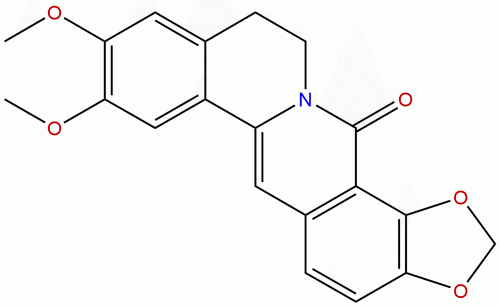
Oxidized berberine belongs to the primitive berberine type isoquinoline alkaloids, and its core skeleton is composed of a tetracyclic isoquinoline system. Compared with berberine, oxidized berberine has an additional oxygen atom at the C-13 position, forming an epoxy structure. This structural feature significantly changes the electronic distribution and spatial configuration of the molecule. Specifically, its molecular structure contains a highly conjugated quaternary ammonium salt system, endowing the molecule with strong polarity and water solubility characteristics. The molecular formula is C ₂₀ H ₁₇ NO ₅, and the molecular weight is 351.3580 Da, which is within the ideal range for small molecule drugs and is conducive to transmembrane transport and target binding.
In terms of physicochemical properties, the lipid water partition coefficient (LogP) of oxidized berberine is 3.0350, indicating its moderate lipophilicity and ability to achieve equilibrium between hydrophilic environment and lipid membrane. The topological polar surface area (TPSA) is 58.9200 Å ², which is below the threshold of 60 Å ², indicating that the molecule has good oral absorption potential and blood-brain barrier penetration ability. In fact, the pharmacological parameters clearly indicate that its blood-brain barrier penetration is "high", which is of great significance for the treatment of central nervous system infections or neurological related diseases. However, its water solubility is only 0.0064 mg/mL, making it a poorly soluble compound, which may be one of the key factors limiting its oral bioavailability. It is worth noting that the hERG inhibition risk assessment is negative, indicating a low risk of cardiac toxicity, while the Ames test result is 1.8, suggesting a possible genetic toxicity risk that needs to be addressed in subsequent drug development.
Compared with berberine (LogP about -1.5), the lipid solubility of oxidized berberine is significantly enhanced, mainly due to the introduction of epoxy structure that reduces the overall polarity of the molecule. This change in physicochemical properties not only affects its pharmacokinetic behavior, but may also alter its interaction mode with biological targets. In addition, berberine oxide is relatively stable under acidic conditions, but may undergo ring opening reactions in alkaline environments, which needs to be considered in formulation design and storage conditions.
Plant sources and extraction methods
Oxidized berberine mainly exists in plants of the Berberidaceae family, especially in the Berberis and Mahonia genera. Plants commonly used in traditional Chinese medicine, such as Coptis chinensis, Phellodendron amurense, and Berberis spp., all contain this compound. It is worth noting that the content of oxidized berberine in plants is usually low and often exists as a trace accompanying alkaloid of berberine, which poses certain challenges for its isolation and purification.
In terms of extraction methods, traditional solvent extraction is still the most commonly used approach. Due to the quaternary ammonium salt structure of berberine oxide, it has good solubility in acidic aqueous solutions, so the acid water extraction method is often used. Specifically, after crushing the dried plant material, extract it with a 0.5% -1% sulfuric acid or hydrochloric acid aqueous solution at 60-80 ℃. After alkalization of the extract, extract it with organic solvents such as chloroform or dichloromethane to obtain the crude extract of total alkaloids. However, due to the low content of oxidized berberine in the total alkaloids, further chromatographic separation is required to obtain the pure product.
The development of modern separation technology provides a new approach for the efficient acquisition of oxidized berberine. High speed counter current chromatography (HSCCC) technology utilizes the distribution differences of solutes between two-phase solvent systems to achieve efficient separation without using solid stationary phases, making it particularly suitable for the separation of alkaloids with similar polarities. Previous studies have used a two-phase solvent system of n-hexane ethyl acetate methanol water (1:5:1:5, v/v) to successfully isolate oxyberberine from total alkaloids of Coptis chinensis, with a purity of over 95%. In addition, the combination of preparative high-performance liquid chromatography (Prep HPLC) and mass spectrometry detection technology can achieve high-purity preparation from milligrams to grams, providing a material basis for subsequent pharmacological research.
It is worth noting that the biosynthetic pathway of oxyberberine in plants is closely related to berberine. Research has shown that berberine can undergo oxidative reactions in plants through the catalytic action of peroxidase or cytochrome P450 enzymes to produce oxidized berberine. This discovery suggests that efficient biotransformation production of oxidized berberine may be achieved by regulating plant culture conditions or using biocatalytic techniques. In recent years, the use of microbial cell factories to heterologous express key enzymes in the biosynthesis pathway of berberine has opened up new directions for the sustainable production of oxidized berberine.
Pharmacological activity research
Antibacterial activity
The antibacterial activity of oxidized berberine is one of its most concerned pharmacological properties. In vitro antibacterial experiments have shown that the compound exhibits inhibitory effects on various Gram positive and Gram negative bacteria, especially on Gram positive bacteria such as Staphylococcus aureus, Staphylococcus epidermidis, and Bacillus subtilis. The minimum inhibitory concentration (MIC) value is usually within the range of 4-32 μ g/mL. Although there is a certain gap compared to commonly used antibiotics in clinical practice, considering its multi-target mechanism of action and low risk of drug resistance, it still has important development value.
It is worth noting that oxyberberine also exhibits good antibacterial activity against methicillin-resistant Staphylococcus aureus (MRSA). MRSA is one of the main pathogens causing hospital infections and is resistant to multiple beta lactam antibiotics, making clinical treatment options very limited. Research has shown that the MIC values of oxyberberine for MRSA standard strains and clinical isolates are between 8-16 μ g/mL, and there is no cross resistance with commonly used clinical anti MRSA drugs such as vancomycin and linezolid. This discovery provides candidate molecules for the development of novel anti MRSA drugs.
In terms of antifungal activity, oxyberberine has shown certain inhibitory effects on common pathogenic fungi such as Candida albicans, Cryptococcus neoformans, and Aspergillus fumigatus. Its MIC value against Candida albicans is 16-64 μ g/mL. Although its activity is weaker than azole antifungal drugs such as fluconazole, it is equally effective against fluconazole resistant strains, suggesting that it may have a mechanism of action different from azole drugs.
Anti inflammatory and antioxidant activity
In addition to antibacterial activity, oxyberberine also exhibits significant anti-inflammatory and antioxidant activities. In the lipopolysaccharide (LPS) - induced macrophage inflammation model, oxyberberine can dose dependently inhibit the release of pro-inflammatory factors such as tumor necrosis factor - α (TNF - α), interleukin-6 (IL-6), and interleukin-1 β (IL-1 β). Mechanism studies have shown that this compound can reduce the transcriptional expression of inflammatory mediators by inhibiting the activation of the nuclear factor kappa B (NF - κ B) signaling pathway. In addition, berberine oxide can directly scavenge 1,1-diphenyl-2-trinitrophenylhydrazine (DPPH) radicals and hydroxyl radicals, exhibiting direct antioxidant activity, with a half maximal clearance concentration (EC ₅₀) of approximately 25 μ M.
Antitumor activity
In recent years, the anti-tumor activity of oxidized berberine has gradually attracted the attention of researchers. In vitro cell experiments showed that the compound had proliferation inhibitory effect on HepG2, MCF-7, A549 and other tumor cell lines, and the IC ≮₀ value was within the range of 10-50 μ M. Flow cytometry analysis showed that oxyberberine can block tumor cells in the G2/M phase and induce cell apoptosis by activating caspase-3 and caspase-9. It is worth noting that the compound has low toxicity to normal liver cells L02 and exhibits certain selective cytotoxicity, which provides a safety basis for it as an anti-tumor candidate drug.
Mechanism of action and molecular targets
The pharmacological activity of oxidized berberine is closely related to its multi-target mechanism of action. Based on existing research data, this compound can act on at least 8 key targets of bacteria and fungi, and this multi-target mode of action is an important feature that distinguishes it from traditional single target antibiotics.
Bacterial targets
Among bacterial targets, DNA gyrase (composed of GYRA and GYPB subunits) is one of the important targets for the oxidation of berberine. DNA gyrase belongs to type II topoisomerase and is responsible for regulating the supercoiled structure of bacterial DNA. It is a classic target of quinolone antibiotics. Molecular docking studies have shown that oxidized berberine can embed into the active site of DNA gyrase, form hydrogen bonds with Ser83 and Asp87 residues of GYRA subunit, and competitively bind to the ATP binding site of GYPB subunit, thereby inhibiting the catalytic activity of the enzyme. This dual subunit binding mode may enhance its inhibitory efficacy and reduce the risk of drug resistance caused by target mutations.
The cell division protein FTSZ is another important antibacterial target. FTSZ is a key protein involved in the formation of the Z-ring during bacterial cell division, and its function is similar to that of microtubule proteins in eukaryotic cells. Oxidative berberine can bind to the GTPase active site of FTSZ, inhibit GTP hydrolysis and Z-ring assembly, thereby blocking bacterial cell division. This mechanism of action is similar to FTSZ inhibitors used clinically (such as PC190723), but the chemical structure is completely different, suggesting that oxyberberine may have a unique binding mode.
Fatty acid synthase FABI is a key enzyme in the bacterial fatty acid synthesis pathway, catalyzing the acyl ACP reduction reaction. The inhibitory effect of oxidized berberine on FABI is related to its epoxy structure in the molecule, which can form covalent or non covalent interactions with Tyr156 and Lys163 residues of the FABI active site, leading to the loss of enzyme activity. Dihydrofolate reductase DHFR is a key enzyme in the folate metabolism pathway and a target for antibiotics such as trimethoprim. The inhibitory effect of berberine on DHFR is relatively weak, but its synergistic effect with other targets may enhance the overall antibacterial effect.
It is worth noting that oxyberberine can also act on resistance related proteins MECA and PENA. MECA is the gene encoding penicillin binding protein 2a (PBP2a) in MRSA, which has low affinity for β - lactam antibiotics and is the main mechanism of MRSA resistance. Research has shown that oxyberberine can downregulate the expression of the mecA gene, reduce PBP2a protein levels, and restore MRSA sensitivity to beta lactam antibiotics. PENA is a protein associated with penicillin resistance in Streptococcus pneumoniae, and the inhibitory effect of oxyberberine on it also helps overcome resistance.
Fungal targets
In terms of fungal targets, oxyberberine has inhibitory effects on ERG11 and CYP51A1. ERG11 and CYP51A1 both encode lanosterol 14 α - demethylase, which is a key enzyme in the fungal ergosterol biosynthesis pathway and a classic target for azole antifungal drugs. Oxidative berberine can bind to the active site of enzymes, inhibit their catalytic activity, hinder ergosterol synthesis, and accumulate toxic intermediates, ultimately inhibiting fungal growth. Compared with fluconazole, the binding mode of oxyberberine to ERG11 is different, which may explain its effectiveness against drug-resistant strains.
In addition, oxyberberine can also inhibit CDR1 (Candida resistance protein 1), which is an ABC transporter responsible for pumping drugs out of fungal cells and is one of the main mechanisms by which fungi develop resistance to azole drugs. By inhibiting the efflux function of CDR1, oxidized berberine can increase intracellular drug concentration and enhance the efficacy of other antifungal drugs. This' resistance modification 'has significant value in combination therapy strategies.
Evaluation of drug properties and pharmacokinetics
The evaluation of drug properties is a crucial step in determining whether natural products can be successfully converted into clinical drugs. Based on the Lipinski Five Rules, the molecular weight of oxidized berberine is 351.36 Da (<500 Da), the LogP is 3.04 (<5), the number of hydrogen bond donors is 1 (<5), and the number of hydrogen bond acceptors is 6 (<10), fully meeting the basic requirements for oral medication. However, its water solubility is only 0.0064 mg/mL, which is a low solubility compound, which may be the main factor limiting its oral bioavailability.
In terms of pharmacokinetics, there is currently limited in vivo research data on oxidized berberine. Based on its physicochemical properties, it is speculated that the compound may undergo first pass metabolism and have low bioavailability after oral absorption. Its high blood-brain barrier penetration suggests that the compound may reach effective concentrations in the central nervous system, which is of great significance for treating central nervous system infections, but may also increase the risk of central nervous system toxicity. The negative risk assessment of hERG inhibition indicates a low risk of cardiac toxicity, which is an important safety advantage.
The Ames test result is 1.8, indicating that there may be a certain genetic toxicity risk associated with oxidized berberine. This result needs to be taken seriously, as genetic toxicity is an indicator that needs to be strictly controlled in drug development. Subsequent research needs to confirm its safety through more comprehensive genetic toxicity assessments (such as in vitro micronucleus tests, in vivo comet assays, etc.), and explore the possibility of reducing genetic toxicity through structural modifications.
To address the issue of poor water solubility, various formulation techniques can be used to improve the bioavailability of oxidized berberine. For example, preparing in salt form (such as hydrochloride, sulfate) can significantly improve its water solubility; The use of nano delivery systems such as liposomes, nanoparticles, or cyclodextrin inclusion complexes can increase their apparent solubility and oral absorption; Pre drug design strategies, such as introducing phosphate or amino acid ester groups, can also improve their pharmacokinetic properties.
Clinical application prospects and prospects
Oxidized berberine, as a multi-target natural product, has shown potential application prospects in multiple therapeutic fields such as antibacterial, antifungal, anti-inflammatory, and anti-tumor. Its most prominent advantage lies in its multi-target mechanism of action, which makes it uniquely valuable in addressing the crisis of antibiotic resistance. Especially in the treatment of MRSA infections, oxyberberine not only has antibacterial activity on its own, but also can restore the sensitivity of β - lactam antibiotics to MRSA. This "synergistic sensitization" effect provides new ideas for the development of new anti infective treatment plans.
In the field of antifungal treatment, the effectiveness of oxyberberine against azole resistant strains and its inhibitory effect on CDR1 efflux pumps make it an ideal candidate drug for combination therapy. Combined use with azole drugs such as fluconazole may achieve synergistic antifungal effects, reduce effective doses, and minimize toxic side effects. In addition, its dual inhibitory effect on ERG11 and CYP51A1 may reduce the risk of fungal resistance through target mutations.
However, the clinical translation of oxyberberine still faces many challenges. Firstly, its poor water solubility and potential genetic toxicity are issues that need to be addressed as a priority. By studying the structure-activity relationship of the system and optimizing the molecular structure, it is expected to obtain derivatives with better water solubility, lower toxicity, and stronger activity. Secondly, there is currently insufficient research on the in vivo pharmacodynamics and pharmacokinetics of oxidized berberine, and systematic animal experiments and preclinical studies are needed to evaluate its therapeutic potential and safety. In addition, establishing efficient and economical large-scale preparation processes is also a necessary condition for achieving its industrialization.
Future research directions should include: (1) in-depth elucidation of the interaction mechanism between oxidized berberine and various targets, especially the molecular basis of its multi-target synergistic effect; (2) Conduct systematic structure-activity relationship research, design and synthesize a series of derivatives, and screen candidate compounds with better drug properties; (3) Develop new formulation technologies to improve their water solubility and bioavailability; (4) Conduct comprehensive toxicological evaluations, especially genetic toxicity and central nervous system toxicity assessments; (5) Explore its potential application in combination therapy and optimize the dosing regimen.
Conclusion
Berberine oxide, as a natural isoquinoline alkaloid with a unique chemical structure, has shown important research value and application potential in the fields of antibacterial, antifungal, anti-inflammatory, and anti-tumor due to its multi-target mechanism of action and extensive pharmacological activity. It can simultaneously act on bacterial DNA gyrase, FTSZ, FABI, DHFR, as well as resistance related proteins MECA and PENA, and has inhibitory activity against fungal ERG11, CYP51A1, and CDR1. This multi-target mode of action gives it a unique advantage in responding to antibiotic resistance crises.
Despite challenges such as poor water solubility and potential genetic toxicity in drug formation, the excellent hERG safety, moderate lipid solubility, and high blood-brain barrier penetration of oxyberberine provide a foundation for its further development. Through strategies such as structural modification, formulation optimization, and combination therapy, it is expected to overcome existing shortcomings and transform them into clinically available therapeutic drugs. With the in-depth study of the pharmacological mechanism and pharmacokinetic properties of oxidized berberine, this natural product is expected to play an important role in the field of anti infective therapy and contribute to human health.