


Product name: Ligustilide
Synonym name: Z-Ligustilide;4431-01-0
Catalogue No.: BP1469
Cas No.: 81944-09-4
Formula: C12H14O2
Mol Weight: 190.242
Botanical Source: Ligusticum and Angelica spp.
Physical Description: Oil
Type of Compound: Miscellaneous
Purity: 95%~99%
Analysis Method: HPLC-DAD or/and HPLC-ELSD
Identification Method: Mass, NMR
Packing: Brown vial or HDPE plastic bottle
Storage: Store in a well closed container, protected from air and light. Put into refrigerate or freeze for long term storage.
Whenever possible, you should prepare and use solutions on the same day. However, if you need to make up stock solutions in advance, we recommend that you store the solution as aliquots in tightly sealed vials at -20℃. Generally, these will be useable for up to two weeks.
The product could be supplied from milligrams to grams, up to kilograms
Inquire for bulk scale.
Descriptions:
Ligustilide and senkyunolide A, two of the most abundant Ligusticum chuanxiong constituents, have vasorelaxation activities in contractions to various contractile agents in rat isolated aorta. [1]
Ligustilide, one of the main compounds of Danggui essential oil, possesses antinociceptive and anti-inflammatory activities, also has an active dilatory effect on myometrium and an effective role in reducing the neurogenic and inflammatory pain, thus it has the potential to be developed into an effective drug for the treatment of various pain syndromes including primary dysmenorrhoea.[2]
Ligustilide exhibits anti-inflammatory activities by blocking the activation of MAPKs/IKK and the downstream transcription factors AP-1 and NF-κB, which may result from ligustilide's down-regulation of iROS production.[3]
Ligustilide has therapeutic effect against (AD)-like neuropathologies, it upregulates Klotho expression in the cerebral choroid plexus and serum, decreases and Forkhead box class O1 and inhibits the -like growth factor 1 pathway and induces Forkhead box class O1 activation in 293T cells along with Klotho upregulation, suggests that Klotho might be a novel therapeutic target for age-related AD, and Klotho upregulation might contribute to the neuroprotective effect of ligustilide against AD.[4]
References:
[1] Chan S, Cheng T G. J Ethnopharmacol, 2007, 111(3):677–80.
[2] Du J, Yu Y, Ke Y, et al. J Ethnopharmacol, 2007, 112(1):211-4.
[3] Su Y W, Chiou W F, Chao S H, et al. Int Immunopharmacol, 2011, 11(9):1166-72.
[4] Kuang X, Chen Y S, Wang L F, et al. Neurobiol Aging, 2014, 35(1):169-78.
[5] Wei L V, Lian W U, Na Y E, et al. Pharmacy & Clinics of Chinese Materia Medica, 2014, 5(2):13-15.
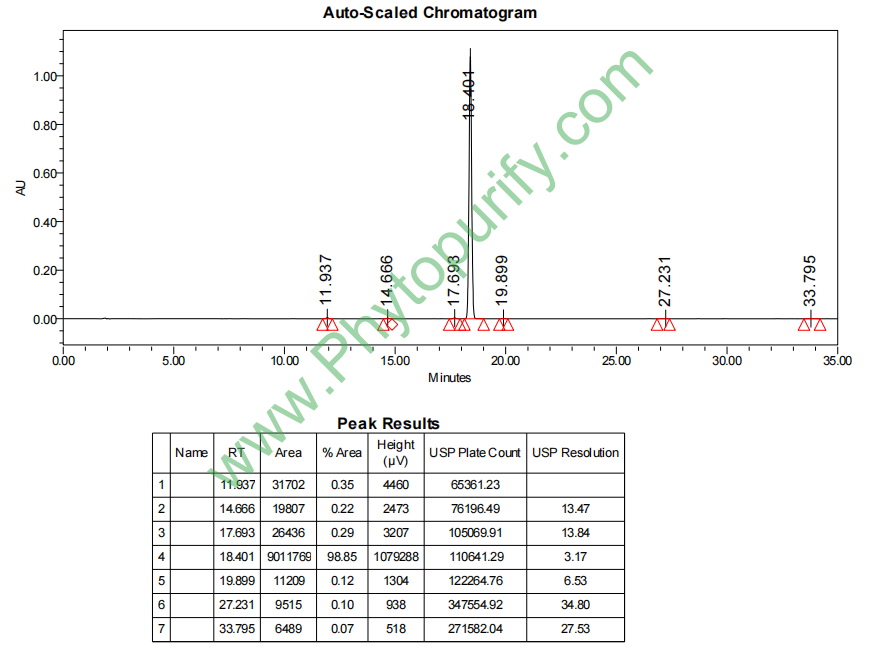
HPLC of Ligustilide
Storage conditions:Short-term storage at 2~8℃, long-term storage at -20 ~ -80℃
26.3000
3.1925
3.1927
.0618
6.4447
16.9808
High
88.0521
3.3864
Yes
Yes
No
No
Yes
Yes
0.9
Yes
Yes
Yes
Yes
Migraine is a common chronic neurovascular disease characterized by recurrent moderate to severe pulsatile headaches, often accompanied by symptoms such as nausea, vomiting, photophobia, and fear of sound, which seriously affect the quality of life and social function of patients. Its pathological and physiological mechanisms are complex, involving multiple levels such as activation of the trigeminal neurovascular system, cortical diffusive inhibition, neurotransmitter imbalance, and dysfunction of multiple ion channels and receptors. Although modern drugs such as triptans and CGRP receptor antagonists have achieved certain therapeutic effects in clinical practice, there are still limitations such as insufficient efficacy, high recurrence rate, and cardiovascular side effects. It is urgent to develop new, efficient, and safe treatment strategies. In this context, exploring active natural products with multi-target regulatory properties from traditional medicinal plants has become an important direction for drug development.
Ligustilide, chemical name 3-butenylphthalide, is a plant belonging to the family Apiaceae, Angelica sinensis(Angelica sinensis Oliv. Diels and Chuanxiong(Ligusticum chuanxiong The main active benzophenone components isolated from Hort. Angelica sinensis and Ligusticum chuanxiong, as important drugs in traditional Chinese medicine clinical practice for "nourishing blood and promoting blood circulation" and "dispelling wind and relieving pain", have a long history and definite therapeutic effects in treating headaches, dysmenorrhea, rheumatism and rheumatism. Gaoben lactone is considered as one of the key substance bases for its pharmacological effects such as analgesia, anti-inflammatory, and microcirculation improvement. In recent years, with the deepening of modern pharmacological research, the potential of ligustilide in anti migraine treatment has become increasingly prominent. Its function is not limited to traditional blood circulation and stasis removal, but has been proven to regulate multiple key targets closely related to migraine pathogenesis, including transient receptor potential vanillic acid subtype 1 (TRPV1), transient receptor potential anchor protein subtype 1 (TRPA1), 5-hydroxytryptamine transporter (SLC6A4), 5-hydroxytryptamine 1A receptor (HTR1A), voltage-gated sodium channel Nav1.1 (SCN1A), and calcitonin gene-related peptide (CGRP) system, demonstrating the synergistic therapeutic advantage of multiple pathways and targets. This article aims to systematically review the chemical properties, plant sources, pharmacological activities related to anti migraine effects, molecular mechanisms of action, pharmacological characteristics, and clinical application prospects of ligustilide, in order to provide scientific basis and theoretical reference for the development of new anti migraine drugs based on this natural product.
Gaoben lactone (CAS number: 81944-09-4) is a natural product with a special phthalein (phthalic acid lactone) skeleton, belonging to the phthalein class of compounds. Its molecular formula is C12H14O2 and its molecular weight is 190.2420 g/mol. Structurally, the core of ligustilide is a phthalein structure formed by the condensation of a benzene ring and a gamma lactone ring (pentacyclic lactone). There is a cis configured butenyl side chain (- CH2-CH=CH-CH3) attached to the 3rd (or 6th, depending on the numbering method, usually referring to the carbon atom adjacent to the carbonyl group of the lactone ring) of the benzene ring. The presence of the unsaturated side chain gives its molecule a chiral center, and naturally occurring ligustilide is mainly in the Z-configuration (i.e. cis), which is also its active configuration. This unique structure combines a lipophilic aromatic ring with a certain reactivity of alpha, beta unsaturated lactones and olefin domains, which is closely related to its biological activity.
In terms of physicochemical properties, the lipid water partition coefficient (LogP) of ligustilide is 3.1925, indicating its good lipophilicity, which facilitates its penetration through cell membranes and the blood-brain barrier. Its topological polar surface area (TPSA) is relatively low, at 26.30 Å ², further confirming its low molecular polarity. The water solubility is poor, about 0.0618 mg/mL, indicating that delivery technologies such as cyclodextrin inclusion, nanoemulsions, liposomes, etc. may be needed in formulation development to improve its solubility and bioavailability. It is worth noting that drug prediction shows a "high" blood-brain barrier permeability, which is crucial for its action on central nervous system targets to exert anti migraine effects. In addition, preliminary toxicity predictions indicate that the hERG channel inhibition risk is "no", with an Ames test value of 0.9 (usually<1.0 is considered to have a low mutagenic risk), suggesting that it has relatively good cardiac safety and genetic toxicity risk characteristics, providing favorable preliminary safety data for further drug development. Ligustilide is unstable under light and high temperature, and is prone to isomerization, oxidation, and polymerization reactions. Therefore, attention should be paid to avoiding light, low temperature, and inert gas protection during extraction, storage, and formulation processes.
Ligustilide mainly comes from various medicinal plants belonging to the Umbelliferae family and Ligusticum genus, among which Angelica sinensis and Ligusticum chuanxiong are the most important, and are the characteristic active ingredients and aroma sources of these two medicinal herbs.
Due to the fact that ligustilide is a volatile oil component and is thermally unstable, its extraction and separation methods need to be carefully selected
* Traditional extraction methods The most commonly used method is steam distillation, which utilizes the principle of volatile components co boiling with water vapor to extract volatile oils from medicinal materials. Then, methods such as silica gel column chromatography, preparative thin-layer chromatography, or high-performance liquid chromatography are used to separate and purify ligustilide from the volatile oils. This method is easy to operate, but high temperatures may cause some ligustilide to isomerize into a more stable trans isomer (E-ligustilide) or undergo degradation.
* Modern extraction techniques:
* Supercritical CO2 fluid extraction This method is carried out at a lower temperature, avoiding the destruction of thermosensitive components, with high extraction efficiency and good selectivity, and can obtain high-quality and high-purity ligustilide extract. It is currently one of the most promising extraction methods.
* Microwave assisted extraction/ultrasound assisted extraction These methods can significantly shorten extraction time and improve extraction efficiency, and are often used in combination with organic solvents such as ethanol and petroleum ether.
* Simultaneous distillation and extraction Combining steam distillation with solvent extraction enables continuous extraction and enrichment, suitable for laboratory scale preparation.
The crude extract of ligustilide usually requires further chromatographic purification. Its analysis and identification mainly rely on gas chromatography-mass spectrometry (GC-MS) and high performance liquid chromatography (HPLC), especially HPLC, which can analyze at room temperature and accurately reflect the true content of Z-ligustilide in the sample. In order to increase stability and applicability, it is often prepared into cyclodextrin inclusion complexes or phospholipid complexes.
Gaoben lactone has a wide range of pharmacological activities, including neuroprotection, anti-inflammatory, analgesic, antiplatelet aggregation, vasodilation, anti-tumor, etc. In the context of anti migraine, its core pharmacological effects are mainly reflected in the following aspects:
Analgesic and anti nociceptive effects Multiple in vivo experimental models have confirmed that ligustilide has significant analgesic effects. In chemical and thermogenic pain models such as acetic acid writhing, formalin induced pain, and hot plate method, ligustilide can dose dependently reduce pain responses. More importantly, in the nitroglycerin induced migraine rat model, ligustilide treatment can effectively reduce migraine like behaviors such as scratching the head and climbing the cage, and decrease the expression of c-Fos protein (a marker of neuronal activation) in the trigeminal cervical spinal cord complex. Its effect is comparable to that of the positive drug sumatriptan.
Neuroprotective and regulatory effects Migraine attacks are associated with cortical diffusive depression (CSD) and subsequent neuronal overexcitation and damage. Research has shown that ligustilide can alleviate glutamate induced neuronal excitotoxicity, inhibit intracellular calcium overload, reduce reactive oxygen species production, enhance antioxidant enzyme activity, and thus protect neurons. In the migraine model, it can inhibit the propagation speed and amplitude of CSD, which may be one of its mechanisms for preventing migraine attacks.
Anti inflammatory and immune regulatory effects Neurogenic inflammation is a key link in the onset of migraine, involving dural vasodilation, plasma protein extravasation, and degranulation of mast cells. Gaoben lactone can significantly inhibit the activation of microglia and astrocytes induced by lipopolysaccharide (LPS) or inflammatory mediators, and reduce the release of pro-inflammatory factors such as tumor necrosis factor - α (TNF - α), interleukin-1 β (IL-1 β), and interleukin-6 (IL-6). In migraine animal models, it can reduce the levels of inflammatory mediators in the trigeminal ganglion and brainstem, inhibit degranulation of mast cells, and alleviate neurogenic inflammatory responses.
Vascular regulatory effect Ligustilide has a bidirectional regulatory effect on blood vessels. It can relax ex vivo vascular rings pre contracted by norepinephrine, potassium chloride, etc. This effect is not related to endothelium, but may be related to blocking voltage dependent calcium channels and receptor regulated calcium channels, reducing extracellular calcium influx. This vasodilation effect helps alleviate abnormal constriction or dilation of cerebral blood vessels during migraine attacks. At the same time, it can also inhibit platelet aggregation and improve microcirculation, which is consistent with the theory of "promoting blood circulation and removing blood stasis" in traditional Chinese medicine.
Sedative and anti anxiety effects Some migraine patients have emotional disorders such as anxiety and irritability. Gaoben lactone has shown certain anti anxiety activity in animal experiments such as elevated cross maze and light dark box, and can synergize with the sedative and hypnotic effects of pentobarbital sodium, which helps alleviate the mental symptoms associated with migraine.
The anti migraine effect of ligustilide is not achieved through a single pathway, but through synergistic regulation of multiple molecular targets closely related to the pathophysiology of migraine, forming a multi-target action network.
Regulating ion channels:
Regulating the monoamine nervous system:
Inhibition of CGRP signaling pathway:
Anti inflammatory and antioxidant pathways:
In summary, ligustilide regulates TRPA1/TRPV1 channels and sodium channels upstream to inhibit pain initiation and neuronal hyperexcitation; The "midstream" regulates the 5-HT system to stabilize neurotransmitter balance and affect emotions; Downstream inhibition of CGRP release and inflammatory response reduces vascular dilation and neurogenic inflammation, forming a three-dimensional, multi-target action network from the periphery to the center, from pain transmission to emotion regulation.
Although ligustilide has shown great potential in pharmacological activity, its pharmacological development still faces some challenges, mainly due to its physicochemical properties and in vivo metabolic characteristics.
Pharmacokinetic characteristics:
Gaoben lactone is rapidly absorbed after oral administration, but its absolute bioavailability is relatively low, which is related to its poor water solubility, significant first pass effect, and instability in the gastrointestinal tract. Animal pharmacokinetic studies have shown that it is widely distributed in the body, and due to its high lipophilicity and small molecular weight, it can effectively penetrate the blood-brain barrier and has a certain distribution in brain tissue, providing a guarantee for its pivotal role. Gaoben lactone is rapidly metabolized in the body, mainly through the oxidation of external double bonds, epoxidation, and hydrolysis and ring opening of the lactone ring, producing various metabolites. The prototype drug has a short elimination half-life, which may result in limited duration of its action. Mainly excreted through urine and feces.
Challenges and Strategies in Drug Development:
1. stability issue Ligustilide is sensitive to light, heat, and oxygen, and is prone to degradation and polymerization. The solution includes: using light shielded packaging and low-temperature storage; Add antioxidants (such as vitamin E) to the formulation; Or prepare it as a prodrug (such as esterification derivatives) to improve chemical stability.
2. Low solubility and low bioavailability This is the main obstacle to developing oral formulations. Advanced drug delivery systems are the key to solving this problem:
* Cyclodextrin inclusion complex By encapsulating ligustilide molecules in the cavities of cyclodextrin, their water solubility and stability can be significantly improved.
* nano-formulation Such as liposomes, nanoemulsions, solid lipid nanoparticles, polymer nanoparticles, etc. These nanocarriers can not only improve solubility and bioavailability, but also achieve brain targeted delivery through surface modification, prolonging in vivo circulation time.
* Self microemulsion drug delivery system After oral administration, a microemulsion spontaneously forms in the gastrointestinal tract, which is beneficial for improving the absorption of lipophilic drugs.
* Phospholipid complex Combining with phospholipids to form complexes, improving their lipid solubility and membrane permeability.
3. Metabolism is too fast It can be delayed by structural modification, such as introducing metabolically stable functional groups, or in combination with cytochrome P450 enzyme inhibitors.
4. Formulation selection: In addition to oral solid and liquid preparations, considering the need for rapid onset of migraine in acute attack, the development of non oral rapid release dosage forms such as nasal sprays or sublingual tablets is also a promising direction, which can avoid first pass effects and improve bioavailability.
The existing pharmacological prediction parameters, such as good BBB permeability, low hERG and Ames risk, have laid a positive foundation for the further development of ligustilide. Future research should focus on overcoming stability and bioavailability bottlenecks through formulation and prodrug strategies, and conducting systematic preclinical pharmacokinetic/toxicological studies.
Gaoben lactone, as a multi-target anti migraine lead compound derived from traditional Chinese medicine, has broad clinical application prospects, but solid research is still needed to promote its transformation.
Potential application directions:
1. Acute migraine treatment: Based on its rapid analgesia, inhibition of CGRP release and vascular regulation, rapid release preparations (such as orally disintegrating tablets and nasal sprays) were developed for symptom control in the acute phase of migraine. Its multi-target properties may be effective for patients who are unresponsive or contraindicated to some triptans.
2. Preventive treatment for migraine Based on its potential for neuroprotection, anti CSD, long-acting anti-inflammatory, and regulation of the 5-HT system, develop sustained-release formulations for the prevention of frequent or chronic migraine attacks, reducing the frequency and severity of attacks.
3. Development of compound preparations As an active ingredient, it can form a fixed dose combination with other drugs that have synergistic effects (such as nonsteroidal anti-inflammatory drugs, magnesium supplements, or plant extracts with different targets of action), which may produce synergistic and attenuated effects.
4. Treating accompanying symptoms Utilizing its anti anxiety and sedative properties, it is suitable for migraine patients with obvious anxiety, tension, or sleep disorders, achieving synchronous management of "headache comorbidity".
Future research prospects:
1. In depth mechanism exploration Using advanced technologies such as gene knockout animals, optogenetics, and chemical genetics, we aim to more accurately elucidate the specific targets and neural circuit mechanisms of ligustilide in vivo. Conduct comparative studies on the differences in activity between its different isomers (Z-type and E-type).
2. Structural optimization and modification Using ligustilide as the parent nucleus, a systematic medicinal chemical modification is carried out with the aim of improving its stability, water solubility, metabolic stability, and target selectivity, and discovering derivatives or analogues with better activity and drug properties.
3. Advanced delivery system research and development Vigorously invest in the research of brain targeted nano delivery systems, long-acting injection microspheres, and other new formulations targeting ligustilide to solve its drug development bottleneck.
4. Preclinical and clinical research Complete a standardized GLP toxicology evaluation to clarify the safety of long-term use. Design and conduct rigorous randomized, double-blind, placebo-controlled clinical trials to evaluate the effectiveness and safety of treating acute migraine and preventing migraine in stages, and explore the optimal dosage and regimen.
5. Real World and Personalized Medicine In the future, the relationship between its therapeutic effect and patient genetic polymorphism (such as SCN1A and CGRP receptor related genes) can be studied to explore the possibility of personalized medication.
Gaoben lactone, a natural molecule derived from traditional Chinese medicines such as Angelica sinensis and Ligusticum chuanxiong for promoting blood circulation and relieving pain, has shown remarkable potential in the field of anti migraine due to its unique chemical structure and multi-target pharmacological mechanism. It can not only intervene in classic pain and inflammation pathways such as TRPV1/TRPA1 and CGRP, but also regulate the 5-HT system, sodium channel function, and oxidative stress response, forming a synergistic system to combat the complex pathological network of migraine. Despite facing challenges in stability, solubility, and pharmacokinetics, the development of modern medicinal chemistry and formulation technology provides powerful tools to overcome these obstacles. From traditional medical wisdom to modern scientific interpretation, the research on ligustilide is a microcosm of the modernization and internationalization of traditional Chinese medicine. In the future, through in-depth interdisciplinary cooperation, continuous deepening of its mechanism of action research, and active promotion of drug development based on advanced technology, ligustilide and its derivatives are expected to move from the laboratory to clinical practice, providing a new, efficient, multi-target and natural treatment option for billions of migraine patients worldwide, achieving a magnificent transformation from "ancient prescription flavor" to "modern new drugs".
