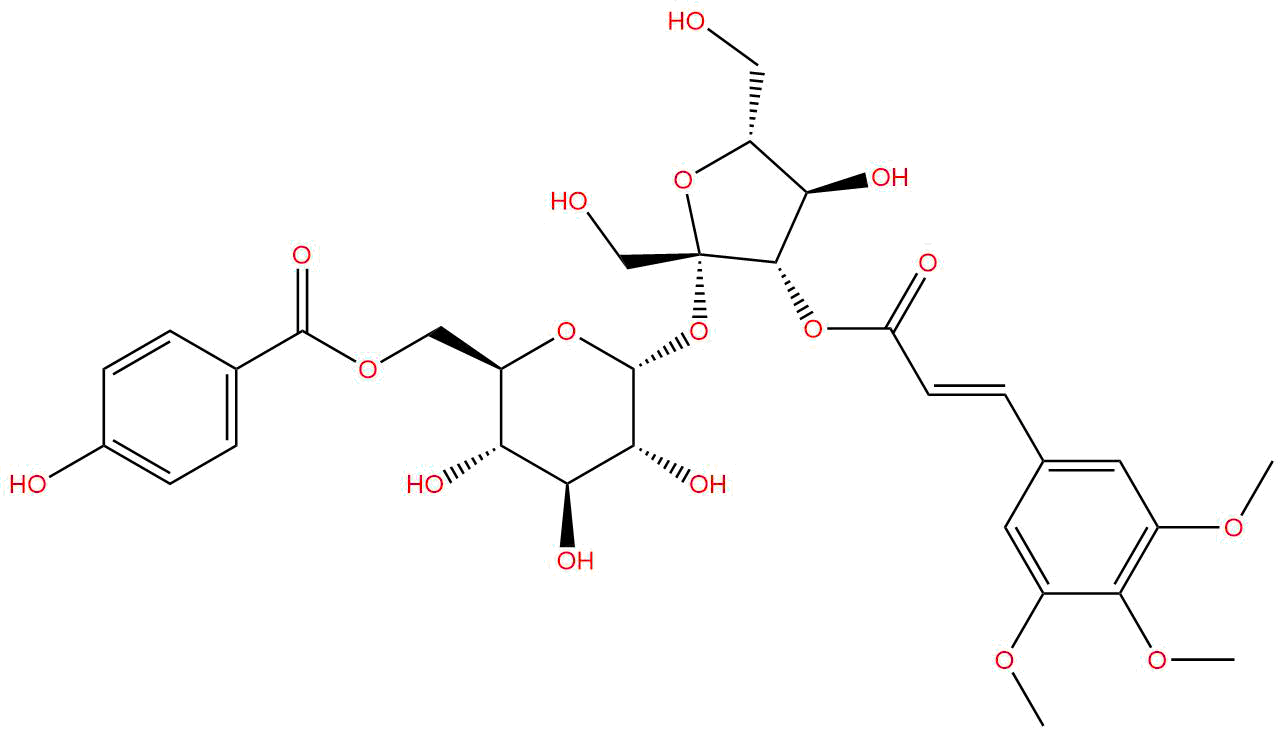


Product name: Tenuifoliside A
Synonym name:
Catalogue No.: BP1375
Cas No.: 139726-35-5
Formula: C31H38O17
Mol Weight: 682.628
Botanical Source: Polygalae radix
Physical Description:
Type of Compound: Phenylpropanoids
Purity: 95%~99%
Analysis Method: HPLC-DAD or/and HPLC-ELSD
Identification Method: Mass, NMR
Packing: Brown vial or HDPE plastic bottle
Storage: Store in a well closed container, protected from air and light. Put into refrigerate or freeze for long term storage.
Whenever possible, you should prepare and use solutions on the same day. However, if you need to make up stock solutions in advance, we recommend that you store the solution as aliquots in tightly sealed vials at -20℃. Generally, these will be useable for up to two weeks.
The product could be supplied from milligrams to grams
Inquire for bulk scale.
Chengdu Biopurify Phytochemicals Ltd. is a leading company in the research, development, manufacture and marketing of High Quality Phytochemicals and Extracts(especially Active Ingredients from Traditional Chinese Medicine,TCM), Natural Active Pharmaceutical Ingredients worldwide.
The main services:
A. Supply active ingredients and reference standards of TCM, from mgs to kgs scale
B. Custom extraction and purification, target Herb Active Ingredients
C. Custom synthesis and semi-synthesis for Natural Active Ingredients
D. CR(contract research), CM(contract manufacture) and PD(process development) services from lab scale, pilot scale to commercial scale(GMP is also available)
E. TCM compounds library for drug screen,more than 3000 compounds available, many of them are rare and unique.
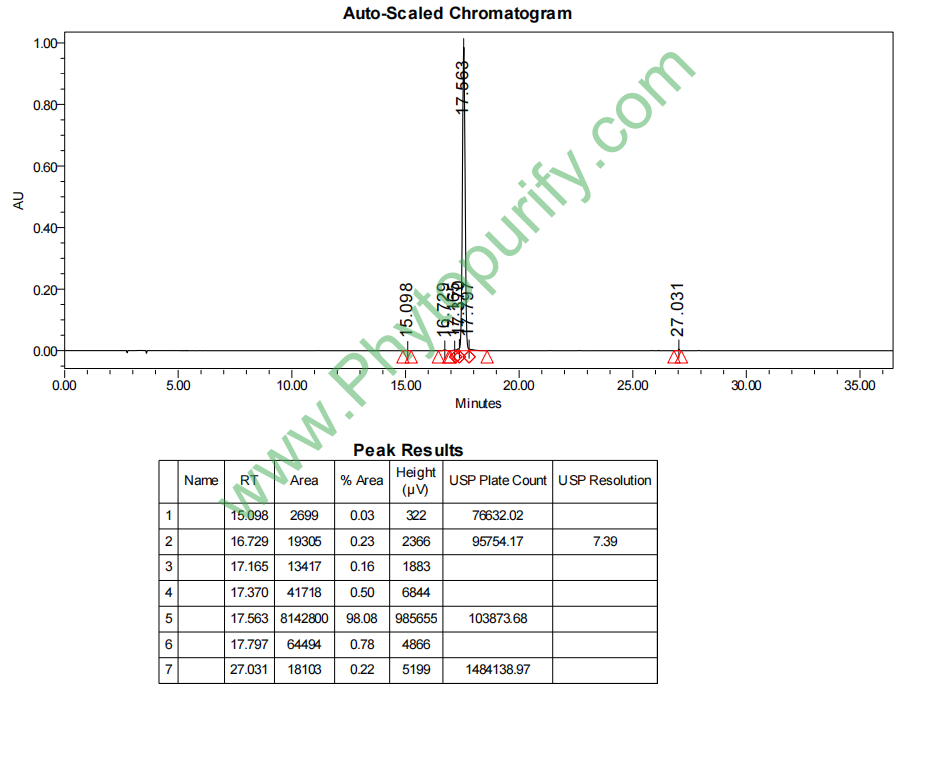
HPLC of Tenuifoliside A
Storage conditions:Short-term storage at 2~8℃, long-term storage at -20 ~ -80℃
249.5900
-.0328
-.0406
2.2950
.4864
.2168
Low
74.3151
4.7288
Yes
No
No
No
No
No
0.0
Yes
Yes
Yes
Yes
Cognitive dysfunction is a clinical syndrome characterized by progressive decline in advanced brain functions such as learning, memory, thinking, and judgment. It is commonly seen in various neurological and psychiatric disorders such as Alzheimer's disease, vascular dementia, and depression. With the aging of the global population, the incidence rate of cognitive dysfunction continues to rise, which has become a serious public health challenge. At present, first-line clinical drugs such as acetylcholinesterase inhibitors and NMDA receptor antagonists can alleviate symptoms to a certain extent, but they cannot reverse the disease process and are often accompanied by side effects. Therefore, exploring new neuroprotective and cognitive improvement drugs with multi-target, high efficiency and low toxicity characteristics from natural products is an important direction for current drug development.
Yuanzhi(Polygala tenuifolia As a traditional Chinese medicine, Willd. has been widely used for thousands of years to treat insomnia, forgetfulness, and restlessness, as it has the effects of calming the mind, improving intelligence, dispelling phlegm, and opening the orifices. Modern pharmacological research has confirmed that the neuroprotective and cognitive improvement effects of Yuanzhi are mainly attributed to its rich content of oligosaccharide esters, saponins, and ketone compounds. Tenuifoliside A is a representative oligosaccharide ester compound isolated from the roots of Eucommia ulmoides, with a CAS number of 139726-35-5. In recent years, studies have found that Zhizhi glycoside A not only has significant antidepressant activity, but also has the potential to improve cognitive function in various cell and animal models. Its effects involve multiple mechanisms such as anti apoptosis, promoting neural nutrition, regulating neurotransmitters, and antioxidant activity. This article aims to provide a systematic review of the chemical structure, plant origin, pharmacological activity, molecular mechanism of action, medicinal properties, and application prospects of Zhizhi glycoside A in the treatment of cognitive impairment, in order to provide scientific basis for the deep development and transformation research of this natural product.
Xiye Yuanzhi Glycoside A is a structurally unique oligosaccharide ester compound. Its molecular formula is C29H38O18 and its molecular weight is 682.6280. From a chemical structure perspective, it is composed of a trisubstituted benzoyl group connected via ester bonds to a tetrasaccharide backbone consisting of three molecules of rhamnose and one molecule of fructofuranose. This benzoyl substituted oligosaccharide ester structure is an important basis for its biological activity.
Based on its chemical structure, Zhizhi glycoside A exhibits specific physicochemical properties. The calculated lipid water partition coefficient (LogP) is -0.0328, indicating that the compound has good hydrophilicity, which is consistent with the characteristic of containing multiple hydroxyl and sugar units in the molecule. The topologically polar surface area (TPSA) is as high as 249.5900 Å ², further confirming its characteristics of high molecular polarity and abundant hydrogen bond donor and acceptor sites. The predicted water solubility value is 2.2950 (usually measured in log mol/L or mg/mL, indicating good solubility), which is beneficial for its dissolution and distribution in organisms. However, high polarity and large TPSA also pose challenges to its ability to penetrate biofilms, especially the blood-brain barrier (BBB) penetration, which is crucial for central nervous system drugs. Preliminary pharmacological prediction analysis indicates that the blood-brain barrier permeability of Zhizhi glycoside A is "low", which may be one of the key bottlenecks that need to be overcome in its development as a central nervous system drug. In addition, the compound showed no risk of hERG potassium channel inhibition in preliminary toxicity prediction (hERG inhibition: No), and the Ames test predicted a value of 0.0, suggesting that it may not have genetic toxicity and has good safety potential.
The main source of Zhizhi glycoside A in fine leaves comes from plants of the genus Zhizhi in the family Zhizhi Yuanzhi(Polygala tenuifolia Willd.)The dried roots are also the authentic source of traditional Chinese medicine Yuanzhi. In addition, within the same genus of plants Guazi Jin(Polygala japonica Houtt.)The presence of this component has also been found in. Yuanzhi is mainly distributed in North China, Northeast China, Northwest China, and Central China. Its medicinal parts, such as the root bark (called "Yuanzhi tube") or root (called "Yuanzhi meat"), are rich in active ingredients.
The efficient and targeted extraction and separation of amygdalin A from plant materials is the basis for studying its pharmacological effects. The commonly used extraction and purification processes currently combine traditional and modern separation techniques:
1. Extract Solvent extraction method is usually used. After crushing the dried roots of Yuanzhi, methanol, ethanol, or ethanol water mixed solutions are commonly used for heating reflux extraction or ultrasound assisted extraction. The alcohol extraction method can effectively dissolve polar components such as oligosaccharides and saponins.
2. Coarse separation The extract obtained by vacuum concentration of the extract is subjected to gradient extraction with organic solvents such as petroleum ether, ethyl acetate, and n-butanol in sequence. Xiyeyuanzhi glycoside A is mainly enriched in the highly polar n-butanol extraction site.
3. Refined and purified The n-butanol fraction was further separated and purified using various column chromatography techniques. Macroporous adsorption resin columns (such as D101 and AB-8) are often used for initial decolorization and enrichment, and then repeated separation is performed by silica gel column chromatography, reverse phase silica gel column chromatography (such as ODS-C18), dextran gel column chromatography (such as Sephadex LH-20), etc. Finally, high-purity preparation was performed using high-performance liquid chromatography (HPLC) or preparative thin layer chromatography (PTLC) to obtain the monomeric compound of Zhizhi glycoside A. Modern technologies such as high-speed countercurrent chromatography (HSCCC) are increasingly being used for the separation of such natural products due to their advantages of irreversible adsorption and high recovery rate.
The pharmacological activity research of Xiye Yuanzhi Glycoside A mainly focuses on the nervous system, especially in the areas of antidepressant and neuroprotection/cognitive promotion, reflecting the traditional efficacy of traditional Chinese medicine Yuanzhi in promoting intelligence and calming the mind.
Antidepressant effect In various animal models of depression (such as chronic unpredictable mild stress model, forced swimming experiment, and tail suspension experiment), Zhizhi glycoside A from slender leaves exhibits activity comparable to the classic antidepressant fluoxetine, significantly shortening animal immobility time, increasing sugar preference, and improving depressive like behavior. Its effect may take effect quickly and have fewer side effects.
Neuroprotective and Cognitive Promoting Effects This is the most promising research direction for Zhizhi glycoside A.
Other potential activities Based on its structural characteristics and preliminary research, Zhizhi glycoside A may also have auxiliary neuroprotective effects such as antioxidant and anti-inflammatory effects, but further systematic research is needed in these areas.
The neuroprotective and cognitive improvement effects of Zhizhi glycoside A are not achieved through a single target, but involve a complex multi-target signal network regulation. Its core mechanism is closely related to the following pathways and targets:
ERK/CREB/BDNF signaling pathway - the core of neural nutrition and plasticity This is the most clearly studied pathway in the mechanism of action of Zhizhi glycoside A. Research has shown that in C6 cells and neurons, amygdalin A can activate extracellular signal regulated kinase (ERK), which enters the nucleus, phosphorylates and activates the transcription factor cAMP response element binding protein (CREB). P-CREB further upregulates the transcription and expression of brain-derived neurotrophic factor (BDNF). BDNF is a key factor in maintaining neuronal survival, promoting synaptic growth, and enhancing synaptic plasticity. The activation of this pathway is the core molecular basis for the promotion of cell proliferation, resistance to apoptosis, and ultimately improvement of cognitive function by Zhizhi glycoside A.
Regulation of key targets related to cognitive impairment The network of action of Zhizhi glycoside A covers multiple aspects of the pathophysiology of cognitive impairment
In summary, Zhizhi glycoside A activates the core neurotrophic pathway ERK/CREB/BDNF and synergistically regulates multiple key targets related to neurotransmitters, A β metabolism, oxidative stress, and tau pathology, forming a multidimensional and networked neuroprotective and cognitive enhancement mode, which is in line with the multi-target strategy advocated by modern treatment of complex neurological diseases.
Although Zhizhi glycoside A has shown good pharmacological activity in preclinical studies, its successful development as a drug largely depends on its drugability and pharmacokinetic (PK) properties.
Analysis of drug properties parameters:
Current status of pharmacokinetic research At present, there are relatively few reports on the pharmacokinetic studies of the glycoside A system in slender leaves, which limits a comprehensive understanding of its in vivo processes. Limited animal experiments (rats) suggest:
As a natural active molecule derived from traditional Chinese medicine, Zhizhi glycoside A has shown unique advantages and broad application prospects in the treatment of cognitive dysfunction and related neurological and psychiatric disorders.
Application Prospects:
Future research prospects and challenges:
Xiye Yuanzhi Glycoside A is a representative active compound discovered from the traditional puzzle herb Yuanzhi. A large number of preclinical studies have shown that it exerts significant comprehensive pharmacological effects on depression, apoptosis, and cognitive function improvement by activating the core neural nutrition pathway ERK/CREB/BDNF, and multi-target regulation of neurotransmitters, oxidative stress, protein metabolism, etc., perfectly interpreting the scientific connotation of traditional Chinese medicine "calming the mind and improving intelligence". Although its high polarity and predicted low blood-brain barrier permeability are major obstacles to the development of central nervous system drugs, its clear multi-target mechanism of action and good preliminary safety prediction endow it with enormous potential for development. Future research should focus on using advanced drug delivery technologies to overcome the challenge of brain entry and promote its translational process through systematic pharmacokinetic and clinical studies. The study of Zhizhi glycoside A not only provides new candidate molecules for the prevention and treatment of brain diseases such as cognitive impairment, but also provides important scientific examples for a deeper understanding of the modernization and internationalization of traditional Chinese medicine Yuanzhi.
