


Product name: Alpha-Thujone
Synonym name:
Catalogue No.: BP0159
Cas No.: 546-80-5
Formula: C10H16O
Mol Weight: 152.237
Botanical Source:
Type of Compound:
Purity: 95%~99%
Analysis Method: HPLC-DAD or/and HPLC-ELSD
Identification Method: Mass, NMR
Packing: Brown vial or HDPE plastic bottle
Storage: Store in a well closed container, protected from air and light. Put into refrigerate or freeze for long term storage.
Whenever possible, you should prepare and use solutions on the same day. However, if you need to make up stock solutions in advance, we recommend that you store the solution as aliquots in tightly sealed vials at -20℃. Generally, these will be useable for up to two weeks.
The product could be supplied from milligrams to grams
Inquire for bulk scale.
For Reference Standard and R&D, Not for Human Use Directly.
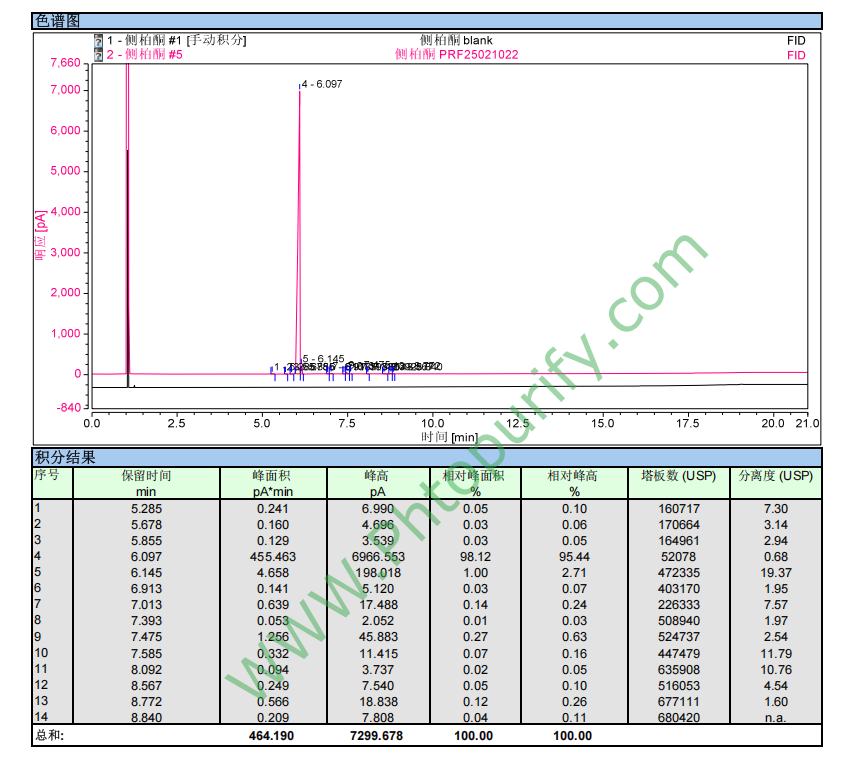
HPLC of Alpha-Thujone
Storage conditions:Short-term storage at 2~8℃, long-term storage at -20 ~ -80℃
17.0800
2.2900
2.2900
High
Yes
No
No
Unknown
No
Positive
Alpha THujone (CAS number: 546-80-5) is a natural monoterpene ketone compound with a unique structure and biological activity. As the (1S, 4R, 5R) - stereoisomer of alpha thujone, thujone has attracted widespread attention in the fields of natural product chemistry and pharmacology. Its molecular structure endows it with diverse biological activities, especially showing potential therapeutic value in regulating insulin resistance related signaling pathways. Insulin resistance is the core pathological basis of type 2 diabetes and multiple metabolic syndromes. It is important to find new natural molecules that can improve insulin sensitivity. This article provides a systematic review of the chemical structure, plant sources, extraction methods, pharmacological activity, mechanism of action, pharmacological evaluation, and clinical application prospects of thujone, aiming to provide theoretical basis and research direction for natural product pharmacology research and new drug development.
The chemical formula of thujone is C10H16O, with a molecular weight of 152.2300. Its structure belongs to monocyclic monoterpene ketones and has a typical cyclopentenone skeleton. Platycone is the (1S, 4R, 5R) - stereoisomer of α - Platycone, and is the enantiomer of (+) - α - Platycone, reflecting its stereochemical specificity. Its LogP value is 2.29, indicating that it has moderate lipid solubility, which is beneficial for membrane penetration and bioavailability. The polar surface area (TPSA) is 17.08 Å ², and the number of hydrogen bond acceptors is 1, indicating its low molecular polarity, which may affect its binding affinity and pharmacokinetic properties with biomolecules.
Platycodon can cross the blood-brain barrier (BBB), which means its potential role and toxicity in the central nervous system require special attention. Toxicological data shows that its median lethal dose (LD50) is 192 mg/kg, indicating that it has a certain degree of acute toxicity. The liver toxicity test result is positive, indicating that it may have adverse effects on liver function, while the cardiac toxicity and hERG channel inhibition are both negative, indicating that its cardiovascular safety is relatively good. The Ames test is positive, indicating a potential genotoxicity risk, which poses a certain challenge to its clinical development.
Platycladus orientalis and its related essential oils are mainly present in plants of the Platycladus genus. This type of plant is widely distributed in temperate regions of Asia and has traditionally been used in traditional Chinese medicine and folk herbal treatments. As one of the main components of essential oils, the content and composition of thujone are significantly influenced by factors such as plant species, growth environment, harvesting time, and extraction process.
The commonly used extraction methods include steam distillation and solvent extraction. The steam distillation method is widely used for the extraction of thujone due to its simple operation and ability to maintain the activity of its components. Solvent extraction can use organic solvents such as ethanol and ethyl acetate, combined with ultrasound assisted or microwave-assisted techniques to improve extraction efficiency and purity. In recent years, supercritical CO2 extraction technology has become a research hotspot for extracting thujone due to its green environmental protection and high selectivity. In addition, chromatographic separation techniques such as gas chromatography-mass spectrometry (GC-MS) are widely used for the identification and purification of thujone.
The pharmacological activity research of thujone covers multiple aspects such as neuroprotection, anti-inflammatory, antibacterial, antioxidant, and metabolic regulation. Its potential role in insulin resistance and metabolic diseases is particularly noteworthy.
Regulation of insulin resistance
Platycodon improves insulin sensitivity by modulating the insulin signaling pathway through multiple targets. In vitro cell models and animal experiments have shown that thujone can regulate the expression of key enzymes and signaling proteins, promote glucose metabolism, lower blood glucose levels, and alleviate metabolic disorders.
Neurological function
Platycodon has the ability to cross the blood-brain barrier and exhibits certain neuroregulatory activity. Its regulatory effect on GABA receptors is considered to be the basis of its sedative and anticonvulsant effects, but high doses may cause neurotoxicity.
Anti inflammatory and antioxidant properties
Platycodon can inhibit the release of inflammatory mediators, alleviate oxidative stress damage, and protect tissue cell function. This effect is closely related to its regulation of antioxidant transcription factors such as NFE2L2.
Antibacterial activity
As a natural monoterpene ketone, thujone exhibits inhibitory effects on various bacteria and fungi, especially on Gram positive bacteria, indicating its potential application value in the field of anti infection.
The mechanism of action of thujone in insulin resistance involves multiple signaling pathways and key molecular targets, mainly including:
CDC25B As a cell cycle regulator, CDC25B is involved in cell proliferation and metabolic regulation in insulin signaling. Platycodon may promote the normal transmission of insulin signaling by regulating CDC25B activity.
PTPN1 (protein tyrosine phosphatase 1B)PTPN1 is a negative regulator of insulin receptors, and inhibiting its activity helps enhance insulin sensitivity. Platycodon may alleviate insulin resistance by inhibiting PTPN1.
STAT3 The STAT3 signaling pathway plays an important role in inflammation and metabolic regulation, and thujone reduces inflammation and improves metabolic status by regulating STAT3 activity.
ABCB1 As a multidrug resistance related protein, ABCB1 plays a critical role in drug metabolism and cellular detoxification, and thujone may affect its expression, regulating the balance of drugs and metabolites within cells.
PRKCA and PRKCD (protein kinase C subtypes)These two kinases are involved in insulin signaling and cellular metabolism regulation, and the regulation of their activity by thujone helps improve insulin sensitivity.
NFE2L2(NRF2)As a core transcription factor for antioxidant stress, NFE2L2 regulates the expression of various antioxidant enzymes, and thujone activates the NFE2L2 pathway to alleviate oxidative stress and protect insulin signaling.
SHBG (Sex Hormone Binding Globulin)SHBG levels are closely related to insulin resistance, and thujone may affect the activity of metabolic hormones by regulating SHBG expression.
NR1H4 (farnesol X receptor, FXR)FXR regulates bile acid metabolism and lipid metabolism, and the regulation of NR1H4 by thujone helps improve metabolic abnormalities.
SIRT1 As a deacetylase, SIRT1 regulates energy metabolism and insulin sensitivity, and thujone activates the SIRT1 pathway to promote metabolic homeostasis.
In summary, thujone has the potential to improve insulin resistance by synergistically regulating insulin signaling and metabolic balance through multiple targets and pathways.
The pharmacological evaluation of thujone shows that it has certain potential for drug development, but there are also challenges in terms of safety and toxicology.
Pharmacokinetic characteristics
Platycone has a moderate molecular weight, good lipid solubility (LogP 2.29), low polarity, and is easily absorbed by the intestine. Its low TPSA and hydrogen bond receptor count are beneficial for membrane permeability and can cross the blood-brain barrier, suggesting its potential role in the central nervous system. Metabolism in the body is mainly carried out through the liver enzyme system, and the metabolites and their activities need further research.
Safety and Toxicology
The LD50 of thujone is 192 mg/kg, indicating its high acute toxicity and requiring careful dosage control. A positive result of hepatotoxicity indicates that it may induce liver damage and needs to be evaluated in preclinical toxicology studies. Both cardiac toxicity and hERG channel inhibition were negative, reducing the risk of cardiovascular adverse reactions. A positive Ames test indicates potential genetic toxicity, which may affect long-term medication safety.
Potential for drug interactions
The regulation of various metabolic enzymes and transporters (such as ABCB1) by thujone may lead to drug interactions, and its synergistic or antagonistic effects with commonly used drugs need to be systematically evaluated.
Dosage form and administration route
At present, thujone mainly exists in the form of essential oil or extract, and its oral bioavailability and stability need to be optimized. New drug delivery systems such as nanocarriers and liposomes are expected to improve their pharmacokinetic properties and safety.
As a natural monoterpene ketone, thujone has broad prospects in the treatment of metabolic diseases due to its potential to regulate insulin resistance through multiple targets. Future research directions include:
In depth mechanism research
Further elucidation of the molecular mechanism of action of thujone and its specific regulatory network in the insulin signaling pathway is required through multiple omics methods such as genomics, proteomics, and metabolomics.
Security optimization
To address the risks of liver toxicity and genetic toxicity, structural modifications and dosage form optimization are carried out to reduce toxic side effects and improve the treatment window.
Preclinical and clinical research
Design reasonable animal models and clinical trials to verify the effectiveness and safety of its treatment for insulin resistance and related metabolic diseases, and promote its clinical translation.
Combination therapy strategy
To explore the combined use of platycodone and existing anti diabetes drugs, to play a synergistic effect, reduce the single drug dose, and reduce the side effects.
Development of a new drug delivery system
Developing targeted release carriers using nanotechnology, biodegradable materials, etc. to improve the bioavailability and tissue selectivity of thujone.
As a natural product with unique chemical structure and diverse biological activities, thujone has shown significant value in the treatment of insulin resistance and metabolic diseases. Its multi-target mechanism of action provides a theoretical basis for the development of new metabolic regulatory drugs. However, the hepatotoxicity and potential genetic toxicity of thujone limit its direct clinical application, and there is an urgent need to improve its safety through structural optimization and dosage form improvement. In the future, combining modern drug design and precision medicine concepts, thujone is expected to become an important research object and potential drug candidate molecule in the field of natural product pharmacology, opening up new avenues for the prevention and treatment of metabolic diseases.
