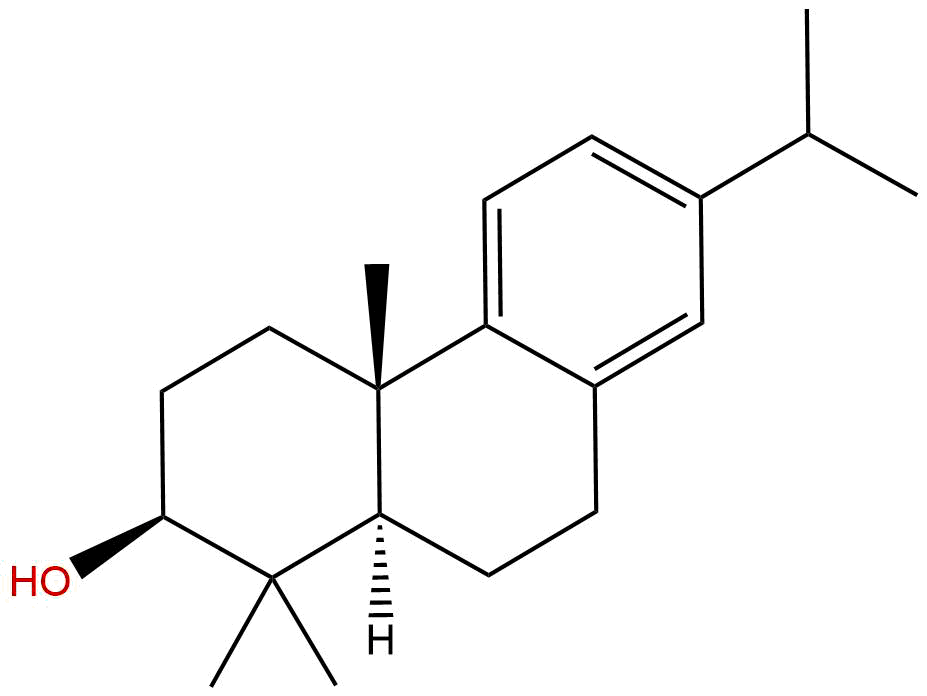


Product name: Abietatriene-3β-ol
Synonym name:
Catalogue No.: BP2441
Cas No.: 78078-41-8
Formula: C20H30O
Mol Weight: 286.459
Botanical Source:
Type of Compound: Diterpenoids
Purity: 95%~99%
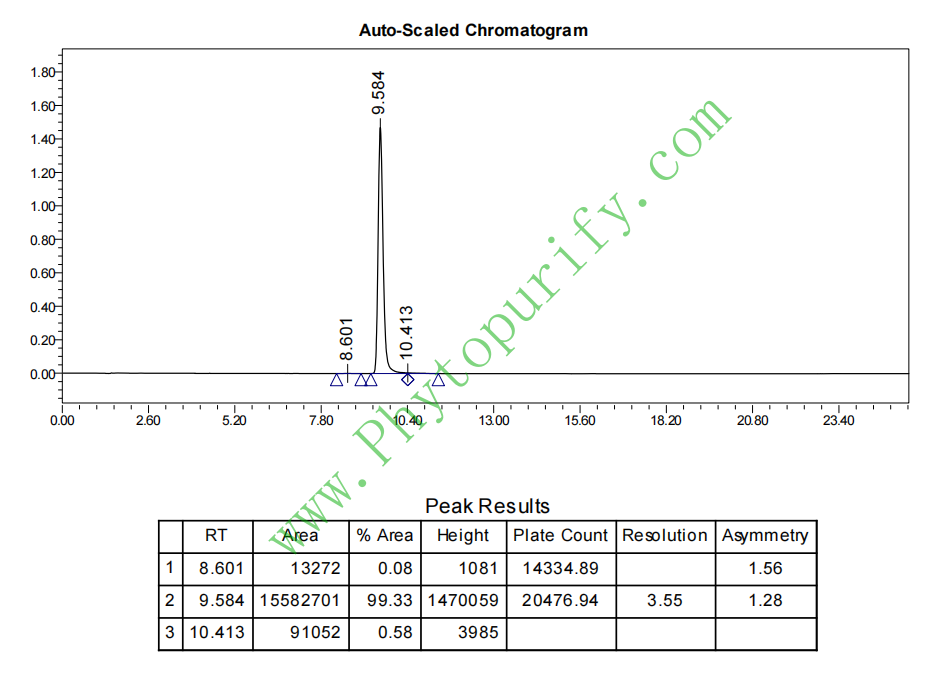
Analysis Method: HPLC-DAD or/and HPLC-ELSD
Identification Method: Mass, NMR
Packing: Brown vial or HDPE plastic bottle
Storage: Store in a well closed container, protected from air and light. Put into refrigerate or freeze for long term storage.
Whenever possible, you should prepare and use solutions on the same day. However, if you need to make up stock solutions in advance, we recommend that you store the solution as aliquots in tightly sealed vials at -20℃. Generally, these will be useable for up to two weeks.
The product could be supplied from milligrams to grams
Inquire for bulk scale.
For Reference Standard and R&D, Not for Human Use Directly.
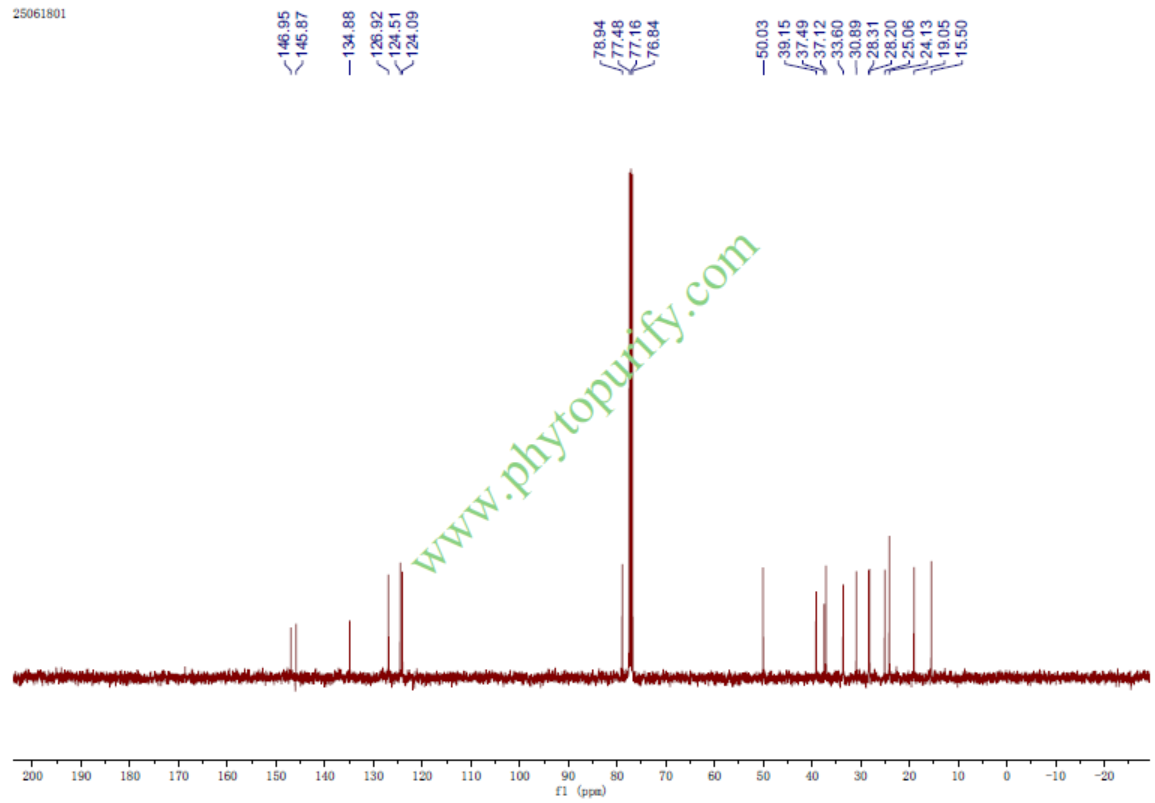
NMR of Abietatriene-3β-ol
HPLC of Abietatriene-3β-ol
Storage conditions:Short-term storage at 2~8℃, long-term storage at -20 ~ -80℃
20.2300
6.0000
Low
No
No
No
Unknown
No
Unknown
Natural products, as an important source of drug discovery, play an irreplaceable role in the long history of human fight against diseases. Among them, diterpenes derived from plants in the Pinaceae family have always been a hot topic in medicinal chemistry and natural product pharmacology research due to their structural diversity and wide range of biological activities. Abietatriene-3 β - ol, as a typical Abietane type diterpene compound, has a chemical structure characterized by a tricyclic diterpene skeleton and a β - hydroxyl group attached to the C-3 position. This compound originated from various pine species(Pinus Spp. and Picea genus(Picea The isolation and identification of resin, bark, or needles in plants (spp.) is a product generated by the secondary metabolism pathway of geranyl pyrophosphate (GGPP) through steps such as cyclization and oxidation.
From the perspective of chemical taxonomy, abietylene-3 β - ol belongs to the reduced form of abietylene diterpenes, and its parent nucleus structure is abietylene, which is an aromatic tricyclic system with conjugated double bonds at positions C-8, C-11, and C-13. This unique aromatic tricyclic skeleton endows the molecule with a certain rigid planar structure, while the hydroxyl group at C-3 provides hydrogen bond donor ability, giving it the potential to interact with biomolecules. Although the compound has a relatively low content in nature, its pharmacological activity as a biosynthetic precursor or metabolic intermediate for various active rosin diterpenes (such as dehydroabietic acid, rust alcohol, etc.) has gradually received attention in recent years.
At present, research on rosin triene-3 β - ol is still in its early stages, and the reported activities mainly focus on anti-inflammatory, antibacterial, and cytotoxic activities. However, compared to its structural analogues such as abietic acid and tanshinone compounds, the systematic pharmacological studies, mechanism of action analysis, and pharmacological evaluation of this compound are still insufficient. This review aims to systematically summarize the chemical structure characteristics, plant sources, extraction and separation methods, reported pharmacological activities, and potential mechanisms of action of rosin triene-3 β - ol, and evaluate its potential as a lead compound or candidate drug based on its physicochemical properties and pharmacological parameters, in order to provide reference for further in-depth research.
The chemical structure of Rosin Trien-3 β - ol is based on the Rosin alkane skeleton, and its systematic name is (1R, 4aS, 10aR) -1,2,3,4,4a, 9,10,10-octahydro-1,4a-dimethyl-7-isopropyl-1-phenanthrene methanol, or simply Rosin Trien-3 β - ol. Its molecular formula is C ₂₀ H ∝₀ O, with a molecular weight of 286.45 Da. Structurally, the compound contains a partially hydrogenated phenanthrene ring system (A, B, C tricyclic), where the C ring is an aromatic ring that forms a benzene ring structure at positions C-11, C-12, and C-13, and is connected to an isopropyl group at position C-13. The A/B ring is trans fused, the hydroxyl group at C-3 position (A ring) is in the β configuration, and there is one methyl substitution at C-4 and C-10 positions respectively. This structural feature makes it belong to the rosin type of tricyclic diterpenes. Compared with the common dehydroabietic acid, the difference is that the C-18 position is a methyl group instead of a carboxyl group, and the C-3 position is a hydroxyl group.
From the perspective of physical and chemical properties, rosin triene-3 β - ol exhibits typical lipid solubility characteristics. The calculated LogP value is as high as 6.00, indicating that the compound has strong lipophilicity and is easily soluble in organic solvents such as n-hexane, chloroform, ethyl acetate, methanol, etc., while its solubility in water is extremely low. The topologically polar surface area (TPSA) is only 20.23 Å ², far below the recommended upper limit of 140 Å ² for oral drugs, which is consistent with its structural characteristics of containing only one hydroxyl hydrogen bond donor and no strong polar groups. The number of hydrogen bond acceptors is 1, further confirming its potential for low polarity and high membrane permeability. However, a high LogP value also implies that the compound may face poor solubility, metabolic instability, and potential risk of phospholipid diseases.
In terms of stability, the aromatic C-ring of rosin triene-3 β - alcohol endows it with good chemical stability and is less prone to oxidative degradation. But the hydroxyl group at C-3 position may undergo dehydration or esterification reactions under strong acid or strong base conditions. In addition, its structure does not contain easily hydrolyzed ester or amide bonds, so it should have good chemical stability under physiological pH conditions. It is worth noting that the melting point and boiling point data of this compound have not been systematically reported, but based on the properties of similar diterpenoid compounds, it is inferred that it should be a crystalline solid with a melting point possibly in the range of 100-150 ° C.
Rosin-3 β - ol is mainly distributed in Pinaceae plants, especially in the pine genus(Pinus)And spruce genus(Picea)Species. The plants currently reported to contain this compound include European red pine(Pinus sylvestris)Black Pine(Pinus thunbergii)Coastal Pine(Pinus pinaster)Norwegian spruce(Picea abies)And the genus Abies(Abies)Some species. In these plants, Rosin-3 β - ol is usually present in trace amounts in the resin secreted by the resin ducts, bark, needles, and heartwood. Its biosynthetic pathway belongs to the MEP pathway of plant terpenoid metabolism, which is catalyzed by glucosinolate synthase via GGPP to form a rosin triterpene skeleton, followed by C-3 hydroxylation modification.
From a content perspective, the content of rosin trien-3 β - ol in plant tissues is usually low, often lower than its main counterparts such as dehydroabietic acid and levoabietic acid. For example, in the needles of European red pine, their content may only be 0.001% -0.01% of dry weight. Therefore, obtaining sufficient amounts of this compound for in-depth research often requires a large amount of plant materials or alternative strategies such as tissue culture and biosynthesis.
The extraction method usually follows the classic process of natural product chemistry. Firstly, extract the dried and crushed plant materials (such as pine needles, bark, or heartwood powder) using organic solvents. Given the strong lipophilicity of the compound, non-polar or moderately polar solvents such as n-hexane, petroleum ether, dichloromethane, or ethyl acetate are preferred. Common extraction methods include room temperature cold soaking, ultrasound assisted extraction, or Soxhlet extraction. For example, a study on Norwegian spruce needles used n-hexane Soxhlet extraction to obtain lipid soluble components rich in diterpenes.
The crude extract after extraction needs to undergo a series of chromatographic separation steps for purification. Due to the coexistence of a large number of structurally similar rosin diterpenes such as dehydroabietic acid, abietic acid, and neoabietic acid, the separation difficulty is relatively high. The classic separation process includes liquid-liquid extraction (such as n-hexane methanol distribution), silica gel column chromatography (using n-hexane ethyl acetate or n-hexane acetone gradient elution), and reverse phase high performance liquid chromatography (RP-HPLC, such as C18 column, acetonitrile water or methanol water system) for purification. Due to the absence of strong UV absorbing groups in the compound (only weak absorption in the aromatic ring), evaporative light scattering detectors (ELSD) or mass spectrometry detectors are commonly used for detection. The structural confirmation of the final product relies on nuclear magnetic resonance spectroscopy (¹ H-NMR, ¹ ³ C-NMR, DEPT, HSQC, HMBC) and high-resolution mass spectrometry (HR-MS) data.
Although the research history of rosin triene-3 β - ol is relatively short, several studies have revealed its potential pharmacological activity, mainly focusing on the following aspects:
1. Anti inflammatory activity
Inflammation is the body's defense response to injury and infection, but excessive or persistent inflammation can lead to various diseases. Previous in vitro studies have shown that rosin triterpene-3 β - ol can inhibit the production of nitric oxide (NO) in macrophages (such as RAW 264.7 cells) induced by lipopolysaccharide (LPS). As an important inflammatory mediator, the excessive production of NO is associated with various inflammatory diseases. This compound reduces the release of NO by inhibiting the expression of inducible nitric oxide synthase (iNOS). In addition, it has been reported that it can also reduce the levels of pro-inflammatory cytokines such as tumor necrosis factor - α (TNF - α) and interleukin-6 (IL-6). These preliminary results suggest that rosin triterpene-3 β - ol may have the potential to be developed as an anti-inflammatory lead compound, but its anti-inflammatory activity is usually weaker than classical rosin diterpenes such as Ferruginol or tanshinone compounds.
2. Antibacterial activity
Pine resin has been used for antibacterial and anti-corrosion purposes since ancient times, and its active ingredients are mainly resin acids. Rosin-3 β - ol exhibits certain inhibitory activity against certain Gram positive bacteria. For example, research has tested its effectiveness against Staphylococcus aureus(Staphylococcus aureus)And Bacillus subtilis(Bacillus subtilis)The minimum inhibitory concentration (MIC) showed moderate antibacterial activity within the range of 50-100 μ g/mL. However, its activity against Gram negative bacteria (such as Escherichia coli) and fungi (such as Candida albicans) is usually weak or ineffective. Its antibacterial mechanism may be related to its ability to disrupt the integrity of bacterial cell membranes, thanks to its high lipophilicity that makes it easy to insert into phospholipid bilayers.
3. Cytotoxic activity
In terms of anti-tumor activity, Rosin-3 β - ol exhibits selective cytotoxicity against certain human cancer cell lines. For example, studies have reported that it can inhibit the proliferation of lung cancer cells (A549), breast cancer cells (MCF-7) and liver cancer cells (HepG2), and the IC ₀ value is usually within the range of 10-50 μ M. It is worth noting that its toxicity to normal cells (such as human embryonic lung fibroblast MRC-5) is relatively low, demonstrating a certain degree of selectivity. This selectivity may be related to its mechanism of inducing cell apoptosis or cell cycle arrest, but the specific molecular targets are not yet clear.
4. Other activities
In addition, very few studies have mentioned the weak antioxidant activity (such as DPPH free radical scavenging ability) and insect repellent activity of rosin triterpene-3 β - ol. These activities are usually weak and may not be their primary pharmacological function.
Overall, the pharmacological activity spectrum of rosin triterpene-3 β - ol is relatively narrow, and the activity intensity is mostly at a moderate level. At present, research mostly remains at the cellular level in vitro, and there is almost no research on in vivo pharmacodynamics. This is related to its low content in nature, difficulty in obtaining, and low early research attention.
The research on the mechanism of action of Rosin Trien-3 β - ol is still in its infancy, and the existing evidence is mainly based on its anti-inflammatory and cytotoxic activities. It is speculated that the molecular targets and signaling pathways it may involve are as follows:
1. Anti inflammatory mechanism: Inhibition of NF - κ B signaling pathway
NF - κ B is a core transcription factor that regulates inflammatory responses. At rest, NF - κ B binds to its inhibitory protein I κ B in the cytoplasm. When stimulated by LPS and other stimuli, I κ B kinase (IKK) is activated, phosphorylates and degrades I κ B, and the released NF - κ B enters the nucleus to initiate the transcription of pro-inflammatory genes (such as iNOS, COX-2, TNF - α, IL-6). Research has shown that rosin trien-3 β - ol may inhibit the activity of IKK or prevent the phosphorylation of I κ B, thereby blocking the nuclear translocation of NF - κ B and downregulating the expression of inflammatory mediators. This mechanism is similar to the anti-inflammatory mechanism of many other rosin diterpenes, such as tanshinone IIA, but the affinity of the target of action of rosin triterpene-3 β - ol may be lower.
2. Cytotoxic mechanism: induction of apoptosis and cell cycle arrest
Rosin-3 β - ol may induce apoptosis in cancer cells through multiple pathways. Preliminary studies have shown that its treatment can lead to a decrease in mitochondrial membrane potential (Δ PSI m), release of cytochrome c into the cytoplasm, and activate Caspase-9 and Caspase-3, ultimately triggering apoptosis of the mitochondrial pathway. In addition, studies have observed that cancer cells treated with it exhibit G0/G1 or G2/M phase cell cycle arrest, which may be related to changes in the expression levels of cyclins and cyclin dependent kinases (CDKs). However, direct upstream molecular targets, such as specific kinases or receptors, have not yet been identified.
3. Potential molecular targets: electrophilic reactions and covalent modifications
The aromatic ring and allyl structure of rosin triene-3 β - alcohol may give it a certain degree of electrophilicity. Although it does not contain typical Michael receptors (such as alpha, beta unsaturated carbonyl groups) in its structure, after metabolic activation in vivo, it may generate electrophilic intermediates that covalently bind to the thiol groups on protein cysteine residues, thereby regulating the activity of key signaling proteins. This mechanism is more common in natural products such as curcumin and resveratrol. However, there is currently no direct evidence to support the covalent modification of rosin triene-3 β - ol.
4. Relationship with known targets
Compared with dehydroabietic acid, which has a highly similar structure, the latter has been proven to be a ligand for G protein coupled receptors (GPCRs) such as cannabinoid receptor CB2 and has antibacterial activity. There is currently no report on whether rosin triterpene-3 β - ol can also act on CB2 receptors or other GPCRs. In addition, the presence of its C-3 hydroxyl group may result in differences in target selectivity compared to dehydroabietic acid.
In summary, the mechanism of action of rosin triene-3 β - ol is not yet thoroughly studied, and there is a lack of clear, high affinity molecular targets. Future research should utilize chemical biology methods, such as activity-based proteomic analysis (ABPP) or drug affinity responsive target stability (DARTS) techniques, to systematically identify the protein targets it directly binds to.
The evaluation of drug properties is an important basis for whether natural products can enter the drug development pipeline. Based on the provided pharmacological parameters and literature data, the following evaluation was conducted on the rosin triene-3 β - ol:
1. Physical and chemical properties and drug like properties
According to the Lipinski Five Rules, the molecular weight (286.45 Da,<500), LogP (6.00,>5, violating the rules), hydrogen bond donor (1 hydroxyl group,<5), and hydrogen bond acceptor (1 hydrogen bond acceptor,<10) of rosin triene-3 β - ol. Its LogP value exceeds the threshold of 5, indicating excessive lipophilicity, which may lead to poor water solubility (expected solubility in water<10 μ g/mL), thereby affecting oral absorption and bioavailability. Although TPSA (20.23 Å ²) is low, which is beneficial for membrane permeability, the low TPSA also suggests that it may lack sufficient polarity to drive dissolution and absorption. Therefore, the compound has significant deficiencies in its physicochemical properties and does not meet the ideal criteria for drug like properties.
2. Pharmacokinetic prediction
- absorb High LogP and low TPSA indicate high intestinal membrane permeability (possibly passive diffusion), but extremely low water solubility is the main limiting step for oral absorption. It is expected that its oral bioavailability will be very low.
- distribution High lipophilicity makes it easily bound to plasma proteins (such as albumin), and its distribution volume may be relatively large. Its strong fat solubility also makes it easy to accumulate in adipose tissue.
- Metabolism The main metabolic pathways of this compound may include glucuronidation or sulfation binding reactions of the C-3 hydroxyl group, as well as oxidative metabolism mediated by cytochrome P450 enzymes (CYP450) in the aromatic ring (C ring), such as hydroxylation. Due to the lack of polar functional groups such as carboxyl groups, its metabolic clearance may be slower.
- excretion Metabolites may mainly enter the intestine through bile excretion and be excreted through feces. The amount of prototype drug excreted through the kidneys is extremely small.
3. Toxicity prediction
- Hepatotoxicity The parameter displays "Unknown". Due to its high lipophilicity, it may accumulate in the liver and pose a potential risk of liver toxicity. The similar compound dehydroabietic acid has been reported to have hepatotoxicity, therefore it requires high vigilance.
- cardiotoxicity The parameter displays "No" and the hERG inhibition prediction is "No", indicating a lower risk of prolonging QT interval and inducing arrhythmia, which is a favorable point.
- Genotoxicity The Ames test result is' Unknown '. Due to its structure not containing known genotoxic warning structures (such as aromatic amines, nitro groups, etc.), but the metabolic activation of aromatic rings may produce reactive oxygen species, further experimental verification is needed.
4. Summary of drug properties
Overall, the pharmacological properties of rosin triene-3 β - ol are poor. The main obstacles are: ① Very poor water solubility Causing difficulty in oral absorption; ② Metabolic stability unknown However, high lipophilicity can lead to rapid metabolism and clearance; ③ Potential risk of liver toxicity However, its low risk of cardiac toxicity is an advantage. To develop it into a drug, strategies such as prodrug design (such as introducing phosphate or amino acid ester groups), nanomedicine (such as liposomes, solid lipid nanoparticles), or structural modification (introducing polar groups to reduce LogP) are needed to improve its solubility and pharmacokinetic properties.
Although Rosin-3 β - ol has not yet entered any clinical research stage, as a natural product lead compound, it still has certain research value and potential application prospects, mainly reflected in the following aspects:
1. Structural optimization as a lead compound
Given its anti-inflammatory and cytotoxic activity, Rosin-3 β - ol can serve as a starting point for structural optimization. By introducing appropriate functional groups into its skeleton through semi synthetic or fully synthetic methods, it is expected to obtain derivatives with stronger activity, higher selectivity, and better pharmacokinetic properties. For example:
- C-3 modification Converting hydroxyl groups into esters, ethers, or amino esters can regulate lipophilicity and metabolic stability.
- C-ring modification Introducing hydroxyl, methoxy, or halogen atoms into the aromatic ring may enhance interaction with the target or improve antioxidant activity.
- Side chain modification Changing the isopropyl group at C-13 position to other alkyl or aryl groups may expand the activity spectrum.
2. Potential applications in anti-inflammatory and antibacterial fields
Considering its anti-inflammatory activity, rosin triterpene-3 β - ol or its derivatives may be developed as topical anti-inflammatory preparations for the treatment of skin inflammatory diseases such as dermatitis and psoriasis. Although its antibacterial activity is not strong, if enhanced through structural modification or combined with other antibiotics, it may be used to combat drug-resistant strains. In addition, the traditional application of resin from pine plants, such as wound healing, also provides a folk medical basis for the local application of this compound.
3. As a chemical biology tool
Due to its unique rosin alkane skeleton, rosin triterpene-3 β - ol can serve as a molecular probe for studying the targets and signaling pathways of diterpenoids in cells. Labeling it as a biotin or fluorescent probe through chemical means such as clicking can be used for target fishing and cell imaging studies, helping to reveal its anti-inflammatory and anti-tumor molecular mechanisms.
4. Challenges and Future Directions
The main challenges currently faced include: ① Restricted source Low natural content and immature chemical synthesis routes limit large-scale research and development. ② The mechanism is unclear Lack of clear molecular targets and in-depth mechanism research. ③ Poor medicinal properties Physical and chemical property defects urgently need to be addressed.
Future research directions should focus on: ① Develop efficient synthesis or biosynthetic methods Resolve the issue of raw material supply. ② Systematically conduct in vivo pharmacological and toxicological studies Evaluate its in vivo activity and safety. ③ Utilizing modern medicinal chemistry strategies for structural optimization Improve its medicinal properties. ④ In depth study of its mechanism of action Especially by utilizing omics techniques to discover its direct targets.
Rosin-3 β - ol, as a typical rosin alkane type diterpenoid compound, originates from abundant pine family plant resources and has a unique aromatic tricyclic diterpenoid skeleton. Current research has revealed that it has certain anti-inflammatory, antibacterial, and cytotoxic activities, but its activity intensity is moderate and its mechanism of action is not yet clear. From the perspective of drug development, this compound has significant issues such as poor water solubility, high LogP, and lack of metabolic and toxicity information, which limits its potential as a direct candidate drug. However, its unique chemical structure and preliminary biological activity make it a valuable structural template that deserves optimization through systematic structural modification and in-depth mechanism research. In the future, interdisciplinary research combining synthetic chemistry, pharmacology, and medicinal chemistry is expected to transform rosin triene-3 β - ol into lead compounds or candidate drugs with practical application value, contributing new strength to the discovery of natural product drugs.
