


Synonym name: Vilmorrianine B; Guayewuanine B; Isoaconitine
Catalogue No.: BP1463
Cas No.: 70578-24-4
Formula: C35H49NO11
Mol Weight: 659.773
Botanical Source: Alkaloid from Aconitum delavayi, Aconitum vilmorrianum, Aconitum crassicaule, Aconitum forrestii, Aconitum hemsleyanum, Aconitum teipeicum, Aconitum pseudogeniculatum and Aconitum dolichorhynchum var. subglabratum (Ranunculaceae)
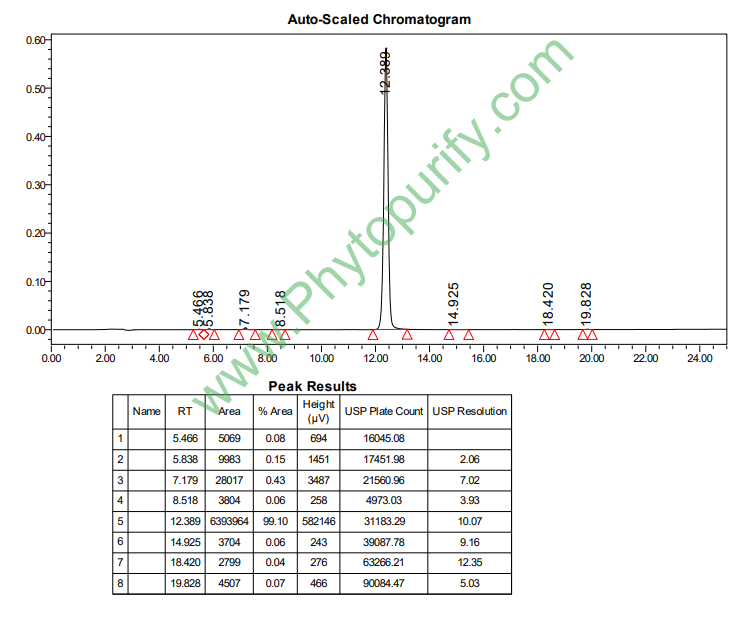
Purity: 95%~99%
Analysis Method: HPLC-DAD or/and HPLC-ELSD
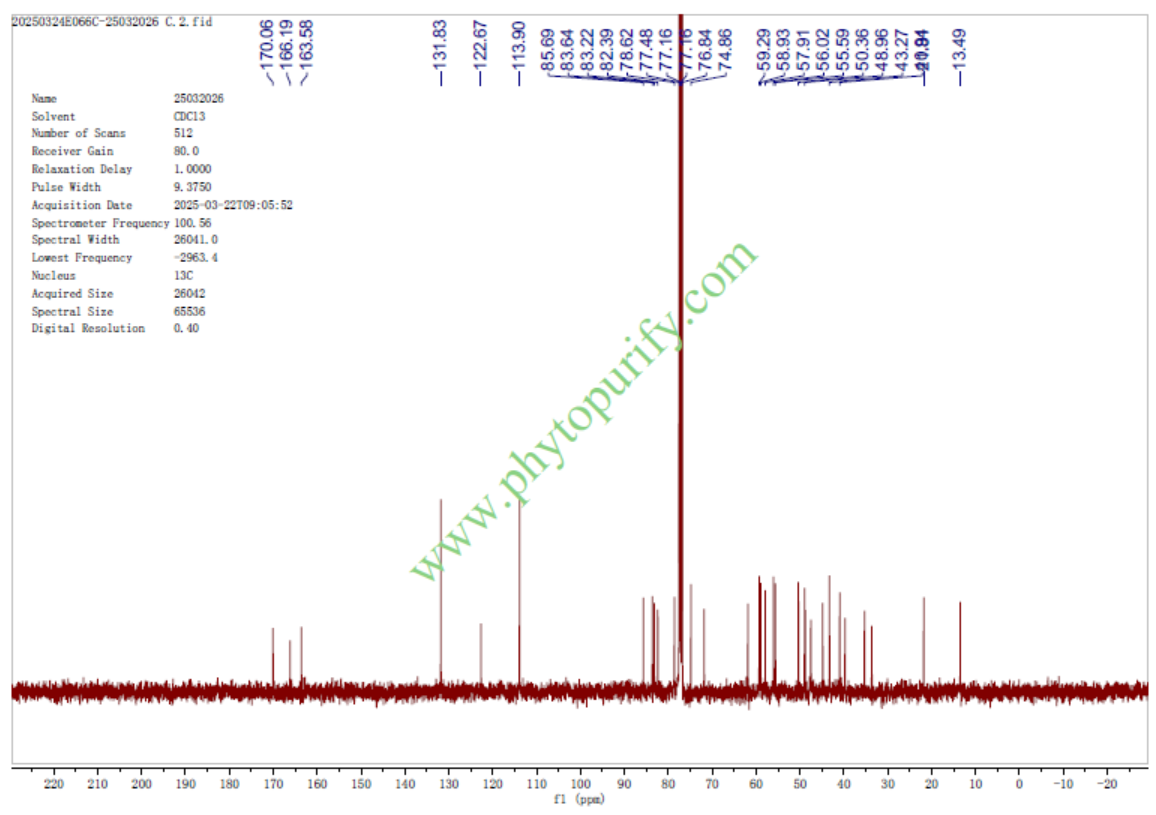
Identification Method: Mass, NMR
Packing: Brown vial or HDPE plastic bottle
Can be supplied from milligrams to grams.
For Reference Standard and R&D, Not for Human Use Directly.
Inquire for bulk scale.
HPLC of Yunaconitine
NMR of Yunaconitine
Storage conditions:Short-term storage at 2~8℃, long-term storage at -20 ~ -80℃
142.4500
2.4182
2.3113
.1132
1.8246
6.9581
Low
73.1829
7.1942
No
No
Yes
No
No
No
0.0
Yes
No
Yes
No
Aconitum plants, as an important component of traditional Chinese medicine, have a history of thousands of years of application. Their effects of "returning yang, rescuing reverse, dispelling wind and dampness" are recorded in classics such as the "Shennong Bencao Jing". However, the highly toxic nature of Aconitum also makes it a double-edged sword, as the highly toxic diterpenoid alkaloids contained in it are both the material basis of its pharmacological effects and the main source of its toxicity. Dianwualkaloid, as a member of the aconite alkaloid family, has attracted much attention since its isolation and identification due to its significant biological activity and severe toxicity. Its CAS number is 70578-24-4, and its molecular formula is C35H49NO11. It is a C19 diterpenoid alkaloid with complex structure and diverse modifications. Early research mainly focused on its toxic effects, classifying it as a highly toxic neurotoxin and cardiotoxin. However, with the deepening of modern pharmacological research, especially in the molecular mechanism analysis of complex pathological processes such as inflammation and pain, the multi-target and multi pathway regulatory potential exhibited by Dianwu alkaloid has transformed it from a simple toxic molecule to a highly valuable natural lead compound for research. This article aims to provide a systematic review of the chemical characteristics, plant sources, pharmacological activities, molecular mechanisms of action, and pharmacological evaluation of Dianwu alkaloids, in order to provide a comprehensive scientific perspective for further exploring their medicinal value and avoiding their toxicity risks.
Dianwualkaloid belongs to the aconitine type diterpenoid alkaloids, with a highly modified C19 aconitine skeleton. Its chemical structure (molecular weight: 659.7730) has the following significant features: the core is a six ring fused aconitine skeleton, containing a tertiary amino group composed of a nitrogen atom, which is a key site for its interaction with biofilms and receptors. Structurally connected with multiple oxygen-containing functional groups, including one benzoate group and one acetate group, these esterification modifications have a decisive impact on their activity and toxicity. In addition, the molecule also contains functional groups such as aromatic ethers, secondary alcohols, and tertiary alcohols, which together constitute its complex stereochemistry and electronic distribution.
From the analysis of physical and chemical properties, the lipid water partition coefficient (LogP) of Dianthus alkaloids is 2.4182, indicating that they have a certain lipophilicity, which is beneficial for penetrating cell membranes, but may also pose a risk of tissue accumulation. Its topological polar surface area (TPSA) is as high as 142.45 Å ², mainly attributed to the numerous oxygen and nitrogen atoms in the molecule, indicating its strong ability to form hydrogen bonds. The water solubility value is 0.1132, belonging to the category of slightly soluble to poorly soluble, which poses challenges for the development of its formulations. These parameters collectively determine its absorption, distribution, metabolism, and excretion characteristics within the organism. Its complex polycyclic structure and multiple chiral centers also make total synthesis extremely challenging, currently mainly relying on extraction and separation from plants.
Dianwujian mainly exists in various plants of the Aconitum genus in the Ranunculaceae family, especially some species with local characteristics. For example, some Aconitum varieties distributed in Yunnan and other areas have higher levels, which is also the source of their Chinese name "Dianwujian". In addition, it is often detected in traditional medicinal or toxic plants such as Artemisia annua and Aconitum carmichaelii on snow. It should be noted that there are significant differences in the content of Dianthus alkaloids in different regions, harvest seasons, and plant parts (such as tubers, stems, and leaves), which directly affect their extraction efficiency and the material basis for subsequent research.
Its extraction and separation usually follow the classic process of natural product chemistry. Firstly, the dried plant material (usually roots) is crushed and subjected to extraction or reflux extraction using polar organic solvents (such as ethanol, methanol, or acidified alcohol water solutions) to transfer the alkaloid components into the solvent. Subsequently, preliminary enrichment was carried out by acid dissolution and alkali precipitation method: utilizing the characteristics of alkaloids and acid salts dissolved in water, then alkalized and free, and dissolved in the organic phase, they were separated from non alkaloid components. The crude total alkali obtained needs to be purified by repeated column chromatography, often using silica gel, alumina or reverse phase silica gel (such as C18) as the stationary phase, and gradient elution with different ratios of chloroform methanol, dichloromethane isopropanol and other solvent systems. High performance liquid chromatography, especially preparative HPLC, is the final key step in obtaining high-purity Dianthus alkaloid monomers. Throughout the entire process, strict attention should be paid to operational safety, as its highly toxic nature requires the laboratory to have good ventilation and protective measures. Modern analytical techniques such as liquid chromatography-mass spectrometry (LC-MS) are commonly used for monitoring the extraction process and confirming the structure of the final product.
Although Dianwu alkaloid is known for its high toxicity, modern pharmacological studies have revealed its biological activities worth further exploration at specific doses and models, with particularly prominent anti-inflammatory and analgesic effects.
1. Anti inflammatory activity: Numerous in vitro and in vivo experiments have confirmed that Dianwujian exhibits significant anti-inflammatory effects in various acute and chronic inflammation models. In the rat paw swelling model induced by carrageenan or Freund's complete adjuvant, pretreatment with Dian Wu alkaloid can dose dependently inhibit the degree of swelling. In the lipopolysaccharide (LPS) - stimulated macrophage model (such as RAW264.7), it can effectively inhibit the excessive production of inflammatory mediators such as nitric oxide (NO) and prostaglandin E2 (PGE2). Its anti-inflammatory effect is not limited to the periphery, but has also shown potential in some neuroinflammatory models.
2. Analgesic activity: The analgesic effect of Dianwu alkaloid is different from traditional opioid drugs, and its mechanism is more diverse. In hot plate method, acetic acid writhing method, and neuropathic pain model, it can all increase pain threshold and reduce pain response. Its analgesic effect is partially related to its anti-inflammatory effect, that is, by eliminating inflammatory pain sensitization; The other part may directly act on key ion channels and receptors involved in pain signal transduction.
3. Other activities: In addition to anti-inflammatory and analgesic effects, research also suggests that Dianwujian may have anti-tumor and immune regulatory activities. For example, there are reports that it can inhibit the proliferation of certain cancer cells, but its therapeutic window is extremely narrow and its toxicity far exceeds its potential efficacy, so it has not yet become a research focus. Its ecological function as a "food repellent" and "plant toxin" also reflects its strong interference with other biological systems.
4. Toxicity study: It must be emphasized that the toxicity of Dianwu alkaloid is its most significant "activity". Its median lethal dose is extremely low, and the main manifestations of poisoning are severe arrhythmia (ventricular premature beats, ventricular fibrillation, etc.), neuromuscular paralysis (numbness of the lips and limbs, difficulty breathing), and central nervous system symptoms. The toxicity mechanism is mainly related to the persistent activation of voltage-gated sodium channels, which leads to sustained influx of sodium ions and interferes with the normal electrophysiological activity of nerve and myocardial cells. Its therapeutic index (the ratio of effective dose to toxic dose) is very small, which severely limits its direct clinical application.
The diversity of pharmacological activities of Dianwu alkaloids stems from their interactions with multiple molecular targets, forming a complex regulatory network. The core mechanism of its anti-inflammatory effect involves the inhibition of multiple classical inflammatory signaling pathways.
Key targets and pathways:
* Nuclear factor kappa B pathway: Dianwujian can inhibit the activation of NFKB1 (p50), prevent its nuclear translocation, and downregulate the gene expression of downstream pro-inflammatory factors (such as TNF - α, IL-6) and enzymes (such as NOS2, PTGS2). This is the central link of its anti-inflammatory effect.
* JAK-STAT pathway: Research has shown that Dianwu alkaloid can inhibit IL-6-induced phosphorylation and dimerization of STAT3, block STAT3 signaling, which is of great significance in its inhibition of chronic inflammation and possible regulation of tumor cell inflammatory microenvironment.
* Inflammatory bodies and cell pyroptosis: The inhibition of CASP1 (caspase-1) by Dian Wu alkaloid suggests that it may intervene in the activation of inflammasomes such as NLRP3, thereby reducing the maturation and release of IL-1 β and IL-18, and inhibiting the process of cell apoptosis.
* Cyclooxygenase and nitric oxide synthase: Dianwujian has inhibitory effects on the expression and activity of PTGS2 (COX-2) and NOS2 (iNOS), which directly reduces the production of inflammatory mediators PGE2 and NO.
* Transient receptor potential channel: The regulatory effect on TRPV1 and TRPA1 channels is an important mechanism by which Dian Wu alkaloid participates in the modulation of pain signals. It may reduce the sensitivity of neurons to nociceptive stimuli by antagonizing or regulating the activity of these channels.
* Tumor necrosis factor: Inhibiting the production and signaling of TNF - α is the key to combating early events in the inflammatory cascade.
It is worth noting that these effects of Dian Wu alkaloid are likely the result of multi-target synergy. Its complex molecular structure may allow it to interact with multiple target proteins simultaneously or sequentially, resulting in "multi-directional pharmacological" effects. However, the relationship between the main target of its high toxicity - voltage-gated sodium channels - and the aforementioned anti-inflammatory targets (whether they are isolated or associated) is a core scientific issue that needs to be addressed in future structural modifications and drug design.
Based on its physical and chemical parameters and preliminary biological data, the pharmacological properties of Dianwu alkaloid face significant challenges.
Analysis of pharmacological parameters:
* Absorption and distribution: The LogP value (2.42) indicates moderate lipid solubility, which theoretically facilitates passive diffusion during oral absorption. However, high TPSA (142.45) and low water solubility (0.1132) may limit its dissolution and transmembrane transport in gastrointestinal fluids. The prediction of "low blood-brain barrier permeability" may reduce the risk of central neurotoxicity, but it also limits its effect on central nervous system targets.
* Metabolism and toxicity: The Ames test result is 0.0, indicating that there is no direct genetic toxicity, which is favorable information. However, 'hERG inhibition: no' only indicates that its direct inhibitory effect on rapidly delayed rectifier potassium channels in the heart may not be strong, but its cardiac toxicity caused by acting on sodium channels and other factors is clear and severe, which is the biggest obstacle to its clinical development. The metabolism of diterpenoid alkaloids in the body is complex, and ester bonds may be hydrolyzed by esterases to generate metabolites with different toxicities. The complete in vivo metabolic spectrum of diterpenoid alkaloids is not yet clear.
* Pharmacodynamics: At present, there are relatively few reports on the pharmacokinetic studies of Dianwu alkaloid system. Limited animal experiments suggest that its oral bioavailability may be low and vary greatly among individuals. It is widely distributed in the body and may accumulate in tissues such as the liver and kidneys. Its metabolic pathway may involve hydrolysis and oxidation reactions of the liver cytochrome P450 enzyme system. The excretion pathway may be mainly through the kidneys. Due to its high toxicity, pharmacokinetic studies in humans are almost impossible to conduct, mainly relying on animal models and in vitro liver microsomal experiments for prediction.
Overall, as a prototype molecule, Dianwu alkaloid has unsatisfactory pharmacokinetic properties and a very narrow therapeutic window, making it highly unlikely to be directly developed into a drug. Its more realistic positioning is as a valuable lead compound。
The direct clinical application prospects of Dianwu alkaloid are bleak, but as a lead compound, it contains unique value in the field of innovative drug development.
1. Structural optimization and modification: The core direction of the future is to conduct systematic research Study on Structure Activity/Toxicity Relationship By chemical synthesis or semi synthesis methods, its molecules can be selectively modified, such as by altering or removing key ester groups (such as benzoyloxy and acetoxy), which are considered key pharmacophores for its sodium channel toxicity; Or derivatization of alcohol hydroxyl and tertiary amino groups can be carried out to improve their solubility, metabolic stability, and target selectivity. The goal is to "detoxify and retain activity", that is, to obtain derivatives that retain or even enhance anti-inflammatory and analgesic activity, while significantly reducing cardiac neurotoxicity.
2. Exploration of new drug delivery systems: To address the issues of poor water solubility and narrow therapeutic window, the development of a new drug delivery system may be considered. For example, by making it into liposomes, nanoparticles, or polymer micelles, targeted delivery (such as targeting inflammatory sites) and controlled release can be achieved, thereby improving efficacy, reducing systemic exposure, and toxicity.
3. In depth exploration of the mechanism of action: By using chemical biology methods, such as proteomic screening based on Dianthus alkaloid structural probes, it is expected to discover new targets and signaling pathways that have not yet been recognized. This not only provides new therapeutic ideas for inflammatory diseases, but also may expand its application potential in other disease fields, such as autoimmune diseases and neurodegenerative disease-related inflammation.
4. Modern interpretation of traditional Chinese medicine compatibility theory: In traditional Chinese medicine formulas (such as "Sini Tang" containing Aconitum species), Aconitum is often reduced in toxicity and efficacy through compatibility (such as with licorice and dried ginger) and standardized processing techniques. Studying the chemical changes (such as interactions with other components), pharmacokinetic behavior changes, and pharmacological synergy/antagonism of Dianwu alkaloid in a compound environment can explain the mystery of "compatibility and toxicity reduction" in traditional Chinese medicine from a modern scientific perspective, and provide guidance for the safe use of such toxic medicinal materials.
Dianwu alkaloid is a natural diterpenoid alkaloid that combines severe toxicity and unique pharmacological activity. It is like a structurally precise "molecular key" that can simultaneously insert into the "keyhole" of multiple key targets in the inflammation and pain signaling network, demonstrating the potential for multi-target regulation. However, its inherent sodium channel activation toxicity makes this key too sharp, and direct use will inevitably harm oneself. The current research is at a critical turning point: shifting from simple phenomenon description and toxicity warning to a rational design stage centered on the development of lead compounds. Through the interdisciplinary fusion of modern medicinal chemistry, pharmacy, and molecular pharmacology, structural modification and delivery strategy innovation of Dianwualkaloid are expected to transform it from a daunting toxin into an innovative drug source for treating inflammatory pain and other diseases. This process is not only the transformation of a natural molecule, but also the modern scientific practice of the concept of "taking the essence and discarding the dross" of traditional toxic Chinese medicine, which has important theoretical significance and potential application value. Although the road ahead is full of challenges, the value of exploration is beyond doubt.
