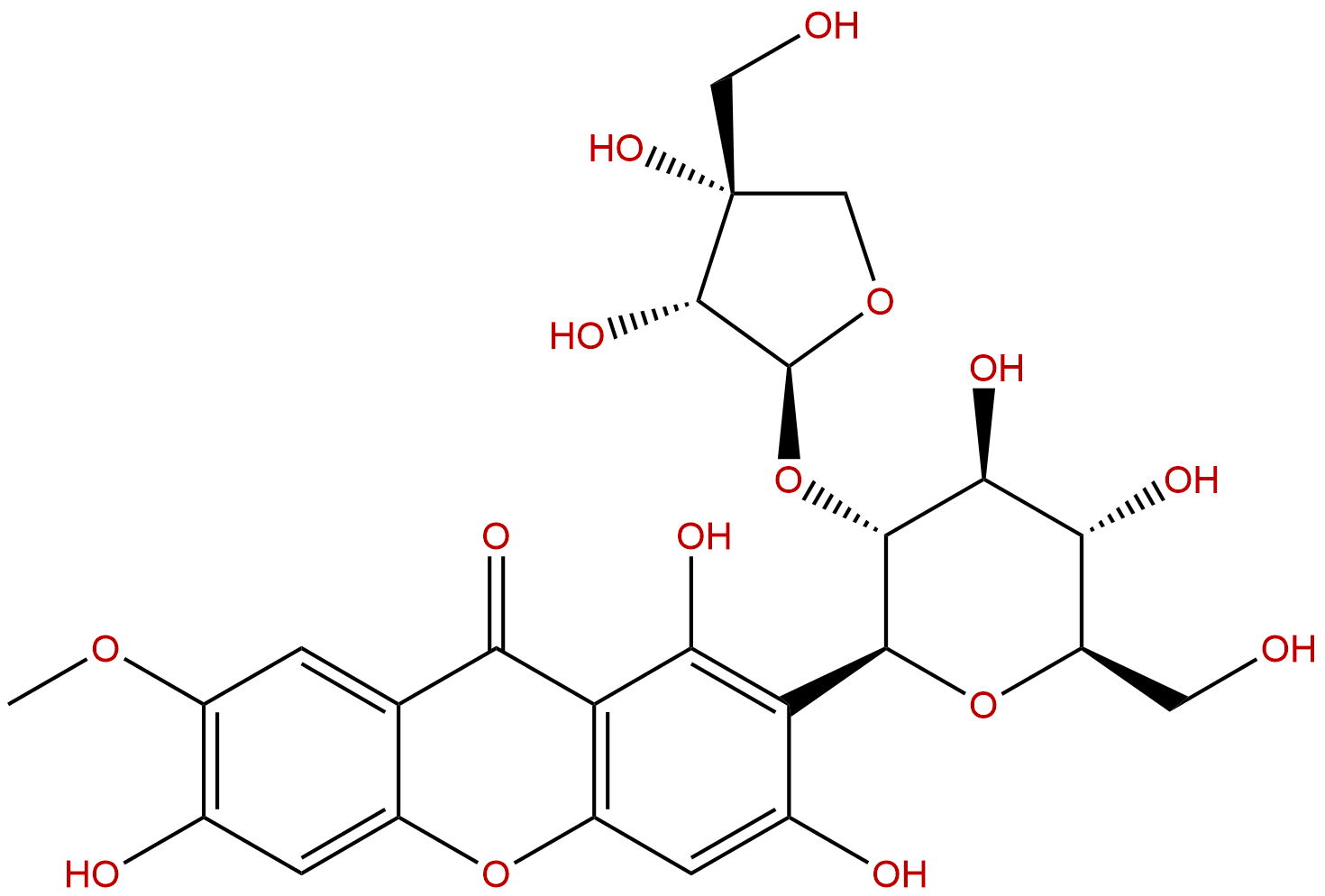


Product name: Polygalaxanthone XI
Synonym name:
Catalogue No.: SBP03977
Cas No.: 857859-82-6
Formula: C25H28O15
Mol Weight: 568.484
Botanical Source:
Physical Description:
Type of Compound: Xanthones
Purity: 95%~99%
Analysis Method: HPLC-DAD or/and HPLC-ELSD
Identification Method: Mass, NMR
Packing: Brown vial or HDPE plastic bottle
The product could be supplied from milligrams to grams. Inquire for bulk scale.
We provide solution to improve the water-solubility of compounds, thereby facilitating the variety of activity tests and clinic uses.
For Reference Standard and R&D, Not for Human Use Directly.
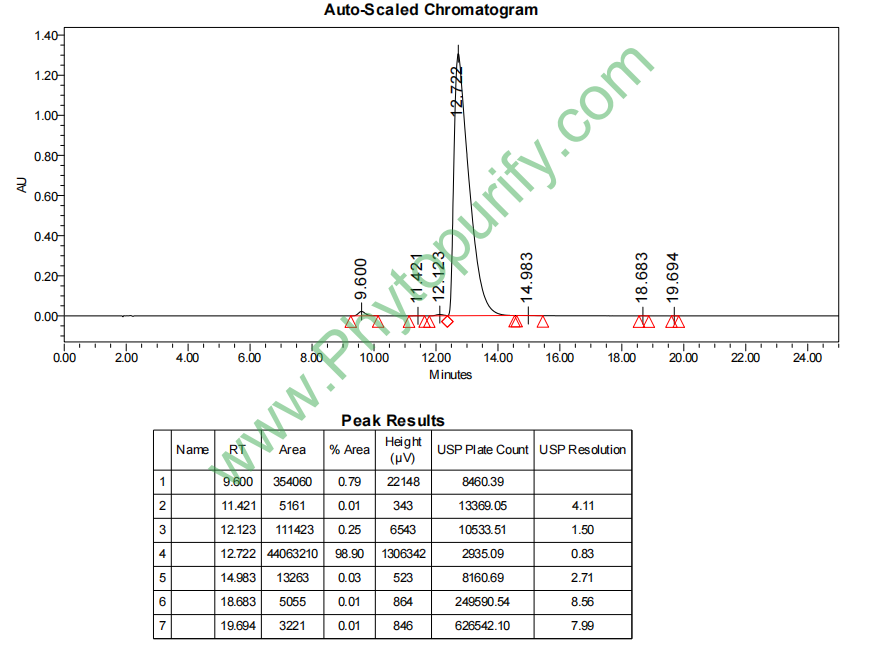
HPLC of Polygalaxanthone XI
Storage conditions:Short-term storage at 2~8℃, long-term storage at -20 ~ -80℃
249.2000
-.6911
-.7779
1.6477
.5825
.2132
Low
74.6533
4.8187
Yes
No
No
No
Yes
No
1.5
Yes
No
Yes
No
Polygalaxantone XI is a traditional Chinese medicine plant derived from the plant Polygala tenuifolia(Polygala tenuifolia)Natural anthraquinone glycosides isolated from the root bark. Its CAS number is 857859-82-6, molecular formula is C25H28O15, and molecular weight is 568.4840 g/mol. As one of the representative components of a series of bioactive oxygen species such as anthraquinone in Yuanzhi, Yuanzhi Mountain Ketone XI has been recognized for its potential in recent years neuroprotection The activity has attracted widespread attention in the fields of natural product pharmacology and neuropharmacology research.
Yuanzhi, as an essential medicine for calming the nerves and improving intelligence, has been shown through modern pharmacological research that its active ingredients (including saponins, oligosaccharides, and anthraquinone) can exert antidepressant, anti dementia, neuroprotective, and other effects through multiple targets and pathways. Yuanzhi Mountain Ketone XI was discovered in this context through the systematic isolation and activity screening of its chemical components. The existing research description indicates that it can be used for research on phlegm removal and promoting mental stability, which is highly consistent with its traditional efficacy of "dispelling phlegm and opening up orifices, calming the mind and improving intelligence". Further research focuses on its interactions with multiple neurorelated targets such as CREB1, BDNF, NGF, etc., indicating its important scientific exploration value in the treatment of neurodegenerative diseases (such as Alzheimer's disease) and emotional disorders. This article will systematically interpret this natural active molecule from its chemical essence, origin, pharmacological mechanism, drug properties, and prospects.
Yuanzhi Mountain Ketone XI belongs to Oxyanthrone glycoside The core skeleton of this compound is oxanthenone (also known as xanthone), which is a class of compounds with a benzo - γ - pyranone structure. It is widely present in plants of the Gentianaceae, Theaceae, and Polygalaceae families, and is known for its diverse biological activities. From the provided SMILES string, its structural features can be parsed:
COc1cc2c(=O)c3c(O)c([C@@H]4O[C@H](CO)[C@@H](O)[C@H](O)[C@H]4O[C@@H]4OC[C@](O)(CO)[C@H]4O)c(O)cc3oc2cc1O
This structure shows that there are multiple hydroxyl (- OH) and methoxy (- OCH3) substituents attached to the anthraquinone core of Yuanzhi Mountain Ketone XI, which are crucial for its antioxidant activity and binding ability to target proteins. More importantly, the molecule is connected to a complex through glycosidic bonds Disaccharide fragment The sugar moiety contains two sugar units (possibly glucose and its derivatives from the description) and has multiple chiral centers (as described)@and@@Symbolic representation allows molecules to have specific spatial configurations that may affect their recognition and binding to biological receptors.
Analyzing its physicochemical properties from the parameters of drug properties:
- Molecular weight (MW):568.48 g/mol, Slightly higher than the standard of 500 Da for typical small molecule drugs.
- Lipid water partition coefficient (LogP/LogD)LogP is -0.6911 and LogD is -0.7779, both negative values, indicating that the compound has Strong hydrophilicity This is mainly attributed to the presence of 15 oxygen atoms, multiple hydroxyl groups, and sugar groups in the molecule, making it easily soluble in water.
- Topological Polarity Surface Area (TPSA)Up to 249.20 Å ², far exceeding the threshold typically considered easy to penetrate cell membranes (about 140 Å ²). High TPSA is a typical characteristic of glycoside compounds, originating from a large number of hydrogen bond donors and acceptors (hydroxyl and ether bonds).
- Water solubility The value is 1.6477 (unit may be log mol/L or mg/mL, which usually indicates good solubility in this context), confirming its high hydrophilicity.
- Permeability The permeability of Caco-2 cells is 0.2132 (usually<1.0 indicates low permeability), and BBB permeability is marked as "low". This is consistent with its high TPSA and strong hydrophilicity, suggesting that oral absorption and blood-brain barrier penetration may pose challenges.
These physical and chemical properties collectively depict a typical Highly polar, water-soluble glycosidic natural products The image and pharmacokinetic characteristics of the drug may be more inclined towards peripheral effects or require special administration strategies to achieve central nervous system targets.
The plant source of Yuanzhi Mountain Ketone XI is Polygala tenuifolia(Polygala tenuifolia Willd.), Also known as slender leaved plant, it is a perennial herbaceous plant of the Polygalaceae family and the Polygalaceae genus. Its dried roots are used as medicine, which is known as the traditional Chinese medicine "Yuanzhi" and is one of the representatives of "Anshen Medicine" in traditional Chinese medicine.
The medicinal history of Yuanzhi dates back to ancient times, first recorded in the "Shennong Bencao Jing" and classified as a top-grade herb. It is said to "mainly cough and reverse the injury, supplement deficiencies, eliminate evil qi, benefit the nine orifices, enhance wisdom, be clever in the ears and eyes, never forget, and strengthen the will and power". Subsequent medical practitioners have continuously deepened its application and summarized its core efficacy as follows:Calming the mind, dispelling phlegm and opening the orifice, dissipating carbuncles and swelling In clinical compatibility, Yuanzhi is commonly used for:
1. Calm the mind and enhance intelligence To treat insomnia, palpitations, forgetfulness, and multiple dreams caused by heart kidney failure, it is often used in combination with Poria cocos, ginseng, and Acorus calamus, such as classic formulas like Anshen Dingzhi Wan and Kaixin San.
2. Expelling phlegm and benefiting the orifices Used for epileptic seizures caused by phlegm obstructing the heart and mind, or for coughing with excessive phlegm that is difficult to cough up. Its "expectorant" effect is believed to be related to the expectorant and anti-inflammatory effects of modern research.
3. Dissolve abscess and swelling External application for the treatment of carbuncles, sores, toxins, and breast swelling and pain.
Modern plant chemistry research has isolated and identified various components from Ganoderma lucidum, including saponins, oligosaccharides, anthraquinone, and alkaloids. Among them, oxanthrone compounds (such as Yuanzhishanketone III, VI, VII, XI, etc.) are another important class of active substances besides saponins. The modern scientific connotation of the traditional "calming the mind and enhancing intelligence" effect is gradually being interpreted as the regulatory and protective effects of these components on the central nervous system. Therefore, the discovery and research of Yuanzhi Mountain Ketone XI is a scientific practice that explains the traditional functions of Yuanzhi, such as "benefiting wisdom" and "never forgetting", from a molecular level, providing specific material basis and functional clues for the modernization of traditional Chinese medicine.
The existing research data mainly relates the activity of Yuanzhi Mountain Ketone XI to neuroprotection And identified five related molecular targets: CREB1, BDNF, NGF, GDNF, and SYP. These targets do not exist in isolation, but form a complex network that synergistically promotes neuronal survival, growth, plasticity, and functional maintenance. Below is an analysis of its mechanism of action:
Core mechanism: Activation of neurotrophic factor signaling pathway and enhancement of synaptic function
Targeting upstream transcription regulatory factor CREB1
CAMP response element binding protein 1 (CREB1) is a key transcription factor in cells. When activated by phosphorylation, it can enter the nucleus and bind to the promoter region of specific genes, initiating transcription of downstream genes. Yuanzhi Mountain Ketone XI may promote the phosphorylation activation of CREB1 through some means, such as regulating upstream kinases such as PKA, CaMKIV, etc. Activated CREB1 is the "master switch" for the expression of a series of downstream neurotrophic factor genes.
Promote the expression and release of neurotrophic factors
This is the core link in which Yuanzhi Mountain Ketone XI exerts neuroprotective effects. After CREB1 activation, it directly drives the expression of the following key neurotrophic factor genes:
Enhancing synaptic structure and function - targeting SYP
Synaptosin (SYP) is a marker protein on the presynaptic vesicle membrane that participates in the release of neurotransmitters. Its expression level is often used as an indicator of synaptic density and functional status. Yuanzhi Mountain Ketone XI can upregulate the expression of SYP, indicating that it can Increase the number of synapses and enhance their function This effect may complement the increase in levels of neurotrophic factors such as BDNF, as BDNF itself can strongly promote the formation and strengthening of synapses.
Integration of mechanisms of action and association with diseases
In neuroprotection In the context of, the above multi-target effects form a positive cycle:
Yuanzhi Mountain Ketone XI → (possibly through signaling pathways) → activates CREB1 → upregulates the expression of BDNF, NGF, GDNF → activates their respective receptor pathways (TrkB, TrkA, RET, etc.) → promotes neuronal survival, anti apoptosis, anti oxidative stress, and enhances energy metabolism → simultaneously upregulates SYP, enhances burst occurrence and neurotransmitter release → ultimately improves neural network connectivity and cognitive function.
This mechanism network perfectly explains the traditional efficacy of Yuanzhi's "benefiting wisdom and never forgetting" in modern neuroscience: by enhancing the endogenous neuroprotective system, it resists neuronal damage and synaptic loss caused by aging, stress, or disease factors. Therefore, Yuanzhi Mountain Ketone XI Alzheimer's disease, vascular dementia, depression, Parkinson's disease It has potential therapeutic application value in disease models involving lack of neurotrophic support and synaptic dysfunction. The traditional efficacy of its "expectorant" function may also be related to peripheral effects such as anti-inflammatory and antioxidant effects, but the current research focus is clearly on central nervous system protection.
Based on the provided pharmacological parameters, combined with classic Lipinski's Five Rules Evaluate the potential of Yuanzhishan ketone XI as a drug based on the Rule of Five (Ro5) and other ADMET properties (absorption, distribution, metabolism, excretion, toxicity):
1. Lipinski's Five Rules Compliance Analysis:
- Rule 1: Molecular weight MW<500 Da The MW of Yuanzhi Mountain Ketone XI is 568.48 Da,not conform to(>500)。
- Rule 2: Lipid water partition coefficient LogP<5 LogP is -0.69,Comply with(<<5)。
- Rule 3: Number of hydrogen bond donors (HBD)<5 From the structural formula, the glycoside portion contains a large number of hydroxyl groups, with HBD far exceeding 5,not conform to。
- Rule 4: The number of hydrogen bond acceptors (HBA) is less than 10 The molecular formula C25H28O15 contains 15 oxygen atoms, all of which are potential HBAs,not conform to(>10)。
- Rule 5: Number of rotatable keys Usually requires<10, the molecular structure is complex, with many rotatable bonds, and may not conform to。
Conclusion Yuanzhi Mountain Ketone XI seriously violated three of Lipinski's five rules (MW, HBD, HBA). Ro5 is an empirical rule used to predict the oral absorption potential of compounds, and multiple violations typically indicate their Oral bioavailability may be low This is consistent with its glycosidic properties (high polarity, high TPSA).
2. Interpretation of key ADMET parameters:
- Absorption and distribution:
- Caco-2 permeability (0.2132) and Peff (0.5825)A low value indicates poor passive permeability of the intestinal epithelium and may result in poor oral absorption.
- BBB penetrability Clearly labeled as' low '. This is a major challenge for drugs aimed at central nervous system protection. Its high TPSA and hydrophilicity are the main reasons.
- Plasma protein binding rate (PPB)74.65%, belonging to moderate to high degree of binding, will affect the concentration of free drugs.
- Metabolism and toxicity:
- AMES test A value of 1.5 (usually>1.1 is considered a potential mutagenic positive) suggests that attention may need to be paid to its genetic toxicity risk.
- chromosome aberration Marked as' yes', further indicating potential genetic toxicity, which needs to be rigorously evaluated in drug development Red Alert。
- HERG inhibition Annotated as' no 'is a positive signal, indicating a lower risk of causing QT interval prolongation in the heart.
- Hepatotoxicity markers Ser_LK and Ser_ST are marked as "Yes", indicating that they may have certain effects on the liver under experimental conditions and need further verification.
- Other toxicities Skin sensitization, respiratory sensitization, and phototoxicity are all negative, which is a positive aspect.
Comprehensive evaluation of drug properties:
Yuanzhi Mountain Ketone XI as a lead compound Its advantage lies in its clear Multi target neuroprotective pharmacological activity and Natural product sources However, its medicinal properties face significant challenges:
1. Pharmacokinetic defects Poor oral absorption and difficulty in crossing the blood-brain barrier make it difficult to effectively reach central targets.
2. Potential toxicity risk AMES and chromosomal aberration positive signals are serious developmental barriers that must be confirmed and evaluated for risk through more in-depth toxicological studies.
3. Complex chemical structure As a glycoside, synthesis or large-scale preparation may be costly.
Therefore, the prospect of developing Yuanzhi Shantong XI directly into an oral central nervous system drug is limited. Its more likely value lies in:
-As Pharmacological tool molecules Used for studying the pathway of neurotrophic factors.
-As lead compound Perform structural optimization. For example, by simplifying sugar groups, preparing prodrugs (such as esterification to improve lipid solubility and BBB penetration), or developing novel drug delivery systems (such as nano delivery systems, intranasal administration bypassing BBB) to improve its pharmacokinetics and toxicity issues.
Research Status:
At present, research on Yuanzhi Mountain Ketone XI is still in progress Early discovery and mechanism exploration stage Most studies have focused on isolating and identifying the compound from Polygala tenuifolia, and preliminarily verifying its neuroprotective activity through in vitro cell models such as PC12 cells, primary cortical neurons, SH-SY5Y cells, etc. Research has confirmed that in injury models such as oxidative stress (such as H2O2), beta amyloid toxicity, and glutamate excitotoxicity, resveratrol XI can increase cell survival rate, and its mechanism is related to upregulation of targets such as CREB, BDNF, and SYP. However,The in vivo pharmacological validation, detailed pharmacokinetic studies, and comprehensive preclinical safety evaluation of the system are still lacking The preliminary data on its genetic toxicity (AMES positive) is a key issue that needs to be clarified in subsequent research.
Application prospects and future directions:
Despite facing challenges in drug development, the research on Yuanzhishan ketone XI is still of great significance, and its application prospects may be reflected in the following directions:
Summary
Yuanzhi Mountain Ketone XI is a natural anthraquinone glycoside with clear multi-target neuroprotective potential discovered from the traditional Chinese medicine Yuanzhi. It exerts neuroprotective effects at multiple levels by regulating the core network of CREB1-BDNF/NGF/GDNF-SYP, from promoting neurotrophic support to enhancing synaptic function, providing modern scientific evidence for elucidating the traditional efficacy of Yuanzhi. However, its inherent strong hydrophilicity, low BBB penetration, and potential genetic toxicity risk constitute the main barriers for its direct conversion to drugs. Future research should focus on overcoming its pharmacokinetic shortcomings through structural optimization and dosage form innovation, and conducting in-depth safety evaluations. Regardless of whether it ultimately becomes a drug or not, the research on Yuanzhi Mountain Ketone XI has deepened our understanding of the neuroprotective mechanisms of natural products and provided valuable scientific clues for developing new treatment strategies for neurological diseases from the treasure trove of traditional Chinese medicine.
