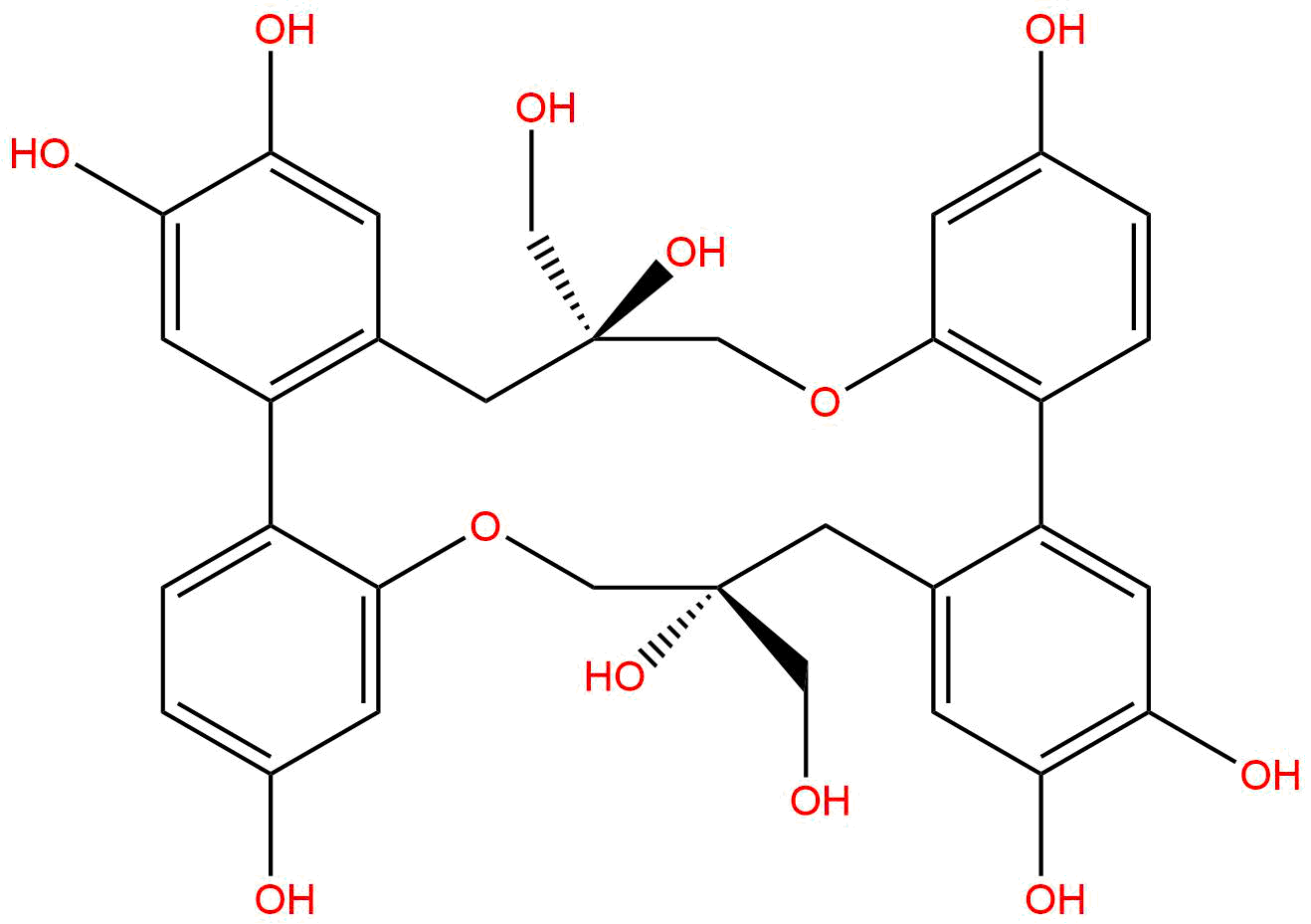


Product name: Caesappanin C
Synonym name:
Catalogue No.: BP2021
Cas No.: 1913319-59-1
Formula: C32H32O12
Mol Weight: 608.596
Botanical Source: Caesalpinia sappan L.
Physical Description:
Type of Compound:
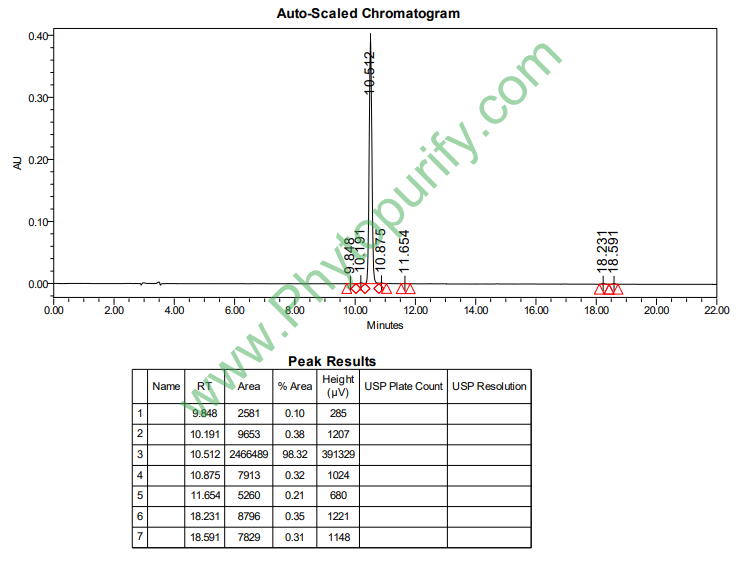
Purity: 95%~99%
Analysis Method: HPLC-DAD or/and HPLC-ELSD
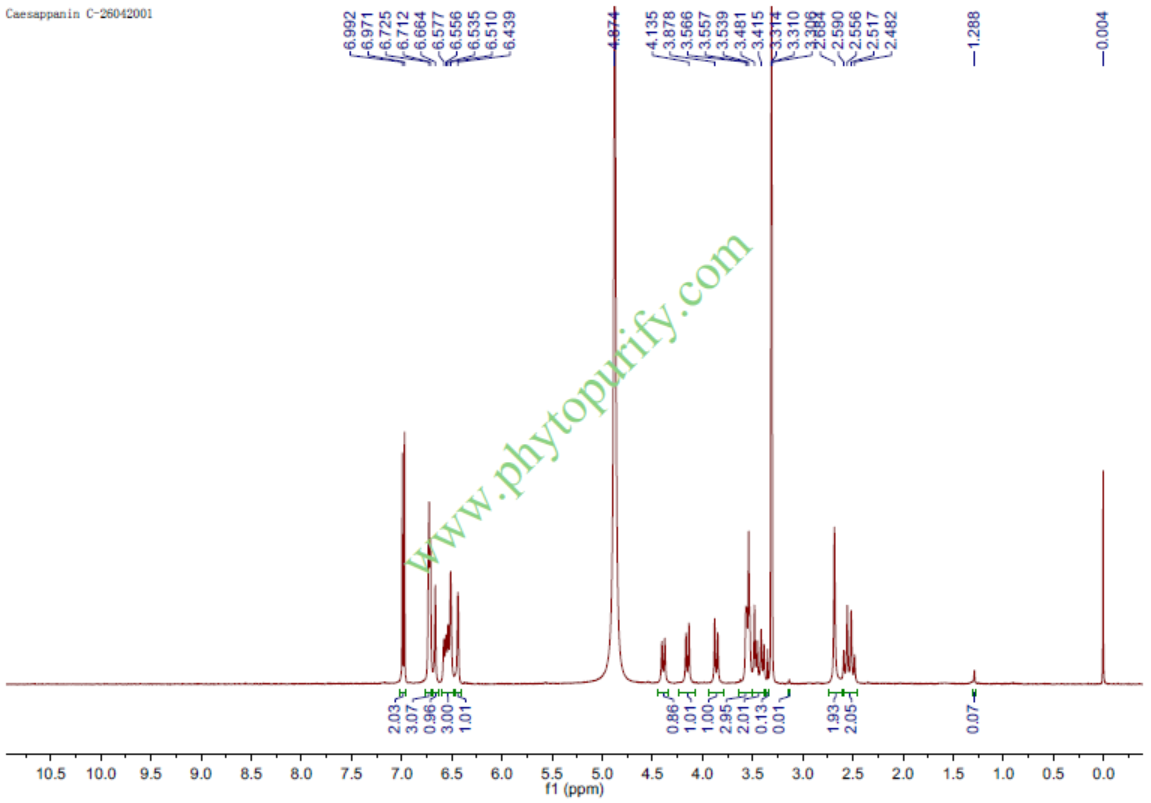
Identification Method: Mass, NMR
Packing: Brown vial or HDPE plastic bottle
The product could be supplied from milligrams to grams. Inquire for bulk scale.
For Reference Standard and R&D, Not for Human Use Directly.
HPLC of Caesappanin C
HNMR of Caesappanin C
Storage conditions:Short-term storage at 2~8℃, long-term storage at -20 ~ -80℃
220.7600
1.1780
1.1552
.0898
1.8767
.9302
Low
86.8659
4.5411
No
No
No
No
Yes
Yes
0.6
Yes
No
Yes
Yes
Natural products, as an important source of drug discovery, play an irreplaceable role in the long history of human fight against diseases. From the classic analgesic morphine to the anticancer drug paclitaxel, from the antimalarial drug artemisinin to the lipid-lowering drug lovastatin, the secondary metabolites found in nature provide abundant lead compounds and structural frameworks for modern drug development. Among numerous natural products, cloud derived from leguminous plants is a true source(Caesalpinia)The compounds have attracted much attention due to their structural diversity and significant biological activity. There are about 150 species of Yunzhen plants worldwide, mainly distributed in tropical and subtropical regions. Many species are used in traditional medicine to treat diseases such as inflammation, pain, infections, and tumors. In recent years, a variety of novel compounds have been isolated and identified from plants of this genus, particularly homo flavane compounds with unique dimer structures, demonstrating remarkable anti-cancer potential.
Caesapanin C (CAS number: 1913319-59-1) is a natural product with a unique chemical structure discovered in recent years from Yunzhen plants. As a class of isomeric yellow alkane dimers, the discovery of Caesapanin C has enriched the structural diversity of natural product chemistry. Its complex molecular skeleton and potential biological activity have quickly attracted the interest of medicinal chemists and pharmacologists. Preliminary studies have shown that the compound exhibits activity in inhibiting proliferation and inducing apoptosis in various tumor cell models, especially in renal cell carcinoma related research, where its regulatory effects on multiple key signaling pathways and target proteins demonstrate unique mechanisms. Renal cell carcinoma (rcc) is one of the most common malignant tumors in the urinary system, and its incidence rate is on the rise worldwide. Despite significant progress in targeted therapy and immunotherapy in recent years, issues such as drug resistance and adverse reactions still exist, and there is an urgent need to develop therapeutic drugs with new mechanisms of action. The emergence of Caesapanin C provides new ideas and potential candidate molecules for the treatment strategies of kidney cancer. This article aims to systematically review the chemical structure, plant origin, pharmacological activity, mechanism of action, and medicinal characteristics of Caesapanin C, in order to provide comprehensive scientific basis for the in-depth research and development of this compound.
Caesapanin C belongs to homoflavonoid dimer, which is composed of two homoflavonoid monomers connected by specific carbon carbon or carbon oxygen bonds. It has a complex structure and multiple chiral centers. The core skeleton of its chemical structure usually contains two benzopyran units and may carry substituent groups such as hydroxyl and methoxy. Specifically, the molecular formula of Caesapanin C is C ∝₀ H ₂₄ O ₁₄, with a molecular weight of 608.5960 g/mol. The molecular structure is rich in phenolic hydroxyl groups, which endows it with strong polarity and the ability to form hydrogen bonds. From the perspective of structural characteristics, the complex multi ring system of Caesapanin C gives it multiple potential pharmacophores, which can interact with various biomolecules. This may be the structural basis for its multi-target pharmacological activity.
In terms of physical and chemical properties, Caesapanin C exhibits moderate to high polarity. Its lipophilic water partition coefficient (LogP) is 1.1780, indicating that the compound has a certain degree of lipophilicity, but overall tends to be hydrophilic. The topologically polar surface area (TPSA) is as high as 220.7600 Å ², far exceeding the recommended upper limit of 140 Å ² for oral medications, mainly due to the large number of hydroxyl and ether oxygen atoms in the molecule. A high TPSA value usually means that the compound has poor permeability to the cell membrane and is not easily able to penetrate the blood-brain barrier. In fact, the predictive model shows that the blood-brain barrier permeability of Caesapanin C is "low", indicating a lower risk of central nervous system side effects, but also limiting its application in the treatment of brain diseases. In terms of water solubility, the predicted water solubility value of Caesapanin C is 0.0898 mg/mL, which belongs to the category of slight solubility. This limited water solubility may pose challenges for its formulation development and in vivo administration, requiring the use of appropriate drug delivery systems or prodrug strategies to improve. In addition, the predicted inhibition of hERG potassium channels by this compound is' no ', indicating a low risk of causing cardiac QT interval prolongation and arrhythmia, which is a favorable safety feature. The predicted result of Ames test is 0.6, indicating a low potential genetic toxicity risk, but further experimental verification is still needed.
Caesapanin C mainly comes from the legume family Yunzhen(Caesalpinia)The roots, stems, or entire plant. Yunzhen has a wide variety of plant species, such as Su Mu(Caesalpinia sappan)Cloud reality(Caesalpinia decapetala)Waiting is a commonly used medicinal herb in traditional medicine. The heartwood of Sumu has the effects of promoting blood circulation, removing blood stasis, reducing swelling, and relieving pain in traditional Chinese medicine. Modern research has confirmed that it contains various components with anti-inflammatory, antioxidant, and anti-tumor activities. Caesapanin C usually coexists with other homologous flavane compounds (such as Caesapanin A, B, etc.) in the extracts of these plants.
The extraction of Caesapanin C usually follows the classic process of natural product chemistry. Firstly, the dried plant material is crushed and soaked or percolated using polar solvents such as methanol, ethanol, or their aqueous solutions for extraction. Due to the high polarity of Caesapanin C, high concentration alcohol or acetone water mixed systems often achieve better extraction efficiency. The crude extract is obtained by filtering and concentrating the extract under reduced pressure. Subsequently, the crude extract is preliminarily separated by liquid-liquid extraction, usually using solvents of different polarities such as petroleum ether, ethyl acetate, n-butanol, etc., to sequentially extract the target compound and enrich it in the moderately polar ethyl acetate or n-butanol fraction. Further separation and purification mainly rely on various chromatographic techniques. Silica gel column chromatography is one of the most commonly used methods, which can achieve preliminary separation by adjusting the polarity gradient of the eluent (such as chloroform methanol or dichloromethane methanol system). For dimer compounds with similar structures, it is often necessary to combine with Sephadex LH-20 gel column chromatography, and use molecular sieve effect and adsorption for fine separation. High performance liquid chromatography (HPLC), especially preparative HPLC, is a key means of obtaining high-purity Caesapanin C. It usually uses a reverse phase C18 column with acetonitrile water or methanol water system as the mobile phase. Finally, the isolated compound was structurally identified using spectroscopic techniques such as nuclear magnetic resonance spectroscopy (NMR), mass spectrometry (MS), and circular dichroism (CD) to confirm whether it is Caesapanin C.
The pharmacological activity research of Caesapanin C is currently in its early stages, but existing research results have revealed its significant anti-cancer potential, especially in the field of renal cancer.
1. Anti renal cancer activity
Renal cancer is the disease area where Caesapanin C research is most concentrated. In vitro cell experiments have shown that Caesapanin C can inhibit the proliferation of various renal cancer cell lines (such as 786-O, ACHN, Caki-1, etc.) in a dose-dependent and time-dependent manner. Compared with normal renal epithelial cells, Caesapanin C exhibits certain selective toxicity towards renal cancer cells, providing a safe window for its clinical application. Further experiments have confirmed that Caesapanin C can induce apoptosis in renal cancer cells, manifested by nuclear condensation, DNA fragmentation, and significant upregulation of apoptosis marker proteins such as cleaved caspase-3. In addition, the compound can effectively inhibit the migration and invasion ability of renal cancer cells, suggesting its potential for anti metastasis. At the mechanistic level, Caesapanin C also exhibits regulatory effects on the renal cell carcinoma microenvironment, such as inhibiting the expression of hypoxia inducible factors, which may affect tumor angiogenesis and metabolic reprogramming.
2. Other potential activities
In addition to its anti renal cancer activity, Caesapanin C may also have other pharmacological effects due to the widespread biological activity of its homologues. For example, based on its polyphenol structure, it may exhibit antioxidant and anti-inflammatory activities. Some structurally similar compounds have been reported to have antibacterial, antiviral, and neuroprotective effects. However, there is insufficient direct research evidence on Caesapanin C in these fields and further exploration is needed.
The molecular mechanism of Caesapanin C's anti renal cancer activity is multi-layered and multi-target, involving comprehensive regulation of cell apoptosis, cell cycle, hypoxia response, and tumor suppressor signaling network. According to existing research, its key mechanisms of action and molecular targets can be summarized as follows:
1. Regulating apoptosis related proteins (BCL2 family and CASP3)
Caesapanin C can significantly downregulate the expression of anti apoptotic protein BCL2 and upregulate the expression of pro apoptotic protein BAX. The decrease in BCL2/BAX ratio is a key step in initiating mitochondrial pathway apoptosis. This imbalance leads to an increase in mitochondrial outer membrane permeability, releasing cytochrome c, which in turn activates the Caspase cascade reaction. Research has confirmed that the level of cleaved Caspase-3 (CASP3) is significantly increased in renal cancer cells treated with Caesapanin C, indicating the effective initiation of the execution phase of apoptosis.
2. Inhibit the HIF1A/CA9 hypoxia signaling axis
Hypoxia is a hallmark feature of renal cancer, particularly clear cell renal cell carcinoma (ccRCC). Due to frequent inactivation of the VHL gene, hypoxia inducible factor 1 alpha (HIF1A) accumulates abnormally under normoxic conditions, thereby activating its downstream target genes, including carbonic anhydrase 9 (CA9). CA9 plays a crucial role in maintaining pH homeostasis within tumor cells and promoting tumor growth. Caesapanin C has been found to inhibit the protein expression or transcriptional activity of HIF1A, thereby downregulating the expression of CA9. This mechanism of action is particularly important for the treatment of kidney cancer, as it directly targets the core pathways that drive the occurrence and development of kidney cancer.
3. Restore the function of tumor suppressor genes (TP53 and PTEN)
TP53 and PTEN are the two most important tumor suppressor genes in the human body. Caesapanin C can upregulate the expression level of TP53 (p53 protein) and enhance its transcriptional activity. Activated p53 can transcribe and activate downstream target genes, such as CDKN1A (encoding p21 protein) and BAX, thereby mediating cell cycle arrest and apoptosis. Meanwhile, Caesapanin C can also upregulate the expression of PTEN. PTEN antagonizes the PI3K/AKT signaling pathway by dephosphorylating PIP3, inhibiting cell survival and proliferation signals. Restoring the functions of TP53 and PTEN is one of the important mechanisms by which Caesapanin C exerts its anti-cancer effects.
4. Regulating the Cell Cycle (CDKN1A)
Caesapanin C treatment can lead to cell cycle arrest in the G1/S phase of renal cancer cells. The mechanism is closely related to the upregulation of CDKN1A (p21) expression. P21 is a broad-spectrum cyclin dependent kinase inhibitor that can inhibit the activity of Cyclin CDK complexes and prevent cells from entering the S phase for DNA replication from the G1 phase. By inducing cell cycle arrest, Caesapanin C gains time for cells to repair DNA damage or initiate apoptosis programs.
5. Affects other key signaling pathways (MET and VHL)
MET receptor tyrosine kinase is often abnormally activated in renal cell carcinoma, driving tumor cell proliferation, invasion, and metastasis. Research has shown that Caesapanin C can inhibit the phosphorylation level of MET, thereby blocking its downstream signaling. In addition, VHL gene, as a key tumor suppressor gene in renal cancer, its functional loss is the fundamental reason for the abnormal accumulation of HIF1A. Although Caesapanin C cannot directly restore the function of the mutated VHL gene, it actually bypasses the pathological consequences of VHL deficiency by inhibiting HIF1A and its downstream effects, achieving functional compensation for the VHL signaling pathway.
In summary, Caesapanin C forms a complex network regulatory mechanism by simultaneously acting on multiple targets such as BCL2, HIF1A, CA9, TP53, CASP3, PTEN, MET, BAX, CDKN1A, and VHL. This multi-target mode of action makes it less likely to develop drug resistance and can synergistically inhibit multiple key processes of tumors, including proliferation, survival, angiogenesis, and metastasis.
To push Caesapanin C from the laboratory to clinical application, a systematic evaluation of its pharmacological properties is necessary. Based on existing computational predictions and preliminary experimental data, a preliminary evaluation of its pharmacological characteristics can be conducted.
1. Drug like properties and physicochemical properties
As mentioned earlier, the molecular weight (608.6 Da) and TPSA (220.76 Å ²) of Caesapanin C both exceed the classical range of Lipinski's "Five Rules" (MW<500, TPSA<140), which typically indicates poor oral bioavailability. Its LogP is 1.178, which is within a reasonable range, but its water solubility (0.0898 mg/mL) is poor, belonging to BCS Class II (low solubility, high permeability) or Class IV (low solubility, low permeability) drugs. These properties suggest that traditional oral formulations may struggle to achieve effective systemic exposure levels.
2. Security prediction
On the positive side, Caesapanin C has a low risk of inhibiting hERG channels, reducing the risk of cardiac toxicity. The Ames test predicted a negative result (0.6), indicating a low risk of mutagenicity. In addition, its low blood-brain barrier permeability also reduces central nervous system side effects. However, these predicted results need to be validated through rigorous in vitro and in vivo toxicology experiments, including acute toxicity, subchronic toxicity, reproductive toxicity, and genetic toxicity.
3. Pharmacokinetic characteristics
At present, there is very limited in vivo pharmacokinetic (ADME) data on Caesapanin C. Based on its physical and chemical properties, it can be inferred that:
- absorb Oral absorption may be poor and bioavailability may be low. Its high polarity and high molecular weight are not conducive to passive diffusion through intestinal epithelial cells. It may be necessary to use drug delivery systems such as nanoparticles, liposomes, phospholipid complexes, etc. to enhance their oral absorption.
- distribution After intravenous administration, it may mainly distribute in the blood and well perfused tissues. Due to its high polarity, its distribution volume may not be large. Low blood-brain barrier permeability limits its distribution in the central nervous system.
- Metabolism A large number of phenolic hydroxyl groups in the molecule are potential substrates for phase II metabolic enzymes such as glucuronosyltransferase and sulfotransferase, which may undergo extensive glucuronidation and sulfation binding reactions in the liver and intestine, leading to rapid clearance.
- excretion Metabolites and small amounts of prototype drugs may be mainly excreted through bile and urine.
4. Optimization strategy for drug properties
Given the above challenges, optimizing the structure of Caesapanin C or developing new formulations is key to enhancing its pharmacological properties. Possible strategies include:
- Prodrug design Esterification or etherification modification of phenolic hydroxyl groups to improve lipid solubility and membrane permeability, and release the active ingredient through enzymatic interpretation in vivo.
- nano-formulation Using liposomes, polymer nanoparticles, or albumin nanoparticles to encapsulate drugs, improving water solubility, prolonging circulation time, and utilizing EPR effect to achieve tumor targeted delivery.
- Simplified structure On the premise of retaining key pharmacophores, attempt to simplify its complex dimer structure and synthesize simpler and smaller molecular weight analogues to improve drug properties.
Caesapanin C, as a structurally novel natural product, has shown unique application prospects in the field of kidney cancer treatment, but also faces many challenges.
1. Potential as a candidate drug for the treatment of kidney cancer
The multi-target mechanism of action of Caesapanin C is its greatest advantage. It simultaneously acts on multiple key nodes involved in the occurrence and development of renal cell carcinoma, including the HIF1A/CA9 hypoxia pathway, BCL2/Bax apoptosis pathway, TP53/PTEN tumor suppression pathway, and MET signaling pathway. This "multi-target, multi pathway" regulatory mode theoretically can more comprehensively inhibit tumors and reduce common resistance issues of single target drugs. Especially for clear cell renal cell carcinoma caused by VHL gene mutation leading to abnormal activation of HIF1A, Caesapanin C provides a direct strategy to target this core pathway, which is different from the mechanism of action of current first-line targeted drugs such as sunitinib, pazopanib and other VEGFR inhibitors, and may provide a new treatment option for drug-resistant patients.
2. Combination therapy strategy
Given the mechanism of action of Caesapanin C, it is highly likely to have a synergistic effect with existing kidney cancer treatment drugs. For example, when combined with immune checkpoint inhibitors such as PD-1/PD-L1 antibodies, Caesapanin C may improve the immunosuppressive state in the tumor microenvironment and enhance the efficacy of immunotherapy by inhibiting HIF1A. Combined with mTOR inhibitors such as everolimus, it can simultaneously block the PI3K/AKT/mTOR and HIF1A pathways, achieving more thorough signal blockade. Combined with traditional cytotoxic drugs, Caesapanin C may reduce chemotherapy drug resistance and enhance its killing effect by upregulating p53 and downregulating BCL2.
3. Challenges faced and future research directions
Despite its promising prospects, the clinical translation of Caesapanin C remains a long and challenging journey.
- Pharmacokinetic defects Low oral bioavailability and poor water solubility are the primary obstacles. The future research focus should be on developing efficient and low toxicity drug delivery systems.
- In vivo efficacy verification Current research mainly focuses on the in vitro cellular level. It is urgent to establish a renal cancer xenograft model (such as subcutaneous or in situ model) and systematically evaluate the in vivo anti-tumor activity, pharmacokinetic characteristics, and toxicity of Caesapanin C and its preparations.
- In depth analysis of the mechanism of action Although multiple targets have been identified, the direct binding mode, binding affinity, and the existence of other upstream targets of Caesapanin C to these targets still need to be further validated through techniques such as surface plasmon resonance and drug affinity reaction target stability.
- Study on Structure Activity Relationship Systematically synthesize a series of derivatives of Caesapanin C, explore which functional groups and chiral centers are crucial for activity in their complex structures, and provide guidance for structural optimization.
- Expand indication research: On the basis of verifying its anti renal cancer activity, we can explore its potential therapeutic effect on other solid tumors (such as liver cancer, lung cancer, breast cancer) and non tumor diseases (such as inflammation, fibrosis).
Caesapanin C, as a homo isomer of flavane dimer derived from Yunzhen plants, has injected new vitality into the research field of natural anti-cancer drugs with its unique chemical structure and multi-target pharmacological activity. This article systematically reviews the research progress of this compound in terms of chemistry, sources, pharmacology, mechanisms, and drug properties. It exhibits a comprehensive effect of inhibiting proliferation, inducing apoptosis, blocking the cell cycle, and anti metastasis by regulating multiple targets closely related to the occurrence and development of renal cell carcinoma, such as BCL2, HIF1A, CA9, TP53, PTEN, MET, BAX, CDKN1A, and VHL. This multi-target mode of action gives it a unique advantage in addressing the complexity and heterogeneity of kidney cancer.
However, Caesapanin C also faces the typical challenge of developing medicinal properties from natural products, such as poor water solubility and low oral bioavailability. Future research needs to overcome these obstacles through structural optimization and the development of new formulations by combining multidisciplinary approaches such as medicinal chemistry, pharmacy, and pharmacology, based on a deep understanding of their molecular mechanisms. We have reason to believe that with the continuous deepening of research, Caesapanin C and its derivatives have the potential to become new candidate drugs for the treatment of kidney cancer and other diseases, contributing to the cause of human health. The classic pathway of discovering lead compounds from natural products and converting them into clinical drugs through modern drug development techniques has been vividly demonstrated in Caesapanin C.
