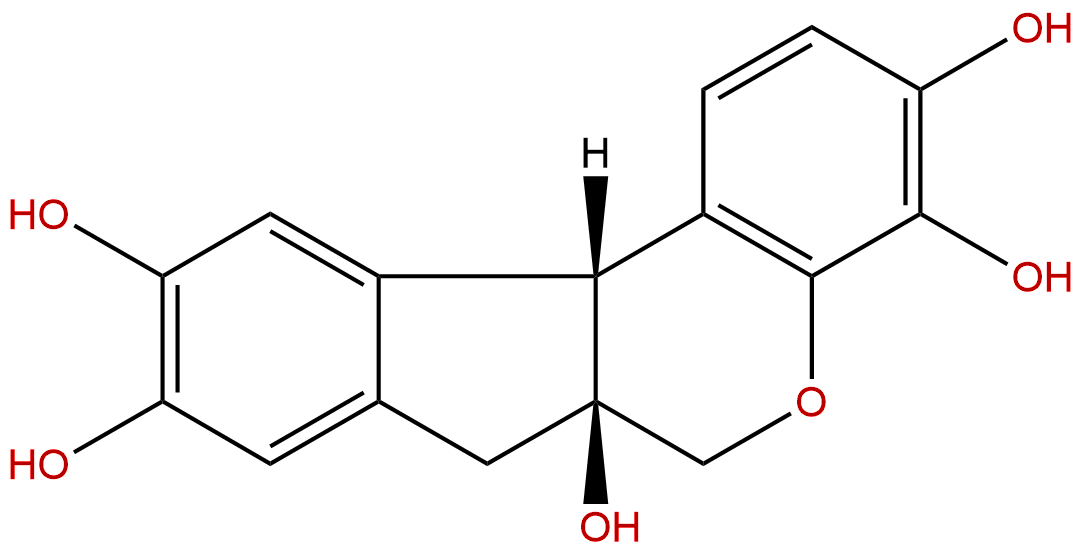


Product name: Hematoxylin
Synonym name:
Catalogue No.: BP3180
Cas No.: 517-28-2
Formula: C16H14O6
Mol Weight: 302.282
Botanical Source:
Physical Description:
Type of Compound: Flavonoids
Purity: 95%~99%
Analysis Method: HPLC-DAD or/and HPLC-ELSD
Identification Method: Mass, NMR
Packing: Brown vial or HDPE plastic bottle
The product could be supplied from milligrams to grams. Inquire for bulk scale.
We provide solution to improve the water-solubility of compounds, thereby facilitating the variety of activity tests and clinic uses.
For Reference Standard and R&D, Not for Human Use Directly.
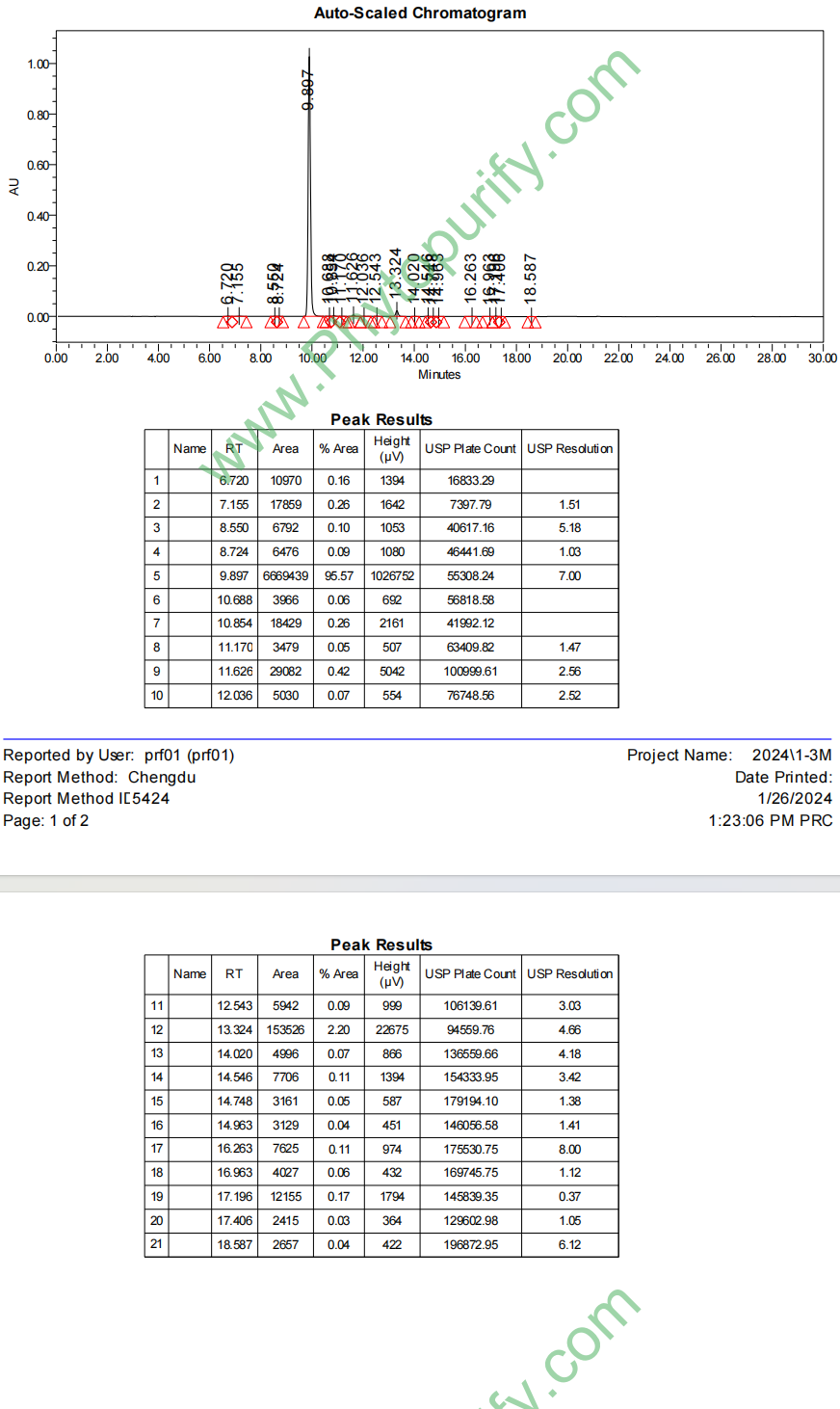
HPLC of Hematoxylin
Storage conditions:Short-term storage at 2~8℃, long-term storage at -20 ~ -80℃
110.3800
1.5776
1.5622
.1814
3.5779
5.5690
Low
78.4687
3.8577
Yes
Yes
No
No
Yes
No
0.6
Yes
No
Yes
No
Hematoxylin (CAS number: 517-28-2), also known as Natural Black 1, is a type of plant derived from the leguminous plant Hematoxylin(Caesalpinia sappan Natural flavonoid compounds extracted from heartwood. Since its introduction into the field of histology in the mid-19th century, its complex with metal ions such as aluminum and iron - hematoxylin lake - has become an irreplaceable nuclear staining agent in pathology laboratories worldwide, laying the foundation for morphological diagnosis of diseases. However, the value of hematoxylin is far more than that. In recent years, with the deepening of pharmacological research on natural products, hematoxylin has gradually demonstrated diversified biological activities beyond its staining function. Research has shown that it is not only an effective inhibitor of β - amyloid protein (A β 42) fibroblast formation (IC50 of 1.6 μ M), indicating its potential application in neurodegenerative diseases such as Alzheimer's disease, but also in the field of oncology, especially leukemia research, demonstrating its anti-cancer potential by regulating multiple key signaling pathways such as AMPK, STAT3, BCL2, etc. Its pharmacological parameters, such as clear molecular weight (302.28), appropriate lipid water partition coefficient (LogP: 1.58), and preliminary safety data (Ames test negative), provide the possibility for its transformation from a classic staining agent to a new therapeutic drug. This article aims to systematically review the chemical properties, plant sources, pharmacological activities, molecular mechanisms of action, pharmacological evaluation, and clinical application prospects of hematoxylin, in order to provide a comprehensive academic perspective for the modern research and development of this ancient natural product.
The chemical name of hematoxylin is 7,11b-dihydrobenzo [b] indeno [1,2-d] pyran-3,4,6a, 9,10 (6H) - pentanol, with a molecular formula of C16H14O6 and a molecular weight of 302.28. Its structure belongs to the class of isoflavones in flavonoids, and its core skeleton is composed of three six membered rings (A, C, B) fused together, with the C ring being a pyran ring with a chiral center. Its structure contains multiple phenolic hydroxyl groups (located at positions 3, 4, 6a, 9, and 10), which are key functional groups for its antioxidant, metal chelation, and interaction with biomolecules.
In terms of physical and chemical properties, hematoxylin itself is a light yellow to light brown crystal or powder, but its oxidation product, hematoxylin, is a deep reddish brown color, which is the active form that forms colored complexes with metal ions. Its theoretical lipid water partition coefficient (LogP) is 1.58, indicating that it has a certain degree of lipophilicity, but not highly hydrophobic. The topological polar surface area (TPSA) is 110.38 Å ², reflecting the strong polarity brought by multiple hydroxyl groups in the molecule. Its water solubility is relatively low, about 0.18 mg/mL, which to some extent limits its bioavailability. In solution, hematoxylin is sensitive to light, heat, and pH value, especially under alkaline conditions, it is easily oxidized to hematoxylin by air. This redox property is not only the basis of its staining chemistry, but may also be involved in regulating its biological activity in vivo.
Sumu su mainly comes from Sumu su(Caesalpinia sappan L. The core talent. Sumu is a traditional Chinese medicinal herb, mainly produced in Southeast Asia, India, Yunnan, Guangxi and other parts of China. Its heartwood is red and has been used since ancient times to promote blood circulation, remove blood stasis, reduce swelling and relieve pain. Except for Su Mu, it belongs to the same plant species as Yang Su Mu(Haematoxylum campechianum L. The heartwood of) is also a traditional commercial source of hematoxylin, but its chemical composition is slightly different from that of hematoxylin.
The extraction method of hematoxylin has undergone development from traditional to modern. Traditional methods often use water or low concentration alcohols (such as ethanol) for reflux extraction, utilizing the solubility of hematoxylin and its related pigments for crude extraction. Modern extraction techniques place greater emphasis on efficiency and purity, often using the following steps:
1. preprocessing Crush the dried heartwood of Sumu to increase the extraction contact area.
2. Solvent extraction Commonly used solvents such as methanol, ethanol, or acetone water mixtures are used for ultrasound assisted extraction or hot reflux extraction. Research has shown that a 70% ethanol aqueous solution is a better choice that balances extraction efficiency and environmental friendliness.
3. Separation and purification After concentration, the crude extract was preliminarily enriched by column chromatography using macroporous adsorption resins (such as AB-8, D101), and gradient elution was performed using different concentrations of ethanol. Further purification can be achieved through methods such as silica gel column chromatography, preparative high-performance liquid chromatography (HPLC), or recrystallization to obtain high-purity hematoxylin monomers.
4. appraisal The purified product was structurally confirmed by melting point determination, UV Vis spectroscopy, IR spectroscopy, MS spectroscopy, and NMR spectroscopy.
Optimizing extraction processes (such as response surface methodology to optimize extraction parameters) and developing green extraction technologies (such as subcritical water extraction) are currently research hotspots for improving the yield and sustainability of hematoxylin.
Hematoxylin has a wide range of pharmacological activities, and its research has expanded from basic tissue chemistry to multiple therapeutic fields such as anti-tumor, neuroprotective, anti-inflammatory, antioxidant, etc.
The pharmacological effects of hematoxylin, especially its anti leukemia activity, are achieved by intervening in multiple key cellular signaling pathways and molecular targets, forming a multi-target, networked mode of action. According to the provided target information, its mechanism of action can be summarized as follows:
In terms of neuroprotection, the mechanism of inhibiting A β aggregation may be related not only to direct interactions, but also to the synergistic effects of regulating the above-mentioned pathways (such as reducing oxidative stress and inhibiting inflammation).
The evaluation of drug properties is a crucial step in the conversion of natural products into drugs. Based on existing data, the pharmacological analysis of hematoxylin is as follows:
In summary, hematoxylin has the basic structural characteristics and preliminary safety to become a lead compound, but its Low water solubility and potentially poor metabolic stability This is its main drawback in pharmacokinetics. Future research needs to validate the above predictions through pharmacokinetic experiments (such as measuring oral bioavailability, half-life, tissue distribution, etc. in rats or mice), and explore prodrug strategies, eutectic technology, or novel delivery systems (such as liposomes, polymer micelles) to optimize their ADME properties.
Hematoxylin has evolved from a century old staining agent to a therapeutic drug, with broad clinical application prospects but also facing challenges.
Potential application directions:
Challenges and Prospects Faced:
In the future, research on hematoxylin will exhibit the characteristics of interdisciplinary integration, combining computational chemistry, structural biology, nanotechnology, and clinical medicine. It is expected to transform this ancient natural molecule into modern drugs with clear molecular mechanisms and good therapeutic indices.
Sumu Su, a classic staining agent that has silently served in histological laboratories for over a hundred years, is once again attracting the attention of pharmacologists with its novel and diverse biological activities. From inhibiting the neuroprotective effect of A β aggregation to exerting anti leukemia effects by regulating multiple key pathways such as AMPK, STAT3, BCL2, etc., hematoxylin has demonstrated the unique advantages of natural product multi-target and multi pathway synergistic effects. Despite facing challenges such as water solubility, metabolic stability, and blood-brain barrier permeability in drug development, its clear chemical structure, good drug like basis, preliminary safety data, and rich pharmacological activity make it a highly valuable lead compound for development. Through the rational modification of modern medicinal chemistry and the empowerment of advanced drug delivery technology, hematoxylin is expected to break through existing limitations and transform from a "staining agent" for pathological sections to a "therapeutic agent" for major diseases such as leukemia and Alzheimer's disease. The in-depth and continuous research on it is not only a modern exploration of a traditional medicinal resource, but also provides insightful examples for the development of innovative drugs derived from natural products.
