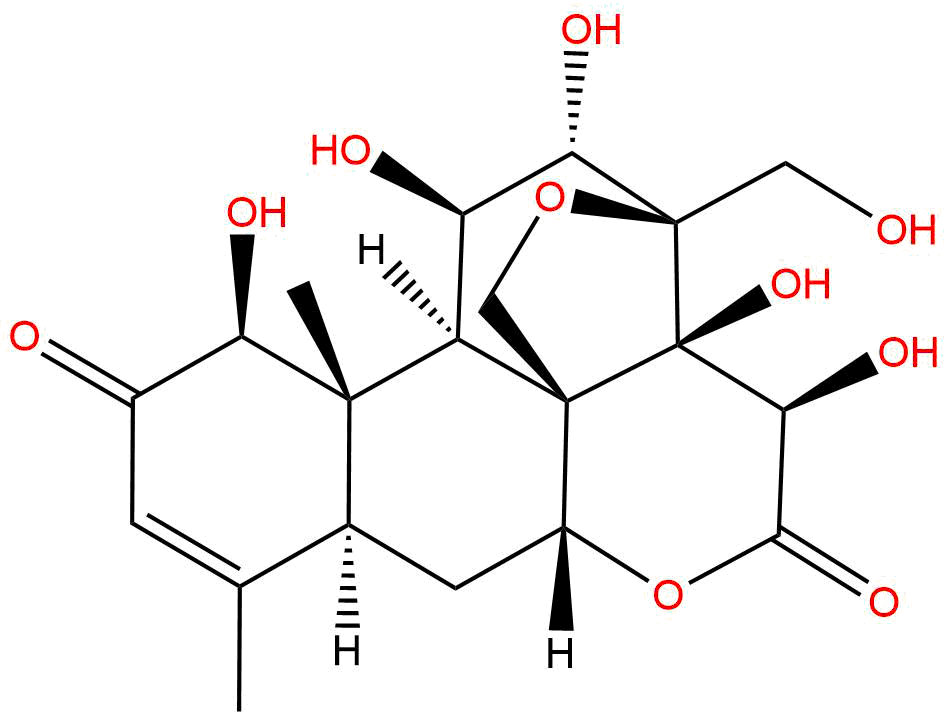


Product name:Yadanziolide A
Synonym name: Bruceine H
Catalogue No.: BP3922
Cas No.: 95258-14-3
Formula: C20H26O10
Mol Weight: 426.418
Botanical Source: Seeds of Brucea javanica
Physical Description:
Type of Compound:
Purity: 95%~99%
Analysis Method: HPLC-DAD or/and HPLC-ELSD
Identification Method: Mass, NMR
Packing: Brown vial or HDPE plastic bottle
The product could be supplied from milligrams to grams
Inquire for bulk scale.
For Reference Standard and R&D, Not for Human Use Directly.
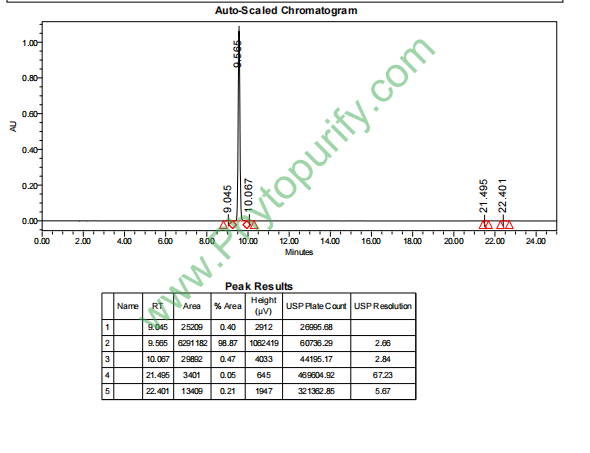
HPLC of Yadanziolide A
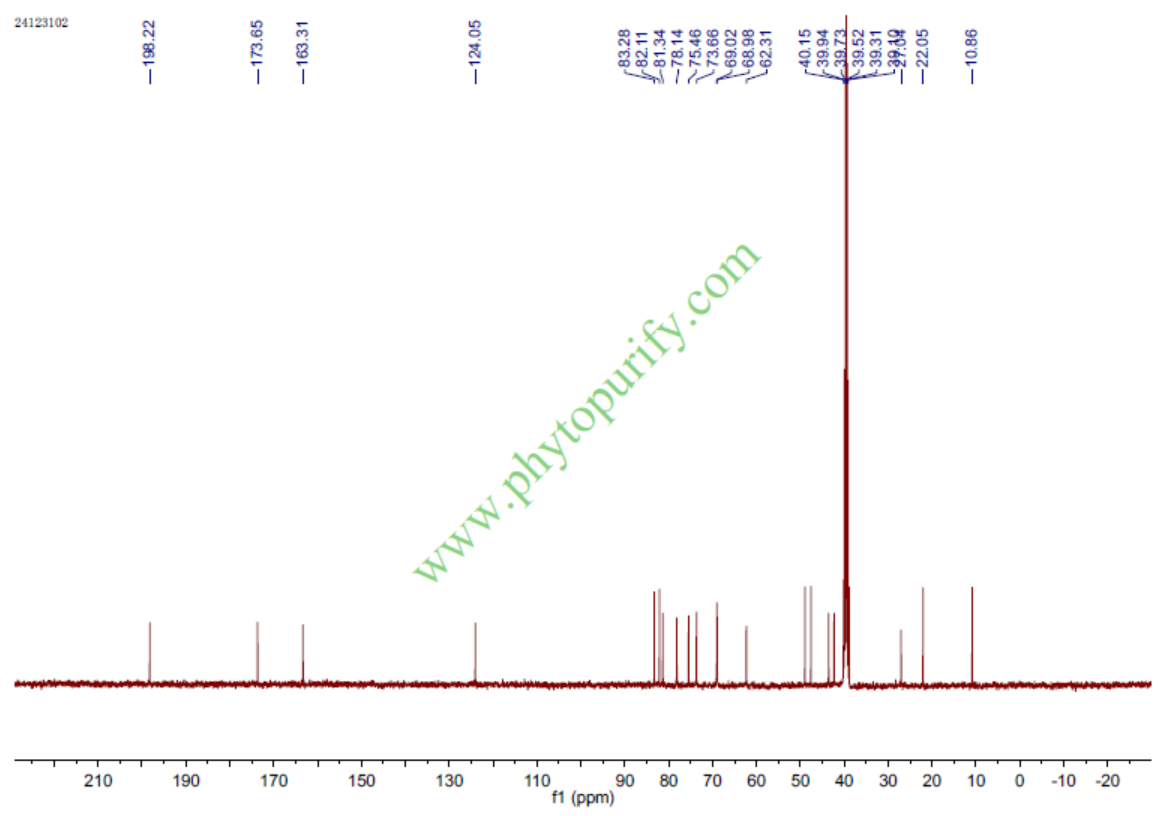
NMR of Yadanziolide A
Storage conditions:Short-term storage at 2~8℃, long-term storage at -20 ~ -80℃
173.9800
-1.0332
-1.0335
5.0132
.3829
3.1556
Low
31.8310
6.7728
No
No
No
No
Yes
No
0.0
Yes
No
Yes
Yes
Natural products, as an important source of drug discovery, play an irreplaceable role in the long history of human fight against diseases. Isolating and identifying compounds with significant biological activity from traditional herbs, and elucidating their mechanisms of action, is an important paradigm in modern medicinal chemistry and pharmacology research. Simaroubacheae plant, Brucea asiatica(Brucea javanica As a traditional Chinese medicinal herb, (L.) Merr. is commonly used in clinical practice to treat dysentery, malaria, corns, and certain malignant tumors with its dried and ripe fruit (brucea). Modern pharmacological research has revealed that brucea is rich in various structurally unique quassinoids, which exhibit a wide range of biological activities, including anti-tumor, antiviral, anti-inflammatory, and anti malaria. Among them, Yadanziolide A, as a representative lignin lactone compound, has attracted much attention due to its significant antiviral and anti-tumor activities.
Brucea Javanese Lactone A (CAS number: 95258-14-3) was first isolated from the ethanol extract of Brucea Javanese seeds. Its chemical structure belongs to the highly oxidized lignin skeleton and has a complex polycyclic system. Early research mainly focused on its antiviral activity, especially its inhibitory effect on Tobacco Mosaic Virus (TMV), with a half maximal inhibitory concentration (IC ₅₀) of 5.5 μ M, demonstrating strong potential against plant viruses. However, with the deepening of research, the potential of brucelloid A in the field of anti-tumor is gradually emerging. Research has shown that this compound can inhibit the proliferation and induce apoptosis of various tumor cells by regulating multiple key cellular signaling pathways, and may also affect the tumor microenvironment. Its target network involves multiple proteins closely related to tumor occurrence, development, metastasis, and drug resistance, such as MCL1, BCL2, STAT3, MMP2, TOP1, HIF1A, TOP2A, MAPK1, ESR1, CYP19A1, etc. These findings not only reveal the enormous potential of brucea jasmonate A as a lead compound for the development of anti-tumor drugs, but also provide important clues for understanding the structure-activity relationship of lignin compounds. This article will provide a systematic review of the research progress of brucea jasmonate A from the aspects of chemical structure, plant origin, pharmacological activity, mechanism of action, pharmacological evaluation, and clinical application prospects, aiming to provide comprehensive references for subsequent basic research and drug development.
Brucea Javanolide A belongs to the class of bitter lignin compounds, and its core skeleton is C ₂ ₀ bitter lignin lactone (quassinoid), which has a complete or open-loop bitter lignin (picrasane) carbon skeleton. These compounds typically exhibit highly oxidative characteristics, containing multiple hydroxyl, carbonyl, and one or more lactone rings. The chemical structural characteristics of Brucea Javanese Lactone A are its complex polycyclic system, including a trans decalin ring system and a fused furan or delta lactone ring. Specifically, its molecular structure typically contains a side chain connected at the C-13 position, which may further cyclize to form another lactone ring, thus forming its unique "lactone lactone" structure. This highly rigid multi ring structure is the structural basis for its specific binding to biological targets.
From the perspective of physical and chemical properties, the molecular formula of brucellolactone A is C ₂₀ H ₂₆ O ₁₀, with a molecular weight of 426.4180 g/mol. The calculated lipid water partition coefficient (LogP) is -1.0332, indicating that the compound has high hydrophilicity and good water solubility (with a water solubility parameter of 5.0132). This property is closely related to the presence of multiple polar groups such as hydroxyl (- OH) and carbonyl (C=O) groups in its molecule. High water solubility is beneficial for the dissolution and absorption of drugs in the body, but it may also affect their ability to penetrate cell membranes. The topologically polar surface area (TPSA) is 173.9800 Å ², which is much higher than the commonly assumed passive diffusion threshold (about 140 Å ²), indicating that brucellolactone A may be difficult to penetrate the cell membrane through simple passive diffusion, and its cellular uptake may depend on specific transporters or endocytosis. In addition, a higher TPSA value also means that the compound has a strong ability to form hydrogen bonds, which helps it form stable interactions with target proteins.
Other key pharmacokinetic parameters indicate that the blood-brain barrier (BBB) penetration ability of brucea jasmonate A is predicted to be "low", which may be due to its high polarity and high TPSA. This characteristic may be disadvantageous for treating central nervous system diseases, but for treating peripheral solid tumors, it may reduce potential toxic side effects on the central nervous system. The prediction result of hERG (human Ether - à - go Related Gene) inhibition is' no ', indicating a low risk of inducing QT interval prolongation and arrhythmia in the heart, which is a good safety signal. The Ames test predicted a result of 0.0, indicating a low risk of genetic toxicity. These preliminary pharmacological evaluation results, combined with their clear pharmacological activity, provide a positive basis for the subsequent development of brucellolactone A as a candidate drug or lead compound.
The main plant source of Brucea Javanese Lactone A is the Sapindaceae plant Brucea Javanese(Brucea javanica Dried mature seeds of (L.) Merr. Brucea is native to tropical and subtropical regions of Asia, such as southern China (Guangdong, Guangxi, Fujian, Yunnan, etc.), India, Malaysia, Indonesia, etc. The plant is a shrub or small tree, and its fruit is a drupe that appears black when mature and contains seeds. Traditionally, the medicinal herb of Brucea Javanica is used as seed medicine, which has the effects of clearing heat and detoxifying, cutting malaria, stopping dysentery, and corroding warts.
The content of Brucea Javanese Lactone A in plants is relatively low and belongs to trace active ingredients. Its extraction and separation usually require the use of modern chromatographic techniques. The classic extraction process generally includes the following steps:
It is worth noting that due to the low content of brucellolactone A in plants and its coexistence with various structurally similar lignin compounds, the separation and purification process is cumbersome and the yield is not high. In recent years, with the development of efficient separation technologies such as high-speed counter current chromatography (HSCCC), a new approach has been provided for the rapid and efficient preparation of brucellolactone A. In addition, in order to meet the needs of subsequent pharmacological research and drug development, exploring the full synthesis or semi synthesis methods of brucellolactone A also has important scientific significance and application value.
The pharmacological activity research of Brucea Javanese Lactone A mainly focuses on its antiviral and anti-tumor aspects, and has gradually expanded to other fields in recent years.
Brucea Javanese Lactone A was initially discovered for its significant antiviral activity against plant viruses. Research has shown that this compound has a strong inhibitory effect on tobacco mosaic virus (TMV), with an IC50 value of 5.5 μ M. TMV is a typical single stranded RNA virus that poses a significant threat to economic crops such as tobacco and tomatoes. Brucea Javanese Lactone A effectively prevents the spread of TMV in plants by inhibiting its replication or assembly process. This discovery not only provides lead compounds for the development of new plant-based antiviral pesticides, but also suggests their potential activity against certain animal or human viruses. However, there are currently few reports on the anti human viruses (such as influenza virus, hepatitis virus, coronavirus, etc.) of Brucella Javanese Lactone A, which will be an important direction worth exploring in the future.
Antitumor activity is currently a hot topic in the research of brucea jasmonate A. A large number of in vitro cell experiments have confirmed that brucea jasmonate A exhibits proliferation inhibition and cytotoxic effects on various human tumor cell lines, including but not limited to:
The mechanism of its anti-tumor effect is complex and involves multiple aspects:
The anti-tumor effect of Brucea Javanese Lactone A is not driven by a single target, but is achieved through a complex, multi-target, and multi pathway network. Its core mechanism of action can be summarized as regulating multiple key processes such as cell survival, proliferation, apoptosis, metastasis, and metabolism. Based on existing research, the key molecular targets and signaling pathways are as follows:
In summary, brucea jasmonate A forms a synergistic anti-tumor network by simultaneously acting on multiple key processes such as apoptosis, proliferation, metastasis, DNA damage, and metabolism. This multi-target mode of action is the basis for its potent anti-tumor activity, but it also increases the complexity of its mechanism of action research.
To promote the clinical application of brucellolactone A from laboratory research, it is necessary to conduct a systematic evaluation of its pharmacological properties and gain a deep understanding of its pharmacokinetic (ADME) characteristics in vivo.
Based on computational predictions and preliminary experimental data, the pharmacological properties of Brucea Javanese Lactone A exhibit a combination of opportunities and challenges.
Advantage:
challenge:
At present, there are relatively limited detailed research reports on the pharmacokinetics of brucea jasmonate A in vivo, but based on its physicochemical properties and studies of similar compounds, it can be inferred that:
Future pharmacokinetic studies require the establishment of sensitive and specific biological sample analysis methods (such as LC-MS/MS), as well as animal experiments to systematically evaluate their drug time curves, bioavailability, tissue distribution, metabolite identification, and excretion pathways under different administration routes. These data are crucial for determining dosing regimens, predicting drug interactions, and evaluating potential toxicity.
As a natural product with multi-target anti-tumor activity, Brucea Javanese Lactone A has broad clinical application prospects, but still faces many challenges. Future research directions should focus on the following aspects:
In depth mechanism research and discovery of new targets Using omics techniques such as transcriptomics, proteomics, and metabolomics, as well as chemical biology methods, systematically elucidate the complete functional network of brucea jasmonate A, particularly its role in regulating the tumor immune microenvironment, tumor stem cells, autophagy, and non coding RNAs such as miRNA and lncRNA. Identifying the protein targets it directly binds to will help to understand its precise molecular mechanism.
Research on Structural Optimization and Structure Performance Relationship Using brucea jasmonate A as the lead compound, its molecular structure is modified through semi synthetic or total synthetic methods to enhance its activity and selectivity, and improve its pharmacokinetic properties (such as increasing membrane permeability and metabolic stability). For example, esterification or etherification of hydroxyl groups, or modification of lactone rings, may alter their polarity and activity. Systematically study the structure-activity relationship to provide guidance for designing better derivatives.
Drug delivery system development Given its poor membrane permeability, developing an efficient drug delivery system is key to enhancing its drug efficacy. Nanotechnologies such as liposomes, polymer nanoparticles, micelles, and cyclodextrin inclusion complexes can significantly improve their solubility, stability, targeting, and bioavailability. Especially, designing intelligent delivery systems that can respond to the tumor microenvironment (such as pH, enzymes) can achieve precise drug release.
Exploration of Combination Medication Strategy Based on its multi-target mechanism of action, the combined use of brucea jasmonate A with existing chemotherapy drugs, targeted drugs, or immune checkpoint inhibitors (such as PD-1/PD-L1 inhibitors) may produce synergistic and attenuated effects. For example, combination with BCL2 inhibitors (such as Venetoclax) may enhance the induction of apoptosis; Combined use with immunotherapy drugs may enhance anti-tumor immune response by regulating the tumor microenvironment.
Expand indication research In addition to anti-tumor effects, its antiviral activity (especially against TMV) suggests that it may be effective against other viruses. It should be systematically evaluated for its activity against human pathogenic viruses such as influenza virus, hepatitis virus, enterovirus, SARS-CoV-2, etc. In addition, its potential pharmacological activities such as anti-inflammatory and antioxidant effects are also worth exploring.
Toxicology and Safety Evaluation Before entering clinical trials, comprehensive toxicology studies are required, including acute toxicity, long-term toxicity, reproductive toxicity, immunotoxicity, etc., to evaluate their safety window and potential adverse reactions.
As a representative bitter lignin lactone compound derived from traditional Chinese medicine brucea, brucea jasmonate A has attracted widespread attention in the fields of natural product chemistry and pharmacology due to its unique chemical structure and significant antiviral and anti-tumor activities. The mechanism of its anti-tumor effect involves the synergistic regulation of multiple key targets such as MCL1, BCL2, STAT3, MMP2, TOP1, TOP2A, HIF1A, etc., exhibiting the characteristics of multiple pathways and targets. Preliminary pharmacological evaluation shows that it has good water solubility and low hERG and genotoxicity risks, but also faces challenges such as poor membrane permeability and unknown metabolic stability. In the future, through in-depth research on the mechanism of action, structural optimization of the system, development of advanced drug delivery technologies, and exploration of rational combination therapy strategies, brucelloid A and its derivatives are expected to overcome existing bottlenecks and develop into a new class of anti-tumor candidate drugs with independent intellectual property rights. The in-depth study of brucellolactone A not only helps to reveal the pharmacological activity secrets of lignin compounds, but also provides a successful example for exploring innovative drugs from the treasure trove of traditional Chinese medicine. The road from laboratory to clinical translation is long and challenging, but its unique chemical space and biological potential make it a pearl worthy of continuous investment and expectation in the field of natural product drug discovery.
