Introduction/Overview
Natural products, as an important source of drug discovery, play an irreplaceable role in the long history of human fight against diseases. Especially secondary metabolites derived from higher fungi have attracted much attention due to their novel structures and diverse activities. Ganoderma lucidum(Ganoderma lucidum)As a traditional medicinal fungus with thousands of years of application history in China and East Asia, it is known as the "fairy grass". Modern pharmacological research has confirmed that Ganoderma lucidum contains various active ingredients, including polysaccharides, triterpenoids, sterols, nucleotides, etc. Among them, Ganoderma triterpenoids are considered to be the key material basis for its various pharmacological effects such as anti-tumor, immune regulation, liver protection, and anti-inflammatory. Among the numerous triterpenoids isolated and identified from Ganoderma lucidum, ganoderic acid T-Q (GA T-Q) has gradually become a research hotspot in the field of natural product pharmacology due to its unique chemical structure and significant biological activity, especially its regulatory effect on microtubule protein polymerization.
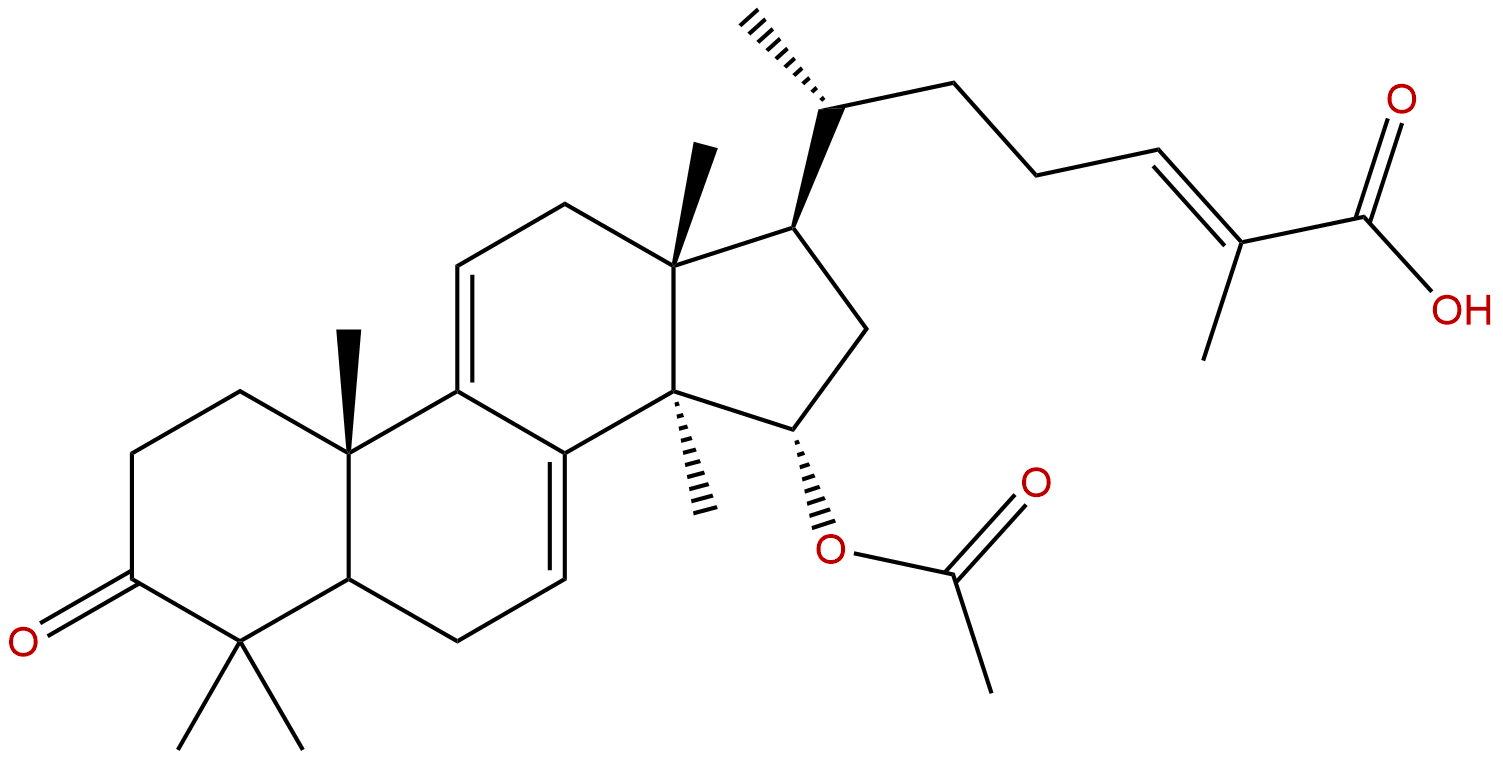
Lingzhi acid T-Q (CAS number: 112430-66-7) is a highly oxidized lanostane type triterpenoid acid with a complex molecular skeleton containing multiple chiral centers and functional groups. Unlike many classic microtubule targeted drugs such as paclitaxel and vinblastine, which are mainly derived from plants, GA T-Q, as a microtubule protein polymerization agonist derived from fungi, provides a new chemical framework and lead compounds for the development of microtubule targeted anti-tumor drugs. Preliminary studies have shown that GA T-Q can induce cell cycle arrest and apoptosis by stimulating microtubule protein polymerization, interfering with the mitotic process of tumor cells. In addition, its anti-tumor activity also involves the regulation of multiple key signaling pathways and targets (such as MCL1, BCL2, STAT3, MMP2, TOP1, etc.), showing the characteristics of multi-target and multi pathway action, which may have higher efficacy and lower risk of drug resistance compared to traditional single target chemotherapy drugs.
This article aims to systematically review the chemical structure and physicochemical properties, plant sources and extraction methods, pharmacological activity, mechanism of action, pharmacological evaluation, and clinical application prospects of Ganoderma lucidum acid T-Q, in order to provide comprehensive references for the in-depth research and development of this natural product.
Chemical structure and physicochemical properties
Lingzhi acid T-Q belongs to highly oxidized lanostane triterpenoids. Its core skeleton consists of four rings (A/B/C/D rings) and exhibits typical 5 α - lanostane structural characteristics. Compared with the basic triterpenoid skeleton, GA T-Q has substituents on multiple carbon atoms, mainly including hydroxyl (- OH), carbonyl (=O), and carboxyl (- COOH) groups. Specifically, its molecular structure contains multiple hydroxyl and carbonyl functional groups, and the presence of these polar groups is crucial for its biological activity and physicochemical properties. The precise molecular weight of GA T-Q is 510.7150 g/mol, with the molecular formula C ∝₀ H ₄₆ O ₇. The carboxyl group in its chemical structure endows it with acidic characteristics, which is also the origin of the name "lingzhi acid".
From the perspective of physical and chemical properties, GA T-Q exhibits typical lipid soluble compound characteristics. Its lipid water partition coefficient (LogP) is 6.0298, indicating that it has high lipophilicity and is easy to penetrate biofilms, but it also results in extremely low solubility in water (water solubility is only 0.0068 mg/mL). This extremely low water solubility is one of the main obstacles to the development of GA T-Q as an oral drug. Its polar surface area (TPSA) is 80.67 Å ², which is at a moderate level, indicating that it may have some oral absorption potential, but requires the use of appropriate drug delivery systems to improve its bioavailability. According to calculation predictions, the blood-brain barrier penetration ability of GA T-Q is relatively low, which to some extent limits its application in the treatment of brain tumors, but may also mean that its side effects on the peripheral nervous system are relatively small. In addition, preliminary toxicity prediction results showed that GA T-Q had a low risk of inhibiting hERG potassium channels (No), and the Ames test result was negative (0.0), suggesting that it may not have significant genetic toxicity, providing positive signals for further preclinical safety evaluation.
Plant sources and extraction methods
Lingzhi acid T-Q mainly comes from the porous fungal family Ganoderma lucidum(Ganoderma lucidum)The fruiting body, mycelium, or spore powder. Lingzhi, as a globally distributed medicinal fungus, has extensive artificial cultivation and wild resources in China, Japan, South Korea and other places. There are significant differences in the composition and content of triterpenoids in Ganoderma lucidum from different regions, varieties (such as Ganoderma lucidum and Ganoderma lucidum), growth stages, and cultivation methods (such as segmented cultivation, substitute cultivation, and liquid fermentation). Usually, mature Ganoderma lucidum fruiting bodies have a high accumulation of triterpenoids, which are the main raw materials for extracting GA T-Q. In addition, Ganoderma lucidum mycelium obtained through liquid deep fermentation technology is also considered a potential and sustainable source of GA T-Q production due to its short growth cycle and strong controllability.
The extraction of GA T-Q usually follows the classic process of natural product chemistry, mainly utilizing its lipid solubility characteristics. The extraction process generally includes the following steps:
- Raw material pretreatment Grind the dried Ganoderma lucidum fruiting body or mycelium to a certain fineness (such as 40-60 mesh) to increase the extraction contact area.
- Solvent extraction Due to the low polarity of GA T-Q, organic solvents with lower polarity are usually used for extraction, such as ethanol, methanol, ethyl acetate, or chloroform. Among them, ethanol is the most widely used in laboratory and industrial production due to its high safety and good extraction efficiency. Cold soaking, percolation, or reflux extraction methods are often used. To improve the extraction rate, multiple extractions can be performed.
- Concentration and preliminary separation Concentrate the extract under reduced pressure to obtain a paste. The extract can be further subjected to liquid-liquid extraction using solvents of different polarities, such as petroleum ether, ethyl acetate, n-butanol, and water in sequence, to enrich GA T-Q in the ethyl acetate or chloroform extraction sites.
- purification This is a key step in obtaining high-purity GA T-Q. The purification methods mainly include:
- column chromatography The most commonly used method is silica gel column chromatography, which separates the target compound by gradient elution (such as petroleum ether ethyl acetate or chloroform methanol system).
- High performance liquid chromatography For homologous compounds of ganoderic acid with similar structures, it is often necessary to refine them using preparative high-performance liquid chromatography (Prep HPLC) to obtain GA T-Q monomers with a purity greater than 95%.
- Other Technologies In recent years, technologies such as high-speed countercurrent chromatography and macroporous adsorption resin have also been applied to the separation and purification of triterpenoids from Ganoderma lucidum.
It is worth noting that due to the low content of GA T-Q in Ganoderma lucidum and its coexistence with various structurally similar ganoderic acids (such as GA T, GA T-Q1, etc.), its separation and purification process is challenging and requires the combination of multiple chromatographic techniques for fine separation.
Pharmacological activity research
The pharmacological activity research of Ganoderma lucidum acid T-Q is still in the early exploration stage, but existing research results have shown its great potential in the field of anti-tumor.
Antitumor activity
The core pharmacological activity of GA T-Q is its anti-tumor effect. In vitro cell experiments showed that GA T-Q inhibited the proliferation of various human tumor cell lines, such as breast cancer cells (MCF-7, MDA MB-231), lung cancer cells (A549), liver cancer cells (HepG2), prostate cancer cells (PC-3), and leukemia cells (HL-60). Its mechanism of action is not singular, but involves multiple levels.
- Inducing cell cycle arrest and apoptosis GA T-Q can significantly interfere with the mitotic process of tumor cells. By stimulating microtubule protein polymerization, GA T-Q may disrupt microtubule dynamic balance, leading to abnormal spindle assembly and blocking cells in the G2/M phase. This cell cycle arrest is an important prerequisite for triggering subsequent apoptotic cascade reactions. Research has confirmed that in tumor cells treated with GA T-Q, the splicing forms of apoptosis marker proteins such as Caspase-3, Caspase-9, and PARP increase, accompanied by downregulation of anti apoptotic proteins BCL2 and MCL1 expression, as well as upregulation of pro apoptotic protein BAX, indicating that it induces cell apoptosis through the mitochondrial pathway (endogenous pathway).
- Inhibit tumor cell migration and invasion Tumor metastasis is one of the main causes of patient death. GA T-Q has been shown to inhibit the migration and invasion ability of various highly metastatic tumor cells. The mechanism may be related to the downregulation of the expression and activity of matrix metalloproteinase (MMP2). MMP2 is a key enzyme that degrades the extracellular matrix, and its reduced activity hinders the invasion and metastasis of tumor cells. In addition, GA T-Q may also inhibit tumor metastasis by affecting the epithelial mesenchymal transition (EMT) process.
- Anti angiogenic effect The growth and metastasis of tumors depend on the generation of new blood vessels. GA T-Q can inhibit the expression and stability of hypoxia inducible factor 1 alpha (HIF1A). HIF1A is a key transcription factor that responds to hypoxic environments and upregulates the expression of angiogenic factors such as vascular endothelial growth factor (VEGF). By inhibiting HIF1A, GA T-Q may reduce angiogenesis in the tumor microenvironment, thereby "starving" the tumor.
Other pharmacological activities
In addition to its anti-tumor activity, preliminary studies also suggest that GA T-Q may have other pharmacological effects, such as:
- anti-inflammatory activity It is possible to reduce the production of downstream inflammatory factors (such as IL-6, TNF - α) by inhibiting the STAT3 signaling pathway.
- Immune regulatory activity As an active ingredient of Ganoderma lucidum, GA T-Q may have an impact on the function of immune cells such as T cells and NK cells, but its specific mechanism remains to be elucidated.
- Antibacterial activity Some triterpenoids from Ganoderma lucidum have shown inhibitory effects on certain bacteria and fungi, and it is worth further exploring whether GA T-Q has similar activity.
Mechanism of action and molecular targets
The pharmacological activity of GA T-Q is the result of its interaction with multiple molecular targets. Its mechanism of action exhibits characteristics of multi-target and network regulation.
Core mechanism: microtubule protein polymerization agonist
The most notable mechanism of GA T-Q is its function as a microtubule protein polymerization agonist. Microtubules are the main components of the eukaryotic cytoskeleton, formed by the polymerization of α - and β - tubulin heterodimers, and play a central role in maintaining cell morphology, material transport, signal transduction, and mitosis. Many effective anti-cancer drugs, such as paclitaxel and vincristine, are microtubule targeting agents. Paclitaxel works by stabilizing microtubules and promoting polymerization; Changchun alkaloids inhibit polymerization. The mode of action of GA T-Q is similar to paclitaxel and belongs to microtubule stabilizers. It can directly bind to microtubule proteins, reduce the critical concentration of microtubule depolymerization, and promote microtubule assembly and stabilization. This abnormal stabilization disrupts the normal dynamic instability of microtubules, leading to the inability of the mitotic spindle to form and function correctly, thereby blocking cells in the metaphase of mitosis and ultimately inducing cell apoptosis. This discovery provides a novel natural product framework for microtubule targeted drugs.
Multi target regulatory network
In addition to directly acting on microtubules, the anti-tumor activity of GA T-Q is also achieved by regulating a series of key signaling pathways and protein targets.
-
Apoptosis related targets:
- MCL1 & BCL2 As anti apoptotic proteins in the BCL2 family, MCL1 and BCL2 are highly expressed in various tumors and closely associated with chemotherapy resistance and poor prognosis. GA T-Q can significantly downregulate the protein levels of MCL1 and BCL2, thereby relieving their inhibition of pro apoptotic proteins such as BAX/BAK, promoting mitochondrial outer membrane permeabilization, releasing cytochrome c, and activating the Caspase cascade reaction.
- STAT3 Signal transducer and activator of transcription factor 3 (STAT3) is a key oncogenic transcription factor, and sustained activation of STAT3 can promote cell proliferation, survival, angiogenesis, and immune escape. GA T-Q can inhibit the phosphorylation of STAT3 (Tyr705 site), block its nuclear translocation and transcriptional activity, thereby downregulating the expression of its target genes (such as MCL1, BCL2, VEGF, etc.).
-
Transfer and invasion related targets:
- MMP2 Matrix metalloproteinase-2 is a key enzyme for degrading type IV collagen, the main component of the basement membrane. GA T-Q weakens the ability of tumor cells to degrade extracellular matrix by inhibiting the expression and enzyme activity of MMP2, thereby inhibiting their invasion and metastasis.
-
Targets related to angiogenesis and hypoxia adaptation:
- HIF1A Hypoxia inducible factor 1 alpha is a core regulatory factor for tumor adaptation to the hypoxic microenvironment. GA T-Q can inhibit the accumulation and transcriptional activity of HIF1A protein, thereby reducing the expression of pro angiogenic factors such as VEGF and exerting anti angiogenic effects.
-
DNA topoisomerase related targets:
- TOP1 & TOP2A DNA topoisomerase is an enzyme necessary for DNA replication, transcription, and chromosome separation. GA T-Q has an inhibitory effect on the activity of TOP1 and TOP2A, which may lead to DNA damage and synergistically exert anti-tumor effects with microtubule inhibition mechanism.
-
Other signaling pathways:
- MAPK1 (ERK2)The MAPK/ERK pathway is the core pathway that regulates cell proliferation and differentiation. GA T-Q may regulate cell fate by affecting the activity of this pathway.
- ESR1 (ER α)&CYP19A1 (aromatase)For hormone dependent breast cancer, GA T-Q may directly antagonize estrogen receptor α (ESR1) or inhibit the activity of aromatase (CYP19A1), thereby reducing the estrogen level in vivo and playing an anti breast cancer role.
In summary, the mechanism of action of GA T-Q is a complex network that directly stabilizes microtubule proteins and simultaneously regulates multiple key nodes such as apoptosis, metastasis, angiogenesis, and DNA damage repair, achieving multidimensional strikes on tumor cells.
Evaluation of drug properties and pharmacokinetics
Although GA T-Q exhibits encouraging pharmacological activity, its pharmacological development faces significant challenges, mainly focused on its poor water solubility and potential metabolic instability.
Drugability assessment
- Water solubility The water solubility of GA T-Q is only 0.0068 mg/mL, making it an extremely insoluble compound in water. This directly leads to extremely low oral bioavailability, and intravenous injection may also be difficult to achieve effective blood drug concentration due to insufficient solubility. This is the biggest bottleneck in its development as a candidate drug.
- fat-soluble A high LogP value (6.0298) indicates high lipophilicity, easy penetration of cell membranes, but also easy accumulation in adipose tissue, which may lead to complex pharmacokinetic behavior, prolonged half-life, and increased risk of toxic side effects.
- Metabolic stability The molecular structure of GA T-Q contains multiple hydroxyl and carboxyl groups, which are common sites of action for phase I and phase II metabolic enzymes in the body, such as cytochrome P450 enzymes and glucuronosyltransferases. Therefore, GA T-Q may undergo rapid oxidation, reduction, or binding reactions in the liver, resulting in high metabolic clearance and short half-life.
- Toxicity prediction Preliminary in vitro and computer simulation predictions indicate that GA T-Q has no risk of hERG inhibition, and the Ames test is negative, suggesting a low risk of cardiac and genetic toxicity. But this is only a preliminary evaluation, and its long-term toxicity, reproductive toxicity, organ specific toxicity, etc. still need to be evaluated through systematic in vivo toxicology studies.
Pharmacokinetic characteristics
At present, there is very limited experimental data on the pharmacokinetics of GA T-Q in vivo. Based on its physicochemical properties and research on similar compounds, it can be inferred that its pharmacokinetic characteristics are as follows:
- absorb Poor oral absorption and extremely low bioavailability. The main absorption site may be in the small intestine, but due to its water solubility, the absorption process will be very slow and incomplete.
- distribution Due to its high lipophilicity, GA T-Q is widely distributed in the body, possibly mainly in organs with abundant blood flow or high lipid content such as the liver, lungs, and adipose tissue. The plasma protein binding rate is expected to be high.
- Metabolism Mainly in liver metabolism. May undergo phase I metabolism such as hydroxylation and carboxylation, as well as phase II metabolism such as glucuronic acid or sulfuric acid binding. Metabolites may lose or retain some activity.
- excretion Metabolites may mainly enter the intestine through bile excretion and ultimately be excreted with feces. The renal excretion of the prototype drug may be very low.
Strategies for improving drug properties
Given the pharmacological defects of GA T-Q, future research needs to focus on developing effective drug delivery systems, such as:
- nano-formulation Using carriers such as liposomes, polymer nanoparticles, and micelles to encapsulate GA T-Q can significantly improve its water solubility, stability, and bioavailability, and achieve targeted delivery.
- Prodrug design Introducing hydrophilic groups (such as phosphate groups, amino acids, and sugar groups) onto the carboxyl or hydroxyl groups of GA T-Q to prepare prodrugs, which release the prototype drug after enzymatic hydrolysis or hydrolysis in vivo.
- Structural modification Conduct a systematic structure-activity relationship study on the skeleton of GA T-Q, and search for derivatives with higher activity, better water solubility, and more stable metabolism through chemical synthesis or biological transformation.
Clinical application prospects and prospects
Despite facing challenges in drug development, the clinical application prospects of ganoderic acid T-Q, as a natural product with a novel mechanism of action (microtubule polymerization agonist) and multi-target regulatory features, are still promising.
Potential application areas
- Antitumor therapy This is the most direct application direction of GA T-Q. Its unique microtubule stabilization mechanism makes it possible to treat tumors that have developed resistance to existing microtubule inhibitors such as paclitaxel. In addition, its multi target characteristics (such as simultaneous inhibition of STAT3, HIF1A, and MMP2) make it a potential advantage in the treatment of highly invasive and metastatic malignant tumors (such as triple negative breast cancer, pancreatic cancer, and glioblastoma). It can be used as a monotherapy or in combination with chemotherapy, radiation therapy, or immune checkpoint inhibitors to exert synergistic effects.
- As a lead compound The unique chemical framework of GA T-Q provides valuable structural templates for medicinal chemists. By systematically modifying and optimizing the structure of the skeleton, it is expected to develop a series of novel microtubule targeted anti-tumor drugs with independent intellectual property rights.
- Assistive therapy and healthcare Given its origin from traditional Chinese medicine Ganoderma lucidum, GA T-Q or its derivatives are expected to be developed as adjuvant therapy drugs or functional health foods for cancer patients, for improving quality of life, reducing side effects of radiotherapy and chemotherapy, and preventing tumor recurrence and metastasis.
Future research directions
In order to promote the clinical application of GA T-Q, future research should focus on the following aspects:
- In depth study on the mechanism of action More advanced technologies such as cryo electron microscopy and X-ray crystallography are needed to analyze the precise binding sites and conformational changes between GA T-Q and microtubule proteins. At the same time, utilizing omics techniques such as transcriptomics and proteomics to comprehensively depict the molecular network of its regulation, revealing the inherent logic of its multi-target effects.
- Research on the Structure Activity Relationship of the System A series of GA T-Q derivatives were prepared by semi synthetic or total synthetic methods, and the effects of different functional groups (such as hydroxyl, carbonyl, carboxyl positions and quantities) on microtubule protein polymerization activity, anti-tumor activity, water solubility, and metabolic stability were systematically studied to provide guidance for designing better candidate compounds.
- Development of an efficient drug delivery system This is the key to solving the problem of GA T-Q drug resistance. We should focus on developing delivery systems based on nanotechnology, such as targeted liposomes, polymer micelles, inorganic nanoparticles, etc., in order to achieve efficient delivery, controlled release, and tumor targeting of GA T-Q.
- In vivo efficacy and safety evaluation Establish multiple in vivo tumor models (such as xenograft tumor models, in situ tumor models, and metastatic tumor models), and systematically evaluate the in vivo anti-tumor activity, pharmacokinetic characteristics, and long-term toxicity of GA T-Q and its derivatives or nanomaterials. This is a crucial step in determining whether it can enter clinical trials.
- Biological synthesis research Exploring the biosynthetic pathway of GA T-Q in Ganoderma lucidum and cloning key synthase genes, it is expected to achieve efficient and sustainable production in heterologous hosts (such as yeast and Escherichia coli) through synthetic biology methods, solving the problem of limited natural sources.
Conclusion
Lingzhi acid T-Q, as a unique lanostane type triterpenoid acid in Ganoderma lucidum, has demonstrated unique value in the field of natural product pharmacology due to its novel microtubule polymerization activation activity and multi-target anti-tumor mechanism. It is not only a modern scientific interpretation of the traditional Chinese medicine Ganoderma lucidum's "strengthening the body and consolidating the foundation" effect, but also provides a new chemical entity and action paradigm for the development of anti-tumor drugs. However, its extremely poor water solubility and potential metabolic instability are huge obstacles on its path from a "natural product" to a "clinical drug". Future research needs to focus on solving the problem of drug formation based on a deep understanding of its mechanism of action, and fully tap into its therapeutic potential through drug chemical modification and advanced nano delivery technology. We have reason to believe that with the continuous deepening of research, ganoderic acid T-Q and its derivatives are expected to bring new treatment options for cancer patients in the future, continuing the modern legend of "fairy grass" ganoderic acid.