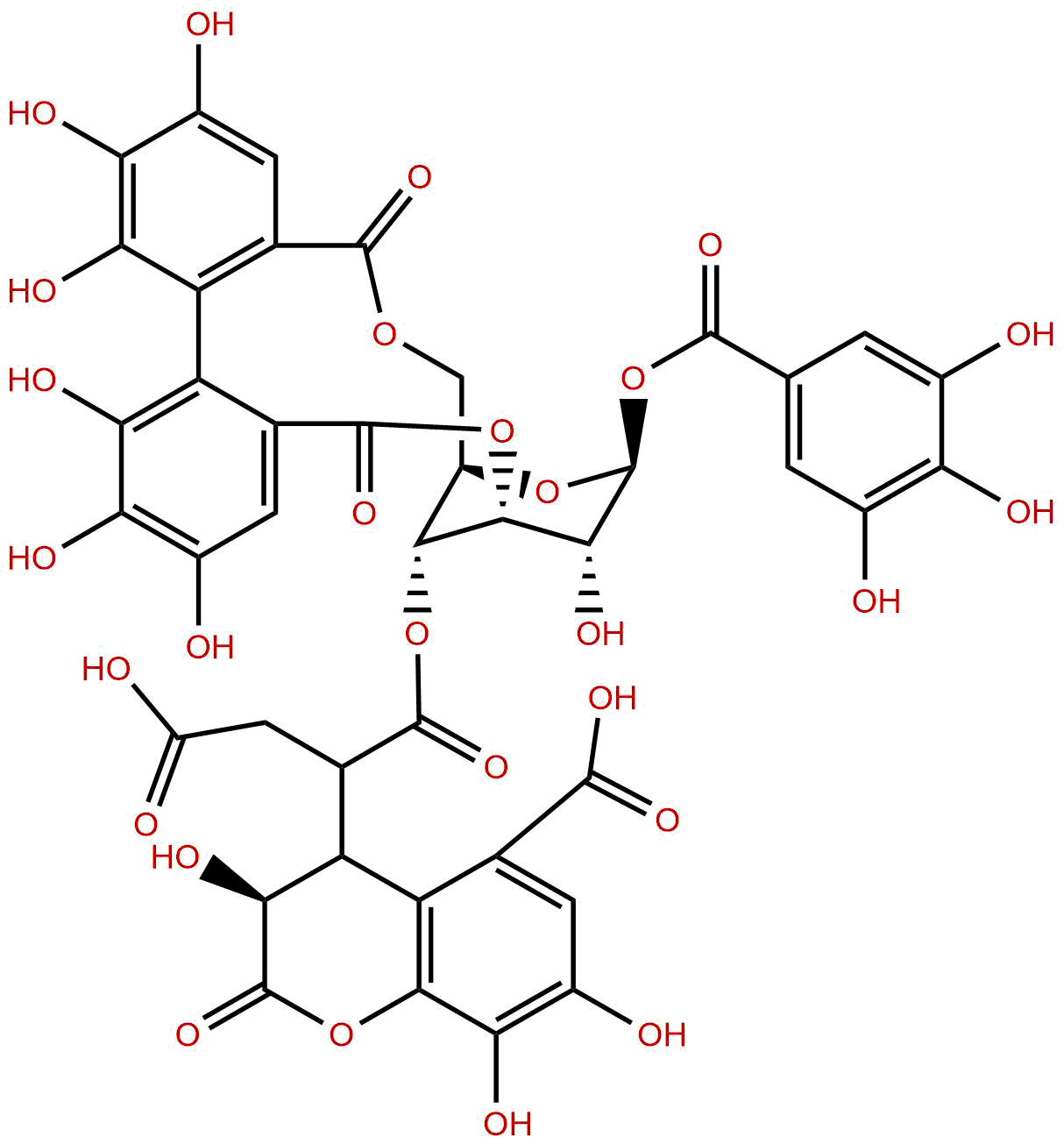


Product name: Neochebulagic acid
Synonym name:
Catalogue No.: BP2054
Cas No.: 28196-46-5
Formula: C41H32O28
Mol Weight: 972.679
Botanical Source: Chebulae Fructus
Physical Description:
Type of Compound: Phenols
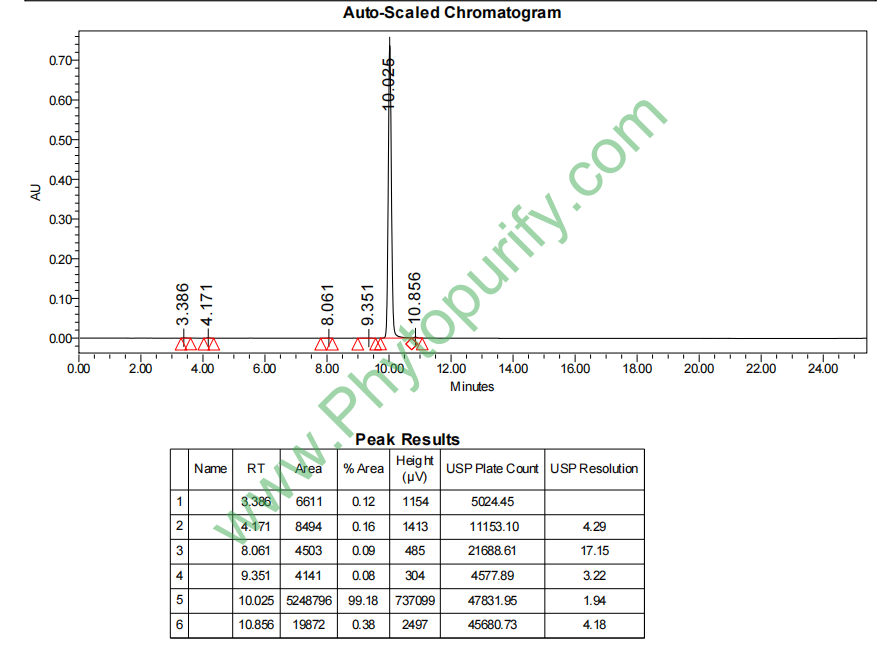
Purity: 95%~99%
Analysis Method: HPLC-DAD or/and HPLC-ELSD
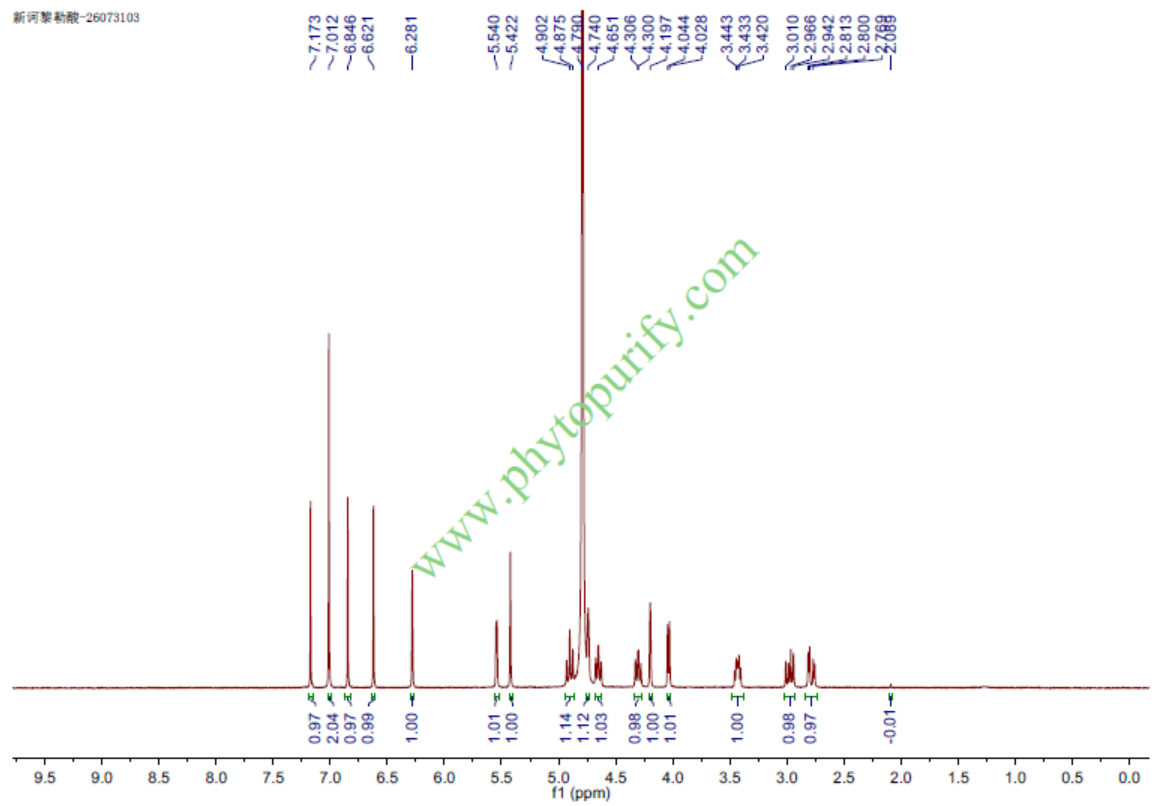
Identification Method: Mass, NMR
Packing: Brown vial or HDPE plastic bottle
Storage: Store in a well closed container, protected from air and light. Put into refrigerate or freeze for long term storage.
Whenever possible, you should prepare and use solutions on the same day. However, if you need to make up stock solutions in advance, we recommend that you store the solution as aliquots in tightly sealed vials at -20℃. Generally, these will be useable for up to two weeks.
The product could be supplied from milligrams to grams
Inquire for bulk scale.
For Reference Standard and R&D, Not for Human Use Directly.
HPLC of Neochebulagic acid
HNMR of Neochebulagic acid
Storage conditions:Short-term storage at 2~8℃, long-term storage at -20 ~ -80℃
Neochebulagic acid is a natural product derived from the traditional medicinal plant Phyllanthus emblica L., and is an important member of the polyphenolic compound family. In recent years, with the rapid development of pharmacology of natural products, neohalic acid has received widespread attention due to its unique chemical structure and significant biological activity, especially its potential in the field of anti-tumor. Colorectal cancer (CRC) is one of the malignant tumors with high incidence rate and mortality worldwide, and its treatment still faces many challenges. The multi-target treatment strategy for colorectal cancer has become a research hotspot, and the new berberine acid has shown good activity in regulating various molecular targets related to CRC, demonstrating its value as a potential drug candidate molecule.
This article aims to systematically review the chemical structure and physicochemical properties, plant sources and extraction methods, pharmacological activity and mechanism of action of New Helic Acid, and explore its application prospects in the treatment of colorectal cancer based on its pharmacological parameters and pharmacokinetic characteristics, providing theoretical basis and reference for subsequent drug development and clinical research.
The molecular formula of New Helic Acid is C48H40O24, with a molecular weight of 972.6790, belonging to the high molecular weight polyphenolic compounds. Its structural features are manifested by the presence of multiple phenolic hydroxyl and carboxyl groups, endowing it with strong antioxidant capacity and the potential to bind to protein targets. The LogP value of this compound is 0.4987, indicating that it has a good balance between hydrophilicity and hydrophobicity, which is beneficial for in vivo distribution and targeting.
The polar surface area (TPSA) of New Helic Acid is as high as 478.3200, reflecting its strong molecular polarity, which may affect its membrane permeability and bioavailability. The water solubility is 0.1953, indicating its low solubility in water, which poses certain challenges for its formulation development. The low permeability of the blood-brain barrier suggests its limited role in the central nervous system, but this may also reduce the risk of central nervous system toxicity. The hERG channel inhibition experiment showed a negative result, indicating a low risk of cardiotoxicity from neohalic acid. The Ames test result is 0.6, indicating a low risk of genotoxicity and meeting safety requirements.
The hydroxyl and ester bond structures of polyphenols in chemical structures provide the basis for their interactions with various biological targets, while also affecting their in vivo metabolic stability and drug efficacy duration.
New Helic Acid is mainly isolated from Phyllanthus emblica L., which is widely used in traditional Chinese medicine and has various effects such as clearing heat and detoxifying, moistening the lungs and stopping cough, anti-inflammatory and antioxidant properties. Yuganzi fruit is rich in various phenolic compounds, among which New Helic Acid is one of the important active ingredients with high content and biological activity.
The commonly used methods for extracting New Helic Acid include solvent extraction, liquid-liquid distribution, column chromatography, and high-performance liquid chromatography (HPLC) purification. Ethanol or methanol are generally used as extraction solvents, combined with ultrasound assisted extraction or reflux extraction techniques to improve extraction efficiency. Subsequently, separation and purification were performed using silica gel column chromatography or C18 reverse phase column, followed by qualitative and quantitative analysis using HPLC.
In recent years, supercritical fluid extraction (SFE) and microwave-assisted extraction (MAE) technologies have also been applied to the extraction of new malic acid, significantly improving extraction efficiency and purity, reducing solvent usage and environmental pollution, in line with the concept of green chemistry.
Xinhelic acid has shown significant pharmacological activity in various in vitro and in vivo models, particularly in the areas of anti-tumor, anti-inflammatory, and antioxidant effects, which have been widely reported.
Colorectal cancer is a key area of research in the field of neoursolic acid. In vitro cell experiments have shown that New Helic Acid can significantly inhibit the proliferation of CRC cell lines, induce cell cycle arrest and apoptosis. Its anti-tumor effect is closely related to the regulation of multiple signaling pathways, including AMPK activation, BCL2 family protein regulation, STAT3 signaling inhibition, etc.
Animal model studies further confirm that New Helic Acid can reduce tumor volume, inhibit tumor metastasis, improve tumor microenvironment, and enhance immune response. In addition, Xinhelic acid has inhibitory effects on multidrug resistance related proteins ABCB1 and ABCG2, which helps to reverse drug resistance and improve the efficacy of chemotherapy drugs.
Neogallic acid enhances cellular antioxidant defense ability and reduces oxidative stress damage by activating the NFE2L2 (Nrf2) signaling pathway. Its anti-inflammatory effect involves inhibiting the release of inflammatory mediators and regulating inflammatory signaling pathways, reducing tissue inflammatory responses, which indirectly inhibits the occurrence and development of tumors.
In addition to anti-tumor and anti-inflammatory effects, New Helic Acid has also shown the potential to regulate SIRT1 activity and affect the protein kinase C β (PRKCB) signaling pathway, which may involve cellular metabolic regulation and apoptosis mechanisms, and has potential value for the treatment of various diseases.
The pharmacological activity of New Helic Acid is based on its regulation of multiple key molecular targets, and the specific mechanism is as follows:
AMPK, as a regulator of cellular energy metabolism, plays an important role in the metabolic reprogramming of tumor cells. Neohelic acid activates AMPK, inhibits the mTOR signaling pathway, induces autophagy and apoptosis, and suppresses the proliferation and survival of tumor cells.
By downregulating the anti apoptotic protein BCL2, neohalic acid promotes cell apoptosis through the mitochondrial pathway and enhances the sensitivity of tumor cells to apoptotic signals.
STAT3 plays a crucial role in tumor cell proliferation, immune escape, and inflammatory response. Xinhelic acid inhibits the phosphorylation and nuclear translocation of STAT3, blocks its transcriptional activity, and reduces the expression of tumor promoting genes.
Xinhelic acid inhibits the function of multidrug resistance associated transporters ABCB1 and ABCG2, reduces drug efflux, reverses tumor cell resistance, and enhances intracellular accumulation of chemotherapy drugs.
By inhibiting the expression and activity of matrix metalloproteinase MMP2, neohalic acid blocks the invasion and metastasis of tumor cells.
Neohelic acid activates the Nrf2 signaling pathway, promotes the expression of antioxidant enzymes, reduces oxidative stress damage, protects normal cells, and inhibits pro-inflammatory responses in the tumor microenvironment.
Xinhelic acid has a certain inhibitory effect on topoisomerase I (TOP1), interferes with DNA replication and transcription processes, and induces tumor cell death.
By regulating the activity of the deacetylase SIRT1, neohalic acid affects cell metabolism, apoptosis, and stress response, promoting apoptosis of tumor cells.
The regulatory effect of New Helic Acid on protein kinase C β (PRKCB) involves cellular signal transduction and metabolic balance, further affecting the growth and survival of tumor cells.
In summary, the synergistic effect of neohalic acid on colorectal cancer through multiple targets and pathways demonstrates the advantages of natural product multi-target therapy.
The pharmacological parameters of New Helic Acid show that it has certain development potential, but there are also challenges.
The molecular weight is close to 1000 Da, and larger molecular weights may limit its oral absorption and cell membrane penetration ability. A high TPSA value indicates high molecular polarity, which may affect the permeability of biofilms and reduce their bioavailability. A moderate LogP value suggests that it has a certain distribution ability in the body.
The negative inhibition of hERG channel and low mutagenicity of Ames test indicate that the risk of cardiotoxicity and genotoxicity of neohalic acid is low, and its safety is good.
At present, there is limited research on the pharmacokinetics of New Helic Acid. Its low water solubility may affect oral absorption. The low permeability of the blood-brain barrier suggests that its function is mainly limited to peripheral tissues. In the future, systematic ADME (absorption, distribution, metabolism, excretion) research needs to be conducted to clarify its metabolic pathways and half-life in vivo, providing a basis for dosage form design and administration plans.
Given the regulatory effects of New Helic Acid on various enzymes and transporters, attention should be paid to its interaction risks with other drugs, especially in combination chemotherapy.
As a multi-target and multifunctional natural product, New Helic Acid has shown great potential in the treatment of colorectal cancer and has broad clinical application prospects.
Combined with its inhibitory effect on multidrug resistance proteins, neohalic acid can be used as an adjuvant drug in combination with existing chemotherapy drugs to improve efficacy, overcome drug resistance, and reduce chemotherapy dosage and side effects.
By regulating inflammation and oxidative stress in the tumor microenvironment, neoursolic acid is expected to improve patients' quality of life and delay tumor progression.
Based on its physical and chemical properties, future strategies such as structural modification and nanocarrier encapsulation can be used to improve its bioavailability and targeting, develop oral or injectable formulations, and enhance clinical applicability.
At present, the clinical research of New Helic Acid is still in its infancy, and there is an urgent need to conduct systematic pharmacological, safety, and pharmacokinetic clinical trials to clarify its effective dosage and treatment window, and promote its clinical application.
As an important active ingredient in Phyllanthus emblica L., New Helic Acid has shown significant potential in the prevention and treatment of colorectal cancer due to its unique chemical structure and multi-target regulatory ability. It exerts a comprehensive effect of anti-tumor, anti-inflammatory, and antioxidant by regulating key molecular targets such as AMPK, BCL2, STAT3, ABCB1/ABCG2, MMP2, NFE2L2, TOP1, SIRT1, and PRKCB, demonstrating the advantages of natural product multi-target synergistic therapy.
Despite exhibiting good pharmacological activity in vitro and animal models, the high molecular weight and polarity of New Helic Acid pose challenges to its pharmacokinetic performance, which need to be overcome through drug design and formulation improvement. The clinical research and mechanism exploration of future systems will provide a solid foundation for their drug development.
In summary, as a natural product with broad application prospects, New Helic Acid is worthy of in-depth research and development in the treatment of colorectal cancer and related diseases, and is expected to become an important candidate for the new generation of multi-target anti-tumor drugs.
