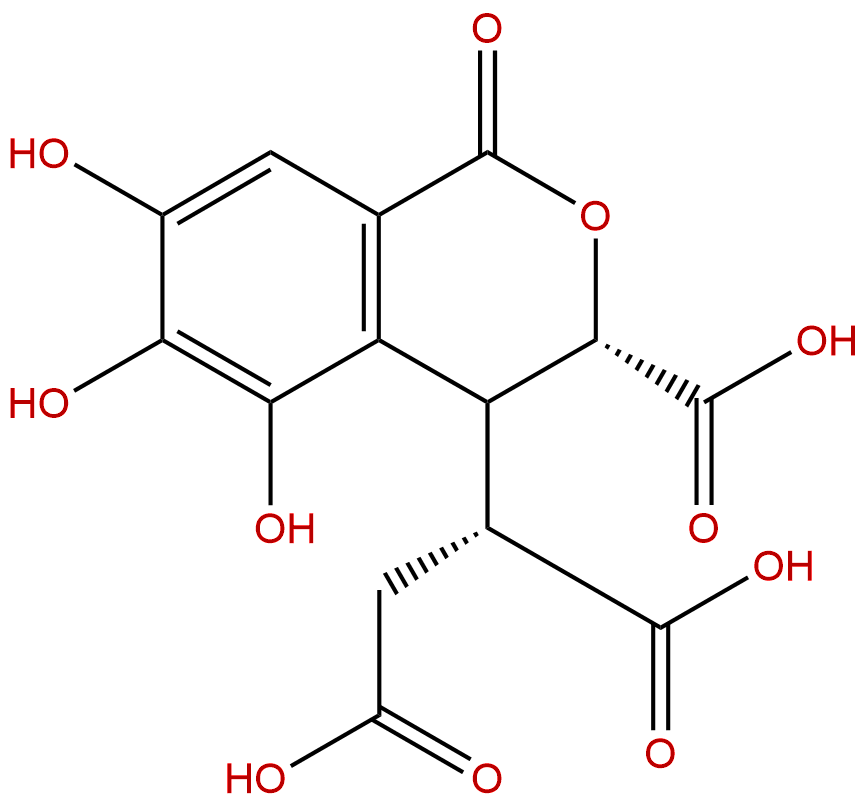


Product name: Chebulic acid
Synonym name:
Catalogue No.: BP2055
Cas No.: 23725-05-5
Formula: C14H12O11
Mol Weight: 356.239
Botanical Source: Chebulae Fructus
Physical Description:
Type of Compound: Phenols
Purity: 95%~99%
Analysis Method: HPLC-DAD or/and HPLC-ELSD
Identification Method: Mass, NMR
Packing: Brown vial or HDPE plastic bottle
Storage: Store in a well closed container, protected from air and light. Put into refrigerate or freeze for long term storage.
The product could be supplied from milligrams to grams
Inquire for bulk scale.
For Reference Standard and R&D, Not for Human Use Directly.
Description:
Chebulic acid has effects against the progression of AGE-induced endothelial cell dysfunction, may constitute a promising intervention agent against diabetic vascular complications; it at both doses (25 and 50 mg/kg) improves biochemical alterations caused by renal ischemia in diabetic rats. Chebulic acid significantly reduced the tert-butyl hydroperoxide (t-BHP)-induced cell cytotoxicity, intracellular reactive oxygen species level, and the ratio of GSSH, oxidized form of glutathione (GSH) to the over total GSH (GSH + GSSG) (4.42%) as compared to that with t-BHP alone (8.33%).
References:
Biol Pharm Bull. 2014;37(7):1162-7. Epub 2014 Apr 24.
Effects of chebulic acid on advanced glycation endproducts-induced collagen cross-links.
Advanced glycation end-products (AGEs) have been implicated in the development of diabetic complications.
METHODS AND RESULTS:
We report the antiglycating activity of Chebulic acid (CA), isolated from Terminalia chebula on breaking the cross-links of proteins induced by AGEs and inhibiting the formation of AGEs. Aminoguanidine (AG) reduced 50% of glycated bovine serum albumin (BSA) with glycolaldehyde (glycol-BSA)-induced cross-links of collagen at a concentration of 67.8 ± 2.5 mM, the level of CA required for exerting a similar antiglycating activity was 38.8 ± 0.5 µM. Also, the breaking activity on collagen cross-links induced by glycol-BSA was potent with CA (IC50=1.46 ± 0.05 mM), exhibiting 50-fold stronger breaking activity than with ALT-711, a well-known cross-link breaker (IC50=72.2 ± 2.4 mM). IC50 values of DPPH· scavenging activity for CA and ascorbic acid (AA) were 39.2 ± 4.9 and 19.0 ± 1.2 µg dry matter (DM) mL(-1), respectively, and ferric reducing and antioxidant power (FRAP) activities for CA and AA were 4.70 ± 0.06 and 11.4 ± 0.1 mmol/FeSO4·7H2O/g DM, respectively. The chelating activities of CA, AG and ALT711 on copper-catalyzed oxidation of AA were compared, and in increasing order, ALT-711 (IC50 of 1.92 ± 0.20 mM) Thus, CA could be a breaker as well as an inhibitor of AGE cross-linking, the activity of which may be explained in large part by its chelating and antioxidant activities, suggesting that CA may constitute a promising antiglycating candidate in intervening AGE-mediated diabetic complications. J Ethnopharmacol. 2010 Oct 5;131(3):567-74. Preventive effects of chebulic acid isolated from Terminalia chebula on advanced glycation endproduct-induced endothelial cell dysfunction. The present study therefore investigated the protective mechanism of Chebulic acid, a phenolcarboxylic acid compound isolated from the ripe fruits of Terminalia chebula against advanced glycation endproducts (AGEs)-induced endothelial cell dysfunction. METHODS AND RESULTS: To investigate the protective mechanism of Chebulic acid against vascular endothelial dysfunction human umbilical vein endothelial cells (HUVEC) were treated with Chebulic acid in the presence/absence of glyceraldehyde-related AGEs (glycer-AGEs). HUVEC incubated with 100 μg/ml of glycer-AGEs had significantly enhanced reactive oxygen species formation, whereas the treatment of Chebulic acid dose-dependently reduced glycer-AGE-induced formation to 108.2 ± 1.9% for 25 μM versus 137.8 ± 1.1% for glycer-AGEs treated alone. The transendothelial electrical resistance (TER) value of the glycer-AGEs group was dramatically decreased to 76.9 ± 2.2% compared to the control, whereas Chebulic acid treatment prevented glycer-AGE-induced TER change with a value of 91.3 ± 5.3%. The incubation of confluent HUVEC with 100 μg/ml of glycer-AGEs for 24h remarkably increased the adhesion of human monocytic THP-1 cells compared to non-stimulated HUVEC. These increases in HUVEC adhesiveness were dose-dependently reduced by Chebulic acid. CONCLUSIONS: The present study shows the effects of Chebulic acid against the progression of AGE-induced endothelial cell dysfunction suggesting that this compound may constitute a promising intervention agent against diabetic vascular complications. Arch Toxicol. 2007 Mar;81(3):211-8. Epub 2006 Aug 24. Isolation of chebulic acid from Terminalia chebula Retz. and its antioxidant effect in isolated rat hepatocytes. A hepatoprotective compound was isolated from the ethanolic extract of the fruits of Terminalia chebula Retz. by consecutive solvent partitioning, followed by silica gel and Sephadex LH-20 column chromatographies. METHODS AND RESULTS: The purified compound was identified as a mixture of Chebulic acid and its minor isomer, neoChebulic acid, with a ratio of 2:1 by spectroscopic analysis including 1D and 2D NMR and MS spectroscopy. To our knowledge, this is the first report on the protection of rat hepatocytes against oxidative toxicity by Chebulic acid obtained from T. chebula Retz. This compound exhibited in vitro a free radical-scavenging activity and ferric-reducing antioxidant activity. Also, the specific ESR spectrum for the (*)OOH radical signals consisting of three-line ESR spectra was within the field of 0.27 mT, whereas 2.5 and 0.25 mg/ml of Chebulic acid significantly reduced the signal intensity of the ESR spectra to 0.06 mT and 0.11 mT, respectively. CONCLUSIONS: Using isolated rat hepatocyte experiment, we demonstrated that the treatment of hepatocytes with Chebulic acid significantly reduced the tert-butyl hydroperoxide (t-BHP)-induced cell cytotoxicity, intracellular reactive oxygen species level, and the ratio of GSSH, oxidized form of glutathione (GSH) to the over total GSH (GSH + GSSG) (4.42%) as compared to that with t-BHP alone (8.33%). HPLC of Chebulic acid Storage conditions:Short-term storage at 2~8℃, long-term storage at -20 ~ -80℃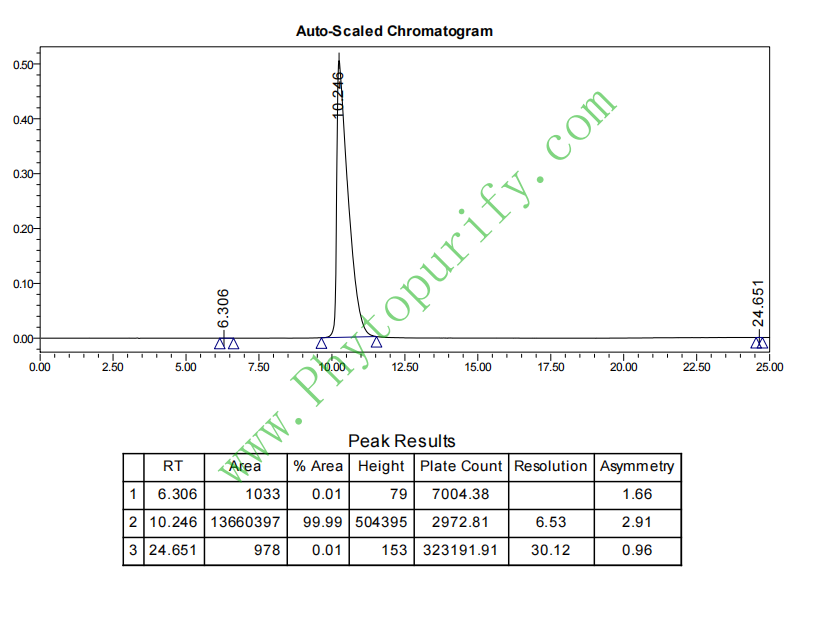
198.8900
-.5592
-2.7777
5.8684
.9495
.6921
Low
73.1396
4.0445
Yes
No
No
No
Yes
Yes
0.0
Yes
No
No
No
Natural products, as an important source of drug discovery, play an irreplaceable role in human health maintenance and disease treatment. Among numerous natural compounds with biological activity, phenolic acids have attracted much attention due to their broad pharmacological activity and relatively low toxicity. Chebulic acid, as a phenolic carboxylic acid compound derived from traditional medicinal plants, has aroused strong interest among researchers in the field of natural product pharmacology in recent years.
The secondary acid of Hezi mainly comes from the Hezi plant in the Junziaceae family(Terminalia chebula Obtained through separation in Retz. Hezi has a long history of application in traditional medicine, especially regarded as the "king of all medicines" in Ayurvedic medicine and Tibetan medicine. It is commonly used to treat digestive system diseases, respiratory system diseases, and various inflammatory diseases. Modern pharmacological research has gradually revealed the scientific connotation of succinic acid as one of its main active ingredients.
From a chemical structure perspective, succinic acid belongs to the class of phenolic carboxylic acid compounds, with a unique molecular skeleton and multiple phenolic hydroxyl groups, which provide the structural basis for its antioxidant activity. Studies have shown that myxa chebulinensis acid exhibits various pharmacological activities, including significant antioxidant, anti glycosylation, anti-inflammatory, liver protective, anti diabetes and anti helicobacter pylori effects. In particular, chebula acid can effectively inhibit the formation of advanced glycation end products (AGEs) and break the formed protein cross-linking, which makes it have potential application value in the intervention of diabetes complications and aging related diseases.
With the change of modern lifestyle, the incidence rate of metabolic diseases, oxidative stress related diseases and infectious diseases continues to rise, and finding safe and effective natural compounds has become an important direction of drug research and development. Hezic acid has shown potential as a lead compound or dietary supplement due to its multi-target action characteristics and good safety. This article will provide a systematic review of the research progress of succinic acid from the aspects of chemical structure, plant origin, pharmacological activity, mechanism of action, medicinal properties, and clinical application prospects, in order to provide reference for the in-depth research and development of this compound.
The chemical name of succinic acid is 2,4-dihydroxy-6- [(3,4,5-trihydroxy-6-oxo-1-cyclohexene-1-yl) methyl] benzoic acid, with a molecular formula of C ₁₄ H ₁₂ O ₁₁ and a molecular weight of 356.2390 g/mol. Its chemical structure consists of a benzoic acid core, two phenolic hydroxyl groups, one cyclohexenone unit, and a methylene bridge connecting the two. This unique structure endows the succinic acid with abundant chemical reactivity and biological activity.
From the analysis of structural characteristics, it is found that the molecule of succinic acid contains multiple phenolic hydroxyl groups (- OH) and carboxyl groups (- COOH), which give it strong hydrogen bond donor and acceptor abilities. The presence of phenolic hydroxyl groups is the key structural basis for the antioxidant activity of this compound, as they can effectively scavenge free radicals and chelate metal ions. In addition, the α, β - unsaturated ketone structure (cyclohexenone unit) in the molecule also provides possibilities for its interaction with biomolecules.
According to computer-aided drug design (CADD) prediction and experimental measurement data, the main physicochemical properties of succinic acid are as follows:
A negative LogP value indicates that succinic acid has hydrophilicity, which is consistent with the presence of multiple polar groups in the molecule. The high water solubility (5.8684 mg/mL) provides favorable conditions for its absorption and distribution in vivo, but may also limit its ability to passively diffuse through cell membranes. The TPSA value is as high as 198.89 Å ², far higher than the recommended upper limit of 140 Å ² for oral drugs, indicating that this compound may be difficult to pass through biological membranes through passive diffusion, and its transmembrane transport may depend on carrier proteins or endocytosis.
The low permeability of the blood-brain barrier indicates that the application of chebula acid in the treatment of central nervous system diseases may be limited, but it is beneficial for indications requiring peripheral effects (such as diabetes and liver disease), and can reduce the risk of side effects of the central nervous system. The negative inhibition of hERG eliminates the risk of cardiac toxicity, while a negative Ames test indicates no genetic toxicity. These safety features lay the foundation for subsequent development.
Hezic acid typically exhibits a characteristic absorption peak at 270-280 nm in the UV visible spectrum, attributed to the π→π * transition of the benzene ring and conjugated system in the molecule. In the infrared spectrum, the broad peak at approximately 3400 cm ⁻¹ corresponds to the O-H stretching vibration of phenolic hydroxyl groups, and the strong absorption peak near 1700 cm ⁻¹ corresponds to the C=O stretching vibration of carboxyl groups. In the nuclear magnetic resonance hydrogen spectrum, phenolic hydroxyl protons usually appear in the range of δ 9-12 ppm, while aromatic protons appear in the range of δ 6-8 ppm. These spectral features provide important basis for the structural identification and quality control of succinic acid.
The main natural source of succinic acid in Hezi is the plant Hezi in the Combretaceae family, which belongs to the Hezi genus(Terminalia chebula Retz.)。 Hezi is native to South Asia and Southeast Asia, including India, Nepal, Sri Lanka, Myanmar, Thailand, and Yunnan, China. In addition, plants belonging to the same genus, such as Pililar(Terminalia bellirica)He Lanren Tree(Terminalia catappa)It also contains succinic acid or its structural analogues.
The fruit of Hezi is the main medicinal part of Hezi acid. According to different degrees of maturity, the fruit of Hezi can be divided into young fruit, mature fruit, and dried fruit, among which immature fruit has a relatively high content of secondary acids in Hezi. In traditional applications, the fruit of Hezi is often processed into powder, decoction, or extract for use. Modern research shows that the content of succinic acid in Hezi fruit varies depending on factors such as place of origin, harvest season, and processing method, typically ranging from 0.5% to 2.0% (by dry weight).
The traditional method of extracting succinic acid from Hezi mainly uses solvent extraction. Due to its high water solubility, the water extraction method is the simplest and most economical way to extract succinic acid. The specific operation usually includes: crushing the dried Hezi fruit, soaking or refluxing it with distilled water under heating conditions (60-80 ° C) for 1-3 hours, and repeating the extraction 2-3 times. After concentration and alcohol precipitation to remove impurities, crude extract can be obtained from the water extract.
Organic solvent extraction method is also commonly used for the extraction of succinic acid, and commonly used solvents include methanol, ethanol, acetone, and their aqueous solutions. Research has shown that a 50% -70% ethanol aqueous solution has a higher extraction efficiency for succinic acid and fewer impurities. The organic solvent extraction method usually adopts cold soaking or reflux extraction, and the extraction temperature is controlled at 40-60 ° C to avoid degradation of thermosensitive components.
To improve extraction efficiency and purity, modern extraction techniques have been applied to the preparation of succinic acid:
Ultrasonic assisted extraction (UAE)Utilizing the cavitation effect of ultrasound to destroy plant cell walls, accelerate solvent permeation and solute diffusion. This method can be performed at room temperature or low temperature, with extraction time shortened to 15-30 minutes and extraction rate increased by 20% -40% compared to traditional methods.
Microwave assisted extraction (MAE)Using the heating effect of microwaves to rapidly increase the internal temperature of plant cells, leading to cell rupture and promoting the release of target components. MAE has the advantages of short extraction time (several minutes), low solvent dosage, and good selectivity.
Enzyme Assisted Extraction (EAE)Using cellulase, pectinase and other enzymes to hydrolyze plant cell wall components, reducing mass transfer resistance and improving the release efficiency of succinic acid. This method has mild conditions and is suitable for extracting thermosensitive components.
Supercritical fluid extraction (SFE)Using CO ₂ as the solvent, selectively extract the target component by adjusting pressure and temperature. Due to the high polarity of succinic acid, it is usually necessary to add solvents such as ethanol to improve extraction efficiency.
The separation and purification of succinic acid from crude extracts usually require the use of multiple chromatographic techniques. Common methods include:
Antioxidant activity is one of the most prominent pharmacological activities of succinic acid. Multiple in vitro experiments have confirmed that succinic acid has strong free radical scavenging ability. In the DPPH radical scavenging experiment, the IC ₅₀ value of succinic acid is about 15-25 μ M, and its activity is stronger than that of common antioxidants vitamin C and vitamin E. In the ABTS ⁺ radical scavenging experiment, succinic acid also showed concentration dependent scavenging effect.
The antioxidant mechanism of succinic acid mainly includes the following aspects: firstly, multiple phenolic hydroxyl groups in the molecule can directly provide hydrogen atoms or electrons to neutralize free radicals; Secondly, its ortho diphenol structure can chelate transition metal ions (such as Fe ² ⁺, Cu ² ⁺) and inhibit the hydroxyl radicals generated by the Fenton reaction; In addition, succinic acid can upregulate the activity of intracellular antioxidant enzymes such as superoxide dismutase (SOD), glutathione peroxidase (GPx), and catalase (CAT), enhancing the body's own antioxidant defense system.
In cell models, pretreatment with succinic acid can significantly reduce H ₂ O ₂ or high glucose induced reactive oxygen species (ROS) levels, protecting cells from oxidative damage. Animal experiments further confirmed that myxa acid could reduce the content of malondialdehyde (MDA) in serum and liver of diabetes rats, increase the activity of antioxidant enzymes, and alleviate tissue damage caused by oxidative stress.
Advanced glycation end products (AGEs) are complex compounds formed by non enzymatic reactions between reducing sugars and amino groups of proteins, lipids, or nucleic acids. The accumulation of AGEs in the body is closely related to aging related diseases such as diabetes complications, atherosclerosis and Alzheimer's disease.
Hezic acid exhibits a unique dual mechanism of action in anti glycosylation. On the one hand, it can inhibit the formation of AGEs. In the bovine serum albumin (BSA) - glucose model, succinic acid inhibits the generation of fluorescent AGEs and cross-linked structures in a concentration dependent manner, with an IC50 value of approximately 50-100 μ M. Mechanism studies have shown that succinic acid blocks the early stages of glycosylation reactions by capturing active carbonyl intermediates such as methylglyoxal and glyoxal.
On the other hand, what is even more unique is that succinic acid can break the protein cross-linking induced by already formed AGEs. This characteristic distinguishes it from most anti glycation agents that can only prevent the formation of AGEs. Experiments have shown that treatment with succinic acid can depolymerize pre formed AGEs cross-linked proteins, restoring protein solubility and function. This "cross-linking" effect may be related to the specific interaction between the phenolic hydroxyl and carboxyl groups in its molecule and the cross-linking structure of AGEs.
Helicobacter pylori(Helicobacter pylori)Gram negative microaerophilic bacteria that colonize the gastric mucosa are closely associated with the occurrence of chronic gastritis, peptic ulcers, gastric mucosa associated lymphoid tissue lymphoma, and gastric cancer. With the increasing severity of antibiotic resistance, the search for new anti Helicobacter pylori drugs has become a research hotspot.
Research has found that succinic acid has a significant inhibitory effect on Helicobacter pylori. In vitro drug sensitivity experiments showed that the minimum inhibitory concentration (MIC) range of succinic acid against various standard strains and clinical isolates of Helicobacter pylori was 16-64 μ g/mL. It is worth noting that succinic acid is equally effective against metronidazole and clarithromycin resistant strains, suggesting that its mechanism of action may be different from existing antibiotics.
The anti Helicobacter pylori effect of Hezic acid involves multiple molecular targets. Computer molecular docking and enzyme activity experiments have shown that succinic acid can bind to various key proteins of Helicobacter pylori:
This multi-target mode of action not only endows succinic acid with broad-spectrum anti Helicobacter pylori activity, but may also reduce the risk of drug resistance.
The liver is the core organ for metabolism and detoxification in the body, and is susceptible to damage from factors such as drugs, alcohol, viruses, and metabolic disorders. Hezic acid has shown protective effects in various liver injury models.
In a mouse model of acute liver injury induced by carbon tetrachloride (CCl ₄), pretreatment with succinic acid can significantly reduce serum transaminase (ALT, AST) levels, alleviate liver cell necrosis and inflammatory infiltration. In a high-fat diet induced non-alcoholic fatty liver disease (NAFLD) model, treatment with succinic acid can reduce liver lipid accumulation, improve insulin resistance, and lower levels of inflammatory factors (TNF - α, IL-6).
The hepatoprotective mechanism of succinic acid involves multiple pathways such as antioxidant, anti-inflammatory, and anti apoptotic effects. It upregulates antioxidant enzyme expression by activating the Nrf2/ARE signaling pathway, reduces inflammatory response by inhibiting the NF - κ B pathway, and inhibits liver cell apoptosis by regulating the Bax/Bcl-2 ratio.
Diabetes is a metabolic disease characterized by hyperglycemia, and its complications seriously affect the quality of life of patients. Chebulic acid shows potential in the prevention and treatment of diabetes and its complications.
In the streptozotocin (STZ) - induced type 1 diabetes rat model, myxa acid administration can reduce fasting blood glucose levels, improve glucose tolerance, and increase serum insulin content. In the db/db mouse model of type 2 diabetes, chebulic acid treatment can reduce blood sugar and glycosylated hemoglobin levels, and improve insulin sensitivity.
The anti diabetes mechanisms of myxa chebulinensis acid include: inhibiting the activity of α - glucosidase and delaying the absorption of carbohydrates; Activate the AMPK signaling pathway to promote glucose uptake and fatty acid oxidation; Protect pancreatic beta cells from oxidative stress and inflammatory damage; It can inhibit the formation of AGEs and prevent complications of diabetes.
Asthma is a chronic airway inflammatory disease characterized by airway hyperresponsiveness and reversible airflow limitation. Hezic acid has shown anti-inflammatory and airway protective effects in asthma models.
In a mouse model of asthma induced by ovalbumin (OVA), administration of succinic acid can reduce eosinophil counts in bronchoalveolar lavage fluid, lower levels of Th2 cytokines (IL-4, IL-5, IL-13), alleviate airway inflammation and mucus secretion. In addition, succinic acid can also inhibit the contraction of airway smooth muscle and reduce airway hyperresponsiveness.
The antioxidant effect of succinic acid is mainly mediated through the following signaling pathways:
Nrf2/ARE pathway Hezic acid can promote the dissociation and translocation of nuclear factor E2 related factor 2 (Nrf2) from Keap1 to the nucleus, bind to antioxidant response elements (ARE), and initiate the transcription of downstream antioxidant enzyme genes (such as HO-1, NQO1, GCLC).
PI3K/Akt pathway By activating phosphatidylinositol 3-kinase (PI3K)/protein kinase B (Akt) signaling, cell survival signaling is enhanced and oxidative stress-induced apoptosis is inhibited.
MAPK pathway Regulating the phosphorylation levels of mitogen activated protein kinase (MAPK) family members (ERK, JNK, p38) to balance cellular stress response.
The mechanism by which succinic acid inhibits the formation of AGEs includes:
Carbonyl capture The phenolic hydroxyl and carboxyl groups in the molecule can undergo nucleophilic addition reactions with active carbonyl compounds (methylglyoxal, glyoxal), forming stable adducts and blocking glycosylation chain reactions.
Metal chelation By chelating transition metal ions (such as Cu ² ⁺, Fe ² ⁺), the metal catalyzed sugar oxidation reaction is inhibited, reducing the generation of AGEs precursor substances.
Protein protection Competitive binding glycosylation reagents with lysine and arginine residues in proteins to protect protein amino groups from modification.
Crosslink destruction By nucleophilically attacking the Schiff base or imidazole ring in the crosslinked structure of AGEs, the formed protein crosslinks are broken.
Molecular docking and dynamic simulation studies revealed the interaction mode between succinic acid and Helicobacter pylori target proteins:
Combined with GYRB The phenolic hydroxyl group of succinic acid forms hydrogen bonds with key amino acid residues (such as Asn46, Asp73) in the ATP binding site of GYRB, competitively inhibiting ATP binding and blocking DNA gyrase activity.
Combined with urease Insert nickel ion binding sites into the active center of urease, coordinate with nickel ions through phenolic hydroxyl groups, and inhibit urease catalytic activity.
Binding with adhesins Interacting with the sugar binding domains of BABA and HopQ, it blocks bacterial recognition and adhesion of receptors on the surface of gastric epithelial cells.
Hezic acid downregulates the expression of pro-inflammatory cytokines (TNF - α, IL-1 β, IL-6) and chemokines by inhibiting the NF - κ B and STAT3 signaling pathways. At the same time, it can regulate macrophage polarization, promote the transformation of M2 anti-inflammatory phenotype, and thus play a protective role in inflammatory diseases.
According to Lipinski's "Rule of Five", the molecular weight of succinic acid (356.24 Da) meets the requirement of<500 Da, but its LogP value (-0.56) is below the recommended range of -0.4, indicating its strong hydrophilicity. The number of hydrogen bond donors (6 phenolic hydroxyl groups+1 carboxyl group) and hydrogen bond acceptors (11 oxygen atoms) both exceeded the recommended values (5 and 10, respectively), indicating the possibility of poor membrane permeability.
However, although the TPSA value (198.89 Å ²) is higher than the usual upper limit of 140 Å ² for oral medications, considering that many successful drugs in natural products, such as morphine and quinine, also have high TPSA values, this parameter is not an absolute limitation. Overall, the physicochemical properties of succinic acid suggest that its oral bioavailability may be low, but it is expected to be improved through appropriate dosage form design (such as nano formulations and prodrug strategies).
At present, there is insufficient systematic research on the pharmacokinetics of succinic acid, but some data are available for reference:
absorb Due to its high water solubility and low fat solubility, the passive diffusion and absorption of succinic acid in the intestine are poor. However, it may be absorbed through active transport mediated by monocarboxylate transporters (MCT) or organic anion transporters (OATP) in the intestine. After oral administration to rats, the estimated absolute bioavailability is between 5% and 15%.
distribution The plasma protein binding rate is high (>90%), and the apparent distribution volume is small, indicating that it is mainly distributed in the extracellular fluid. Low blood-brain barrier permeability limits its distribution in the central nervous system.
Metabolism The main metabolic pathways include glucuronic acid binding, sulfate binding, and methylation. Phase II metabolic enzymes (UGT, SULT) in the liver and intestine are involved in their metabolism. Some metabolites may retain their biological activity.
excretion Mainly excreted in the form of metabolites through urine and bile. The low detection level of the prototype drug in urine suggests extensive first pass metabolism.
Current toxicological studies have shown that succinic acid has good safety. In the acute toxicity experiment, the LD ₅₀ value of oral administration to mice is greater than 2000 mg/kg, which belongs to low toxicity substances. In the subchronic toxicity experiment, no significant adverse reactions were observed after continuous administration for 28 days. The results of Ames test and micronucleus test were both negative, indicating no genetic toxicity. The hERG inhibition test was negative, ruling out the risk of cardiac toxicity.
However, at high doses, it may cause gastrointestinal discomfort (such as diarrhea and abdominal pain), which is consistent with the laxative effect of traditional Chinese medicine. The safety data of long-term medication still needs to be further accumulated.
Based on existing pharmacological research, hedonic acid has potential for development in the following disease areas:
Diabetes and its complications As an anti glycosylation agent, it can be used to prevent and treat complications such as diabetes nephropathy, retinopathy and neuropathy. Its dual effect (inhibiting the formation of AGEs and breaking existing crosslinks) makes it superior to existing single agent drugs.
helicobacter pylori infection As an adjuvant therapy with antibiotics, it can improve eradication rates and reduce the development of drug resistance. The multi-target mechanism of action makes it equally effective against drug-resistant strains.
Non alcoholic fatty liver disease Improve liver steatosis and inflammation through antioxidant, anti-inflammatory, and lipid metabolism regulating effects.
Aging related diseases By inhibiting the accumulation of AGEs and oxidative stress, delaying the aging process, and preventing age-related diseases.
To overcome the shortcomings in the medicinal properties of succinic acid, the following strategies can be adopted:
Prodrug design Esterification or etherification modification of carboxyl or phenolic hydroxyl groups can improve lipid solubility and membrane permeability, and release active parent drugs after enzymatic hydrolysis or hydrolysis in vivo.
nano-formulation Using carrier systems such as liposomes, polymer nanoparticles, and solid lipid nanoparticles to improve oral bioavailability and achieve targeted delivery.
structural optimization Based on the study of structure-activity relationship, reasonable modifications were made to the molecules of succinic acid to improve their physicochemical properties while maintaining their activity.
Compound preparation Combined use with existing drugs such as metformin and omeprazole to achieve synergistic effects, reduce dosage and side effects.
The future research on succinic acid should focus on the following directions:
In depth mechanism research Using omics techniques (proteomics, metabolomics) to systematically reveal its multi-target action network, identify key targets and signaling pathways.
Pharmacokinetic optimization Conduct systematic preclinical pharmacokinetic studies to elucidate absorption, distribution, metabolism, and excretion characteristics, providing a basis for dosage form design.
Clinical translational research After completing the necessary toxicological evaluation, conduct clinical trials to verify its effectiveness and safety in the target indication.
Study on Structure Activity Relationship Synthesize a series of derivatives, systematically study the effects of different substituents on activity and drug properties, and search for better candidate compounds.
Green extraction process Develop environmentally friendly, efficient, and cost-effective extraction and purification processes to meet industrial production needs.
Hezic acid, as a natural phenolic carboxylic acid compound derived from traditional medicinal plants, has demonstrated significant research value and development potential due to its unique chemical structure and multifaceted pharmacological activities. Its antioxidant, anti glycosylation, anti Helicobacter pylori, liver protection, anti diabetes and anti asthma activities provide new candidate molecules for the intervention of various diseases. In particular, its unique role in breaking AGEs cross-linking has irreplaceable advantages in the field of anti-aging and diabetes complication treatment.
Although there are some challenges in the pharmacological development of succinic acid, such as low oral bioavailability, these issues are expected to be resolved through the application of modern medicinal chemistry and formulation technology. Drawing inspiration from the wisdom of traditional medicine and combining it with modern scientific and technological methods, succinic acid and its derivatives are expected to develop into a new type of multi-target natural medicine, contributing to human health.
In the future, with the continuous deepening of research and the continuous advancement of technology, we have reason to believe that succinic acid will move from the laboratory to clinical practice, transforming from a natural product into an effective drug that benefits patients. This process requires the collaborative efforts of researchers from multiple disciplines such as chemistry, pharmacology, pharmacy, and clinical medicine to jointly promote the modern drug development process of this ancient plant component.
