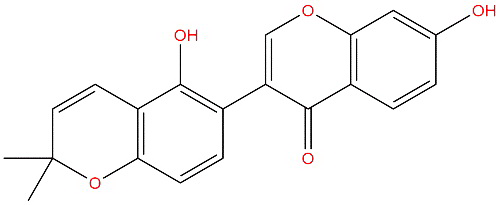


Product name: Glabrone
Synonym name: Morusin hydroperoxide; Eurycarpin B
Catalogue No.: BP3962
Cas No.: 60008-02-8
Formula: C20H16O5
Mol Weight: 336.343
Botanical Source:
Physical Description:
Type of Compound:
Purity: 95%~99%
Analysis Method: HPLC-DAD or/and HPLC-ELSD
Identification Method: Mass, NMR
Packing: Brown vial or HDPE plastic bottle
Storage: Store in a well closed container, protected from air and light. Put into refrigerate or freeze for long term storage.
Whenever possible, you should prepare and use solutions on the same day. However, if you need to make up stock solutions in advance, we recommend that you store the solution as aliquots in tightly sealed vials at -20℃. Generally, these will be useable for up to two weeks.
The product could be supplied from milligrams to grams
Inquire for bulk scale.
For Reference Standard and R&D, Not for Human Use Directly.
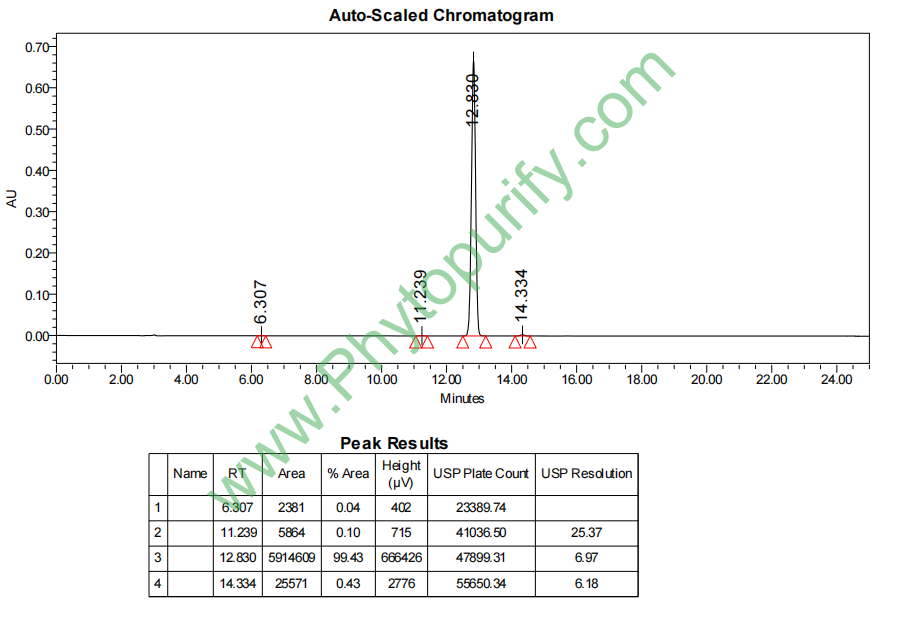
HPLC of Glabrone
Storage conditions:Short-term storage at 2~8℃, long-term storage at -20 ~ -80℃
79.9000
3.5797
3.4749
.0122
1.9388
16.5936
Low
91.7975
2.8641
Yes
No
No
No
Yes
Yes
0.6
No
Yes
Yes
Yes
Natural products, as an important source of drug discovery, play an irreplaceable role in the long-term struggle between humans and diseases. Licorice(Glycyrrhiza As one of the most widely used medicinal plants in traditional medicine, spp. is rich in various flavonoids with significant biological activity in its roots and stems. In the chemical composition family of licorice, Glabrone, as a unique flavonoid compound, has received widespread attention from researchers in recent years due to its various pharmacological activities.
Guanglicorice ketone (CAS number: 60008-02-8) was first isolated and identified from licorice roots, and its chemical structure belongs to the subfamily of isoflavones. Unlike common components such as glycyrrhetinic acid and glycyrrhizin in licorice, glycyrrhetine exhibits a more diverse spectrum of biological activities. Research has shown that this compound is not only a potent natural ligand for peroxisome proliferator activated receptor gamma (PPAR - γ), but also has important value as a specific UGT1A9 probe substrate in drug metabolism studies. More notably, the metabolites of glycyrrhetine can block the release of influenza virus by inhibiting neuraminidase (NA), providing new ideas for the development of anti influenza drugs.
From a medicinal chemistry perspective, the molecular weight of glycyrrhetine is 336.34 Da, with a LogP value of 3.58, indicating moderate lipid solubility. Its topological polar surface area (TPSA) is 79.90 Å ², which is consistent with the basic characteristics of drug like compounds. Preliminary toxicological evaluations indicate that the compound has no inhibitory effect on hERG channels, and Ames test results suggest a low risk of genetic toxicity. These characteristics lay the foundation for further drug development.
This article will provide a systematic review of the research progress of glycyrrhetine from multiple dimensions, including chemical structure, plant origin, pharmacological activity, mechanism of action, pharmacological evaluation, and clinical application prospects, in order to provide reference for the in-depth research and development of this natural product.
Glycyrrhizin belongs to the class of isoflavones, and its basic skeleton is composed of two benzene rings (A ring and B ring) connected by an oxygen-containing heterocyclic ring (C ring). Compared with typical isoflavone structures, glycyrrhetine has a double bond between the 2nd and 3rd positions of the C ring, forming a conjugated system that endows it with specific UV absorption characteristics and chemical reactivity. Specifically, the chemical structure of glycyrrhetine can be described as 3- (2,4-dihydroxyphenyl) -5,7-dihydroxy-4H-chromene-4-one, with the molecular formula C ₂ ₀ H ₁ ₆ O ₅.
The multiple phenolic hydroxyl groups (5,7,2 ', 4' - tetrahydroxy) in the structure endow it with strong hydrogen bond donor and acceptor abilities, which are closely related to its biological activity. Especially the arrangement of 5,7-dihydroxy groups on the A ring and 2 ', 4' - dihydroxy groups on the B ring provide molecular recognition sites for molecules to interact with various protein targets.
The physicochemical properties of glycyrrhetine provide important information for its pharmacokinetic behavior and drug properties:
It is worth noting that the water solubility of glycyrrhetine is poor (0.0122 mg/mL), which may limit its formulation development and bioavailability in practical applications. However, its moderate LogP value (3.58) suggests that its solubility and absorption properties may be improved through appropriate formulation techniques such as nanoemulsions, liposomes, cyclodextrin inclusion, etc.
Glycyrrhizin mainly exists in the Fabaceae genus of licorice(Glycyrrhiza)In the roots and rhizomes of plants. There are about 30 species of licorice plants worldwide, mainly distributed in temperate and subtropical regions of Eurasia, North Africa, and the Americas. Among them, species with high levels of glycyrrhetine include:
Research has shown that the content of glycyrrhetine in licorice roots is usually low, about 0.01% -0.05% (dry weight), and it is a trace active ingredient in licorice. Its content is influenced by various factors, including plant variety, growth environment, harvest season, processing method, etc. Generally speaking, the content of glycyrrhetine in wild licorice is higher than that in cultivated varieties, and the content is higher in roots and stems harvested in autumn.
The traditional extraction of licorice ketone mainly uses organic solvent extraction method. Common solvents include methanol, ethanol, ethyl acetate, etc. The typical extraction process is as follows: after drying and crushing licorice roots, soak them in 70% -95% ethanol at room temperature or heating conditions for extraction. The extract is then concentrated under reduced pressure to obtain the crude extract. However, due to the low content of glycyrrhetine in licorice and its similar structure to other flavonoid components, traditional methods often require multiple purification steps to obtain high-purity products.
To improve extraction efficiency and selectivity, researchers have developed various modern extraction techniques:
Ultrasound assisted extraction (UAE)Utilizing the cavitation effect of ultrasound to destroy cell walls and accelerate the dissolution of target components. Under optimized conditions (ultrasound power of 300W, temperature of 50 ° C, time of 30 minutes), the extraction rate of glycyrrhetine can be increased by 30% -50% compared to traditional methods.
Microwave assisted extraction (MAE)By utilizing the dielectric heating effect of microwaves, the internal temperature of plant cells rapidly increases, promoting the release of target components. This method has the advantages of short extraction time (usually 5-10 minutes) and low solvent usage.
Supercritical fluid extraction (SFE)Selective extraction is achieved by adjusting pressure and temperature using CO ₂ as the extraction medium. This method is green and environmentally friendly, with high product purity, but the equipment cost is relatively high.
The purification of glycyrrhetine in crude extract is usually carried out using column chromatography technology:
In recent years, high-speed countercurrent chromatography (HSCCC) and molecular imprinting techniques have also been applied to the separation and purification of glycyrrhetine, which have the characteristics of easy operation and high recovery rate.
As a natural ligand of PPAR - γ, glycyrrhetine exhibits significant biological activity in regulating glucose and lipid metabolism. PPAR - γ is a member of the nuclear receptor superfamily, highly expressed in adipose tissue, liver, and skeletal muscle, and involved in regulating insulin sensitivity, adipocyte differentiation, and glucose homeostasis.
In vitro studies have shown that glycyrrhetine can activate the transcriptional activity of PPAR - γ in a dose-dependent manner, with EC ₅₀ values at the micromolar level. In the 3T3-L1 preadipocyte differentiation model, glycyrrhetine can promote adipocyte differentiation, upregulate the expression of adiponectin and glucose transporter 4 (GLUT4), and inhibit the production of inflammatory factors such as TNF - α and IL-6. These effects are similar to those of the classic PPAR - γ agonist Rosiglitazone, but the activation potency of glycyrrhetine is approximately 1/10 to 1/5 of that of Rosiglitazone.
In animal models, glycyrrhetine (20-50 mg/kg/d, orally administered) can significantly improve glucose tolerance abnormalities in high-fat diet induced insulin resistant mice, reduce fasting blood glucose and serum insulin levels. At the same time, the levels of serum triglycerides and free fatty acids in mice treated with glycyrrhetine were significantly reduced, and the degree of liver steatosis was alleviated. It is worth noting that unlike thiazolidinedione drugs (TZDs), glycyrrhetine did not cause significant side effects such as weight gain and edema, suggesting that it may have better safety.
The unique mechanism of action of glycyrrhetine in combating influenza virus is noteworthy. Research has confirmed that glycyrrhetine itself has weak inhibitory activity against influenza virus neuraminidase (NA), but its metabolites in the body exhibit potent NA inhibition. This discovery reveals the potential of glycyrrhetine as a prodrug.
Specifically, after the glucuronidation reaction mediated by UGT1A9 in vivo, the metabolites generated by glycyrrhetine can bind to the active site of influenza virus NA, blocking the release of the virus from the host cell surface, thereby inhibiting virus transmission and infection. In vitro experiments have shown that the IC ₅₀ value of this metabolite against influenza A virus (H1N1 and H3N2 subtypes) is in the nanomolar range, comparable to the NA inhibitor oseltamivir used in clinical practice.
Further research has found that the metabolites of glycyrrhetine have inhibitory activity against oseltamivir resistant strains (such as H274Y mutant strain), providing a new solution to the problem of influenza virus resistance. In addition, this metabolite also exhibits broad-spectrum antiviral activity against influenza B virus.
Glycyrrhizin has shown anti proliferative and pro apoptotic activities in various tumor cell lines, and its mechanism of action involves multiple signaling pathways and molecular targets.
Glycyrrhizin can induce tumor cell apoptosis by regulating the expression of Bcl-2 family proteins. Studies have shown that in breast cancer MCF-7 cells, photoglycyrrhizinone treatment can down regulate the expression of anti apoptotic proteins MCL1 and BCL2, and up regulate the expression of pro apoptotic protein BAX, leading to the decline of mitochondrial membrane potential, the release of cytochrome c, and finally activating caspase cascade reaction. Similar results have also been reported in liver cancer HepG2 cells, lung cancer A549 cells, and colon cancer HT-29 cells.
STAT3 (Signal Transduction and Transcription Activating Factor 3) is continuously activated in various tumors, promoting the proliferation, survival, and metastasis of tumor cells. Glycyrrhizin can inhibit the phosphorylation of STAT3 (Tyr705 site), block its nuclear translocation and transcriptional activity. In tumor cells constitutively activated by STAT3 (such as MDA-MB-468 breast cancer cells), photoglycyrrhizinone treatment can significantly reduce the expression of STAT3 target genes (such as Cyclin D1, Survivin, VEGF), thereby inhibiting cell proliferation and angiogenesis.
Matrix metalloproteinases (MMPs) play a crucial role in tumor invasion and metastasis. Glycyrrhizin can inhibit the activity of MMP2 and MMP9, reducing the degradation of extracellular matrix by tumor cells. In Transwell invasion experiment, photoglycyrrhizinone treatment can significantly reduce the invasive ability of MDA-MB-231 breast cancer cells. In addition, glycyrrhetine can also inhibit tumor metastasis by suppressing the expression of HIF-1 α and reducing hypoxia induced epithelial mesenchymal transition (EMT).
Glycyrrhizin has inhibitory effects on both topoisomerase I (TOP1) and topoisomerase II α (TOP2A). In cell-free systems, glycyrrhetine can stabilize TOP1-DNA cleavable complexes, similar to the mechanism of action of camptothecin. Meanwhile, glycyrrhetine can also inhibit the catalytic activity of TOP2A, leading to the accumulation of DNA double strand breaks. This dual topoisomerase inhibition activity may be one of the important mechanisms underlying its anti-tumor effect.
Glycyrrhizin has a weak excitatory effect on estrogen receptor alpha (ESR1) and can inhibit the activity of aromatase (CYP19A1). In estrogen dependent breast cancer cells (such as MCF-7), photoglycyrrhizinone has a two-way regulatory effect: at low concentrations, it slightly promotes cell proliferation, and at high concentrations, it inhibits proliferation and induces apoptosis. This selective estrogen receptor modulator (SERM) like activity makes it potentially useful in the treatment of breast cancer.
In addition to the main activities mentioned above, glycyrrhetine also exhibits antioxidant, anti-inflammatory, and neuroprotective effects. Its antioxidant activity is mainly attributed to multiple phenolic hydroxyl groups in the molecule, which can scavenge free radicals and chelate transition metal ions. In the LPS induced macrophage inflammation model, glycyrrhetine can inhibit the production of NO and PGE2, downregulate the expression of iNOS and COX-2, and these effects are related to the inhibition of the NF - κ B pathway.
As a natural ligand for PPAR - γ, the activation mechanism of glycyrrhetine involves multiple steps such as ligand binding, conformational changes, and transcriptional regulation. Molecular docking and fluorescence polarization experiments have shown that glycyrrhetine can enter the ligand binding pocket (LBD) of PPAR - γ and form hydrogen bonds and hydrophobic interactions with key amino acid residues such as Ser289, His323, Tyr473, etc. This binding induces conformational changes in the helix 12 (AF-2 domain) of PPAR - γ, promoting its interaction with co activators such as SRC-1 and PGC-1 α, thereby activating the transcription of downstream target genes.
It is worth noting that the activation mode of PPAR - γ by glycyrrhetine is different from that of synthetic agonists such as Rosiglitazone. Glycyrrhizin belongs to the category of partial agonists, with a maximum activation potency of about 60% -70% of that of Rosiglitazone, but it causes milder conformational changes, which may explain its fewer side effects such as edema and weight gain.
Glycyrrhizin is a specific probe substrate for UGT1A9, which makes it of great value in drug metabolism research. UGT1A9 is an important member of the UDP glucuronosyltransferase (UGTs) family, involved in the glucuronidation metabolism of various endogenous substances and exogenous drugs. Under the catalysis of UGT1A9, glycyrrhetine undergoes glucuronidation mainly at the 7th hydroxyl group, producing 7-O-glucuronide metabolites.
Due to its high selectivity towards UGT1A9 (other UGT subtypes such as UGT1A1, UGT1A3, UGT2B7 have low metabolic activity towards it), it can be used as a specific probe substrate to evaluate the activity of UGT1A9. This feature has practical value in the following areas:
-Screening inhibitors or inducers of UGT1A9
-Evaluate the metabolic pathways mediated by UGT1A9 in drug drug interactions
-Study on the effect of UGT1A9 gene polymorphism on drug metabolism
The inhibitory mechanism of 7-O-glucuronide, a metabolite of glycyrrhetine, on influenza virus neuraminidase (NA) has been elucidated through molecular simulations and enzyme kinetics studies. This metabolite can occupy the active site of NA and form a stable hydrogen bond network with catalytic residues such as Arg118, Arg152, Arg371, etc. At the same time, its glucuronic acid group interacts with the auxiliary binding site of NA (150 loop) to enhance binding affinity.
Unlike oseltamivir, the binding mode of glycyrrhetine metabolites to NA does not depend on the conformational changes of E276 residues, which may be the structural basis for its continued activity against oseltamivir resistant strains. In addition, the inhibitory type of this metabolite on NA is competitive inhibition, with Ki values in the nanomolar range.
The anti-tumor effect of glycyrrhetine involves multiple molecular targets and signaling pathways, exhibiting typical multi-target drug characteristics. Table 1 summarizes the main anti-tumor targets and their effects of glycyrrhetine:
| target | Effect of action | Related tumor types |
|---|---|---|
| MCL1 | Downregulate expression and promote apoptosis | Breast cancer, lung cancer |
| BCL2 | Downregulate expression and promote apoptosis | Multiple types of tumors |
| STAT3 | Inhibit phosphorylation and block signals | Breast cancer, liver cancer |
| MMP2 | Inhibit activity and reduce invasion | Breast cancer, melanoma |
| TOP1 | Inhibit catalytic activity and induce DNA damage | Multiple types of tumors |
| HIF1A | Inhibit expression and reduce angiogenesis | Renal cancer, breast cancer |
| TOP2A | Inhibit catalytic activity and induce DNA damage | Multiple types of tumors |
| MAPK1 | Regulating phosphorylation and affecting proliferation | Multiple types of tumors |
| ESR1 | Weak excitation/antagonism bidirectional regulation | breast cancer |
| CYP19A1 | Inhibit aromatase activity | breast cancer |
This multi-target mode of action gives glycyrrhetine the following advantages in anti-tumor therapy: ① reducing the probability of common resistance to single target drugs; ② Enhancing anti-tumor effects through synergistic effects; ③ May reduce the toxic side effects caused by high-dose single target drugs.
Based on Lipinski's "Rule of Five", the pharmacological parameters of glycyrrhetine are as follows:
-Molecular weight: 336.34 Da (<500, compliant)
-LogP: 3.58 (<5, compliant)
-Number of hydrogen bond donors: 4 (phenolic hydroxyl group,<5, compliant)
-Number of hydrogen bond acceptors: 5 (oxygen atoms,<10, compliant)
From the above parameters, it can be seen that glycyrrhetine fully complies with the "five rules" and has a good drug like basis. In addition, its TPSA is 79.90 Å ², indicating that it has good oral absorption potential. However, its poor water solubility (0.0122 mg/mL) is its main weakness, which may affect its oral bioavailability.
At present, there is insufficient systematic research on the pharmacokinetics of glycyrrhetine, but preliminary information has been provided by existing studies
absorb The oral bioavailability of glycyrrhetine in rats is about 15% -25%, and the lower bioavailability is mainly attributed to its poor water solubility and first pass metabolism. In the Caco-2 cell monolayer model, the apparent permeability coefficient (Papp) of glycyrrhetine is 2.5 × 10 ⁻⁶ cm/s, indicating moderate permeability.
distribution The protein binding rate of glycyrrhetine is relatively high (>95%), mainly binding to serum albumin. Its apparent distribution volume (Vd) is approximately 0.8 L/kg, indicating that it is mainly distributed in the extracellular fluid. Low blood-brain barrier penetration is beneficial for reducing central nervous system side effects.
Metabolism Glycyrrhizin mainly undergoes phase II metabolism in the body, with UGT1A9 mediated glucuronidation being the main metabolic pathway. In addition, the CYP450 enzyme system (especially CYP3A4 and CYP2C9) also participates in its oxidative metabolism, generating hydroxylated metabolites. It is worth noting that the inhibitory effect of glycyrrhetine on the CYP450 enzyme system is weak (IC ₅₀>50 μ M), indicating a low possibility of metabolic drug interactions.
excretion Glycyrrhizin and its metabolites are mainly excreted through bile, with a small amount excreted through the kidneys. In the rat experiment, within 48 hours after administration, about 60% of the dose appeared in the form of metabolites in the feces, and only 10% -15% in the urine.
As a specific probe substrate for UGT1A9, glycyrrhetine can be used to evaluate the effects of other drugs on UGT1A9 activity. When combined with UGT1A9 inhibitors such as probenecid and fenofibrate, the clearance rate of glycyrrhetine may decrease and blood drug concentration may increase. On the contrary, when combined with UGT1A9 inducers (such as rifampicin), its clearance rate may increase.
In addition, the inhibitory effect of photoglycyrrhizinone on P-glycoprotein (P-gp) and breast cancer resistant protein (BCRP) is weak (IC ≮₀>100 μ M), suggesting that the risk of inducing transporter mediated drug interaction is low.
Preliminary toxicological studies have shown that glycyrrhetine has good safety:
- acute toxicity Oral LD>2000 mg/kg in mice
- Repeated administration toxicity Rats were administered continuously for 28 days (100 mg/kg/d), and no significant toxic reactions were observed
- cardiotoxicity HERG inhibition test negative, indicating low risk of QT interval prolongation
- Genotoxicity The Ames test result is 0.6 (weakly positive tendency), and further in vivo micronucleus test and chromosome aberration test are needed to confirm
It is worth noting that the Ames test results of glycyrrhetine suggest that it may have weak genetic toxicity, which needs to be given special attention in future development. By structural modification or formulation optimization, the potential genetic toxicity risk may be reduced.
As a natural partial agonist of PPAR - γ, photoglycyrrhizinone has unique advantages in the treatment of type 2 diabetes and metabolic syndrome. Compared with synthetic PPAR - γ agonists (TZDs), glycyrrhetine may avoid or alleviate common side effects of TZDs such as edema, weight gain, and cardiovascular risk while maintaining its hypoglycemic effect. Future research directions include:
1. Develop oral formulations of glycyrrhetine to enhance its bioavailability
2. Explore the synergistic effect of glycyrrhetine with other hypoglycemic drugs such as metformin and DPP-4 inhibitors
3. Conduct research on the application of glycyrrhetine in the treatment of non-alcoholic fatty liver disease (NAFLD)
As a prodrug, glycyrrhetine has broad-spectrum antiviral activity in its metabolites, especially against oseltamivir resistant strains, making it an important candidate compound for the development of anti influenza drugs. Future development directions include:
1. Directly synthesize glucuronide metabolites of glycyrrhetine as active pharmaceutical ingredients
2. Design prodrug derivatives of glycyrrhetine and optimize their metabolic activation efficiency
3. Evaluate the synergistic antiviral effect of glycyrrhetine combined with oseltamivir
4. Explore the inhibitory effect of glycyrrhetine on other respiratory viruses such as SARS-CoV-2
The multi-target anti-tumor activity of glycyrrhetine makes it potentially valuable in tumor treatment, especially as a chemotherapy sensitizer or adjuvant therapy drug. Future research focuses include:
1. Clarify the sensitivity and mechanism of action of glycyrrhetine in different types of tumors
2. Explore the combination therapy of glycyrrhetine and clinical chemotherapy drugs (such as paclitaxel and cisplatin)
3. Evaluate the role of glycyrrhetine in tumor stem cells and drug-resistant cells
4. Develop a targeted delivery system for glycyrrhetine to enhance tumor tissue selectivity
As a specific probe substrate for UGT1A9, glycyrrhetine has important application value in drug development and clinical pharmacy
1. Used for high-throughput screening of UGT1A9 inhibitors or inducers
2. Evaluate the potential impact of candidate compounds on UGT1A9 in the early stages of drug development
3. Evaluate the activity status of UGT1A9 in patients in clinical studies and guide personalized medication
Despite the multifaceted pharmacological activities and good pharmacological basis of glycyrrhetine, its clinical translation still faces the following challenges:
As a natural flavonoid compound derived from licorice, glycyrrhetine has shown significant research value in the field of natural product drug development due to its unique chemical structure and multifaceted biological activities. From PPAR - γ natural ligands to UGT1A9 specific probe substrates, from anti influenza virus prodrugs to multi-target anti-tumor lead compounds, the pharmacological activity spectrum of glycyrrhetine continues to expand, and its mechanism of action is becoming increasingly clear.
At present, the research on glycyrrhetine is still in its basic stage, and there is still a considerable distance from clinical application. However, its good drug like parameters, low hERG inhibition risk, and preliminary safety data lay the foundation for further drug development. In the future, with the advancement of formulation technology, in-depth elucidation of pharmacokinetic characteristics, and systematic development of preclinical pharmacological research, glycyrrhetine is expected to play an important role in the treatment of metabolic diseases, viral infections, and tumors.
It is worth noting that the research on glycyrrhetine also provides useful insights for the development of natural product drugs: discovering active ingredients from traditional medicinal plants, elucidating their mechanisms of action through modern pharmacological methods, optimizing their medicinal properties using medicinal chemistry methods, and ultimately achieving the transformation from natural products to innovative drugs. This research paradigm will continue to drive the development of natural product drug research and contribute to human health.
