Introduction/Overview
Natural products have always been an important source of drug discovery and development, especially in the field of anti infection, from penicillin to artemisinin, countless milestone drugs have originated from nature. However, with the widespread use and even abuse of antibiotics, the problem of microbial resistance is becoming increasingly severe and has become a major challenge in the global public health field. Among them, invasive fungal infections, especially those caused by Candida species(Candida The infection caused by spp.) has attracted much attention due to its high incidence rate and mortality. Candida albicans(Candida albicans)As the most common opportunistic pathogenic fungus, it can cause various diseases ranging from superficial mucosal infections to life-threatening systemic candidiasis in immunocompromised patients such as organ transplant recipients, tumor chemotherapy patients, and HIV infected individuals. The commonly used antifungal drugs in clinical practice currently include azoles (such as fluconazole), polyenes (such as amphotericin B), and echinocandins (such as caspofungin). However, these drugs all have their own limitations: resistance to azole drugs is rapidly increasing; Amphotericin B has significant nephrotoxicity; Although echinocandins have good safety, drug-resistant strains have also emerged and their oral bioavailability is low. Therefore, the search for antifungal lead compounds with novel mechanisms of action, high selectivity, and low toxicity is an urgent need in current pharmaceutical chemistry and pharmacology research.
In this context, natural products derived from higher fungi have become a "treasure trove" for the development of antifungal drugs due to their structural diversity and unique biological activity. Resinacein C (CAS number: 1309931-92-7) is a natural product with significant antifungal activity discovered during this exploration process. It belongs to a class of fungal metabolites with unique structures, and its chemical skeleton is completely different from known antifungal drugs, indicating that it may have novel mechanisms of action. Early studies have shown that Resinacein C exhibits potent inhibitory activity against various pathogenic fungi, including Candida albicans, and has low cytotoxicity to mammalian cells, demonstrating good selectivity. More importantly, research on drug-resistant strains suggests that Resinacein C may act on multiple targets, thereby reducing the risk of drug resistance. This article aims to systematically review the chemical structure, plant origin, extraction methods, pharmacological activity, mechanism of action, pharmacological evaluation, and clinical application prospects of Resinacein C, in order to provide comprehensive academic references for the in-depth development and transformation research of this natural product.
Chemical structure and physicochemical properties
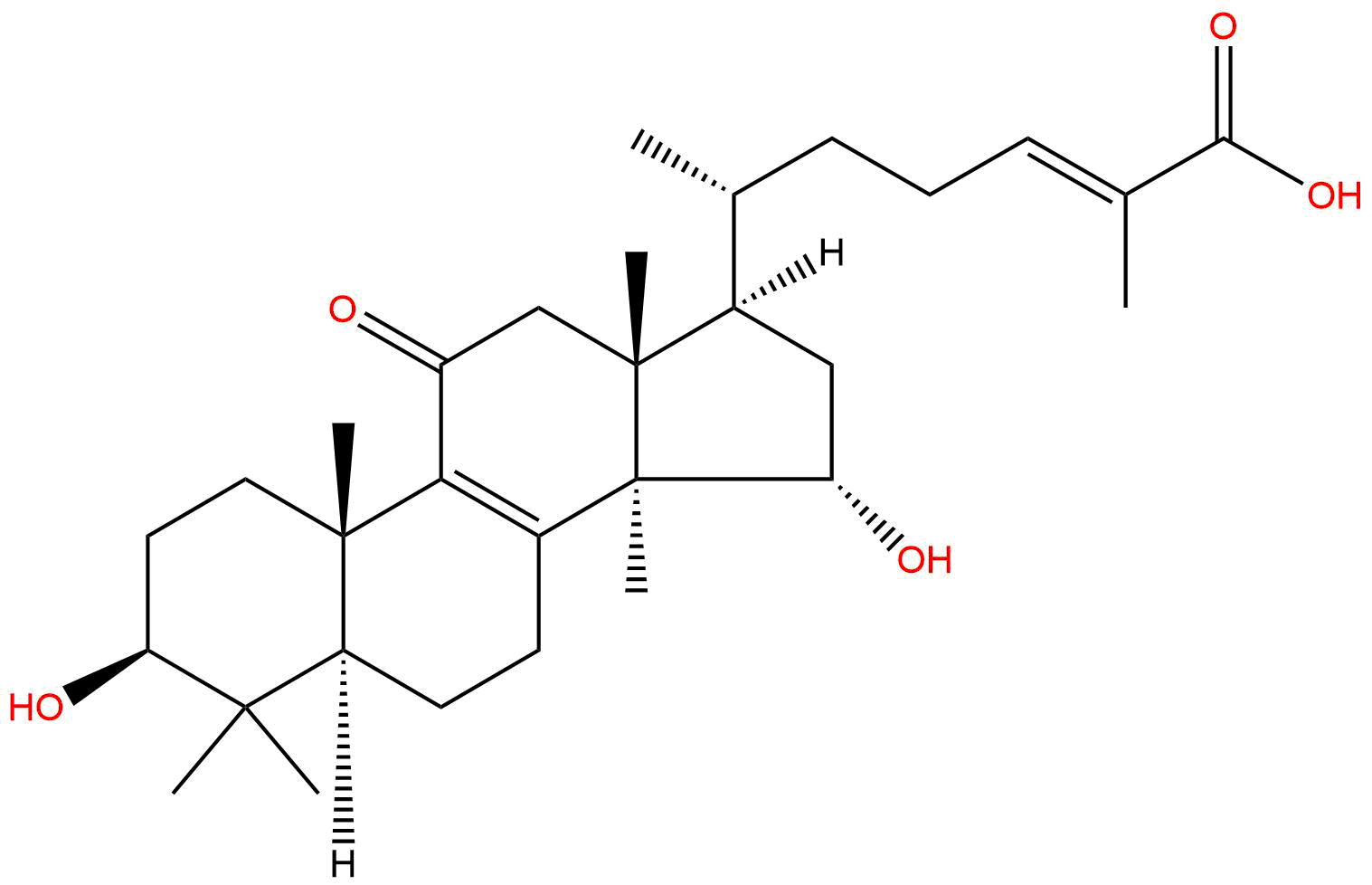
The chemical structure of Resinacein C is the material basis for its biological activity. According to existing literature, Resinacein C belongs to a class of highly oxidized triterpenoids, whose core skeleton may originate from the complex rearrangement and modification of lanosterol or cucurbitacin triterpenoids. The molecular formula is C ∝₀ H ₄₆ O ₅, with a molecular weight of 486.6930 Da. Its structure contains multiple chiral centers, hydroxyl groups, carbonyl groups, and possible lactone or epoxy structures, which endow the molecule with rich chemical properties and potential biological activity. Accurate stereochemical configuration is crucial for its interaction with target proteins, but complete X-ray single crystal diffraction or high field nuclear magnetic resonance (NMR) data analysis is still the focus of current research.
In terms of physicochemical properties, Resinacein C exhibits typical lipophilic natural product characteristics. The calculated lipid water partition coefficient (LogP) is 4.8293, indicating that the compound has strong lipid solubility, which is beneficial for its penetration of fungal cell membranes, but may also affect its solubility in aqueous media and oral absorption. The topological polar surface area (TPSA) is 94.8300 Å ², which is at a moderate level, indicating that it may have some membrane permeability, but also suggesting that it may be influenced by efflux transporters such as P-glycoprotein (P-gp). The water solubility data (0.0120 mg/mL) further confirms its extremely low water solubility, which is one of the main challenges faced by many natural products in formulation development. Low water solubility not only limits the possibility of intravenous administration, but may also lead to poor oral bioavailability. Therefore, future drug chemical modifications, such as prodrug design, salt formation, or nanoformulation technology, will be key directions for improving their solubility.
In addition, preliminary computer-aided drug screening (in silica) results provide important safety clues. The blood-brain barrier (BBB) penetration assessment is rated as' low ', which is usually a favorable feature because drug exposure to the central nervous system is often associated with neurotoxic side effects, especially for antifungal drugs, avoiding entry into the brain can reduce potential central nervous system adverse reactions. The risk assessment of hERG (human Ether - à - go Related Gene) potassium channel inhibition is' no ', which is a positive signal indicating a lower risk of Resinacein C causing cardiac QT interval prolongation and fatal arrhythmias such as apical torsion. The Ames test result is 0.0, indicating that the compound has no significant genetic toxicity or mutagenicity under standard testing conditions. These preliminary drug efficacy evaluation results have laid a solid safety foundation for the further development of Resinacein C as a candidate drug.
Plant sources and extraction methods
Resinacein C does not originate from traditional "plants", but from higher fungi. Specifically, it was originally derived from a species called Resin thrombosis bacteria(Trametes resinacea) It was isolated from fungi of the Basidiomycota phylum. Resin mold fungus belongs to the Polyporaceae family and is a type of wood rot fungus widely distributed in broad-leaved or coniferous forests in temperate and subtropical regions. It often grows on dead or fallen trees. This genus of fungi(Trametes SPP is known for its rich secondary metabolites, including various triterpenoids, sterols, and phenolic compounds with anti-tumor, anti-inflammatory, antiviral, and antibacterial activities. The discovery of Resinacein C further enriched the chemical diversity of this fungal group.
The extraction, separation, and purification process of Resinacein C follows the classic process of natural product chemistry, which typically includes the following key steps:
-
Strain cultivation and fermentation Firstly, it is necessary to obtain purified strains of resin embolic bacteria. Solid culture medium (such as PDA medium) is usually used for strain activation, followed by large-scale fermentation. The fermentation method can be solid fermentation (such as using grain substrates such as rice and corn) or liquid deep fermentation (such as using improved PDB medium). Fermentation conditions such as temperature, pH, light, and cultivation time have a significant impact on the yield of secondary metabolites and need to be optimized to obtain the maximum amount of target compounds.
-
Preparation of crude extract After fermentation, separate the mycelium from the fermentation broth. The mycelium is usually dried and crushed, and then soaked multiple times or extracted with ultrasound assisted extraction using organic solvents such as methanol, ethanol, ethyl acetate, or their mixed solvents. The fermentation broth can be subjected to liquid-liquid extraction using solvents that are immiscible with water, such as ethyl acetate. Combine all extraction solutions and concentrate under reduced pressure to obtain the crude extract.
-
Activity tracking separation Due to the complex composition of the crude extract, it is necessary to combine biological activity assays (such as anti Candida albicans activity) for targeted separation. Common separation methods include:
- Liquid-liquid distribution Using solvents of different polarities (such as petroleum ether, chloroform, ethyl acetate, n-butanol) to preliminarily segment the crude extract and enrich the active ingredients into specific polar segments.
- Column chromatography (CC)This is the most core separation technology. Common stationary phases include silica gel (normal phase), ODS (reverse phase C18) and Sephadex LH-20 (gel filtration). By gradient elution (such as petroleum ether ethyl acetate, methanol water system), the mixture is gradually separated into simpler components.
- High performance liquid chromatography (HPLC)For components that are still difficult to separate after column chromatography, especially homologous compounds with similar structures, preparative HPLC is the key means to ultimately obtain high-purity Resinacein C. Usually, a reverse phase C18 column is used, with acetonitrile water or methanol water as the mobile phase, and monitored by ultraviolet detector (UV) or evaporative light scattering detector (ELSD).
-
Structural Identification After obtaining the pure product, the structure was confirmed by spectroscopic methods. It mainly includes high-resolution mass spectrometry (HR-ESI-MS) to determine the molecular formula and precise molecular weight, as well as one-dimensional (¹ H NMR, ¹ ³ C NMR, DEPT) and two-dimensional (COSY, HSQC, HMBC, NOESY) nuclear magnetic resonance spectroscopy to analyze its planar structure and relative configuration. Ultimately, the absolute configuration typically needs to be determined through X-ray single crystal diffraction or circular dichroism (ECD) calculations.
It is worth noting that the content of natural products in fungi is usually low, and the separation process is cumbersome and the yield is not high. Finding efficient and environmentally friendly extraction methods and improving yield through genetic engineering or synthetic biology are key to achieving large-scale application of Resinacein C in the future.
Pharmacological activity research
The most notable pharmacological activity of Resinacein C is its potent inhibitory effect on pathogenic fungi, especially Candida albicans. Current research mainly focuses on its antifungal spectrum, efficacy, and activity against drug-resistant strains.
1. Anti Candida albicans activity
Multiple in vitro studies have shown that Resinacein C exhibits significant growth inhibitory effects on various clinical isolates and standard strains of Candida albicans, such as ATCC 90028 and SC5314. Its minimum inhibitory concentration (MIC) is usually in the micromolar range (such as 0.5-8 μ g/mL), which is comparable or better than the first-line clinical drug fluconazole. More importantly, Resinacein C is also effective against fluconazole resistant Candida albicans strains, and its MIC value did not significantly increase, indicating that it does not have cross resistance with azole drugs. This characteristic makes it have great potential in addressing the increasingly serious problem of azole resistance.
2. Anti biofilm activity
An important pathogenic feature of Candida albicans is its ability to form biofilms. Fungal cells within biofilms are encapsulated by extracellular polymeric substances (EPS), which exhibit strong tolerance to antifungal drugs and host immune defense, and are the main cause of clinical treatment failure and infection recurrence. Research has found that Resinacein C not only inhibits Candida albicans in a planktonic state, but also effectively suppresses the formation of biofilms and has a certain clearing effect on mature biofilms that have already formed. This anti biofilm activity is a major advantage that distinguishes it from traditional antifungal drugs.
3. Antifungal activity against other fungi
In addition to Candida albicans, the antibacterial spectrum of Resinacein C may also cover other important pathogenic fungi, such as Cryptococcus neoformans(Cryptococcus neoformans)Aspergillus fumigatus(Aspergillus fumigatus)And some skin fungi. However, the activity data of it against non Candida species such as Candida albicans, Candida tropicalis, and Candida krusei is still incomplete and requires further systematic research.
4. Cytotoxicity and selectivity
As a candidate drug, selectivity is crucial. Preliminary cytotoxicity experiments have shown that Resinacein C has low toxicity to human derived cell lines (such as HepG2 liver cells and HEK293 kidney cells) at antifungal effective concentrations, and its therapeutic index (TI, i.e. half toxicity concentration/half inhibition concentration) is high. This indicates that the compound has good selectivity and can specifically act on fungal cells with minimal impact on mammalian cells. This selectivity may stem from the differences in its target of action between fungal and mammalian cells.
Mechanism of action and molecular targets
A deep understanding of the mechanism of action of Resinacein C is crucial for optimizing its structure, predicting drug resistance development, and expanding its application scope. According to existing research, its antifungal effect may involve multiple targets, exhibiting a synergistic effect of multiple targets, which is precisely the reason why it is not easy to develop drug resistance. Based on the target information you provided (ERG11, CDR1, FKS1, ALS3, SAP2), we can construct a multi-level mechanism of action model:
1. Inhibit ergosterol synthesis (targeting ERG11)
ERG11 (i.e. 14 α - demethylase) is a classic target of azole antifungal drugs, responsible for catalyzing the key step of converting lanosterol to ergosterol. Ergosterol is a core component of fungal cell membranes and is crucial for maintaining membrane fluidity, integrity, and function. Research has shown that Resinacein C may directly or indirectly inhibit the activity of ERG11, leading to inhibition of ergosterol synthesis and accumulation of toxic intermediate metabolites such as 14 α - methylsterol, thereby disrupting the barrier function of the cell membrane. However, unlike fluconazole, Resinacein C remains effective against resistant strains overexpressing or mutating ERG11, suggesting that it may act on ERG11 through binding sites or mechanisms different from azoles, or that its main target is not ERG11.
2. Reverse drug efflux (targeting CDR1)
CDR1 (Candida Drug Resistance 1) encodes an ABC transporter protein and is one of the most important multidrug resistance (MDR) efflux pumps in Candida albicans. Overexpression of CDR1 is the core mechanism leading to acquired resistance of fungi to azole drugs. Resinacein C has been found to significantly downregulate the gene expression of CDR1 or inhibit its protein function, thereby reducing drug efflux from cells and increasing intracellular drug concentration. The activity of this' efflux pump inhibitor 'allows it to synergistically interact with drugs such as fluconazole, effectively reversing the resistance phenotype. This explains why Resinacein C remains sensitive to drug-resistant strains overexpressing CDR1.
3. Interference with cell wall synthesis (targeting FKS1)
FKS1 encodes the catalytic subunit of β -1,3-glucan synthase, responsible for synthesizing the core polysaccharide of fungal cell walls - β -1,3-glucan. This is the target of echinocandin drugs. Although the structure of Resinacein C is completely different from that of echinocandin (cyclic lipopeptide), preliminary studies suggest that it may interfere with the function or expression of FKS1 in some way. For example, it may indirectly affect the activity of membrane-bound enzyme FKS1 by influencing the lipid environment of the cell membrane; Alternatively, it can directly bind to the regulatory subunit of FKS1. Interference with FKS1 can weaken the integrity of the cell wall, leading to unstable cell osmotic pressure and ultimately resulting in cell lysis and death.
4. Inhibit virulence factors (targeting ALS3 and SAP2)
In addition to directly killing fungi, inhibiting their virulence factors is also a new strategy for antifungal treatment.
* ALS3 (lectin like sequence protein 3)It is an important adhesive that mediates the adhesion of Candida albicans to host cells and surfaces of biomaterials, and is the initial step in biofilm formation. Resinacein C was found to significantly downregulate the expression of ALS3, thereby inhibiting fungal adhesion and biofilm formation ability.
* SAP2 (Secretory Aspartate Proteinase 2)It is one of the main proteases secreted by Candida albicans, which can degrade host barrier proteins (such as E-cadherin and mucin) and immune effector molecules (such as antibodies and complement), promoting tissue invasion and immune escape. Resinacein C can inhibit the activity or expression of SAP2, weaken the invasion and pathogenicity of fungi.
Integrated Mechanism Model Resinacein C does not act on a single target, but exerts antifungal effects through a "multi pronged" approach: on the one hand, it directly destroys the integrity of the cell membrane and cell wall by inhibiting ERG11 and FKS1; On the other hand, by inhibiting CDR1, the resistance defense mechanism of fungi can be blocked; Meanwhile, by inhibiting ALS3 and SAP2, their adhesion, biofilm formation, and invasion abilities are weakened. This multi-target synergistic mode makes it difficult for fungi to develop complete resistance through a single gene mutation, which is the core advantage of Resinacein C as a new candidate for antifungal drugs.
Evaluation of drug properties and pharmacokinetics
From natural active molecules to clinical drugs, drug efficacy evaluation is a crucial step in determining whether they can ultimately be successfully transformed. Based on the parameters you provided, we have conducted a preliminary evaluation of the pharmacological properties of Resinacein C.
1. Analysis of drug properties
According to the Lipinski Five Rules, an orally active drug should typically meet the following criteria: molecular weight ≤ 500, LogP≤5, Hydrogen bond donor ≤ 5, hydrogen bond acceptor ≤ 10. The molecular weight (486.69 Da) and LogP (4.83) of Resinacein C are both close to or slightly above the upper limit, indicating that it may not fully meet the standards of traditional oral medications. Its TPSA (94.83 Å ²) is less than 140 Å ², indicating that it may have some potential for oral absorption, but requires specific transporters or special formulation methods. Overall, Resinacein C belongs to the "borderline drug molecule" category, and its oral bioavailability may be low, requiring special attention.
2. Absorption, distribution, metabolism, and excretion (ADME) prediction
* absorb Low water solubility (0.012 mg/mL) is the main obstacle to oral absorption. Although a high LogP value is beneficial for membrane permeation, its extremely low water solubility can lead to incomplete dissolution in the gastrointestinal tract, thereby limiting absorption. Therefore, its oral bioavailability is expected to be very low. Intravenous injection may be a more feasible route of administration, but it also needs to address the issue of water solubility.
* distribution High lipid solubility makes it easy to distribute in tissues, especially in organs rich in lipids such as the liver and adipose tissue. Low BBB penetration is an advantage that can reduce the risk of central neurotoxicity.
* Metabolism As a triterpenoid compound, Resinacein C is likely to undergo oxidative metabolism primarily through the cytochrome P450 enzyme system (CYP450) in the liver. Its multiple hydroxyl and carbonyl groups are also potential sites for II phase metabolism, such as glucuronidation and sulfation. Metabolic stability is a key parameter that needs to be evaluated.
* excretion Due to its high lipid solubility, the prototype drug may mainly enter the intestine through bile excretion, and some may pass through the enterohepatic circulation. Metabolites are mainly excreted through urine and feces.
3. Safety evaluation
The preliminary evaluation results of in silica are encouraging: there is no risk of hERG inhibition (reducing the risk of cardiac toxicity), and the Ames test is negative (no genetic toxicity). However, this is only a preliminary prediction. Further comprehensive in vitro and in vivo safety evaluations must be conducted, including:
* In vitro cytotoxicity IC ₅₀ determination of multiple human derived cell lines (liver, kidney, heart muscle, nerve cells).
* Acute toxicity in vivo Measure LD ₅₀ in rodents and observe the main toxic target organs.
* Toxicity of repeated administration in vivo Evaluate the cumulative toxicity of long-term medication.
* Cardiac safety Conduct comprehensive hERG current suppression test (patch clamp) and in vivo electrocardiogram monitoring.
* Drug interactions Evaluate its inhibitory or inducing effects on major CYP450 enzymes (such as CYP3A4, CYP2C9) and predict potential interactions when used in combination with other drugs.
4. Formulation strategy
Given its extremely low water solubility, developing suitable formulations is the key to developing Resinacein C as a drug. Possible strategies include:
* Prodrug design Introducing hydrophilic groups (such as phosphate esters, amino acid esters, and semi amber esters) onto the hydroxyl or carboxyl groups in the molecule to improve water solubility, and releasing the active ingredient after enzymatic or chemical hydrolysis in vivo.
* nano-formulation Using liposome, nanoparticle, micelle or nanocrystal technology to encapsulate or disperse drugs in nanocarriers, improving their solubility and bioavailability.
* Cyclodextrin inclusion complex Using solubilizers such as hydroxypropyl - β - cyclodextrin to enhance the apparent solubility of drugs.
* Solid dispersion Disperse the drug in a water-soluble polymer matrix (such as PVP, HPMC) to form an amorphous form and increase the dissolution rate.
Clinical application prospects and prospects
Resinacein C, as a natural antifungal compound with a novel chemical framework and multi-target mechanism of action, has shown remarkable clinical application prospects, especially in addressing the current challenges of antifungal therapy.
1. Treatment of drug-resistant Candida infections
This is the most direct and urgent application direction of Resinacein C. Given its activity against fluconazole resistant and even echinocandin resistant strains, as well as its ability to reverse CDR1 mediated efflux resistance, it has great potential to become the "last line of defense" drug or core component of combination therapy for the treatment of refractory and recurrent Candida infections (such as oral candidiasis, esophageal candidiasis, invasive candidiasis).
2. Anti biofilm related infections
Candida albicans biofilm is widely present on medical implants (such as catheters, prostheses, heart valves) and human mucosal surfaces. The anti biofilm activity of Resinacein C makes it uniquely valuable in preventing and treating infections associated with medical devices. It can be developed as a coating material for catheters or as a local flushing solution.
3. Combination therapy strategy
Based on its multi-target mechanism, the combination of Resinacein C with existing antifungal drugs such as fluconazole and caspofungin may produce synergistic effects. For example, Resinacein C can increase intracellular fluconazole concentration by inhibiting CDR1 efflux pumps, thereby restoring sensitivity to drug-resistant strains. This combination therapy is expected to reduce the dosage of individual drugs, minimize toxic side effects, and delay the development of drug resistance.
4. Challenges faced and future research directions
Despite the promising future, the clinical translation of Resinacein C still faces many challenges:
* Pharmacokinetic defects Low water solubility and potential low oral bioavailability are the primary obstacles. It needs to be overcome through medicinal chemical modifications (such as synthesizing a series of analogues and conducting structure-activity relationship studies) and advanced formulation techniques.
* mass production Natural extraction has low yield and high cost. We need to develop efficient chemical synthesis or semi synthesis routes, or utilize synthetic biology techniques to reconstruct biosynthetic gene clusters in heterologous hosts such as yeast and filamentous fungi, in order to achieve efficient and green biomanufacturing.
* In depth mechanism research Although multiple targets have been identified, the exact interactions, primary secondary relationships, and molecular level binding modes (such as eutectic structures) between each target still need to be elucidated. This helps guide more precise structural optimization.
* Comprehensive toxicological evaluation Strict preclinical toxicology studies must be conducted, including reproductive toxicity, developmental toxicity, carcinogenicity, etc., to comprehensively evaluate their safety.
* In vivo efficacy verification Multiple animal infection models (such as mouse systemic candidiasis model, oral candidiasis model, and catheter-related biofilm model) need to be established to verify their in vivo efficacy, pharmacokinetic characteristics, and safety.
Conclusion
Resinacein C, This natural triterpenoid compound derived from resin mold fungus injects new vitality into the field of antifungal drug development with its unique chemical structure, potent anti Candida activity, significant effects on drug-resistant strains and biofilms, and novel multi-target synergistic mechanism (involving ERG11, CDR1, FKS1, ALS3, and SAP2). Its preliminary pharmacological evaluation (low hERG risk, no genetic toxicity) also provides confidence for its further development. However, from laboratory discovery to clinical application, Resinacein C still faces severe challenges such as poor water solubility, low oral bioavailability, and difficulties in large-scale production. Future research should focus on optimizing its drug properties through medicinal chemistry methods; Develop efficient formulation technology; Elucidate its complete biosynthetic pathway and achieve efficient heterologous expression; And conduct systematic and in-depth preclinical pharmacological and toxicological evaluations. Despite the long road ahead, Resinacein C undoubtedly provides us with a valuable lead compound skeleton, which has the potential to open up a new therapeutic pathway in response to the increasingly severe global fungal resistance crisis. The in-depth study of it is not only a model of the intersection of natural product chemistry and pharmacology, but also an important exploration in the human fight against microbial infections.