Introduction/Overview
Natural products, as an important source of drug discovery, play an irreplaceable role in the long history of human struggle against diseases. Among them, alkaloids derived from plants and microorganisms have always been a hot topic in medicinal chemistry and pharmacology research due to their structural diversity and significant biological activity. Norchelerythrine, as an isoquinoline alkaloid with a unique benzophenanthrene skeleton, has received widespread attention in recent years due to its potential multiple pharmacological activities such as antibacterial and analgesic effects. This compound was originally derived from Rutaceae plants Zanthoxylum capense The root of a plant belonging to the genus Zanthoxylum in Africa was isolated and named after its structural similarity to Chelerythrine, except for the absence of an N-methyl group. Dexmedetomidine not only exhibits inhibitory activity against various common clinical Gram positive and Gram negative bacteria, but more notably, its molecular structure has potential interactions with multiple targets related to pain signal transduction, such as TRPV1, TRPA1, opioid receptors, etc., indicating its important development value in the field of analgesia. However, the extremely low water solubility (0.0003 mg/mL) and potential genetic toxicity risk (Ames test positive) of the compound also pose significant challenges to its drug development. This article will provide a systematic review of the research progress on demethylated quercetin from multiple dimensions, including chemical structure, plant origin, pharmacological activity, mechanism of action, pharmacological evaluation, and clinical application prospects. The aim is to provide comprehensive scientific basis for the in-depth development and rational utilization of this compound.
Chemical structure and physicochemical properties
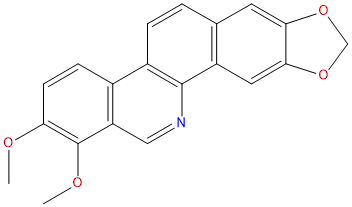
The chemical structure of dehydroquercetin belongs to the benzo [c] phenanthridine alkaloids, and its core skeleton consists of a four ring aromatic ring system, including an N-methylated dihydropyridine ring. Compared with quercetin, demethylated quercetin lacks a methyl group on the N atom, which significantly affects its physicochemical properties and biological activity. Its molecular formula is C ₂₁ H ₁₉ NO ₄, and its molecular weight is 333.3430 g/mol. The molecular structure contains multiple methoxy (- OCH ∝) and phenolic hydroxyl (- OH) substituents, which not only give the molecule a certain polarity, but also provide the possibility for hydrogen bonding interactions between it and biological targets.
From the perspective of physical and chemical properties, demethylated quercetin exhibits typical lipophilic characteristics. Its oil-water partition coefficient (LogP) is 3.8049, indicating that the solubility of the compound in the organic phase is much higher than that in the aqueous phase. This characteristic is highly consistent with its extremely low water solubility (0.0003 mg/mL), which means that the compound is almost insoluble in water, posing significant challenges for its in vitro activity evaluation, in vivo administration, and formulation development. The topologically polar surface area (TPSA) is 49.8100 Å ², which is lower than the commonly believed threshold for good cell membrane permeability (approximately 60-70 Å ²), indicating good membrane permeability. In fact, the blood-brain barrier (BBB) penetration ability of this compound has been evaluated as "high", which provides favorable conditions for its action on central nervous system targets such as opioid receptors, but may also increase the risk of central nervous system toxicity. In addition, the predicted result of hERG inhibition is' no ', indicating a low risk of inducing QT interval prolongation and arrhythmia in the heart, which is a positive pharmacological signal. However, the Ames test result of 1.8 (usually greater than 2.0 is considered strongly positive) suggests that the compound has potential genetic toxicity, which is a warning point that needs to be closely monitored in its drug development process.
Plant sources and extraction methods
Deoxystrobin was originally derived from plants of the Rutaceae family in the genus Zanthoxylum Zanthoxylum capense It was isolated from the roots of Cape Zanthoxylum or South African pepper.Zanthoxylum capense It is a shrub or small tree native to southern Africa, and its bark and roots are commonly used in traditional African medicine to treat various diseases, including pain, inflammation, infections, and gastrointestinal discomfort. Except for Z. capense Deoxystrobin also exists in several other Rutaceae plants, such as Zanthoxylum nitidum(Two sided needle)Zanthoxylum simulans(Wild Sichuan peppercorns) and Toddalia asiatica(Flying Dragon Palm Blood) and so on. These plants have a long history of application in traditional medicine systems in Asia and Africa, and their chemical diversity is an important source for discovering new lead compounds.
The extraction and separation of dehydroquercetin usually follow the classic alkaloid extraction process. Due to the fact that alkaloids usually exist in the form of salts in plant bodies, acid water extraction is often used. The specific steps generally include: crushing the dried plant roots, soaking or percolating them in an acidic aqueous solution (such as 0.5% -2% hydrochloric acid or sulfuric acid), converting the alkaloids into water-soluble salts and extracting them. Subsequently, the acidic extraction solution is alkalized (such as adjusting the pH to 9-10 with ammonia or sodium hydroxide) to free the alkaloids, and then extracted with organic solvents (such as chloroform, dichloromethane, or ethyl acetate). After concentration, the crude extract of total alkaloids was obtained from the extraction solution.
In order to obtain high-purity demethylated quercetin monomer, multiple chromatographic separation techniques need to be combined. Common methods include silica gel column chromatography, alumina column chromatography, preparative thin-layer chromatography, and high-performance liquid chromatography (HPLC). Due to the similarity in structure and polarity between demethylated quercetin and other benzophenanthridine alkaloids such as quercetin and Sanguinarine, separation is difficult. Typically, gradient elution silica gel column chromatography is used for initial separation using solvent systems such as chloroform methanol or petroleum ether acetone, followed by purification using preparative HPLC. In recent years, new separation techniques such as high-speed countercurrent chromatography (HSCCC) have also been applied to the separation of such alkaloids, which have the advantages of high separation efficiency and low sample loss. With the deepening of understanding of the pharmacological activity of berberine, establishing an efficient, environmentally friendly, and scalable extraction process will be an important direction for future research.
Pharmacological activity research
The pharmacological activity research of norepinephrine mainly focuses on its antibacterial and analgesic aspects. In addition, there are also a few studies involving its potential anti-inflammatory and anti-tumor activities.
1. Antibacterial activity
As mentioned earlier, berberine has inhibitory effects on various bacteria. Research has shown that it is effective against Staphylococcus aureus(Staphylococcus aureus)Pseudomonas aeruginosa(Pseudomonas aeruginosa)Enterococcus faecalis(Enterococcus faecalis)And Escherichia coli(Escherichia coli)The minimum inhibitory concentration (MIC) is greater than 50 µ g/mL. Although this value indicates that its antibacterial activity is relatively mild and not a potent fungicide, it still has research value considering that its spectrum of action covers both Gram positive and Gram negative bacteria, and may also have some activity against clinically common drug-resistant strains. Its antibacterial mechanism may be related to the destruction of bacterial cell membranes, inhibition of nucleic acid synthesis, or interference with bacterial quorum sensing systems, but the specific mechanism still needs further clarification. It is worth noting that due to its high MIC value, its potential for direct development as a single antibacterial drug is limited, but it can be studied as an antibacterial enhancer or in combination with other drugs.
2. Analgesic activity
Analgesia is the most promising pharmacological activity direction of norepinephrine. Its molecular structure has potential interactions with multiple classic pain targets, providing a solid theoretical basis for its development as a novel analgesic drug. The relevant targets include:
- TRPV1 and TRPA1 These two transient receptor potential (TRP) channels are important nociceptors that can be activated by various harmful stimuli such as capsaicin, heat, acid, and inflammatory mediators, mediating the transmission of pain signals. Dexmedetomidine may exert analgesic effects by antagonizing or regulating the activity of these channels.
- Opioid receptors (OPRM1, OPRD1, OPRK1)The μ, δ, and κ opioid receptors are the main components of the endogenous analgesic system and the targets of clinically potent analgesics such as morphine. Norepinephrine may act as an agonist or partial agonist of opioid receptors, activating endogenous analgesic pathways.
- Cyclooxygenases (PTGS1/COX-1 and PTGS2/COX-2)COX is a key enzyme in prostaglandin synthesis, and prostaglandins are important pain and inflammatory factors. Inhibition of COX activity is the main mechanism by which classical nonsteroidal anti-inflammatory drugs (NSAIDs) exert analgesic effects. Dexmedetomidine may reduce prostaglandin production by inhibiting COX activity.
- Other targets This also includes cannabinoid receptor 1 (CNR1), dopamine receptor D2 (DRD2), and serotonin transporter (SLC6A4), all of which are associated with pain regulation and emotion, suggesting that their analgesic effects may involve multiple targets and pathways.
This multi-target mode of action may bring more comprehensive analgesic effects and reduce common side effects of single target drugs, such as opioid addiction and respiratory depression; On the other hand, it also increases the complexity of studying the mechanism of action. At present, there is insufficient in vitro and in vivo experimental data on the analgesic activity of norepinephrine. Key questions such as its exact analgesic effect, intensity of action, dose-response relationship, and addictive nature need to be answered through systematic pharmacological research.
Mechanism of action and molecular targets
The mechanism of action of norepinephrine has not been fully elucidated, but based on its chemical structure and preliminary pharmacological activity data, it can be inferred that it exerts its effects through multiple targets and pathways, especially in the field of analgesia.
1. Interaction with TRP channel
TRPV1 and TRPA1 are the most extensively studied pain related TRP channels. The benzophenanthridine skeleton of demethylated quercetin may enable it to embed into the hydrophobic pockets of these channels and bind to channel proteins through van der Waals forces and π - π stacking interactions. The phenolic hydroxyl and methoxy groups in its molecule may form hydrogen bonds or electrostatic interactions with key amino acid residues (such as polar or charged residues) on the channel pores or ligand binding sites, thereby changing the conformation of the channel and inhibiting its activation by harmful stimuli (such as capsaicin, low temperature, inflammatory mediators). This antagonistic effect can effectively block the transmission of nociceptive signals from the periphery to the center, thereby producing analgesic effects. In addition, its regulation of TRPA1 may also be related to anti-inflammatory and anti itch effects.
2. Interaction with opioid receptors
Molecular docking and pharmacophore modeling studies may reveal the binding mode between norepinephrine and opioid receptors. The core aromatic ring system and N atom (although secondary amine) may mimic the aromatic ring and amino groups of tyrosine residues in endogenous opioid peptides (such as enkephalin), which are key pharmacophore features of opioid receptor agonists. Norepinephrine may act as a partial or partial agonist of μ, δ, or κ opioid receptors, activating downstream G protein signaling pathways (mediating analgesia) while not activating the β - arrestin pathway (mediating side effects such as respiratory depression, constipation, and tolerance), thus developing novel opioid analgesics with fewer side effects. However, this hypothesis requires rigorous in vitro functional experiments such as GTP γ S binding assay and cAMP accumulation assay to verify.
3. Inhibition of cyclooxygenase (COX)
The molecular structure of berberine contains phenolic hydroxyl groups, which are similar to the active groups of many COX inhibitors such as aspirin and ibuprofen. Phenolic hydroxyl groups can form hydrogen bonds with tyrosine residues in the active site of COX enzymes and may chelate heme iron ions in COX-2, competitively inhibiting the binding of arachidonic acid to enzymes and reducing the synthesis of pain mediators such as prostaglandin E ₂ (PGE ₂). Its selectivity for COX-1 and COX-2 is not yet clear, but if it has selectivity for COX-2, it is expected to reduce gastrointestinal side effects. This mechanism works synergistically with TRP channels and opioid receptor mechanisms, which may explain its potential anti-inflammatory and analgesic effects.
4. Potential effects with other targets
Norepinephrine may also affect pain perception and emotion by regulating the cannabinoid receptor (CB1), dopamine receptor (D2), and serotonin system. For example, activating CB1 receptors can inhibit the release of glutamate and substance P, producing analgesic and anti anxiety effects; Regulating the dopamine and serotonin systems can improve the depression and anxiety that often accompany chronic pain. This multi-target mode of action makes it a promising candidate for a comprehensive therapy for chronic pain, such as neuropathic pain and inflammatory pain.
Evaluation of drug properties and pharmacokinetics
The evaluation of drug properties is a crucial step in determining whether a candidate compound can ultimately become a drug. Dexmedetomidine has shown significant advantages and disadvantages in terms of medicinal properties.
Advantage:
- Good membrane permeability and central nervous system penetrability Its LogP and TPSA values indicate that it has good lipid solubility and membrane permeability, especially its "high" blood-brain barrier penetration ability, which makes it have the potential to be developed into central nervous system drugs (such as analgesics and antidepressants).
- Low risk of cardiac toxicity HERG inhibition is predicted as' no ', reducing its risk of causing fatal arrhythmias, which is an important safety advantage.
- Clear chemical structure As a natural product, its structure is clear and easy to modify and optimize through chemical synthesis or semi synthesis.
Disadvantages and challenges:
- Extremely low water solubility The water solubility of 0.0003 mg/mL is the biggest obstacle to its medicinal properties. This will result in extremely low oral bioavailability, and injection administration will also face solubility and formulation issues. Solubilization techniques are required, such as preparing salts, using cyclodextrin inclusion complexes, liposomes, nanocrystals, or solid dispersions.
- Potential genetic toxicity A positive Ames test is a serious warning signal that may limit its clinical development. Further in vivo genetic toxicity tests (such as micronucleus test, comet assay) are needed to confirm the risk and explore the mechanism of its genetic toxicity (such as whether it is related to DNA embedding or reactive oxygen species production). If genetic toxicity does exist, it must be eliminated or reduced through structural modifications.
- Lack of pharmacokinetic data At present, there is almost no data available on the absorption, distribution, metabolism, and excretion (ADME) of norepinephrine in the body. The key parameters such as metabolic stability, protein binding rate, main metabolic pathways, half-life, etc. are unknown. Considering its lipophilicity, it may be widely metabolized by liver CYP450 enzymes and may have a longer half-life and higher tissue distribution. All of these need to be elucidated through systematic in vitro and in vivo ADME experiments.
Pharmacokinetic prediction:
Based on its physicochemical properties, it can be preliminarily predicted that after oral administration, its absorption may be extremely poor and unstable; Due to its high lipophilicity, its distribution volume may be large and can be widely distributed in tissues, especially brain tissue; Metabolism may mainly occur through liver oxidation (such as O-demethylation, aromatic ring hydroxylation) and binding reactions (such as glucuronidation, sulfation); Excretion may mainly occur through bile and feces. These predictions require validation with experimental data.
Clinical application prospects and prospects
Despite facing severe challenges in drug development, the unique chemical structure and multi-target pharmacological activity of norepinephrine, especially its potential in the field of analgesia, make it still have important research value and development prospects.
1. As a lead compound for novel analgesics
Its multi-target mode of action (simultaneously acting on TRPV1, opioid receptors, COX, etc.) provides the possibility for developing analgesics with new mechanisms, low addiction, and low side effects. Future research should focus on:
- structural optimization Systematic structural modification of demethylated quercetin by medicinal chemical methods. For example, introducing polar groups (such as phosphate groups, amino acids) to improve water solubility; Replace N-methyl with other heterocycles or alter methoxy position to reduce genetic toxicity and improve selectivity towards specific targets; Synthesize a series of derivatives and establish structure-activity relationships (SAR).
- mechanism verification Using gene knockout mice, specific antagonists, and advanced molecular biology techniques such as surface plasmon resonance and cellular calcium imaging, confirm its direct binding and mode of action with targets such as TRPV1 and opioid receptors.
- In vivo efficacy and safety evaluation Establish various acute and chronic pain models (such as hot plate method, formalin test, sciatic nerve ligation model), and systematically evaluate their analgesic effects, dose dependence, onset time, and duration. Meanwhile, it is necessary to rigorously evaluate its potential side effects such as genetic toxicity, neurotoxicity, addiction, and respiratory depression.
2. As an antibacterial enhancer or combination therapy
Although its own antibacterial activity is not strong, its synergistic effect with existing antibiotics can be explored. For example, it may enhance the sensitivity of antibiotics to drug-resistant bacteria by disrupting bacterial cell membranes or inhibiting efflux pumps. In addition, its anti-inflammatory activity may also help alleviate tissue damage caused by infection.
3. Potential applications in other disease fields
Based on its potential interaction with dopamine receptors and serotonin transporters, norepinephrine may also have research value in the field of mental disorders such as depression, anxiety, or drug addiction. Its regulatory effects on TRPV1 and TRPA1 may also play a role in diseases such as itching, asthma, and overactive bladder. However, these directions are currently in a very early stage of exploration.
Conclusion
As a benzophenanthridine alkaloid derived from traditional medicinal plants, the unique chemical structure and multi-target pharmacological activity of norepinephrine have attracted the interest of researchers, especially its potential value in the field of analgesia. It simultaneously acts on multiple targets related to pain signaling, such as TRPV1, opioid receptors, COX, etc. This multi-target mode of action provides new ideas for the development of novel, low side effect analgesics. However, the extremely low water solubility and potential genetic toxicity of this compound are the two main obstacles on its drug development path. Future research must focus on structural optimization through medicinal chemistry methods to overcome these deficiencies, while combining in-depth pharmacological and toxicological studies to comprehensively elucidate its mechanism of action, pharmacokinetic characteristics, and safety profile. The research process of norepinephrine once again confirms the value of natural products as a treasure trove of lead compounds, and reveals the enormous challenges faced in the process of transforming natural active molecules into clinical drugs. Only through interdisciplinary collaborative innovation can these potential natural products ultimately be transformed into good medicines for the benefit of humanity.