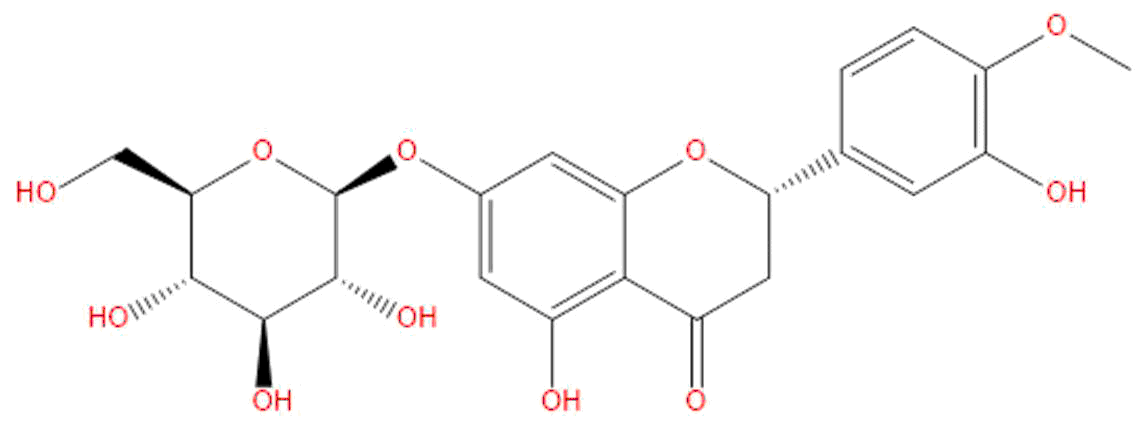


Product name: Hesperetin 7-O-glucoside
Synonym name:
Catalogue No.: BPF8405
Cas No.: 31712-49-9
Formula: C22H24O11
Mol Weight: 464.423
Botanical Source:
Type of Compound: Flavonoids
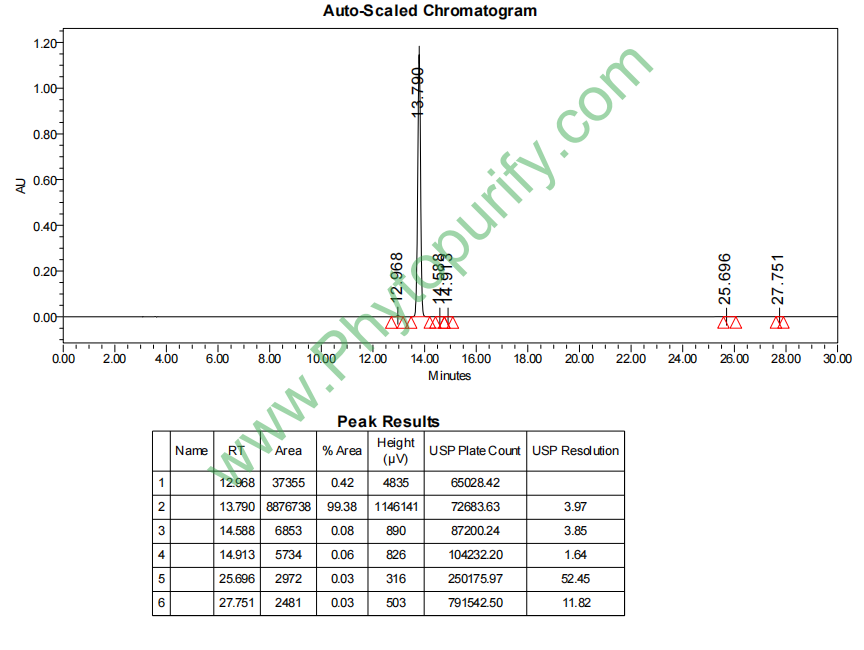
Purity: 95%~99%
Analysis Method: HPLC-DAD or/and HPLC-ELSD
Identification Method: Mass, NMR
Packing: Brown vial or HDPE plastic bottle
Storage: Store in a well closed container, protected from air and light. Put into refrigerate or freeze for long term storage.
Whenever possible, you should prepare and use solutions on the same day. However, if you need to make up stock solutions in advance, we recommend that you store the solution as aliquots in tightly sealed vials at -20℃. Generally, these will be useable for up to two weeks.
The product could be supplied from milligrams to grams
Inquire for bulk scale.
For Reference Standard and R&D, Not for Human Use Directly.
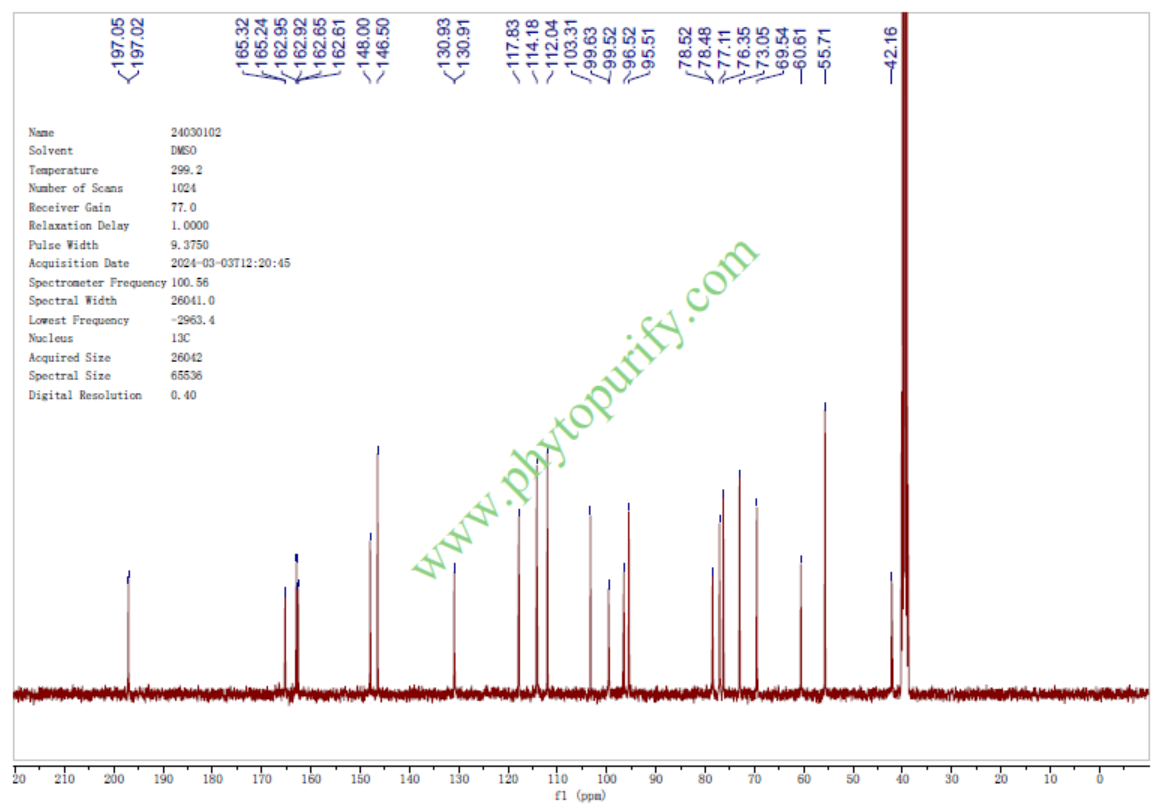
NMR of Hesperetin 7-O-glucoside
HPLC of Hesperetin 7-O-glucoside
Storage conditions:Short-term storage at 2~8℃, long-term storage at -20 ~ -80℃
175.3700
.2663
.2148
3.7572
.6351
.1223
Low
75.4497
4.0790
No
No
No
No
No
No
0.0
Yes
No
No
No
Natural products, as an important source of drug discovery, play an irreplaceable role in human health maintenance and disease treatment. Flavonoids, as one of the main categories of secondary metabolites in plants, have attracted much attention due to their extensive and significant biological activities. Hesperetin 7-O-glucoside, as a typical flavonoid monoglucoside, is one of the common active ingredients in citrus fruits. This compound is composed of the hydroxyl group at position 7 of Hesperetin, which is linked to a molecule of glucose through a glycosidic bond. Its chemical structure endows it with unique physicochemical properties and biological functions.
Hesperidin 7-O-glucoside is mainly found in the fruits, peels, and leaves of citrus plants in nature. It is the primary hydrolysis product or metabolic intermediate of hesperidin (hesperidin 7-O-rutinoside). For a long time, hesperetin 7-O-glucoside has been widely used as a food adjuvant in the food industry, especially as a functional ingredient in citrus processed products. However, in recent years, with the deepening of modern pharmacological research, the medicinal value of this compound has gradually been revealed. Research has shown that hesperetin 7-O-glucoside not only has significant anti-inflammatory activity and hypotensive effects, but also exhibits multiple pharmacological functions such as antioxidant, antibacterial, regulating gut microbiota and metabolic homeostasis. Notably, this compound can inhibit human intestinal maltase and human HMG CoA reductase, suggesting that it has potential application value in the treatment of diabetes and cardiovascular disease.
From the perspective of drug development, hesperetin 7-O-glucoside exhibits excellent pharmacological properties. Its molecular weight is 464.42 Da and the lipid water partition coefficient (LogP) is 0.2663, indicating moderate hydrophilicity; The topological polar surface area (TPSA) is 175.37 Å ², indicating that it may have good oral absorption potential. More importantly, the compound has no hERG inhibitory activity and the Ames test result is negative, indicating a low risk of cardiac and genetic toxicity. These characteristics make hesperetin 7-O-glucoside a highly promising natural lead compound for development.
This article will systematically review the research progress of hesperetin 7-O-glucoside from multiple dimensions, including chemical structure and physicochemical properties, plant sources and extraction methods, pharmacological activity research, mechanism of action and molecular targets, drug evaluation and pharmacokinetics, clinical application prospects and prospects, in order to provide reference for the in-depth research and development of this compound.
The chemical name of hesperetin 7-O-glucoside is (2S) -5,7-dihydroxy-2- (3-hydroxy-4-methoxyphenyl) chroman-4-one 7-O - β - D-glucopyranoside, and its core skeleton belongs to flavanone compounds. The parent nucleus structure of this compound is 2-phenylchromanone, with hydroxyl groups attached to the 5th and 7th positions of the A ring, hydroxyl groups at the 3 'position of the B ring, and methoxy groups at the 4' position. On the 7th hydroxyl group, a molecule of D-glucose is connected by a β - glycosidic bond to form a monoglucoside structure. This glycosylation modification not only increases the water solubility of the molecule, but also has a significant impact on its biological activity and metabolic behavior.
From the perspective of physical and chemical properties, the molecular formula of hesperetin 7-O-glucoside is C ₂₂ H ₂₄₁₁, with a molecular weight of 464.4230 g/mol. Its lipophilic water partition coefficient (LogP) is 0.2663, indicating that the compound has moderate lipophilicity, which can maintain a certain solubility in the aqueous phase and has the ability to cross biofilms. The topological polar surface area (TPSA) is 175.37 Å ², which is higher than the ideal range for oral drugs (usually<140 Å ²). However, considering the specificity of glycosides, their actual absorption may depend on gut microbiota mediated deglycosylation processes. The water solubility parameter is 3.7572, indicating that it has a certain solubility in water, which is a favorable factor for the development of oral preparations.
In terms of spectral characteristics, hesperetin 7-O-glucoside exhibits typical flavanone absorption features in the UV visible region. Its maximum absorption wavelength usually occurs around 285-290 nm (band II, A-ring benzoyl system) and 320-330 nm (band I, B-ring cinnamyl system). In the infrared spectrum, characteristic absorption peaks of hydroxyl (~3400 cm ⁻¹), carbonyl (~1640 cm ⁻¹), and glycosidic bonds (~1080 cm ⁻¹) can be observed. The nuclear magnetic resonance hydrogen spectrum and carbon spectrum can clearly display the proton signals on the flavanone skeleton and the characteristic signals of the sugar moiety, providing important basis for structural identification.
It is worth noting that the stability of hesperetin 7-O-glucoside is influenced by multiple factors. Under acidic conditions, glycosidic bonds are relatively stable; But in alkaline environments, glycosidic bonds are prone to hydrolysis, releasing free hesperetin and glucose. In addition, light exposure, high temperature, and oxidative conditions can also accelerate its degradation. Therefore, strict control of pH, temperature, and light conditions is required during the extraction, purification, and formulation processes to ensure the stability of the compound.
Hesperidin 7-O-glucoside is relatively widely distributed in nature, mainly found in various parts of citrus plants in the Rutaceae family. Among them, citrus fruits contain this compound in their skin, flesh, seeds, and leaves. Common plant sources include sweet oranges (Citrus sinensis), grapefruits (Citrus paradisi), lemons (Citrus limon), broad skinned oranges (Citrus reticulata), and grapefruits (Citrus maxima). It is worth noting that hesperetin 7-O-glucoside usually exists in the form of hesperetin in plants, which is hesperetin 7-O-rutinoside, where the hydroxyl group at position 7 of hesperetin is linked to rutin (rhamnose glucose disaccharide). In the process of plant metabolism, hesperidin can undergo hydrolysis under the action of specific enzymes, removing the rhamnose group and generating hesperidin 7-O-glucoside. Therefore, this compound is both a metabolic intermediate of hesperidin and an independent active ingredient in plants.
From the distribution of content, hesperetin 7-O-glucoside has a higher content in the peel of citrus fruits, especially in immature fruits or peel. Different varieties, origins, harvest seasons, and storage conditions can all affect its content. For example, in sweet orange peel, the content of hesperetin 7-O-glucoside can reach 0.1% -0.5% of dry weight, while in some specific varieties of grapefruit, its content may be higher. In addition, the presence of this compound has also been detected in some non citrus plants, such as certain Rosaceae plants and leguminous plants, but the content is usually low.
There are currently multiple mature methods for extracting hesperetin 7-O-glucoside. The traditional solvent extraction method is one of the most commonly used methods. Due to the moderate polarity of the compound, ethanol water mixed solvents are usually chosen as extractants. Research has shown that a 60% -80% ethanol aqueous solution can achieve high extraction efficiency at 50-70 ° C. During the extraction process, factors such as material to liquid ratio, extraction time, and extraction frequency need to be optimized. In order to improve extraction efficiency, modern technologies such as ultrasound assisted extraction and microwave-assisted extraction are also widely used. The cavitation effect of ultrasound can damage plant cell walls, promote solvent permeation and solute release; The heating effect of microwaves can accelerate molecular motion and increase mass transfer rate.
After extraction, purification treatment is usually required. Column chromatography is a commonly used purification method, among which macroporous adsorption resins (such as D101, AB-8, etc.) are widely used due to their high adsorption capacity and good desorption performance. By gradient elution, hesperetin 7-O-glucoside can be effectively separated from other flavonoid compounds. In addition, advanced technologies such as preparative high-performance liquid chromatography (Prep HPLC) and high-speed countercurrent chromatography (HSCCC) have also been used for the preparation of high-purity samples. During the purification process, special attention should be paid to avoiding the use of strong acid or strong base conditions to prevent hydrolysis of glycosidic bonds.
In recent years, with the promotion of green chemistry concepts, some environmentally friendly extraction methods have gradually gained attention. For example, using deep eutectic solvents (DES) instead of traditional organic solvents for extraction not only improves extraction efficiency but also reduces environmental pollution. In addition, enzyme assisted extraction can significantly improve the release efficiency of target compounds by using enzyme preparations such as cellulase and pectinase to degrade plant cell walls.
The pharmacological activity of hesperetin 7-O-glucoside has made significant progress in recent years, and its various biological effects have attracted widespread attention. The following will systematically explain its pharmacological activities from the aspects of anti-inflammatory, hypotensive, antioxidant, antibacterial, and metabolic regulation.
anti-inflammatory activity It is one of the most prominent pharmacological effects of hesperetin 7-O-glucoside. Multiple in vitro and in vivo experiments have confirmed that this compound can effectively inhibit inflammatory reactions. In cell models, hesperetin 7-O-glucoside can significantly reduce the expression levels of pro-inflammatory factors such as tumor necrosis factor - α (TNF - α), interleukin-6 (IL-6), and interleukin-1 β (IL-1 β) in macrophages stimulated by lipopolysaccharide (LPS). In animal models, oral administration of hesperetin 7-O-glucoside can alleviate carrageenan induced toe swelling in rats and inhibit acetic acid-induced increase in peritoneal capillary permeability in mice. These results indicate that hesperetin 7-O-glucoside has oral active anti-inflammatory effects, and its mechanism of action may be related to the inhibition of the nuclear factor kappa B (NF - κ B) signaling pathway and mitogen activated protein kinase (MAPK) signaling pathway.
Blood pressure lowering effect It is another important pharmacological activity of hesperetin 7-O-glucoside. Research has shown that this compound can exert its antihypertensive effect through multiple pathways. Firstly, hesperetin 7-O-glucoside can inhibit the activity of angiotensin-converting enzyme (ACE), thereby reducing the production of angiotensin II and leading to vasodilation. Secondly, the compound can promote the release of nitric oxide (NO), activate soluble guanylate cyclase, increase the level of cyclic guanosine monophosphate (cGMP), and thereby cause vascular smooth muscle relaxation. In addition, hesperetin 7-O-glucoside can also inhibit the synthesis and release of endothelin-1 (ET-1), further promoting vasodilation. In a spontaneously hypertensive rat model, long-term oral administration of hesperetin 7-O-glucoside significantly reduced systolic and diastolic blood pressure, and no significant adverse reactions were observed.
antioxidant activity It is a common characteristic of flavonoid compounds, and hesperetin 7-O-glucoside is no exception. This compound can directly scavenge various free radicals, including hydroxyl radicals, superoxide anion radicals, and hydrogen peroxide. Its antioxidant mechanism is mainly based on the phenolic hydroxyl groups in the molecular structure, especially the ortho dihydroxy groups on the B ring, which can provide hydrogen atoms or electrons to convert free radicals into stable products. In addition, hesperetin 7-O-glucoside can also upregulate the expression of a series of antioxidant enzymes, including superoxide dismutase (SOD1, SOD2), catalase (CAT), glutathione peroxidase 1 (GPX1), and heme oxygenase 1 (HMOX1), by activating the nuclear factor E2 related factor 2 (NRF2) signaling pathway. This dual antioxidant mechanism makes hesperetin 7-O-glucoside excellent in protecting cells from oxidative stress damage.
Antibacterial activity On the one hand, hesperetin 7-O-glucoside has inhibitory effects on various pathogenic bacteria. Research has shown that the compound exhibits certain antibacterial activity against common pathogens such as Staphylococcus aureus, Escherichia coli, and Pseudomonas aeruginosa. Its antibacterial mechanism may involve multiple aspects such as disrupting the integrity of bacterial cell membranes, inhibiting bacterial nucleic acid synthesis, and interfering with bacterial energy metabolism. It is worth noting that hesperetin 7-O-glucoside has a particularly prominent regulatory effect on gut microbiota. Animal experiments have shown that oral administration of this compound can significantly alter the composition of the gut microbiota in mice, increase the abundance of beneficial bacteria such as lactobacilli and bifidobacteria, and reduce the proportion of harmful bacteria such as Clostridium and Escherichia coli. This microbial community regulation is closely related to improving metabolic homeostasis and may help prevent and treat metabolic diseases.
Metabolic regulation effect It is a research hotspot in recent years for hesperetin 7-O-glucoside. This compound can inhibit human intestinal maltase with a Ki value of 1.8 mM, which can delay the digestion and absorption of carbohydrates, thereby reducing postprandial blood glucose levels. At the same time, hesperetin 7-O-glucoside can also inhibit human HMG CoA reductase, with a Ki value of 9.8 μ M. This is the rate limiting enzyme in cholesterol synthesis, and its inhibition can reduce cholesterol synthesis in the body, exerting a lipid-lowering effect. In addition, the compound can regulate fat metabolism, reduce fat accumulation, and improve insulin sensitivity. These metabolic regulation effects make hesperidin 7-O-glucoside have potential application value in the prevention and treatment of type 2 diabetes and cardiovascular disease.
The pharmacological activity of hesperetin 7-O-glucoside is the result of multi-target and multi pathway synergistic effects. A deep understanding of its mechanism of action and molecular targets is of great significance for the further development and clinical application of this compound.
Anti inflammatory mechanism In terms of anti-inflammatory effects, hesperetin 7-O-glucoside mainly exerts its effects by inhibiting the NF - κ B and MAPK signaling pathways. In the resting state, NF - κ B binds to the inhibitory protein I κ B and exists in an inactive form in the cytoplasm. When cells are stimulated by inflammation (such as LPS, TNF - α), I κ B kinase (IKK) is activated, leading to phosphorylation and degradation of I κ B, releasing NF - κ B into the nucleus and initiating transcription of pro-inflammatory genes. Research has shown that hesperetin 7-O-glucoside can inhibit the activity of IKK, block the degradation of I κ B, and thus prevent the nuclear translocation of NF - κ B. In addition, the compound can also inhibit the phosphorylation of p38, JNK, and ERK in the MAPK pathway, reducing the activity of downstream transcription factor AP-1. By double inhibiting the NF - κ B and MAPK pathways, hesperetin 7-O-glucoside can effectively reduce the expression of pro-inflammatory factors such as TNF - α, IL-6, IL-1 β, COX-2, and iNOS.
Mechanism of antioxidant action It involves two levels: direct clearance of free radicals and activation of the NRF2 signaling pathway. NRF2 is a key transcription factor in the cellular antioxidant defense system. Under normal conditions, NRF2 binds to Kelch like ECH related protein 1 (KEAP1) and is degraded by ubiquitination. When cells are stimulated by oxidative stress or electrophilic agents, the conformation of KEAP1 changes, releasing NRF2 into the nucleus and binding to antioxidant response elements (ARE), initiating the expression of a series of antioxidant enzyme genes. Research has shown that hesperetin 7-O-glucoside can promote nuclear translocation of NRF2 by modifying the thiol group of KEAP1, thereby upregulating the expression of antioxidant enzymes such as SOD1, SOD2, CAT, GPX1, HMOX1, etc. In addition, the compound can directly scavenge reactive oxygen species (ROS) and reduce oxidative damage. It is worth noting that hesperetin 7-O-glucoside can also inhibit the expression of matrix metalloproteinases (MMP1 and MMP3), which play important roles in tissue remodeling and inflammation processes. Its inhibition helps protect the integrity of the extracellular matrix.
Mechanism of blood pressure lowering effect Involving multiple targets. Firstly, hesperetin 7-O-glucoside can inhibit the activity of ACE and reduce the production of angiotensin II. Angiotensin II is a potent vasoconstrictor, and a decrease in its level directly leads to vasodilation. Secondly, the compound can activate endothelial nitric oxide synthase (eNOS), promoting the synthesis and release of NO. NO activates soluble guanylate cyclase, increases cGMP levels, and causes vascular smooth muscle relaxation. In addition, hesperetin 7-O-glucoside can also inhibit the activity of endothelin converting enzyme (ECE), reduce the production of ET-1, and further promote vasodilation. The synergistic effect of these multiple targets enables hesperetin 7-O-glucoside to exhibit good antihypertensive effects.
Metabolic regulatory mechanism Mainly involving the inhibition of key metabolic enzymes. Hesperetin 7-O-glucoside can inhibit human intestinal maltase, an alpha glucosidase located at the brush border of the small intestine, responsible for hydrolyzing maltose into glucose. By inhibiting this enzyme, hesperetin 7-O-glucoside can delay the digestion and absorption of carbohydrates, and reduce postprandial blood glucose peaks. Meanwhile, the compound can also inhibit HMG CoA reductase, which is the rate limiting enzyme in the mevalonate pathway and is responsible for catalyzing the conversion of HMG CoA to mevalonate. By inhibiting this enzyme, hesperetin 7-O-glucoside can reduce cholesterol synthesis and exert a lipid-lowering effect. In addition, the compound can activate AMP activated protein kinase (AMPK), promote fatty acid oxidation, inhibit fat synthesis, and improve insulin sensitivity.
Antibacterial mechanism Involving the impact on bacterial cell membranes and nucleic acid synthesis. Hesperetin 7-O-glucoside can interact with the lipid bilayer on bacterial cell membranes, increasing membrane permeability and leading to intracellular leakage and bacterial death. In addition, the compound can also inhibit the activity of bacterial DNA gyrase and topoisomerase IV, interfering with DNA replication and transcription. The regulatory effect on gut microbiota may be achieved by selectively inhibiting the growth of harmful bacteria while promoting the proliferation of beneficial bacteria. This selective effect may be related to the differential sensitivity of different bacterial strains to hesperetin 7-O-glucoside.
The pharmacological evaluation of hesperetin 7-O-glucoside is a key step in determining whether it can enter clinical development. From the perspectives of medicinal chemistry and pharmacokinetics, this compound exhibits a series of favorable and unfavorable characteristics that require comprehensive evaluation.
Physical and chemical properties and drug like properties In terms of molecular weight, the molecular weight of hesperetin 7-O-glucoside is 464.42 Da, slightly higher than the threshold of molecular weight less than 500 in Lipinski's five rules, but still within an acceptable range. Its LogP value is 0.2663, indicating that the compound has moderate lipophilicity and is beneficial for oral absorption. The TPSA is 175.37 Å ², which is higher than the ideal range for oral medication (<140 Å ²), which may affect its passive diffusion ability. However, considering that glycoside compounds are typically absorbed through active transport or gut microbiota mediated deglycosylation processes, the limitations of TPSA may be partially overcome. The water solubility parameter is 3.7572, indicating that the compound has a certain solubility in water, which is beneficial for the development of oral formulations.
Blood-brain barrier permeability Evaluation shows that hesperetin 7-O-glucoside has low blood-brain barrier permeability. This feature is both an advantage and a disadvantage. From a safety perspective, low blood-brain barrier permeability means that the potential impact of the compound on the central nervous system is relatively small, reducing the risk of neurotoxicity. However, from the perspective of treating central nervous system diseases, this characteristic limits its application. Therefore, hesperetin 7-O-glucoside is more suitable for treating peripheral diseases such as metabolic disorders, cardiovascular diseases, and inflammatory diseases.
safety evaluation In terms of safety, hesperetin 7-O-glucoside exhibits good safety characteristics. The hERG inhibition test result was negative, indicating that the compound does not pose a risk of prolonging QT interval and inducing arrhythmia. The Ames test result is 0.0, indicating that it does not have genetic toxicity. These data indicate that hesperetin 7-O-glucoside has a low risk of genotoxicity and cardiotoxicity, providing a safety guarantee for its further development. In addition, in animal experiments, no significant acute toxicity reactions were observed when orally administered with hesperetin 7-O-glucoside, which has a high LD50 value and a large safety window.
Pharmacokinetic characteristics It is a key factor affecting the pharmacological properties of hesperetin 7-O-glucoside. Research has shown that the compound is partially absorbed in the gastrointestinal tract after oral administration, but the degree of absorption is influenced by multiple factors. Due to the presence of glycosidic bonds, hesperetin 7-O-glucoside may be hydrolyzed by β - glucosidase in the intestine, releasing free hesperetin and glucose. Free hesperetin has higher lipid solubility and can be more easily absorbed through intestinal epithelial cells. Therefore, the oral bioavailability of hesperetin 7-O-glucoside largely depends on its degree of hydrolysis in the intestine.
In terms of distribution in the body, hesperetin 7-O-glucoside and its metabolites are mainly distributed in blood, liver, kidney, and intestinal tissues. Due to low blood-brain barrier permeability, its concentration in brain tissue is relatively low. In terms of metabolism, hesperetin 7-O-glucoside mainly undergoes phase II metabolism in the liver, including glucuronidation and sulfation reactions. These metabolic reactions increase the water solubility of compounds, which facilitates their excretion through urine and bile. In addition, some hesperetin 7-O-glucoside may be further metabolized by gut microbiota to produce phenolic acid small molecule compounds, which may also have biological activity.
In terms of excretion, hesperetin 7-O-glucoside and its metabolites are mainly excreted through urine and feces. Its half-life is relatively short, usually within a few hours. In order to improve its oral bioavailability and prolong its action time, formulation techniques such as nanoliposomes, cyclodextrin inclusion complexes, or phospholipid complexes can be considered. These techniques can enhance the solubility and stability of compounds, promote their absorption, and thus improve pharmacokinetic characteristics.
Based on the multiple pharmacological activities and good safety characteristics of hesperetin 7-O-glucoside, this compound has shown broad application prospects in multiple therapeutic fields.
Metabolic diseases It is one of the most promising application directions for hesperetin 7-O-glucoside. In view of its ability to inhibit human intestinal maltase and HMG CoA reductase, this compound is expected to be developed into a drug for the treatment of type 2 diabetes and dyslipidemia. Compared with existing alpha glucosidase inhibitors (such as acarbose) and HMG CoA reductase inhibitors (such as statins), hesperetin 7-O-glucoside has advantages such as natural origin, multi-target action, and lower toxicity. In addition, its regulatory effect on gut microbiota may provide new ideas for the treatment of metabolic diseases. By improving the gut microbiota, hesperetin 7-O-glucoside may help restore metabolic homeostasis, prevent and treat diseases such as obesity, insulin resistance, and fatty liver.
cardiovascular disease It is another important application area. The hypotensive, lipid-lowering, and antioxidant effects of hesperetin 7-O-glucoside make it potentially valuable in cardiovascular protection. Long term oral administration of this compound may help prevent the occurrence and development of cardiovascular diseases such as hypertension, atherosclerosis and coronary heart disease. In addition, its anti-inflammatory effect also helps to reduce the inflammatory reaction of vascular wall, stabilize atherosclerotic plaque, and reduce the risk of cardiovascular events.
Inflammatory diseases In terms of oral anti-inflammatory activity, hesperetin 7-O-glucoside has the potential to treat chronic inflammatory diseases. For example, in inflammatory bowel diseases such as Crohn's disease and ulcerative colitis, this compound may exert therapeutic effects by inhibiting intestinal inflammatory responses and regulating gut microbiota. In inflammatory diseases such as arthritis and dermatitis, hesperetin 7-O-glucoside may also alleviate inflammatory symptoms by inhibiting the NF - κ B and MAPK signaling pathways.
In the field of food and health products It is another important application direction of hesperetin 7-O-glucoside. As a commonly used food adjuvant, this compound has been widely used in citrus processed products. In the future, it can be developed into functional foods or dietary supplements for the prevention of metabolic and cardiovascular diseases. Considering its good safety, hesperetin 7-O-glucoside is suitable as a long-term health food ingredient.
However, the clinical application of hesperetin 7-O-glucoside still faces some challenges. Firstly, its oral bioavailability is low and needs to be improved through formulation techniques or structural modifications. Secondly, its metabolic pathways and the activity of metabolites in the body still need further clarification. In addition, large-scale clinical studies are still lacking, and more clinical trials are needed to verify its efficacy and safety. Finally, although its mechanism of action has been studied to some extent, it still needs to be further explored, especially the synergistic mechanism and network regulation mechanism of its multi-target effect.
Looking ahead to the future, research on hesperetin 7-O-glucoside can be deepened in the following aspects: firstly, by structural modification or prodrug design, its oral bioavailability and metabolic stability can be improved; The second is to develop new formulations, such as nano formulations, liposomes, or microemulsions, to improve their pharmacokinetic characteristics; Thirdly, conduct systematic preclinical and clinical research to clarify its efficacy, toxicity, and pharmacokinetic characteristics; Fourthly, explore its synergistic effects with other drugs and develop compound formulations; The fifth is to conduct in-depth research on its mechanism of action, especially its regulatory mechanism on gut microbiota and metabolic networks.
Hesperetin 7-O-glucoside, as a typical flavonoid monoglucoside, occupies an important position in the field of natural product pharmacology due to its unique chemical structure and multifaceted biological activities. This article provides a systematic review of the compound from multiple dimensions, including chemical structure and physicochemical properties, plant sources and extraction methods, pharmacological activity research, mechanism of action and molecular targets, drug efficacy evaluation and pharmacokinetics, as well as clinical application prospects.
Research has shown that hesperetin 7-O-glucoside has various pharmacological activities such as anti-inflammatory, hypotensive, antioxidant, antibacterial, and metabolic regulation. Its mechanism of action involves multiple signaling pathways such as NF - κ B, MAPK, NRF2, as well as multiple molecular targets such as ACE, maltase, and HMG CoA reductase. This compound exhibits good safety characteristics, with no hERG inhibitory activity or genetic toxicity, and can exert significant pharmacological effects after oral administration. Hesperetin 7-O-glucoside has broad application prospects in the prevention and treatment of metabolic diseases, cardiovascular diseases, and inflammatory diseases.
However, research on hesperetin 7-O-glucoside is still in its early stages, and there is still a long way to go from laboratory studies to clinical applications. Future research needs to focus on improving its oral bioavailability, elucidating metabolic pathways, verifying clinical efficacy, and exploring its mechanisms of action in depth. With the continuous deepening of research and technological progress, hesperetin 7-O-glucoside is expected to become a new natural medicine for treating various diseases and contribute to human health.
